Unknown's avatar

About Jon Chaisson

Author, blogger, music collector, cat wrangler. May contain trace amounts of sugar and caffeine. Books available at Smashwords!

Blogging the Beatles 15/16/17: All My Loving EP, ‘Komm Gib Mir Deine Hand’/’Sie Liebt Dich’ single & ‘Can’t Buy Me Love’/’You Can’t Do That’ single

It was January of 1964, and it looked as though the Beatles were not stopping to catch their breath any time soon. They were finishing up a few weeks’ worth of “Christmas shows” in London, recording live songs for the BBC, doing a televised show at the London Palladium, and heading off to France for a marathon of shows there. Their fame was growing at a phenomenal rate at this point, having finally broken in Europe outside their proving grounds of Hamburg, Germany. But that was just the beginning–at the start of February, they’d fly to the United States and play their most important shows ever: Washington Coliseum, Carnegie Hall, and two appearances on The Ed Sullivan Show. These would prove to Capitol Records (and the rest of the world) once and for all that they were a rock and roll force to be reckoned with.

Being out on the road did not mean they weren’t working on new music. New songs were still being worked on, and a new album was slated for the summer to coincide with the movie they were about to shoot as well. In true Brian Epstein fashion, he refused to have the band act in a second-rate low-budget musical like the ones Elvis and Cliff Richard had made in the past. Scriptwriter Alun Owen had been hired to capture the distinct Liverpudlian style of humor the boys were known for. As soon as they returned from the US, they’d be not only behind the mike, but in front of the camera.

In the meantime, Parlophone made sure the busy Beatles remained in the charts and on the radio as much as possible.
Credit: jpgr.co.uk – The Beatles Complete UK Discography site

Credit: jpgr.co.uk – The Beatles Complete UK Discography site

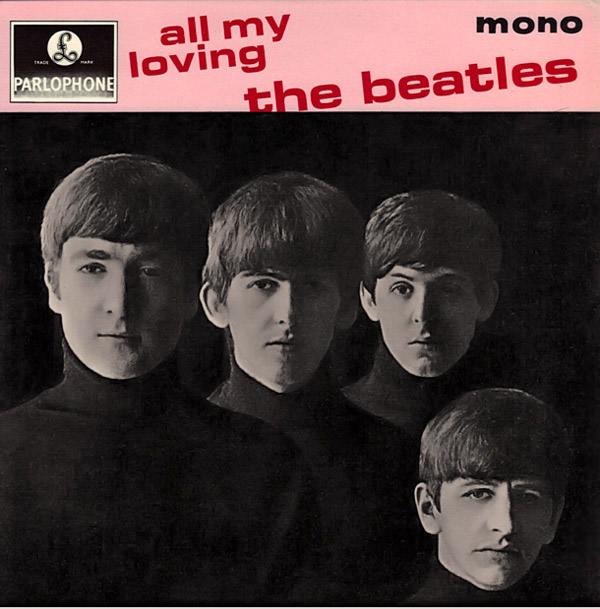
EP: All My Loving
Released: 7 February 1964

Side A:
All My Loving
Ask Me Why

Side B:
Money (That’s What I Want)
PS I Love You

This EP is for all intents and purposes a filler release (as most of their EPs were), using two tracks from each of their 1963 albums. “All My Loving” is definitely a song that should have been a single but wasn’t, though in EP form it made it to a respectable number 12 on that particular chart. The cover is a variation on the With the Beatles cover, adjusted to show a bit more of the darkened half of their faces, and a pinkish header up at the top to give it a bit of color. There’s not too much to be said about this release, other than that it did its intended job of keeping the band in the limelight.


* * *

Credit: Discogs.com

Credit: Discogs.com

Single: “Komm, Gib Mir Deine Hand”/”Sie Liebt Dich”
Released: 5 March 1964 [Germany]

This single, on the other hand, had to be one of the more interesting and esoteric releases the band had ever recorded. The West German branch of EMI Records had been hounding Brian and George Martin to get the boys to record in German, absolutely convinced that their music would not sell at all unless they sung in the vernacular. [By now, we understand that most of the suits at the record labels at this time were often “absolutely convinced” something would not sell, and were almost always proven wrong after the fact.] So on 29 January, in the middle of their long stay at the Olympia Theatre in Paris, they were shuttled over to the Pathé Marconi Studios to record two songs for Germany. Clearly they were not looking forward to this, and must have only done it simply as a thank you to the country that had helped establish them a few years previous. The end result was mixed; as always, they did their best and it went over well, but in the end it really made no difference on the charts. They would not record another song in a foreign language (at least not for this reason and to this extent) again.

Side 1: Komm, Gib Mir Deine Hand
First on the docket on that day was 11 vocal takes of “I Want to Hold Your Hand” in German. They’d used the backing tracks for the English version here, explaining why this version sounds so close to the original. The vocal delivery lacks a lot of the emotion of that original, but it’s worth noting that they did their best, considering they’d only had a day or so to learn the song phonetically from a German vocal coach.

Side 2: Sie Liebt Dich
This version of “She Loves You”, on the other hand, is quite interesting, in that it was a full recording, music and all. The original masters for that single had been destroyed by EMI (one of only a rare few that had suffered that fate due to old and outdated regulations at Abbey Road), they recorded a completely new version in fourteen takes. Unlike the reckless abandon of the original, this version seems a little tame. Having played it so many times live since its release, this version sounds tighter and smoother–it sounds more like the sleek professionalism of “All My Loving” at this point.

All told, the single did reasonably well, but it was a superfluous release. The single itself would show up as an import in the UK, and in the US, “Komm Gib Mir Deine Hand” would show up on the US-only Something New album while “Sie Liebt Dich” would be released by Swan, and eventually show up on the 1980 Rarities compilation. Both would be considered official canon and are now available on the Past Masters compilation.

* * *

Credit: jpgr.co.uk – The Beatles Complete UK Discography site

Credit: jpgr.co.uk – The Beatles Complete UK Discography site

Single: “Can’t Buy Me Love”/”You Can’t Do That”
Released: 20 March 1964

They had be come so efficient with their recording at this point, that not only did they end up cancelling a second day’s recording time for the above single, but they had time left over to record a new song. This time it was Paul’s new track, and one that would become the first single for their upcoming movie that they were about to start shooting at the start of March. Director Richard Lester had requested a few songs from them ahead of time to use within the movie (not so much as plot points but as scenes where they’re actually performing the song), and this was the first of many they wrote at the time. This was the first of an extremely small number of Beatles songs that were not recorded at Abbey Road, but as was often their habit, if they had a good idea, they didn’t want to waste time sitting on it until they returned back to their home base. While the b-side would be recorded a short time later at the end of February, this track became yet another turning point in their career.

[Note: As both of these would end up on the A Hard Day’s Night album, I will go into more musical detail in that entry; for now I will briefly go over the recording notes at this time.]

Side A: Can’t Buy Me Love
Paul’s blues-influenced rocker begins with a fantastic a capella entrance, just like the previous “All My Loving” and the countdown to “I Saw Her Standing There”–he knew how to pull the listener in right from the get-go. And like “She Loves You”, it starts off not with a verse or an introduction, but the chorus itself. It was also decided that, after previous versions that had the distinct Beatles harmony, they decided that a single-voice delivery worked even better. That was George Martin’s doing; it was another wonderful example of the producer hearing potential in a song, playing with the arrangement, and creating a newer and better track in the process.

Side B: You Can’t Do That
Another song written specifically for the upcoming movie, it’s a twelve-bar American blues-influenced track of John’s with a special nod to Wilson Pickett. Of special interest is the fascinating use of seventh chords in the rhythm guitar and the deep jealousy in the lyrics, both of which give the song a nasty edge. In another shake-up of the Beatles love song, he already has the girl, but she’s sneaking behind his back and he doesn’t trust her. This track was recorded at Abbey Road at the end of February, upon their return to the UK after their sojourn to the United States, and was very nearly part of the finished movie, only to be cut in the final edit. It ended up on the non-soundtrack side of the A Hard Day’s Night album in the UK, and on The Beatles’ Second Album in the US.


Considering how the rest of the year would play out for the band, this was probably the most understated and straightforward time of their career before worldwide Beatlemania kicked in. Though their touring schedule was intense, at this point they were not traveling nearly much as they had in the past few years–all told, in the first few months of the year they played a large number of dates at the same places, with no endless traveling in between–but that would change in the next half of the year, when their world tours began and their new movie hit the theaters.

Next up: the Long Tall Sally EP, A Hard Day’s Night, and making movies
Blogging the Beatles 14: The American Label View of Beatlemania, 1963-1964

There have been countless books, blogs, videos, documentaries and what-have-you about the start of Beatlemania, so I’ve decided to do a little something different here and focus not on the fans, but the business. Admittedly, it’s less of a thrill ride, but it’s equally as fascinating, considering the sheer number of Beatle-related titles that were released in the six months between that first Capitol single and their soundtrack for A Hard Day’s Night.

Officially, it wasn’t until the “I Want to Hold Your Hand”/”I Saw Her Standing There” single was released the day after Christmas in 1963 that Beatlemania finally kicked off in the United States. Just over a year after their debut Parlophone single in the UK (and just shy of two years after their “unofficial” recorded debut with the “My Bonnie” single), Capitol Records in the US finally realized they had a potential moneymaker on their hands and chose to jump to it. For varying reasons, however, they decided to retain some semblance of control and made their own decisions as to how they’d go about making that money. Like Elvis Presley and many other rock performers of the day, if they could get away with repackaging the same albums and singles in slightly altered formats, and especially if the young listeners out there kept buying them, then they saw no problems.

Backing up a little here, we should probably mention that the smaller independent labels were in fact trying to do what they could to release everything the band had recorded thus far. Vee Jay did in fact release the first few singles, “Please Please Me”/”Ask Me Why” and “From Me to You”/”Thank You Girl” on 25 February and 27 May 1963 respectively, though they didn’t really do much of anything on the charts. Brian Epstein had also made sure that he didn’t make the same mistake with Vee Jay and made sure any future singles or albums not released by Capitol were on a single-title basis. By the time “She Loves You”/”I’ll Get You” came out, it was instead given to the small Philadelphia label Swan Records. Swan managed to luck out here, as this was the single that kicked off the firestorm in the UK–they might have only owned one Beatles single (technically two, as they were able to also release the German-sung “Sie Liebt Dich” on 21 May 1964 as well), but by the time “I Want to Hold Your Hand” came out, “She Loves You” finally shot back up the charts (and eventually hit Number 1). That one single alone saved the label’s business for at least a few more years.

Vee Jay finally released their version of the American debut album under the name Introducing the Beatles, on 10 January 1964, ten days before Capitol released its “American debut” of the Beatles, Meet the Beatles. Sadly, Vee Jay’s story is a long one of legal troubles, both internal and external. They were an extremely small independent label with insignificant releases and very few big names; their company president Ewart Abner had spent a sizable portion of the label’s finances on gambling and personal debts; and by the middle of 1963, when they’d originally planned to release the album, they instead put it on hold when it seemed there was insufficient demand. However, by the end of 1963, they had a change of mind. Capitol had instead come out guns blazing, informing that they were going to release an all-out blitz campaign for the band. Vee Jay’s board of directors knew they had a full album on their hands, and given their current financial woes…was it worth tempting legal fate by releasing what they had and raking in as much money as they could? Evidently, yes–and multiple times throughout 1964:

–10 January: Introducing the Beatles album (Please Please Me minus “Please Please Me” and “Ask Me Why”)
–27 January: Introducing the Beatles album with a slightly different lineup (the two above songs replacing “Love Me Do” and “PS I Love You” due to Capitol’s first of many legal volleys to stop the label from releasing tracks multiple times)
–30 January: “Please Please Me”/”From Me to You” single
–26 February: Jolly What! The Beatles & Frank Ifield On Stage album: a shameless compilation of Ifield studio tracks (he was a country singer with minor hits in the UK) with both sides of the “Please Please Me” and “From Me to You” singles sprinkled throughout.  No tracks at all were in fact “on stage.”  The label would also reissue this album later in the year with a different cover.
–2 March: “Twist and Shout”/”There’s a Place” (under the subsidiary Vee Jay label “Tollie”)
–23 March: “Do You Want to Know a Secret”/”Thank You Girl” single
–23 March–Souvenir of their Visit to America EP (“Misery”/”A Taste of Honey”/”Ask Me Why”/”Anna (Go to Him)”)
–27 April: “Love Me Do”/”PS I Love You” (on subsidiary Tollie)
–10 August: reissues of the “Do You Want to Know a Secret”, “Please Please Me”, “Love Me Do” and “Twist and Shout” singles under their “Oldies 45” subsidiary label
–September: Hear the Beatles Tell All interview album (interestingly, Capitol had no legal rights to this one)
–1 October: The Beatles vs the Four Seasons album: the Introducing… album, packaged with a recent Four Seasons’ hits album Vee Jay had released
–12 October: Songs, Pictures and Stories of the Fabulous Beatles album–the same Introducing… album under a different name and cover.

Amazing how one label could stretch one album’s worth of songs into four albums, four singles, an EP, four reissued singles, and two reissued albums, all within the space of ten months. Certainly, the label had absolutely no shame in wanting to scare up as much money as they could while they still had hold on the fourteen songs. A small section of the public was willing to spend that money on the same album multiple times, but by the end of the year, those later titles sank without a trace quickly. On 15 October 1964, all legal battles between Vee Jay and Capitol put to rest, all the masters on Vee Jay reverted to Capitol…

…who would then release their own version of these same songs on 22 March 1965 as The Early Beatles. This was most likely more out of completeness’ sake than anything else, just so they could say they released every Beatles song on Capitol. By that time they had also taken ownership of the “She Loves You” single that Swan so briefly owned, placing it on The Beatles’ Second Album on 10 April 1964.  It was repackaging taken to ridiculous extremes…but if anything, The Early Beatles remains the official release in the US Beatles canon.

***

The repackaging of Beatles albums went on for a few more years, up until Revolver in late 1966. For some reasons it made sense, at least to the labels–while a fourteen-track album was not anything surprising in Britain, in the US that was considered a relatively long album, and most of them were cut down from fourteen to ten or eleven tracks. These extra songs would pile up alongside new songs and singles that were popping up in the UK. Capitol made good with these by creating US-only releases that did not have any UK analogue. There was also the fact that both A Hard Day’s Night and Help! were released in the US as full soundtracks–instead of releasing half-soundtracks like in the UK (side one was the soundtrack, side two was non-movie songs), the US versions contained the scores instead.

But consider this: in the space of two years, Capitol was almost as bad as Vee Jay, splitting seven UK albums and various singles across eleven US albums and singles.

Meet the Beatles! (20 January 1964) took half the tracks (and the cover) of With the Beatles alongside various single sides.
The Beatles’ Second Album (10 April 1964) took the other half, plus more single sides and half of the Long Tall Sally EP.
–The EP Four by the Beatles (11 May 1964) featured songs from Second Album.
A Hard Day’s Night (26 June 1964, released on United Artists Records) featured the movie’s songs plus the score.
Something New (20 July 1964) took the non-soundtrack songs from A Hard Day’s Night, the other two Long Tall Sally EP tracks, and “Komm Gib Mir Deine Hand”.
–“And I Love Her”/”If I Fell” and “I’ll Cry Instead”/”I’m Happy Just to Dance with You”, both US-only singles from A Hard Day’s Night (also released on 20 July)
–“Matchbox”/”Slow Down” single (24 August 1964), originally half of the Long Tall Sally EP
Beatles 65 (15 December 1964) contained all but four tracks from Beatles for Sale, one leftover from A Hard Day’s Night, and the “I Feel Fine”/”She’s a Woman” single.
–The second and last Capitol EP, 4-By the Beatles (1 February 1965), featured tracks from Beatles 65.
–“Eight Days a Week”/”I Don’t Want to Spoil the Party” (5 February 1965), two tracks from Beatles for Sale
Beatles VI (14 June 1965) contained the remaining Beatles for Sale tracks, plus various single sides and “Bad Boy”–the one Beatles song specifically recorded for the American release.
Help! (13 August 1965) featured the movie’s songs plus the score.
–“Yesterday”/”Act Naturally” (13 September 1965) from the UK Help! album, a US-only single that would become one of their best-selling songs.
–“Nowhere Man”/”What Goes On” (21 February 1966) from Rubber Soul, a US-only single and a radio favorite.
Yesterday…and Today (20 June 1966) was the last of them, which featured leftovers from the non-soundtrack side of Help!, various singles and tracks missing from the US versions of Rubber Soul (16 December 1965) and Revolver (8 August 1966).

By that time, the Beatles had had enough of Capitol butchering their albums (and yes, this is precisely why Yesterday and Today had the infamous butcher sleeve that it did when it was first released) and made sure that future releases would not suffer the same fate. Thankfully, no more Beatles albums would be torn apart this way in the name of making money off of new albums every three months, with only one album (Hey Jude on 26 February 1970, a compilation of singles sides) being the exception. Capitol relented, having realized that their relentless publicity had paid off in spades. They were one of the label’s biggest-selling bands, their name big enough that they could release anything at this point and it would sell.

***

Most of these label shenanigans were not watched by the band themselves, of course. They paid attention to their own UK releases, but when it came time to the US, they found they couldn’t even begin to make heads or tails of it. John Lennon was known to introduce a song when they played live by saying something along the lines of “here’s a song that’s from our new album…record…single…I think.” Many of the releases were even remixed differently–the most interesting difference being on Beatles 65, which for some reason was drenched in reverb, giving songs, especially “I Feel Fine” and “She’s a Woman”, an extremely heavy echo. While the real masters had been mixed and maybe occasionally touched up by George Martin himself, Capitol had been the culprit behind these not-quite-professional tweaks. You can hear them on the two box sets that came out in 2003-4, The Capitol Albums Volumes 1 and 2 (which is also the only place you can find the US version of Help! with the score intact). The members of the band have often stated they weren’t exactly happy with these remixes, let alone the mangling of the albums themselves, but despite all that, the American releases did their job, and did it well. The constant issuing of new material alongside previously released tracks had kept the band in the sights of the US throughout the first half of the sixties, helping them define an era in American rock and roll.

Sometimes you just need to rock out.

Those of you who know me and my musical tastes, I tend to veer more towards the atmospheric. Anything drenched in reverb and gives off a dreamlike quality I tend to enjoy, thus my love for Cocteau Twins, MBV, all things shoegaze. I also tend to like a lot of 90s Britpop, and of course anything that sounds vaguely similar to the 80s college rock I love so much. I also love a good selection of different kinds of techno/electronica/etc, from Lamb and Hooverphonic to Massive Attack and Tricky. It’s not always mellow, but it certainly has a “body” to it–a spirit that instills a sense of space and place. I feel like I’ve gone somewhere with this music.

Then there’s the other side of my tastes…the complete opposite. Sometimes I’m in the mood for something loud, something filled with ear-bleeding guitar and gut-punching bass and lozenge-needing screams. Pixies and Ministry did that to me, back in ’88. It’s not atmospheric, instead it’s got a thick wall of sound beating down on you, threatening to pick you up off your feet and send you spiraling, just like that scene in Back to the Future. There’s tracks out there where I swear I can feel the force of the track pushing at me like a strong wind beating against my face.

Believe me, I’m not the biggest fan of alternative metal. It rose to power in the late 90s, and for awhile it pretty much took over the playlists of all the alternative rock stations around 1997-99. The first wave of mainstream alt.rock had subsided around then, finding itself a comfy spot on the Adult Alternative stations instead, and the mainstream stations at that time picked up on the dance pop of NSYNC, Backstreet Boys, and Spice Girls. Alternative stations had to do something to remain relevant, so they Turned Up the RAWK. Say hello to Tool, Deftones, Korn, Staind, POD, and even the rap metal of Limp Bizkit (hey, don’t get me wrong–their lyrics may have been stupid, but their guitarists kicked ass).

I was working at HMV when these bands hit, and I was also listening to a lot of WFNX at the time, so it’s not as if I could avoid them. I didn’t hate the sound, but at the time it really wasn’t me. I was still listening to mainstream alternative, the last breaths of Britpop, and the occasional new-agey compilation…it was just my mindset at the time, and the mood I was in, especially when I was writing. While WFNX played “Change (in the House of Flies)”, I was listening to “The Boy with the Arab Strap”…definitely opposite ends of the spectrum there. I would sometimes jokingly call this stuff “meathead rock” because it was a new generation of metal, only this time without the progressive rock pretense.

It wasn’t until probably 2001 or 2002 when I started getting it–I was in a different mindset then, much further along in purging my own personal demons from the 90s, so this music wasn’t bringing me down or rubbing me the wrong way anymore…it was time to rock out. I was getting deeply into POD’s Satellite, Porcupine Tree’s In Absentia (they’d mastered a prog/metal hybrid by that album), and Deftones’ 2003 self-titled at this time. I started to appreciate that it wasn’t just about the heaviness and the volume…like the calmer music I listen to, a lot of alternative metal has its own soul–starker, angrier, and more eager to show its talons, but underneath all the rage, there’s some absolutely stunning melodies going on.

In tandem with that, I was doing a lot of musical catch-up. Despite working at a record store for close to four years, I needed to rediscover a lot of bands that I’d left by the wayside, or hadn’t gotten around to listening to. When I wasn’t buying new releases at Newbury Comics, I was checking out the used and discount bins of various stores (including Newbury) and beefing up my back catalogue with all kinds of stuff. I’m still doing a bit of catch-up, really…just today I found a sweet deal on Amazon and downloaded a handful of early Deftones albums I didn’t already have, and I’m still wondering why I never got into them earlier. Their sound is so melodic and tight, and for years all I heard was the tchug-tchug-tchuggatchug of drop-tuned and heavily distorted guitars. Now I can hear the soul behind it, the dedication to the songwriting, the emotions spilling out, and it’s lovely. Take a listen to Deftones’ “Minerva” for a great example:

I’m well aware there’s louder, dirtier, angrier music out there for those who are into that kind of thing, and I’ve come to appreciate that stuff as well. It’s not anything I’d listen to while doing other things, especially writing (which is when I do most of my music listening), but I get where it’s coming from. Sometimes you need to relax with something soothing…and sometimes you just need to rock out.

Gonna drive past the Stop n’ Shop with the radio on

I usually don’t offer news links here at Walk in Silence, and I never post a link when there might be a slight political dig involved.  This is not what WiS is about at all.

That being said, one of my online friends offered the following story link:

http://www.myfoxboston.com/video?clipId=8418846&autostart=true

I’ll skip the obvious “Fox News” jokes here, thank you.

The short version is that there’s an recent push by State House Representative Marty Walsh to have The Modern Lovers’ “Roadrunner” be the official state rock song of Massachusetts, and Senator Elizabeth Warren is fully behind it.  Hey, why not?  It’s a great song–simple and a little odd, but then again, so is the state I grew up in.  And besides…Oklahoma has The Flaming Lips’ “Do You Realize??” as their official state rock song, so it’s not as if we’re creating a precedent for weirdness here.  And anyone who grew up in the Bay State in the 70s and 80s knows this song well, and knows exactly what Jonathan Richman is singing about when he talks about driving up 128 past the suburban trees and the Stop and Shop.  The state also has a deep and rich history in radio (read Donna Halper’s “Boston Radio 1920-2010” for an interesting and quick history lesson there), so it’s also a love song to all the great radio stations past and present.

That said, it’s kind of jarring when you watch that Fox25 News fluff piece and hear the voice of the flat-topped announcer saying “This song SUCKS!” less than a minute in (and right after the announcer willingly admits he doesn’t know the song and doesn’t think it has much to do with the state at all).  Then they let Flat-Top riff on what he thinks is a better song, to which he suggests Boston’s “Smokin'” from their eponymous ’76 debut. A generic party song (and definitely a “Bro” song at that) that has little to do at all with the state, other than the band’s name. The rest of the report is pretty much filler as the others suggest songs very stereotypical of their on-air personas (the token dweeb picks Marky Mark’s “Good Vibrations”, the token female chooses some mellow “come to Boston” song, the main announcer/token straight man suggests a different Boston song that at least mentions Hyannis).

See a theme here?  All Boston-themed.

You know that famous New Yorker strip, right?  The drawing with Manhattan in the foreground and all these random unimportant locations off in the distance, placed randomly in otherwise blank space.  Boston media has frequently done the same, to be honest…there’s a long-running joke that most Bay Area politicians don’t know what’s beyond the 128 or 495 highway belt other than trees and maybe Worcester or Springfield…and most Bostonians are unaware that their drinking water comes from the Quabbin Reservoir, a manmade watershed way out in the middle of the state that took place of four small towns.  When it comes to music, most people think all Massachusetts bands (or at least the famous ones, anyway) come from Boston or one of its close suburbs.  And pretty much every show that I’ve ever seen at Comcast Center (aka Great Woods, back in my day) in Mansfield–which is much closer to Rhode Island than it is to Beantown–every band revs up the crowd with “Good evening Boston!!!”  Mind you, I’m not complaining, as the rest of the state has pretty much grown accustomed to it.

This story made me think of a few things, really…

On one level, I was forcibly hurled back to 1987, when I was a sophomore in high school and discovering all kinds of great new music on this crazy thing called college radio.  My biggest obsession of the time was the Cure, who’d just put out their double album Kiss Me Kiss Me Kiss Me earlier that year.  I’d gone to see them live at the Worcester Centrum and bought a great tee-shirt that I wore until it was threadbare.  Hearing Flat-Top bark out “this song sucks!” in this piece brought me right back to those days when the popular kids in my class mocked me for listening to unpopular crap.  Mind you, that hardly bothers me now, but the context of the piece just rubbed me the wrong way.  These announcers had written off the song right off the bat, most likely due to Jonathan Richman’s warbly singing and the one-chord playing, but more than likely due to it not being a world-famous song.  Irreverence has been the normal frame of mind for media’s “Morning Teams” both on radio and TV for quite some time, so I’m sure the plan had been “let’s make fun of the weird song” from the beginning.  Still…it was jarring to hear something like that after all this time.  I haven’t had a jock diss my favorite music for at least two decades!

On another level, I also started thinking, what other songs out there would be indicative of Massachusetts?  There are place-centric songs out there of course: The Standells’ “Dirty Water”, Pixies’ “U-Mass”, about half the songs from Boston’s debut, The Get Up Kids’ “Mass Pike”, The Mighty Mighty Bosstones’ “I Want My City Back”, and so on.  But I think that’s where the TV people had it wrong–they were focusing not just on Boston-centric songs, but also songs that mention a specific area.  What they needed to do, if they wanted to do their homework and perhaps extend this fluff piece into something more substantial (haha! yes, I know that’ll never happen), is to find songs by bands from the state that would say “this is what Massachusetts is about.”  It doesn’t have to say anything lyrically, it just has to represent the state somehow.  Oklahoma picked the Flaming Lips song not because of the lyrics, but because they are one of the most famous bands from that state.

And that is why I think “Roadrunner” is actually the perfect song suggestion: it’s a love song to the state.  It’s not about rocking out or getting by or trying to get the girl or anything…it’s simply about driving up 128 just outside the metro limits at some ungodly hour of the morning, rocking out to the radio.  It’s not about the commute or the drive, either…it’s about just being there, being in the state, and loving the fact that you’re there.

Blogging the Beatles 11/12/13: ‘I Want to Hold Your Hand’/’This Boy’ single, The Beatles Christmas Record, and ‘I Want to Hold Your Hand’/’I Saw Her Standing There’ single

Credit: jpgr.co.uk – The Beatles Complete UK Discography site

Credit: jpgr.co.uk – The Beatles Complete UK Discography site

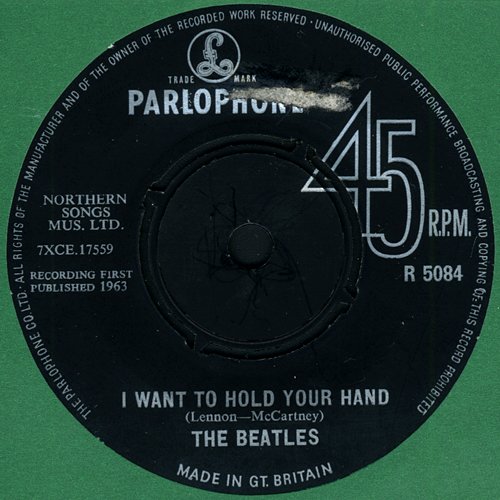
Single: “I Want to Hold Your Hand”/”This Boy”
Released: 29 November 1963

By late Autumn 1963, John and Paul’s musical output was in full swing with no sign of slowing down at all. This was the sign of two writers who were lucky enough to work on what they did and loved all day long; they were also smart and attentive enough to understand that to be a strong musician and performer, they couldn’t do it half-assed. Even if the songs missed their mark and the end result wasn’t exactly what they’d wanted or planned on, they knew enough not to release something they’d be ashamed of later on. [John, however, would later be his own harshest critic in this respect and dismissed a lot of his own earlier work, even if the songs were strong.] They were a band made up of obsessed music lovers who had a bead on what sounds they loved and what sounded right to them, and had the dedication to focus on that in their own work.

In addition to this, near the end of their studio work on With the Beatles, they were given an extremely wonderful gift–four-track recording at Abbey Road, which gave them even more of an aural playground to work in than before. Their previous work had all been on two-track recording consoles which gave them an extremely limited amount of aural space to work with. Nearly all of their songs so far had been recorded with the full band playing and singing, with just the occasional overdub [which was recorded straight onto the master, meaning they’d damn well better get it right the first time!] and rarely a double-tracked vocal. This worked just fine for the band, but it left their sound just a tiny bit flat; they were itching to break that barrier like they very nearly did with “She Loves You”, attempting to capture not just the song but the emotion behind it. Expanding to four-track gave them two more tracks to play with–they could overdub, expand the sound, let it breathe like they’d wanted it to.

Of course, back then it didn’t make all that much difference to the listener; at that point in time, the kids in Britain were still listening to the BBC on handheld radios with single speakers or on the radio at home. AM radio was (and still is) monaural, and the prevalence of FM stereo radio was still quite a few years in the future. For the most part, most listeners actually preferred a well-produced mono recording over stereo, because it translated a lot better on their single-speaker radios. [This is also why the band’s discography has separate and unique mono and stereo mixes from their beginning all the way up to early 1969, and why there are slight differences in each. I’ll go into this later in the series.]

So on 17 October, they christened their four-track recording career with a new single that would change the game entirely.

Side A: “I Want to Hold Your Hand”
Their next single was written in the music study basement of the Asher residence in Wimpole Street, London–Paul was going out with daughter and well known London actress Jane Asher at the time, and they’d also become good friends with her brother Peter (one half of Peter & Gordon, whom John and Paul wrote a few songs for). It was a truly co-written song, “written eyeball to eyeball” as John would later put it, on the Asher’s piano. On the surface, and to many critics who didn’t quite get it, this track was yet another Beatles love song, same as all their others. What made it different, and what pricked the ears of quite a few fans, not to mention other musicians, was the innovative chord changes they were using. Unlike earlier songs influenced by American pop and blues, they were expanding out into complex melodies.

The home chord here is G, giving it a high, happy sound. The path the verse takes is almost literary: G-D-Em-B. The phrase takes us on a miniature journey of home-travel-conflict-return. Laid on top of that are lyrics of wanting–the narrator is attempting to ask out a girl he really enjoys being with. The following chorus is relatively simple and positive: C-D-G-Em, the Em used less as a conflict and more as a way to come back around to the positive A for the repeat, and then to the positive G to end the phrase.

We of course have the band’s trademark of a twice-used bridge, and I really enjoy what goes on here aurally. The simple progression of Dm-G-C-Am once is very similar to any other of their bridges; it’s then followed by Dm-G-C, and a final triple-repeat of C-D–you’re expecting a repeat of that first phrase, only the ending has been changed, and the excitement and anticipation builds up to return to the main verse again. But that’s not all…if you’ve noticed, Ringo has been playing his high-hat cymbals very loosely throughout the track, which fills up a lot of the background with white noise. It’s not until this bridge that he closes that high-hat and the cymbals are short and crisp, and that the song suddenly grows quieter. Added to that, lyrically this is where the narrator temporarily stops his pleas and dwells on just how happy the girl makes him; where the main lyrics are dialogue, the bridge is a reverie.

If your ears and brain aren’t trained or used to listening to things like this, this track is a relatively simple one, another love song made to order. But for the kids scrambling for something new, and for the musicians with the ear for it, this track completely blew them away. There were at least a million advance sales for it in the UK, even before anyone had heard it (mainly due to the popularity of their recent singles and albums), and considering the reaction when it finally dropped, it would only send them even higher into the musical stratosphere. In a way, it would also create a future goal, albeit a sometimes frustrating one for them–the song had gone past their fans’ expectations to the point that they now expected that to happen on a consistent basis. It pushed them ever further creatively, but it could also stifle and frustrate them. Tempering that balance would be a trick, but they felt they were up for it.

Side B: “This Boy”
A fascinating B-side, so much so that one wonders why they squandered such an excellent track. This was another of John’s attempts at writing a song similar to Motown doo-wop, like Smokey Robinson’s “I’ve Been Good to You”–the I-VI-II-V musical phrase that was so prevalent in many of those torch songs from the fifties and early sixties. What sets it apart, just like its A side, is what they do with it. Lyrically, it’s a change-up from the sad love song: this time it’s the narrator saying “he’s no good for you, take me back instead.” Vocally it’s absolutely gorgeous: John, Paul and George, who were naturals at three-part harmony, deliver the verses quietly and breathily, adding an extra level to the lyrics. It might be a wish for the girl to return to him, but he’s not expecting much. At least not until the middle eight, where John lets it all out in a double-tracked vocal, an incredibly strong and loud “I’m on my knees here” plea. The bridge is also fascinating in its own right, with a descending chord phrase filled with sevenths (G-F#7-Bm-D7, G-E7-A-A7) while John’s vocal line ascends. It’s a lovely piece, and one that was later recorded by George Martin with an orchestra for Ringo’s solo scene in their upcoming movie A Hard Day’s Night.

* * *

Credit: jpgr.co.uk – The Beatles Complete UK Discography site

Credit: jpgr.co.uk – The Beatles Complete UK Discography site

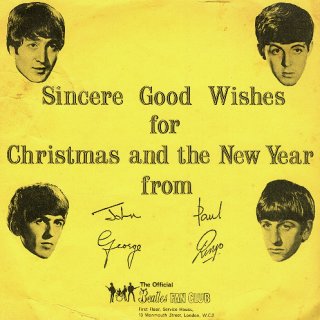
Single: “The Beatles’ Christmas Record”
Released to the Beatles’ Official Fan Club: 6 December 1963

“The Beatles’ Christmas Record” was recorded on the same day as the above tracks, a short five minute track of semi-scripted silliness as a personal thanks to the members of their fan club. You can distinctly hear each member’s unique sense of humor here, even when having to read a scripted “thanks to everyone, it’s been a great year, etc.”: John’s deft wordplay (“Merry Christmas” as “Gary Crimble”), Paul’s smarminess (we love you, but please stop sending the jelly babies!), Ringo’s lovable straight man (I was the last to join, but I’ve been in other bands…), and George’s cleverly snide remarks (“Thank you Ringo! We’ll phone you!”). Each even gets to sing their own interpretation of “Good King Wenceslas”.

This recording and the Christmas messages that followed were never released as part of the official discography, only to the fan club members, and thus were relatively hard to find for quite some time. You may be able to find the original 1970 compilations (the UK From Then to You or the US The Beatles Christmas Album) on specialty vinyl stores, or you can find them on oft-bootlegged collections, but they’ve never been rereleased in their original flexidisc form.

* * *

Meanwhile, over in the United States…

Credit: jpgr.co.uk – The Beatles Complete UK Discography site

Credit: Wikipedia

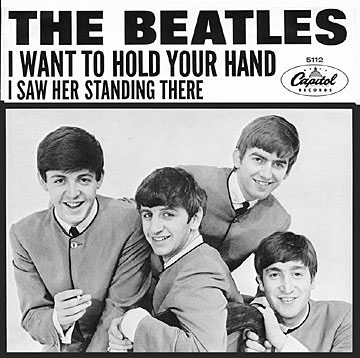
Single: “I Want to Hold Your Hand”/”I Saw Her Standing There”
Released in the US: 26 December 1963

…Capitol Records finally gets on board. And only after much wrangling from EMI and Brian Epstein, a few renegade DJs who’d gotten a hold of the UK single weeks earlier, and many teenage fans telling their local radio stations to play the band already. To be honest, they’d been half-heartedly planning on releasing this particular single sometime in early January of 1964, to coincide with their scheduled performance on The Ed Sullivan Show, but one gets the feeling they hadn’t really put too much heart into it. Instead of the original single, they created their own by switching “This Boy” with the then non-single “I Saw Her Standing There” from Please Please Me. That itself is interesting, considering that track was at that moment about to be released by Vee-Jay Records on the long-delayed Introducing the Beatles. Nonetheless, the switch paid off, as both songs ended up being powerhouse hits. Given the overwhelmingly positive radio response, Capitol moved up the release to just after Christmas.

The outcome was instantaneous. It sold a quarter million copies within the first few days, and eventually sold up to five million. It hit number one in early February, only to be eventually knocked off the spot by none other than their previous UK number one hit, “She Loves You”, and soon the charts would be filled with multiple Beatle hits. The floodgates were opened, and Beatlemania had begun. But not just Beatlemania…it also triggered a “British Invasion” of UK pop songs entering the US charts and hitting high numbers, from the Hollies to the Kinks to the Dave Clark Five.

In retrospect, the time had been ripe for a musical revolution, one that tends to happen every decade or so. It’s fascinating to watch and predict once you know what to look for, and this had all of it. By late 1963 the country was in a troubling state…they’d just suffered a terrible blow due to the assassination of President Kennedy; racism and segregation in the South had become ever-rising hot button issues; other world events such as the Cuban Missle Crisis and unrest in France were still on the minds of the country. The mood of popular music had changed to mirror life: Elvis had returned from the Army, but his once-rebellious rock now sounded dated, and he’d just started a decade-long run of making lightweight movies with uninspiring soundtracks; other big names had fallen from the limelight either due to not changing their sound (Jerry Lee Lewis) or personal issues (Chuck Berry, who’d spent a year or so in jail) or death (Buddy Holly, a few years earlier); still other popular artists (Andy Williams, Frank Sinatra) were liked by the older generation but left younger fans wanting. At the same time, various subgenres of new music were gaining ground in localized areas: the southern California surf sound of the Beach Boys, the Detroit grooves of Motown, the southern gospel blues of Johnny Cash. New sounds were brewing just underneath the surface, maybe even popping up on local charts, sounds that the younger generation wanted and desperately needed, and it was only a matter of time before all hell broke loose.

The rise of Beatlemania and the British Invasion of the sixties was the catalyst for all that–perhaps just as Nirvana was for the Seattle sound, thirty years later.  A new generation of music would rise with the changing times, only this time it was rock music.

Next up: Introducing the Beatles, Meet the Beatles, and many singles: the US catches up (sort of)

Blogging the Beatles 8/9/10: The Beatles’ Hits and The Beatles No 1 EPs, and With the Beatles

Credit: jpgr.co.uk – The Beatles Complete UK Discography site

Credit: jpgr.co.uk – The Beatles Complete UK Discography site

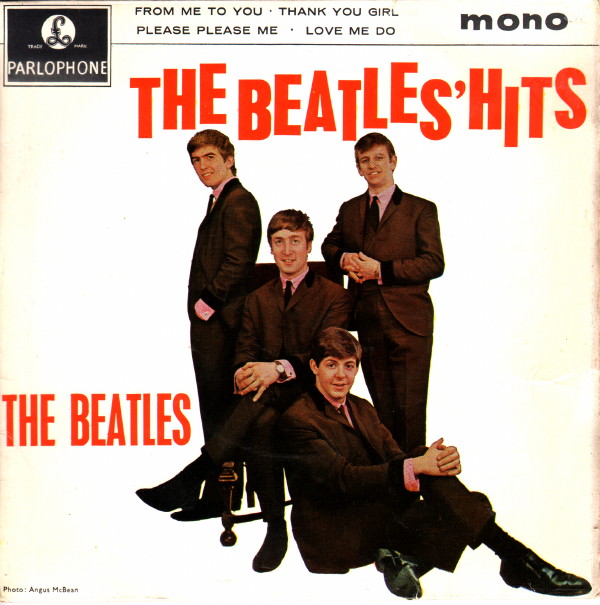
EP: The Beatles’ Hits
Released: 6 September 1963

Side A:
From Me To You
Thank You Girl

Side B
Please Please Me
Love Me Do

*******

Credit: jpgr.co.uk – The Beatles Complete UK Discography site

Credit: jpgr.co.uk – The Beatles Complete UK Discography site

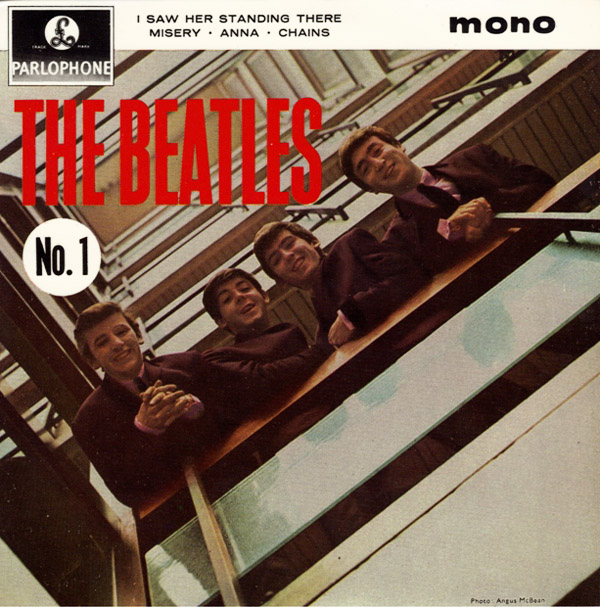
EP: The Beatles No 1
Released: 1 November 1963

Side A
I Saw Her Standing There
Misery

Side B
Anna (Go to Him)
Chains

The usual lifespan of a single is about two months, from release to charting to fade from public view. Back then as now, it would take a week or two for it to ascend the charts until it either stalled or hit Number One, and start its descent back down again. There’s the occasional rarity of a single so popular it stays on the charts for an extremely long time, or the even rarer single that rises, drops, then rises again. The Beatles’ releases would experience all of these during their tenure, and part of it was due to the shrewd planning of Brian Epstein. Having been a keen record store manager who could read the pulse of listeners and purchasers, he and George Martin understood that to keep your prized band in the limelight,
one had to have something new and fresh (or at least something in a different package!) in the shops every couple of months or so. This was standard practice back then, but Epstein and Martin followed it so thoroughly that it was considered shocking when the band finally took some time off in 1966 and their fourth quarter release was a greatest hits package instead.

These two EPs were nothing more than yet another repackaging of tracks from the Please Please Me album and are not worth going into too much detail here. Both covers were shot by Angus McBean–the second EP is an outtake from the debut album’s cover session–and the band’s erstwhile press officer Tony Barrow wrote some rather amusing fluff for the rear covers, as he would for the first three albums. The first one was packaged as some of the best songs “in the Lennon-McCartney Songbook”, a sort of sampler for those who hadn’t quite caught on yet. The second EP is a little stranger in packaging, as it looks as if Parlophone had come up with and soon aborted the idea of rereleasing the album in EP form of four songs each. This second EP is simply the first four tracks from the album.

Despite these two releases having nothing new at all, they did surprisingly well on the charts and in sales. Unlike the shameless repackaging-as-completely-new VeeJay releases in the States, Parlophone all but stated these were songs you already had, just in a new, collectible form.

In the meantime, the boys had spent their summer working on a second album, all while still touring locally.

*********************

Credit: jpgr.co.uk – The Beatles Complete UK Discography site

Credit: jpgr.co.uk – The Beatles Complete UK Discography site

Album: With the Beatles
Released: 22 November 1963

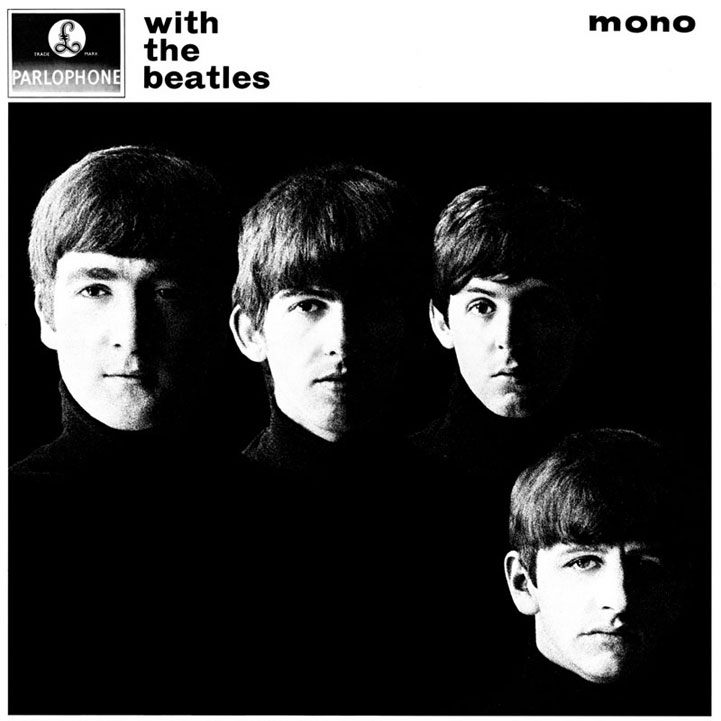
The Beatles released their second album exactly nine months after their first album, and though they were recorded just a few months apart, you can hear (and see!) just how much the band had matured in an amazingly short amount of time. The cover was taken by fashion photographer Robert Freeman, shot in a darkened hallway at the Palace Court Hotel in Bournemouth (the natural light source was a window at the end of the hall), who captured a slightly older, harder, more serious band. Even the artwork is reserved, the title in a small lowercase font.

Unlike the insanity of the first album’s recording in one marathon session, they spent a few weeks here and there in July and September working on the follow-up at Abbey Road, in between their never-ending tour schedule. While Please Please Me emulated the sound of the band’s live shows, this second album showcased their impressive songwriting chops in action. Six of the songs are covers–considering their meteoric rise to fame, it only made sense to continue with well-rehearsed covers from their live shows rather than rushing the songwriting–but once again their covers are of their personal favorites, Motown tracks, obscure American singles, and a song from a musical.

Side A

Track 1: It Won’t Be Long
One would expect an album’s first track to start out with a bit of melody or a countdown, some kind of introduction, yes? Not this one. Right out of the gate, we’ve got John belting out the chorus of this fantastic rocker, the first song written specifically for this album. Right away we hear two things: a deft call/response with the “yeahs” (perhaps a nod to their previous single, which they had just recorded), and John’s love of wordplay: It won’t be long ’til I belong to you. After the chorus we have a simple E-C-E verse, followed up with something quite interesting, a middle-eight filled with chromatically descending chords. You wouldn’t hear that in a rock and roll song. There are also little tricks hiding in the song, such as using only one measure instead of an expected two between the two verse lines. Listening to this alongside “She Loves You”, it’s quite surprising to hear how vastly different they are, even though they were written and recorded just a month apart. Even then they must have understood the sonic and melodic differences between a song destined for a single and a song destined for an album.

Track 2: All I’ve Got to Do
John follows up with a Smokey Robinson-styled original, and there’s something quite original going on here right at the beginning that you might not notice: an open chord, played not by a guitar, but by Paul on his bass, apparently the first rock song to ever to do that. There’s also the fact that, taking the lyrics in a historical sense, boys in the UK actually didn’t call girls on the phone! That was purely an American thing back then; it was still rare for kids in the UK to call lovers and friends (instead they would stop by their houses or meet up a predetermined destination). John stated this track was pretty much written for the American market on those two points alone.

Track 3: All My Loving
This fabulous number by Paul was written just weeks after “She Loves You”, and is quite possibly one of his first big hits. This track was never released as a single in the UK, but despite that it received so much airplay that EMI released it a few months later on an EP. Everyone supplies some fantastic playing here…Paul sings the wonderful melody while playing a descending/ascending bass line throughout. John supplies some impressive rhythm guitar work here, frantically strumming triplets to give it a bouncy, rollicking sound. George’s lead fills are very close to that of his country fingerpicking heroes like Chet Atkins. And Ringo’s drumming here is solid, echoing John’s triplets with his fills.

Track 4: Don’t Bother Me
George makes his official songwriting debut, and he doesn’t pull any punches at all. Written while he was recuperating from an illness while the band were playing in Bournemouth (at the same hotel the cover was taken, some time in late August), this song had started out as an exercise to see if he could, in fact, write a song for the band. Right away you can hear George’s penchant for uncommon chord changes, in this case the main melody of B-A-G-Em. It’s almost got a Link Wray feel, a “dirty blues” sound rather than a pop-infused melody like John and Paul knew so well. It’s also the band’s first song with a less-than-happy feel to it. He wants the girl back, but in the meantime, leave him alone to deal with it himself.

Track 5: Little Child
John readily admitted this was a filler song. It’s not one of their strongest or most creative; it’s a typical I-IV-V blues rock song with blatant throwaway lyrics. They at least did their best by turning it into a decent rocking jam, complete with some spirited harmonica playing by John.

Track 6: Till There Was You
The only Beatles cover of a song from a Broadway musical. Paul was familiar with Peggy Lee’s 1961 version of this song from The Music Man, which the band played frequently during its 1962 Hamburg run. One of four covers recorded during the first With the Beatles session on 18 July and redone and finished on the 30th, it’s a quiet and pretty little number very similar to Lee’s. Everyone plays very quietly, from George’s delicate fingerpicking and John’s muted chord strumming to Ringo’s soft percussion.

Track 7: Please Mister Postman
After the previous track’s quietness, they bounce back with another cover, this time of the debut single by Motown singers The Marvelettes. Similar to “It Won’t Be Long”, there’s no intro here, it just jumps right in with a howling “Wait!” from John, Paul and George. Also recorded on 30 July, this track definitely sounds like they had a hell of a lot of fun recording this one, even if it wasn’t their best work. It sounds like the band recording the song for their own enjoyment rather than the listener.

Side Two:

Track 1: Roll Over Beethoven
George gets a second lead performance here, this time with a great cover of the classic Chuck Berry tune. A holdover from the earliest days of the band, they loved playing this track so much they kept it in their live repertoire up until 1964. It was always George’s showcase song, not just with the great opening riff and guitar work, but as a singer. You can hear the conviction in his voice here.

Track 2: Hold Me Tight
Both John and Paul thought very little of this track, though I personally find it one of their more melodic tracks on this album. This was one of their early songs, written sometime around 1961 and attempted during the Please Please Me session, and used as another filler track here. It’s a party song more than anything else, one to get the crowds up on the dance floor, where the audience’s focus is more on having a good time rather than listening closely to the song. There’s also Paul’s incredibly shaky vocal delivery–he’s all over the place on this one, like he never quite figured out how to sing it. Despite all that, it’s got some great bits like the descending chords of the chorus. It’s definitely a throwaway, but it’s a good throwaway, probably better than “Little Child.”

Track 3: You Really Got a Hold on Me
After that diversion, we come back to another excellent cover song, this time of the great Smokey Robinson & the Miracles track. John and George share vocal duties here, and they do a wonderful job delivering the goods. It obviously pales to the soulful original, but for an up and coming British band to cover a hit song released only a year previous, they do far better than one would expect. This was the first track recorded for this album, back on 18 July, so you can still hear the afterglow of their recent live performances here.

Track 4: I Wanna Be Your Man
This goofy little party track was perfect for Ringo to sing–it’s got ridiculously simple lyrics, the music isn’t all that adventurous, and there’s a lot of amusing hooting and hollering from the other guys going on during the break. It’s not a song to take all that seriously! It’s definitely a step up from “Boys” from the previous album, and it’s a hell of a lot of fun. The band handed this track to The Rolling Stones for one of their earliest single releases, even though they made a right hash of it (as only they could and get away with it!).

Track 5: Devil in Her Heart
Talk about obscure covers! George pulled out this single by The Donays, released late in 1962 in the UK which didn’t go anywhere on the charts. He did the pronoun switcheroo from “his” to “her” and the end result is quite excellent, bypassing the original and giving it a new life. His vocals here are strong and much more confident than his previous songs. Ringo executes some excellent drumming here, playing with force and conviction. One would be convinced this was an actual Lennon/McCartney composition, they pull it off so well.

Track 6: Not a Second Time
This quite a fascinating track of John’s, as there’s some really adventurous chord changes going on here–it’s almost a George song in that respect. Lyrically it’s also a song that’s not one of their cookie-cutter love lyrics, but one of heartbreak and not letting it happen again. It’s not a song that makes its presence known like some of the earlier tracks on the album, but it’s one that grows on you.

Track 7: Money (That’s What I Want)
The album winds down with one last cover, this of Barrett Strong’s song that gave Motown its first big hit. Brian Epstein turned them onto this one, having carried it at his record store back in 1960, and it became a staple of their live shows. John delivers a gritty lead, with the three sharing background “…that’s what I want” vocals as if their lives depended on it. It’s a great cover that would wind up on many of their post-breakup compilations.

**

The end result of With the Beatles is that, although it’s not their most cohesive record, it’s one where they’ve at least (and at last) found their voice and their style, and have begun to experiment with it. Unlike the previous album, this one shows a lot more confidence in their playing, if not always their writing. They could be forgiven for not quite hitting their mark this time out, considering it was recorded in fits and starts while they were out on tour. They would thankfully be given some time off in between gigs come 1964, which gave them a bit more time to come down as well as focus more on their songwriting.

If they thought they were on top of the world now, however, things were about to get a hell of a lot more insane.

Next up: “I Want to Hold Your Hand”/”This Boy” single and their first Christmas single

Flyby: My Bloody Valentine release first album in twenty two years; breaks internet in process

My Bloody Valentine's newest release, as of a few hours ago

My Bloody Valentine’s newest release, as of a few hours ago

Can’t say I’m surprised this would happen.

Kevin Sheilds, the leader of venerated shoegaze band My Bloody Valentine, stated just a few days ago that the new album was mastered and would drop in a few days. Now, in the old fashioned world of physical Monday/Tuesday releases (Monday in the UK, Tuesday in the US), one would expect that the first new batch of songs from MBV would be dropping on the 5th, but you’d be mistaken.

Instead, Shields went onto Facebook today and said ‘have at it.’ And promptly broke the internet with the insane number of devoted followers scrambling to mybloodyvalentine.org to purchase it. It’s simply titled mbv and has nine tracks averaging around five minutes in length. I managed to head over there three hours later and dropped my $16 for the mp3 version ($16 for the mp3 or WAV version, $22 for the physical and digital, not sure what the price was for the vinyl/digital). I have to say it’s well worth the wait and the price.

The first note you hear is the trademark MBV guitar wash, that lovely sound of a guitar fed through chorus, reverb, delay, distortion, and god knows what else. It says “Hi there. Remember us?” Most of the tracks are relatively downbeat in tempo. My first thought was that it sounds like the album the band would have recorded between Isn’t Anything and Loveless. It’s got the laid back mellowness of the former, but the loudness of the latter. There’s even a few rather melodic tracks (I’m listening to a lovely “new you” [caveat: all the track titles, per Shields, should not be capitalized] with Belinda Butcher’s silky multitracked singing) that I think work really well in contrast to their older droning tracks.

I’m still giving it a listen now, and I have to admit I’m loving it. It definitely feels like they picked up where they left off, returning to their trademark sound that gets straight into your brain. Obsessive music collectors like myself will be happy with the result, as it’ll fit right in with the rest of their later catalog. Those of us who remember the original Loveless coming out in 1991 will think this was a reissue of the next album rather than something completely new. And the young’uns will most likely see where all these newer noise and post-rock bands got their inspiration.

Blogging the Beatles 6/7: Twist and Shout EP & ‘She Loves You’/’I’ll Get You’ single

Credit: jpgr.co.uk – The Beatles Complete UK Discography site

Credit: jpgr.co.uk – The Beatles Complete UK Discography site

EP: Twist and Shout
Released: 12 July 1963

The first of many UK extended play singles by the Beatles to surface in the sixties. While the EP format was never the biggest seller in the United States, where it was mostly used to repackage a handful of songs already available elsewhere on singles or on albums (there were a few exceptions, mostly the early pop musicians like Elvis and so on, who occasionally used it in a mini-album format), it seemed to flourish quite well in the UK, well into the middle of the decade. Usually selecting four recent or thematically-related songs and adorned with the most recent pictures of the group, the label would push these releases out as filler in between singles and albums, mainly to keep their prized bands in the spotlight for as long as they could.

The Twist and Shout EP was no different–four tracks from the Please Please Me album were gathered together to be released while there was a lull between their latest singles, and more so while the band was touring nonstop and playing on all sorts of local television and radio shows. Nowadays that might be considered oversaturation, but at the time it was par for the course if you wanted to be the biggest pop music sensation.

The tracks were the big favorite ‘Twist and Shout’ and ‘A Taste of Honey’ on one side, with ‘Do You Want to Know a Secret’ and ‘There’s a Place’ on the other. The choice of tracks is interesting, as it seems that Parlophone focused more on presenting each lead singer and less on theme or flow; we have John’s searing vocal on ‘Twist’, Paul’s vocal on ‘Taste’, George’s on ‘Secret’. Instead of choosing ‘Boys’ for Ringo however, they instead chose the duet of ‘Place’ to showcase their harmonizing abilities.

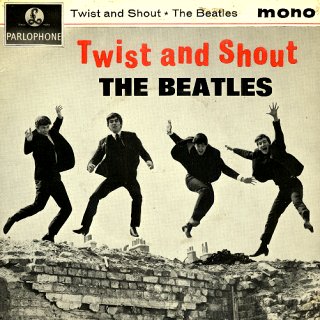
The cover was not by photographer Dezo Hoffman, as is often thought, but by Fiona Adams of Picture Story Publications of Soho. Though it’s a relatively simple picture of the four boys jumping around atop a bombed-out site, it nonetheless became a fan favorite, and one they gave a nod to during the “Can’t Buy Me Love” scene in A Hard Day’s Night.

Parlophone would release a handful of Beatles EPs over the next few years, nearly all of them being repackaging of already-released songs (the two exceptions being the Long Tall Sally and Magical Mystery Tour EPs which featured all new songs), and despite that fact, they would all sell incredibly well in the UK.

* * * *

Credit: jpgr.co.uk – The Beatles Complete UK Discography site

Credit: jpgr.co.uk – The Beatles Complete UK Discography site

Single: “She Loves You”/”I’ll Get You”
Released: 23 August 1963

Side A: “She Loves You”
For all anyone knew, this was going to be another pop single by the band that would do reasonably well, just like the previous singles had. It was another ‘pronoun song’ (as Paul and John would refer to them) of their early career, written in a hotel room in Newcastle-Upon-Tyne after a show with Roy Orbison and Gerry & the Pacemakers, another verse-chorus-verse love song they could whip out in the course of a few hours. “From Me to You” and Please Please Me were still doing well, their shows were going over fantastically, and they still wrote new songs during their off hours. It was originally to be a call-response song, but they soon dropped that idea–the only hint of that remaining being the ever-present “yeah yeah yeah” throughout.

Little did anyone know how this one track was going to explode all over Britain and catapult them into major stars. If “I Want to Hold Your Hand” is the gateway to Beatlemania in the US, then “She Loves You” was the gateway for it in the UK. It would hit number one everywhere in that country, and become one of their most famous and most loved songs of their early career.

There’s a lot that’s different here, too. Unlike their last few singles, which were upbeat yet restrained in nature, they really let things fly fast and loose here. The first thing you hear is the rumble of Ringo’s drum fill–an unexpected opening for a Beatles tune–and immediately everyone dives in with a loud and raucous chorus. And did you catch that on that last “yeah”? That’s a sixth chord! George Harrison, a fine guitarist who loved those “dirty chords” from the beginning, came up with that. Producer George Martin knew those well from his jazz and classical producing jobs, but who in their right minds would put that in a pop song? He felt it was corny and out of date–reminiscent of, say, a Glenn Miller tune. And yet it worked phenomenally.

Even the production is interesting–while most of their previous output had been relatively laid back with very few studio tricks used, with this song everything is pumped up to the fore, as if frantically trying to capture the overwhelming power of the song itself. High drums, high guitar (with fantastic jazzy fills from George), and extremely strong harmonized vocals from John, Paul and George. There’s slight use of reverb here as well, giving it a bit of an echo. They used the production style itself as part of the overall structure of the song, something they would fast become known for.

There’s also the shift in point of view here, something new for the band. After all those ‘pronoun songs’ about I, me, you and her, Paul decided to change it up by creating what is essentially the wingman–the best buddy telling you that she’s still in love with you, even after the two of you had a falling out. It’s the friend telling you to not be an idiot, to go out there and get her back, because it’s worth it. In effect, the lyrics become less of a love song and more of a deeply personal one–this is what happens after the bliss of first love and the heartbreak of first loss…it’s the middle ground of uncertainty. Should I get her back? Should I let her go? But she loves you, and you know that can’t be bad. Interestingly, the only thing missing from this song is a bridge, prevalent in a lot of their earlier tracks. Instead, it’s got more of an aside–a quick two line addendum at the end of the chorus, not used the first time out, used once the next time, and used three times at the end with a sort of theatrical pause. It’s that final elbow nudge of the best buddy saying “come on, don’t just sit there, go get her back already!”

And the ending! Wow, the ending…no final chorus, no final words…just a jubilant “yeah yeah yeah!” It’s you finally taking your best bud’s words to heart and running out that door to find your girl again. This is what sold the song for everyone–it’s an explosion of excitement and positive feeling. One can only wonder what the kids of the day felt when they heard that for the first time. The band was already proving themselves as a perfect outlet for adolescent frustration and reckless abandon out of the view of the parents and elders, and this song was the band saying “go on, go for it. Don’t hold back.” And that last sixth-chord a capella “yeah” at the end of the song would become a quintessential Beatle trademark, and probably one of the first “Beatlesque” composition points that would be copied, revered and imitated for decades to come.

And so Beatlemania was born.

Side B: “I’ll Get You”

This is one of those songs vastly overshadowed by everything else surrounding it–the enormous fame brought by its much stronger flipside track, the never-ending appearances on the radio, TV and stage, and the hit singles and albums that came before and after. And for the moment, let’s even look past the present-day view of the lyrics as maybe sounding a bit stalker-ish. This is a typical b-side for the band, one that might not have been as exciting or heartfelt as the main track, but was most definitely not a forgettable throwaway.

Unlike the bombast of the a-side, this track is mixed tight and clean. No instruments take precedence here–George’s guitar is relegated to second rhythm to complement John’s, Paul’s bass playing is smooth but not that adventurous, and Ringo’s drums are steady and plain. Part of it is due to it being in mono (along with the a-side; both tracks were two of four Beatle tracks never released in true stereo), but it also seems like it was done purposely. Unlike the emotional abandon of “She Loves You”, “I’ll Get You” is a straight-ahead song about a man trying to woo a reluctant woman. There’s even the repeated refrain “Oh yeah, oh yeah” that seems to have been lifted from the other side. And if you notice about halfway through, Paul screws up the “when I’m going to change your mind” line by singing “make” instead, which was never fixed. And if we left it at that, it would truly be an uninspiring afterthought of a song. Of course, this being the Beatles, they couldn’t just let it go a that.

For starters, there’s John’s first of many uses in a lyric of a request for the listener to think about what he’s about to say: Imagine I’m in love with you / it’s easy ’cause I know / I’ve imagined I’m in love with you / many many many times before. [Not to mention that when sung in a Scouse accent, the words “know” and “before” actually do rhyme!] There’s also quite a few interesting chord changes here, ones placed far enough back in the mix that you don’t immediately notice them. You kind of expect it to be a typical I-IV-V blues format, until it gets to the it’s not like me to pretend section at the end of the verse, where they execute a rather busy D-Am-D-Bm-G-A run, followed by a simple G-D-E-A bridge and back into the song. And as for that one lyrical flub…this might have been the first time a wrong word was delivered in a Beatle song, but it would be far from the last, and more often than not, they left it in on purpose…they often reveled in throwing little odd bits into their songs just to see who noticed.

Overall, it’s not their most memorable song, but as said, they rarely if ever threw away a composition or did a job half-assed. Even a song like “I’ll Get You” is treated with time and care by the band.

* * * *

If their previous songs were any indication of what was expected of the band, then nobody had expected “She Loves You” to be miles ahead of what they’d previously put out over the last year. It even woke up some of the listeners stateside. Capitol Records, in their infinite wisdom, still didn’t think the band was worth signing, and the single was relegated to the minor label Swan Records and released about a month later in September. [As an aside, Brian Epstein learned from his mistake with Vee Jay and stated that Swan could only hold it for two years, and only that single. By that time he’d expected that Capitol would soon come around, and this would keep any additional legal hurdles at bay.] It didn’t make that much noise here in the US, but there was a significant amount of chatter going on by this time. Influential New York deejay Murray the K was a big fan of it, and the Vee Jay versions of their first singles were starting to sell. It might not have gotten all that much airplay or sold much at all, but it was just enough of a primer to prick up the ears of potential listeners. By the end of 1963, Capitol would finally get the hint, and nothing would ever be the same.

Next up: The Beatles’ Hits and The Bealtes No. 1 EPs and With the Beatles album

Blogging the Beatles 5: ‘From Me to You’/’Thank You Girl’ single

Credit: jpgr.co.uk – The Beatles Complete UK Discography site

Credit: jpgr.co.uk – The Beatles Complete UK Discography site


Single: “From Me to You”/”Thank You Girl”
Released: 11 April 1963

The spring of 1963 was a ridiculously busy time for the Beatles. After their marathon session in February to record the remaining ten tracks off Please Please Me, they left it in George Martin’s capable hands to produce the mono and stereo masters for release. Meanwhile, they would be crisscrossing all over Britain on tour. Many of these shows had been arranged by Brian Epstein well before they became famous, so even though they’d suddenly had hit singles and a new album racing up the charts, they were still honoring these tiny shows at hotel ballrooms, local cinemas, and even a few schools! In addition to this, they also honored a few of their scheduled shows at the Cavern Club, played a number of BBC radio programs (thus the wealth of “at the Beeb” recordings available), occasional showcases with other Epstein acts like Billy J Kramer and Gerry and the Pacemakers, and an ongoing tour with Helen Shapiro. And in between all of this, they made time to record more singles and a second album.

It was on 28 February while they were riding on a coach for the Shapiro tour that John and Paul holed themselves up in the rear of the bus and worked on writing a follow-up single. It’s said that Kenny Lynch–the man who’d recorded “Misery” as the first person to ever cover a Beatles tune–had heard them singing the “ooh” in the middle eight, and immediately thought the song was doomed to failure. Five days later they were back in Studio Two at Abbey Road, and banged out “From Me to You”. And despite Lynch’s misgivings, it would end up being their second single to hit number one.

The b-side, “Thank You Girl”, was most likely written around the same time. These two tracks, as well as a long-unreleased version of their song “The One After 909” were recorded on 5 March (a fourth song, a version of “What Goes On”, was practiced but never recorded). The single was released a month later.

Side A: “From Me to You”
Despite Kenny Lynch’s disdain for such a simply-written song, it’s a very catchy tune, and understandably caught the ear of thousands of teenage fans. Playing on the personal “me and you” that worked so well with “Please Please Me”, this love song played on the fact that John and Paul were well aware of their female fans that felt they were singing just to them! The lyrics are light and fun, as if they just want to gush over their sweetheart–if there’s anything she wants, he’ll take care of it, because they love her that much. There’s also a return of the theme of distance, the couple being separated but their love remaining strong and true.

There are quite a few interesting bits to this song, really. Right off, we have John and Paul scatting the opening melody, the “da-da-dah da-dun dah-dah-dah”. That was Martin’s suggestion (which the band thought was rather odd, until they heard the final run through and agreed it actually worked). What’s also interesting is that the main verses of the song also serve as a repeating chorus, with the title right at the end of each verse–“just call on me, and I’ll send it along, with love from me to you.” The bridges are similar, repeated after each verse section. There’s also the solo section, understated yet creatively done: George repeats the verse melody on the guitar, while John echoes it in a higher octave on harmonica and also fills in an echoing of the title [da-da-dum da-da-dum-dum-dah (“from me…”), da-da-daum- da-da-dum-dum-dah (“…to you…”)] before singing the last part of the verse.

Overall, it’s a giant step up from their previous songwriting–by this time, they had a few singles, an album, and a ridiculous amount of touring under their belt, not to mention at least five years’ worth of working on their craft. This was the song that clicked with them, one that wasn’t a throwaway but a well-crafted one they devoted time and work to.

Side B: “Thank You Girl”
“We knew that if we wrote a song called, ‘Thank You Girl’ that a lot of the girls who wrote us fan letters would take it as a genuine thank you. So a lot of our songs were directly addressed to the fans.” — Paul, in 1988

That pretty much explains that song in a nutshell–it might be yet another love song they could write in their sleep, but it was one that the fans could take as a personal note just to them. On the surface, it’s another of their head-over-heels love song lyrics, and musically it’s extremely simple. John later said he wasn’t exactly impressed with how it came out, feeling it was close but missed its mark. Simply put, it’s a song about a man eternally grateful about the woman he loves. But as Paul hinted, there was an ulterior motive: taken from a besotted fan’s perspective, this is a heartfelt “thank you” to all the female fans out there who sent them countless fan letters and screamed at their concerts. So soon into their professional career as musicians, they felt themselves truly lucky and grateful that these fans were so dedicated.

This was actually supposed to be the A-side, but after recording the two, it was decided this would be the b-side. Like “Ask Me Why”, it ended up not being one of their stronger songs, but it was no throwaway, and it the fans themselves were of course happy to have such a song written for them by their favorite band.

*

This was another single released on the VeeJay label in the US, as Capitol still hadn’t gotten on board at this time. “Thank You Girl” was added as a replacement track on later reissues of Introducing the Beatles and later on the US release The Beatles’ Second Album, and “From Me to You” would pop up on a version of Songs, Pictures and Stories of the Beatles (one of the many VeeJay reissues of Please Please Me under various titles), but other than that, neither track would get a straightforward release on an album together until the cd release of Past Masters in 1987. It was unfortunately a missed opportunity due to the legal wrangling between VeeJay and Capitol at the time.

The third track recorded during this session, “The One After 909”, would be all but forgotten until January 1969 when it resurfaced during the Get Back album and movie sessions, but by that time its format was drastically different. Instead of a mid-tempo rock and roll tune emulating Chuck Berry, it ended up countrified and sloppily recorded as an afterthought and released on Let It Be. It very nearly surfaced in 1985 on an aborted compilation of unreleased tracks called Sessions, but wouldn’t get an official release until the Anthology 1 album in 1995.

In the UK, however, it was their second number one single hit right after “Please Please Me”, and they weren’t about to rest on their laurels, not by a long shot. They’d continue touring and recording well into the next year. They’d return to the studio again on the first of July to record what would become one of the signature songs of Beatlemania, thanks to the phrase “yeah, yeah, yeah.”

Next up: “She Loves You”/”I’ll Get You” single