I remember making this one at the tail end of my years at HMV, and I’ve come back to it recently when I’ve been working through the Mendaihu Universe Legacy Soundtrack list. It was made in early August 2000 when it was clear that I wasn’t long for that store. My quality of work hadn’t changed, at least not in my view, but that was my then-boss’ issue: I apparently was too set in my ways and couldn’t (and wouldn’t) bend to his will. You’ve all heard the story of our frequent arguments leading up to a final “you need to quit or else I’ll fire you” confrontation.
Still, I’d hoped I’d last longer at the store because it was one of my favorite jobs I’d ever had. [To this day I still have the occasional dream about it, twenty-six years on.] Because of this, there seems to be a slight feeling of melancholy in this mix. Not one of spiraling gloom like the mixes I’d made back in my teen years, but one of things coming to an end. The energy here is muted for the most part, with only a few songs reaching any high octane.
I remember listening to this one a lot in my car during my weekend road trips, but also when I started heading down to the Pioneer Valley more often, considering I’d be starting a new job down there soon enough. After several years of heading east towards the metro Boston area, I’d be returning west to my old haunts of central Massachusetts; quieter, calmer, and definitely a shorter distance. I had to remind myself that this wasn’t going to be about attempting to relive my late 80s past but creating something new.
So while I was sad that I was leaving HMV, I was looking forward to starting a new chapter. One that meant a new day job, but also meant a much-needed revitalization of this science fiction trilogy that I’d been hammering away at for a few years already.
SIDE A: 1. Richard Ashcroft, “A Song for the Lovers” 2. Doves, “Sea Song” 3. The Dandy Warhols, “Godless” 4. BT, “Satellite” 5. Stone Temple Pilots, “Sour Girl” 6. Porcupine Tree, “Last Chance to Evacuate Planet Earth Before It Is Recycled” 7. Belle and Sebastian, “Don’t Leave the Light On Baby” 8. Moby, “Porcelain” 9. Black Box Recorder, “The Facts of Life” SIDE B 1. The (International) Noise Conspiracy, “Smash It Up” 2. Longpigs, “Blue Skies” (not available on Spotify) 3. Lit, “Over My Head” 4. BT, “Never Gonna Come Back Down” 5. Eve 6, “Promise” 6. Everclear, “Wonderful” 7. The Dandy Warhols, “Nietzsche” 8. Catherine Wheel, “Sparks Are Gonna Fly” 9. Badly Drawn Boy, “Another Pearl” 10. The Urge, “It’s My Turn to Fly” 11. Cypress Hill, “(Rock) Superstar”
I remember stumbling upon the “Pop Stars” single back in 2018 not via YouTube but the various gifs that popped up on social media back then, and I was intrigued: this was really well done animation in a style that was quite different from most things I’d seen around then, and dang it if that track wasn’t a banger that got stuck in my head constantly! I was even more fascinated when I learned they were a musical tie-in with the League of Legends game universe, each character with a full background, gameplay and so on. And through them I learned about the K-Pop band (G)I-DLE (known as i-dle these days) and Madison Beer. Who new that I still had a soft spot for well-crafted pop? I even posted about them back in 2020 when the EP came out.
A year and a half later they would follow up with a great EP called All Out that would also get a lot of play here on my PC. After that, the pandemic kind of put that project on hold while LoL focused on other in-game videos, their annual World Championship festivities (and their theme songs from bands like Linkin Park and others), and the two seasons of the animated series Arcane.
That is, until yesterday, when the above brand spankin’ new single and video dropped, and all the LoL fans lost their collective minds. The foursome look a bit different now, and they’ve brought on two new singers for the English parts, but they’re just as badass.
I’ve got multiple early opens at the day job this weekend, I need to focus a bit on the next Bridgetown Trilogy remaster, and I’m also getting over the one-two punch of flu and Covid vaccines, so I’m afraid I ran out of time for a blog update. I’m hoping I’ll be a bit more with it next week. See you then!
Let it be known that I got my first senior discount yesterday. At my own day job, no less.
Mind you, I’m only fifty-five this year, but that was enough for me to start getting a ten percent discount every first Wednesday of the month. That first time only got me maybe $2.50 off total, but some of my senior customers ended up with a sweet deal of ten, fifteen, even twenty dollars off because they bought quite a bit.
This has nothing to do with my music blog, other than that I had “When I’m Sixty-Four” in my head when I was first informed of this new deal at the shop. Heh.
The other day I was going through the Mendaihu Universe Legacy Soundtrack list — the albums, mixtapes, and compilations with a direct link to my countless writing sessions for the Bridgetown Trilogy and its many preludes, revivals and offshoots — and I discovered that I could actually pinpoint when those sessions went from ‘when I could get to it’ and solidified into an almost-daily event for the next several years. It’s also the same timeframe when my music listening habits changed and expanded considerably.
It all boils down to when I stopped working longhand on The Phoenix Effect on 7 August 1998. Over the course of that spring and summer, I’d gotten into the habit of writing four or five longhand pages in the food court at the mall I worked at, then once I was at home I’d work on transcribing that work. The transcription started most likely that spring so I had a bit of catching up to do, but by that date, I was completely caught up. I’d even been revising as I went, which meant that the longhand version and the transcript version had some significant differences.
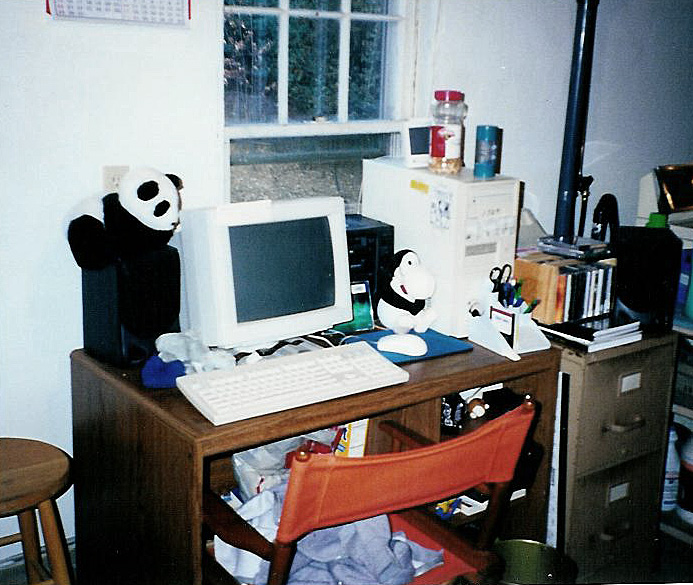
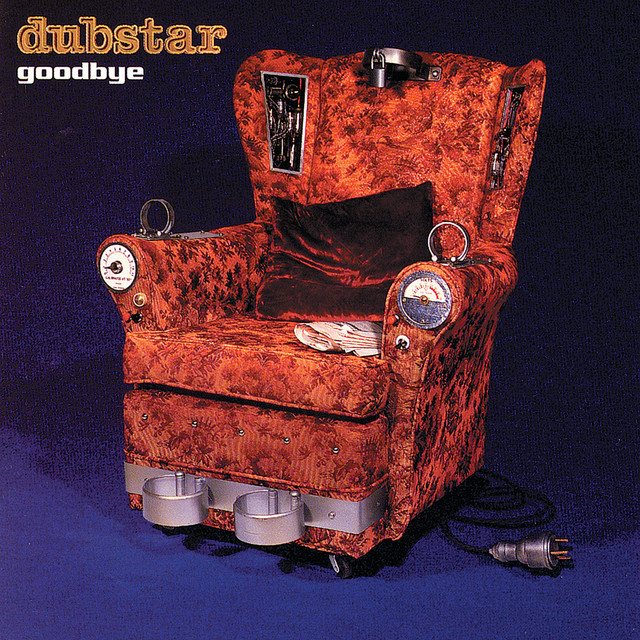
It made more sense to me to finish the novel on the PC, so for the next three weeks I headed downstairs to my basement writing nook every day to work on it. And considering I prefer writing with a soundtrack, the albums I listened to at the time were the ones getting significant repeat play during those sessions. Dishwalla’s And You Think You Know What Life’s About, Hooverphonic’s Blue Wonder Power Milk, Dubstar’s Goodbye, theaudience’s self-titled, Rasputina’s How We Quit the Forest, God Lives Underwater’s Life in the So-Called Space Age. And once the novel was complete, I started on the next round of revisions. With that came repeat listens of Mansun’s Six, Paul McCartney’s Rushes (under the moniker The Fireman), Baxter’s self-titled, Belle & Sebastian’s The Boy with the Arab Strap, UNKLE’s Psyence Fiction.
At the start of 1998, my work at the writing nook was scattershot, maybe two or three times a week. But by the end of that same year, I was down there almost every single night. Not that I completely gave up on longhand just yet, however… I was already planning out a working schedule in which I’d start the sequel to Phoenix in the food court before work while I revised Phoenix in the evening. That first sequel attempt was trunked six months later with another one attempted then stopped soon after, followed by an aborted rewrite of Phoenix. From there the dates do get a little hazy, but I would say that it was most likely the summer of 2000 that I tried one more time on the rewrite, and A Division of Souls was born.
The most important thing of all, though, was that I’d finally solidified a writing practice that I’ve stuck with ever since. I was down there in that basement nearly every single day now, even on the weekends after my road trips or other errands, working on something. There was a brief time of a few months in which it fell to the wayside in September 2000 when I started working second shift at Yankee Candle, but by November I’d switched to the morning shift. From then on until my moving out in March 2005, I’d be down there nearly every night, working on the Bridgetown Trilogy.
And considering the schedule, that also meant that by late autumn of 2000 I was making my weekly runs to Newbury Comics in downtown Amherst, picking up new releases every Wednesday after my comic book run at Hampshire Mall. And nearly all of these albums would get repeated play down there in the basement while I worked on the trilogy. My collection grew exponentially for the next five years because of that, and several of those titles became part of the MU Legacy Soundtrack list.
But yeah, it’s kind of neat to finally confirm that this longstanding writing-and-new-music habit I still have started in September of 1998.
This is one of those albums where I went in not knowing a single track from it, and it ended up being one of my favorite albums of the year. I’d read the positive reviews in the British music papers, and had heard this would get a slightly abridged stateside release (a mix of tracks from the UK version plus the handful of popular songs from their previous record Disgraceful from 1995). The week this showed up as a promo at my store, I snagged it and gave it a spin.
You all know that I do love me some music that invokes a sort of autumnal vibe. Songs that make me feel like I’m driving around woodsy New England on a slightly cloudy Sunday afternoon, taking in the reds and oranges of fall foliage before the day is over and I have to head back home and return to work the next day. I know, it’s kind of specific, but you get what I’m trying to say here. A sort of end-of-day melancholy.
And the leadoff single “Stars” did that with its sweeping and sighing synth chords and unobtrusive electronic drums. It’s their signature song (it was originally on Disgraceful), but it’s such a gorgeous and moody song that I stopped in place and had to play it again just to relive that moment. I was already hooked. I also realized they weren’t a band that would get a lot of play on WFNX (they were leaning more towards harder and louder alt-rock at that point), but an AOR station like The River definitely would, and did.
The album isn’t all just moods, however, it also ventures into some really fun territory like the British Northern Soul sound of “Inside” and the bouncy “Cathedral Park”…
…or the Cocteau Twins-y “Just a Girl She Said”, or the Pet Shop Boys-y “The View from Here”. They even do a lovely cover of Billy Bragg’s “St Swithin’s Day”, giving the formerly all-acoustic original a full-band sound. It was kind of hard to pin them down style-wise, but that was part of what drew me to them, because while the styles changed, the mood I’d been drawn to remained. It all felt so autumnal to me, which worked perfectly considering it had been released at the end of September of 1997.
They were in that 1996-98 sweet spot of alternative that was distinctively British with a female lead and a synth-driven atmosphere (see: Hooverphonic, Mono, Sneaker Pimps, Lamb) that might not have been huge in the States but definitely had its own fanbase here.
This album came out while I was already a number of chapters in on writing The Phoenix Effect, and because of its sound and vibe it was a perfect candidate for a writing soundtrack. Over the next several years I’d give it a spin while working in the Belfry, and to this day I’ll still break it out now and again just to enjoy what a wonderful and light album it is.
I was introduced to Global Communication in a very roundabout way. While I’m sure I saw the above record in the bins at the HMV I worked at, I never gave it a chance, at least not until late 1997 when I heard a deeply haunting track by Pulusha called “Isolation, Part 1”, found on the not-quite-holiday album Invocation that had intrigued me when it came out in October of 1997. After a bit of reading, I found out that Pulusha was a one-off project featuring Kirsty Hawkshaw — who I knew from Opus III in the early 90s — and Mark Pritchard, who was one half of Global Communication. This album had dropped in July of 1994, but had been so well-regarded that we continually stocked it in our electronic music section three years later.
I’ve listened to and loved all kinds of ambient music over the years — the experimental soundscapes of Brian Eno, the laid back cool of Orbital, the deep echoes of the early years of 4AD — but I’d never heard anything like this before. There are no real titles for the tracks; they are all known by their playing length instead, to avoid influencing what the listener might feel or imagine upon hearing it for the first time.
What caught my attention was the grandfather clock and the gentle rain of the second track, “14:31”.
You of course know that music was a huge influence on my early writing. Inspired by Miami Vice, I took music I loved and wrapped story ideas around them, and the Infamous War Novel was the first longform story I wrote that took those songs and shaped a full storyline around it. But I’d grown out of that style by the early 90s. Music was still there, though playing just a minor ‘soundtrack’ part instead. And a lot of what I was listening to at the time didn’t always fit with what I was writing, so I grew out of that style.
That is, until I listened to the above track in headphones one evening, and my imagination suddenly found itself in a dusty old mansion, sitting in a semi-dark study with cold wood panels, the only light coming from outside the one bay window, partially framed by the canopy of leaves outside, the sky a dirty light gray and the grass of the lawn a deep rich green, matching the dark trees outside. The room was a mix of forgotten papers and books, smelling of must and petrichor.
I don’t think I’d ever had that vivid of a mental image from a song in years.
This was right about the time I started working on The Phoenix Effect as well. This album immediately became part of its soundtrack, played whenever I worked on the more spiritual components of the story. I needed to be in that kind of mental space, that kind of ambient atmosphere, because that’s what it sounded like in my head. Otherworldly, spatial, the sound of moments you never notice until they sneak up on you. A soundtrack that could create not just the mental image of a forgotten part of a house deep in the country, but the loneliness of a spaceship far away from home.
These are but two tracks off a ten-track album that take you on an aural trip without actually telling you where you’re going. It leaves the destination — or just the trip itself — entirely up to your imagination.
One of the downsides to my day job is when I end up monitoring the self checkout machines. That job on its own isn’t that bad, because I’m totally fine with helping customers there. No, the issue is that it’s right next to the shared sinks and hand dryers just outside the bathrooms, and every single time someone uses those dryers, everything I hear ends up getting covered up by a half-minute of WHHHSSSSHSHHHHHHHHHHHHHHHHHHHHHH white noise. I can handle it if it happens every now and again, but when it’s going all day long, I start getting a bit twitchy.
I’ve mentioned before that I have APD. I’m definitely not hard of hearing; in fact I’ve also mentioned that I have weirdly sharp directional hearing (in which I can usually tell you almost exactly which direction a noise is coming from). The way I explain it to people is to picture yourself in a very noisy restaurant. Not only do I hear the music being played over the speakers, I hear the conversation at the table next to us, the sports bros cheering at someone’s score on the TV, other conversations elsewhere around us, all on top of you trying to have a conversation with me. I hear it all at once and all at the same volume, and I can’t always filter it to focus only on you. [You’ll often see me cupping an ear in your direction because of this.]
So when that damn hand dryer goes off, it basically blots out any other sounds that might be going on around me, whether it’s a customer asking a question, my manager calling me on the radio, the store phone ringing, or someone calling me on the intercom. I love my job, but I hate that damn hand dryer sometimes.
What can I do about it? Well, not much unfortunately. It’s less irritating and disrupting if I’m working the register, where the noises are more muted. Or if I happen to do be doing an errand on the floor or upstairs, I embrace the peace and quiet and let my brain rest for a while. And thankfully I’m not assigned the self checkouts all that often.
I have noticed that my APD has gotten a bit more irritating over the years, and I’m sure that’s because I’m just getting older and finding this amount of chaotic noise more irritating, maybe even overwhelming. Perhaps this is why I’ve loved listening to music so much over the course of my life: this is where I focus on one source of sound and little else. And because I’m focusing only on the music, it resonates with me more on an emotional and mental level that most people, I assume.
I can certainly try to focus on the voices and sounds that I need to focus on at any moment, but it can certainly be exhausting as hell sometimes.
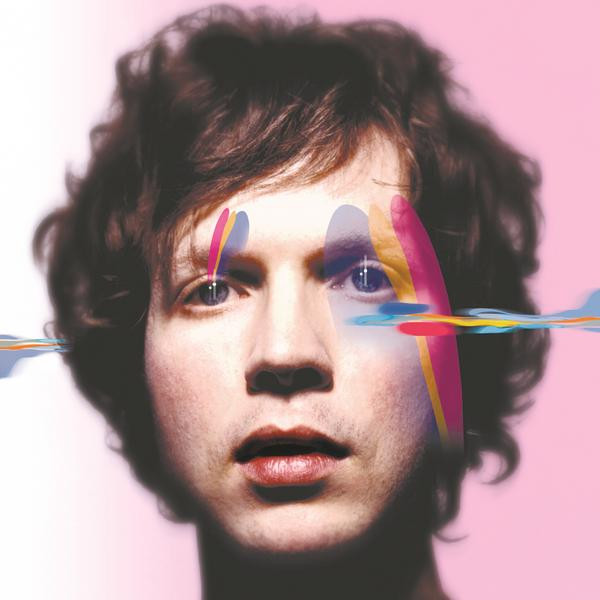
In honor of Beck’s upcoming new record Ride Lonesome which comes out this Friday, I thought I’d do a quick revisit of my favorite album of his, 2002’s Sea Change. It’s aptly named; after the quirky Odelay, the meandering Mutations, and the funky Midnite Vultures, he goes through a bitter breakup, completely changes direction, and comes out with a deeply personal and contemplative record that defies anything he’s done before. It’s my top favorite of all his albums and the one I return to the most. I’ve mentioned several times that it’s also tagged as a Mendaihu Universe Legacy Soundtrack, having been played constantly during the writing of the Bridgetown Trilogy.
He made several music videos for this album even though there were no official singles, and they complement the album’s themes of emotional loss and eventual healing.
He pulls no punches right from the start: the opener “The Golden Age” sets the stage as a night-time drive, perhaps a long dark night of the soul: Put your hands on the wheel, let the golden age begin / The window down, feel the moonlight on your skin / Desert wind cool your aching head / The weight of the world drift away instead. There’s a lot to work through, and it’s not going to be easy.
That pain continues through “Paper Tiger”, a string-laden piece (conducted by his father David Campbell) that feels very much like an old blues track. Here we start hearing more nuances in the album’s production (the always amazing Nigel Godrich), with phased vocals and the use of that slow-build style I love so much.
Eventually he comes around — sort of — with the somber “Guess I’m Doing Fine”, which is obviously not the case but at least he’s trying to find a way through it all. The video has him walking around various parts of Los Angeles, including several scenes in Echo Park, with a ghostly acoustic guitar following his every move. Eventually he befriends a local and they start talking about life. Their conversation is unknown, but the setup underscores the whole point of the song: the only way to get better is to work towards it.
It’s a tough road ahead, working through the anger of “Lonesome Tears” and the self-effacing “Lost Cause” until we hit the exhaustion of “End of the Day”. It all starts building up until it finally spills out with the adversarial “It’s All in Your Mind”, which, interestingly, was originally a lo-fi single released years before (just before Odelay), but it fits in well here.
It’s followed up by the somber and mercurial “Round the Bend” — he’s finally accepted this grief, and starts the healing. It’s followed by “Already Dead’, in which he faces everything that’s left and gone away. What’s left is what needs working on: “Sunday Sun” focuses on acceptance and moving on.
In its own way, the penultimate track “Little One” underscores that acceptance, that what is done is done and you can’t get it back. But like the video, it also focuses on what’s only seen in dreams and hopes: a clearer future of healing. A waking up from the nightmare, exhausted and feeling out of place, yet seeing a clearer path ahead. The album closes with the quiet yet uplifting “Side of the Road”, a reminder of what we’ve gone through and what we might encounter next.
*
Interestingly, I passed on picking this album up for a few months when it dropped back in September of 2002, as I hadn’t been the biggest fan of Midnite Vultures and hadn’t really heard anything from this one. It wasn’t until I happened to hear a few songs during one of my frequent stops at the Newbury Comics in downtown Amherst that it finally clicked, and I was immediately sold. By year’s end I was playing it constantly during my writing sessions. It was a perfect soundtrack that aurally fit the moods and setting of the more somber sequences of the trilogy.
Twelve years and several albums later, Beck revisited this quieter style with the equally brilliant Morning Phase in February of 2014. And his newest, Ride Lonesome, has been described as the third in this series. While Beck has already been seen as a master in writing catchy yet offbeat (and often bizarre) alternative pop singles with quirky lyrics and creative production, with these albums he proves that he can also write deeply personal and heartfelt ballads that work themselves deep into your psyche.
[NOTE: This was originally a LiveJournal post of mine from 11 September 2013, and lightly edited. The above playlist is missing only two songs — one was my own, and another is linked below.]
I was working at Yankee Candle that day, and I’ve already posted about what I did, what I felt, and so on. We all have at some point or another. One thing I rarely about, however, is how I got through all of it on a personal level.
Those of you who know me already understand that I’m an obsessive music nerd. I may not have a degree in it, but I’ve been collecting and listening to music since I was a wee kid. I’ve also made mixtapes since I started taping stuff off the radio, and started making my own real mixes around 1988. These mixes often reflected the mood I was in at the time and became a way for me to sort out those emotions and thoughts on my own.
In 1991 I created a compilation called Desert Storm: Sailboats of Ice on the Desert Sand, a highly-charged mix that reflected my anti-war feelings at the time. Considering I was a sophomore in college at the time, one can understand that this particular playlist might be a bit overwrought and self-righteous (Ending with Barry McGuire’s “Eve of Destruction”? How heavy-handed can I possibly get?), but it seemed to help me get over the anger and confusion I felt at the time.
A bit over ten years later, and exactly ten days after the events in New York, Pennsylvania and Washington DC, I put together another compilation to help me sort things out. I needed to put things in some sort of order so I could process what happened then, what some may have felt, and what might come next. I had to do this on my own, with no outside influence. I knew that if I followed the news I’d get overwhelmed; if I read the pundits, I’d only get pissed off; if I reacted to emotion and wished for vengeance, then I wouldn’t be true to myself.
I had to process this in my own way, and music, as ever, helped me through it.
1. Albinoni/Giazotto, comp. ‘Adagio in G Minor’ Certainly, some may connect this track to the more dramatic movie themes — or if you’re me, connect it to the first track of Sigue Sigue Sputnik’s Dress for Excess album — but this was actually a connection from a Best Classical Album in the World Ever cd I got from back in my HMV days a few years previous. I listen to this track for what it is; a quiet yet stunning piece of neo-Baroque music that serves to set the scene. In my head, I pictured the sun coming up, the start of a lovely and clear day, maybe even somewhat hot and muggy. There’s a sense of…something, underneath it all, however. One of those feelings of tension but you’re not entirely sure where it came from.
2. Jars of Clay, “Crazy Times” Everyday stress. A long and frustrating commute. Driving into the city, or taking the train in, or maybe even like me, taking that back road in the pre-morning darkness towards your destination, coffee in the cupholder, contemplating why you’re even up and in this situation. Nothing inherently bad…just temporarily finding yourself in a situation or place that you’d rather not be in, fully knowing that you’d be free of it eventually.
3. Radiohead, “Street Spirit (Fade Out)” Tension spills over as we get to our destination. It’s another Tuesday workday, and you’d rather still be in bed, even though you’re wide awake, already on your second coffee, and really need to get that project done today. For a brief moment you’re wondering why you’re even here at this job…it’s okay, it pays the bills, but does it make you happy? What do you really want to do? Can you even do it at this point, or do you have to wait another few years and save up? Shit…well, you can’t really think about it right now, can you? Almost time for that team meeting. May as well get it over with.
4. Live, “Overcome” 8:46am ET. “OK. What the fuck just happened…?”
5. The Cure, “All Cats Are Grey” 9:03am ET. “Oh. Oh, shit.” 9:37am ET. “What the fuck is going on…???” 10:03am ET. “…”
6. Nine Inch Nails, “We’re in This Together” 9:58am ET. The South Tower collapses. 10:28am ET. The North Tower collapses. The first song I thought of as soon as the news had been sent my way. I immediately thought of all those people in the Towers, unable to escape. The people on the planes with no way of escaping. The commuters and the pedestrians below, scrambling to get the fuck out of the area as fast as they could. Tension built up to dangerous levels, where fight or flight kicks in. Where fear feeds or kills. And despite it all, somehow still having that choice whether to live or die, to endure or break.
7. Ciccone Youth, “(Silence)” Just…silence, as we sit there, staring in disbelief.
8. Pulusha, “Isolation, Part 1” Everything slowly starts to sink in. We see what we’ve witnessed on the TV, what we’ve heard over the radio, what our friends, our relatives, complete strangers have been telling us. We start processing what happened. Two skyscrapers that many people have known for most of their lives are reduced to rubble. A section of a major government building in ruins. Thousands of people killed. All other planes are accounted for, aside from those four. Some of us know victims, others only hear of them. It’s hard, but we finally let ourselves accept what just happened.
9. The Flying Bohemians, “Intro/Sodabottle” This is something I’d recorded myself in the summer of 1995. It’s a shortish instrumental played on guitar through flanger and delay, using a soda bottle as a slide (as well as invoking a trippy sound — the title was partly inspired by a college friend who’d made a working bong out of a plastic 7-Up bottle). This is the moment where I’m told by my boss of what exactly happened and the aftermath, and I’m left speechless. I head out to the smoker’s table out back and proceed to light up at least four cigarettes in a row, staring up at the now empty sky. Our warehouse was right under a major flight path for planes out of Boston. I let it hit me fully and completely, just so I could process it all.
10. Manic Street Preachers, “If You Tolerate This Your Children Will Be Next” “Let’s go get those motherfuckers!” “Kill those shitstains, whoever they are!” “Goddamn Muslims!” “Bomb the fuck out of Afghanistan!” “Oh, you have messed with THE WRONG FUCKING PEOPLE.” “USA! USA! USA! USA!” “Kill ’em all!” “Those fuckers are gonna eat lead!” “Those bastards are gonna fucking DIE.” “Give me a goddamn gun, I’m gonna head over there and do it myself if I have to.” “NOBODY fucks with America.”
Jesus, the fucking noise that came after that silence…
11. Failure, “Daylight” Some of us wanted to go out and kill the bastards. Some of us wanted to hide from the world until it blew over. Some of us wanted to detach ourselves just enough so we could think clearly. Some of us wanted to know why these events happened. Some of us just…wanted it to be over, just so we could let the healing begin.
12. Temple of the Dog, “Hunger Strike” By that afternoon, we were all exhausted. We’d bled our emotions dry for the day, leaving us empty. Calmer minds started turning towards the rescue efforts, the security checkpoints, the vigilance of the police, fire departments, FBI agents, the doctors and nurses, everyone from triage up to commanders and commissioners. They kept watch over everything and everyone, often at the risk of their own health and sanity. And for a brief moment, we stopped being hateful towards each other.
13. Jeff Buckley, “Hallelujah” This song was everywhere that day. Leonard Cohen’s brilliant elegy of perseverance and reconciliation when the world is utterly fucked up beyond fixing seeped into the country’s psyche with Buckley’s sparse and haunting version. We would heal from this. Hopefully.
14. Radiohead, “You and Whose Army?” Cooler heads finally prevailed, after all the noise died down. We would eventually find and capture–or even kill–the ones who had done this, but we weren’t about to go in guns blazing…at least not yet, anyway. We were still angry and in pain, and we wanted revenge…but many of us felt we could trust those trained to do so–the Armed Forces, the FBI, those in charge–to eventually put this all to rest. We were quiet…but we wouldn’t forget these events, not for a long while.
In retrospect, this didn’t quite unfold the way we wanted or expected — I will spare you the diatribe on that — but slowly, eventually, we found Osama bin Laden and many of his cronies. [EDIT: Twenty-five years later and sadly the day continues to be turned into patriotic porn for the conservative wing while the rest of us are trying to heal and move on.]
15. U2, “Mothers of the Disappeared” Originally a song about the Mothers of the Plaza de Mayo, this song was my own personal tribute to those we lost that day. That’s what I try to remember. Not the violence, not the revenge, not the anger…but the loss. How easy it was to erase a life, and how easy it still is to use that loss as an excuse to further fuel blind hate.
16. Chet Atkins w/ Mark Knopfler, “Imagine” I will freely admit that I am liberal, but in my own way. I will also admit to wanting peace over war if at all possible. On the flipside, though I dislike war, I understand it as an inevitability if and when it happens. I fully admit and embrace this paradox because it’s who I am. I will never be a part of a war as I refuse to take the life of another person for any reason, but I have come to accept that the world is an incomplete, fallible place where things disintegrate and events unfold to cause war. I’ve seen and read about uprisings and revolutions, I’ve witnessed and read about pre-emptive strikes, I’ve read about the after-effects of these things. We’re constantly evolving, and that doesn’t necessarily mean only in a positive direction. Things change whether we want them to or not.
At the end of the day, however, it would be nice to see a day where we can meet in peace, not in animosity.