I’ve been thinking lately about how the eternal on-ness of global connection has given way to the loss of self to some degree. Now, I’m not necessarily saying that the incredible ease in which I can go online and find something I’m looking for is inherently bad — just that I often remember and kind of miss that it wasn’t always this easy to fall down a rabbit hole. And I’m not necessarily saying that this global connection is breeding some kind of conformity, because if anything, it’s done the exact opposite and opened several social avenues for people who might not have had this access in the past.
I’m just saying that if I’m passive about this global connection, that I just let it wash over me with minimal reaction or emotional resonance, then all it’s ever been is a white noise distraction and a folly.
Right now as I’m writing this on late Sunday afternoon, I’m listening to Radiohead’s Kid A, an album released twenty-six years ago this month, and I recall buying it on cassette at Newbury Comics in downtown Amherst, and listening to it on the way home. Driving through the back woods of central Massachusetts on a cold afternoon, the New England foliage just reaching its peak. I’m looking forward to getting home to work on A Division of Souls on my PC in my parents’ basement. We had the internet back then of course — it was dial-up and the local phone lines wouldn’t upgrade for another year or so — but I was more focused on writing my new novel instead of futzing around online. I saved that for the late nights on weekends when I had time to kill and nobody to accidentally disconnect me.
I say this because I find it morbidly fascinating that I can listen to Kid A and am immediately connecting with the music on a deeper and closer level, as I hadn’t had as much distraction, nor was I fully plugged in and mainlining sounds from hither and yon. I’d given myself more time and patience to resonate with the music I surrounded myself with. And then I’ll put on, say, A Moon Shaped Pool from 2016, and it’s much harder for me to connect. I know what it is, and it’s not that I’ve lost interest in the band. It’s because in those ensuing ten years, I’ve ingested so much music, most of it passively or merely in passing, that that resonance isn’t nearly as strong.
Is it because my memory is almost full? Or is it because I’ve rewired my brain so much over the years that the connections aren’t as easy to revisit? I’ve been going through my library and ‘retiring’ a good portion of it — saving the secondary backup but deleting it from the main source drive — in order to rectify this. I think of it as selling my old physical copies at record stores back in the day, getting rid of the excess to lighten the load a bit and maybe get something back from it.
Why do I want to reinvest in this ‘resonance’, as I keep calling it? Well, it’s because that’s the primal reason for me loving music in the first place. A song that sings to me. A style or a genre that inspires or influences me in one way or another. It’s still there, I know it is, it’s just become so much harder to reach because of this passive intake and its ensuing clutter.
I remember making this one at the tail end of my years at HMV, and I’ve come back to it recently when I’ve been working through the Mendaihu Universe Legacy Soundtrack list. It was made in early August 2000 when it was clear that I wasn’t long for that store. My quality of work hadn’t changed, at least not in my view, but that was my then-boss’ issue: I apparently was too set in my ways and couldn’t (and wouldn’t) bend to his will. You’ve all heard the story of our frequent arguments leading up to a final “you need to quit or else I’ll fire you” confrontation.
Still, I’d hoped I’d last longer at the store because it was one of my favorite jobs I’d ever had. [To this day I still have the occasional dream about it, twenty-six years on.] Because of this, there seems to be a slight feeling of melancholy in this mix. Not one of spiraling gloom like the mixes I’d made back in my teen years, but one of things coming to an end. The energy here is muted for the most part, with only a few songs reaching any high octane.
I remember listening to this one a lot in my car during my weekend road trips, but also when I started heading down to the Pioneer Valley more often, considering I’d be starting a new job down there soon enough. After several years of heading east towards the metro Boston area, I’d be returning west to my old haunts of central Massachusetts; quieter, calmer, and definitely a shorter distance. I had to remind myself that this wasn’t going to be about attempting to relive my late 80s past but creating something new.
So while I was sad that I was leaving HMV, I was looking forward to starting a new chapter. One that meant a new day job, but also meant a much-needed revitalization of this science fiction trilogy that I’d been hammering away at for a few years already.
SIDE A: 1. Richard Ashcroft, “A Song for the Lovers” 2. Doves, “Sea Song” 3. The Dandy Warhols, “Godless” 4. BT, “Satellite” 5. Stone Temple Pilots, “Sour Girl” 6. Porcupine Tree, “Last Chance to Evacuate Planet Earth Before It Is Recycled” 7. Belle and Sebastian, “Don’t Leave the Light On Baby” 8. Moby, “Porcelain” 9. Black Box Recorder, “The Facts of Life” SIDE B 1. The (International) Noise Conspiracy, “Smash It Up” 2. Longpigs, “Blue Skies” (not available on Spotify) 3. Lit, “Over My Head” 4. BT, “Never Gonna Come Back Down” 5. Eve 6, “Promise” 6. Everclear, “Wonderful” 7. The Dandy Warhols, “Nietzsche” 8. Catherine Wheel, “Sparks Are Gonna Fly” 9. Badly Drawn Boy, “Another Pearl” 10. The Urge, “It’s My Turn to Fly” 11. Cypress Hill, “(Rock) Superstar”
The other day I was going through the Mendaihu Universe Legacy Soundtrack list — the albums, mixtapes, and compilations with a direct link to my countless writing sessions for the Bridgetown Trilogy and its many preludes, revivals and offshoots — and I discovered that I could actually pinpoint when those sessions went from ‘when I could get to it’ and solidified into an almost-daily event for the next several years. It’s also the same timeframe when my music listening habits changed and expanded considerably.
It all boils down to when I stopped working longhand on The Phoenix Effect on 7 August 1998. Over the course of that spring and summer, I’d gotten into the habit of writing four or five longhand pages in the food court at the mall I worked at, then once I was at home I’d work on transcribing that work. The transcription started most likely that spring so I had a bit of catching up to do, but by that date, I was completely caught up. I’d even been revising as I went, which meant that the longhand version and the transcript version had some significant differences.
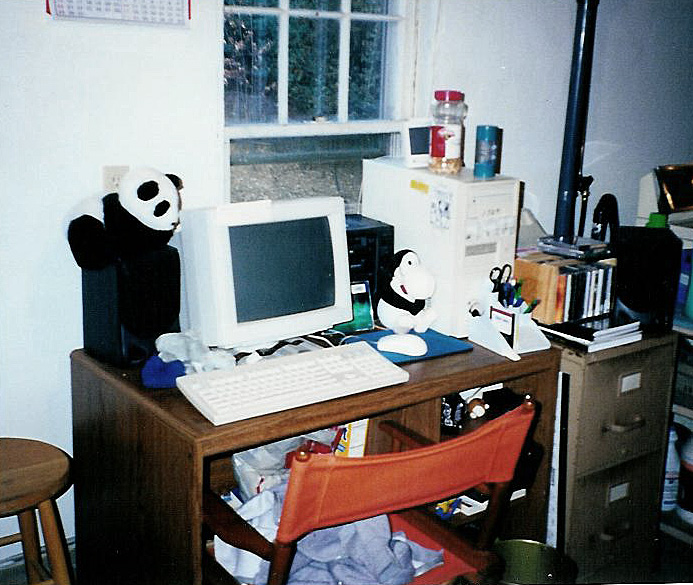
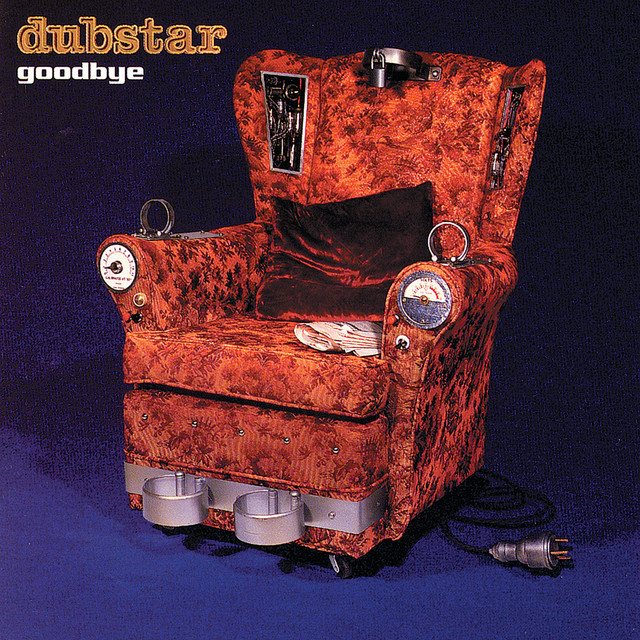
It made more sense to me to finish the novel on the PC, so for the next three weeks I headed downstairs to my basement writing nook every day to work on it. And considering I prefer writing with a soundtrack, the albums I listened to at the time were the ones getting significant repeat play during those sessions. Dishwalla’s And You Think You Know What Life’s About, Hooverphonic’s Blue Wonder Power Milk, Dubstar’s Goodbye, theaudience’s self-titled, Rasputina’s How We Quit the Forest, God Lives Underwater’s Life in the So-Called Space Age. And once the novel was complete, I started on the next round of revisions. With that came repeat listens of Mansun’s Six, Paul McCartney’s Rushes (under the moniker The Fireman), Baxter’s self-titled, Belle & Sebastian’s The Boy with the Arab Strap, UNKLE’s Psyence Fiction.
At the start of 1998, my work at the writing nook was scattershot, maybe two or three times a week. But by the end of that same year, I was down there almost every single night. Not that I completely gave up on longhand just yet, however… I was already planning out a working schedule in which I’d start the sequel to Phoenix in the food court before work while I revised Phoenix in the evening. That first sequel attempt was trunked six months later with another one attempted then stopped soon after, followed by an aborted rewrite of Phoenix. From there the dates do get a little hazy, but I would say that it was most likely the summer of 2000 that I tried one more time on the rewrite, and A Division of Souls was born.
The most important thing of all, though, was that I’d finally solidified a writing practice that I’ve stuck with ever since. I was down there in that basement nearly every single day now, even on the weekends after my road trips or other errands, working on something. There was a brief time of a few months in which it fell to the wayside in September 2000 when I started working second shift at Yankee Candle, but by November I’d switched to the morning shift. From then on until my moving out in March 2005, I’d be down there nearly every night, working on the Bridgetown Trilogy.
And considering the schedule, that also meant that by late autumn of 2000 I was making my weekly runs to Newbury Comics in downtown Amherst, picking up new releases every Wednesday after my comic book run at Hampshire Mall. And nearly all of these albums would get repeated play down there in the basement while I worked on the trilogy. My collection grew exponentially for the next five years because of that, and several of those titles became part of the MU Legacy Soundtrack list.
But yeah, it’s kind of neat to finally confirm that this longstanding writing-and-new-music habit I still have started in September of 1998.
This is one of those albums where I went in not knowing a single track from it, and it ended up being one of my favorite albums of the year. I’d read the positive reviews in the British music papers, and had heard this would get a slightly abridged stateside release (a mix of tracks from the UK version plus the handful of popular songs from their previous record Disgraceful from 1995). The week this showed up as a promo at my store, I snagged it and gave it a spin.
You all know that I do love me some music that invokes a sort of autumnal vibe. Songs that make me feel like I’m driving around woodsy New England on a slightly cloudy Sunday afternoon, taking in the reds and oranges of fall foliage before the day is over and I have to head back home and return to work the next day. I know, it’s kind of specific, but you get what I’m trying to say here. A sort of end-of-day melancholy.
And the leadoff single “Stars” did that with its sweeping and sighing synth chords and unobtrusive electronic drums. It’s their signature song (it was originally on Disgraceful), but it’s such a gorgeous and moody song that I stopped in place and had to play it again just to relive that moment. I was already hooked. I also realized they weren’t a band that would get a lot of play on WFNX (they were leaning more towards harder and louder alt-rock at that point), but an AOR station like The River definitely would, and did.
The album isn’t all just moods, however, it also ventures into some really fun territory like the British Northern Soul sound of “Inside” and the bouncy “Cathedral Park”…
…or the Cocteau Twins-y “Just a Girl She Said”, or the Pet Shop Boys-y “The View from Here”. They even do a lovely cover of Billy Bragg’s “St Swithin’s Day”, giving the formerly all-acoustic original a full-band sound. It was kind of hard to pin them down style-wise, but that was part of what drew me to them, because while the styles changed, the mood I’d been drawn to remained. It all felt so autumnal to me, which worked perfectly considering it had been released at the end of September of 1997.
They were in that 1996-98 sweet spot of alternative that was distinctively British with a female lead and a synth-driven atmosphere (see: Hooverphonic, Mono, Sneaker Pimps, Lamb) that might not have been huge in the States but definitely had its own fanbase here.
This album came out while I was already a number of chapters in on writing The Phoenix Effect, and because of its sound and vibe it was a perfect candidate for a writing soundtrack. Over the next several years I’d give it a spin while working in the Belfry, and to this day I’ll still break it out now and again just to enjoy what a wonderful and light album it is.
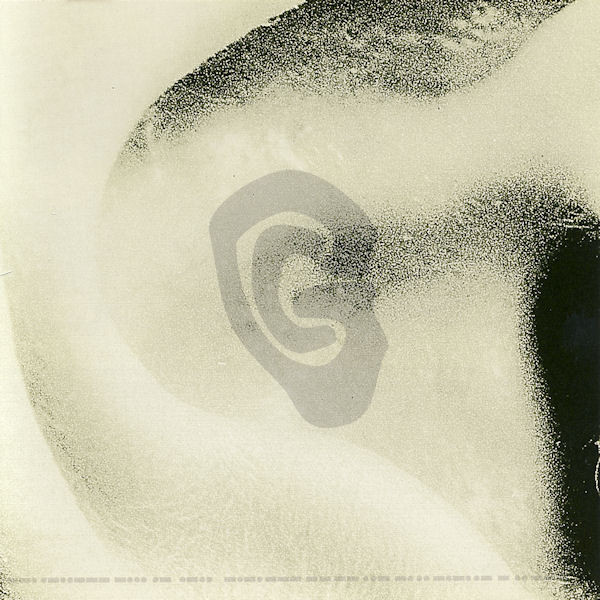
I was introduced to Global Communication in a very roundabout way. While I’m sure I saw the above record in the bins at the HMV I worked at, I never gave it a chance, at least not until late 1997 when I heard a deeply haunting track by Pulusha called “Isolation, Part 1”, found on the not-quite-holiday album Invocation that had intrigued me when it came out in October of 1997. After a bit of reading, I found out that Pulusha was a one-off project featuring Kirsty Hawkshaw — who I knew from Opus III in the early 90s — and Mark Pritchard, who was one half of Global Communication. This album had dropped in July of 1994, but had been so well-regarded that we continually stocked it in our electronic music section three years later.
I’ve listened to and loved all kinds of ambient music over the years — the experimental soundscapes of Brian Eno, the laid back cool of Orbital, the deep echoes of the early years of 4AD — but I’d never heard anything like this before. There are no real titles for the tracks; they are all known by their playing length instead, to avoid influencing what the listener might feel or imagine upon hearing it for the first time.
What caught my attention was the grandfather clock and the gentle rain of the second track, “14:31”.
You of course know that music was a huge influence on my early writing. Inspired by Miami Vice, I took music I loved and wrapped story ideas around them, and the Infamous War Novel was the first longform story I wrote that took those songs and shaped a full storyline around it. But I’d grown out of that style by the early 90s. Music was still there, though playing just a minor ‘soundtrack’ part instead. And a lot of what I was listening to at the time didn’t always fit with what I was writing, so I grew out of that style.
That is, until I listened to the above track in headphones one evening, and my imagination suddenly found itself in a dusty old mansion, sitting in a semi-dark study with cold wood panels, the only light coming from outside the one bay window, partially framed by the canopy of leaves outside, the sky a dirty light gray and the grass of the lawn a deep rich green, matching the dark trees outside. The room was a mix of forgotten papers and books, smelling of must and petrichor.
I don’t think I’d ever had that vivid of a mental image from a song in years.
This was right about the time I started working on The Phoenix Effect as well. This album immediately became part of its soundtrack, played whenever I worked on the more spiritual components of the story. I needed to be in that kind of mental space, that kind of ambient atmosphere, because that’s what it sounded like in my head. Otherworldly, spatial, the sound of moments you never notice until they sneak up on you. A soundtrack that could create not just the mental image of a forgotten part of a house deep in the country, but the loneliness of a spaceship far away from home.
These are but two tracks off a ten-track album that take you on an aural trip without actually telling you where you’re going. It leaves the destination — or just the trip itself — entirely up to your imagination.
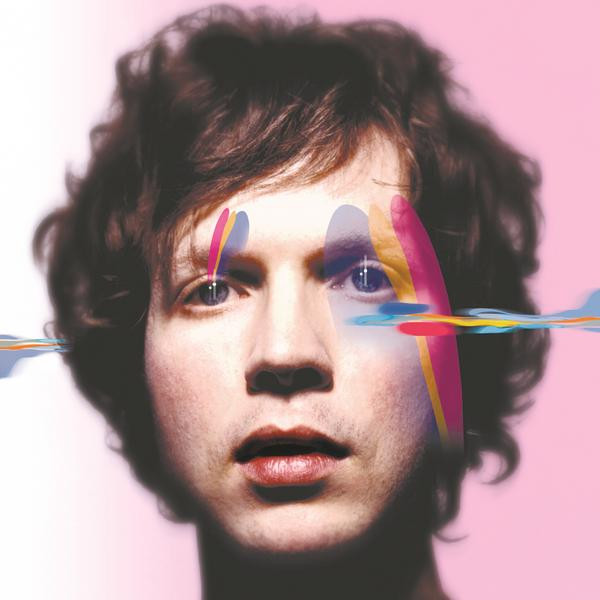
In honor of Beck’s upcoming new record Ride Lonesome which comes out this Friday, I thought I’d do a quick revisit of my favorite album of his, 2002’s Sea Change. It’s aptly named; after the quirky Odelay, the meandering Mutations, and the funky Midnite Vultures, he goes through a bitter breakup, completely changes direction, and comes out with a deeply personal and contemplative record that defies anything he’s done before. It’s my top favorite of all his albums and the one I return to the most. I’ve mentioned several times that it’s also tagged as a Mendaihu Universe Legacy Soundtrack, having been played constantly during the writing of the Bridgetown Trilogy.
He made several music videos for this album even though there were no official singles, and they complement the album’s themes of emotional loss and eventual healing.
He pulls no punches right from the start: the opener “The Golden Age” sets the stage as a night-time drive, perhaps a long dark night of the soul: Put your hands on the wheel, let the golden age begin / The window down, feel the moonlight on your skin / Desert wind cool your aching head / The weight of the world drift away instead. There’s a lot to work through, and it’s not going to be easy.
That pain continues through “Paper Tiger”, a string-laden piece (conducted by his father David Campbell) that feels very much like an old blues track. Here we start hearing more nuances in the album’s production (the always amazing Nigel Godrich), with phased vocals and the use of that slow-build style I love so much.
Eventually he comes around — sort of — with the somber “Guess I’m Doing Fine”, which is obviously not the case but at least he’s trying to find a way through it all. The video has him walking around various parts of Los Angeles, including several scenes in Echo Park, with a ghostly acoustic guitar following his every move. Eventually he befriends a local and they start talking about life. Their conversation is unknown, but the setup underscores the whole point of the song: the only way to get better is to work towards it.
It’s a tough road ahead, working through the anger of “Lonesome Tears” and the self-effacing “Lost Cause” until we hit the exhaustion of “End of the Day”. It all starts building up until it finally spills out with the adversarial “It’s All in Your Mind”, which, interestingly, was originally a lo-fi single released years before (just before Odelay), but it fits in well here.
It’s followed up by the somber and mercurial “Round the Bend” — he’s finally accepted this grief, and starts the healing. It’s followed by “Already Dead’, in which he faces everything that’s left and gone away. What’s left is what needs working on: “Sunday Sun” focuses on acceptance and moving on.
In its own way, the penultimate track “Little One” underscores that acceptance, that what is done is done and you can’t get it back. But like the video, it also focuses on what’s only seen in dreams and hopes: a clearer future of healing. A waking up from the nightmare, exhausted and feeling out of place, yet seeing a clearer path ahead. The album closes with the quiet yet uplifting “Side of the Road”, a reminder of what we’ve gone through and what we might encounter next.
*
Interestingly, I passed on picking this album up for a few months when it dropped back in September of 2002, as I hadn’t been the biggest fan of Midnite Vultures and hadn’t really heard anything from this one. It wasn’t until I happened to hear a few songs during one of my frequent stops at the Newbury Comics in downtown Amherst that it finally clicked, and I was immediately sold. By year’s end I was playing it constantly during my writing sessions. It was a perfect soundtrack that aurally fit the moods and setting of the more somber sequences of the trilogy.
Twelve years and several albums later, Beck revisited this quieter style with the equally brilliant Morning Phase in February of 2014. And his newest, Ride Lonesome, has been described as the third in this series. While Beck has already been seen as a master in writing catchy yet offbeat (and often bizarre) alternative pop singles with quirky lyrics and creative production, with these albums he proves that he can also write deeply personal and heartfelt ballads that work themselves deep into your psyche.
While I’m on the subjects of the HMV years, writing The Phoenix Effect and favorite albums from 1998, I’d be remiss if I didn’t mention another album that even more play in the back room of the store and especially during my writing sessions.
Most of you already know their popular hit “Counting Blue Cars” from 1995’s Pet Your Friends album, which got considerable play on radio and MTV at the start of 1996. It still gets play now and again (and shows up on the music loop at my day job), sadly they were treated as a one hit wonder soon after.
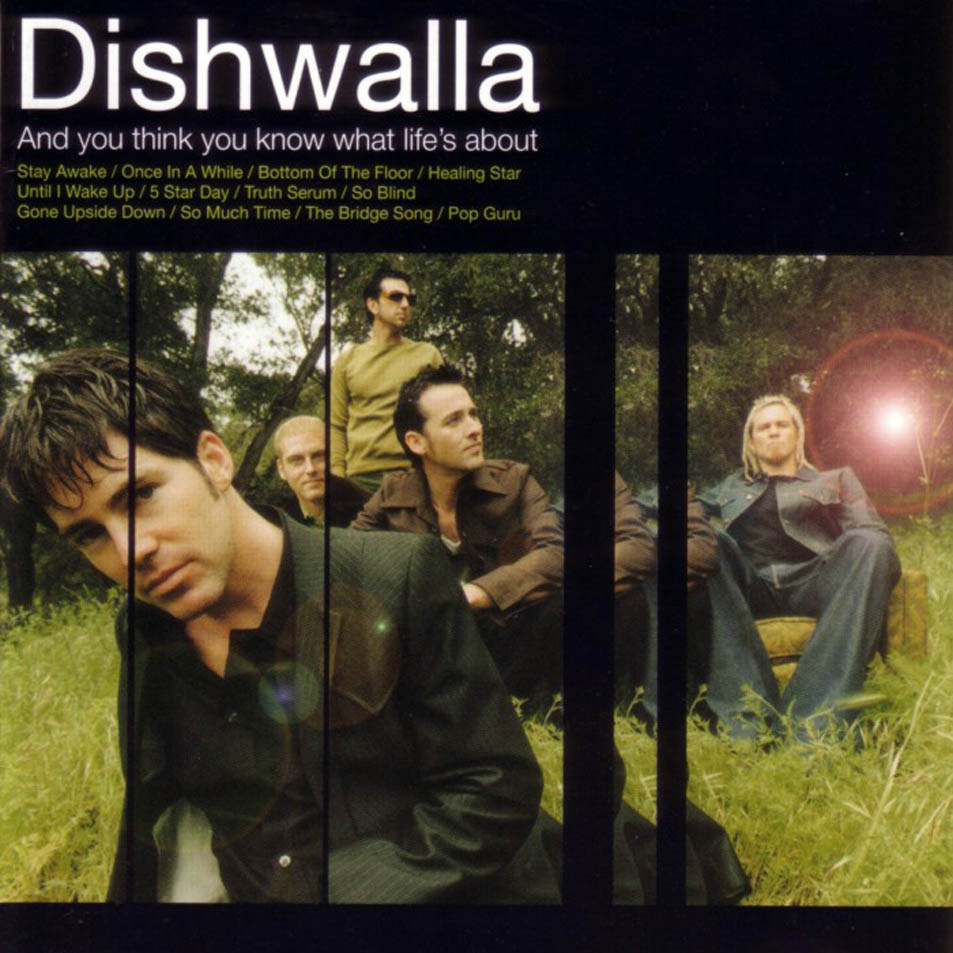
Which is too bad, because their sophomore record, And You Think You Know What Life’s About, finds the band with an edge and looking to expand their sound. As a member comments in the promo video found on the CD itself, after playing on the road for several months, they found themselves playing harder and stronger, spilling even more of their emotions and strength into their instruments than before, and it shows on this album. They holed up in the hills of Santa Barbara and came out with one hell of a great record that sadly got too easily dismissed by jaded critics expecting another “Blue Cars”. And to add insult to injury, the UNI/PolyGram merger that year pretty much dried up any promotion or support they’d had before.
Right off the bat it kicks off with “Stay Awake”, bashing drums and chunky noisy guitars, slapping you in the face to get your attention. This isn’t going to be your typical mid-90s radio-friendly alt rock album. Even the second track “Once in a While” might start off as a quiet ballad, but soon changes tack and turns up the volume. And third track “Bottom of the Floor” slides further into that harsher realm of discomfort and displacement, which seems to be the theme of this record. (This track is also where the album title comes from.)
We’re given a reprieve on the fifth track, the absolutely gorgeous “Until I Wake Up.” Originally released in demo form as a b-side to the “Counting Blue Cars” single, this is singer JR Richards revealing his deepest fears and weaknesses: the inability to control your life to the point where the dream world seems to be the only escape. It’s one of his most famous songs as a songwriter and he’s performed it and rerecorded it several times over the years in his solo career. I remember hearing this one and thinking this would be an absolutely perfect fit for the Mendaihu Universe, and so it sits nicely on the Songs from the Eden Cycle Vol 4 mixtape.
“5 Star Day” brings us back into the fold like a wake-up call, maybe one that’s needed but unwanted, reaching out in hope that the new day will be much better than the previous one. Maybe not, as it’s soon followed by the sinister “Truth Serum” bringing you back to the harsh reality that you were hoping to escape.
“So Blind” takes us off on a trip we might not want to go on, but we’re already strapped in and off on yet another adventure…very much like the never-ending exhaustion of touring as a band. You’re hoping for some kind of stability and tranquility, but you’re probably not going to find it here. And it takes you through to the brittle mind of “Gone Upside Down” and the psychedelic otherworld of “So Much Time.” It’s a trip that you don’t so much go on as you’re taken on whether you want it or not. And eventually you resurface drained yet somehow invigorated again with “The Bridge Song.”
And to end the album, you’re reminded: you’re the pop-star here, you’re performing for us, so make it happen! Ending the record with the hard-edged and snarky “Pop Guru” is an interesting choice, considering it not only riffs on the Beatles’ 1967 interest in the Maharishi, but uses it as a metaphor for reminding you of your place as a touring musician.
For an album that got little promotion yet had a few tracks used on the hit TV show Charmed, it’s a surprisingly strong and consistent record from start to finish. [They would have other songs featured on TV shows and movies, and singer JR Richards would perform a version of ‘Counting Blue Cars’ himself on an episode of How I Met Your Mother.] “Once in a While” and “Stay Awake” might have gotten some minor play on radio, but there were no music videos, official singles or any other promotion given.
And yet somehow it remains a major favorite of the band’s fans because of that. It’s an underdog record that’s harder than Pet Your Friends and less commercial than 2002’s comeback Opaline (which did in fact get sizeable promotional help). It’s a quirky record that’s more like a deep cut than a hit single, and that’s partly why I love it so much.
Some years back ordered another copy of it from JR Richards himself (signed, of course) and let him know how much the album meant to me, especially during my years writing The Phoenix Effect and its eventual remake as the Bridgetown Trilogy. He was touched by that and appreciated that he’d helped inspire someone in that way. And indeed, it got a ton of play during those basement writing sessions in the late 90s and early 00s (and yes, also during the mid-10s revisions and self-release of the books). It’s the one of theirs I return to the most as well.
I’d been a passing fan of this Belgian trio because of their excellent 1996 trip-hoppy single “2Wicky” (which would show up on multiple soundtracks like Stealing Beauty and I Know What You Did Last Summer), and their debut A New Stereophonic Sound Spectacular had done relatively well with the clubs and critics. I even listened to it once or twice while working in the back rooms of the record store.
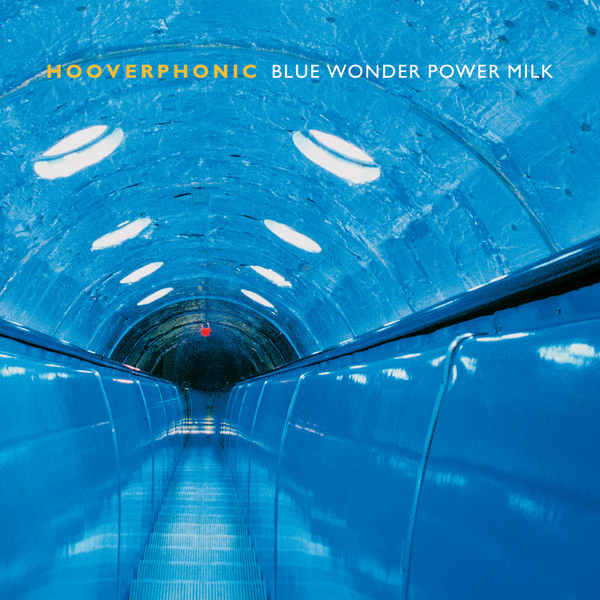
But it was their 1998 sophomore release, Blue Wonder Power Milk, that really caught my attention. It was their first with singer Geike Arnaert, who would stay with them for the next several albums, and it also signaled a change in musical style. The melodies were more complex, the sounds more experimental and adventurous.
The opener “Battersea” is upbeat and bouncy, surging with tension yet purposely never quite peaking or releasing. It breaks down slightly several times, and yet it fits perfectly with lyrics about the need to escape your surroundings. It slides next to “One Way Ride”, a horn-laden mood piece continuing that theme.
It trips suddenly to “Dictionary”, the first track featuring guitarist Alex Callier on vocals. It’s a bit of an odd song lyrically but it’s all about the mood here: darker, grittier, sexier. This was the song that initially caught my attention when I heard the album for the first time, since it sticks out so much yet still fits in perfectly. We’ve escaped our surroundings but now we’re in the big city at night where secrets lie.
The first single, “Club Montepulciano” did really well for them in their native country, and it did get some play here in the States here and there. It’s a side quest into the clubbing world, wining and dining and allowing yourself to have fun. But then…
“Eden”, the third single from the album, is a masterpiece in evoking trip-hop yet still exuding warmth and emotion. A classic “if only…” song of heartbreak, it was later covered by none other than Sarah Brightman later that year. This song completely sold me on the album.
The album then slides into a few mood pieces like the grooving “Lung” and the quiet lullaby “Electro Shock Faders” until we hit what would be one of the best songs Ray Davies ever wrote that The Kinks never released: “This Strange Effect”. It’s the opposite of “Eden”: flirty and fun yet still mysterious.
That’s immediately followed by the track “Renaissance Affair” which was never released as a single but was used for a car commercial in the States sometime later, leading the song to show up again as an extra track on their next album, 2000’s The Magnificent Tree. It’s one of their most popular tracks that gets used in various places. It’s a lovely circular melody that matches its theme of constant movement.
The album winds down with a few deep cuts: the staccato strings of “Tuna” and the sunrise quiet of “Magenta”, and finally capped by the oddball hidden track “Blue Wonder Power Milk”.
This album came out in early May 1998 when I was about halfway through writing the longhand version of The Phoenix Effect, so as you can well imagine, it soon received heavy rotation status down in the basement of my parents’ house when I was transcribing and revising it on my computer at night. It was a perfect soundtrack for me to listen to during my writing sessions: it set the moods I was aiming for, but wasn’t intrusive or distracting to make me lose my place. I would come back to it several times over the years, both when I worked on the trilogy in the early 00s and again in the mid 10s when I prepped them for self-publishing.
It also got a lot of play at work as well, especially on those days when I had a lot to do back there. My work station was pretty much my own personal corner then, well established and surrounded by everything I needed to get those products out onto the floor quickly and easily. And right next to the desk on top of a few big plastic crates was my cassette/cd player that I’d set up almost from Day One. After a while, I’d spend my lunch time back there, sneaking in a little more writing while listening to a new release or a current favorite. Blue Wonder Power Milk got so much play back there that summer and into autumn that I’m pretty sure it ended up in the top five of my favorite albums of the year.
And yes, they are on the “I will buy anything from this band without even hearing it first” list of favorite bands! They’re still around coming out with great albums and wonderful live shows. I highly recommend them.
This is a super short one, mainly because in my music library, the rest of the year is filled with singles, box sets, and best-of collections. I suppose in a way that’s a reprieve from my ingesting far too many new releases over the last several months, and it also gave our store a much-needed boost in Q4 sales. I’d like to think we did pretty good that year, considering the music business was about to get hit with a major shake-up in 1998 when the two major distributors PolyGram and Universal decided to merge. A lot of great bands suddenly found themselves without a label (or without any label support); some got dropped and went indie, but several broke up.
On a personal note, however, I think I was doing pretty good at the time. I was further out of debt, I had insurance coverage for the first time in three years, and my writing career was finally off and running. And I made it a point to get outside more often, even if it was just to get in the car and drive somewhere. I’d been stuck at home for too long, and this was my version of personal freedom. And I think that helped not just my mind and spirit but also my creativity, considering my writing definitely improved over the next several months.
The Cure, Galore: The Singles 1987-1997, released 3 November 1997. This could be seen as Standing On a Beach Part 2, I suppose, considering it was another singles-to-date collection. [Alas, the cassette version did not contain any b-sides like Beach did.] It also contains a brand new song, “Wrong Number” which would have fit nicely on Wild Mood Swings. I didn’t listen to this one too much at the time, but it grew on my over the next few years.
Spice Girls, SpiceWorld, released 3 November 1997. The second (and last with the original five-woman lineup) sold pretty well considering the critics were expecting diminishing returns, so frequent with pre-fab pop stars. This one’s interesting in that it’s less stylish and slick and more adventurous and even maybe a bit silly in places, but it’s good fun. “Spice Up Your Life” was a cacophonous mess but a catchy single. It also tied in nicely with their movie of the same name, which I went to see that winter at the newly-built theater at the mall. The movie is actually quite fun and funny and a well-crafted pastiche of A Hard Day’s Night, which I appreciated.
Mixtape, Songs from the Eden Cycle Vol 3, created early November 1997. I think this is the most spiritual of the first four volumes of this series, partly because there are a few tracks from the Invocation collection on here, but mostly because I was looking for music that evoked a more surreal and otherworldly sense of place. That was me experimenting with what Trisanda, the spiritual homeworld of my characters, would look and feel like.
Jonatha Brooke, 10¢ Wings, released 4 November 1997. I was already familiar with Brooke’s work with the folk duo The Story, but this was her first foray into a more alt-rock singer-songwriter spot similar to many other women musicians getting a lot of airplay at the time. I’d hear “Crumbs” on The River a lot and I really liked that track, so much that it’s one of my favorites of the year. It’s a really great album worth checking out.
Black Grape, Stupid Stupid Stupid, released 24 November 1997. Shaun Ryder’s second album with BG wasn’t as baggy-oriented as the first one, which didn’t help much with the critics, but to me it felt like they were trying to expand their sound by going in a more rock direction. “Marbles (Why You Say Yes?)” was the single that got play in the US and it’s a super fun track.
Will Smith, Big Willie Style, released 25 November 1997. I remember when this came out because it was such a huge deal. It was his solo musical debut away from his work with DJ Jazzy Jeff, and also his first after appearing in several popular and successful film and TV productions. Did he still have it musically? Would this even sell, dropping so late in the year where it could get lost in the Q4 noise? Indeed he did, and this was a huge seller with several hit singles from it.
*
…and so the year ends: a cold and wet winter (I seem to remember it snowing quite a bit that season) but very much on the upswing. I was in a good place mentally and emotionally for the first time in years, and I had fully embraced the freedom I’d wanted for so long and now had. To be honest I hadn’t expected any of it, given how low I’d been only a few years before, so this was something new. I’d figured out how to find my own sense of stability, and how not to be so impulsively reactive to every situation, and that was mainly because I’d also learned how not to get so distracted. In retrospect, this was when I finally figured out ‘workarounds’ in personal situations I had issues with and started implementing them. Some I’ve since shed, but some I still utilize.
Musically, 1998 would start off a little slow, but I had hope. After all, I was already convinced that all my deeply-held favorite albums and songs were released in years ending in 2 and 8, after all!
When I think about late 1997 into early 1998, I’m of course reminded that this was when I worked on the longhand rough draft of The Phoenix Effect, but I’m also reminded that this was right about when I started working more often at my writing nook in my parents’ basement. I’d been transcribing off and on when I had a chance (or more to the point, when I felt like it), but by this point I knew that I had a pretty important novel project that kept me excited, and I’d started thinking about how I could up my game.
It didn’t feel right to me to wait until the longhand draft was finished before I began working on the revision. That’s how I’d always worked in the past (other than True Faith, which was direct to PC with an attempted longhand revision later on), but I was starting to feel, I don’t know…impatient? Like I didn’t want my interest to wane? That had happened to me in the past on several aborted writing projects, and I didn’t want this one to suffer the same fate. And that’s why I started transcribing and revising TPE down in the basement while still writing it longhand before my shift. And thanks to an old boombox of my uncle’s, I could listen to the new CDs I was amassing from work while doing so.
The interesting outcome of this was two-fold. One, the revision I was doing altered a few storylines here and there, so the longhand version goes off in odd directions in the latter half. And two, the longhand version stops cold and without a proper ending, mainly because I’d caught up with the transcription and chose to finish the novel on the PC.
Ivy, Apartment Life, released 6 October 1997. It’s hard to say if this was a Fountains of Wayne side project or a parallel one, considering they both started around the same time. Either way, this was the second album by them that caught the attention of critics and a larger fanbase, and its single “The Best Thing” got considerable play on alternative radio.
Big Wreck, In Loving Memory of…, released 7 October 1997. This Canadian-by-way-of-Boston band sprang up out of nowhere with the instantly catchy and bouncy single “The Oaf” which had considerable Alternative chart success. They were a huge favorite on WFNX and WBCN thanks to their local origins, and several album tracks got significant play during the autumn and winter. This got a ton of play at the store, both on the sales floor and in the back room, and it also got a lot of play during my writing sessions as well.
Various Artists, Invocation, released 7 October 1997. I mentioned this one over at Welcome to Bridgetown a short while ago: this is a sort-of holiday compilation that’s actually spiritually themed, and it contains music from several different genres including World, New Age, Orchestral, Electronic, and Vocal. I’d grabbed a promo of this on a whim, half expecting a New Agey dreamscape, only to discover something much deeper and more personal. I found myself listening to it constantly, enough that it ended up being a very important influence on Phoenix. It also introduced me to Pulusha, who I then found out was a side project of Global Communciation, who also became a major influence.
Various Artists, Lounge-a-Palooza, released 7 October 1997. Meanwhile, this odd little mix took the minor wave of lounge music at the time (thanks to an Esquivel and Stereolab) and went in the most typical Gen-X direction: covering unexpected popular songs in that style. You’ll get Ben Folds Five’s goofy take on The Flaming Lips’ “She Don’t Use Jelly”, a nightmarish version of Was (Not Was)’s “Zaz Turned Blue” by Polly Jean Harvey….and Vegas popsters Steve Lawrence and Eydie Gorme doing Soundgarden’s “Black Hole Sun”. A really fun mix worth checking out.
Everclear, So Much for the Afterglow, released 7 October 1997. This album tends to be forgotten in their catalog other than the single “Father of Mine”, but the first single “Everything to Everyone” is an excellent track right up there with their hit “Santa Monica”. I used to hear that one on the way to and from work on the radio and would sing along.
Fantastic Plastic Machine, Fantastic Plastic Machine, released 10 October 1997. I first heard of this one via the above song featured on a CMJ mix cd, and was reminded of the loungey J-Pop I loved from Pizzicato Five. It’s clever album full of fun lightweight groove.
Soundtrack, A Life Less Ordinary, released 14 October 1997. This was an oddball black comedy by Danny Boyle that didn’t do all that well at the box office, but its soundtrack received considerable attention, especially with its lead song by Beck, who was still huge at the time. This one got a lot of play on the sales floor and in the back room as well.
Various Artists, Shaken and Stirred: The David Arnold James Bond Project, released 20 October 1997. This collection was originally created basically because of producer Arnold’s love for the music of John Barry’s 007 work, but Barry was so impressed that he suggested to the Broccoli family that he try out composing for the next in the series, Tomorrow Never Dies. It’s a fascinating collection that remains faithful to the originals yet features them in different styles; Aimee Mann’s take on “Nobody Does It Better” remains one of my top favorite tracks of the year.
Mogwai, Young Team, released 21 October 1997. I believe this is right around the time I’d finally heard what this band was about, even though I wouldn’t be picking anything up from them for a few more years. I remember one of my coworkers really loving the epic “Mogwai Fear Satan” (which would become a calling card of theirs) and would sometimes play it on the sales floor on less busy afternoons.
Recoil, Unsound Methods, released 28 October 1997. Alan Wilder’s ongoing electronic project and his first since leaving Depeche Mode, it’s a much darker affair than his previous work under that name and reveals his desire to create much more experimental sounds than with his former band. It’s an odd listen but there are some really interesting tracks on there.
Roni Size/Reprazent, New Forms, released 28 October 1997 [US version]. I’d had a passing familiarity with the genre of Drum ‘n’ Bass — fast, twitchy, bass-heavy, futuristic, and inherently jazzy — but it wasn’t until I heard the absolutely brilliant single “Brown Paper Bag” that I fell in love with it. It’s an album right up there with DJ Shadow’s Endtroducing in terms of electronic excellence and highly recommended.
*
Coming up: wrapping up the year, and looking forward to the next