The other day I was going through the Mendaihu Universe Legacy Soundtrack list — the albums, mixtapes, and compilations with a direct link to my countless writing sessions for the Bridgetown Trilogy and its many preludes, revivals and offshoots — and I discovered that I could actually pinpoint when those sessions went from ‘when I could get to it’ and solidified into an almost-daily event for the next several years. It’s also the same timeframe when my music listening habits changed and expanded considerably.
It all boils down to when I stopped working longhand on The Phoenix Effect on 7 August 1998. Over the course of that spring and summer, I’d gotten into the habit of writing four or five longhand pages in the food court at the mall I worked at, then once I was at home I’d work on transcribing that work. The transcription started most likely that spring so I had a bit of catching up to do, but by that date, I was completely caught up. I’d even been revising as I went, which meant that the longhand version and the transcript version had some significant differences.
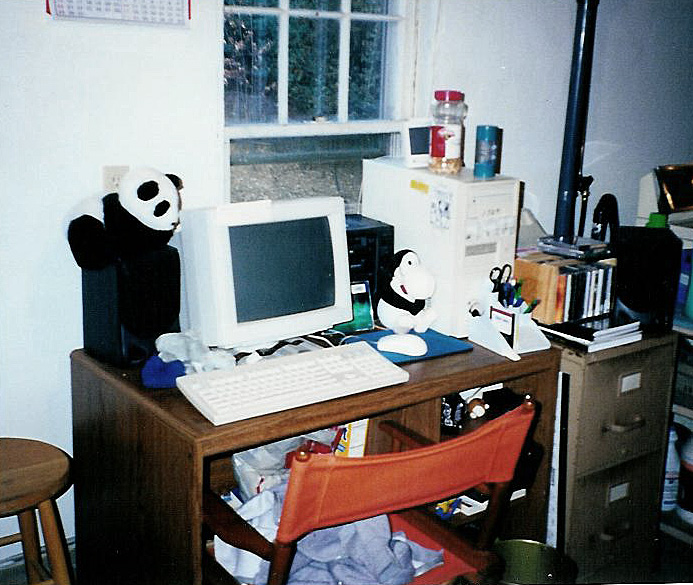
It made more sense to me to finish the novel on the PC, so for the next three weeks I headed downstairs to my basement writing nook every day to work on it. And considering I prefer writing with a soundtrack, the albums I listened to at the time were the ones getting significant repeat play during those sessions. Dishwalla’s And You Think You Know What Life’s About, Hooverphonic’s Blue Wonder Power Milk, Dubstar’s Goodbye, theaudience’s self-titled, Rasputina’s How We Quit the Forest, God Lives Underwater’s Life in the So-Called Space Age. And once the novel was complete, I started on the next round of revisions. With that came repeat listens of Mansun’s Six, Paul McCartney’s Rushes (under the moniker The Fireman), Baxter’s self-titled, Belle & Sebastian’s The Boy with the Arab Strap, UNKLE’s Psyence Fiction.
At the start of 1998, my work at the writing nook was scattershot, maybe two or three times a week. But by the end of that same year, I was down there almost every single night. Not that I completely gave up on longhand just yet, however… I was already planning out a working schedule in which I’d start the sequel to Phoenix in the food court before work while I revised Phoenix in the evening. That first sequel attempt was trunked six months later with another one attempted then stopped soon after, followed by an aborted rewrite of Phoenix. From there the dates do get a little hazy, but I would say that it was most likely the summer of 2000 that I tried one more time on the rewrite, and A Division of Souls was born.
The most important thing of all, though, was that I’d finally solidified a writing practice that I’ve stuck with ever since. I was down there in that basement nearly every single day now, even on the weekends after my road trips or other errands, working on something. There was a brief time of a few months in which it fell to the wayside in September 2000 when I started working second shift at Yankee Candle, but by November I’d switched to the morning shift. From then on until my moving out in March 2005, I’d be down there nearly every night, working on the Bridgetown Trilogy.
And considering the schedule, that also meant that by late autumn of 2000 I was making my weekly runs to Newbury Comics in downtown Amherst, picking up new releases every Wednesday after my comic book run at Hampshire Mall. And nearly all of these albums would get repeated play down there in the basement while I worked on the trilogy. My collection grew exponentially for the next five years because of that, and several of those titles became part of the MU Legacy Soundtrack list.
But yeah, it’s kind of neat to finally confirm that this longstanding writing-and-new-music habit I still have started in September of 1998.
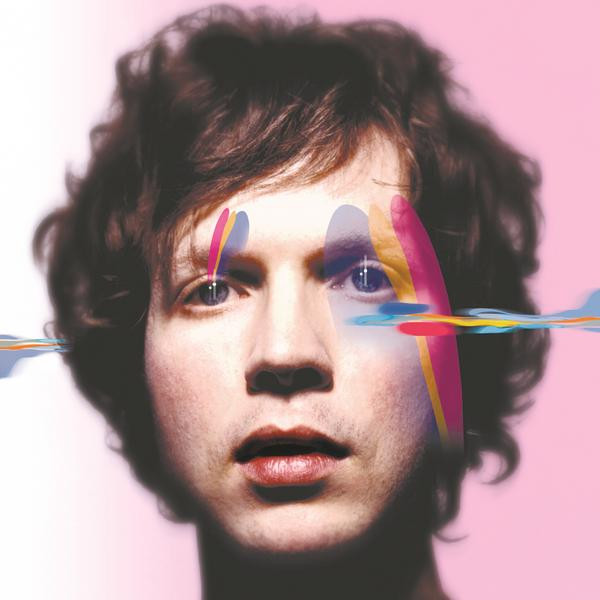
In honor of Beck’s upcoming new record Ride Lonesome which comes out this Friday, I thought I’d do a quick revisit of my favorite album of his, 2002’s Sea Change. It’s aptly named; after the quirky Odelay, the meandering Mutations, and the funky Midnite Vultures, he goes through a bitter breakup, completely changes direction, and comes out with a deeply personal and contemplative record that defies anything he’s done before. It’s my top favorite of all his albums and the one I return to the most. I’ve mentioned several times that it’s also tagged as a Mendaihu Universe Legacy Soundtrack, having been played constantly during the writing of the Bridgetown Trilogy.
He made several music videos for this album even though there were no official singles, and they complement the album’s themes of emotional loss and eventual healing.
He pulls no punches right from the start: the opener “The Golden Age” sets the stage as a night-time drive, perhaps a long dark night of the soul: Put your hands on the wheel, let the golden age begin / The window down, feel the moonlight on your skin / Desert wind cool your aching head / The weight of the world drift away instead. There’s a lot to work through, and it’s not going to be easy.
That pain continues through “Paper Tiger”, a string-laden piece (conducted by his father David Campbell) that feels very much like an old blues track. Here we start hearing more nuances in the album’s production (the always amazing Nigel Godrich), with phased vocals and the use of that slow-build style I love so much.
Eventually he comes around — sort of — with the somber “Guess I’m Doing Fine”, which is obviously not the case but at least he’s trying to find a way through it all. The video has him walking around various parts of Los Angeles, including several scenes in Echo Park, with a ghostly acoustic guitar following his every move. Eventually he befriends a local and they start talking about life. Their conversation is unknown, but the setup underscores the whole point of the song: the only way to get better is to work towards it.
It’s a tough road ahead, working through the anger of “Lonesome Tears” and the self-effacing “Lost Cause” until we hit the exhaustion of “End of the Day”. It all starts building up until it finally spills out with the adversarial “It’s All in Your Mind”, which, interestingly, was originally a lo-fi single released years before (just before Odelay), but it fits in well here.
It’s followed up by the somber and mercurial “Round the Bend” — he’s finally accepted this grief, and starts the healing. It’s followed by “Already Dead’, in which he faces everything that’s left and gone away. What’s left is what needs working on: “Sunday Sun” focuses on acceptance and moving on.
In its own way, the penultimate track “Little One” underscores that acceptance, that what is done is done and you can’t get it back. But like the video, it also focuses on what’s only seen in dreams and hopes: a clearer future of healing. A waking up from the nightmare, exhausted and feeling out of place, yet seeing a clearer path ahead. The album closes with the quiet yet uplifting “Side of the Road”, a reminder of what we’ve gone through and what we might encounter next.
*
Interestingly, I passed on picking this album up for a few months when it dropped back in September of 2002, as I hadn’t been the biggest fan of Midnite Vultures and hadn’t really heard anything from this one. It wasn’t until I happened to hear a few songs during one of my frequent stops at the Newbury Comics in downtown Amherst that it finally clicked, and I was immediately sold. By year’s end I was playing it constantly during my writing sessions. It was a perfect soundtrack that aurally fit the moods and setting of the more somber sequences of the trilogy.
Twelve years and several albums later, Beck revisited this quieter style with the equally brilliant Morning Phase in February of 2014. And his newest, Ride Lonesome, has been described as the third in this series. While Beck has already been seen as a master in writing catchy yet offbeat (and often bizarre) alternative pop singles with quirky lyrics and creative production, with these albums he proves that he can also write deeply personal and heartfelt ballads that work themselves deep into your psyche.
The answer to my job frustrations lay in a newspaper want-ad my mom saw in the Sunday paper in the early half of September. A new record store was opening in the recently opened new mall in Marlborough — out in the middle of nowhere yet perfectly placed where I-280 and Route 495 meet, two major highways in the state. Solomon Pond Mall had been built earlier in the year and was still bringing in new tenants when the HMV chain chose to open one there. They’ve long been a UK institution yet began expanding in the US in the early 90s. I’d gone to the one in Harvard Square in Cambridge a few times during my time in Boston. And their selection was excellent: they weren’t afraid to carry titles that weren’t on the national charts, and many music nerds like me loved that.
Me? Work at a record store? I mean, come on. Have you met me??
Especially since I had both retail and shipping/receiving experience, which they were looking for. I sent in a resume immediately. They responded back quickly with interest, first with a quick phone pre-interview and then a second in-person interview later on with the manager. That would take place in the food court of the mall, and by the end of it I believed I was a shoo-in. They would call about a week later with an offer, which I of course accepted!
And then came the next problem to be solved: how the hell do I get there? That was also answered by my mom who knew a few car dealership owners due to her job and asked around. In short order, so we found a beater for me: a 1992 blue Chevy Cavalier for $2000. Paperwork signed and filed, I was ready to go on my first day, which was 23 September.
How do I know this date without looking it up? Because my first day was actually getting training at the Harvard Square store the day before Sheryl Crow’s self-titled second album came out. That was the first CD I ever processed, tagged and price-stickered for the company. I’d start the very next day at the Solomon Pond Mall store.
The next four years were going to be interesting. And my finances were definitely going to suffer damage if I wasn’t careful with my purchases. Thank heavens for promo copies, then!
*
The London Suede, Coming Up, released 2 September 1996. I’d loved their first album but felt the second was a bit too out there for me, but this third album hit the sweet spot: the glam rock of the first album, the quirkiness of the second, and some stellar songwriting. This is fascinating, considering this was the first without their original guitarist Bernard Butler. It’s my second favorite album of theirs right after the first one.
REM, New Adventures in Hi-Fi, released 10 September 1996. This band, on the other hand, had fallen from my obsession radar by the time this album came out. While I did like Out of Time, I thought Automatic for the People was merely okay and Monster was a noisy mess. This album was a head-scratcher for me then, a collection of songs written and recorded during long and grueling tours fraught with health issues and whatnot. It’s not necessarily bad, but it’s patchy and contains a lot of filler. And yet this is the one that a lot of latter-era fans think is one of their best, and critics couldn’t say enough great things about it.
Billy Bragg, William Bloke, released 10 September 1996. Bragg hadn’t had a radio hit in a while and this one suffers from not really having one on it. He was a new dad now and he’d temporarily backed away from his overtly political lyrics in the process, making this one sound rather calm and sedate. It’s got some great deep cuts on it, however, including the lovely “Sugardaddy”.
Kula Shaker, K, released 16 September 1996. I first heard this band when WHMP played the “Tattva” single and I was immediately hooked by their 60s psychedelic pop sound that was less a caricature and more a loving nod to the style. I was also taken by the brilliant album cover created by comic artist Dave Gibbons (known for his work on Watchmen at the time). It’s pure psych-out bliss and one of my favorite albums of the 90s. They’d break up a few years later, but would reunite in the 00s, and their latest (this year’s Wormslayer) is another favorite I often revisit.
Space, Spiders, released 16 September 1996. Yet another one-hit wonder, at least on this side of the Atlantic, with the 60s inspired single “Female of the Species”, which would end up on the soundtrack for the first Austin Powers film. But it’s catchy as hell and worth checking out the rest of the album. It’s good 90s fun.
Tool, Ænima, released 17 September 1996. After three long years, the revered alt-metal band that stormed MTV with its weird-ass Brothers Quay/Jan Svankmajer-inspired videos finally returned with its second record that won over fans (and gained new ones) immediately. I wasn’t the biggest fan but I appreciated them enough to listen to this one now and again while at work. I even had a promo tee-shirt for this album!
Cake, Fashion Nugget, released 17 September 1996. I’d known about this band for a while, but it was the excellent single “The Distance” that got me hooked. [It was also the hilarious one-note guitar solo for their cover of “I Will Survive” that sold me.] I’d borrow the store copy and listen to it up back quite frequently, eventually getting my own copy which I still visit every now and again. It’s a really fun album full of quirky alt-rock melodies that get stuck in your head.
Various Artists, Hang the DJ: Modern Rock 1986, 1987 and 1988, released 17 September 1996. Most compilations revisiting the 80s tended to not be all that daring, staying safe with the same Soft Cell, Thomas Dolby, ABC and Berlin songs you expect. The track list for these three titles, on the other hand, looked like something I would have made back in the day! [In fact, the 1988 volume contains quite a few of the same tracks as my year-end Does Truth Dance? Does Truth Sing? mix.] I found these at the record store and immediately picked up all of them on cassette where they got a lot of play over the next couple of years.
Moby, Animal Rights, released 23 September 1996. Moby took an unexpected left turn far away from his well-known and well-loved electronic music by putting out a hardcore rock album that confused almost every fan of his. He did, however, release a surprisingly decent cover of the classic Mission of Burma song “That’s When I Reach for My Revolver” which got a lot of play on WFNX of course. [Sadly, the MTV version would take all the sting out of the song with the alternate line “that’s when I realize it’s over”, which still makes me wince.]
Fatboy Slim, Better Living Through Chemistry, released 23 September 1996. Before songs like “Praise You” and “Rockafeller Skank” permeated the airwaves and wouldn’t go away, he dropped a more sedate and lighthearted album that laid down the path he’d take on his electronic music career. The Who-sampled single “Going Out of My Head” got a significant amount of radio play at the time.
John Parish & Polly Jean Harvey, Dance Hall at Louse Point, released 23 September 1996. This one took me a while to get used to, as it’s not the sound of PJ Harvey that you’d expect. Parish was a former bandmate of hers, and they’d reconvened to put out what would basically be experimental torch songs, including a cover of the Leiber-Stoller song “Is That All There Is?” It was a critic favorite at the time, and I’ve eventually come around on it.
Weezer, Pinkerton, released 24 September 1996. I remember this one dividing fans and critics alike with its crunchier and heaver sound. Those who were expecting light pop gems like “Buddy Holly” and “Undone” instead got weird things like “El Scorcho” and “Pink Triangle”. I for one loved it, and would remain a fan ever since.
Soundtrack, That Thing You Do! released 24 September 1996. I knew this was going to be a pastiche on 60s pop with expected nods to the Beatles, but Tom Hanks pulls it off by making it a spot-on homage to the scene instead of a comic riff. It’s a really well-made film and one of my favorites of the decade. Even the music was bang on, with Adam Schlesinger’s excellent take on jangle pop as well as solo crooners and even jazz. This was one of the first promo CDs I’d get from the store!
Morcheeba, Who Can You Trust? released 24 September 1996. This band’s first album came out of nowhere and captured the attention of both critics and fans of trip-hop and chillwave electronic music with the great single “Trigger Hippie” that got a lot of play on WFNX at the time. I’d be a fan almost from the start.
Lamb, Lamb, released 30 September 1996. Believe it or not, I missed the boat the first time around on this band, though I’d finally catch on a short time later when my coworker Doug introduced me to the absolutely brilliant single “Gorecki”. [Yes, the character of Christine in the Bridgetown Trilogy is indeed named after this song.] By 1998 I was a big fan and they’d be on my “I’ll buy anything they release” shopping list. They’d also have pride of place on the Official Trilogy Soundtrack. Highly recommended.
The Chemical Brothers, “Setting Sun” single, released 30 September 1996. This duo had become a critic and fan favorite with their debut, 1995’s Exit Planet Dust, but they’d become even bigger with this teaser single that’s an obvious nod to the Beatles’ “Tomorrow Never Knows” and also such a noisefest that you can’t help but blast it out of your car’s speakers. It would be another eight months before the follow-up record appeared, but at that point they’d become an MTV staple in the late 90s.
*
Coming Up: The beginnings of a deeper (and more expensive) immersion
Believe it or not I did not listen to Revolver this time out while I did our taxes! Just…didn’t feel in the mood, I guess. But yes, everything is done and away until next year. Who knows what they’re going to look like then?
In the meantime, I’ve been revisiting some music from 2001-2002 — the Belfry Years, specifically the albums that were on heavy rotation during the writing of A Division of Souls, which I’m currently ‘remastering’. [Long story short if you don’t follow my writing blog: It’s been ten years this September since I first self-published the book, so I thought I’d do a tenth anniversary special edition. I’m currently doing a bit of revision and clean-up where needed, fixing up the cover a bit, and perhaps adding some extra bonus things. And yes, I will most likely be doing this for The Persistence of Memories and The Balance of Light as well.]
So what’s popped up that I’m enjoying once more?
I’d forgotten how much I loved Zero 7’s Simple Things! It’s a lovely record that feels a bit like Morcheeba with a hint of Air and “Destiny” is just a wonderful track.
The Chameleons UK shows up on my playlists partly because I love the track “Swamp Thing” so much, but this 2001 album was an amazing return to form after a long hiatus for the group. Highly recommended.
Big Wreck has always been one of my unsung favorites. They’re one of those bands that are absolutely amazing yet have never had a huge following. Loud and extremely melodic, they’re definitely not alt-metal, but they’re not just another 90s alt-rock band either. I highly recommend checking out all their work.
I kinda sorta liked Coldplay’s “Yellow” when it came out, but I wasn’t completely sold on their lighter sound. I even passed up picking up their second album A Rush of Blood to the Head until I heard them do “Politik” live on the Grammys in early 2003. That’s when I realized just how amazing “God Put a Smile Upon Your Face” is, and how this band has a lot more going on than just radio friendly fare.
I said I was going to do it and I’m doing it now: I’m currently going through the albums and singles from 2000 onwards as a soundtrack to the Bridgetown Trilogy Remaster Project. I started the revisit on Monday afternoon on my day off with William Orbit’s remixed take on Barber’s Adagio for Strings, one of my all-time favorite classical pieces.
I know, this is sort of an arbitrary place to start and doesn’t really line up with the writing chronology. I’d started and finished The Phoenix Effect (the early ‘demo’ version, if you want to continue the music analogy) but hadn’t yet started writing its aborted sequel The Mihari (that would take place that summer if I’m not mistaken), but the actual day-one of A Division of Souls wouldn’t take place until late 2001 or early 2002.
So why start the relistening at January 2000? Partly because I knew my days were numbered at the record store by then. I still loved the job and wished I could stay there forever, but a) I could definitely see the downturn of the music industry happening in real time, and b) I wasn’t sure how much longer I could handle the store manager without eventually ragequitting. It was also a bit of a weird time musically; grunge had long given way to adult alternative which had given way to meathead alt-metal, and pop was having a huge resurgence with its sugary overproduced electronica.
A lot of music I listened to at the time felt a bit out of place. I wasn’t quite sure what I wanted to listen to, because very little of it was resonating with me at a deep level, as it once had just a few years previous. That could very well be due to personal issues and changes, and at the time I was feeling unmoored.
Still, I was willing to see where it all took me. Life changes and all.
Not too many releases to speak of at the end of the year (which, y’know, par for the course at the time), which meant I spent most of my writing sessions listening to all the cds I’d accumulated over the past year or so. In retrospect, 2003 was indeed a stellar year for alternative and indie rock, even though it did kind of feel like a year of change…while there were very few mind-blowing albums or songs that sank deep into my psyche at the time, that’s not to say they weren’t bad per se. Just an interesting mix of bands and sounds changing and evolving. And I always think that’s a good thing, even if the sounds didn’t quite resonate with me.
I did spend a lot of the time listening to releases from 2002 as well — in particular, I’d gotten into Beck’s Sea Change a bit later than its release but it soon became one of my top writing session albums (and still is to this day). Coldplay’s A Rush of Blood to the Head was another that I got into quite late. I was very curious to see what the next year would bring.
*
Hooverphonic, Sit Down and Listen to Hooverphonic: The Live Theater Recordings, released 1 December 2003. I actually didn’t get around to acquiring this one for a while, which is surprising considering my love for this band, but I mention it here because all of their previous albums were still on heavy rotation in the Belfry, including most of the tracks found on this one. Still one of my favorite bands!
Various Artists/Soundtrack, Live Forever: The Best of Britpop, released 2 December 2003. If you’re curious about the Britpop movement of the 90s, this is a perfect collection to start off with. While some mixes lean heavily on obscurities or label-related releases, this one was inspired by the documentary Live Forever: The Rise and Fall of Brit Pop, which I highly recommend, and focuses more on several popular groups and bands at the time. This one still gets plays here in Spare Oom!
Mix CD, Re:Defined…The Best of 2003, created 30 December 2003. The second year in which my end-of-year compilation is CD-only — I’d bought a CD drive for my older PC late in 2002 and managed to somehow have enough hard drive space to rip songs from my collection then burn them. This was the first end-of-year mix using my new PC, and I think it shows that I’d gotten the hang of making a disc mix, after having made 45-minutes-a-side mixes for the last twenty or so years! I’m quite happy with how this one came out, actually.
*
So what would 2004 bring…? I’d continued my weekly runs to Newbury Comics and would continue to do so until further notice, and I’d start writing The Balance of Light soon enough — as well as a vampire novel idea that would pop into my head, serving as a secondary project when I’d started having trouble with TBoL. After three-plus years of writing the Bridgetown Trilogy, I was starting to burn out.
And then at some point during the summer, one of my close friends would hold a get-together with several friends from all around, during which I’d meet for the second time a friend of a friend from New Jersey…
Don’t forget to support your local bookstore! If they sell e-books, go ahead and download from their website! Here are a few of my favorite local bookstores where you can buy it:
A DIVISION OF SOULS is also STILL FREE! Want to get caught up first before jumping in? Head over to B&N, Kobo or Smashwords (or hey, even NoiseTrade) and download the first book, and your reading list is good to go!
Say hello to the rug’s topography / it holds quite a lot of interest with your face down on it…
I distinctly remember hearing Failure for the first time; their debut Comfort had been released just as I started my senior year in college, and our FM station, WERS, had received a promotional copy, which I soon found in the freebie bins outside the studio (aka the “here, this sucks and/or is too commercial-sounding and we won’t play it” bins, given the station at the time). I’d heard a lot of great things about the band and the album, even despite the incessant and often misguided comparisons to the ubiquitous Nirvana. I can see where they’d get that, if you think loud guitars + quirky chord changes + odd lyrics = Nirvana or one of its clones, but I always felt that was a cop-out, a weak and lazy way to pigeonhole a newly-popular subgenre.
I played “Submission” and “Pro-Catastrophe” from that first album on my radio show on our AM station, WECB, where I was the music director that semester, and I thought they were well worth checking out and sharing with others. My enthusiasm didn’t get too far, of course, considering WECB’s low-watt reach was ridiculously sketchy, not to mention by that time, the alternative rock purists were refusing to listening to anything remotely commercial, and that WFNX was playing Nirvana, Soundgarden and Pearl Jam every fifteen minutes or so. Failure unfortunately could not sneak in edgewise into anyone’s playlist. I don’t blame the band for that at all; in fact, I have to give them mad props for remaining true to the sounds they wanted to create. They weren’t as Led-Zep as most grunge bands were, they weren’t as hard as any metal bands out there, but they also weren’t deliberately outsider anti-commercial either.
They released a second album, Magnified, in early 1994, which I unfortunately never picked up at the time, as that was during my broke years in Boston, but I did eventually pick it up a few years later while working at HMV.
That was where I fell in love with the band again.
In August of 1996, about a month before I started working at the record store, the band released the video for the single “Stuck on You”, a brilliant and almost shot-for-shot takeoff of the opening credits to the James Bond flick The Spy Who Loved Me, and I was immediately hooked. I mean, listen to that crunch–it’s drop-tuned a half-step to give it a powerful low end, and balanced with a high end distorted riff. The whole thing just punches you in the face from the first few seconds, and doesn’t relent until the last few. Lead singer and songwriter Ken Andrews delivers great vocals here too, drifting lazily through the verses (which, interestingly enough, are about getting a song stuck in your head) but belting them out during the choruses.
One of the first promotional freebies I got from the record store was a copy of this single, a two-track cd shaped like the head of the spaceman on the album’s cover and featuring the album version and the radio edit of the track. Suffice it to say this track got a lot of play in the back storage room at the time. Fantastic Planet was one of my first purchases when I first started working at HMV. As the lone shipping/receiving clerk for the store, I often hung out up back, pricing and security-tagging and processing them into the stock database, but during all that time I’d have a radio going. That was one of the first things I did when I started the job, actually–I got a hold of a cheap boombox at WalMart and brought it in specifically for backroom listening. [It wasn’t just for my own entertainment, either…I did that because I knew the label reps would want us to sample some of their wares during their visits. That worked quite to our advantage, actually.]
I knew I’d love it even before I heard any other tracks from it–the fact that they named it after the 1973 animated French film of the same name (a movie I’d taped years before off USA Network’s Night Flight and watched repeatedly) was definitely a selling point, but I’d heard a hell of a lot of positive reviews as well. I even snagged a promotional album flat for it as well and had it posted prominently for pretty much the entire time I was at the store. And yes, I played the hell out of that album for years to come.
The history behind the album is quite interesting, as Ken Andrews and bassist Greg Edwards explain in this recent interview as well as in this promo for the album’s 2010 vinyl reissue both point out that it was recorded during their most tumultuous times as a band. Come 1995 they’d had issues not just with the label (Slash Records) not quite knowing how to sell the band, and drugs and personal issues were also causing fractures. And yet, they retained a crystal clear idea of what they wanted the album to sound like, and took delicate care with each and every track before considering it done. This included the production as a whole–they took care to ensure the running order was perfect as well. The album also both starts and ends with the same trinkety sound effect loop, but it could be taken two ways: the album is either an unending cycle, or they’re a prologue and epilogue to gauge just how much the cycle has changed from one end to the other.
It’s hard to say exactly what the album may be about, really…while there is a theme of space in the science fiction sense–thus the title–it’s also about emotional space and one’s self within it. There are songs about drug addiction and psychological breakdowns, but there are also songs about redemption and clarity as well. Even the opening track, “Saturday Savior”, could be taken more than one way–either a throwaway relationship, or addiction denial. The album almost has a similar lyrical and musical feel as Pink Floyd’s The Wall, where we don’t quite notice until a few songs in that things are starting to get dark and desperate. It’s not until “Smoking Umbrellas” that the imagery becomes trippier, the chords of the song drifting in unexpected directions. The frantic “Pillowhead” follows it up, and the narrator knows full well that he’s deep in addiction now. By “Dirty Blue Balloons”, he’s at his “Comfortably Numb” phase, wasted beyond help, and at “Pitiful” he’s hit rock bottom. We’ve hit the halfway point in the album, and we’re not sure where he can go from here.
And that’s when “Leo” arrives–a moment of clarity, where he’s finally able to see himself, and he doesn’t like what he sees and feels. There’s pain, a misplaced hunger, a sense of paranoia that he can’t quite place. There’s no real resolution, at least not yet. The first step is a cleansing, in the form of “The Nurse Who Loved Me”. A brilliant, beautiful angelic song (which puts A Perfect Circle’s cover to shame) that’s not just about the narrator’s coming clean physically but emotionally as well. It’s one of the best tracks on the album, deliberately constructed to build tension both in sound and pace, right up until the last second…and ending with a breath of exhaustion and relief. And by “Another Space Song” and “Stuck On You”, he’s back on the mend. There’s still addiction–emotional addiction this time–that needs stopping and healing. He faces it head on on “Heliotropic”, one of the heaviest and angriest tracks on the album. He’s forcing himself to admit guilt and turn away from the temptations once and for all. Redemption and relief finally come to him in the epic closer “Daylight”–he’s gone through hell physically and emotionally, most of it his own doing, and he’s made peace with it…now it’s time to make peace with himself.
When I first heard this album, I did pick up on the addiction references, but I also chose to see past them for the overall mood of the album, just as I had back in my teens with The Wall–it wasn’t so much about the actual story being told that intrigued me as it was about the way it was told. I don’t really pay too much attention to the literal meaning of the lyrics; instead I see the peaks and the valleys in this album as if they’re part of a novel or a movie, with its sequencing taking us on a deep spiritual and emotional journey. It tells a story, and it tells it without flinching. It’s because of this that it fell into heavy rotation during my writing sessions for the Bridgetown Trilogy, and helped inspire the ending scene in A Division of Souls. It’s remained one of my top ten favorite albums, and still gets heavy play–I even have it on the mp3 player I use at the gym.