The other day I was going through the Mendaihu Universe Legacy Soundtrack list — the albums, mixtapes, and compilations with a direct link to my countless writing sessions for the Bridgetown Trilogy and its many preludes, revivals and offshoots — and I discovered that I could actually pinpoint when those sessions went from ‘when I could get to it’ and solidified into an almost-daily event for the next several years. It’s also the same timeframe when my music listening habits changed and expanded considerably.
It all boils down to when I stopped working longhand on The Phoenix Effect on 7 August 1998. Over the course of that spring and summer, I’d gotten into the habit of writing four or five longhand pages in the food court at the mall I worked at, then once I was at home I’d work on transcribing that work. The transcription started most likely that spring so I had a bit of catching up to do, but by that date, I was completely caught up. I’d even been revising as I went, which meant that the longhand version and the transcript version had some significant differences.
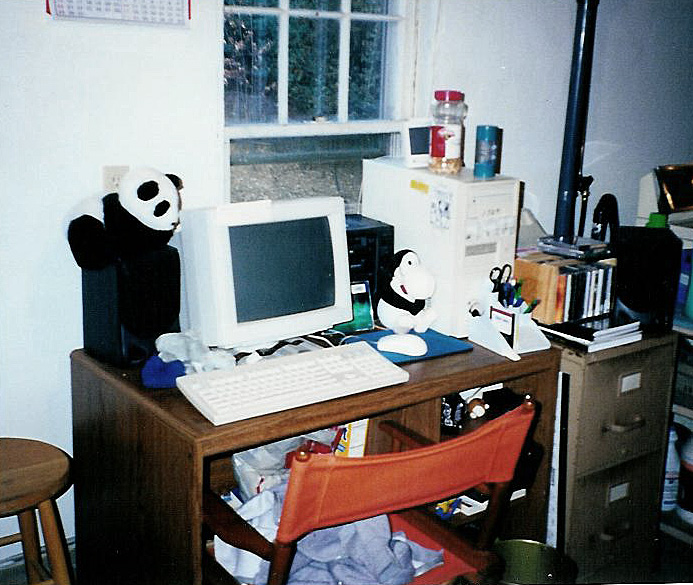
It made more sense to me to finish the novel on the PC, so for the next three weeks I headed downstairs to my basement writing nook every day to work on it. And considering I prefer writing with a soundtrack, the albums I listened to at the time were the ones getting significant repeat play during those sessions. Dishwalla’s And You Think You Know What Life’s About, Hooverphonic’s Blue Wonder Power Milk, Dubstar’s Goodbye, theaudience’s self-titled, Rasputina’s How We Quit the Forest, God Lives Underwater’s Life in the So-Called Space Age. And once the novel was complete, I started on the next round of revisions. With that came repeat listens of Mansun’s Six, Paul McCartney’s Rushes (under the moniker The Fireman), Baxter’s self-titled, Belle & Sebastian’s The Boy with the Arab Strap, UNKLE’s Psyence Fiction.
At the start of 1998, my work at the writing nook was scattershot, maybe two or three times a week. But by the end of that same year, I was down there almost every single night. Not that I completely gave up on longhand just yet, however… I was already planning out a working schedule in which I’d start the sequel to Phoenix in the food court before work while I revised Phoenix in the evening. That first sequel attempt was trunked six months later with another one attempted then stopped soon after, followed by an aborted rewrite of Phoenix. From there the dates do get a little hazy, but I would say that it was most likely the summer of 2000 that I tried one more time on the rewrite, and A Division of Souls was born.
The most important thing of all, though, was that I’d finally solidified a writing practice that I’ve stuck with ever since. I was down there in that basement nearly every single day now, even on the weekends after my road trips or other errands, working on something. There was a brief time of a few months in which it fell to the wayside in September 2000 when I started working second shift at Yankee Candle, but by November I’d switched to the morning shift. From then on until my moving out in March 2005, I’d be down there nearly every night, working on the Bridgetown Trilogy.
And considering the schedule, that also meant that by late autumn of 2000 I was making my weekly runs to Newbury Comics in downtown Amherst, picking up new releases every Wednesday after my comic book run at Hampshire Mall. And nearly all of these albums would get repeated play down there in the basement while I worked on the trilogy. My collection grew exponentially for the next five years because of that, and several of those titles became part of the MU Legacy Soundtrack list.
But yeah, it’s kind of neat to finally confirm that this longstanding writing-and-new-music habit I still have started in September of 1998.
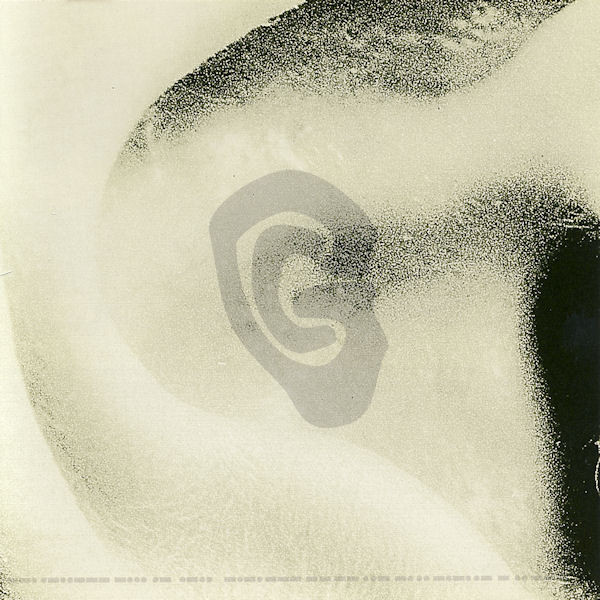
I was introduced to Global Communication in a very roundabout way. While I’m sure I saw the above record in the bins at the HMV I worked at, I never gave it a chance, at least not until late 1997 when I heard a deeply haunting track by Pulusha called “Isolation, Part 1”, found on the not-quite-holiday album Invocation that had intrigued me when it came out in October of 1997. After a bit of reading, I found out that Pulusha was a one-off project featuring Kirsty Hawkshaw — who I knew from Opus III in the early 90s — and Mark Pritchard, who was one half of Global Communication. This album had dropped in July of 1994, but had been so well-regarded that we continually stocked it in our electronic music section three years later.
I’ve listened to and loved all kinds of ambient music over the years — the experimental soundscapes of Brian Eno, the laid back cool of Orbital, the deep echoes of the early years of 4AD — but I’d never heard anything like this before. There are no real titles for the tracks; they are all known by their playing length instead, to avoid influencing what the listener might feel or imagine upon hearing it for the first time.
What caught my attention was the grandfather clock and the gentle rain of the second track, “14:31”.
You of course know that music was a huge influence on my early writing. Inspired by Miami Vice, I took music I loved and wrapped story ideas around them, and the Infamous War Novel was the first longform story I wrote that took those songs and shaped a full storyline around it. But I’d grown out of that style by the early 90s. Music was still there, though playing just a minor ‘soundtrack’ part instead. And a lot of what I was listening to at the time didn’t always fit with what I was writing, so I grew out of that style.
That is, until I listened to the above track in headphones one evening, and my imagination suddenly found itself in a dusty old mansion, sitting in a semi-dark study with cold wood panels, the only light coming from outside the one bay window, partially framed by the canopy of leaves outside, the sky a dirty light gray and the grass of the lawn a deep rich green, matching the dark trees outside. The room was a mix of forgotten papers and books, smelling of must and petrichor.
I don’t think I’d ever had that vivid of a mental image from a song in years.
This was right about the time I started working on The Phoenix Effect as well. This album immediately became part of its soundtrack, played whenever I worked on the more spiritual components of the story. I needed to be in that kind of mental space, that kind of ambient atmosphere, because that’s what it sounded like in my head. Otherworldly, spatial, the sound of moments you never notice until they sneak up on you. A soundtrack that could create not just the mental image of a forgotten part of a house deep in the country, but the loneliness of a spaceship far away from home.
These are but two tracks off a ten-track album that take you on an aural trip without actually telling you where you’re going. It leaves the destination — or just the trip itself — entirely up to your imagination.
This is a super short one, mainly because in my music library, the rest of the year is filled with singles, box sets, and best-of collections. I suppose in a way that’s a reprieve from my ingesting far too many new releases over the last several months, and it also gave our store a much-needed boost in Q4 sales. I’d like to think we did pretty good that year, considering the music business was about to get hit with a major shake-up in 1998 when the two major distributors PolyGram and Universal decided to merge. A lot of great bands suddenly found themselves without a label (or without any label support); some got dropped and went indie, but several broke up.
On a personal note, however, I think I was doing pretty good at the time. I was further out of debt, I had insurance coverage for the first time in three years, and my writing career was finally off and running. And I made it a point to get outside more often, even if it was just to get in the car and drive somewhere. I’d been stuck at home for too long, and this was my version of personal freedom. And I think that helped not just my mind and spirit but also my creativity, considering my writing definitely improved over the next several months.
The Cure, Galore: The Singles 1987-1997, released 3 November 1997. This could be seen as Standing On a Beach Part 2, I suppose, considering it was another singles-to-date collection. [Alas, the cassette version did not contain any b-sides like Beach did.] It also contains a brand new song, “Wrong Number” which would have fit nicely on Wild Mood Swings. I didn’t listen to this one too much at the time, but it grew on my over the next few years.
Spice Girls, SpiceWorld, released 3 November 1997. The second (and last with the original five-woman lineup) sold pretty well considering the critics were expecting diminishing returns, so frequent with pre-fab pop stars. This one’s interesting in that it’s less stylish and slick and more adventurous and even maybe a bit silly in places, but it’s good fun. “Spice Up Your Life” was a cacophonous mess but a catchy single. It also tied in nicely with their movie of the same name, which I went to see that winter at the newly-built theater at the mall. The movie is actually quite fun and funny and a well-crafted pastiche of A Hard Day’s Night, which I appreciated.
Mixtape, Songs from the Eden Cycle Vol 3, created early November 1997. I think this is the most spiritual of the first four volumes of this series, partly because there are a few tracks from the Invocation collection on here, but mostly because I was looking for music that evoked a more surreal and otherworldly sense of place. That was me experimenting with what Trisanda, the spiritual homeworld of my characters, would look and feel like.
Jonatha Brooke, 10¢ Wings, released 4 November 1997. I was already familiar with Brooke’s work with the folk duo The Story, but this was her first foray into a more alt-rock singer-songwriter spot similar to many other women musicians getting a lot of airplay at the time. I’d hear “Crumbs” on The River a lot and I really liked that track, so much that it’s one of my favorites of the year. It’s a really great album worth checking out.
Black Grape, Stupid Stupid Stupid, released 24 November 1997. Shaun Ryder’s second album with BG wasn’t as baggy-oriented as the first one, which didn’t help much with the critics, but to me it felt like they were trying to expand their sound by going in a more rock direction. “Marbles (Why You Say Yes?)” was the single that got play in the US and it’s a super fun track.
Will Smith, Big Willie Style, released 25 November 1997. I remember when this came out because it was such a huge deal. It was his solo musical debut away from his work with DJ Jazzy Jeff, and also his first after appearing in several popular and successful film and TV productions. Did he still have it musically? Would this even sell, dropping so late in the year where it could get lost in the Q4 noise? Indeed he did, and this was a huge seller with several hit singles from it.
*
…and so the year ends: a cold and wet winter (I seem to remember it snowing quite a bit that season) but very much on the upswing. I was in a good place mentally and emotionally for the first time in years, and I had fully embraced the freedom I’d wanted for so long and now had. To be honest I hadn’t expected any of it, given how low I’d been only a few years before, so this was something new. I’d figured out how to find my own sense of stability, and how not to be so impulsively reactive to every situation, and that was mainly because I’d also learned how not to get so distracted. In retrospect, this was when I finally figured out ‘workarounds’ in personal situations I had issues with and started implementing them. Some I’ve since shed, but some I still utilize.
Musically, 1998 would start off a little slow, but I had hope. After all, I was already convinced that all my deeply-held favorite albums and songs were released in years ending in 2 and 8, after all!
This one’s a little longer than usual because May’s releases were kind of quiet. That said, by this point I was doing pretty well with writing The Phoenix Effect. I wasn’t even close to working daily, let alone getting a significant number of words, but that wasn’t my aim at that point. Some days I’d work on my poems and lyrics instead; other days I’d just sit and listen to cassettes on my Walkman. Some days I’d get a few pages’ worth of longhand words, other days I’d get one paragraph.
This whole exercise was simply to keep at it, with no strict rules yet. It was a story idea that sparked my interest, so it was more important for me to find my footing with it. Who were the main characters, and what were their goals? I think the thing that helped was the creation of Caren and Poe, two characters very loosely inspired by Mulder and Scully from The X-Files, assigned to investigate a major near-catastrophic event at the huge tower in the center of the sprawling city. [That in itself was an idea dating all the way back to the original 1993 Vigil outtakes. Its instigator, now known as Nehalé Usarai, was originally a True Faith character reimagined.] They were brand new characters in a story already three years and several versions old, and they were the focal points I needed in order to make this idea work.
Once I had my footing and perhaps a few chapters down, then I’d try spending a little more time on it than ‘when I could find the time’.
Paul McCartney, Flaming Pie, released 5 May 1997. Paul’s first album since the Beatles’ Anthology project has its obvious inspiration, right down to its title that comes from John Lennon’s fanciful description of the band’s origins in a 1961 issue of Mersey Beat. But it’s also a loving dedication to his wife Linda, who was suffering from breast cancer at the time and would pass away within the year. Several fans felt it was a long overdue return to form after his less popular albums of the late 80s and early 90s, and it’s definitely the first of his albums where he fully embraces his own legacy instead of trying to fight against it. It’s one of my top favorites of his and highly recommended.
Soundtrack, The Fifth Element, released 6 May 1997. I remember this movie coming out and the overwhelming response being what the hell did I just watch? Hardcore Luc Besson fans had expected something serious and high-octane like Leon: The Professional and instead got a weird and darkly comic adventure that really didn’t take itself entirely all that seriously. The trailer also framed it as a deeply serious movie when in fact it’s filled to the brim with absurdist humor. [It’s also noted that the hero and the villain never actually cross paths let alone know about each other throughout the entire film, and that’s quite a feat in itself.] It’s since become a cult favorite to the point where it’s still quoted. The soundtrack is quite a lot of fun as well, composed by Besson’s frequent collaborator Eric Serra.
Foo Fighters, The Colour and the Shape, released 20 May 1997. How do you follow up a debut album that was essentially a solo record yet became a huge hit? By solidifying a full backing band and writing some the strongest and darkest and heaviest songs you’ve got swirling inside you. This is my favorite of the early FF records, as it’s full of tension, anger, and maybe a bit of pain as well.
Soundtrack, Batman & Robin, released 27 May 1997. A lot of people will say that 1995’s Batman Forever is terrible (it is, but in a really good and fun way), but this sequel actually is terrible (it is, in a really not so good and embarrassing way). I understood they were trying to channel the Adam West version with its cartoonish silliness, but it’s just bad and pretty much put me off of future Batman films. The soundtrack itself is another one of those “The Album” releases, where only a handful of tracks actually made it into the film, with the rest being “inspired by” it. Of note, however, is the REM rarity “Revolution” and two blazing tracks from The Smashing Pumpkins that got a significant amount of play on the radio.
Mixtape, Songs from the Eden Cycle, Vol 1, created June 1997. By mid-June I figured it was about time I made an ‘official’ mixtape for my current writing project. Almost all of my other projects to date had one, songs that inspired scenes or set the moods for me, and this was the first of many I’d be making for The Phoenix Effect. At this point I was still calling the project “The Eden Cycle” as I’d had vague plans of it being a multi-book universe. The first track of course had to be Poe’s rerecording of her song “Hello”, but it was also the first (of many) appearances of Failure’s epic closer “Daylight” which, even then, I knew would play during the final scenes of the story. This mix got a ton of play over the course of the next several years, including three more volumes made during my years at HMV. And once I started working on self-publishing the Bridgetown Trilogy, even more volumes would be made.
Days of the New, Days of the New, released 3 June 1997. At first I kind of filed this band away with all the other growly grunge bands like Stone Temple Pilots and Alice in Chains, but there was something about this band that made them different. They were swampy like AIC, bluesy like STP, and maybe even a bit inventive like Soundgarden. “Touch, Peel and Stand” and “Shelf in the Room” got a lot of play on WFNX at the time and gave them a significant following.
The Verve, “Bitter Sweet Symphony” single, released 16 June 1997. Yes, that video and song! This one dropped a good couple of months before what would be both their breakthrough and their break-up album, not to mention their hugest selling hit in which they made pretty much nil due to an uncleared sample. And yet it remains an alternative favorite to this day, a late-90s update on the classic GenX my life is shit theme in post-punk and early alternative rock.
Spiritualized, Ladies and Gentlemen We Are Floating in Space, released 16 June 1997. Yet another video in which the lead singer is doing nothing but walking, this was the band’s third record and an unexpected hit in the States for them. Unlike the hazy rave sounds of their first two records, this was more of an experiment in soundscapes, going from the gorgeous lullaby of the title track to the epic wall of sound with the single “Come Together”.
Radiohead, OK Computer, released 16 June 1997. Meanwhile, this band was on the verge of self-destruction, not quite knowing how to follow up the massively popular The Bends, while at the same time dearly wishing to escape the chokehold of worldwide fame and high expectations. Instead they went inwards, creating a deeply unsettling and uncomfortable record that dealt with exactly that: the feeling of not being unable to detangle yourself from the restrictive ropes you may or may not have placed upon yourself. The trick was to go against all expectations and write from the heart: the twitchy “Airbag”, the bizarre fever dream of “Paranoid Android”, the disgust of “Karma Police”, even the brittle beauty of “Exit Music (for a Film)” (written for Baz Luhrmann’s Romeo & Juliet and following its plot line explicitly), it’s miles away from anything they’d done before and in effect allowed them to follow their own experimental paths thereafter. This one got a ton of play over the next several years and is of course an MU Legacy Soundtrack! [Side note: I only recently learned that the highway cloverleaf you see on the cover is actually the highly confusing I-84/I-91 interchange in Hartford CT, the very same one I’d take the following month on my planned roadtrip, and one I’d pass several times years later on my trips down to New Jersey in 2004.]
Summercamp, Pure Juice, released 17 June 1997. This band often gets forgotten in the avalanche of late 90s emo pop, but this album was one of my favorites. It’s bouncy, exciting and full of catchy songs like “Drawer” and “Should I Walk Away”. This one got a lot of play in the back room at the store and also during my writing sessions.
Mansun, Attack of the Grey Lantern (US Edition), released 24 June 1997. The original UK version of this album dropped earlier in the year (17 February) and its US version had much of its track listing shuffled around, but regardless, this was a band that made me stop and think: what the hell am I listening to? They might be seen as a Britpop band, especially with its UK hit “Wide Open Space” (which itself was a single that dropped back in November 1996), but the track is so unlike anything else that was being played at the time that it just stood out that much more. I remember many of my coworkers really liking the record, enough that it got a significant amount of play on the sales floor at the time. I quickly became a fan and listened to this one quite often.
CJ Bolland, The Analogue Theatre (US edition), released 24 June 1997. The squealy-sexy single “Sugar Is Sweeter”, with its vocals courtesy of Lords of Acid’s Jade4U, was another oddball favorite on the dance floor as well as on WFNX, enough that it showed up on the excellent Urbal Beats compilation (see next entry) and multiple soundtracks.
*
Coming up: On a long road trip to Ohio and writing a defining moment.
There’s something to be said about finally finding your groove. So much stress and anxiety finally recedes into the background where you don’t need to constantly worry that it’ll come back to bite you in the ass when you’re not paying attention. HMV was the first job in ages where I wasn’t jumping ship, getting axed or finding it’s a terrible fit after six months, which meant that I could finally focus on what I wanted to focus on and not worry as much about the bills. It meant that I could allow myself a deeper focus on the writing and a calmer approach to life. Hell, I’d even started assisting in the ordering of stock by then, as my boss trusted me and appreciated my input. It was the first time in years where I didn’t feel like I was scrambling and flailing.
And I think one can see the difference in what I wrote at the time. While still a rough draft, it’s so much better than the work I was doing on my previous now-trunked works. I’d stumbled upon a style that resonated with me and I wanted to see how far I could go with it, and now I had the ability to make that happen.
Our Lady Peace, Clumsy, released 2 April 1997. The Canadian band’s second album was a huge hit in their own country but also a surprise hit here in the States with the two major singles, the snaky “Superman’s Dead” and the ballad “Clumsy”. It was a big seller at my store and even made it to the best-of wall at the end of the year. This one got a lot of play during my writing sessions as well.
The Chemical Brothers, Dig Your Own Hole, released 7 April 1997. It took forever, but when the new album dropped it was HUGE. You heard the new single “Block Rockin’ Beats” everywhere, all the time, to the point that maybe it was a little oversaturated, but it was such an amazing record it surpassed Exit Planet Dust in terms of popularity. The duo seemed to have found their niche, cleverly mixing electronic and analog sounds, and occasionally providing guest vocals, and the fans ate it up. It ended up on several year-end lists and still remains one of their most popular albums.
Sleater-Kinney, Dig Me Out, released 8 April 1997. Their first for the Kill Rock Stars label and the first with drummer Janet Weiss, you can tell that they went all out for this one. Loud, raucous, and full of heartbreak, it was a highly successful release for the college and alternative stations. This was one of my boss’ favorite albums of the year and he’d often play it out on the sales floor.
Depeche Mode, Ultra, released 14 April 1997. After a tumultuous couple of years, the band came back with an album that channeled both their old-school dark-themed style and their newer heavier sound. It’s a perfect fit and the record is one of my all-time favorites of theirs. This is one of the first albums I added to the ‘MU Legacy Soundtrack’ list — albums that I’d frequently come back to throughout my writing of the trilogy and its various versions over the years. It’s still my favorite of the 90s DM albums, even more so than Violator.
Soundtrack, Austin Powers: International Man of Mystery, released 15 April 1997. I went to this movie thinking that it was either going to be really funny or painfully repetitious and unfunny (as SNL skits tend to be for me), but I was pleasantly surprised by its ability to absolutely nail it as a loving pastiche of mid-60s Mod, yet still be absurdly silly at the same time. The end-credits music video of Austin’s band Ming Tea (Mike Myers, Suzanna Hoffs and Matthew Sweet) was a perfect way to cap it all off.
Supergrass, In It for the Money, released 21 April 1997. It took me a while to grow into this album, as I’d only been a passing fan of their debut I Should Coco, but once I did, I was a fan thereafter. I’m pretty sure it was the lovely and Beatlesque “Late in the Day” (and its clever video) that caught my attention in the first place. It has a very autumnal sound, quieter and calmer than their debut and far more adventurous. This was another album that my boss loved and pushed on the sales floor.
Scud Mountain Boys, The Early Year, released 21 April 1997. I knew about this local (Northampton) band from listening to WAMH in the mid 90s, and this was a reissue of their first two albums that dropped in 1995. Their quiet alt-country sound fit in perfectly not only with the indie crowd but seemed to capture the sound of woodsy midwestern Massachusetts as well. Their cover of “Wichita Lineman” is absolutely stunning and is my favorite version of the song. This was another album that got a lot of play in the back room as well as during my writing sessions.
Delerium, Karma, released 22 April 1997. A side project of Rhys Fulber of Front Line Assembly, this band could have been just another Enigma copycat yet somehow broke through on the chillwave circuit with the gloriously lovely “Silence” single with Sarah McLachlan on vocals. The rest of the album is just as wonderful and ended up on my year-end favorites list; it was also another MU Legacy Soundtrack that got a lot of play over the next several years.
Future Bible Heroes, Memories of Love, released 29 April 1997. I remember first hearing the song “Lonely Days” on The River, an Adult Alternative station out of Andover MA, while driving home from work one night and immediately falling in love with its not-quite-retro sound. One of several side projects of Stephin Merritt (he of The Magnetic Fields among other things) and including vocalist Claudia Gonson and ex-Figures On a Beach musician Chris Ewen, Their indie pop sound manages to capture that early 80s synthpop style with oddball self-conscious lyricism (a Merritt hallmark) and catchy melodies. This would get a lot of play as well, and is of course an MU Legacy Soundtrack.
*
Coming Up: In which a new writing project finally gets its own mixtape
The mind is elastic, as they say. Sometimes you end up misremembering things, or you’re absolutely certain something happened in this order when it actually happened differently. If you look at the timestamp I wrote on the very first page of The Phoenix Effect, it says 3/7/97, 10:30pm. I almost always timestamped my longhand work, something I’ve done since the early days of the Infamous War Novel back in 1984, so it’s not as if I was making it up. Now, this goes completely against my firm belief that I started writing that novel in the food court at Solomon Pond Mall before my shift started.
Now, maybe I did, and the first attempt is full of scratch-outs and mistakes, and later on that evening I started over. Or maybe I actually did start writing it that evening and then started writing in the food court thereafter. Either way, it’s almost thirty years ago and unless I have any other notes, I’ll have to guess that it’s one of those because it’s all a bit fuzzy now.
ANYWAY! The important thing here is that I started a new novel in March of 1997 after finally deciding to trunk True Faith once and for all, and my aim here was to see if I could pull it off. I hadn’t completed a novel in years, and I was getting frustrated with myself for having all these unfinished and abandoned ideas gathering dust in crates in the boiler room in the basement. I still wanted to write this futuristic sci-fi idea, this spark that had appeared in 1993 and had never gone out. And now I had the time, a clear mind, a steady job and a computer to work on it.
Next thing was to start amassing the soundtrack I’d be listening to while writing it.
U2, Pop, released 3 March 1997. I remember the PolyGram Distribution rep being extremely let down by this album and really not doing much at all to push it to my boss Tom. U2 had become a band where you expected excellence and ever-increasing originality with every album, and that never works with any band at all. Me, however? I loved it! Sure, it’s not as grandiose as Achtung Baby or intriguing as Zooropa, and even the band members themselves admit that it’s a rushed project that should have had more time spent on it (they had to rush as another ridiculously huge tour was on the horizon). Personally I think this is when the “it’s cool to hate U2” really started. Regardless, I played the hell out of my promo copy over several years while writing not only TPE but the entire trilogy. On it’s own it’s full of fascinating sonic experimentation and intense lyricism. It wouldn’t have worked as a grandiose statement, and I think that bothered a lot of people.
Guster, Goldfly, released 4 March 1997. Local boys done good! This Somerville band was a fan favorite in the Boston area with their quirky sound (and their stick-less drummer), and the creepy yet catchy “Airport Song” was an immediate favorite on WFNX and WBCN and other MA stations. This was also their first major release after self-releasing their debut. They’re still going strong to this day.
Collective Soul, Disciplined Breakdown, released 11 March 1997. I’ll admit I’ve always been a fan of this band since hearing “Shine” back in 1993, and while they didn’t quite hit the same heights as their huge-selling self-titled album, they continued to release some really great music that I often came back to. They’re definitely part of that style I like to call ‘commercialternative’ (modern rock that’s easy on the ears and often played on your more adventurous AOR station — and I say this as a positive), but I’ve never gotten sick of them. And they just dropped a new album last week!
The Mighty Mighty Bosstones, Let’s Face It, released 11 March 1997. This album was a major breakthrough for them, as they fit in quite nicely with the ska-punk wave that was cresting right about this time (see also: Reel Big Fish, Goldfinger, Less Than Jake, and so on). “The Impression That I Get” was written to honor a friend who’d sadly been a victim of an abortion clinic shooting in Boston back in 1995 — I remember that happening as it took place just a few miles away from my apartment — and ended up being a big hit for them. It’s also a great album celebrating the Bay State, with a song about the sketchy-as-f*ck Mayor Curley (“The Rascal King”) and the local interstate (“1-2-8”).
Morphine, Like Swimming, released 11 March 1997. Alas, their last album before singer Mark Sandman passed away. They’re another local favorite that got a ton of play on WFNX and WBCN, and the catchy and amusing “Early to Bed” was a big favorite.
Soundtrack, Grosse Pointe Blank, released 13 March 1997. An oddball dark comedy with John Cusack and featuring a Gen-X friendly soundtrack of 80s college radio faves? It was a major favorite with my generation, and the soundtrack was a big hit that spring. It definitely helped that Violent Femmes’ “Blister in the Sun” was the big classic used multiple times in the film, giving the band a much needed boost. This one of course got a lot of play in the back room of the store.
Ben Folds Five, Whatever and Ever Amen, released 18 March 1997. When your debut album is so quirky yet brilliantly written, you kind of wonder how you can ever top it. Their follow-up does indeed feel a bit jaded in that classic Gen-X way — so much so that “The Battle of Who Could Care Less” perfectly encapsulates it while also being a radio favorite at the time. The unexpected hit from this one, of course, is the heart-rending ballad “Brick”.
Matthew Sweet, Blue Sky On Mars, released 25 March 1997. While his 1995 album 100% Fun got some minor play, it was this follow-up that gave him that extra added boost with a much more stylized and slightly psychedelic sound that made it a favorite on AOR stations.
Soundtrack, The Saint, released 25 March 1997. Val Kilmer’s reboot of the old Roger Moore TV show was surprisingly enjoyable even though it wasn’t the biggest hit. Like most action films of the late 90s, its soundtrack is full of twitchy electronica from Orbital, Underworld, Fluke, Sneaker Pimps and more.
Goldfinger, Hang-Ups, released 26 March 1997. I remember hearing “This Lonely Place” on WFNX quite a bit during my commute home from the store, and I grew to really like this perky and sunny track. They’re still around and released a new album early this year!
Third Eye Blind, Third Eye Blind, released 26 March 1997. Say what you will about this band and album (and those three singles you could not escape from over the next few years), I actually really liked this album because it showed that they weren’t just a one hit wonder. There are a lot of interesting deep cuts here including the opener and minor single “Losing a Whole Year” which I always liked. And now I can consider them a local band, heh.
*
Coming up: In which I start listening to pretty much everything that comes through the back room at the record store.
I spent most of the next month or so taking my time thinking about how to approach the futuristic sci-fi story idea I’d had in my head for the last couple of years. While True Faith was a step in the right direction, there were two things wrong with it. One, it felt like a swing and a miss; it had its moments but it felt too derivative and weak, like I wasn’t allowing myself to expand on the ideas and push boundaries. And two, now that I was no longer on speaking terms with its co-author, it was probably for the best that I start over from scratch.
So because of this, I had to approach the project from two different directions: I wanted it to be original and 100% from me, and I wanted to force myself out of my old writing styles and crutches and try something utterly new. And it was a single of a re-recorded track that became the spark that started it all.
Depeche Mode, “Barrel of a Gun” single, released 3 February 1997. The last couple of years had not been good for the band, considering they’d lost key member Alan Wilder after their last tour and almost lost lead singer Dave Gahan to drugs. We weren’t quite sure what to expect of the band, especially when they dropped this heavy and unsettling teaser track. And yet it was less a downward spiral and more of a hard road out of hell, a song of redemption that signaled a new sound and style for the band.
Texas, White On Blonde, released 3 February 1997. “Say What You Want” is one of those oh, THAT song! tracks that pops up on the radio now and again and you forget you really like it. This Scottish band dropped a fine single that got a lot of play both on MTV and on AOR stations, and the album was a moderate success for them. Some time later, the song would be re-released as a completely unexpected yet fascinating duet with the Wu-Tang Clan. I remember my boss really liking this album and giving it a lot of play out on the floor.
U2, “Discothéque” single, released 4 February 1997. At this point this band had settled into the well-trodden path of ‘release brilliant album –> put on an amazing live show –> how the hell do they follow this up?’, and this time they put out…a dance song? It took a lot of people by surprise. Instead of getting another rocker like “Zooropa” we got another discofied “Lemon”. [And let’s face it, the Passengers side project was met with headscratching and an ‘okay fine you’ve done your experimental thing, give us another rocker now’.] There were already rumors that the upcoming album was half-baked and incomplete, an utter mess and even more into their own navels than usual. And yet…somehow this became a huge hit despite all that.
Silverchair, Freak Show, released 4 February 1997. After the impressive and popular debut Frogstomp, this trio surprised everyone by coming out with something that was less peppy Pearl Jam and more swampy Alice in Chains. It’s a much darker and grungier album, prefaced by the snotty single “Freak” and followed up with the sludgy “Abuse Me”. I found this abrupt change intriguing enough that this album got quite a bit of play at the time.
The Offspring, Ixnay On the Hombre, released 4 February 1997. It took this punk band almost three years to follow up from the hugely successful Smash album, and when it finally dropped it was a much darker and more polished affair on a major label. It’s not quite as brash as its predecessor, and its songs feel a bit gloomier in comparison, especially the major hit “Gone Away”. It’s not a terrible album, but it’s definitely a step in a different direction that took time to get used to, and one they’d use to considerable success over the next several years.
Blur, Blur, released 10 February 1997. Another band in need of a change, this UK favorite felt like they’d overstayed their quirky ‘Cool Britannia’ moment and needed to adjust course away from Britpop if they wanted to keep going. And in the process, they wrote and recorded a guitar-heavy record that reveals their unexpected angular post-punk side that works perfectly. From the blistering favorite “Song 2” to the Bowie riff “MOR” to the twitchy “On Your Own”, it’s so different from the snarky Parklife and the glossy The Great Escape that its fans were utterly blown away by it. It remains a fan favorite to this day.
Veruca Salt, Eight Arms to Hold You, released 11 February 1997. A few years after their wonderfully poppy American Thighs with its catchy singles “Seether” and “Number One Blind”, they released their second album (its title a nod to the Beatles, of course) along with the equally catchy “Volcano Girls” that got a lot of play on alternative radio.
Poe, “Hello” single, released 11 February 1997. The song itself dates back to her 1995 debut, but it’s this full-band reimagining that contained the venom and power the original sorely lacked, and it became a radio favorite almost immediately. It’s also this version of the track that was the spark I needed to restart my sci-fi novel project. The lyrics are an obvious nod to the literary cyberpunk genre — so much so that it feels like a direct reference to the 1995 movie Johnny Mnemonic — and suddenly I had an idea: what if the soul can be shifted into a different body? Between that and a quick reread of the original Ghost in the Shell manga, I was off and running. And the rest is (a rather long) history.
Soundtrack, Lost Highway, released 18 February 1997. Even though my interest in David Lynch’s work had fallen by the wayside by this point, this soundtrack fascinated me with its heady mix of creepy instrumentals and intense industrial noise. I absolutely loved the Nine Inch Nails single “The Perfect Drug”, but also the Smashing Pumpkins track “Eye” which also got a considerable amount of play on WFNX.
Live, Secret Samadhi, released 18 February 1997. Another band that took its time working on the follow-up to a groundbreaking album, this was yet another one that detoured into a much darker realm. There’s the chunky-riff single “Lakini’s Juice”, the tender ballad “Turn My Head”, the weird “Freaks” and the gritty opener “Rattlesnakes”. It wasn’t as huge a hit as Throwing Copper was, but it did reasonably well.
Sneaker Pimps, Becoming X (US Edition), released 25 February 1997. I’d been waiting on this one since I’d first heard “6 Underground” at the end of last year, and had even talked the boss into ordering a few import copies beforehand, but when it finally landed in the US, it took off like a shot and became a huge favorite of the alternative crowd, especially those who were enamored of that dark and grimy trip-hop sound they’d heard from Tricky and Portishead. It’s a great album, sometimes unsettling and weird but always keeping your interest from start to finish. This also got a lot of repeat play for my writing sessions!
*
Coming Up: In which I finally begin a new writing project that will keep me busy for the next two decades.
As mentioned previously, I’m continuing with 1997 as it’s the first full year of my stay at HMV. Even though I’d technically started in late September 1996, I kind of consider those first couple of months a trial run, getting myself used to the job while at the same time dealing with a lot of personal change. Once that disconnect from the recent past was made permanent, I had a clean slate to work with, and I wasn’t going to squander it. I was still thinking about what my next writing project would be, yet I kept coming back to the original Vigil idea that intrigued me back in 1993. I let that stew for a little while, as first I had to work on something else: getting myself started in the first place!
I knew that the best way for me to kickstart my writing again was to use the motto I’d come up with during the summer of 1995: Just shut the f*ck up and DO it already. I’d already been writing lyrics and poetry, something I’d returned to during my stay at the radio station, and thought it was time for me to start lugging a few notebooks with me to work. I started heading in a half hour earlier than normal just so I could sit in the food court. At the start, I’d put on my headphones and listened to a few albums while writing a few lyrics and poems here and there, and it was right around the end of January that I felt it finally reconnected with me. [I remember it was a poem about the mall walkers I’d see every morning that finally pushed me across the line.]
Riverdance, released sometime in 1995-96, depending on which edition. I add this here at this time mainly because this had been such a huge thing on PBS over the Christmas season. It was their go-to for their fundraising drives and the soundtrack ended up getting some serious sales in the process. It was a go-to for the overhead speakers during the quieter mornings. The 1996 edition came out right during the height of the new-age/Celtic folk mini-boom, one that I’d dabbled in for a bit and was an inspiration and influence on True Faith and The Phoenix Effect.
Bjork, Telegram, released 14 January 1997. As a follow-up to her genre-bending second album Post, she dropped a remix collection that didn’t quite hit the same heights but did feature a re-recording of the single “I Miss You”, complete with a bonkers music video animated by John Krikfalusi of Ren & Stimpy fame. She’d follow up later in the year with a proper third album that, once again, defied expectations.
Jamiroquai, Travelling Without Moving, released 14 January 1997. Yes, that video, the one Jay Kay has just recently and humorously riffed on for a Beefeaters Gin advertisement. “Virtual Insanity” was a huge breakout single for his brand of Stevie Wonder-inspired funk, and the rest of the album is just as brilliant and amazing. Further singles “Cosmic Girl” and “Alright” were just as popular, and the closer “Do You Know Where You’re Coming From” — officially a drum-n-bass track by M-Beat with Jay Kay on vocals — is a stunner. This one got a ton of play in the back room of the store and also got some heavy spins during my writing sessions throughout the year. It’s one of my favorites of the year.
Daft Punk, Homework, released 17 January 1997. It took me a little while to get into Daft Punk as the first I’d heard of them was the single “Da Funk” which didn’t resonate with me at all. However, upon watching the highly creative and amusing Michel Gondry video for “Around the World”, I was finally won over. It would take a little while longer for me to finally add them to my collection, however!
The Verve Pipe, “The Freshmen” single, released 27 January 1997. This is the one Verve Pipe song everyone knows, considering it was so saturated on rock radio at this point, but thankfully it gave the excellent Villains album a second boost in sales. They’ll still happily roll this track out these days when they’re playing live…not bad for what was originally a deep cut on their 1992 indie debut!
Built to Spill, Perfect from Now On, released 28 January 1997. This indie band had been around for a few years by this point, but it was this record, their first for a major label, that caught everyone else’s attention. And it’s quite interesting in that it was a deliberate move away from their original sound, leaning more on sprawling melodies and experimentation.
David Bowie, Earthling, released 30 January 1997. This one interestingly polarizes fans, considering it’s his foray into electronic music. There’s a lot of drum-n-bass, industrial and house going on here, and I think that’s why it appealed to me. I’d been a passive fan but never went out of my way to pick up his back catalogue (other than a greatest hits collection or two), but this one fascinated the hell out of me and became one of my favorite albums of the year. It too got a lot of backroom play as well as being a writing soundtrack.
*
Coming up: In which several new releases give me an unexpected creative spark.
The last few months of 1996 were infinitely better than that of the previous year…but at the same time there were still some massive bumps in the road that desperately needed repaving. The signs had become obvious in November when I’d begged off hanging out with certain friends simply out of exhaustion. I was still getting used to the fifty-mile commute and literally doing a ton of heavy lifting of boxes for the store, and had told them I’d been too tired to go out on the town. That seemed innocuous on its own, but somehow it ended up being one of many issues they’d had with me at the time. Now, mind you, I admitted I wasn’t perfect and still had a lot of growing up to do, but I had no idea how they felt about me primarily because they never told me in the first place. What I had assumed was a relatively decent friendship had somehow deteriorated to the point that they’d rather I not be around.
And to be brutally honest in retrospect, maybe they had a point and I did have my bad moments that I’m not proud of at all, but the fact remained that they said nothing, no context at all, and left me wondering what the hell I might have done wrong. Sure, it’s totally up to them whether or not they wanted to give me an explanation, and I’ve done the same before and since, but at some sign long before it got that bad would have been appreciated.
Anyway, it all came to a head at the start of the year — on my birthday, no less — that two separate phone calls devolved into arguments and finally into a “we’re done here”. And we’ve never crossed paths since.
On my way to work the next day, the local classic rock station chose to play Supertramp’s “Goodbye Stranger”. I found it extremely fitting, really. What could have been a sad ending and a possible spiral now felt like freedom to me. I’d been forced to disconnect with a deeply unhappy past, and now I had no more obstacles.
It was time to move on.
Three months later, I started writing The Phoenix Effect, kickstarting a project that would define my writing and self-publishing career.
*
Mixtape, Untitled VII, created November 1996. I’d started this mix a few months earlier while working at my mom’s bank and finished it up at the store. The mix contains several songs from the 1995-96 era from Radiohead, Stabbing Westward, Cake, Ben Folds Five, Seal, Spacehog, The Verve Pipe, a few track from the Beatles’ Anthology volumes, and even the US version of the Sailor Moon theme song. It’s a three-cassette mix and it actually contains a few songs from early 1997 to fill out the back end. It’s an extremely solid mix and it got a lot of play over the next couple of years.
The Presidents of the United States of America, The Presidents of the United States of America II, released 5 November 1996. Their second album didn’t nearly hit the same heights as their bonkers debut, but it was no less silly and fun. I named my car the Mach 5 after this song and not after Speed Racer!
BT, 今 ima, released 5 November 1996. I first heard of BT via the single “Blue Skies” which featured Tori Amos on vocals, which got a lot of play on WFNX at the time. I still wasn’t completely on board with techno yet, but I remember the store playing this one on the speakers quite a bit at the time and selling relatively well. I’d become a fan in another few years and have followed him since.
The Lightning Seeds, Dizzy Heights, released 11 November 1996. If I recall, this was only available on import at first, and my boss Tom was a big fan of Ian Broudie’s work so we carried it. I thought his cover of The Turtles’ “You Showed Me” was absolutely great.
Tricky, Pre-Millennium Tension, released 11 November 1996. I’d heard of Tricky due to his previous album Maxinquaye, but I didn’t really pay much attention until this album came into the back room. I was absolutely floored by how dark and unsettling yet intriguing and creative this album was, and became a huge fan thereafter. It even got a bit of play during my writing sessions!
Belle and Sebastian, If You’re Feeling Sinister, released 18 November 1996. This Glaswegian collective drops a second album a mere five months after their debut, and by this time the American college radio stations were paying attention and playing several tracks off both.
DJ Shadow, Endtroducing…, released 19 November 1996. I remember this being huge at the store as well, because it blew so many minds. It was unlike any electronic album you’d heard before, created out of a basement full of obscure records and seamlessly stitched together to sound original. It’s not quite trip-hop, not quite techno, not quite jazz, but everything in between. Highly recommended.
Bush, Razorblade Suitcase, released 19 November 1996. Their follow-up to the massively popular Sixteen Stone seemed to suffer not from the sophomore slump but because it’s a much darker and angrier record. It’s less grunge and more heavy rock and sounds nothing like their previous hits (well, the single “Swallowed” kinda comes close). It didn’t do so well at the store, but I always really enjoyed it.
Barenaked Ladies, Rock Spectacle, released 19 November 1996. This was their second minor breakthrough, especially with the live version of “Brian Wilson” which got a lot of play on alternative and AOR stations at the time. It’s a great record that proves that they’ve always been a fun and stellar live band.
Enigma, Le Roi Est Mort, Vive Le Roi!, released 20 November 1996. The new-agey electronic project’s third album did reasonably well with the single “Beyond the Invisible” and it of course got a lot of play during my writing sessions. The track “Why!…” caught my attention whenever it played out on the floor.
The Bloodhound Gang, One Fierce Beer Coaster, released 3 December 1996. The meathead rap-rock band’s second album could have been seen as their one-hit wonder with the goofy “Fire Water Burn”, deadpanning the titular Funkadelic lyrics and silly lines like “I’m not black like Barry White, no I am white like Frank Black is”, it got a lot of play on WFNX and WAAF and became a minor favorite. I remember some drunk guy coming up back looking for this album and I had to gently shoo him back out on the floor with CD in hand.
*
…and so ended my first full year back in the hometown. Like I said, a bit of a bumpy road, but in all honesty it was a much-needed respite that allowed me to change for the better. Those disintegrating friendships did hurt, but it ended up clearing the way for me to follow my desires without distraction and perhaps also do a bit of overdue growing up. I chose to continue focusing on my writing, slowly figuring out where I wanted to go with it and moving forward the best way I could.
Coming Up: Yes, I’ve decided that I’m going to continue this series with 1997, mainly because the two years are interconnected in various ways. The start of my writing career, the start-over of my life, and so many great records that served as a soundtrack for it all. See you next week for it!
I’d say for the first month or so of this new job of mine, I took the same somewhat longer route to work as that was the easiest. That would change within a few months of course, once I got used to the area and learned several of the backroads. I also remember briefly contemplating finding a place closer to the store. Mind you, that was mostly a lingering itch to head back out on my own that I didn’t take entirely all that seriously, knowing that it was more important for me to continue getting out of debt, ensuring this job stayed permanent, and that I could perhaps save up more.
Mind you, when your position is the lone shipping/receiving clerk for the entire store and every single CD, cassette, import and box set goes through your hands, the temptation to spend said money on new releases is pretty damn high, I can tell you that. Thankfully I did get an associate discount of 30% off (basically buying it at cost) and the promos coming into the store were plentiful. This was back when there were six major distributors (I can still rattle them off: UNI (Universal), EMD (EMI), BMG, Sony, PGD (PolyGram), and WEA (Warner/Elektra/Atlantic), and UNI and PGD would merge in 1998), and I got to know their sales reps really well over the course of my stay there. Not only did I acquire several promos, I’d also get free tickets to shows! I pretty much owned that back room, having laid it out for ease of access for both me and my coworkers, and I got to know the UPS driver really well with all his daily visits.
It’s funny, really, how such a simple thing as a job I truly enjoyed would lift my spirits so much. Until then, I had no idea that could ever happen. I was still feeling out of place, caught between friendships that were slowly fading into obscurity, a crowded house with little privacy, a past I was trying to move on from, and writing projects that I was losing interest in. Yet I now had this bit of personal freedom that I could explore for the first time now that I had the time, money and impetus to do so. I found myself escaping more and more, even if it was just for a few hours, whether it was one of those backroad trips or a visit to Boston or to the Pioneer Valley. I had to do get out there and do something. And I had the perfect soundtrack for it now.
*
Fountains of Wayne, Fountains of Wayne, released 1 October 1996. This band from New Jersey (named after an actual store in Wayne NJ that sold fountains) featured none other than songwriter Adam Schlesinger, who we’d met previously as the writer for The Wonders’ “That Thing You Do”. “Radiation Vibe” got a lot of airplay on WHMP and WFNX and became their calling card until a some years later when the hugely popular “Stacy’s Mom” dropped. Their smart and clever pop sound is super infectious and they’re well worth checking out.
Republica, Republica, released 5 October 1996. This was the very first CD I bought at my own store via a gift certificate I’d won during an employee meeting for knowing way too much music trivia, heh. “Ready to Go” was a monster hit for the band and got played everywhere, both on alternative and commercial radio, and the vertigo-inducing video got a ton of play on MTV as well. It’s a super fun album that isn’t just great for partying but playing super loud.
Sneaker Pimps, “6 Underground” single, released 7 October 1996. Sometimes you hear a song on the radio and you literally stop in your tracks to say “what the hell am I hearing…??” This was one of them, and it was extremely popular on WFNX. The band offers up its own version of trip hop on this track from their debut album Becoming X that was originally released on 19 August in the UK, but wouldn’t be released in the States until the following February. It’s one of my top favorite tracks of the 90s and the album is highly recommended.
Elysian Fields, Bleed Your Cedar, released 8 October 1996. This was a promo I picked up purely out of curiosity as the sales rep had enjoyed it. They were like sultry and stylish slowcore, more noirish than Low but not quite leaping into goth grimness either. “Jack in the Box” was the single featured on WNFX but it was the swampy “Lady in the Lake” that became my favorite track. Singer Jennifer Charles would soon show up on several albums over the years as a guest vocalist, including Tweaker, Lovage, John Zorn, Foetus, Live, and more.
They Might Be Giants, Factory Showroom, released 8 October 1996. This band kind of fell by the wayside for me for a few years, partly because of their foray into much more serious music with 1994’s John Henry and their hiatus while John L and John F worked on solo projects. This, however, was a fine return to form with the funky single “S-E-X-X-Y”. This was another promo I picked up early on.
The Heads, No Talking Just Head, released 8 October 1996. This was an odd project by the now Byrne-less Talking Heads, recording an album full of guest singers like Johnette Napolitano, Debbie Harry, Shaun Ryder, Andy Partridge and more. It was apparently a sort of experiment to see if they could still carry on as a trio, yet nothing further came out of it.
Spice Girls, Spice, released 9 October 1996. I’ll admit I was not a fan of “Wannabe” partly because I could not escape the damn song. And yet somehow I found myself intrigued not by their sort of manufactured public image but their surprisingly catchy songs. The single “Say You’ll Be There” is a breezy and fun track full of soul, and the ballad “2 Become 1” (yes, it’s what you think it’s about) is actually quite a lovely production. It was so ridiculously popular at the store that I don’t think we ever returned any unsold copies for at least a couple years.
Phish, Billy Breathes, released 15 October 1996. I was of course familiar with this Vermont jam band via my college years, but I’d never actually gone out of my way to pick them up as that kind of thing wasn’t, well, my jam at the time. Although getting this as a promo changed that when I kept hearing the track “Free” on the radio. It’s a surprisingly catchy track that pulled me in. I was finally hooked and I’ve been a fan since. This album became a favorite during my writing sessions in the next few years.
The Lemonheads, Car Button Cloth, released 15 October 1996. This, on the other hand, wasn’t nearly the big hit they’d hoped it would be, and while it had a minor alt-rock radio hit with the single “If I Could Talk I’d Tell You”, it received mixed reviews and didn’t really do much afterwards. He’d put the band aside for the next several years and not resurface until 2006’s self-titled record.
The Monkees, Justus, released 15 October 1996. After their highly successful 1986 reunion and the occasional tours (often minus Mike Nesmith) thereafter, they decided to reunite once more for a full-on multimedia event celebrating their 30th anniversary, with not only an album of new tracks but also a TV special played up very similar to their old show of yore.
Paula Cole, This Fire, released 15 October 1996. You will of course know this album from its two huge singles “Where Have All the Cowboys Gone” and the theme from Dawson’s Creek, “I Don’t Want to Wait”, but it’s a surprisingly deep and varied record that’s worth checking out, such as with the spooky “Mississippi” (my favorite track off the album) and the sexy “Feelin’ Love”. Later in 1997 when I went to the Lilith Fair concert, she ended up being one of my favorite performers that night. She’s put out several other great records since.
Beth Orton, Trailer Park, released 21 October 1996. Another singer-songwriter that got a lot of radio play on WFNX and other alternative and AOR stations, the dreamlike and delicate “She Cries Your Name” is a lovely track and one of my favorites of that year. It’s an intriguing record that seamlessly marries electronica and folk in a way that no one expected, and it works amazingly well. Highly recommended.
The Beatles, Anthology 3, released 28 October 1996. The third and final volume alas did not feature a third “new” song, with its opening track instead being a George Martin overture that was originally written as an intro to Ringo’s “Don’t Pass Me By”, but instead showed up as incidental music near the start of the Yellow Submarine film. The rest of the album features both the well known and the obscure (and much bootlegged) from the White Album and the Abbey Road projects.
The Rutles, Archaeology, released 29 October 1996. Meanwhile, Neil Innes’ spot-on Beatles pastiche project riffs not only on the band but the reunion with tracks once again sounding almost but not quite like the original. The Pre-Fab Four’s music is a treat.
Wilco, Being There, released 29 October 1996. While their debut AM did capture the interest of the fans of their former band Uncle Tupelo, it was this unexpected double-disc project that brought them a much wider audience. They’d remain an alt-country band with a heavy Big Star influence, but they’d remain a huge favorite with every release.
Luscious Jackson, Fever In Fever Out, released 29 October 1996. I used to hear the “Naked Eye” track on WFNX all the time on the drive to work, and by this time they’d become a band to be reckoned with. They still had that inner city groove they’d created with the In Search of Manny EP only they’d become glossier and poppier in the process. This was a favorite at my store and we’d play it over the system quite often.
Soundtrack, William Shakespeare’s Romeo + Juliet, released 29 October 1996. I’ll admit I’m not the biggest Baz Luhrmann fan, as I find most of his movies cloying and over the top, but I’ll admit that he hit paydirt with this version of the Shakespeare play. He managed to be clever about it in several ways, and the soundtrack is full of favorite radio hits like The Cardigans’ “Lovefool” and the peppy “You and Me Song” by the Wannadies. But it was the Garbage deep cut “#1 Crush” (originally the b-side of the “Vow” single) that caught my interest — it’s a seriously sexy track even though the lyrics get progressively more unsettling as it goes on.
*
Coming Up: Ending the year on a slightly curious and strange note, and looking forward