You’ve heard me talk about this before: the best music releases of the year are quite often released within the fourth quarter — specifically, between late August and late November. This is so prevalent that you can set your watch to it. We’ll have a few strong spring releases, usually bands that already have a long-lasting cred; summer will be full of chart-worthy pop; late summer will be kind of skint, but may also contain some unexpected gems. But from September to just after Thanksgiving? You’re gonna see a crapton of releases.
Why? Simple: Christmas shopping!
It works on multiple levels. The spring releases are usually slow-burners and tried-and-true names that guarantee a sale. The summer releases are the impulse buys to celebrate vacation time. The end of summer is usually quiet because the kids are too busy purchasing things for school or college. But by the time September rolls around, there’s money in hand once more. And secondly: as much as we hate to admit it, a lot of us really do start our Christmas shopping hella early. And the music business knows this, so they’ll keep the guaranteed high-sale titles for when the shopping is at its highest.
So what do we have on tap in the rock universe, anyway? What’s coming out that’s going to take my hard-earned money?
September 2:
–The Wedding Present, Going, Going…
September 9:
–Bastille, Wild World —The Beatles, Live at the Hollywood Bowl reissue
—The Head and the Heart, Signs of Light
–Local Natives, Sunlit Youth
–MIA, AIM
–Nick Cave & the Bad Seeds, Skeleton Tree
–Wilco, Schmilco
September 16:
–Against Me!, Shape Shift with Me
—Steven Wilson, Transience
September 23:
–Warpaint, Heads Up
September 30:
–Banks, The Altar –Big Jesus, Oneiric
–Pixies, Head Carrier
—Regina Spektor, Remember Us to Life
–Yello, Toy
October 7:
–Kaiser Chiefs, Stay Together —Green Day, Revolution Radio
–Melissa Etheridge, MEmphis Rock and Soul –Phantogram, Three
—Placebo, A Place for Us to Dream
October 14:
–The Orb, Chill Out, World
October 21:
–Beck, (title TBA)
–Korn, The Serenity of Suffering
Ocboter 28:
–Empire of the Sun, Two Vines
—Madness, Can’t Catch Us Now
…and that’s just what’s been announced over the past few months that I’m interested in hearing. By late September we’ll start seeing more titles from all kinds of groups and across all the genres. We’ll start seeing more box sets and major reissues (An expansive box from Pink Floyd, and Fleetwood Mac’s Mirage, for instance). Mixes and greatest hits packages will start popping up. And somewhere in there, probably mid-October and early November, we’ll start seeing new and repackaged Christmas albums as well.
It’s the most wonderful time of the year indeed, especially if you’re a music nerd like I am.
I’ve been thinking about writing one of those writing memoirs over the last few years. Specifically, I already know the title: Everything I Learned About Writing I Learned from Rock History.
I mean, think about it:
The Beatles, “Love Me Do”:
Their first single, and their first professionally recorded song, back in the summer of 1962. It’s an incredibly simplistic song: barebones production, moon-June lyrics, and Paul’s vocal fill at the end of the verse is so full of nerves that you’d be surprised how often he fearlessly belted out songs at the Cavern on any given day.
What do I learn from this song as a writer?
–Your first work is more than likely going to be crap, because you’re too nervous about trying to get it right the first time that you fail to get it right the first time.
–On the other hand, if you have something unique and catchy enough, fans will look past that and give you another chance. Single #2, “Please Please Me”, was released in January of 1963, and you can definitely see the improvement in not just the sound but the songwriting. That track would end up being their first #1 hit.
–End result: It’s okay to kinda make a fool of yourself first time out. As long as you’re going in the right direction and you’re confident from the get-go, that’s all that matters.
Another example: Woodstock.
The great thing about Woodstock is that it was the ultimate “let’s put on a show in the barn” and it was blessed with an amazing amount of luck and good karma that it ended up being a success (as an event, at any rate — financially I believe there were numerous hiccups) and a defining cultural event.
As a writer? I learned the following:
–Sometimes the weirdest, craziest ideas might end up being the best and most successful ones.
–Go for it. No, seriously: go for it. What are you gonna lose?
–Caveat: At least have a general idea of what you want and how to get it. Don’t make hasty and questionable decisions that could possibly bite you on the ass later on (yes, I’m thinking of Altamont here). But trust your instincts if they’re screaming out that this is the right thing to do. Or the absolute worst thing to do.
Or perhaps something more up to date: One of my favorite indie bands of the moment, Dirty Dishes:
What, pray tell, did I learn here?
–Going indie is totally a viable career choice nowadays. I heard about this group via NoiseTrade, and quickly downloaded their entire available discography to date from Bandcamp. I’m on their mailing list, so I went out and downloaded this new track the day I got the note that it had been released. They’ve become one of those bands where I’ll download their new works when they drop, even if I haven’t heard it yet. [Just a few weeks ago, someone wrote something along the same lines as their review of one of my books — and let me tell you, that just about made my damn year!]
–The great thing about indie releases is that you can upload it to all sorts of sites if you wish. I’ve seen bands on Bandcamp, eMusic, Amazon, and elsewhere. You can do that with books too: My ebooks are through Smashwords, but they’re also available through Amazon, iBooks, Kobo, Nook, and elsewhere. I’ve even put them up on NoiseTrade Books, and I’ve gotten a good handful of downloads from there as well. Point being: be creative about getting your stuff out there, and keep an open mind. You never know which avenue is going to bring in new fans!
–If you’ve got a unique voice and you know how to use it, perhaps releasing your work in a way you feel fits best may no longer be via the high-end pros. I most likely will try selling future stories to agents and publishers, but in the long run, I realized that going indie was the best avenue for my trilogy after all.
The point is, it seems my decades-long obsession with music and its history has influenced my writing in more ways than what I write. I’ve learned a lot from the music business as well, and I can see so many parallels with the writing business that it’s given me a clearer path to future endeavors.
So yeah…maybe writing a book about that might not be a bad idea…?
So yeah, I’ve still been contemplating expanding the Walk in Silence series to include the 90s. I’ve started listening to the decade chronologically, much as I did with the original series and going through the 80s, and once again it’s been an interesting ride.
Presently I’m listening to Living Colour’s sophomore album Time’s Up, which came out in late August 1990. It was the back end of summer, and I’d chosen to take the last two weeks off between my summer job (second year at the DPW) and starting my sophomore year at Emerson. Chris and I got together to reform the Flying Bohemians as a duo, and recorded a few tracks in my parents’ garage.
I spent those last two weeks doing not much of anything: made a pretty decent compilation that I still listen to in 2016, did a bit of poetry, lyric and journal writing, a lot of Solitaire playing, and met up with all my friends who’d come home for a brief time. For the most part, most of them had taken root in their college towns and gotten local summer jobs or were taking summer classes, so there was only a narrow window of time that we could meet up.
Me? The only reason I’d come back home for the summer was that I hadn’t prepared myself for any summer position or an apartment to sublet for a few months. It had crossed my mind, of course, but I hadn’t the time or the money to plan it out sufficiently. I figured the summer of 1991 would be when I’d stick around.
That, and I’d wanted to spend more time with T, as well as distance myself from the frustration of freshman year. Summer 1990 was time to start over again.
I’ve been reading a few rock history books lately, and it seems the current trend is to focus on a single year and focus on its events chronologically. It’s meant to put the music in some sort of context; it’s very similar to what I’d originally wanted to do with the Walk in Silence project. The focus of these books is to not only explain how these groundbreaking songs and albums were recorded but why.
Jon Savage’s 1966: The Year the Decade Exploded is a great example of this. It not only focuses on the back end of the British Invasion, changes in fashion, and the ups and downs of politics, it also comments on the public and governmental reactions to each, both in the US and the UK. Nearly all the events of that year informed or influenced events that happened soon after.
Andrew Grant Jackson’s 1965: The Most Revolutionary Year in Music (yay, fellow Emersonian!) does a similar job, showing how pop music of the time — not just rock from both sides of the Atlantic, but the soul of Motown and Stax, and the country of Nashville and Bakersville — but the ever-rising tension of politics, war, race, and gender.
A third interesting example is David Browne’s Fire and Rain: The Beatles, Simon & Garfunkel, James Taylor, CSNY and the Lost Story of 1970. The title format is flipped, but the story is the same, this time focusing on the public hangover of the late 60s and four bands that influenced the start of what would be the bipolar decade of music, one side embracing lite-rock and the other embracing Bacchanalian excess.
Another is David Hepworth’s 1971: Never a Dull Moment – The Year that Rock Exploded. I haven’t read that yet, but it promises to be interesting…the Beatles may have broken up, but in their place we were given, Bowie, Led Zeppelin, post-Syd Barrett Pink Floyd, and more. Not to mention John, Paul, George and Ringo being able to express themselves in ways they couldn’t have as a group. In short, rock had ceased to be a ‘pop’ element and came into its own as an art form and a self-supporting music genre. Given that 1971 is my birth year (yep, I’m an old fart at 45, folks, but I’m still rockin’), I’m looking forward to giving this one a read.
While I am a bit amused at how often this book trend has been popping up lately, they’ve all been fun reads. Too often I’ll hear a song on the radio and completely forget its place within the bigger history of music and what was going on in the world at the time. These books definitely offer a lot of that insight that you don’t always hear on the radio.
What are the current music history books you’ve read that you’ve enjoyed?
I don’t use the Sirius XM radio on my own PC as much as I should, so today I thought I’d put it on. I chose the Lithium channel, primarily because the song playing at the time was Nine Inch Nails’ “Down In It”. And now I’ve been listening to the 90s all morning.
Yes, I know! Me, the guy who’s posted about 80s college rock for far too long, finally moving forward in time? Heh.
Seriously, the 90s was an interesting decade, looking back on it now. I tend to think of it as a decade where we crossed a lot of lines that had drawn in the sand for so long that we kind of forgot why they were there in the first place. A lot of interesting chances were taken in the creative world; some fell flat, but some were welcomed and became the norm. College radio became modern rock became alternative rock became chart-topping rock. It didn’t help that the 80s chart rock had become a sad caricature of itself, full of hair metal spandex and arpeggios, and bar bands with very few actual hits. Something had to take over eventually, and alt.rock had been waiting in the wings since the early 80s.
The music of the 90s for me felt sort of like a light was finally turned on. More to the point, it felt like I’d exited the dark cave of my bedroom and its 4AD/Cure gloom and entered the sunshine of the wider world beyond. I could easily say that Nirvana’s “Smells Like Teen Spirit” was in fact the point of change, as it probably was for many others. It wasn’t the first alt.rock song that broke through to chart radio (I’d like to think that honor actually belongs to Love and Rockets’ “So Alive”, which hit #3 on the Billboard Hot 100 chart two years earlier), but it was the most important one. Rock radio wasn’t the same afterwards.
Yeah, sure, there were also the bands that weren’t grunge, weren’t Britpop, and didn’t quite fit into the already-standard ‘alternative’ format. In retrospect they were chart rock’s New Breed. They were melodic, catchy, and just mainstream enough to be played on pretty much any commercial rock station without scaring the parents. They were just edgy enough that the kids loved them anyway. You probably wouldn’t hear them on college radio (that avenue was being filled at that time with No Depression, math rock, slowcore, and the other decidedly noncommercial subgenres), but you’d hear them on the burgeoning Modern Rock and AOR stations.
These are the songs you’ll hear on Adult Alternative stations nowadays, tracks by Collective Soul and Tonic rubbing shoulders with James Bay and Elle King. The slightly harder stuff will pop up on the alt.rock stations that have survived this long, sneaking in as ‘classic tracks’ next to new tracks by other 90s bands that have miraculously stayed together this long (Weezer, Red Hot Chili Peppers, Blink-182).
*
I can pretty much divide the 90s into two distinct personal eras: the college/Boston years (1990-95) and the HMV years (1996-2000), with the yearlong entr’acte of ennui and deadend jobs of 1995-6. Despite the personal ups and downs I was contending with at the time, I rarely missed an opportunity to follow the latest trends. I may not have had the money to buy it all at the time, but that didn’t stop me from making radio tapes, dubbing cds from friends, or keeping my boombox set to the local alternative stations.
Or spending most of my hard-earned pay at the record store I worked at, for that matter.
Despite my personal and emotional ups and downs in that decade, I found it to be a lot more enjoyable than the previous decade when I was dealing with my gawkish teenage self. My twenties certainly had their extremely frustrating moments, and I did make a lot of really stupid decisions, but by the back end of that decade, I had my shit together and knew exactly what I wanted to do. That’s when I knew for a fact that I’d be a writer. It’s also when I knew that this infatuation with music was going to be a lifelong thing and I was perfectly fine with that.
Josh Stewart & Dan Snyder, 1850. One of the free albums I downloaded from NoiseTrade, it’s a spooky post-rock album with atmospherics that remind me of Global Communication and Boards of Canada.
Paper Lights, Great Escapes. Dan Snyder is also the man behind this band (I got one of his earlier EPs from NoiseTrade and bought this one when it dropped). I seem to really enjoy quirky one-man-band groups (Decomposure is another). This album’s quite relaxing; I often listen to it during my editing sessions.
Big Jesus, Oneiric Sampler EP. These young’uns have no right to rock this hard and melodic. Another NoiseTrade find, and I’m totes going to buy the album when it drops. They’ve got that fast grunge sound that reminds me of Helmet, balancing it with a bit of soaring guitar noodling reminiscent of POD. Expecting great things from this band.
The Avalanches, Wildflower. Apparently its de rigeur now to let a decade and a half go by between albums? Heh. A welcome return to a band that’s inventive, fun, and oftentimes a bit silly.
The Temper Trap, Thick as Thieves. A very strong third album from this Aussie band, it sounds much heavier and crunchier than their previous albums.
Garbage, Strange Little Birds. Been a fan since their first album, and this new one is just as excellent as the rest of them. I’ve been playing this one a lot during the day, but I’m sure it’ll get more play during my evening writing sessions soon enough.
Paul Draper, One EP. It’s been quite some time since we’ve heard from the former Mansun lead singer, but it’s well worth the wait. I’m really hoping he comes out with more tunes soon!
Minor Victories, Minor Victories. Rachel Goswell from Slowdive, Stuart Braithwaite from Mogwai, and Justin Lockey from Editors? A cat kaiju (nekaiju?) video? HOW COULD THIS POSSIBLY BE A BAD THING.
And one more, this from about nine years ago…
Blonde Redhead, 23. I’d been hearing the title track popping up on KSCU every now and again, and I kept forgetting how much I loved the song, so I put the album on my mp3 player. It ended up being my falling-asleep music on the plane out to Europe a few weeks back, and man, I couldn’t have picked a better album! A mix of 4AD moodiness and noise-rock hinting at Silversun Pickups. Totally worth having in your collection.
I’d tweeted earlier this week that one of my favorite things about vacationing in London is hearing some of my favorite songs in their original context. By that, I mean hearing songs that were big and important hits in the UK that may not have been even a blip on the US radar.
A year or so ago we were at a bar near Smithfield Market meeting with a friend of ours when Manic Street Preachers’ “Everything Must Go” popped up on the jukebox. It was a top-ten hit in the UK and signaled a new direction for the band after the strange disappearance of their former lead singer months previous.
David Bowie was of course a worldwide success, and his title theme for the movie Absolute Beginners was a very minor hit in the US (hitting #55 on the Billboard chart) but hit #2 in the UK. The movie itself is somewhat based on the British novel of the same name written by Colin MacInnes — a well-loved coming of age novel set in the hip London of the late 50s. Heard this one in a coffee shop just outside of St. Paul’s Cathedral one rainy morning.
The Divine Comedy is well known in the UK as an ‘orchestral pop’ band in the vein of Scott Walker (another musician quite familiar there but not in the US), and they wrote a song about the oversize tour buses one sees all around London. This track would pop into my head every time I saw one of them go by.
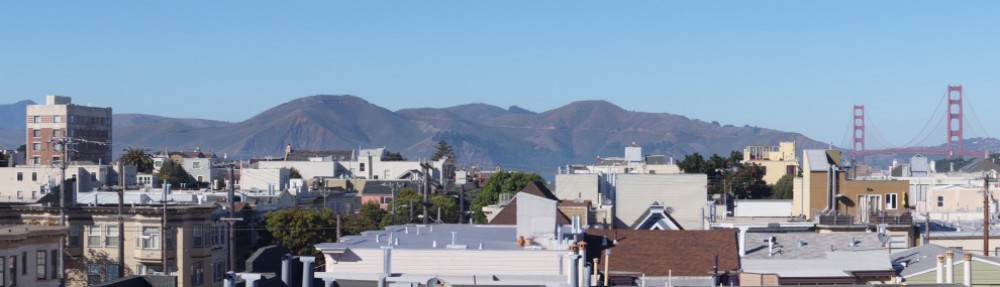
I love doing this kind of thing wherever I go, come to think of it. It’s partly to get the feel of the local sound, and partly because I’m just a sucker for rock music history. Whether it’s getting in touch with with Britain’s quirky rock (most of which became alternative rock here in the states), or Boston’s unique mix of collegiate and blue-collar, or San Francisco’s purposely weird sounds, I love being able to not only connect with the music itself, but the context in which it was written and recorded. It brings me closer to the real lives behind the music…it lets me understand why the song exists.
Hi there! Currently writing this entry at the Minneapolis-St Paul airport, waiting for our connecting flight home from our Half Pop Musik Tour (aka our vacation to London and Paris).
The plan is to get a nap in on this last leg, as I will need to get up early tomorrow morning and do a bit of food shopping before we head out to Outside Lands later that day.
Regular entries here at WiS should resume this week! Thanks for waiting!
I’ll be afk for a bit while we head out on a well-earned vacation (and to rawk out at Outside Lands upon return), so it’ll be a bit quiet here for a few weeks. I may pop by for a bit of photo sharing though!
Upon return, I’ll be returning to the Tuesday & Thursday posting schedule that I’ve had going for the last few months. The WiS series, at least the 80s years, is done, so I’ll be jumping back into music blogging, talking about tunage old and new.
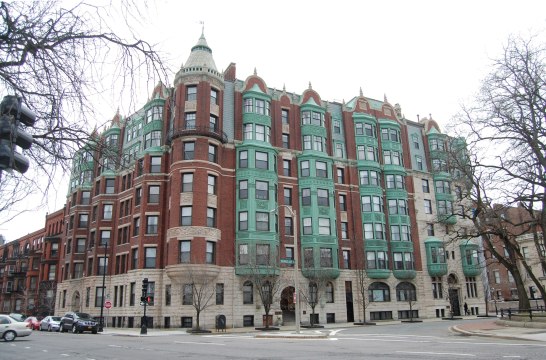
4 Charlesgate East, Boston (Picture courtesy of backbayhomes.org)
My first long distance drive, mere weeks after I got my license, was to drive all my stuff to Boston. For most of the trip it’s relatively easy — Route 2 all the way in. The trick is navigating the weird roads: the double-lane rotary in Concord, four-lane highway down to two-lane surface road, the weird intersections in Cambridge, the lane-change to get on to Storrow Drive, and looping around multiple one-way streets of Back Bay to pull up next to my dormitory and unload with all the other students. At a building that had no parking. Somehow the insanity of that early September day ran smoothly, thanks to a number of fraternity brothers teaming up to help us newbies.
As you can see above, it wasn’t your typical box dorm…Charlesgate was once a hotel, turned into an SRO, became a Boston University dorm (BU is a few blocks on the other side of Kenmore Square…they still have a few frat houses on Beacon on this block), and eventually became the largest dorm for Emerson College.* Some of the rooms were huge and spacious (like mine, thankfully!), while others were little more than a closet space. It was old enough to have its own ghost stories! Some of the older SRO renters still lived there per a loophole, including an older lady that lived up the hall from me and smoked smelly cigars, despite the no-smoking rule in the buildling. It was quite the peculiar building, but it was a great place to live. Our cafeteria was right across the street, along with a bus stop for a school shuttle that would bring us to the dorm at the other end of Beacon.
Note: Yes, this is the exact same Fuzzbox I’d fallen in love with a few years previous…their second album was a complete 180 with shiny production and nary a thread of Oxfam in sight. It was one hell of a brave move and I love this album all the more for it.
My freshman dorm room was 306, facing Beacon (you can see it the picture — second floor up from the white stone facade, the farthest-left bay windows). I’d been placed with a kid from New Hampshire who I originally thought I’d get along with, as we both had the same tastes in music. In reality, though, we couldn’t have been more different and irritating to each other. He was a punk purist who actively disliked any college rock tainted by commercial radio and major labels, even if they’d started out on indie labels. I was someone who liked pop radio just as much as I liked obscurities. He thought I was an ignorant local yokel. I thought he was a poseur and an ass. I liked a bit of order and cleanliness; his side of the room was a total shithole. We didn’t hate each other…we just had absolutely nothing in common except for some music choices. We merely tolerated each other until our year was done. On the plus side, I will say that he did introduce me to a lot of excellent indie bands that I’d otherwise have ignored.**
One big problem I had? I was within walking distance of three record stores. There was the Tower Records at the corner of Mass Ave and Newbury Street, where I could get all the new releases. There was Nuggets in Kenmore Square, an excellent used record store where I could buy a lot of stuff cheap; and up the street from that there was Planet Records, which catered to my collectible whims. This basically meant that I was constantly broke, but at least I had a soundtrack for it!
Another big problem was of my own making: I’d been expecting to meet more people like the Misfit gang, and had completely failed to do so. A specialized college like mine tended to attract the artistes and the trust fund kids (or at least that’s how it seemed at the time), so I quickly found myself not fitting in anywhere at all. Even some of the students from towns smaller than mine were all about being the intellectual hipster with a dash of special snowflake for added flavor. But it was also my own damn fault, as I was looking for my own imagined version of an ‘alternative crowd’ that wasn’t there, at least not at this college. It took me most of the first semester to figure that out and get my shit together. By second semester I’d shifted focus and met a different crowd that I got along famously with. [In fact, I’m still in touch with two or three of them to this day.]
Of course, I was also missing Tracey something fierce, and that had its own problems, mostly in the form of a high phone bill, but also frustration that we were so rarely able to talk to each other. We’d write letters and call each other now and again, and nearly every time I came home on the weekends, I’d make sure we spent at least part of the day together. But it became obvious that I was torn; I wanted to loosen the ties I had with my home town, but I couldn’t exactly do that, at least not completely, without ending the relationship. And I just couldn’t accept taking that step at that time. Would it have made any difference if we had split up? Who knows…I’ve long gotten past mulling that question. Either way, I felt a bit stuck: not quite released from my old bonds, and not quite connected to the new ones.
I’d even stopped writing for the most part. Sure, I was focusing on my school work (once more a B- student with deadline issues) and my occasional extracurricular activities (getting a midnight shift at WECB, our then-AM station!), but I’d started to find myself falling into that dark spiral again, and I wasn’t sure if I wanted to keep that up again. I toyed around with reviving the IWN again, but creatively I was running dry. I did write some of my best Flying Bohemian songs in 1990-91, but a lot of the poetry and lyrics had gotten quite…angry.
On the plus side, I’d started drawing a hell of a lot more. During one of my history classes I was doodling in the margin of my notebook, drawing a caricature of Daniel Ash from Love and Rockets, when I came up with an idea: an alter-ego character. I’d drawn similar characters my senior year in high school (two characters from my Belief in Fate project in comic strip form), but Simon ‘Murph’ Murphy was to be one of my favorite creative outlets of my college years; he was full of non-sequiturs, weird life observances, smart-ass remarks, and had no filter whatsoever when it came to saying what was on his mind. He was the right outlet I needed right then.
The weekend trips back home were also what saved my sanity. I’d hop on the commuter train at North Station on Friday night, bogged down with a suitcase full of dirty laundry and a backpack of homework and music to listen to. I’d take the Fitchburg train out to its terminus, where my Dad would pick me up and drive me the last few dozen miles home. Nine Inch Nails’ Pretty Hate Machine got some seriously heavy play on those trips…it was my ‘Fuck you, Boston’ album on the ride out to western MA. Alternately, Bob Mould’s Workbook was the ‘fuck it, let’s just start over correctly this time’ album for the same trips. I got a lot of my shit together on the rides back. By Sunday afternoon when my Mom or Dad would drop me off at the station, I’d be in a much better mood (and bogged down with clean laundry and a bag of fresh groceries to keep me fed) by the time I got off at the Convention Center stop on the Green Line and walked back to the dorm.
I had to grow up a hell of a lot in a short amount of time, and freshman year was a blur of anger, frustration, depression, and everything in between. But it was also a blur of excitement, unexpected creativity, and self-realization. It took me quite a long time to get used to this new reality, but I wasn’t going to overwhelm me. I’d find a way to figure it all out. One way or another.
* – Emerson sold off Charlesgate and its neighboring building Fensgate in the mid-90s when they moved the entire school over to the Common…they’re both upscale condos now. In fact, at this point, the campus I knew as a student no longer exists as part of the school.
** – In a very bizarre twist of fate, he’s now a lawyer. I don’t even remember what he went to Emerson for…writing, perhaps?

 Walk In Silence