Walk in Silence 8

Again, I blame the Beatles.

By the early 80s, I had most of their discography, with only a few holes here and there.  Minor things like obscure b-sides.  I would branch out to the solo discographies around the same time.  Most of them were relatively easy to find, as they were still in print and selling.  Paul’s was the easiest, as his output was large and consistent; John’s wasn’t that hard either, as he’d stopped recording in 1975 with only the Double Fantasy album and singles to follow up on; George and Ringo’s albums and singles were somewhat harder to find, but not exactly difficult if one knew where to look for them.

Which meant going to specialty shops!  My father knew of one in Worcester that sold both comics and records that called itself That’s Entertainment, and that’s where I finally found (but did not buy) John and Yoko’s elusive experimental noise albums, Two Virgins, Life with the Lions and Wedding Album.  But more importantly, that’s where I found (and bought!) my first Beatles bootleg entitled Casualties.  It’s a takeoff of the legit Rarities compilation from 1980, containing an equal amount of outtakes (demos, alternate takes) and outfakes (mixes created by the bootlegger that aren’t entirely legit).  These bootlegs let me hear my favorite band in a new light, hearing the fantastic early version of “I Am the Walrus” sans the sound effects and strings, a decade before it would show up on the Anthology compilation.

That in itself spawned another treasure hunt: to find more Beatle bootlegs!  This would prove harder than expected, but it would also expand my knowledge of used record stores.  Over the next few years I’d make it a leisurely pursuit.  Since most of these records were expensive at nearly twenty bucks a pop, I could only purchase them if and when I had the money.  I was still looking for them around 1985 and 1986 when my dad brought me to a store called Al Bum’s in downtown Amherst, not that far from the UMass and Amherst College campuses.

Al Bum’s was a dusty, grimy indie record store that knew its base really well.  In the mid 80s, students were still dithering between cassettes and vinyl, and though cds were becoming more widely available, they hadn’t yet taken over the store’s main floor yet.  Al Bum’s cassette wall was similar to the one at the Strawberries chain in Leominster, in that it took up most of the back wall and was semi-blocked by a wall of sheet plastic.  Big fist-sized holes in the barrier let you take the tape out of its cubbyhole so you could look at it, but not be able to pull it (and its plastic security box) out of its section.  You had to drop it down — risking cracking the cassette case itself — and it would ride a well-worn conveyor belt up to the front register.  In the case of Al Bum’s, however, it looked as though that process had broken down quite some time ago.  If you wanted a tape, you had to flag down a manager or let the register jockey know you wanted something.

the-smiths

It was also your store for music posters as well.  Sure, you’d see the Bon Jovi and Duran Duran posters at the mall stores, but Al Bum’s was where you went for that Smiths poster you saw in Pretty in Pink, or that dayglo Bob Marley poster that looked so cool under a black light.  For Christmas in 1986 my sister bought me a ridiculously large poster of the Cure which took up half the west wall of my bedroom.  It stayed there until I brought it to college where it finally fell to pieces from wear.

I’d gone to other indie stores before…but this was the first one where I was actively looking for the music I was hearing.  I didn’t buy a lot of it at that time — not yet, anyway — as I was really doing a lot of casing out while still wanting to buy those bootlegs.

As it happens, I only bought maybe six or seven of those total.  It was mainly a cost thing: did I really want to spend twenty dollars on a record that may or may not be of good quality?

So — back to regular music purchasing.  That is, buying the pop music I still listened to.  I could easily find those anywhere, from the Mars department store, or the Music Forum downtown, or the chain stores at the malls.  [I should also add the flea markets and the tag sales my dad and I would frequent on Sunday afternoons.  I found some great tapes and vinyl super cheap that way.]  I even joined the RCA Record Club for a while.  And in the spirit of the time, I continued my habit of creating ‘radio tapes’ to add to the songs in my collection.

And now that I had a newer personal stereo and a mini boombox, both with tape players, I was able to listen to these tapes whenever and wherever.

Around 1985 or so, I’d started giving them names — silly, K-Tel-inspired names borrowed from one of the featured songs on the tape — and even made an attempt at keeping the theme and flow consistent, just like that label’s well-known mix albums.

Looking back on these radio tapes now, I’m kind of amused at how eclectic my tastes were, even then.  There would be a 12-inch remix of ABC’s “How to Be a Millionaire” followed by Wham!’s “I’m Your Man” followed by INXS’ “This Time” and ending with Dire Straits’ “Industrial Disease”.  That was the mix of the day, really, even on pop stations.  It wasn’t until 1986 or so that the truly pop productions (thank you, Stock Aitken Waterman) came in with their Linn drum beats and moon-June lyrics of love found or lost (or parties having or heading towards).  That was the thing: once the synth and the technology became cheaper and easier to buy and use, the Brills That Be saw an easy path to the top of the charts with catchy and fun music that might be great at the clubs (or in my case, the school gym floor), but was certainly far from being music meant to last.  It’s great for having fun, but it certainly doesn’t have the longevity.]

This is why I was still listening to pop radio for most of the mid-80s, even after I discovered college radio.  I wholeheartedly agree, it was good fun, and despite some of it not aging well at all over the years, it was tied to the lighter aspects of my social life, such as they were.

Walk in Silence 7

So how does one investigate new music in the mid-80s, when the internet as we currently know it didn’t even exist?  How does one research a genre when all its available outlets are so slim?  Well — thankfully, I had a local library and a magazine stand next door to it, both of which I’d already frequented for years.

The magazine stand, an old and dusty storefront with squeaky wooden floors, a basement stockroom and enough penny candy behind a glass case to feed us kids for years at a time, Norm’s Smoker was the one stop shop for dads and kids — the candy case, the cigars and cigarettes, the magazines and the comic books, and a dented and well-worn metal soda cooler.  I used to pick up my Archie digests here and a little later on, issues of the comic book The ‘Nam, but after my musical awakening, I needed to find quality music magazines to peruse.

My family had a subscription to Rolling Stone in the early 80s but let it lapse, but I’d continued to read it at the library for free.  Spin had launched in May of 1985, so I started reading that one as well.  And in a completely leftfield move for me, I started picking up Star Hits, which had started up in late 1984.  Star Hits was more of a teen magazine, but due to its tight relation to the UK — it originated as a British pop mag nearly a decade earlier as Smash Hits, and contained nearly all the same content.  That’s what appealed to me; Star Hits pointed out to me that the general idea of popular music in the US was much, much different than in the UK.  Pop, to me, was informed by what was on the Top 40 countdowns and on MTV.  There was a lot of bleedover, of course, but there were a lot of stark differences as well.  It was Star Hits that told me about The Cure and The Smiths and Depeche Mode — three now-giants of 80s alternative rock, but hardly heard of in Podunk, USA at the time, even if they were on major labels by 1986.*

Trouser press

At the library, I was blessed to have found a 1985 edition of Ira Robbins’ Trouser Press Guide to New Wave Records, which became my musical bible over the newxt few years.  I took that book out so many times and pored over it so obsessively that I finally had my parents special-order it from the Waldenbooks in Leominster for me.

Sure, I’d seen record guides before.  I owned a few cheap ones that were little more than info scrapes from glossy magazines and the most minimal of discography information.  There were the dry ones that focused on 50s and 60s rock (and kind of petered out come the 70s).   And there were the Rolling Stone-related ones that mainly focused on the more popular rock bands of the last decade or so.

Trouser Press, on the other hand, was a godsend!  Based on Robbins’ love for British music (and his previous fanzine of the same name, which he’d edited for the last decade), this tome was exactly what I was looking for.  Between those well-worn covers I found a solid (if not always complete) discography of hundreds of bands I would need to familiarize myself with.  I bought myself a small index card box and snagged a bunch of 3×5 cards from my dad’s bin and set to work copying out all the albums I’d need to look for the next time we were near a record store.

Was it as immediate as all that?  Well, not really.  It was more of a slow morphing.  I was still listening to commercial radio well until around 1987 or so.  First off, I understood that some college stations went off the air at the end of the semester.  Even though I had discovered that station in April, I knew I only had a few more weeks of listening before it would disappear on me.

That left me with the summer of 1986, fending for myself.  I’d recently started an after-school job at the local YMCA as a hall monitor, which really meant a few hours of walking around the building, cleaning things and making sure the kids didn’t injure themselves or goof off too long after their swimming classes ended (and let me tell you, I had to do a lot of barking to make sure they got to their awaiting parents upstairs!).

It was here of all places, during the drudgery of having run out of things to clean and monitor, that I hatched my plan of branching out.  What else was I going to do?  Walk around listlessly?  Sure, I could have shot hoops or hung out at the front desk.  All I had to do was make an appearance in front of the boss a few times, the rest was up to me.

So, I did two things:  I read my issues of Star Hits when they came out, and I wrote.  I perched myself at the foot of the back stairway with one of my notebooks and did a LOT of writing.  The first attempt at consistent writing, actually.  It was also when the Infamous War Novel got a major boost.  Thanks to my new music discovery, weirder and darker ideas were starting to emerge.  You can see a marked difference about a third of the way through, where the plot is less about the war going on and more about the lead character’s psyche as it slowly started to disintegrate.

One of the first purchases I made came at a perfect time — only a few short weeks later, The Cure released a major-label compilation of their singles thus far, entitled Standing on a Beach.  This was exactly what I was looking for!  This was a perfect starting point: jump in with both feet with a greatest hits package!  SoaB got a crapton of play on my tape players within the first six months of its release, but amusingly its first play was in the family car the day I bouht it.  Heh — little did my family know what they were in for!  They already knew I was a music geek, thanks to my prodding for an allowance of sorts so I could buy albums.  I bought it at Musicland down at Hampshire Mall in Hadley, specifically on cassette because it contained an extra twelve songs that were all b-sides.  The drive back was…interesting, considering.  Me grooving to this weird music, and my family squirming and side-eying me.  The best bit though was hearing “Let’s Go to Bed”, where both me and one of my sisters suddenly realized we’d heard the track before:  it had gotten some minor airtime in the early days of MTV, usually alongside Duran Duran.

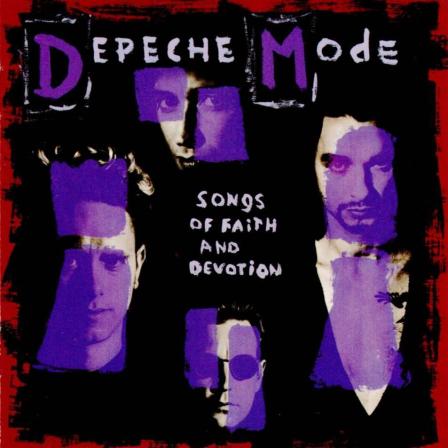
The next purchase was Depeche Mode’s Catching Up with Depeche Mode (their US counterpart to the UK Singles 81-85), another greatest hits mix I could familiarize myself with.  As with the Cure album, I was already familiar with one of its featured tracks; in this case it was their minor breakthrough hit “People Are People”, which had even made an appearance on American Top 40.

From there?  It was a matter of searching.

And thus started a VERY long journey in the search for alternative rock.


* – In fact, at one point all three were on Sire Records.  [The Smiths and Depeche Mode were on Sire in the US for the entirety of the 80s; The Cure released The Top, Japanese Whispers and most of their 1982-84 singles via Sire in the US.]  This just goes to show that Seymour Stein, its cofounder, and signer of other classic alt.rock bands like Pretenders, Ramones, Talking Heads and Echo & the Bunnymen, was a true visionary for the alternative rock genre.  It’s said he was even the one who gave it the original name of ‘new wave’.


Walk in Silence 6

Indeed, what was this?

No commercials, no flashy filler.  No growly masculine voiceover, no sexy feminine voiceover.  Just a voice off the street.  And something about the music — it was hard to describe, but it was like a step backward, but in a good way.  A very good way.  There was something truthful about what I was hearing.  The focus was on the sound and the mood, and the lyrics were far from the moon/June pop or the party-all-night rock.  It wasn’t music written for the charts, and it was refreshing.

Another batch of songs later and I finally got my answer: I was listening to WMUA 91.1, a college radio station based at University of Massachusetts in Amherst.

College radio!  So this was what it sounded like!

I wasn’t completely ignorant of it…I had one sister just graduating from college and another about to attend, so I knew such stations existed.  Most of the more serious music magazines like Rolling Stone and the like would often mention these punk bands in passing that I’d never hear on other stations.  I was familiar with WMUA as well, having occasionally heard it in the background whenever we drove down through the Pioneer Valley.  The reason I’d never actually paid attention to college radio before then was simple: most of those stations rarely came in up my way.  Our house was in a valley, and the nearest college was a good thirty or so miles away.  I’d need a really good antenna or at least a radio with a strong receiver if I was going to get anything in.*

I listened to the station for a good hour or two that night, getting the feel of what they were playing.  It was quite an eclectic mix; sometimes loud and punky, other times quiet and melodic.  I’ll admit it wasn’t exactly a jaw-dropping, eye-opening, mind-blowing event.  It was more a revelation.  I’d heard of this genre in passing, and now I was finally experiencing it for the first time.  I do in fact remember three songs from that night:


The first two were Violent Femmes’ “Blister in the Sun” and “Add It Up.”  The almost feminine, not quite fey voice of Gordon Gano’s delivery was not exactly the kind of singing voice you’d hear on American Top 40.  Musically they were sparse and dirty, tight but frenetic, and not exactly something you’d share with your parents.  I was drawn to the hint of Isley Brothers with the former (with its progressively quieter delivery on a later verse only to burst out in the chorus), and the a capella introduction of the latter (I’ll admit I thought it was an old lady singing when I first heard it), and when I finally got a dubbed copy of the album some months later, it was on heavy rotation for years afterwards.**

The third song was by a band called The Cure, and the song in question was “A Forest”.  Brooding, spooky, and full of reverb, it was the first song in years that struck me so viscerally:  I wasn’t just lying in my darkened bedroom, listening to the radio with my headphones…I was also deep in the woods surrounding my house, in the dead of night, completely aware of my cold and dangerous surroundings.  I’d based images in the IWN on songs I knew, but this was the first time an image came to me unbidden and unexpected.

I had to investigate this music further.


* – This was tested a day or so later when I tried to get WMUA on my min boombox.  It came in ever so faintly, just enough that I’d have to pump the volume up considerably and hope for the best.  A short time and a quick run to Radio Shack later, I had a six-foot retractable antenna on it, and I was in business!

** – I was quite amused when it got a well-deserved nudge in popularity over a decade later thanks to John Cusack’s film Grosse Point Blank.  This album is considered a must-have in anyone’s collection.


This is how my mind works.

jonzbox

The Jonzbox, acquired Christmas 1983, last used…2004?

So I’m listening to KSCU online this morning, and one of the deejays is playing stuff that’s catching my interest.  I have a few titles written down for further research and possible downloading.

And I’m thinking…back in the day, I used to have a blank tape at the ready inside that mini boombox you see above there, Record and Play already down, the Pause button ready to be hit as soon as a cool song comes on.  I have a good handful of tapes full of stuff I’ve taped off of college radio shows from the 1988-1989 semesters.  One or two of those tapes are almost complete shows.

So after that show finishes, I’m thinking…it’s all fine and dandy that I can write down the songs that I like and download them, but what if I want more than that?  What if I want to retain that bit of college radio atmosphere, some deejay patter, and so on?  How would I go about doing that?  I mean, aside from downloading questionable software that may or many not even work?

So it occurs to me: I could set up a tape deck, just like the old days…plug some wires into the Audio In jack in the back, plug the other end into the speaker jack or the headphone jack of the PC. I think I still have a few blank tapes kicking around, and I know I can still find new blanks if take the time to look for them.  And then I can use my audio software to convert the tapes to mp3 later on.

An extremely Rube Goldbergian setup to be sure, but I would actually go that far if I really wanted to.  Because I’m that much of a music nerd to go THAT old school to tape stuff off the radio.


[As an aside, there’s one show on KSCU, The 80s Underground, where the deejay records his entire show, patter and all, and puts it up as a podcast later in the day.  He’s got excellent taste, knows his obscurities, and it’s well worth checking out.]

Walk in Silence 5

The last thing you’d expect to hear way down on the end of the dial was pop music.

Let me explain: back in the early 80s, back when FM radio was finally the preferred frequency, the stations were quite uniform in what you’d expect, at least in central Massachusetts.  You could easily find whatever kind of music you liked, as you knew where on the dial it would be.  The louder and more aggressive the sound, the higher up on the dial it would be.  You’d hear the latest pop and dance music at 107.7 (usually some iteration of the well-used ‘KISS’ call letters), the hard rock of WAAF, and so on.  By the time you hit 99 FM, things started quieting down.  Adult listening, country and folk, classical, until you hit the nonprofit stations 92 and under.

There was that odd station or two, of course — at the end of 1985, the station out of Peterborough NH, WMDK, had adjusted its format to feature the AOR that some stations were taking on.  I’d started listening to that station around winter of that year, as it catered to my widening tastes, mixing pop (INXS and ZZ Top) with more eclectic sounds (Split Enz, Squeeze).*

So when, on that late April evening, I was looking for something to listen to, I thought I’d check to see what they were playing.  It must not have intrigued me, as I don’t remember stopping for long.  It may have been some blues show or something that wasn’t holding my attention.  After scouring the dial for something and getting nowhere, I thought I might make a last-ditch effort to find a jazz show, and if that failed, I’d call it a night.

What I didn’t expect, way down there, was a Clarence Clemens song.

“You’re a Friend of Mine” wasn’t even a recent song at that point.  The track was the first single from the burly saxophonist’s solo album Hero, which had been released a good seven or so months previous, and the single had already vanished from the charts some months ago.  And any song that left the charts was either dropped from the playlist like a stone and vanished from the pop world, or if it was lucky enough to be immensely popular, it would hover somewhere in light rotation for a good year or so.**

For this Clemens/Jackson Browne duet, it was more of a fanciful pop track, evoking the house-party sound of Clemens’ boss, Bruce Springsteen.  For me, it was a pop song I kind of liked and hadn’t heard for some time.  I was more fascinated that I was hearing it near 88 on the dial.  I thought at first that this might have been another one of those AOR stations that I was discovering lately.  [Around this same time, I’d discovered WRSI 95.3 out of Turners Falls*** and WCCC 106.9 out of Hartford (when it came in on clear days).]  If this was indeed the case, I’d stick around for a bit to see what they followed it up with.


Well, how about nothing?

One thing I learned on as a radio listener and later as an assistant on-air tech  is that the last thing any professional deejay wants to broadcast is dead air.  It’s the radio equivalent of standing in front of a large audience, pantsless and without a podium, with absolutely nothing to say.  And for the general manager, that’s wasted airtime that should have been used for advertising or at least a PSA.  It’s lost revenue time.

I mean, it happens to deejays at some time or another.  You forget to raise the volume level of the song you have queued, or you’ve misjudged the length of the song currently playing and haven’t prepared the next song yet. ****  But it’s still embarrassing (and costly), so there’s always a bit of juggling going on.

Another thing I’m familiar with is the sign-off of radio stations.  Most stations nowadays bypass this as many of them have become 24/7 broadcasters (partly thanks to global listeners tuning online around the world, but also due to the many stations now owned by the few corporations — another commentary I’ll skip for now), but back in the 80s there were a handful of stations, many of them on the AM or low-watt FM dial, who only broadcasted during daylight hours or into the early evening.  At the top of the hour, they’d fade out any music and read out a legal ID, or play the prerecorded cart, stating that they were  ‘at the end of the broadcast day’, read out their wattage, where their antenna was, and so on.  Sort of like ending credits to a movie or a TV show, in a way.  After a few seconds, if you were still listening, you’d hear the station switch itself off, leaving us with nothing but glorious white-noise static.


So.  When “You’re a Friend of Mine” ended that night around ten in the evening, followed by silence, I’d totally expected a flustered deejay to come on the air and nervously laugh at his idiocy and offer apologies left and right.  Then, after a few more seconds, I thought they were doing this very thing and had forgotten to turn the mic up.  [This I’ve done many a time as well in my short radio career.]  Then, a few seconds after that, I figured this might have been the end of their broadcast day and the legal ID hadn’t kicked off.  Or it had, and that hadn’t been turned up either.  [I’ve done that as well.]  And after a minute, no static.

What I hadn’t expected was just another song.

No flustered deejay, no commercial or PSA, just another song entirely.  And a wholly different soundat that.  Clemons’ pop-rock aesthetic was nowhere to be heard.  Instead I was hearing a loud, chunky guitar playing fast and easy barre chords.  Some sort of low-quality noise that was professionally produced, but sounded far from professional in musicianship.  Not that I was complaining, mind you.  This was just…different.  It wasn’t trying to be perfect.  The singer was on key only about half the time; the lyrics, when they were intelligible, may have been about having a shitty day, or just drinking one’s cares away, I’m really not sure.

What was this…?


* – I believe WMDK was going through its transformation while broadcasting, as there would be live deejays playing tracks, but other shifts would have pre-recorded bumpers. This I remember well, as they’d play my favorite INXS song at the time, “What You Need”, but for about a month and a half they played the voice-over talent mispronouncing the band as “In-EX-uss”.

** – See Duran Duran, who would remain a staple of pop radio until 1990 or so when their Liberty album failed to garner any interest in the US.  They’d be in hiding until early 1993 when their second self-titled album (aka The Wedding Album) was released to critical acclaim.

*** – Radio trivia:  Rachel Maddow used to work at this station way back in the day, and I remember listening to her on the morning show every now and again.

**** – Or, as I’ve had happen many times during the olden days of cart machines, the prerecorded cart (it looks like one of those 8-track tape cartridges and is essentially a looped tape of commercial length) having been stopped rather than cued, or the cart machine simply isn’t working.  I am so jealous that current radio stations have everything set up digitally on software, and all you need do is make sure everything is programmed correctly.

Walk in Silence 4

Jazz.  Now there’s a musical genre I wouldn’t have thought to pay much attention to in 1985, had I not been itching to expand my horizons.  I was familiar with its many subgenres, of course: my dad is a big fan of the swing era so I’d always hear Benny Goodman or Artie Shaw playing on his big crackly radio down cellar, and my mom owned a copy of The Dave Brubeck Quartet’s Time Out album.  I’d also hear all kinds of stuff while changing the dial on my own radio.

But it wasn’t until spring 1985 that, out of boredom and curiosity, I started paying attention to what was being played on the lower end of the dial.  I’d gotten my own small boombox on Christmas of 1983, a compact thing that fit perfectly on my desk.  I used that thing everywhere — taping music off the radio, recording silly sounds and snippets from home and elsewhere, and plugging in the headphones at night.

I recall that was also the last Christmas that my dad’s company sent him a present to give to us kids (we got them every year until we were twelve), and that year I got my first personal stereo — not a Sony Walkman with a tape player, but a Radio Shack knockoff with an AM/FM tuner.  Well, at the time I ‘owned’ maybe one or two tapes.  Beatles-related, of course, so I was fine with plugging in the headphones and doing a bit of radio listening as I was nodding off.  With actual stereo headphones and not a single earbud!  I used that radio almost every single night for at least six months running.

I’d get a few replacement personal stereos over the years, but it as that particular model that helped me find and appreciate jazz.  In particular I found myself enjoying the ‘cool jazz’ format the most — the Blue Note era sax solos, the laide back meandering of pianos, the occasional slippery drum solo.  With the Brubeck background, I started picking up on a few decades’ worth of names like Chet Baker, Oscar Peterson, Herbie Hancock, Miles Davis, Count Basie.

This, for me, was music made purely for listening.  Not exactly a performance sound, although it was certainly that.  This was music that wasn’t making a statement or written to be a hit single — it was a piece of art that was to be appreciated in one’s own way.  And for me, that was lat at night, when I really should have been asleep on a school night.

That habit stuck with me all through high school.  The jazz part of it was ephemeral, only lasting for a few months and whenever I could get a signal, as many of the stations were nowhere nearby.  These were all located down in the Pioneer Valley, down near the Amherst/Hadley/Northampton area.  Other nights I’d look for classic rock shows on my trusted regular stations like WAQY or WAAF, or I’d plug my headphones into the boombox and listen to the various radio mixes or the tapes my sisters owned.


It was April vacation of 1986 when I found myself up late one night, door closed, listening to the radio in the dark once more.  I was still half-searching for jazz that night.  My listening habits were still the same:  stiwtching between jazz shows, classic rock blocks, one or two pop stations, or a few tapes from my slowly-growing collection.  Whatever caught my attention, I’d stick around for a while and listen in while I let my mind wander about whatever teenage shenanigans I’d gotten myself into at that point.  [And chances are, most of the time it was either wondering why I couldn’t get a girlfriend, or why I was procrastinating and not getting any of my homework done.  I was a real winner, folks!]

That particular night, I was looking for a jazz show on the low end of the dial, but I wasn’t having much luck.  Trying to get any clear stations on my boombox was enough of a chore at times, considering my house was at the bottom of a valley, so each night was completely up to chance when turning that miniscule dial, millimeter by millimeter, sneaking it ever so slightly with my fingernail to land exactly on the right frequency.

That night, I finally found it.

Walk in Silence 3

This is where the Infamous War Novel came in handy.

I’d tried writing and rewriting the damn thing for over a year, between school, family events and hanging out with friends, and after multiple failed attempts, I stumbled upon a brilliant idea — outlining!  Okay, I already knew about outlining thanks to my English classes, but bear with me for a moment here.

You see, in September of 1984, a new TV show premiered that changed the way audiences watched television, specifically action-heavy shows like police dramas.  Michael Mann’s Miami Vice was a game-changer for a lot of reasons, and not just because of the flashy clothes and the hot sports cars.  This was a show with gritty violence, dark storylines, subplots focusing on deeply personal issues…and one hell of a great soundtrack to go along with it all.

It’s par for the course now, but back then, putting a pop song in the background of a scene to amplify the dramatic nuances was a completely new thing for television.  Whole scenes would go by with little or no dialogue but tell a gripping story just the same.  The “Brother’s Keeper” episode in which Phil Collins’ “In the Air Tonight” drives the entire scene is a key example of this.

I grokked to this linking of sound and image straight away, and went about reverse-engineering it to see how it could be used for the IWN.  What I came up with was a synergy of music and ideas, all linked by the main plot.  I already had a handful of songs in the back of my head that would inspire the scenes, having tested a few scenes early on just to see if I could do it.  I understood how three-act plot arcs worked, even if I hadn’t quite perfected it.  I put the two together, and made a playlist of songs and ideas that would create a story with flow, conflict and closure.  Thus Caught in the Game, the final version of the IWN was born.

The writing of the IWN helped get rid of some of that personal boredom, but it wasn’t enough to keep me from ditraction.  I think the reason why I was feeling this way was because, by the start of 1985, I was really itching to change myself.  I was finishing off my not-so-fantastic run of eighth grade, where I’d earned my one failing grade one semester. [In English, ironically enough.  I wasn’t doing any of the homework and rarely paid attention in class.  Again, it wasn’t that I was heading down a bad road, it was that I was completely fucking bored most of the time.]

 *

I remember one of the last dances they had for the end of the school year, everyone had semi-dressed up, and the deejay played all the latest hits.  They played Tears for Fears’ “Everybody Wants to Rule the World”, and, strangely enough, USA for Africa’s “We Are the World”.  Then they threw on Simple Minds’ “Don’t You (Forget About Me)”, and all hell broke loose.  The Breakfast Club had just come out not that long before, and despite its R rating, I and everyone else in my class had gone to see it and deemed it the most awesome movie of all time.  That movie spoke to each and every one of us that year, and life made a little bit more sense because of it.

I remember feeling a sense of finality during those last few weeks of eighth grade.  A bunch of us were so excited to be heading up to high school.  We felt it was the turning point where we were finally escaping our childhood and moving on to bigger and better things.  The last four years of our primary education were in our sights; we could see that 1989 wasn’t a decade away, but just a short handful of years.

Musically, that’s when I’d made a decision to broaden my horizons.  I still loved listening to the early MTV years and the current run of pop and rock, but what seemed really far out and cool in 1982 now seemed a bit old hat, maybe a bit cheesy.  The synthetic sounds of new wave were wearing a bit thin, didn’t hold the shine and gloss it once gave.  There was more out there  — we knew there was more out there, just out of our grasp.  The pop stations were not evolving as frequently as they once did.  MTV was now firmly ensconced in their own brand of pop sheen and easily digestible hair metal.  Rock stations, while doing their best to stay current, were starting to morph into classic rock or hard rock stations, leaving the middle ground behind.  It was all about the instant gratification now.

That’s not to say I stopped listening to it.  I was still a fan of American Top 40 and still recorded my favorite songs off the radio.  In retrospect it’s hard to argue that there were a hell of a lot of great songs that came out in 1985.  I had at least a dozen or so ‘radio tapes’ of pop songs made by 1985 and would create at least a few dozen more up until 1987.  I even catalogued them on a well-worn steno notebook that I saved for years.*  And as much as I loved it, it was still lacking.  I wanted something a little more adventurous.

Cue the new generation of alternate programming: AOR.

Album Oriented Rock.  Not quite free-form, as that did not really exist as a viable programming format anymore.   AOR was its commercial cousin, the station that didn’t have a completely strict and narrow playlist, gave the deejays some freedom to choose a few songs during their shift, and most importantly, dug much deeper into a band’s discography.  One would be more inclined to hear Led Zeppelin’s “In My Time of Dying” instead of “Fool in the Rain” for the umpteenth time.

More to the point, sometimes you wouldn’t even hear pop or rock at all; some days you’d hear the recent generation of folk singers or Dylan’s latest iteration; something blues from Eric Clapton or Joan Armatrading.  You’d hear deep tracks from bands as disparate as Lynyrd Skynyrd, Camper Van Beethoven, and Graham Parker.  AOR appealed to me in an interesting way; it kind of felt like ‘grown up music’, the stuff you listen to after you’ve grown out of top 40 pop.  Or in other words, it was the stuff you listened to if you really wanted to be a serious music listener.

* – As you may well have guessed, I have since taken the track listing of nearly all these radio tapes and created mp3 mixes of them, using my digital collection.

Walk in Silence 2

We all go through that weird phase when we’re kids — you know the one, where we get that feeling that we don’t quite fit in, that we’re scared of our own individuality, even more scared of having it seen by others who are quick to judge us.  We do our best to fit in the best we can, in our own ways, to varying levels of success.  Some of us easily fit in anywhere and with anyone, we have a healthy sense of being in charge of ourselves.  Others don’t worry about it and take everything as it comes.  And some of us are all too aware of who we might be, but can’t quite find a niche to place ourselves in.

I’d say I was the third case, because from a relatively early age — probably first grade, come to think of it — I was aware that I wasn’t quite on the level with the other kids in my class.  Intellectually I was probably a year ahead (and I don’t mean that in an egotistical way — in retrospect I feel I should have been a year ahead, for reasons I’ll get into later).  Socially, maybe on the same level, maybe a few leagues behind.  There was also the name recognition — I was the son of a well-known local historian and reporter with three older sisters, so I already had an expectation to live up to.  I also joked that I could never get away with anything growing up, because my parents would find out before I even got home.  [This actually happened a few times in my teens.  News travels fast in a small town.]  So there I was, mid-80s, feeling just that bit out of place — getting along with almost anyone, irritating some and annoying others, a do-gooder that couldn’t get away with anything, an average-grade student who was expected to be better, who was easily influenced for good or ill, out of boredom and impatience.

Still, that didn’t stop me from being the go-to person when someone needed to talk music.  I still went to all the school dances and moved around on the floor like a total idiot to my favorite songs, and completely failed to get any slow dances (mostly my own damn fault for not asking in the first place).

So with that, and with a few years’ worth of MTV and radio in my brain, I was ready and rearing to go.  I started listening to American Top 40 on a frequent basis, taping songs onto ‘radio tapes’ that I could listen to at a later time.

Socially, I wasn’t quite sure where the hell I was, to be honest.  I floated from one group to another over the years.  Like most people, The kids I hung with in elementary school had long ago moved on.  New friendships upon hitting fifth grade and a new school, where I met up with other kids from different neighborhoods.  Then junior high (seventh and eighth grade) with even more new faces.

It was in seventh grade that I met up with one of my buddies that I’d spend the next few  years hanging with.  Kevin was a kid from Royalston, the small town north of us that we shared upper grades with.  He and I met basically because we were often one right after the other in homeroom and other classes.  We were both music nerds and, well, nerds in general, so we got on swimmingly.  We were both well-read in the MTV department and knew most of the popular songs out there in the mid-80s.

There were two other people I met that year that would leave an impression on me as well.  One was Scott, who I knew tangentially through a kid named Bobby who lived around the corner from us when I was younger.  Scott and I kind of knew each other in sixth grade through band, but by the next year we were hanging out now and again.  H ewas the one who decided we should become writers, and set about stealing random sheets of lined paper from the front of the class so we would write our stories.  It was during this time that I’d come up with a ‘what if there was a war in my home town’ story — started right about the same time Red Dawn came out, but actually inspired by the ongoing Cold War news of the day.*  Out of those study-hall writing sessions came what would eventually be called Caught in the Game, and more recently referred to as the Infamous War Novel — I’ll be referring to it as the IWN from here on in.

The third person was actually someone a grade ahead of me — Chris, who I quickly found was interested in music almost to the obsessive level I was.  We had no classes together, but we shared a couple of study halls and also helped with the junior high newspaper (such as it was).  He also had a hankering for the occasional story telling, writing one or two short stories that I still have in my files.  But as he was a year ahead, he’d vanish out of my sight for a couple of years until a fateful meet-up in early 1986.**


But…that’s pretty much my entire life up to that point.  Not muc to mention other than some good friends, and not much else to report in this small town of mine.  Hang out with the last few remaining kids from the neighborhood, that’s pretty much it.***  In a small town of about ten thousand people and nearly ten times as many trees, one made do with whatever was on hand back in those days.

By 1985, however, I was getting itchy.  At fourteen, I was at that age where I felt I had to start moving on.  I’d grown out of the immature humor and the friendly roughhousing. I was starting to lose interest in the subjects I had to focus on.  At first it was thought it might have been eyesight and a need for glasses (slightly clearer vision, but no real improvement), and then suggested maybe it was just immaturity and too much focus on frivolous things.  No one in the area had any idea what ADHD was, so that wasn’t even brought up.  It wasn’t until a few years into my high school years that it wasn’t any of this — it was a much simpler issue.

I was bored.

Added to the fact that I was seen as a student of intellect when I was younger, why was I slacking off now?  It was because I was confined.  I didn’t figure it out right away, but I knew something was there.  I was smart, I just hated to be confined to an education track that was too slow for me.  Why did I not say anything at the time?  Well, even that was confining.  Expectations, really.  As a kid I was all too willing to do what was expected of me.  Call it Catholic guilt, call it not wanting to rock the boat.  There were all sorts of rasons.

But really — it was all becoming old hat.  Stuck being the goody two shoes out of honor and expectation.  Wanting to strike out and doing something completely unique and unexpected of me.

But what?


* – This story was also inspired by the Cold War-themed music out there at the time.  Music was a huge inspiration for my writing even then.  My writing attempts actually started earlier, around 1980 or so, with at least a dozen ideas that were fleshed out in my head but never expanded upon.

** – I should also mention that Chris and I are related distantly, which was part of our impetus for meeting.  I’m not entirely sure of the connection, but I believe his grandfather and my grandfather were cousins or something like that.

*** – I was one of the youngest kids in the neighborhood growing up, so I was usually the annoying tag-along kid brother.

Being There

_84462727_gettyimages

I was thinking the other day about how all our musical heroes, however big or small, have passed away in the last few months…Prince, Bowie, Lemmy, Maurice White, etc…and even in the past few decades, like Kurt Cobain, Michael Jackson, George Harrison, and so on.  It’s sad and it bothers us when they leave our realm.

At the same time, however, I started thinking just how incredibly lucky I am to have been there when they were huge.

So many important composers and songwriters over the centuries, performers and writers whose fame while they were alive took place well before we or even our grandparents were born.  Beethoven, Mozart, Bach, Tchaikovsky, and so on.

One can only wonder what it was like to hear their most famous pieces when they premiered.  Pieces that are still known to us centuries later.

Me, I was born the year after the Beatles broke up so I never experience their chaotic live shows or the unveiling of “Strawberry Fields Forever” and Sgt Pepper to a gobsmacked audience.  Or hearing “Hey Jude” the day it came out.  The closest I ever got was hearing “Free As a Bird” and “Real Love” as new songs during their Anthology documentary in 1995.

And yet…being a teenager in the 80s, I was there when MTV arrived.  I remember seeing the relatively new video for Bowie’s “Ashes to Ashes” and being floored by the nightmarish visuals.  Or the incredible hype behind the then unheard-of fifteen minute video for Michael Jackson’s “Thriller”.  Or the unveiling of multiple charity songs in the mid 80s: Band Aid’s “Do They Know It’s Christmas”, USA for Africa’s “We Are the World”, Artists United Against Apartheid’s “Sun City”…hell, even Hear ‘n Aid’s “Stars”.  All those Big Famous Names in one room!

I was at college in Boston in the early 90s when grunge and Britpop were insanely huge, and got to see Radiohead’s very first US show on Lansdowne Street.  I got to meet Robyn Hitchcock during a college radio presser.  During my HMV years I got to go to a few meet n’ greets with various bands, and got to see many more live.  And I met a few musicians in the store itself.  And over the last few years my wife and I have been going to Outside Lands, where we’ve seen a ridiculous amount of great bands.  This year’s line-up plans to be absolutely amazing.


Do I feel sorrow when my favorite musicians pass away?  I suppose in a way I do…I’ve never been one to completely fall apart, and there is that quite sobering realization that this musician won’t be around anymore to write or record anything else.  Their oeuvre has a finite end, and we fans are loath to admit that will ever happen.

I feel absolutely blessed that I live in a time where I’ve been entertained by so many creative minds in the last thirty-plus years.  Absolutely fucking blessed.  These are the creators that have inspired me, entertained me, and made my life that much happier.

So to all the musicians living or passing in 2016:  I thank you from the bottom of my heart.


Walk In Silence 1

I’d say the music that I connected to most at the time was classic rock.  I’d grown up listening to it, and started my music collection with the Beatles.  Not to say I didn’t enjoy other genres or station programming…I had a passing interest in the poppier Top 40 sounds, especially from about 1983 onwards, when it updated its sound and included multiple genres.  But thanks mainly to WAQY 102.1 FM out of East Longmeadow and WAAF 107.3, originally out of Worcester, I found myself listening to a lot of classic and AOR rock.

Looking back, I think part of it may be due to the quality of the production and the creativity of the music.  It didn’t necessarily need to be a genius creation, it just had to have something that caught my attention somehow.

That would mean John Bonham’s thunderous drums and John Paul Jones’ synth strings on the epic “Kashmir” — the first rock song to completely blow my mind — or the Beatlesque* sounds of Electric Light Orchestra’s “Can’t Get It Out of My Head”.  Or it could be the countrified twang of Eagles.  Even the bubblegum fun of Sweet’s “Ballroom Blitz” and “Fox On the Run” counted, thanks to their catchy guitar riffs and high-pitched harmonies.


I often say The Beatles’ 1967-1970 compilation is ‘officially’ the first album I ever owned, but that’s not entirely true.  I will admit that claim actually belongs to Shaun Cassidy’s Born Late, which I’d gotten for Christmas in 1977.  I kind of consider that a trial run, though…in December of 1977 my music collection was pretty much a reflection of what I thought album collecting was about at the time: pop music and buying whatever was popular at the time.  Why did I have my mom buy that Shaun Cassidy album?  Who knows.  I think it was because he was one of the Hardy Boys on TV at the time, and he was all over the covers of teen magazines at the time.  David’s little brother, also a musician and an actor and a heartthrob!  Buy it now!  Hell, I was six years old at the time, I didn’t know any better.  I didn’t even know I was breaking a perceived gender role at the time by liking a young pop star’s music.  My parents may have side-eyed me (more on the quality of the music than the gender role, that is), but I didn’t care.  Even then it was about the music.

All that changed in 1978, when two things happened.

First, the much maligned movie Sgt Pepper’s Lonely Hearts Club Band, featuring the insanely popular Bee Gees (another favorite band, thanks again to an older sister) and Peter Frampton (a huge pull, thanks to the fantastic Frampton Comes Alive album and his mindblowing use of the talkbox guitar effects on “Do You Feel Like We Do”).  I originally went because I liked the singers, but my mom had hinted that I’d enjoy the songs they’d be singing here.  It’s painful to watch now, but at the time it was silly and a lot of fun.

Second, I was made aware of an annual tradition on WLVI, channel 56 (6 on our dial), one of Metro Boston’s independent television stations (decades before it became an affiliate of The CW).  On a summery Sunday afternoon they’d play Yellow Submarine, the 1968 animated Beatles movie.

I knew the Beatles in passing, of course.  In the 70s, who didn’t?  They’d only broken up a few short years before and were enjoying healthy solo careers at that point (especially Paul McCartney).  Their music was still getting heavy rotation on the radio at the time.

[I should probably interrupt here and state that there was a third event that took place in 1978 that changed everything, even though I wasn’t quite aware of it at the time.  That event is the overwhelming change in radio listening habits in the United States.  It was this year when people began listening to music on the FM dial rather than on AM.  There are many and varied reasons for it — the acceptance of rock radio as a valid genre rather than an underground interest, and even the fact that home stereos were becoming more affordable.  By the time 1978 rolled around, we’d had a stereo in my parents’ bedroom that as soon moved to my sisters’ bedroom, where it got much higher use.  I ended up with a cheap hand-me-down kids’ record player where even to this day, I can still remember the loud nasally wrhirrrrrrrr of the motor.  I’d get the old stereo when my sisters upgraded, and finally getting my own sometime around 1983.]

So yes, it was in 1978 when I finally, officially, owned my first record, and also picked up on my first musical obsession.  Over the next four or five years, I searched and found all the Beatles-related records I could find.  Some of the albums I purchased were new (usually bought at Mars Bargainland, the department store outside of town), but many were found used at garage sales, town fairs and elsewhere.  First came the albums, then came the singles.  I believe I got Sgt Pepper and Abbey Road early on, because I was already familiar with most of those songs from the Sgt Pepper movie.  Revolver was another early one, thanks to familiarity with some of its tracks as well.  Imagine an eight-year-old  hearing “Tomorrow Never Knows” for the first time — I had no idea what I was listening to, but it certainly was amazing!

 *

I’m explaining all this, even though it has nothing to do with college radio, because this early obsession is a major reason why I latched onto it as closely as I did.

Even as the pop music of the seventies and eighties slowly morphed from one genre or style to another, I found myself irrevocably obsessed over it all.  I knew bands and their discographies almost as well as other kids my age might know who played on what NFL team and for how long.  Their stats were performance ratings and signature moves; my stats were release dates and what labels released them.


* – Beatlesque: usually means evoking psychedelic melodies of 1967, dreamlike whimsy, three-part harmony, and often attempting to sound like something from either Sgt Pepper’s Lonely Hearts Club Band or Abbey Road.