I’ll believe it when I see it, but…

…it looks like it’s finally a reality that The Cure will drop their newest album, Songs of a Lost World, on 1 November, and the teaser single “Alone” should drop…today?

I’m writing this post a few days ahead of time (on the 24th, due to a busy Day Job schedule) so there might actually be a full video by the time this entry pops up, but for now here’s the YouTube Short that’s been doing the internet rounds the last couple of days!

If anything, I’m purposely not expecting the new album to be Disintegration levels of perfection. After all, they haven’t had any new albums out since 2008’s 4:13 Dream (not including the new remixes of Torn Down: Mixed Up Extras 2018). However, they’ve been touring off and on in the interim, and they’ve been playing many of these new songs live during the recent shows.

Still, I’m looking forward to the album. Whether it’ll be the ‘doom and gloom’ album Robert Smith has been hinting at or a mix of the two separate albums that were supposedly complete (he’s also hinted that the other album is poppier), who knows? But I’m sure I’ll love it!

[EDIT: Yep, looks like the full version of “Alone” dropped this morning!]

Listening to 2000’s era Cure, Pt 5: The last (?) Cure album

Another four years after their last studio album, the band finally dropped the unexpectedly upbeat 4:13 Dream in late 2008. It had a very interesting origin story behind it: it was supposed to be a sprawling double album swaying between light and dark, with over thirty songs prepped and nearly ready for release. However, at the last moment they’d chosen to dial it back to using only the lighter songs in a tight thirteen-track single record. Only one song breaks the five-minute barrier, the lovely opener “Underneath the Stars”.

The band chose to tease the album’s release by releasing four singles beforehand, followed by a six-track remix EP, then dropping the album in full afterwards.

The first single was the crunchy and peppy “The Only One”, which felt like a track from Wild Mood Swings. The second was the twitchy “Freakshow” which, interestingly enough, feels like it’s from The Top with its off-kilter beat and ‘I’m in an uncomfortable social situation’ theme.

The third single, on the other hand, had that polished-gloom sound of Kiss Me Kiss Me Kiss Me (it’s got the same tension as that album’s “Shiver and Shake”). “Sleep When I’m Dead” was actually an old song dating from 1985’s The Head On the Door, which makes sense here.

And finally, fourth single “The Perfect Boy” sounds the most current, very similar to something off Bloodflowers. It’s also the closest to their recognizable classic sound, though surprisingly it did not get all that much airplay at the time.

The album itself dropped in October of that year, and though it was a welcome return, the sheen had worn off, and both the critics and the fans weren’t exactly sure what to think of it. Don’t get me wrong, it’s a great record and their most mature…but it kind of lacks what made them the band that they are. The production is similar to Wild Mood Swings in that it feels a bit too polished, though thankfully the flow of the album is much tighter.

*

That said…once they released this album, did their tours and so on, they just…kept touring and stopped recording. Given Robert Smith’s penchant for announcing one thing online with the best of intentions yet never quite following through for varying reasons, we never knew if we were going to get a follow-up, a leftovers collection, or a breakup. Sometimes it was all three. As the years went on, we’d occasionally get a “we’re working on new songs” only to hear them in rough form during their endless live shows and then nothing. The deluxe reissues would continue after a long delay (with the highly awaited Disintegration in 2010, Mixed Up in 2018 and featuring brand new remixes under the name Torn Down, and a grand package for Wish in 2022. We also had a handful of live albums, like Bestival Live 2011 and the anniversary celebrating 40 Live… but that was about it.

In late 2023, we finally heard a few more brand new tracks that they were road testing in live shows, once again hinting that they might be in the studio after a decade and a half. Do we still know what’s going on here? Smith is once again furtive and playful, hinting but never quite following up. We’ll know when we know, I guess!

Listening to 2000’s era Cure, Pt 5: the Deluxe Editions II

The second wave of Deluxe Editions surfaced a year and a half later in early August 2006 with 1984’s The Top, 1985’s The Head on the Door and 1987’s Kiss Me Kiss Me Kiss Me. This was the peak of their original 80s fame, when they’d finally broken through that indie barrier (with partial help from the 1986 singles collection Standing On a Beach). But it wasn’t a sudden rise to fame, however…they still had a few ghosts in their closet that needed purging.

I’ve always felt The Top was their psychedelic album, written and recorded deep in their mid-80s booze and drug haze. It’s certainly a head trip and full of high weirdness like the freaky opener “Shake Dog Shake” and the odd “Piggy in the Mirror”, not to mention the Salinger-influenced “Bananafishbones” and the hazy folk of the lone single “The Caterpillar”. Even the darker moments are unsettling, like the mental breakdown of “The Empty World” and the dissociation of “The Top”. It’s not the easiest listen — it’s a band barely holding itself together. Most of the extras on the deluxe edition are demos and a few live tracks, but it also includes a few great outtakes that would become bootleg favorites, “Ariel” and “Forever”.

The Head On the Door, on the other hand, is a much cleaner and stronger Cure with a revived lineup and a focus on shorter and tighter songs. The original album clocks in at just over a tight half hour of ten songs, nearly all of which could have easily been singles or radio hits. The first single “In Between Days” is brisk and swinging and fits Robert Smith’s playful side that he’d too often hide in the past. Follow-up single “Close to Me” is just as fun, trading the energy of “Days” with a light jazz (similar to “The Lovecats”, come to think of it). It helped that both tracks were made into irresistible oddball videos by director Tim Pope, who seemed to instinctively know how to capture the true spirit of the band. There are also wonderful deep cuts here as well, like the freeing “Push” or the dramatic “A Night Like This”. About the only old-school Cure track here is the closer “Sinking”. The deluxe edition features nearly all demos including several tracks that would end up as b-sides.

The double-album Kiss Me Kiss Me Kiss Me — the title taken from the first line of the first song, the epic noisefest “The Kiss” — is intriguing as it takes elements of both albums and melds it into a very kaleidoscopic record. For each pop song like “Just Like Heaven” and “The Perfect Girl” there are psychedelic moments like “The Snakepit” and “Like Cockatoos”. There are even literary moments like the Baudelaire influenced “How Beautiful You Are”, and utterly silly moments like the singles “Why Can’t I Be You?” and “Hot Hot Hot!!!” It’s a glorious mess but it’s a clean mess unlike The Top. They’re having fun with this record instead of being hedonistic with it. The deluxe edition also contains more demos and live tracks.

*

Next up: A new album (and several false rumors about more)!

Listening to 2000’s era Cure, Pt 4: the Deluxe Editions I

After the promotion of The Cure and the Curiosa Festival had come and gone, the next phase was about to begin: a massive reissue of their early catalog. While this may not have been all that important in the UK where they’d stayed on the Fiction label for years, in the US they’d appeared on several: the indie PVC, A&M, Sire, and eventually an extended stay (complete with minor reissues) on Elektra. This would finally bring the majority of their discography together on one label, with its original packaging.

The new reissues of their back catalog began of course with their debut album Three Imaginary Boys in late 2004. Most Americans knew most of its tracks from the US collection Boys Don’t Cry or via the import. [I’d bought the original version at Al Bum’s in Amherst probably in early 1987 and much preferred this one. It flows much better and the band’s early gloom is much more prevalent here.

The bonus disc of this reissue would of course include the singles “Boys Don’t Cry” and “Jumping Someone Else’s Train”, both post-album stand-alone singles, though surprisingly it did not contain their debut single “Killing an Arab”, though that was most likely due to its questionable source material. Still, it did contain several demos and outtakes that are quite fascinating to hear.

The next three album reissues would appear all on the same day: Seventeen Seconds, Faith and Pornography, in late spring 2005. The first two had been released at different times in the US, including as a double-disc two-fer called Happily Ever After, which I owned on cassette.

Seventeen Seconds expanded on their post-punk sound and added a pastoral feel to their sound, thanks to the melodic bass lines of new members Simon Gallup and the keyboards of Matthieu Hartley. This album definitely feels like something you’d listen to alone, on headphones, sometime around 2am. It was a huge inspiration to my writing in the late 80s and got a ton of play late at night. The extra tracks on this reissue are more focused on live recordings, some of which would show up on the cassette version of the live album Concert.

Faith, on the other hand, was a much darker affair. It too is perfect late night listening, but it leans more towards isolation and loneliness. There are two faces here: the anger and tension of songs like “Primary” and “Doubt”, and the atmospheric fog of “All Cats Are Grey” and the title track. The original cassette had included the twenty-seven minute (!!) instrumental track “Carnage Visors”, which they’d recorded for an animated film that would play before their live shows. This epic is included on this reissue, along with several studio outtakes and live tracks, as well as the non-album single “Charlotte Sometimes”.

Pornography, on the other hand…is not an easy album to listen to. Hartley had left, leaving the band as a barebones trio that only added to the album’s sparseness. They took several steps further down into the bitterly cold abyss, well past the darkness of Faith. Depression, desolation and entropy abound on this record. Is it any wonder that this was in super heavy rotation on my Walkman in the late 80s, then? While it’s not as violently dismal as, say, The Downward Spiral, it could probably be seen as its goth equivalent. Interestingly enough, its closing title track (like “Hurt”, come to think of it) hints at a sense of strained hope. This too features a lot of studio demos and live tracks.

*

Are these reissues that you must have in your collection? Well, if you’re a huge fan like I am, then yes, definitely. The remastered tracks sound great, and the extras are all sorts of fun to listen to. For completists they are missing a few things here and there, such as a few single-only b-sides (which, to be fair, were easily available on the Join the Dots box set), but it’s worth checking out.

Coming Up Next: the final three reissues of the decade

Listening to 2000’s era Cure, Pt 3: the self-titled album

Interestingly, this album hardly gets any notice or play on the radio nowadays. Most commercial stations stick with “Love Song” or “Pictures of You” or “Just Like Heaven”, all released during their 80s heights. At the time, however, it was a long-awaited and extremely welcome return for a much-loved alternative band that was now picking up new generations of fans.

The slow-build track “Lost” sets the tone and the sound for the album: somewhat dissonant, a bit uncomfortable, and a lot heavier in sound. Where Robert Smith usually emotes a feeling of detached misery in his older works, this track is more of a primal scream, something he hadn’t really let himself reach since perhaps Pornography (and even then, that album was more a deliberate loss of sanity than the fear of losing it).

A few tracks later with the single “The End of the World”, he embraces that alterna-poppy catchiness the band perfected with 1992’s Wish. While the track seems upbeat and fun, there’s a darker edge to it, both sonically and lyrically. Even the video for it is of two minds: fanciful and nightmarish. This track got considerable play in the summer of 2004 on alternative radio.

The next track, “Anniversary”, is my favorite from this album, and it’s a perfect example of The Darker Cure Sound: a nightmarish crawling through Smith’s gloomier lyrics, driven not by a slow build but by the irritation it causes. You want to know where it leads, whether there will be a major lift in the song, yet it never quite gets there, on purpose.

The next single, “alt.end”, is similar to “The End of the World” in that it’s catchy as hell…and just as dark. It too sounds like something off of Wish, working that light/dark dichotomy as far as it can go.

Oh, and remember that Dragon Hunters song I mentioned in the previous entry? Here’s the original song it was based off of, released in the UK as the alternate to the “alt.end” single. While it’s not nearly as catchy, it’s a solid track that works well.

All told, the album is one of their strongest, and also one of their most unique sounding, considering that they’d chosen Ross Robinson as a co-producer — he’s more known for producing alt-metal bands like Korn, Slipknot and At the Drive In. While the band is no stranger to heaviness (Pornography) or widescreen theatrics (Disintegration), this is the only one that sounds so bare-bones and yet so sonically intense.

They promoted this album via a massive touring festival called Curiosa, a multi-stage, multi-band day long experience that included several other bands influenced by (or were favorites of) The Cure: Mogwai, Interpol, The Rapture, Muse, The Cooper Temple Clause, and more. I got to see their stop at the Tweeter Center in Mansfield MA (still known as Great Woods back then), with a perfect seat just in front of the lawn area. I loved pretty much every single band I saw that day, even ones like Cooper Temple Clause who I’d never heard of (and bought their CD right after their performance). I of course didn’t quite stay for the entirety of the Cure performance as it was getting late and getting out of their parking lot is a nightmare (not to mention it’s an hour-plus drive back to central MA), but by then I was exhausted yet extremely pleased.

*

Next up: The Deluxe Editions

Listening to 2000’s era Cure, Pt 2: Hits, Dots, and One-Offs

While Bloodflowers was a great album, it wasn’t my favorite of their latter years. I think part of it was that it came out at a time when my time at the record store was coming to a close, but it was also that it simply just didn’t resonate with me as deeply as some past albums had. Still, this sparked off a slow but steady stream of increased visibility. They were constantly on tour at the start of the decade, and followed it up with a number of collections and appearances.

The band released the Greatest Hits collection in late 2001 as a contractual obligation to the Fiction label. It features many of their best known tracks, chosen by Robert Smith himself, and also two new tracks: the poppy “Cut Here” (the title an anagram of the band name) and the perky “Just Say Yes” featuring Saffron from Republica. It’s by no means a must-have collection, but it’s a good place to start, and also a good mix for those not interested in a discography deep dive. The expanded version features a second album’s worth of the same songs, this time recorded acoustically.

Smith kept himself busy by appearing on a few albums, many of which are definitely worth checking out. He provided vocals on the great track “Perfect Blue Sky” on Junkie XL’s Radio JXL: A Broadcast from the Computer Hell Cabin — an expansive two-cd collection of upbeat radio-friendly electronic tracks and expanded house instrumentals. This album is one of my favorites of 2003 and also features vocals from Saffron, Dave Gahan, Gary Numan, Chuck D, Terry Hall, and more. It also features the groovy reimagining of Elvis’ “A Little Less Conversation” which had showed up in 2001’s Ocean’s Eleven. It’s a record worth picking up.

Also in 2003, he featured on…a Blink-182 album?? Sure, why not? The punk pop trio called The Cure one of their influences, and he features on the track “All of This”.

Then in spring of 2004, he featured on the second album by tweaker, drummer Chris Vrenna’s collective project. The album 2am wakeup call is about Vrenna’s wife’s insomnia so much of the record is dark and moody…but not necessarily gloomy. I listened to this album incessantly for most of that year, not just in the Belfry during my writing sessions (I was writing The Balance of Light at the time) but during my commutes to work. I highly recommend checking this record out.

Backing up a few months, The Cure also released the box set Join the Dots: B-Sides & Rarities 1978-2001. It’s a four-disc collection that proves that these oddities weren’t just throwaways or one-offs. Their b-sides, like “Just One Kiss”, “Breathe” and “The Big Hand”, could be just as amazing and memorable as their album tracks and singles, and even their soundtrack and compilation offerings like “Burn” (from The Crow soundtrack) and the cover of Depeche Mode’s “World in My Eyes” (from For the Masses) are great. It’s worth checking these out.

But wait! There’s one more thing! One that often gets overlooked!

They also did the theme song for the French animated series Dragon Hunters by taking their track “Taking Off” (which would show up soon on their next record) and repurposing it into this fun and boppy theme. This one doesn’t show up on any greatest hits, reissues or box sets (at least not yet anyway), but it’s easy to find online.

Coming up: finally, another new album!

Listening to 2000’s era Cure, Pt 1: Bloodflowers

I stopped listening to The Cure so much probably about the time 1996’s Wild Mood Swings came out, and for a few reasons: one, I’d long grown out of my penchant for sinking into a depressive spiral with Pornography and Disintegration as its soundtrack, and two, WMS was just not a Cure album I could sink my teeth into no matter how much I tried. [In hindsight, I think it was a mix of it being too long and it feeling a bit too overproduced.]

So when 2000’s Bloodflowers was announced — and billed as a spiritual link to those two classic dark and gloomy albums I just mentioned — I looked forward to hearing it. It was released in my final year working at HMV, so as you can well imagine, it got a lot of play in the back office where I worked, as well as in the Belfry where I was just about to embark on writing the Bridgetown Trilogy. To me, Bloodflowers was a long-awaited return to form that I’d missed.

It’s an album that was purposely written to be listened to as a full album, and there were no official singles released from it, although the meandering “Out of This World” and the catchy “Maybe Someday” were both provided with promotional edits for radio play. The latter got significant play on WFNX at the time.

And thankfully, the rest of the album features some absolutely lovely deep cuts that became favorites, like the song “There Is No If…” which Robert Smith had written during his late teens but never tried recording, fearing that it was too cheesy, until he delivered a devastatingly desperate version here.

There’s also the other rarity here: Smith singing about getting older. “39” was written about him slowly approaching his forties. Would he continue down this road of writing his patented doom and gloom, or write something uplifting and trite? There’s also a little bit of concern here: he’s honestly surprised he’s lasted this long, given his drug and alcohol infused past.

I remember the critical response to this album being mixed: some were absolutely thrilled that they’d returned somewhat to form, while some felt a bit like they’d heard this many times before. I can definitely feel its similarity to Disintegration — minus the reverb-drenched echoes on everything — in that it felt like something coming to a close. Whether it was youth, bacchanalia, or goth gloom, it definitely felt like closure.

It would be another four years before their next album, although they would spend most of that time going on extended tours and releasing a greatest hits album with two new songs and a box set of b-sides and rarities.

*

Coming up next: The Cure and the Curiosa Tour

Dancing screaming itching squealing fevered feeling

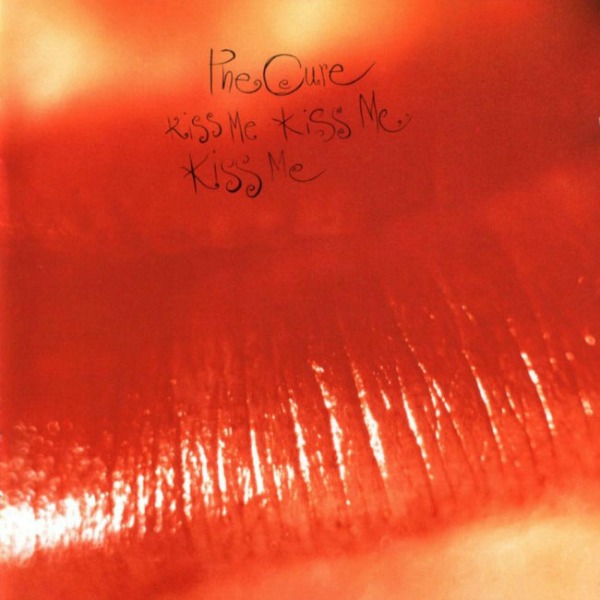
The-Cure-Kiss-Me-Kiss-Me-Kiss-Me

It was 28 years ago today that The Cure’s Kiss Me, Kiss Me, Kiss Me was released, and of course I’ve got it playing on my PC while I’m writing this up.

The Cure’s release history up to that date in the US was quite scattershot in the mid-80s…multiple labels over the course of four years (Boys Don’t Cry on PVC, Happily Ever After and Pornography on A&M, the 1982-83 singles and The Top on Sire).  It wasn’t until 1985’s much poppier and upbeat The Head on the Door showed a new and invigorated band, and their new label Elektra made sure they didn’t falter.  The 1986 singles compilation Standing on a Beach only served to push their status ever higher, and by the time Kiss Me (or “Kiss Me Cubed” as my friends and I used to call it) came out, America had finally taken notice.

This sprawling yet exciting double album came out at the same time I was asserting my individualism as a teenager.  A new circle of friends, a burgeoning record collection full of newly-found college rock, and a fresh coat of not giving a fuck anymore of what other kids thought of me.  I’d gone to see them with my sister and a friend that August in Worcester, and came back with a concert tee with Robert Smith’s pasty, lipsticked mug on the front and the lyrics to “Hot Hot Hot!!!” on the back.  I practically wore that shirt out in the ensuing months. I certainly got a lot of guff from both kids and teachers, but I didn’t care. This was the new me.  Forget fitting in, time to figure out who I was.

Kiss Me was indeed a sprawling album, but like Standing on a Beach it got a hell of a lot of play on my tape players.  I was a huge Cure fan by that time, and thanks to Elektra buying out the old contracts, their early releases were finally much easier to find.  I listened to them all on heavy rotation whenever and wherever I could.  I even predicted that “Just Like Heaven” would end up being one of their next (and best, and most famous) singles, and I was not proven wrong.

My friends and I would occasionally take road trips down to Amherst and Northampton to hang out at the record stores, and during the fall of 1987 and into 1988 this album would often be playing.  [This was back in the days before most of our parents’ cars had tape decks, so one of us, usually me, would lug along a boombox and have it playing in the back seat.  During one memorable trip when this was playing, the drinking of many sodas that evening came to its expected fruition and I urged they pulled over.  As I’m running into the woods, they pulled away, leaving me completely alone. Returning a few minutes later, they saw me on the side of the road, running after them, and slammed on the breaks, causing my radio to crash to the car’s floor in a thump! loud enough that I heard it from fifty yards away.]  To this day I still think of the winding Daniel Shays Highway and the back roads of Shutesbury when I listen to this album.

Compared to their earlier, darker albums of the early 80s and the intense frailty of Disintegration just a few years later, this album seems is so much more energetic, even a bit psychedelic.  It kind of reminds me of Prince’s Sign ‘o’ the Times, which had come out almost exactly two months earlier; it’s a beefy double album full of multiple and quite different genres, but it’s also a crowning achievement where nearly all the tracks are memorable, wonderfully produced, and leaves little to no room for boredom.  But also like Prince’s album, Kiss Me was a departure from their earlier albums, where they chose to break down the barriers, both creative and personal, to record something they would be proud of.  I kind of think The Head on the Door was a practice run, Standing on the Beach was the fanbase test, and this was the first official run; it would culminate of course with Disintegration.  It’s of no surprise that this was also the era of one of their best band line-ups, with Simon Gallup on bass, Porl Thompson on guitar, Lol Tolhurst on keyboards and Boris Williams on drums.  This particular quintet remains one of the strongest versions of the band for many older fans, as their sound was amazingly tight and inventive.

https://youtu.be/WFkTYAQ2EqY


Throwback Thursday: Spring 1989

Ah, twenty-five years already, then? A quarter century already since I was a pimply, music-obsessed, self-proclaimed nonconformist and budding writer, twitchy and moody and waiting for my senior year in high school to be over and done with so I could go out and live in the Big Bad World. My senior year felt like a badly scripted, unwanted denouement, to be honest. I really should have been a year ahead. I say this now, well after the fact, because after twenty-five years of contemplation, I realize it wasn’t that I was lazy or had any learning deficiency, it’s that I was bored. And boredom begets distraction. And distraction begets so-so grades. And I never quite got out of that slump, not really. I think if I’d graduated in 1988 instead, it would have forced me to put more effort into it, made me work to my potential. It would have made me mature a hell of a lot quicker. As it happens, I ended up coasting for the rest of my education years instead when I should have excelled.

But that’s a different post altogether. This is a music blog, isn’t it?
Credit: flyerize.com

Credit: flyerize.com

Spring 1989 was right about the time when that beloved radio subgenre of mine, college rock, finally emerged from its late night perch and started making its presence known elsewhere. Well, that’s not entirely true. There’s a lot more to it than a wider audience. Consider the following:

–In late 1988 (the September 10th issue, to be exact), Billboard acknowledged the subgenre for the first time with a “Modern Rock Tracks” chart.

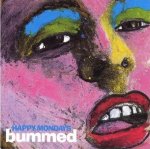
–The Top 40 of the late 80s was in flux, with all different kinds of pop music gaining traction. Top 40 rock was giving way to Top 40 dance music. Many production-ready sounds had emerged as well, thanks to production houses like Stock Aitken Waterman. This was especially embraced by the poppier end of the MTV playlist, thanks to heavy rotation as well as shows like Club MTV. This let the occasional unexpected hit sneak into the charts now and again, giving other subgenres an opening for success.

–The rock sounds of early in the decade and the one before it–the arena rock, the LA glam metal, the Michael-Mann-approved, Miami Vice-ready mood pieces, and the last dregs of 70s bar band sounds–had begun to age, and age badly. Harder, more serious rock like Guns n’ Roses and Metallica became the accepted norm. [Come to think of it, this is probably around the same time many FM rock stations divided between “current rock” and “classic rock” formats.]
credit: discogs.com

credit: discogs.com

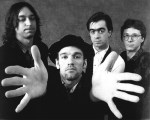
–Several British subgenres of rock emerged or were noticed in America about this time as well: shoegaze, Madchester, Britpop, etc. Many were noticed and release by major American labels at this time. They may not have made high chart placement, but they were starting to get noticed. Several local US scenes were gaining traction as well: Seattle, Boston, Athens, and so on.

–Even the American punk scene was in flux, many of its major late-70s/early-80s players (Hüsker Dü, The Replacements, Black Flag, et al) either having broken up, evolved considerably, or on their way to self-destruction. There would always be the hardcore punk in its many sounds and guises, and it would remain in the shadows where it wanted to be, but the newer sounds were more steeped in the post-punk sound–equally as emotional in its delivery, but more melodic and adventurous in its sound. This sound was less influenced by the DIY punk ethos and more by the UK post-punk sounds of just a few years earlier.
credit: thequietus.com

credit: thequietus.com

–Two years earlier in late 1987, we also saw an influx of uniquely college-rock bands releasing highly lauded albums, elevating them past the college-radio-only playlists and onto commercial radio: The Smiths, The Cure, Depeche Mode, REM, Red Hot Chili Peppers, and so on. Many of these were on Warner Bros-related labels, and a number of them had the backing of Sire Records head Seymour Stein. [Seriously, we need a bio of this man, STAT…he was such a big influence on the New Wave scene.]

By 1989, for this music nerd and self-proclaimed nonconformist, I felt both liberated and a little saddened by this change in the weather. On the one hand, I was thrilled that the music I had so loved since that fateful evening in April 1986 was finally getting its due…but at the same time, it felt like it was losing its mystique in the process. After all, this was the music I listened to on my own. It was my music, the songs that spoke to me. I tried to take the high road with this one, though…I felt it was high time my peers stopped listening to the prepackaged crap that radio was feeding us and listen to music with substance.
Credit: discogs.com

Credit: discogs.com

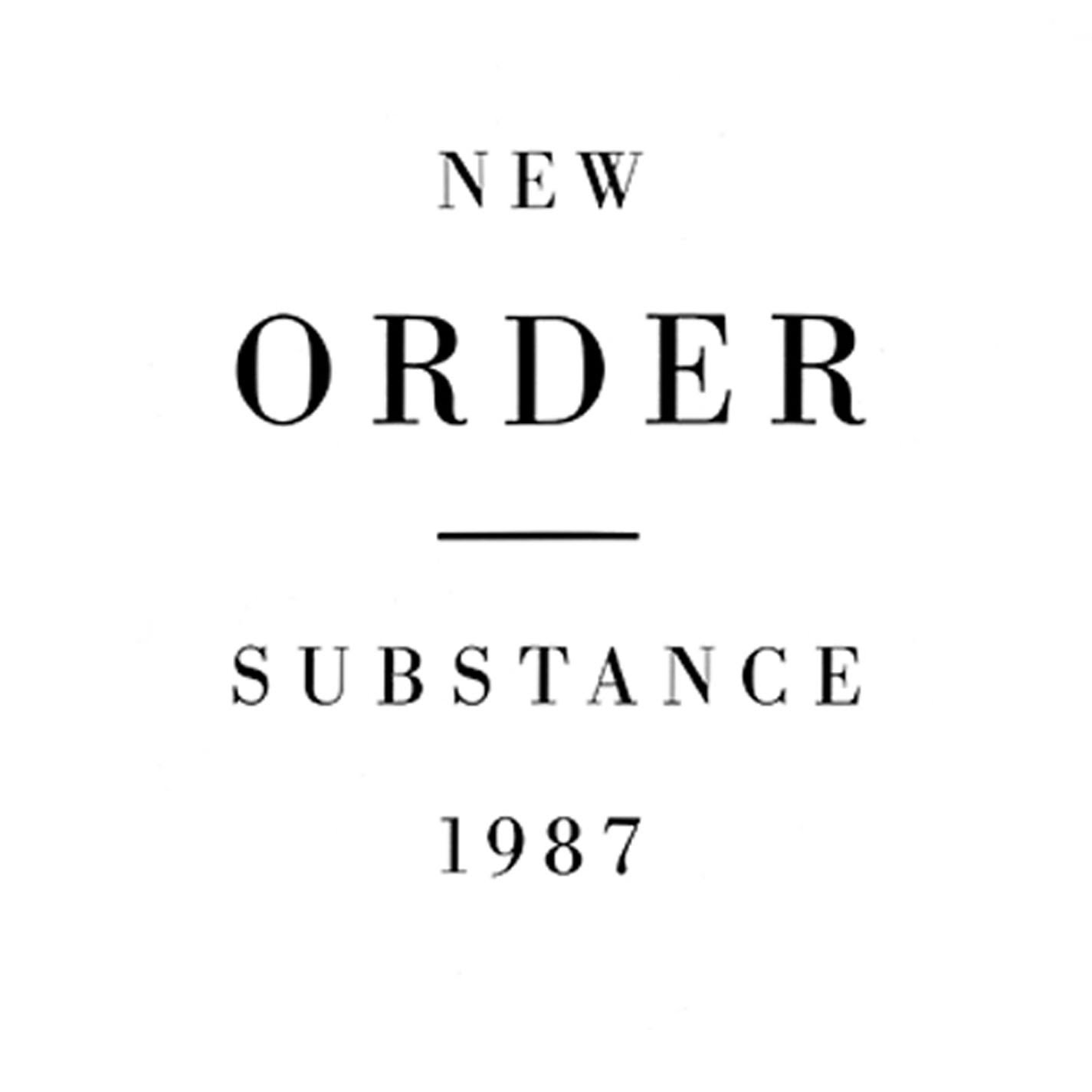
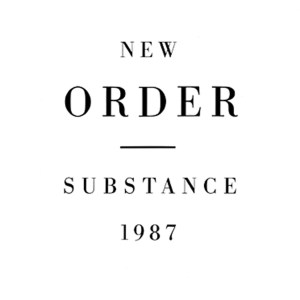
Style versus substance…that was the big debate of the 80s, wasn’t it? Do you want something pleasing to the eyes and ears but superficial, or do you want something of deep meaning but not exactly pretty to look at or listen to? I’d like to think that’s why New Order chose Substance as the title for its 1987 hits collection (and by extension, its Joy Division collection as well); they may also be making sequenced dance music, but put “Blue Monday” side by side with “Never Gonna Give You Up” and one can definitely hear the difference. One was destined for status of classic dance track that’s still embraced today, the other the subject of a hokey (yet admittedly amusing) internet meme. The genre could be similar, but the quality couldn’t be any more different.

Then there’s also the change that comes with the change in decades as well. It’s often been noted that the last few years of a decade tend to show a decline in the interests that once defined them–the flower power of 1967 gave way to the high-octane politics of 1968; the blissful haze of the 70s gave way to the discontent of the late 70s. The paranoia and the wackiness of the early 80s was giving way to the more serious and reflective late 80s. There was also the fact we were coming in on the last decade of the millennia as well. We wondered what the 90s would bring us–the promised jetpacks? World peace? Information at our fingertips? The possibilities!

I’d like to think that this calmer introspection was yet another piece in the puzzle that led to college rock, and in effect other rock subgenres, becoming more acceptable. Yes, I know, it might be a stretch, but think about it–when you’re thirteen, things you dislike are stupid (or in the 80s New England parlance, fucken retahded), but when you’re hitting eighteen and about to head off to college, these things aren’t as important on your popularity scale and you start accepting different things easier. Where Metallica was once only listenable to those long-haired smoking weirdos who wore denim jackets and drove to school in Camaros, in 1989 they had a massive hit with the song “One”–a song based on a 30s war novel at that. By 1989 we had chart hits from Faith No More, Fine Young Cannibals, Love and Rockets, REM, The B-52s, Nine Inch Nails, and more.

Credit: discogs.com

Credit: discogs.com

In early May, just as I was finally winding down my educational years in my small hometown, The Cure released what would be considered their best album ever, Disintegration. It was prefaced by two different singles: in the UK, the slinky and creepy “Lullaby” reached all the way to #5, and in the US the darker and angrier “Fascination Street” became their first US chart hit, hitting #1 on the new Modern Rock Tracks list. This was new stuff for those unfamiliar with the band, and for those like me and my close friends, this was definitely new stuff. The Cure had always retained a darker sound since their inception, but after the much brighter sounds of 1985’s The Head on the Door and the poppier, more psychedelic sounds of 1987’s Kiss Me, Kiss Me, Kiss Me, Disintegration was an altogether different affair. It was epic not only in scope but in sound, “mixed to be played loud so turn it up” as the liner notes suggest. It was as dark, it was moody, and it was absolutely, stunningly gorgeous.

This album fit perfectly as a final step towards the end of the decade, and it was the soundtrack to the last remaining days I spent in my hometown. I’d spend the summer working for the DPW in the town cemeteries, and I’d be listening to this album on repeat on my Walkman while I pushed lawn mowers all over the place. I’d listen to it at night that summer, now that WAMH out of Amherst College was off the air for the season. I’d been writing a gloriously doom-laden teen roman à clef and several poems/lyrics at the time (you know how it is when you’re that age), and used this album as a soundtrack as well. And when August rolled around and my buddy Chris had his first of a few “fiasco” parties as his grandfather’s cabin out on Packard Pond, this album got heavy airplay both on our tape players while we laughed, played cards and did other silly things, and again on my Walkman as I finally climbed into bed later that night.

On the last day of that party, after we all cleaned and straightened up and headed back to our homes, I sat on the front porch at my parents’ house and listened to it one more time on my headphones, composition book in hand in case inspiration arose. “Homesick” came on, and I latched on to the lyrics: “So just one more, just one more go / inspire in me, the desire in me, to never go home.” It was the perfect ending quote to my life up to that time–not that I don’t like it here, but PLEASE give me a reason to move on. It was the end of summer, I’d be heading to Boston for college in a month, and I was just itching to get started with the new chapter of my life. And to add to the bittersweet end of the season, the last track, “Untitled”, came on with its slightly-offkey melodica intro, creating a melody that would repeat ad nauseum until all the instruments left again, leaving the offkey melodica drifting way. The lyrics to “Untitled” were the polar opposite of “Homesick”, a last tearful goodbye delivered with such a mortal finality it felt like heartache. While the former was “okay, time to move on and embrace the future”, the latter was “oh, and by the way–you can never return to the past.”

Indeed, I could not, no matter how much I may have wanted to.

*

I’ve returned to my past many times over the years, mostly with writing works in progress, song lyrics and poems, and quite a few blog posts, but I understand that I can’t stay there indefinitely. It took me little while in college to understand that, but I eventually got over it. Now, I enjoy heading back to the days of the late 80s, especially with my overly large music collection. I like to listen to what came out back then and compare it to what’s out now. I can see and hear the cycles now, the songs of yesterday hidden in the songs of today. I talk with many of the same people in that circle of friends online now, even though a continent separates us. I might not be the twitchy self-proclaimed nonconformist anymore, though I am still that writer and music nerd.

So I think after twenty-five years, it’s a good balance.