Unknown's avatar

About Jon Chaisson

Author, blogger, music collector, cat wrangler. May contain trace amounts of sugar and caffeine. Books available at Smashwords!

Fly-by and Shameless Plug Time!

Yeah, best laid plans and all that…I had some interesting ideas to toy with for a new post, but kind of got distracted by my Great Office Cleanup Project.  In short, I decided that my old arrangement of printed manuscripts on the bottom shelf (and partially blocked by a file box) and unsorted piles of stuff on the shelf above wasn’t working.  What I thought would take one day ended up taking both Saturday and Sunday, as the cleanup also included the partially obscured bookcase next to the loveseat, the four small storage boxes next to the desk, and the rest of the tall black bookshelf.

All told, I got rid of about twenty ancient spiral notebooks, most of them over a decade old, that I haven’t used in ages–I ripped out what few pages I did use and sorted them into their proper piles and threw the remains in the recycling.  There’s also a box full of stuff that can either be shredded or tossed, and one final smaller box of non-writing personal bits and bobs that I need to sort through.  I reorganized by putting all related project stuff together, putting trunked and unimportant projects down on the bottom shelf, and current projects up on the second.  All poetry and journals are together on another shelf, and all the reference books are up on top.  In short, it’s still a bit messy, but at least I know where the hell everything is now!

We shall return to our regularly scheduled writing this week, and I’m planning to get another post out ASAP. Thanks again for your patience!


That said…

SHAMELESS PLUG TIME!

Please check out the Kickstarter for Decomposure’s latest possible album project!

I’m plugging his project for two three reasons:

1.  I’m a big fan of his music, and it’s worth checking out, especially 2012’s Eating Chicken.  He’s done everything from experimental sound textures to lovely balladry to quirky angular pop.  He’s quite the excellent songwriter and I love what he’s done creatively.

2. I like the idea he came up with for this current project, as it’s got some parallels to what I’m doing here with Walk in Silence, by revisiting his childhood via roadtrip and writing an album about it.  I’m quite curious as to how this will unfold and would love to hear new music from him.

3.  Like many creative people, he actually records music as a labor of love, as he actually has a full-time career outside of the music field.  I’ll pay forward to anyone who’s that dedicated to their craft.

So yeah–check it out, and give him some love and cash if you can! 🙂

Writing Walk in Silence, the book

You may have seen my occasional tweets, or my weekend updates at my trusty old Live Journal, in which I’ve been voicing my surprise at how quickly Walk in Silence, the book, has been coming along.  As of today, I’m a few pages in to Chapter 5, in which I talk about key events of 1986 that bring me closer to my long-standing obsession with alternative rock–in this case, MTV’s addition of The Monkees, Monty Python’s Flying Circus and 120 Minutes, as well as my discovering college radio during spring break.

I chose to plot this book similar to how I’ve seen a number of creative non-fiction books written: the opening prologue introducing the ultimate key moment of the entire book (my discovering college radio), and in the ensuing first few chapters explaining how I got to that point.  In this case, this includes my other musical obsessions, namely the Beatles, listening to radio in general, and being a part of the first generation of MTV viewers.  Other things pop up, including Miami Vice, classic rock, American Top 40, and other decidedly non-alternative points.  Now that I’m back to that same prologue point, I can move forward focusing mostly on the alternative sounds from here on in.

The bit that surprises me the most is how far I’ve gotten in such a small time.  This is definitely a rough and relatively short first draft, as the word count is only at around 12k, but given the chronology I’ve given myself, I still have a ways to go.  I music collection did not expand nearly as much until around 1986 or so anyway.  Once I hit that Defining Moment, I was not only buying new alt-rock music, but catching up with the older stuff as well.  A good portion of this book will actually focus around 1986-1989–both around the time the genre started gaining more ground, as well it being a time of personal growth for me.

I haven’t given myself a hard deadline to get this first draft finished, but I have made a tentative guess that I should be done with it by the end of summer, perhaps sometime into early autumn.  By far the fastest I’ve ever written any book, first draft or no.  I think I’ve chalked this one up to the fact that I’ve been thinking about this stuff since the time the music came twenty some-odd years ago, and that I’ve been doing light research on it for at least five or six.  At this point I’m putting it all in focus and getting it all down on the screen.   Do I know how long the future drafts and revisions will take?  I’m not thinking about that right now, to be honest.  I just want to get it all out at this time; I’ll start fixing it on the next go-rounds.

Casey Kasem 1932 – 2014

Casey Kasem is partly to blame for my lifelong obsession with music.

It goes back to the late 70s and early 80s, when my older sisters listened to the radio and caught the countdowns. They were nowhere near obsessive about it as I was, but it was my eldest sister who would sometimes tape songs off the radio, creating her own mixtapes, a habit I would pick up in the early 80s myself. We’d listen to the American Top 40 on weekends, catching the countdowns during our roadtrips to Keene or Leominster, or I’d catch them while scanning the dial looking for something to listen to while I did my homework.

Kasem was the co-creator of the long-running American Top 40 radio show we all know and love. His version of the countdown was a flashier, glossier version of the old AM Top 40 announcer of the 50s and 60s, ready with a soundbite or a PSA or an emotional Long Distance Dedication. Sure, it was scripted and flashy and aimed to excite the listeners, move them emotionally somehow, and it worked. Kasem delivered it with panache, sometimes corny and sometimes ridiculous in its earnestness, but you could tell he meant every single word of it. The whole point was to say “Hey–listen to these great songs.” The countdown itself was originally pulled straight from Billboard (and later Radio and Records, and now Mediabase) so you understood that it was about sales and popularity, but that was part of the game–what song was going to hit Number 1 this week? Who was it going to unseat from that top spot? What new songs would debut? Kasem understood this game, and played it perfectly.

He was also one of the deejays with a distinctive voice: Wolfman Jack’s growl, Howard Stern’s bassy, nasal chatter, the homey drawl of Garrison Keillor…the showbiz flash of Casey Kasem. It was also the voice of Scooby Doo‘s Shaggy of course, forever regaling us with the classic flustering “Zoinks!”, but for many of us, especially those of us who tuned in every week, it was the friendly voice of our best friend the music geek, giving us the most obscure and left-field music trivia about our favorite songs. He’d even throw a fascinating 12-inch remix in there if he could. It was great fun.

I wasn’t a constant listener to AT40, but for a while there in the mid-80s, from around 1984 to 1987, I listened enough to pick up on all the latest and greatest. A lot of my mixtapes from then were songs culled from those countdowns. Those mixtapes would in turn inspire my ‘compilation’ mixtapes, and his countdowns would inspire my end-of-year countdowns over the years. He was a showman and quite an inspiration to me.

Rik Mayall 1958-2014

I remember the first time I ever watched The Young Ones on MTV. It was probably early 1987, after I’d started watching 120 Minutes, taping episodes and watching them later that week. At first I only taped 120, but as I would start the VCR timer a few minutes early, I’d always catch the last few minutes of whatever previous show was playing. They were no longer playing music videos but some loud and wacky UK show, so I thought I’d give it a go, set the timer a half hour earlier.

The “Bombs” episode was the first one I’d taped and watched. The first thing you see, after stock footage of a fighter plane dropping the titular bomb, is a close-up of Rik Mayall’s character attempting to pop a zit in the bathroom mirror, spouting ridiculously bad political poetry and singing the Beatles’ “Revolution” while putting on deodorant. Within minutes he’s having an argument with his roommate Vyvyan, and things head downhill from there. It’s loud and boisterous, quite often in poor taste, and VERY of its time of Thatcher’s early 80s Britain. And it’s goddamn hilarious.

Rik was often my favorite character on this series, taking everything to brilliant and often absurd extremes. Vyv might be the amusingly destructive punk, neil the lovably dim hippie, and Mike the shyster and person in charge (read: the only roommate with somewhat of a brain between his ears), but Rik was the character who sang to me. He was the most vocal character, unafraid to cross lines in his dialogue, sometimes completely unaware that there were lines there to begin with. He spoke what was on his mind, regardless as to whether it made sense.

In “Bombs”, each roommate has their own reaction to finding a bomb in their kitchen, blocking the refrigerator. Vyv attempts to set the thing off (and delivering my favorite non-sequitur of the entire series when he fails). Mike is cool-headed, already planning to sell it to the highest bidding government. neil appropriately freaks out like any good hippie should, and prepares himself for the fallout accordingly. It’s Rik who has the most realistic scheme, immediately deciding to use it as collateral against Thatcher’s rule. He too completely fails, but not before he manages to go on a number of lengthy political diatribes. Most of them are extremely leftist and completely absurd, and ultimately brilliant satire.

Ultimately, I think The Young Ones influenced my outlook on life from my late teens onwards; life just seemed to be much more agreeable if I remembered just how absurd it often is. Rik Mayall often played those types of characters; hapless bassist Colin Grigson in the “Bad News” episodes of The Comic Strip, the moral-free but ultimately kind-hearted titular imaginary friend in Drop Dead Fred, the over-the-top military hero Lord Flashheart in Blackadder II, and the ridiculously conservative MP Alan B’stard on The New Statesman. He was never big here in the US other than in The Young Ones, but he definitely left a mark on me.

RIP, Rik, you right bastard…thanks for all the laughs.

Fly-by: I’m wide awake and these memories can’t wait

So where have I been for the past month? I had planned on getting some blogging done here, but as you can see, there’s been a bit of a delay. A good delay, though. Since my last entry here, I’ve been working hard at the Walk in Silence outline. It’s quite long at 30+ pages and around 11k words (granted, a lot of those are song and album titles I may use), and I just finished it up a few days ago.  That took a lot of my time, because I didn’t want to forget any details.  Am I going to use all of it?  Probably not…I can already see a few places where I’ve repeated myself, and I can fix that when I come to the writing part of it.

So how am I going to write this, anyway?  I have absolutely no background in writing nonfiction other than blog posts here and elsewhere, where I wax poetic either about past personal events or write overviews about albums and/or bands.  But really…I had no background writing science fiction and fantasy before I started the Mendaihu Trilogy, so I have to start somewhere, right?  And I figure–just start at the beginning, let it flow and not worry too much about the wording just yet.  Just like my fiction.

I started writing it just a few days ago and I only have about 1500 words so far, but once I get back into the groove of writing again, I’m sure the word count will rise.

So yes…that’s what I’ve been doing.  I wanted to give as much focus to the outline as possible and prep myself for the Big Writing Push, and because of that, a lot of my blog posting fell by the wayside.  [I’ve also been filling in for a vacationing coworker and doing double-duty for the last two weeks, so there’s been absolutely no downtime during the day to sneak in some extra work.  She’s returning tomorrow, so I’ll have more breathing room quite soon.]


So!  That being said…as mentioned over at the other blog, starting soon I’ll be working on new blog posts very soon, perhaps starting off once a week and maybe expanding further down the line.  I still have a backlog of ideas I’d like to hit on, so expect to see those quite soon!


Making it official…

Just posting here for posterity to say that I’ve just now (well, about 7:10pm PT, so a short time ago) officially started work on the BOOK of Walk in Silence. There’s two reasons for this:

1. I’m about twenty chapters away from finishing off the major revision of the Mendaihu Trilogy, and have noticed that I’ve been getting a lot more work done via my tablet just before bed than in the hour or so I usually give myself after dinner, so those last twenty chapters will be worked on there.

2. I’ve been itching to start something new for a good couple of years now, especially now that I’m on a good creative roll, and I’ve decided I just can’t wait anymore. It’s high time for me to kick this project into high gear.

Of course everything is in place: many of my reference books are about five feet away in a bookcase, I have SiriusXM’s “Classic College Radio” channel playing, I have a bottle of Dr Pepper open, and I’m finishing off my pint of Ben & Jerry’s Boston Cream Pie ice cream. [I can’t really say that it should be Mountain Dew and Harvest Cheddar Sun Chips–those are official Mendaihu Universe snacks, not WiS snacks. Not that I’m trying to set a new, fattening and sugary precedent here.]

SO! Be it known that as of 7:10pm PT on 4/29/2014, I’ve started officially working full-time on the book Walk in Silence. I will of course keep you all updated and post any interesting snippets or bits and bobs that may not get into the book but are definitely worth sharing.

Wish me luck! 🙂

On College Radio vs Progressive Radio in Massachusetts in the late 80s

I’ve been thinking about this subject lately, partly due to the way I’ve decided to frame the text of Walk in Silence in book form.  I did not want to write just a memoir, nor did I want to write a simple book about alternative rock. I decided to make it a hybrid of both, and in the process I wanted to do a bit of research on radio history in general.  I not only want to go over some of the highlights of great alternative rock of the time and talk about my favorite songs and albums, but I want to explain the genre itself–how it formed, how it got there, and how it related to other music (and points in history) at that particular time.  It’s not just enough for me to say why “Under the Milky Way” is my all-time favorite song; I wanted to explain that the Church’s Starfish album was make-or-break for them after years of not-quite-success.  There’s also the fact that in the 80s, the lines between pop music, rock, and “new wave” were a hell of a lot more defined then.

On a more professional note, however, there were two different kinds of stations playing this kind of music at the time as well, and that’s what I want to speak about here.

There was the college radio station: the longtime home to the alternative, the free-form, and the not-quite-professional.  Ratings didn’t matter to college radio, only that they had the funding from wherever it happen to come from, be it fund drives or grants or the listening audience.  For most college stations, especially for colleges where it was more of an extracurricular position rather than part of the curriculum, the student disc jockeys may have at the least been instructed to vary their playlist or play a few core tracks, and at most been given stern reminders of FCC rules and regulations.  Other than that, you could get away with playing whatever you liked.  For the most part, the quality and style depended on whose shift you were listening to.  Some disc jockeys would play hardcore punk or EBM (Electronic body music, a danceable subgenre of industrial rock and championed by many European groups like Front 242), or maybe even that new post-punk influenced rock stuff coming from the UK, like the Smiths and the Cure.

On the other hand–or should I say, up a little higher on the dial–there were the professional radio stations.  Short version: by the early to mid 1980s, there seemed to be a shift in popular radio, and a lot of stations were starting to feel the crunch.  Slightly longer version: considering that popular FM radio was pretty much still in its teens at this time (it sounds weird, but it’s true: popular FM radio as we know it today really didn’t come into wide popularity well until the mid to late 70s), the FM stations that tried to cater to all sounds and styles were beginning to flounder.  Listening habits changed and people wanted to hear more of their favorite styles rather than a wide and often weird mishmash.  The wildly successful pop stations of AM yesteryear were now the wildly successful pop stations of FM now.  The rock stations did well, but they were also splintering, often due to their listenership; some like Worcester’s WAAF 107.3FM with its younger fanbase continued to follow trends to play the latest hard rock, while others like East Longmeadow’s WAQY 102.1FM began to drift with its older fanbase towards classic rock.

Of the latter, a newer subgenre emerged.  Partly inspired by the more adventurous free-form sounds of 70s FM radio, the arrival of Album-Oriented Radio (AOR) in the late 70s and early 80s catered more towards the connoisseur radio listener, the avid music listener who wanted more than just the throwaway pop or the mindless party rock.  True to its name, its playlist prided itself on featuring non-single album tracks, providing the listener with a much wider experience.  As the 80s wore on however, it was found that while AOR had its diehard fans, it was not a moneymaker.  A number of stations reverted back to a rock format, or were sold and completely changed formats.  Those who stayed were often extremely localized, such as Turners Falls’ WRSI 95.3FM (sold in 1996 and moving to Northampton at 93.9) and Peterborough NH’s WMDK 92.1FM, and placed in small but artistic-minded communities.  They may have been small, but they had the upper hand–they were run by music fans who knew their stock in trade, and knew how to sell it locally.

These two local stations never really sold themselves as “AOR” but more as “progressive radio”.  This term may have confused some, considering the word ‘progressive’ often went hand in hand with ‘rock’, and together ‘progressive rock’ often meant twenty-minute hyperbolic workouts from bands like Yes, early Genesis, and ELP.  But by the 80s, ‘progressive radio’ actually meant something different–it was almost a taunt, a term that said ‘we’re better than you–we play music for smart people’, and in its own way it was true.  The passive radio listener just wants background noise, but the active radio listener wants something that will stimulate the brain.  And it just so happened that post-punk sounds coming out of the UK and the collegiate sounds emerging in the US fit the bill at that point in time.  If there were no college radio stations nearby, or none with the wattage strength to reach long distances (especially over hilly central Massachusetts), these progressive stations would offer up the most radio-friendly of it.

And for a good couple of years, probably from around 1984 or 1985 up to 1988, these stations could get away with playing the not-quite-commercial rock.  These bands weren’t being played anywhere else except on college and progressive radio stations.
While college radio was much more open-minded and adventurous in its available playlist, it had its own shortcomings as well.  Part of the whole alternative music scene in parts of the US was its exclusiveness–it was music for the nerds and the geeks and the people on the fringes of society who didn’t belong in the popular cliques.  Morrissey may have sung and the music that they constantly play / it says nothing to me about my life / hang the blessed DJ in response to a UK radio personality who tastelessly followed up coverage of the Chernobyl disaster with Wham!’s “I’m Your Man”, but in the US it took on a slightly different meaning.  For those of us here in the States, it was simply a rebellion against the tired, creatively vacant mainstream.

But what was mainstream, anyway? Especially in the last few years of the decade when more ‘modern rock’ songs were showing up on the Top 40 charts? What was there to rebel against when the keys to our rebellion were now becoming mainstream?  By the early 90s, many college radio stations were refusing to play anything by the Cure or Morrissey or Depeche Mode or REM, simply because they were being played on commercial radio.  They would need to start looking elsewhere for their alternative fix.

On the other hand, progressive radio could still get away with it.  Perhaps it was that, as professional stations, they had to constantly keep an eye on shifting tastes.  Progressive radio is where I first started hearing Britpop, back in 1989 with Happy Mondays and the Stone Roses, well before a lot of other stations played it.  They also kept an eye on other subgenres of rock that fit into their playlist, like the folk rock sound of Tracy Chapman, Tanita Tikaram and Indigo Girls, the blues rock of Jeff Healey, or the new funk of Lenny Kravitz.  They were able to balance the commercial with the alternative, and that kept their stations alive much longer.  It also kept the alternative sound in the spotlight, making way for newer “adult alternative rock” stations such as WXRV (The River) 92.5FM in Haverhill.  It also helped usher in more “new alternative” sounds–bands that may lean towards the mainstream, but are decidedly not intellectually vacant pop.

 *

Over two decades later, I’ve been noticing a slow but significant return to departmentalizing the different genres of rock on FM radio.  It’s partly due to the advent of the internet, and it’s also due, as it always has been, to the shifting tastes of its listeners.  For a brief time in the 90s, alternative rock became so polarizing that on the one hand we had all-commercial rock radio on one end and very anti-commercial rock radio on the other.  Now, however, we’re starting to see specific subgenres again, and they’re being played on both college radio and on indie rock stations, sometimes within the same hour.  We’ll hear the bizarro tUnE-yArDs alongside the catchy pop of Capital Cities alongside the folk rock anthems of Frank Turner.  Listeners can access the sounds not just on FM radio but on satellite stations, online-only stations, streaming sites and even playing their mp3 library set to “random”.  But thanks to these same things, we can set our listening preferences so we’re only listening to weird left-field rock or synthpop or folk rock.  We’re not just bound to the FM dial anymore, but we can bound ourselves to just how wide or how narrow we want our music to be.  Radio may continually shift in its never-ending search for new sounds and higher earnings, but as always, it comes around and settles in new and more interesting ways for us to listen.

Fly-by: Coming Soon

Hey there!  Sorry for the delay in posts…it’s been quite the busy month here in JoncWorld.  What with tax season, preparations and travel for a week’s vacation back to New England, some serious revision work going on, as well as other personal events, I’m afraid I’ve been lax here at Walk in Silence as of late.  I aim to change that (again).  So!  A short list of possible upcoming posts….

–Radio Radio: College radio versus Progressive radio in the 80s

–The Audience-less Live Album:  A (brief) subgenre, or shameless re-recording?

–Wanting My MTV: Free-form, New Wave and other subgenres on pre-1984 MTV

–Teenage Thunder: An overview of Sigue Sigue Sputnik (no, really!)

–Collecting in the Digital Age: Building an mp3 collection of classic albums and tracks


I hope to start writing these within the next week or so, after the Easter holiday.  Stay tuned! 🙂

Throwback Thursday: Spring 1989

Ah, twenty-five years already, then? A quarter century already since I was a pimply, music-obsessed, self-proclaimed nonconformist and budding writer, twitchy and moody and waiting for my senior year in high school to be over and done with so I could go out and live in the Big Bad World. My senior year felt like a badly scripted, unwanted denouement, to be honest. I really should have been a year ahead. I say this now, well after the fact, because after twenty-five years of contemplation, I realize it wasn’t that I was lazy or had any learning deficiency, it’s that I was bored. And boredom begets distraction. And distraction begets so-so grades. And I never quite got out of that slump, not really. I think if I’d graduated in 1988 instead, it would have forced me to put more effort into it, made me work to my potential. It would have made me mature a hell of a lot quicker. As it happens, I ended up coasting for the rest of my education years instead when I should have excelled.

But that’s a different post altogether. This is a music blog, isn’t it?

Credit: flyerize.com

Credit: flyerize.com

Spring 1989 was right about the time when that beloved radio subgenre of mine, college rock, finally emerged from its late night perch and started making its presence known elsewhere. Well, that’s not entirely true. There’s a lot more to it than a wider audience. Consider the following:

–In late 1988 (the September 10th issue, to be exact), Billboard acknowledged the subgenre for the first time with a “Modern Rock Tracks” chart.

–The Top 40 of the late 80s was in flux, with all different kinds of pop music gaining traction. Top 40 rock was giving way to Top 40 dance music. Many production-ready sounds had emerged as well, thanks to production houses like Stock Aitken Waterman. This was especially embraced by the poppier end of the MTV playlist, thanks to heavy rotation as well as shows like Club MTV. This let the occasional unexpected hit sneak into the charts now and again, giving other subgenres an opening for success.

–The rock sounds of early in the decade and the one before it–the arena rock, the LA glam metal, the Michael-Mann-approved, Miami Vice-ready mood pieces, and the last dregs of 70s bar band sounds–had begun to age, and age badly. Harder, more serious rock like Guns n’ Roses and Metallica became the accepted norm. [Come to think of it, this is probably around the same time many FM rock stations divided between “current rock” and “classic rock” formats.]
credit: discogs.com

credit: discogs.com

–Several British subgenres of rock emerged or were noticed in America about this time as well: shoegaze, Madchester, Britpop, etc. Many were noticed and release by major American labels at this time. They may not have made high chart placement, but they were starting to get noticed. Several local US scenes were gaining traction as well: Seattle, Boston, Athens, and so on.

–Even the American punk scene was in flux, many of its major late-70s/early-80s players (Hüsker Dü, The Replacements, Black Flag, et al) either having broken up, evolved considerably, or on their way to self-destruction. There would always be the hardcore punk in its many sounds and guises, and it would remain in the shadows where it wanted to be, but the newer sounds were more steeped in the post-punk sound–equally as emotional in its delivery, but more melodic and adventurous in its sound. This sound was less influenced by the DIY punk ethos and more by the UK post-punk sounds of just a few years earlier.

credit: thequietus.com

credit: thequietus.com

–Two years earlier in late 1987, we also saw an influx of uniquely college-rock bands releasing highly lauded albums, elevating them past the college-radio-only playlists and onto commercial radio: The Smiths, The Cure, Depeche Mode, REM, Red Hot Chili Peppers, and so on. Many of these were on Warner Bros-related labels, and a number of them had the backing of Sire Records head Seymour Stein. [Seriously, we need a bio of this man, STAT…he was such a big influence on the New Wave scene.]

By 1989, for this music nerd and self-proclaimed nonconformist, I felt both liberated and a little saddened by this change in the weather. On the one hand, I was thrilled that the music I had so loved since that fateful evening in April 1986 was finally getting its due…but at the same time, it felt like it was losing its mystique in the process. After all, this was the music I listened to on my own. It was my music, the songs that spoke to me. I tried to take the high road with this one, though…I felt it was high time my peers stopped listening to the prepackaged crap that radio was feeding us and listen to music with substance.
Credit: discogs.com

Credit: discogs.com

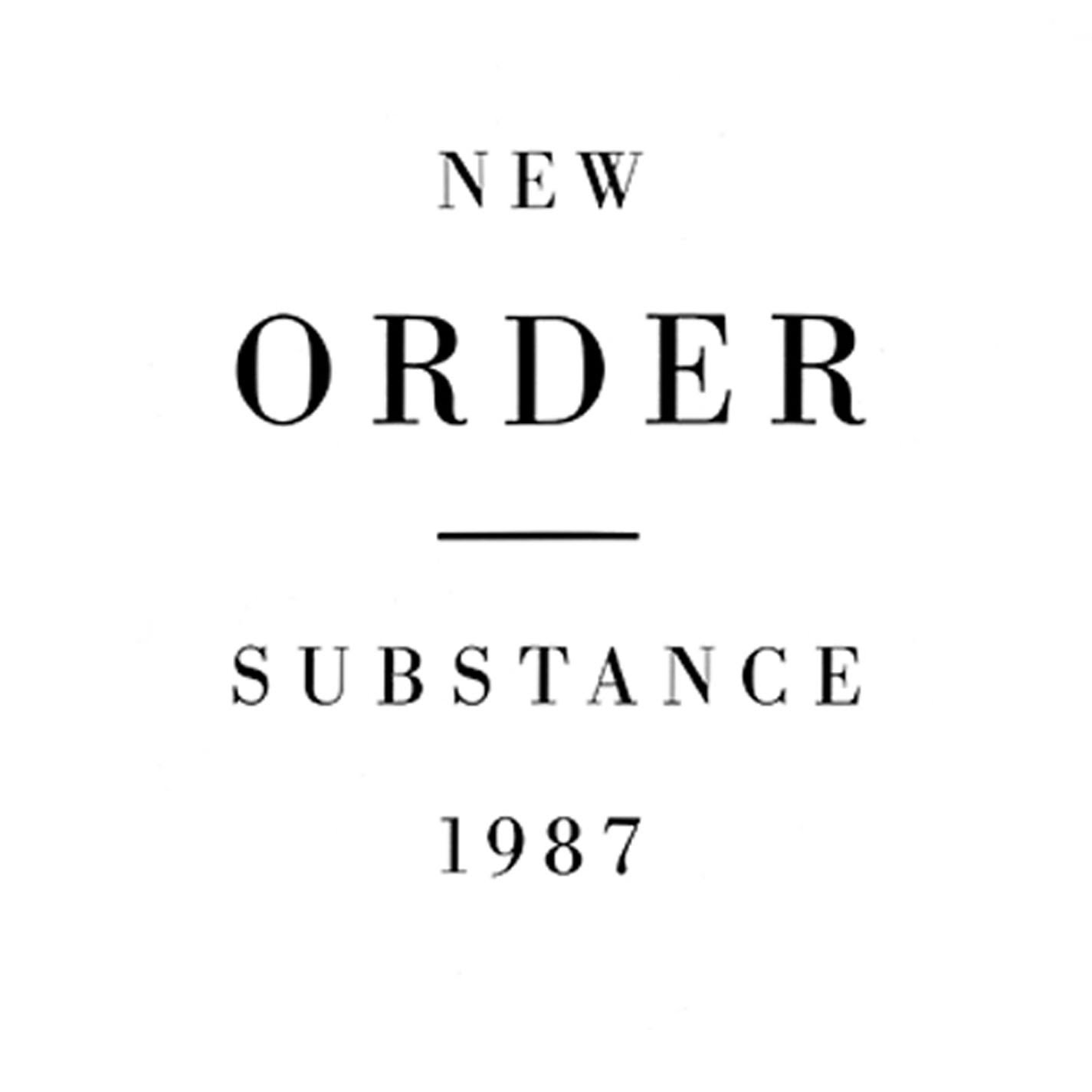
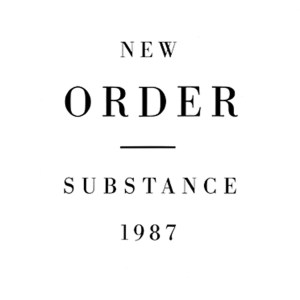
Style versus substance…that was the big debate of the 80s, wasn’t it? Do you want something pleasing to the eyes and ears but superficial, or do you want something of deep meaning but not exactly pretty to look at or listen to? I’d like to think that’s why New Order chose Substance as the title for its 1987 hits collection (and by extension, its Joy Division collection as well); they may also be making sequenced dance music, but put “Blue Monday” side by side with “Never Gonna Give You Up” and one can definitely hear the difference. One was destined for status of classic dance track that’s still embraced today, the other the subject of a hokey (yet admittedly amusing) internet meme. The genre could be similar, but the quality couldn’t be any more different.

Then there’s also the change that comes with the change in decades as well. It’s often been noted that the last few years of a decade tend to show a decline in the interests that once defined them–the flower power of 1967 gave way to the high-octane politics of 1968; the blissful haze of the 70s gave way to the discontent of the late 70s. The paranoia and the wackiness of the early 80s was giving way to the more serious and reflective late 80s. There was also the fact we were coming in on the last decade of the millennia as well. We wondered what the 90s would bring us–the promised jetpacks? World peace? Information at our fingertips? The possibilities!

I’d like to think that this calmer introspection was yet another piece in the puzzle that led to college rock, and in effect other rock subgenres, becoming more acceptable. Yes, I know, it might be a stretch, but think about it–when you’re thirteen, things you dislike are stupid (or in the 80s New England parlance, fucken retahded), but when you’re hitting eighteen and about to head off to college, these things aren’t as important on your popularity scale and you start accepting different things easier. Where Metallica was once only listenable to those long-haired smoking weirdos who wore denim jackets and drove to school in Camaros, in 1989 they had a massive hit with the song “One”–a song based on a 30s war novel at that. By 1989 we had chart hits from Faith No More, Fine Young Cannibals, Love and Rockets, REM, The B-52s, Nine Inch Nails, and more.
Credit: discogs.com

Credit: discogs.com

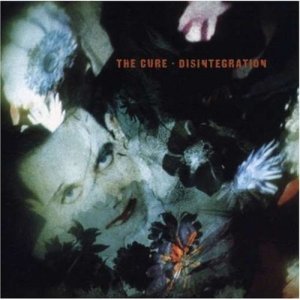
In early May, just as I was finally winding down my educational years in my small hometown, The Cure released what would be considered their best album ever, Disintegration. It was prefaced by two different singles: in the UK, the slinky and creepy “Lullaby” reached all the way to #5, and in the US the darker and angrier “Fascination Street” became their first US chart hit, hitting #1 on the new Modern Rock Tracks list. This was new stuff for those unfamiliar with the band, and for those like me and my close friends, this was definitely new stuff. The Cure had always retained a darker sound since their inception, but after the much brighter sounds of 1985’s The Head on the Door and the poppier, more psychedelic sounds of 1987’s Kiss Me, Kiss Me, Kiss Me, Disintegration was an altogether different affair. It was epic not only in scope but in sound, “mixed to be played loud so turn it up” as the liner notes suggest. It was as dark, it was moody, and it was absolutely, stunningly gorgeous.

This album fit perfectly as a final step towards the end of the decade, and it was the soundtrack to the last remaining days I spent in my hometown. I’d spend the summer working for the DPW in the town cemeteries, and I’d be listening to this album on repeat on my Walkman while I pushed lawn mowers all over the place. I’d listen to it at night that summer, now that WAMH out of Amherst College was off the air for the season. I’d been writing a gloriously doom-laden teen roman à clef and several poems/lyrics at the time (you know how it is when you’re that age), and used this album as a soundtrack as well. And when August rolled around and my buddy Chris had his first of a few “fiasco” parties as his grandfather’s cabin out on Packard Pond, this album got heavy airplay both on our tape players while we laughed, played cards and did other silly things, and again on my Walkman as I finally climbed into bed later that night.

On the last day of that party, after we all cleaned and straightened up and headed back to our homes, I sat on the front porch at my parents’ house and listened to it one more time on my headphones, composition book in hand in case inspiration arose. “Homesick” came on, and I latched on to the lyrics: “So just one more, just one more go / inspire in me, the desire in me, to never go home.” It was the perfect ending quote to my life up to that time–not that I don’t like it here, but PLEASE give me a reason to move on. It was the end of summer, I’d be heading to Boston for college in a month, and I was just itching to get started with the new chapter of my life. And to add to the bittersweet end of the season, the last track, “Untitled”, came on with its slightly-offkey melodica intro, creating a melody that would repeat ad nauseum until all the instruments left again, leaving the offkey melodica drifting way. The lyrics to “Untitled” were the polar opposite of “Homesick”, a last tearful goodbye delivered with such a mortal finality it felt like heartache. While the former was “okay, time to move on and embrace the future”, the latter was “oh, and by the way–you can never return to the past.”

Indeed, I could not, no matter how much I may have wanted to.

*

I’ve returned to my past many times over the years, mostly with writing works in progress, song lyrics and poems, and quite a few blog posts, but I understand that I can’t stay there indefinitely. It took me little while in college to understand that, but I eventually got over it. Now, I enjoy heading back to the days of the late 80s, especially with my overly large music collection. I like to listen to what came out back then and compare it to what’s out now. I can see and hear the cycles now, the songs of yesterday hidden in the songs of today. I talk with many of the same people in that circle of friends online now, even though a continent separates us. I might not be the twitchy self-proclaimed nonconformist anymore, though I am still that writer and music nerd.

So I think after twenty-five years, it’s a good balance.
WiS: We’ve Got a Fuzzbox and We’re Gonna Use It!!

I’ve been wanting to write this post since the two remastered cds came out in the middle of last year, and now I can finally do so! We’ve Got a Fuzzbox and We’re Gonna Use It!!, aka Fuzzbox here in the states, was a cute and punky quartet out of Birmingham UK, and one of my first music crushes when I started listening to alternative rock. They’d been brought to my attention right about the same time as Sigue Sigue Sputnik in the glossy music mag Star Hits, and upon seeing their crazy-colored and spritzed hair and Goodwill-chic punky fashion, I was completely hooked–which in all honesty wasn’t really hard, considering it didn’t take much to rebel in a small town like mine. They made me realize punk wasn’t just about rebelling against society, like American punk had suggested–it was also about doing your own thing, however out there it might be, and not giving a shit about what other people thought about it.

Fuzzbox was only together for a short time, releasing only two albums and a handful of singles (like most punk bands were wont to do during the 80s, it seems) before going their separate ways, but they were just so damn fun to listen to that it didn’t matter.

Credit: last.fm - l-r, Tina, Vix, Magz & Jo

Credit: last.fm – l-r, Tina, Vix, Magz & Jo

Fuzzbox started sometime in 1985 with four friends who’d decided to start a band. And like any punk band worth their salt at the time, mastering your instrument wasn’t exactly high on the list of priorities. Consisting of Vickie Perks (aka Vix) on vocals, Tina O’Neill on drums and sax, and sisters Maggie (aka Magz–vocals, keys and guitars) and Jo Dunne (bass, guitars and keys), they immediately jumped in on the occasional open mike night at the local bars and learned their chops onstage. It’s said Maggie was the creator of the band name, announcing that they did in fact have a fuzz distortion guitar pedal they were about to use.

Their debut single was the gritty and poppy “XX Sex”, with shockingly direct feminist lyrics about exploitation and sexism in the media. They followed up with a ridiculous and silly summer single with labelmates The Nightingales and Ted Chippington with “Rockin’ with Rita”, and by summer’s end they were given a spot on the highly influential NME C86 compilation with “Console Me”. They prefaced their debut album that October with a jittery and bass-heavy single about unrequited love, “Love Is the Slug”, my musical introduction to them via MTV’s 120 Minutes.

Credit: fuzzbox.angelfire.com

Credit: fuzzbox.angelfire.com

Bostin’ Steve Austin (released as a self-titled album here in the states, but with the same cover) was released in December of 1986, featuring a dozen gems about the girls’ life in Birmingham–not just containing the teen heartbreak of “Love Is the Slug” and “Jackie”, it also contains the confrontational “XX Sex” and “What’s the Point” (their follow-up single released in January of 1987) and “Preconceptions”, as well as a weirdly hypnotic cover of Norman Greenbaum’s “Spirit in the Sky”. The quality of the music here is surprisingly tight, even when it hints at sounding on the verge of disintegrating into a distorted mess. Vix’s lyrics alternate between playful, angry, and emotional, and despite the simplicity of the melodies there’s a lot going on musically. The stop-start of “You Got Me”, the building tension in “Love Is the Slug” and even the 60s-girl-group pastiche of “Hollow Girl” works perfectly.

Bostin’ Steve Austin got a ridiculous amount of play on my tape players between early 1987 and mid-1989–this was the side of punk that I gravitated to, the revelation that I didn’t have to try fitting in with the in-crowd anymore. I didn’t really need to do much, of course–wear some of my college rock tee-shirts, my grandfather’s green trenchcoat, and let my hair grow out of its quintessentially 80s spiky ‘do (but not to the point of longhaired metaldom), and start writing music reviews for albums hardly anyone else in my school listened to.

Meanwhile, Fuzzbox disappeared for a short while, and would reappear in early 1989 with a completely new and unexpected look and sound. I admit I wasn’t entirely sure how to approach it at first, having twitched and thought “oh god, they’ve become Jem and the Holograms.” But there was something about it…something about the slick late 80s production, the chart-ready poppiness, that called to me. I began to realize that this was the forbidden candy for me as a fan of college rock, the ultimate test: do I dare admit that, after labeling myself an alternative music nerd and a nonconformist, that I actually enjoyed this admittedly catchy music?

Credit: www.independent.ie - clockwise from top left: Vix, Maggie, Tina, Jo

Credit: http://www.independent.ie – clockwise from top left: Vix, Magz, Tina, Jo

Gone was the thrift-shop fashion as well, replaced by glitz and glamour. The fuzziness of their sound was also gone, replaced by shiny synthesizers and sequencers. They now had an outsider as a cowriter of songs in the form of session musician/producer Liam Sternberg. And yet…

…and yet, there was something about this new album, Big Bang, that I just could not give it up. I was older and now in college, and yet the music hinted at the readymade poppiness of 80s Top 40, the kind that was throwaway and yet catchy and likable at the same time. The Brummie humor was still there, hiding in the lyrics of lead single “International Rescue”, a loving ode to the Gerry Anderson tv classic Thunderbirds (and, in the video, a humorous nod to Jane Fonda’s Barbarella as well).

Credit: musicstack.com

Credit: musicstack.com

Big Bang kicked off with the irresistibly poppy “Pink Sunshine” (and also released as the second single) and my immediate reaction was to wonder where the hell my punk goddesses had gone off to…but I soon understood what they were doing. This wasn’t about rebelling, not anymore. It was about being an adult now, having gotten over the teenage growing pains. These were the Brummie girls stuck in their jobs, dealing with the drudgery of the real world and letting it all loose at the end of the working week.
There’s a lot of flirting and emotion going on with this album, and that’s part of what makes it so irresistible. There’s the rocking sci-fi of “Fast Forward Futurama”, the heartbreak of “Self!” (featuring the guitar work of none other than Queen’s Brian May!), and the gorgeous dancefloor bliss of “Versatile for Discos and Parties” (quite possibly my favorite track off the album). There’s even a brilliant cover of Yoko Ono’s “Walking on Thin Ice”, retaining the song’s mystique but giving it additional emotional beauty. The album ends on a very somber yet lovely note with a track called “Beauty”, which sounds like nothing else they’ve ever recorded.

Big Bang‘s shameless pop wasn’t shameless at all–it was a loving tribute to the dance pop of the decade, one that was about to come to a close. The sound of 80s pop would age, and often not for the best, but when it was done right, it was still fun to listen to. A few years later, once I discovered anime movies and series, from Urusei Yatsura and Silent Möbius and later to the Gall Force series and Sailor Moon, I began to realize that, thanks to Big Bang, I now had begun a long-lasting love affair with Japanese Pop (aka J-Pop). I began seeing the album as an unintended but spot-on paean to the J-Pop so prevalent in the credits and montages in anime, and that made me love the album even more. It’s pure pop, but it’s still irresistibly fun.

In 1990 they would release a final single, “Your Loss My Gain”, written for a never-realized third album, and while it seemed they were progressing in a more mature pop direction, they soon split up. They all went their separate ways. Only Vix remained in the music industry, recording under various band names including Vix n’ the Kix. Three compilations would surface a bit over a decade later: two albums of demos and outtakes called Fuzz and Nonsense and Rules & Regulations to Pink Sunshine: The Fuzzbox Story, and a greatest hits collection amusingly titled Look at the Hits on That (a very Fuzzbox-worthy pun title). And in 2010, Vix, Maggie and Jo reunited with the help of Vix’s backing band for a one-off single, a cover of M’s classic track “Pop Muzik”. Sadly, Jo would pass away from a cancer-related illness in 2012, but a year later, Vix decided it was time to rerelease the band’s 80s discography. Bostin’ Steve Austin would finally have its debut on compact disc, and Big Bang would contain all the remaining 80s tracks, including the “Your Loss My Gain” single.

We’ve Got a Fuzzbox and We’re Gonna Use It!! was a band that influenced not just my listening habits but my way of life when I was growing up in the late 80s; it was a refreshing view of punk-as-freedom rather than punk-as-anger, and helped me realize that the music I listen to, then and now. My tastes still lean towards the alternative, but I’m not above the shamelessly pop, especially if it’s done well. In relistening to Bostin Steve Austin I now hear a lot of the intelligence and fearlessness in the lyrics, which makes me appreciate it all the more. And as an added bonus, they’re there if all I want is some great and fun music to listen to.

Check it out:
Bostin Steve Austin: Splendiferous Edition, at Amazon.co.uk
Big Bang!: Orgasmatron Edition, at Amazon.co.uk
“Pop Muzik” single on iTunes