Twenty Years On: January 1998 in Review

My recent ongoing blog series Thirty Years On, focusing on classic albums and singles that were released thirty years ago in 1988, has inspired me to do a sequel as well, Twenty Years On.  [I could say I have this fascination with music in years ending in 8; I’m even fascinated by the music history of 1968.  Still, I’m yet to take a good critical look at 1978 and 2008.  Maybe in the future…?]   This will be just like 30YO, in that it won’t be strictly scheduled, but will at least be consistent.

SO!  What happened in 1998, anyway?  Personally: entering year 2 of working at HMV, finally getting myself out of debt, and writing like a fiend.  But you already know all that. Musically, it was a critical year for many bands, because it was when the Big Six distributors (Universal, EMD, BMG, Sony, PolyGram, and Warners) shrank down to the Big Five (Universal and Polygram would merge and become UMG)…and a hell of a lot of good bands with potential being unceremoniously dropped like yesterday’s fashion.  Despite that, however, there were still a hell of a lot of great records released.

So without further ado…

Bowling for Soup, Rock On Honorable Ones!!, released January. BfS’ second studio album slipped under the radar for a hell of a lot of people, and they wouldn’t get much notice until a few years later. Irreverent, goofy, nerdy, and always fun. (This particular song is featured on at least three different albums of theirs, to my knowledge.)

Pearl Jam, “Given to Fly” single, released 6 January. The lead single from their upcoming album Yield, this felt like a much stronger and more cohesive band than their previous album, 1996’s abrasive No Code. Still no video from the band (yet), but this track was an excellent start in the right direction.

Great Expectations soundtrack, released 6 January. A hip and updated version of the Dickens novel as done by 90s pretty things Ethan Hawke and Gwyneth Paltrow, the movie itself had average success and was quickly forgotten, but the soundtrack features some excellent tracks by Mono, Chris Cornell, The Verve Pipe, Pulp, Duncan Sheik, Poe, and Tori Amos.  Well worth checking out.

Radiohead, “No Surprises” single, released 12 January. Third and last single from their stunning 1997 classic OK Computer, this was a curious selection for a single, and yet seemed to fit the entire theme of that record: discomfort and irritation beyond our control.

Air, Moon Safari, released 16 January. Every now and again, an album will come out that’s so unique, so different from everything else out there, that it’ll blow the minds of all the critics, and most likely yourself. The French duo’s debut is one such album, a magical downtempo record that sounds equally futuristic and retro at the same time. Highly recommended.

Propellerheads, Decksandrumsandrockandroll, released 26 January. This duo only released one album and a few singles and EPs, but it’s a hell of a great electronica album that’s worth checking out. They deftly mix jazz, hip-hop, techno and more into an album that’s perfect for both listening and grooving.  You may also remember their track “Spybreak!” from the ridiculously over-the-top (yet so awesome) shootout scene from The Matrix.

Catatonia, “Mulder and Scully” single, released 31 January. This quirky Welsh band hit it big on both sides of the Atlantic with this fun track about a relationship so strange it calls for The X-Files duo. It would be the second single from their upcoming second album, International Velvet.

Coming up soon: February 1998!

Favorite Bands: The The

The The, aka Matt Johnson and an always-shifting list of band members, has had quite an interesting musical history.  Numerous alleged albums never released or rejected by labels (See Without Being SeenSpiritsThe Pornography of DespairGun Sluts, and Karmic Gravity) and extremely hard to find singles are balanced out by six official albums, three soundtracks, and one box set.  [I’m yet to order those soundtracks, as they’re import-only.]

Johnson’s writing style is quite different from a lot of post-punk and college rock bands from the same era.  His lyrics can be both volatile and tender; he was never afraid to say what was on his mind, whether it was anger or love.

His first album, Buring Blue Soul, was released in 1981 under his own name and features a more angular sound inspired by Wire (BC Gilbert and Graham Lewis worked with him on a few tracks). It’s a bit of a strange album, but it’s worth it just to hear how creative he was at the beginning.

1983’s Soul Mining, however, is considered one of his best albums, featuring a full band sound, excellent production and tight songwriting. Some of his best-known songs are from this LP, including “This Is the Day”, “Perfect” and “Uncertain Smile”. [Check out the phenomenal extended piano solo, played by Squeeze’s Jools Holland, in that last track.]

In 1986 he released an eight-song opus about love, sex, hope and death called Infected, complete with an extended video production featuring visuals of all the tracks, filmed all over the globe. It’s harsh and unrelenting, but it’s an incredible journey from start to finish.


(this one features the vocals of Neneh Cherry, just a few short years before her own breakout)

He followed that up three years later in 1989 with Mind Bomb, featuring a wider world view: war, violence, politics, post-Reagan/Thatcher life, and yes, even love. It also features Johnny Marr, fresh out of the Smiths and the Pretenders, who would stay with him for one more album.


(a breathtaking duet with Sinead O’Connor)

In 1990, he’d sneak out a single that remains one of my favorite The The tracks, “Jealous of Youth”. It would also surface a few years later on the Solitude EP.

In 1993 he returned for another full-band album, Dusk, which fit quite nicely into the sounds of commercial alternative rock, and gave him some serious airplay. That didn’t keep him from releasing his bare emotions, however…

He followed it up two years later with…a Hank Williams cover album? I’ll admit it’s not one of my favorite The The albums as I’m not entirely sure what he was aiming for here, but hey… it’s still pretty good!

He wouldn’t reappear for another five years, with 2000’s Naked Self. It’s a much calmer affair…moodier, but calmer. It’s definitely worth picking up.

…and from there, he vanished from public view, working here and there on scores and soundtracks (Moonbug, Hyena and Tony, all under his The The moniker, plus numerous art films) as well as an occasional shortwave radio show over the years, only resurfacing recently with his Radio Cinéola box set and a documentary called The Inertia Variations. At the moment there’s rumors he’s working on a new album, but time will tell…

Thirty Years On

Yeah, I’m pretty sure y’all saw this coming some time ago.  My unhealthy obsession with the music of 1988 deems it necessary that I do the occasional thirty-years-on post this year.  But hey!  This time I’ll focus only on the music and spare you the personal stories you’ve heard enough times already.  This’ll be like my Blogging the Beatles posts from a few years back, taking my favorite music from my favorite year specifically from a listener’s point of view.  I don’t have any set schedule or plan for this series , so it’ll most likely be sporadic, depending on the release dates and so on.

I decided to use the classic Guns n’ Roses “Welcome to the Jungle” (or as my friend Chris once call it back then, “Welcome to my Uncle’s”) as my header video for this introduction for a few reasons.  Even though the track had been released back in July of 1987, it was still getting heavy airplay alongside their other classic single “Sweet Child o’ Mine”.  Originally I was not a GnR fan at all, lumping them in with all the other hair metal bands of the day.  But on the same token, they were essentially the hardest-sounding band out there at the time.  A quick look at the early January pop charts and you’ll notice that pop music was leaning perilously towards the ‘lite’ side.  It was refreshingly inclusive and included multiple genres and performers, sure, but you’ve got to admit that there wasn’t much of a spine to many of those songs.  GnR was the much-needed exception to that rule.

It was time to look a bit deeper into the independents if I was going to satiate my need for exciting music.

The Inertia Variations

I don’t know how Matt Johnson does it, but he always manages to say what’s been on my mind.  In this case, thinking about what life gives and takes away…and our part in it.

The The hasn’t released any rock albums since 2000’s NakedSelf.  He’s slipped out three soundtracks (Tony, Hyena and Moonbug) in the last few years, and just this year he’s released a box set of sounds and commentary from his occasional shortwave radio show, Radio Cinéola.  It contains exactly one new The The song, “We Can’t Stop What’s Coming”, dedicated to his recently-deceased brother Andrew.

I think I need to give his early albums a spin again.  They’ve always been a hard listen; they’re not painful, but they pull no punches whatsoever.  They’ll pull the curtains down to reveal the shittiness of the world, but at the same time they’ll also reveal how beautiful and precious it is.

The Inertia Variations is a documentary made about his inability to release anything new over the last decade and a half other than his soundtracks.  I have not yet seen it (he’s currently touring it around the UK) but I’m hoping it’ll be available to us here in the US sometime next year.  It’s an interesting title and idea, really.  It’s about a man stuck in stasis, unsure of where he wants to go, or if he wants to go anywhere at all.  It’s not entirely laziness, it’s also an inability to find purchase on stable ground.

And I’m sure we’ve all felt that.  Whether we want to admit it or not.

Step On My Old Size Nines

For some reason the above Stereophonics track popped into my head the other day. It’s one of their older tracks from Just Enough Education to Perform (such a wonderfully acid way to describe a hack writer, I think). They’re an excellent Welsh band that sort of fell into my lap during the HMV years and I’ve been following them ever since. They just came out with a new album a few weeks ago (Scream Above the Sounds) which is definitely worth a listen.

Here’s a few tracks I think you might like from them as well. Go and check them out!

The kids would all sing, he would take the wrong key

Last Friday saw the release of a major compilation from the Who entitled Maximum As & Bs, featuring nearly all their singles from their first release as the High Numbers to their most recent.

I’ve been a somewhat passive Who fan in the past, knowing most of their more famous songs from listening to classic rock radio as a youth, but I never really followed them too closely until years later.  I found them very similar to the Kinks; they were an acquired taste and you kind of had to understand their very British influences in order to really appreciate them.

So of course during the course of Friday afternoon I streamed the collection from Amazon, and found it quite fascinating.  Like most bands from the 60s (yes, even the Beatles), the band flailed around for a few years trying to find their footing.  There’s a lot of mod posturing and moon-June lyricism going on in the early tracks.  They managed to get past this most of the time, thanks to Pete Townshend’s wit and amazing riffs, John Entwistle’s thundering bass lines, and of course Keith Moon’s manic drumming.  Roger Daltrey’s of course a great singer, but those first couple of years are a bit shaky for him; it felt like he was trying too hard to fit his powerful voice into quiet songs.  By the time they came to Tommy, though, they were a powerhouse and a rock radio staple.

[Granted, their concept album era of Tommy and Quadrophenia isn’t for everyone.  I myself find both projects a little too ridiculous, but they both contain some stellar songs that stand on their own amazingly well.]

This compilation is quite long, covering multiple decades (and is essentially a cd/digital repackaging of the singles box sets they released recently), so you may want to take it in a cd at a time, but it’s definitely worth checking out.

A dreaded sunny day…

smths tqidr

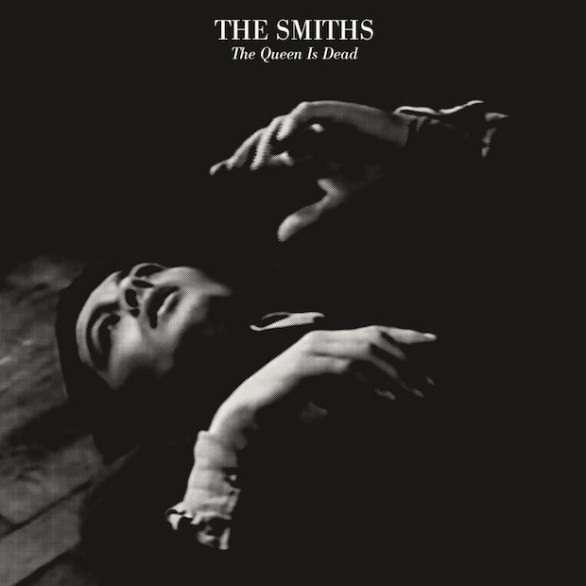
Last Friday saw the reissue of the fantastic 1986 album by the Smiths, The Queen Is Dead.  The expanded package includes a lovely remaster of the album itself, with the addition of numerous demos from that era, single b-sides, and a live performance at Great Woods in Mansfield MA (of course mislabeled as “Boston”, as is normal for that venue).  The cd package also includes a dvd of the Derek Jarman mini-film, as well as a hi-fidelity remaster of the album.

The Queen Is Dead became my favorite Smiths album soon after I picked it up, which, if I recall, was not that long after I ordered their final album from Columbia House.  It’s their most solid and consistent album that’s not a singles compilation, in my opinion.  While some love the brutalism of Meat Is Murder or the doom of the debut (or the poppiness of Strangeways, Here We Come, for that matter), the consensus is usually that TQID is their best moment.  The songs are tight, exciting, and playful.  Johnny Marr’s guitar work here is top notch, and Morrissey is clearly having fun being the smartass intellectual lyricist.

I almost always gravitate to this album over their others.  While I love nearly all their work, this one is the most positive and uplifting, the most fun to listen to, even with the one-two punch downers of “I Know It’s Over” (mother, I can feel the soil falling over my head…) and “Never Had No One Ever” (I had a really bad dream / It lasted twenty years, seven months, and twenty seven days…).  They’re balanced by the silliness of “Frankly Mr Shankly” and “Vicar in a Tutu”.  The lead title track is an amazing kick-ass jam and is one of their hardest, loudest tracks they ever committed to tape.  [The reissue offers a ‘full version’ that goes on for nearly a minute longer.]

If you’re a passing fan of the band, I do suggest picking up this reissue; its remaster provides the album with a much fuller, warmer sound (the original mix suffered from too much treble and loudness, at least in how I’ve heard it).  I’m also happy that they provided us with the original twelve-inch crossfade of the two b-sides “Rubber Ring” and “Asleep”, which makes the two songs connect in a very Abbey Road medley sort of way.

RIP Gord Downie

I remember hearing The Tragically Hip back in my senior year of college, when Fully Completely came out, just a few days before my 22nd birthday. I was the music director for our AM station, WECB, and I always tried to keep the selection eclectic and interesting. I’d heard of the band, having seen their previous three releases in the music bins (1987’s self-titled EP, 1989’s Up to Here and 1991’s Road Apples), but their third album was definitely their breakthrough, at least in Beantown. I loved that they were a mixture that defied description, other than they sounded really cool. I immediately put “Courage (for Hugh MacLennan)” in rotation and “Fifty Mission Cap” as an extra play.

A year later, I’m living quite skint in the burbs of Allston and for a brief time my roommate and I have cable, and my then-girlfriend and I start watching Canada’s MuchMusic channel in earnest. It’s where I first hear great Canadian musicians like Moist, Barenaked Ladies, and Sloan in regular rotation instead of just occasionally. I stumble upon The Hip’s classic single “Grace, Too” (from 1995’s Day for Night) when I watch their video, greatly amused and fascinated by its lo-fi genius, using only video feedback, reflection, and a shirtless Gord to play off the boasting lyrics.  It becomes my favorite song of theirs.

A few years later and I’m back home in midwestern Massachusetts, trying to get my life and accounts back in order, and I’m listening to WRSI and WHMP, two Pioneer Valley stations that weren’t afraid to play the same eclectic music that I loved hearing back in my college days. I hear occasional plays of “Ahead by a Century” (from 1996’s Trouble at the Henhouse) but alas, never get around to taping it off the radio.

By 1998 I’ve got a steady job at the record store and expanding my musical tastes with every new and intriguing release that comes in. So much the better if I can get a promo copy for it! The BMG rep hands me a copy of their 1998 album Phantom Power and I immediately fall in love with it, especially the lovely “Bobcaygeon”.

By the end of 2000 I’d be leaving that job, but not before getting another dose of the Hip with that year’s Music@Work album. I find myself amused once more, this time by the fitting title song:

…as well as one if the deeper cuts, “Freak Turbulence.”

In 2002, I’m writing my trilogy down in the basement on a nightly basis, and hitting up Newbury Comics on a weekly basis, and In Violet Light comes out, another excellent Hip album. Oddly enough it’s years before I actually see the hilarious video for my favorite song off it, “The Darkest One”.

I kind of lose track of the band in the mid-2000s due to multiple moves and personal events, but eventually I catch up and pick up the rest of their catalog. I sadly admit that I don’t listen to them nearly as much as I should, and I never got to see them live.

But The Tragically Hip has never really been a band that I wanted to overindulge in. I like the fact that I’ll throw on Live Between Us or Now for Plan A or even Yer Favourites and think…damn, this is one hell of a great band. I like being pleasantly surprised by just how fucking good a band like that can be.


Thanks Gord. You were one hell of a great songwriter and humanitarian.

When I left your house this morning,
It was a little after nine
It was in Bobcaygeon, I saw the constellations
Reveal themselves, one star at time

One Epic Release Day, 30 Years Ago

It’s not often that we put importance on an album release date.  When it is, it’s usually for a single album that’s considered a historical artifact, like 2 June 1967 with Sgt Pepper’s Lonely Heart’s Club Band, or 9 March 1987 with U2’s The Joshua Tree.

But on 28/29 September 1987, we were treated with not one but four excellent albums that many consider a vital part of the 80s alternative rock movement.

First, we had a newbie:  Pixies’ debut EP on 4AD, Come On Pilgrim.

We all know the story behind the band by now…two UMass Amherst students (Frank Black and Joey Santiago) start up a noisy band and move to Boston; a smartass ad in the local paper pulls in exactly one audition, one Kim Deal; a friend of a friend, David Lovering, is chosen as drummer. Their off-kilter mix of punk, surf, folk and who knows what else is both frightening and intriguing. Ivo Watts-Russell is convinced signing them to his label is a bizarre move, and yet…

I remember hearing “Vamos” on WAMH probably around the same time their “Gigantic” single had come out (about six months after this EP) and thinking, what the hell is this…? By that time I was more into moody college rock, but this was something so leftfield yet so fascinating that I had to follow up. Of course, they were a local band by my standards, so I definitely had to check them out.

Next, we had a band on its way up, not quite there yet but already given a huge following: The Red Hot Chili Peppers, with their third album The Uplift Mofo Party Plan.

They’d been around since 1984 with the delightfully weird but funky first album, but their follow-up, 1985’s Freaky Styley, was a bit too weird for a lot of people. This third album was a return to their rock-funk sound and became a favorite. Tragically, their guitarist Hillel Slovak would die of a heroin overdose after this album’s tour. His death would deeply affect the rest of the band, especially singer Anthony Keidis, and their next album, Mothers Milk, would reflect that darker edge. Still…that album would clear their way even more (especially with their fantastic cover of Stevie Wonder’s “Higher Ground”), and a few years after that their popularity would peak with 1991’s Blood Sugar Sex Magik.


Next, we had a band that had already reached significant heights with their distinctive sampling and synth-heavy sound, combined with curious lyrics (often about sex, emotional pain, and the darker side of love) and fascinating melodies. Depeche Mode had no way to go but up. Their album Music for the Masses would take their sound even further than before: louder, brasher, stronger.

“Never Let Me Down”, was the second single, released a month before the album (the first single, “Strangelove”, dropped a full five months previous, the usual habit for DM releases), and its in-your-face volume intrigued many fans. The rest of the album delivered just as much punch, to the delight of many, even as its lyrics seemed to be darker and more personal than ever. A little over two years later they’d return with their absolute best album, Violator.


And lastly, a band on its way out. It’s the story of too many bands; two front men with strong egos and opinions, writing absolutely stunning, gorgeously played music and proudly singing heart-on-sleeve lyrics that say exactly how you feel, splitting up in the most acrimonious way possible. The Smiths’ Strangeways, Here We Come was their last gasp, their Abbey Road, containing some of the strongest songs they’d written…and by the time it hit the shops, the band was already in the past tense.

The Smiths was the band for the wallflower, the weirdo, the proud outcast.  Morrissey’s poetic missives perfectly balanced Johnny Marr’s amazing guitar work, and in the short four-plus years they’d been together, they’d given teenagers a hell of a strong and massive soundtrack to their lives.  Though their work on Strangeways had been enjoyable, just like always, the clashing of egos caused the band to fall apart.  Both Morrissey and Marr have moved on from it all, now playing Smiths songs in their live sets, have even talked with one another over the years, but life has gone on.

*

Of course, there were other album releases that day — Yes’ Big Generator, Wet Wet Wet’s Popped In Souled Out, The Art of Noise’s In No Sense? Nonsense!, and Boston locals O-Positive with their Cloud Factory EP, for starters — but those four albums had to be the most important.  They were by four bands either on their way up or their way down, all four bands that could be considered integral to the growing alternative rock scene of the time.