Another busy day today. Here, have some videos of a great band you should know. They make lovely music that I think you’ll like.
Favorite Bands: Elbow
Reply
Another busy day today. Here, have some videos of a great band you should know. They make lovely music that I think you’ll like.
I remember when U2’s breakthrough album The Joshua Tree came out, because it wasn’t just the usual music nerds like me that were eagerly awaiting for it; most of the guys I knew on my high school football team couldn’t wait to get their hands on it! That was certainly a change. Usually the jocks’ tastes in music and my tastes never crossed paths at all.
It could be that the teaser single, “With or Without You”, was such a huge hit that resonated with pretty much everyone. I think there was also the fact that their previous releases — the atmospheric The Unforgettable Fire from 1984, the excellent but far too short live album Under a Blood Red Sky from late 1983 and the amazing War from earlier that same year — were big favorites on MTV and rock radio. And that classic performance at Live Aid in the summer of 1985 had given them a big ol’ boost as well.
I remember not being overly excited about the release at first. Sure, I loved U2, but I wasn’t a hardcore dedicated fan yet. In fact, I was more focused on the new Siouxsie & the Banshees cover album (Through the Looking Glass) that was released around the same time. But I went ahead and bought it anyway, ordering the cassette from the BMG Music Club, and deemed it worthy of repeated listens.
It wasn’t until that summer, around the release of the third single “Where the Streets Have No Name” that the album really clicked with me. I’d started hearing more deep cuts from the album being played on WAAF, WAQY and other New England radio stations as well. The drifting beauty of “One Tree Hill”, the barely restrained anger of “Bullet the Blue Sky”, the pastoral melancholy of “Red Hill Mining Town” (the last of which reminded me of the dead-end feeling I was having about my home town at the time).
The album kicked off such a storm of excitement that their tour ended up being THE EVENT TO SEE. Sadly, I would never get to see them live until nearly ten years later for the PopMart Tour, but my sisters did get to see them down in Worcester for this tour, much to my extreme jealousy. Numerous parts of the tour stops were filmed for what would end up being the documentary Rattle and Hum, released in 1988 complete with soundtrack and new songs recorded on the road. And a little over ten years later, they’d resurrect and re-record one of the b-sides for “Streets” and release it as a single for one of their greatest hits mixes:
I’d revisit the album numerous times over the years: a constant soundtrack during my post-college writing years and even more during the Belfry years; talking with my then-girlfriend about how the album was sequenced into a specific flow of sound and mood; a constant replay when the band released their (almost) entire discography on iTunes; while working on my Walk in Silence project. I’ve never grown tired of it.
*
Thirty years on, this album is still considered a classic. U2 themselves are celebrating its anniversary with a tour of North America and Europe, playing the album in its entirety. I doubt I’ll be going when they stop by Santa Clara in late May, but I’m sure it’ll be a fantastic show. [For a brief moment I thought hey, maybe they’ll come to Outside Lands!…and then I realized they’ll be wrapping up their European leg about the same time so I doubt they’ll be in the mood for trekking all the way back to California by that time. Wishful thinking, though!]
Thinking about some of the great musicians we lost this year, I realized that Bowie, Prince, and George Michael all had career-changing releases in 1987. It was probably the last year I paid any significant attention to commercial rock and the countdown charts before I sold my soul to college radio, but I still kept my ears (and eyes) open for the big names at the time.
David Bowie’s Never Let Me Down (released 27 April 1987) was a big seller but had a mixed reaction from its critics. Having spent most of the 80s recording catchy but less-than-adventurous chart rock, after this album he’d work with Reeves Gabrels and Hunt and Tony Sales to form Tin Machine — an often maligned side project, but in my opinion a much needed boost to his creativity. He’d follow up in the 90s with much stronger albums and critical success. It took me a while to warm up to this album, as I too felt Bowie had fallen into a bit of a rut and was going through the motions, but in retrospect it’s still a solid album.
Prince’s Sign o’ the Times (released 30 March 1987) is one of my top favorite albums of his, and its creation story is even more fascinating. Known for creating multiple side projects that may or may not come to fruition, Prince took the best parts of his Camille project (recording under a different name, an altered voice, and an even more androgynous image), the last dregs of two aborted projects with the Revolution before he ended that group (Dream Factory and Crystal Ball), and filled it out with his own solo tracks to create a fantastic double album full of funk, pop, psychedelia, rock, and even a few of his patented weird psych-outs. I always felt this album was the point where he’d left his over-the-top 80s pop persona behind and became more serious about his music. He’d hit a few more roadblocks and make a few more wrong turns, but by the early 90s he’d hit his stride and become an even bigger star. I still listen to this album, it’s that damn good.
I remember hearing American Top 40 premiering George Michael’s “I Want Your Sex” single in the summer of 1987 and being blown away by it — the lite-pop production of Wham! was long gone (it had started slipping away with his “A Different Corner” single from spring 1986) and replaced by HUGE sounds and a hell of a lot of funk, and I loved the sound of it. Radio and fans wondered what he was going to do next, having completely shed the goofy fun of his previous band. His solo debut Faith (released 30 October 1987) was the result: mature, intensely creative and absolutely amazing. I chose “Father Figure” here (even though the single dropped in January of 1988) because it’s my favorite song from the album…it’s a gorgeous and stunning ballad and I love the sparse-yet-cavernous sound of the production.

The ‘William It Was Really Nothing’ single, released 24 Aug 1984. British pop perfection.
One of the most common things I hear from many British bands in interviews is how surprised they often are when they’re told of their success in America. I mean, as a writer, I get it; once your art is out there, you only see the response of those who actually connect with you, but you have no idea of the bigger picture. Quite often, the musicians will respond with a bit of embarrassed surprise that they had no idea how inspiring or influential they are or were. They’ve only seen it from their point of view as a working, touring musician. They see the audience and maybe the sales numbers, but that’s about it.
I’m going to be seeing a conversation with Johnny Marr (guitarist extraordinaire of the Smiths and solo, natch) at the Jewish Community Center here in town tonight, and of course I’m trying to think of a good question to ask if there’s a Q & A at the end of the talk. My first thought, of course, was ‘How does it feel to have written one of the most recognized, beloved, and imitated riffs of the 80s?’ but that seems a bit silly. On the other side of the spectrum I could go full-on Matt Pinfield and ask about The Smiths being an insanely influential band on US college radio in the 80s. Or I could just ask him how he tunes his guitars because I can’t figure out how the hell he plays half his licks.
I paid a little extra for my ticket so I get his new autobiography, Set the Boy Free, as well. And perhaps I may get it signed if he’s going to be doing so.
Last time I did this was a few years back when I saw Peter Hook (bassist of Joy Division and New Order) at the same place. I ended up not asking any dorky questions, but I did get to tell him his playing style was deeply influential in my own over the years. [He followed that up with a big smile and asked if I was currently in a band! Come to find out he’s just as big a music geek as I am and loves meeting other musicians of all levels.]
Looking forward to tonight!
I was a huge fan of Zebra when I was in junior high. I remember hearing “Who’s Behind the Door?” on WAAF — and seeing the video on MTV — and being totally blown away by the music. I loved the sound of synthesizers back then, especially if they used the strings setting. [I’d later get into Giuffria a year or so later for the same reason.] I even got to see them live, when they opened up for Loverboy at the Worcester Centrum — my very first big arena concert.
I bought the cassette of the self-titled debut album right about the same time, and I nearly wore it out within a year.
Decades later, and I’m listening to it on mp3, and it suddenly dawns on me — this album sounds almost exactly like a Porcupine Tree album.
Think about it: both lead singers are guitar virtuosos who write beautiful and complex melodies. Sure, one sings in falsetto half the time, but never mind. Plus the keyboards play a strong and vital part in the music, giving it a darker ambience. There are a few shorter pop songs here and there, but there are also some lengthy prog-jam pieces in there as well. It’s no wonder that I became such a huge PT fan in the late 90s.
I still pull out this album every now and again and give it a listen. I’ll listen to album two, No Tellin’ Lies, every now and again as well, but this first album will always be a particular favorite of mine.
One of the things I’m looking forward to on the Blogging the Beatles 2 series is listening to George Harrison’s All Things Must Pass album, because it’s one of his best. It’s at least four or five years’ worth of tracks that were nixed for Beatle work. Indeed, after awhile he just decided not to offer and kept them for himself.
One of my favorite tracks from the album is “Beware of Darkness” which is a perfect example of George’s best songwriting. It’s got a hauntingly beautiful melody, but it also showcases his penchant for using slightly off-kilter chord progressions. They made sense and blended quite nicely, but they weren’t the chords you were expecting. It often felt like he was trying to bypass the tried-and-true pop motifs of the day, and yet write a song that still contained a musical flow that was pleasant to the ears. [I often think of Blur’s “Coffee & TV” as a similar example of unexpected-yet-logical chord progressions. There were a lot of alternative songs in the 90s that took this strange route, much to my delight.]
And as before, I plan on trying to play along on my guitar while I’m relistening an relearning these songs. Suffice it to say, I still feel like I’m extremely out of practice. It’s not a good sign that a few of my guitars sometimes have a fine layer of dust on them. And if George is going to tempt me with his B-A-G7-G#m-C#m (there’s a lot of wacky barre chords in there, folks), then there’s a hell of a lot more I need to learn. Especially if I want to try it with my acoustics.
This is going to be an interesting exercise, to say the least.
On a final note, here’s an excellent cover of the same track by Concrete Blonde, from their debut self-titled album. It’s a bluesier, heavier version, but it retains the dark hints of tension found in the original, and it’s one of my favorite covers.
Others have commented: it’s going to be the Beatles’ solo years next! This one’s gonna be a long series, so I’m pretty sure I’ll be featuring it on specific days…maybe offering it every other Wednesday or something. We shall see. This may take some time for me to build up a backlog, as there are quite a few releases to plow through — and I’m not going to include the multiple reissues that have taken place over the years. One last note: I’ve already decided this is going to be chronological, just like the previous series, so this means we’ll be visiting all four solo discographies at the same time. I will also be featuring multiple releases per post, or else I’ll be posting until 2019!
Until then, I’ll be providing the usual music posts on Tuesdays and Thursdays.
Thanks for joining in!

The always excellent Johnny Marr, who I’ll be seeing in October!
I’ve been tempted to do another “blogging a band” series like I did with the Beatles a while back. The original one was a lot of fun, as I was not only able to give the songs and albums a good solid listen, I was able to better understand their place in musical history — both their own, and within the larger scene. And as a bonus, I was also able to learn a lot of new songs on my guitar!
I probably don’t know any band nearly as well as I know the Beatles, but I do own a lot of complete (or nearly complete) discographies of plenty of bands, or they’re easily available for streaming somewhere if I don’t. I’ll be relearning their oeuvre right alongside you!
So, what do you think? Here’s a shortlist so far of favorite 80s/90s bands I could possibly do:
–U2
–The Smiths
–The Cure
–Wire
–Blur
–Depeche Mode (continuing the by-the-decade theme)
I was also thinking of maybe continuing the Beatles theme by going through their solo output, either separately or all together chronologically.
Any votes/suggestions?
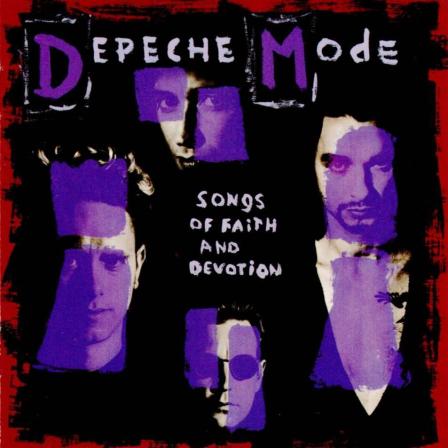
The next release from Depeche Mode in the 90s was a much darker affair…
But first, I’d like to make a little side trip to late 1991 and Wim Wenders’ fantastic epic, Until the End of the World. One of my top ten favorite films, it’s a road movie about a woman whose presence changes the fate of nearly everyone around her, while she herself is trying to figure out her own. It takes place at on New Years’ Eve, as 1999 changes over to 2000 — not just the end of the year, but the century and the millennium as well. For the soundtrack, Wenders reached out to numerous bands and musicians and asked them to write a song in the style they believe they’d have eight years from then.
DM’s donation was a religiously-tinged blues ballad called “Death’s Door” that hints at the prodigal son returning (much like William Hurt’s character in the film). It’s a great soundtrack worth picking up, and if you can find a copy of the film (it’s available for streaming on Amazon), it’s well worth checking out.
After that, the band remained quiet for some time until February 1993, when the new single “I Feel You” was released. Upon first listen, it sounded like the band had retained their fuller, stronger sounds and melodies, but had continued with their darker themes and moods. Like many previous pre-album singles (like “Strangelove” and “Personal Jesus”, it sounded vastly different than anyone had expected, right down to the opening screech of feedback.
Also gone was Dave Gahan’s perky goofball image; he was now grungy and longhaired with a dangerous sex swagger. [It was revealed sometime later that this partly due to his worsening drug addiction.] In fact, within the first minute of the video, we no longer see the band on banks of keyboards; only Andy Fletcher was behind the keys. Alan Wilder was now drumming, and Martin Gore was playing a Cash-like twang that would become the motif of the entire track.
Songs of Faith and Devotion arrived not six months later but almost exactly one month after that first single. There’s a rough tension throughout the album, not unlike listening to The Beatles’ white album (a description given to it by Alan Wilder himself)…the music is full of powerful anger, and Gahan’s singing has taken on an irritated growl (inspired by the LA alternative bands he’d been hanging with by that time). There are more organic samples here — live drums and guitars laid down and sequenced — and hardly a clanging pipe or popping firework anywhere at all. And tensions within the band had grown to such a degree that Wilder would quit the band at the end of the supporting tour.
It’s a very apt title, as religious themes pop up all over the place. It’s not an album about praise, though…it’s about the limits of faith and devotion, both in life and in spirituality. The critical response to the album was highly positive, however, and though its singles are rarely chosen for airplay nowadays, it’s an incredibly solid and deeply emotional album worth checking out.
Second single “Walking in My Shoes” is the track that would get the most airplay, as it’s the most melodic and most typical of the band’s sound. That’s not to say it was written to sell units, however, far from it. It’s a bleak song using the ‘walk a mile in my shoes’ metaphor as only Gore and DM can do it: don’t you dare judge me until you feel what I’ve gone through.
Third single “Condemnation,” however, was a completely leftfield hit on both sides of the Atlantic. While “Death’s Door” hinted at a hymnal, this one is purely gospel choir, and it’s a deeply moving and lovely track.
Fourth and final single “In Your Room” featured the band venturing even further from their digital sound as well as their previous image: the video features numerous visual cues from their previous videos made with Anton Corbijn, twisted just that little bit to hint at a wish to be freed of them. Even the mix used here (the Zephyr Mix) is almost all analogue, showing DM as an almost purely rock band now instead of a synth band.
Even the album tracks like the gospel-by-way-of-Led-Zeppelin “Get Right with Me” and the turbulent irritation of “Rush” feature a band going all out in spirit and emotion. Taken as a whole, the album definitely mirrors the real-life tensions the band had been dealing with during the writing and recording, as well as the expectations laid upon them to recreate something as phenomenal as Violator. It would nearly break them. Wilder would depart at the end of the album’s tour, and once the tour was over that December, they would go their separate ways. Dave Gahan would attempt suicide in late 1995 and nearly die from a drug overdose in spring 1996. Gahan survived and persevered, recovering from his heroin addiction and turning his life around.
By early 1997, they were back with a new, even stronger and more cohesive album, Ultra.
Josh Stewart & Dan Snyder, 1850. One of the free albums I downloaded from NoiseTrade, it’s a spooky post-rock album with atmospherics that remind me of Global Communication and Boards of Canada.
Paper Lights, Great Escapes. Dan Snyder is also the man behind this band (I got one of his earlier EPs from NoiseTrade and bought this one when it dropped). I seem to really enjoy quirky one-man-band groups (Decomposure is another). This album’s quite relaxing; I often listen to it during my editing sessions.
Big Jesus, Oneiric Sampler EP. These young’uns have no right to rock this hard and melodic. Another NoiseTrade find, and I’m totes going to buy the album when it drops. They’ve got that fast grunge sound that reminds me of Helmet, balancing it with a bit of soaring guitar noodling reminiscent of POD. Expecting great things from this band.
The Avalanches, Wildflower. Apparently its de rigeur now to let a decade and a half go by between albums? Heh. A welcome return to a band that’s inventive, fun, and oftentimes a bit silly.
The Temper Trap, Thick as Thieves. A very strong third album from this Aussie band, it sounds much heavier and crunchier than their previous albums.
Garbage, Strange Little Birds. Been a fan since their first album, and this new one is just as excellent as the rest of them. I’ve been playing this one a lot during the day, but I’m sure it’ll get more play during my evening writing sessions soon enough.
Paul Draper, One EP. It’s been quite some time since we’ve heard from the former Mansun lead singer, but it’s well worth the wait. I’m really hoping he comes out with more tunes soon!
Minor Victories, Minor Victories. Rachel Goswell from Slowdive, Stuart Braithwaite from Mogwai, and Justin Lockey from Editors? A cat kaiju (nekaiju?) video? HOW COULD THIS POSSIBLY BE A BAD THING.
And one more, this from about nine years ago…
Blonde Redhead, 23. I’d been hearing the title track popping up on KSCU every now and again, and I kept forgetting how much I loved the song, so I put the album on my mp3 player. It ended up being my falling-asleep music on the plane out to Europe a few weeks back, and man, I couldn’t have picked a better album! A mix of 4AD moodiness and noise-rock hinting at Silversun Pickups. Totally worth having in your collection.
Epic fantasy & military sci-fi author.
An Eclectic Collection of Pop Culture
Photographs, music and writing about daily life. Contact: elcheo@swcp.com
historian of the business and politics of culture
Something's wrong. It's not dusty here.
Young Adult Author
Blogging the Nagra Tapes | The Beatles' Get Back sessions
Adventures in collecting Beatles music
A daily selection of the best content published on WordPress, collected for you by humans who love to read.
Trek Across the Musical Terrain
A Music Blog
For all the things I idiotically adore
Drill a hole and take a peek outside.
Writer of Young Adult Fantasy
about the craft and business of fiction
Quality articles about the golden age of music
Madly In Love With Sound
 Walk In Silence