Platinum Records

If you haven’t seen my recent post over at Welcome to Bridgetown, I’m currently celebrating the platinum anniversary of my starting a novel (The Phoenix Effect) that would end up morphing into my Bridgetown trilogy.  All this month I will be posting fun things related to the original as well as the trilogy, and I thought I’d do the same over here.

Twenty years ago I was a few months in on my relatively new job as the lone shipper/receiver at HMV Records.  Even though I was one of the oldest hires there (I’m pretty sure I was closer to my manager Tom’s age than the young’uns I worked alongside), I was still feeling my way around.

The biggest change from the years previous was that I had a much closer connection to the music I was listening to.  I was listening to a lot of radio at the time but didn’t have that much money to spend on new releases, but this job let me listen to a lot more stuff (and yes, I may have dubbed a number of cds onto blank cassettes while in the back room, heh!).

But the sounds were changing as well.  The bright bounciness of Britpop was suffering from hangovers and bloating (see: Oasis’ Be Here Now, a solid but WAY overworked album); the American grunge was kind of losing its way (not to mention some of its lead singers to overdoses), and let’s face it: the college rock I knew of then was essentially the commercial rock of now.

That’s not to say the quality (or quantity) of alternative rock was declining…it was merely evolving with the times.  In fact, 1997 featured some fantastic, solid releases from bands both old and new, taking the genre in new and interesting directions.

On a personal level this was a positive and much-needed evolution for me, as I’d been in dire need of a change in my life and outlook.  I’d been broke, angry and depressed for about three years straight, gone through some personal issues that were Not Fun At All, and needed a positive change ASAP.

Not only that, this change in mood is reflected in my writing.  I’d essentially started a new project resurrected from the ashes of one that I had to close down for personal reasons.  And let’s be brutally honest:  back then, I’d had a collegiate view of being a writer.  I was a special snowflake with the Powers of Story [insert sprinkly *whoosh* sfx here] and I wrote Important Life Allegories™.  In reality, however…my writing was crap, I knew it was crap, no one was going to take it seriously, and I was going to need to be a shit ton better than the level I was currently at if was going to get anywhere with it.

So that meant dispensing with the mindset of Writing as Superpower and take it seriously.  Making it a daily process instead of a casual one.  Relearning the basics of story construction.  (This included doing a hell of a lot more reading than before; not just the how-to writing books, but the different genres of fiction and nonfiction I was interested in.  This plan kick-started my habit of visiting book stores on the weekends and, thankfully, a love of reading.)

Music has always been a part of my writing process, and this time it was no different.  This time out I’d be making mixtapes of tracks that would inspire my writing (the four-volume Songs from the Eden Cycle from 1997-8, the sort-of sequels in the early 2000s, and the recent Eden Cycle Sessions mp3 playlists).  Certain albums released during this time would get heavy rotation play on my cd player down in my basement writing nook.  And I’d listen to a hell of a lot of stuff on my fifty-mile commute, which was always a perfect time for me to brainstorm.

I’d made a decision to be a writer quite early in my life, but 1997 was when I decided to take that decision seriously.

Hey Wait I got a new complaint

I don’t use the Sirius XM radio on my own PC as much as I should, so today I thought I’d put it on.  I chose the Lithium channel, primarily because the song playing at the time was Nine Inch Nails’ “Down In It”.  And now I’ve been listening to the 90s all morning.

Yes, I know!  Me, the guy who’s posted about 80s college rock for far too long, finally moving forward in time?  Heh.

Seriously, the 90s was an interesting decade, looking back on it now.  I tend to think of it as a decade where we crossed a lot of lines that had drawn in the sand for so long that we kind of forgot why they were there in the first place.  A lot of interesting chances were taken in the creative world; some fell flat, but some were welcomed and became the norm.  College radio became modern rock became alternative rock became chart-topping rock.  It didn’t help that the 80s chart rock had become a sad caricature of itself, full of hair metal spandex and arpeggios, and bar bands with very few actual hits.  Something had to take over eventually, and alt.rock had been waiting in the wings since the early 80s.

The music of the 90s for me felt sort of like a light was finally turned on.  More to the point, it felt like I’d exited the dark cave of my bedroom and its 4AD/Cure gloom and entered the sunshine of the wider world beyond.  I could easily say that Nirvana’s “Smells Like Teen Spirit” was in fact the point of change, as it probably was for many others.  It wasn’t the first alt.rock song that broke through to chart radio (I’d like to think that honor actually belongs to Love and Rockets’ “So Alive”, which hit #3 on the Billboard Hot 100 chart two years earlier), but it was the most important one.  Rock radio wasn’t the same afterwards.

Yeah, sure, there were also the bands that weren’t grunge, weren’t Britpop, and didn’t quite fit into the already-standard ‘alternative’ format.  In retrospect they were chart rock’s New Breed.  They were melodic, catchy, and just mainstream enough to be played on pretty much any commercial rock station without scaring the parents.  They were just edgy enough that the kids loved them anyway.  You probably wouldn’t hear them on college radio (that avenue was being filled at that time with No Depression, math rock, slowcore, and the other decidedly noncommercial subgenres), but you’d hear them on the burgeoning Modern Rock and AOR stations.

These are the songs you’ll hear on Adult Alternative stations nowadays, tracks by Collective Soul and Tonic rubbing shoulders with James Bay and Elle King.  The slightly harder stuff will pop up on the alt.rock stations that have survived this long, sneaking in as ‘classic tracks’ next to new tracks by other 90s bands that have miraculously stayed together this long (Weezer, Red Hot Chili Peppers, Blink-182).

*

I can pretty much divide the 90s into two distinct personal eras: the college/Boston years (1990-95) and the HMV years (1996-2000), with the yearlong entr’acte of ennui and deadend jobs of 1995-6.  Despite the personal ups and downs I was contending with at the time, I rarely missed an opportunity to follow the latest trends.  I may not have had the money to buy it all at the time, but that didn’t stop me from making radio tapes, dubbing cds from friends, or keeping my boombox set to the local alternative stations.

Or spending most of my hard-earned pay at the record store I worked at, for that matter.

Despite my personal and emotional ups and downs in that decade, I found it to be a lot more enjoyable than the previous decade when I was dealing with my gawkish teenage self.  My twenties certainly had their extremely frustrating moments, and I did make a lot of really stupid decisions, but by the back end of that decade, I had my shit together and knew exactly what I wanted to do.  That’s when I knew for a fact that I’d be a writer.  It’s also when I knew that this infatuation with music was going to be a lifelong thing and I was perfectly fine with that.

The taste of youth, the taste of you, dear

Okay, I’m finally going to take the plunge.

Next week will be the first of many entries for the Walk in Silence blog series…and of course, I’ll be letting you know all about that over the next week and a half.

But that’s not the plunge I’m talking about.

When I was first planning out the WiS project, I always had the timeframe in the back of my mind: should I focus just on my own personal connection with college radio (1986-1989)?  Should I talk about its history (197? – 199?)?  Or should I just come up with an arbitrary time?  Eventually I chose the third entry, that way I could focus mostly on my own personal history, but also include the time before I connected with the genre, thus 1984 – 1989.

The plunge I’m thinking of now is the college and post-college years.  They weren’t exactly the happiest years of my life, for various reasons, but they were interesting musically.  College rock, at least with American radio, gave way to grunge and Britpop as it became more popular, and changed genre names numerous times before deciding on the all-encompassing ‘alternative rock’.  A schism grew: those who felt alternative rock was selling out and followed the most obscure bands possible, and those who really didn’t mind either way, as long as the prefabricated crap currently in the charts went away.

I’ve been toying with the idea of doing a sequel to Walk in Silence for quite some time.  There’s no name to it yet, nor is there any concrete schedule or plan for it at this time (all my focus is currently on posting WiS and publishing the Bridgetown trilogy), but I do have a few ideas floating around…it’ll focus mostly on the years from late 1989 (when I left for college) to late 1995 (when I left Boston and moved back home).  And it will most likely continue the WiS theme of both personal story and music history.

Some albums from that era still get heavy airplay on the radio: you’ll still hear tracks from Nevermind and Blood Sugar Sex Magik and Loveless and Definitely Maybe and Achtung Baby and Violator and so on.  But there are so many more albums I’ve ignored for one reason or another, forgotten about or couldn’t make myself listen to for personal reasons.  Songs that radio let pass into history, even forgetting to play them on Throwback Thursday.  But as with Walk in Silence and the 80s, it’s been nigh on twenty-plus years for most of these.  It’s well past time to revisit them again.

So starting today I’m going to start listening to some of these albums in my collection, give them a once-over they haven’t had in quite some time, and see where I can go with it.

Should be an interesting ride, to say the least.

Lush: Chorus

I’d been a fan of the 4AD label since probably 1986 when I first heard This Mortal Coil’s cover of Bill Ogan’s “I Want to Live” (from the Filigree and Shadow album) on WMUA one dark night.  I’d fallen in love with the dark moods the label’s bands evoked; not the dark of violence or depression, but the dark as in the absence of light.  To me, the sound of Cocteau Twins and Dead Can Dance always made the most sense to me at one in the morning, when the rest of the world was asleep.  Yes, even the stark punk crunch of Pixies in 1988 evoked darkness for me; their music sounded like a band that had just gotten into the studio at 2am after playing a blistering show and channeling that chaotic energy into the wee hours.

So when I first heard Lush in late 1989 via their first EP, Scar, and soon after with their follow-up EP Mad Love (both timed perfectly with my entry into college), I was completely taken in by how bright their music was.  The same amount of reverb was there, but it was all made of sparkling beads of light and autumn afternoon breezes.  The rainy excitement of “Scarlet” and the tripping evolution of “De-Luxe” were my entryway into the brighter realm of Britpop, at a time when the American alternative sound was veering into the metallic sludge of northwestern grunge.  When Lush released the stunning “Sweetness and Light” single in late 1990, I was completely hooked.  Its freeing energy and gorgeous simplicity created, to me, a perfect pop song.  To this day it’s extremely high on my list of absolute favorite songs.

https://youtu.be/e2TFVjRIM9E

Their first album proper, Spooky, came out just days after my 21st birthday, and I remember going to Tower with what little money I had at the time to buy it.  I didn’t embrace it right away, but that was more due to some personal issues I was having at the time than the music.  By that summer I had it on repeat on my Walkman, especially the single “Nothing Natural”.  I loved Steve Rippon’s off-kilter, questioning bass line, and especially loved the back end of the song where it completely drops away, leaving the rest of the song soaring for a good few moments before crashing back down for its final measures before finally fading out.

I equally loved Split, even though it felt like a much darker affair (again, I think this was more due to my personal mindset at the time), but after years of listening to Lush, it’s become my favorite album of theirs.  I feel it’s where they hit their peak musically, even despite the producing issues they had at the time.  It contains my other favorite song of theirs, “Desire Lines”.  It’s a slow, plodding song, but deliberately so (and an extremely courageous choice for a single), and it’s probably the first song where I finally grokked to the mathematics of song construction.  One can sense its novel-like format, coming in unobtrusive and steady, ebbing and flowing with increasing energy until it finally builds to its middle eight, hitting a shimmering climactic peak before dropping back down to the denouement.

Their next album, Lovelife from early 1996, was a bit of a leftfield surprise for me, as I hadn’t expected a more economic and poppier sound from them, but it was yet another album that got quite a bit of play for me, thanks to it being released just months before I started my job at HMV (I would often play this one and the Gala in the back room while prepping stock for the floor).  The track “Ladykillers” was on heavy rotation on WFNX at the time, so I’d hear it almost every day on the way to and from work.  And the goofy definitely-not-a-love song “Ciao!” — a brilliant duet with Miki Berenyi and Pulp’s Jarvis Cocker, and probably the best British musical odd couple since Shane MacGowan and Kirsty MacColl.

I would return to Lush’s catalogue over the years, especially during certain writing sessions for the trilogy where I needed some kind of music that was ambient and dreamlike but also upbeat (otherwise I’d have gone for my regular go-to of Global Communication’s 76:14).  Their Ciao! Best of Lush album came out in early 2001 and I’m pretty sure it was in my writing soundtrack bin well until 2003 or so.  And now they’ve just released a lovely box set called Chorus, of nearly everything they recorded (it’s currently quite hard to find, but you might want to check their official online store here, that’s where I got it).

I remember Lush being hard to pin down for a lot of alt.rock listeners in the 90s in the northeastern US…they were either too dreampoppy for grunge tastes, or they were too noisy for the fans of the classic chamberpop 4AD sound, but they seemed to fit right in with those other stunning (in sound and in volume) shoegaze bands like My Bloody Valentine, Swervedriver and Ride.  It’s been years since they broke up in the late 90s, but thanks to reunions of bands like MBV and Ride, brilliant music documentaries like Beautiful Noise and Live Forever, as especially new noisepop bands like WarpaintTamaryn and Wolf Alice carrying the torch, Lush is now fondly remembered as one of the best bands of their time and highly influential.


Lush has recently reunited and are playing a few gigs in the UK soon; they may also be releasing an EP of new songs later this year.

Favorite Albums: Failure, Fantastic Planet

Credit: discogs.com

Credit: discogs.com

Say hello to the rug’s topography / it holds quite a lot of interest with your face down on it…

I distinctly remember hearing Failure for the first time; their debut Comfort had been released just as I started my senior year in college, and our FM station, WERS, had received a promotional copy, which I soon found in the freebie bins outside the studio (aka the “here, this sucks and/or is too commercial-sounding and we won’t play it” bins, given the station at the time).  I’d heard a lot of great things about the band and the album, even despite the incessant and often misguided comparisons to the ubiquitous Nirvana.  I can see where they’d get that, if you think loud guitars + quirky chord changes + odd lyrics = Nirvana or one of its clones, but I always felt that was a cop-out, a weak and lazy way to pigeonhole a newly-popular subgenre.

I played “Submission” and “Pro-Catastrophe” from that first album on my radio show on our AM station, WECB, where I was the music director that semester, and I thought they were well worth checking out and sharing with others.  My enthusiasm didn’t get too far, of course, considering WECB’s low-watt reach was ridiculously sketchy, not to mention by that time, the alternative rock purists were refusing to listening to anything remotely commercial, and that WFNX was playing Nirvana, Soundgarden and Pearl Jam every fifteen minutes or so.  Failure unfortunately could not sneak in edgewise into anyone’s playlist.  I don’t blame the band for that at all; in fact, I have to give them mad props for remaining true to the sounds they wanted to create.  They weren’t as Led-Zep as most grunge bands were, they weren’t as hard as any metal bands out there, but they also weren’t deliberately outsider anti-commercial either.

They released a second album, Magnified, in early 1994, which I unfortunately never picked up at the time, as that was during my broke years in Boston, but I did eventually pick it up a few years later while working at HMV.

That was where I fell in love with the band again.

In August of 1996, about a month before I started working at the record store, the band released the video for the single “Stuck on You”, a brilliant and almost shot-for-shot takeoff of the opening credits to the James Bond flick The Spy Who Loved Meand I was immediately hooked.  I mean, listen to that crunch–it’s drop-tuned a half-step to give it a powerful low end, and balanced with a high end distorted riff.  The whole thing just punches you in the face from the first few seconds, and doesn’t relent until the last few.  Lead singer and songwriter Ken Andrews delivers great vocals here too, drifting lazily through the verses (which, interestingly enough, are about getting a song stuck in your head) but belting them out during the choruses.

One of the first promotional freebies I got from the record store was a copy of this single, a two-track cd shaped like the head of the spaceman on the album’s cover and featuring the album version and the radio edit of the track.  Suffice it to say this track got a lot of play in the back storage room at the time.  Fantastic Planet was one of my first purchases when I first started working at HMV.  As the lone shipping/receiving clerk for the store, I often hung out up back, pricing and security-tagging and processing them into the stock database, but during all that time I’d have a radio going.  That was one of the first things I did when I started the job, actually–I got a hold of a cheap boombox at WalMart and brought it in specifically for backroom listening.  [It wasn’t just for my own entertainment, either…I did that because I knew the label reps would want us to sample some of their wares during their visits.  That worked quite to our advantage, actually.]

I knew I’d love it even before I heard any other tracks from it–the fact that they named it after the 1973 animated French film of the same name (a movie I’d taped years before off USA Network’s Night Flight and watched repeatedly) was definitely a selling point, but I’d heard a hell of a lot of positive reviews as well.  I even snagged a promotional album flat for it as well and had it posted prominently for pretty much the entire time I was at the store.   And yes, I played the hell out of that album for years to come.


The history behind the album is quite interesting, as Ken Andrews and bassist Greg Edwards explain in this recent interview as well as in this promo for the album’s 2010 vinyl reissue both point out that it was recorded during their most tumultuous times as a band.  Come 1995 they’d had issues not just with the label (Slash Records) not quite knowing how to sell the band, and drugs and personal issues were also causing fractures.  And yet, they retained a crystal clear idea of what they wanted the album to sound like, and took delicate care with each and every track before considering it done.  This included the production as a whole–they took care to ensure the running order was perfect as well.  The album also both starts and ends with the same trinkety sound effect loop, but it could be taken two ways: the album is either an unending cycle, or they’re a prologue and epilogue to gauge just how much the cycle has changed from one end to the other.

It’s hard to say exactly what the album may be about, really…while there is a theme of space in the science fiction sense–thus the title–it’s also about emotional space and one’s self within it.  There are songs about drug addiction and psychological breakdowns, but there are also songs about redemption and clarity as well.  Even the opening track, “Saturday Savior”, could be taken more than one way–either a throwaway relationship, or addiction denial.  The album almost has a similar lyrical and musical feel as Pink Floyd’s The Wall, where we don’t quite notice until a few songs in that things are starting to get dark and desperate.  It’s not until “Smoking Umbrellas” that the imagery becomes trippier, the chords of the song drifting in unexpected directions.  The frantic “Pillowhead” follows it up, and the narrator knows full well that he’s deep in addiction now.  By “Dirty Blue Balloons”, he’s at his “Comfortably Numb” phase, wasted beyond help, and at “Pitiful” he’s hit rock bottom.  We’ve hit the halfway point in the album, and we’re not sure where he can go from here.

And that’s when “Leo” arrives–a moment of clarity, where he’s finally able to see himself, and he doesn’t like what he sees and feels.  There’s pain, a misplaced hunger, a sense of paranoia that he can’t quite place.  There’s no real resolution, at least not yet.  The first step is a cleansing, in the form of “The Nurse Who Loved Me”.  A brilliant, beautiful angelic song (which puts A Perfect Circle’s cover to shame) that’s not just about the narrator’s coming clean physically but emotionally as well.  It’s one of the best tracks on the album, deliberately constructed to build tension both in sound and pace, right up until the last second…and ending with a breath of exhaustion and relief.  And by “Another Space Song” and “Stuck On You”, he’s back on the mend.  There’s still addiction–emotional addiction this time–that needs stopping and healing.  He faces it head on on “Heliotropic”, one of the heaviest and angriest tracks on the album.  He’s forcing himself to admit guilt and turn away from the temptations once and for all.  Redemption and relief finally come to him in the epic closer “Daylight”–he’s gone through hell physically and emotionally, most of it his own doing, and he’s made peace with it…now it’s time to make peace with himself.


When I first heard this album, I did pick up on the addiction references, but I also chose to see past them for the overall mood of the album, just as I had back in my teens with The Wall–it wasn’t so much about the actual story being told that intrigued me as it was about the way it was told.  I don’t really pay too much attention to the literal meaning of the lyrics; instead I see the peaks and the valleys in this album as if they’re part of a novel or a movie, with its sequencing taking us on a deep spiritual and emotional journey.  It tells a story, and it tells it without flinching.  It’s because of this that it fell into heavy rotation during my writing sessions for the Bridgetown Trilogy, and helped inspire the ending scene in A Division of Souls.  It’s remained one of my top ten favorite albums, and still gets heavy play–I even have it on the mp3 player I use at the gym.

Favorite Albums: The La’s, The La’s

Source: discogs.com

Source: discogs.com

If you want I’ll sell you a life story
About a man who’s at loggerheads with his past all the time
He’s alive and living in purgatory
All he’s doing is rooming up in hotels
And scooping up lots of wine

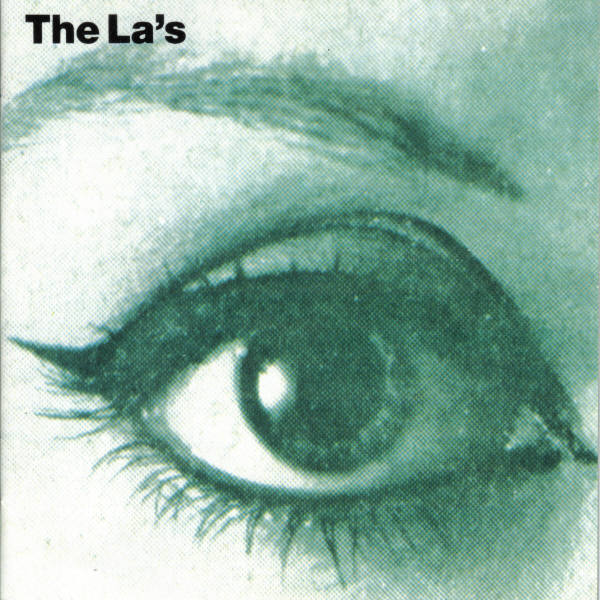
Many of you already know this band as a one-hit wonder with their single “There She Goes”, which hit the American airwaves in early 1991 and appeared pretty much everywhere in the early 90s, from tv shows to movie soundtracks. You may have also heard the oft-told story of lead singer Lee Mavers’ never-ending search for the perfect sound for their music, and that the album was released against his wishes. Their single self-titled album is listed on all kinds of best-of lists even today, and is highly praised by many music critics.

But is it as excellent as they say it is? I would definitely agree that it is. Let’s put aside the argument of “…but it’s not the album that Lee Mavers wanted put out.” Let’s be honest, I can see where Mavers was coming from, but sometimes your creation doesn’t quite match what’s in your brain, and you have to make do with the end result if it’s close but not perfect. Steve Lillywhite, the last producer to work with the band, pretty much had the job of making a finished product for Polydor Records, whether or not Mavers was happy with it. Let’s take a look at the end result.

The La’s were (are?) a Liverpudlian band who wore their influences openly and proudly–the pre-fame Teddy image look of the Beatles (as well as their ’64 Dylan-inspired folk rock sound), the simple-yet-catchy songwriting of Buddy Holly, with a dash of the lo-fi DIY of 60s garage bands. Mavers’ songs were the kind you’d kick around with your buddies in your uncle’s back shed, songs of love and longing, of frustration and irritation. At the same time it’s a dedication to craft, filled with intricate guitar picking and tight band playing. They’re well aware how to write a song correctly, where no tracks ramble or lose direction.

“Son of a Gun” kicks off the album and sets the scene: a tale about a man entering the 90s, who may have had an exciting and adventurous past, but now seems lost and listless. You’re not quite sure if he’s talking about a friend of his or if he’s actually talking about himself but hiding his failure behind third-person narrative. He returns to this directionlessness multiple times throughout the album: the folky skiffle “Doledrum” , the slow doom of “Freedom Song”, the waltzy “Way Out”…and in a brilliant move, he returns one final time to this theme in the excellent epic closer “Looking Glass”.  By this final contemplation, however, he’s come to the conclusion that he’s got to break the cycle once and for all if he wants to escape it–in fact, he comes to terms with the fact that his past is gone, and the only way he can move is forward.  Not that the whole album is a study on suburban Brittish ennui; there’s a number of uplifting songs involved as well, from the big single “There She Goes” and the perky “Feelin'”, and the love of music in “Timeless Melody”  Each song delivers its own take on Britain’s blue-collar listlessness, condemning it, celebrating it, and ultimately breaking free of it.

The La’s was released in October of 1990 in the UK, but did not reach American shores until March of 1991, where it was an instant hit with the growing alternative rock crowd.  In Boston, where I was in college at the time, many tracks off the album got airplay on both WFNX and WBCN, and remained a favorite on both of those stations throughout the 90s.  Even after the rather twee take on “There She Goes” by Sixpence None the Richer, the original still version still gets played to this day.


On a more personal note, this album came out right about the time I was finishing off my sophomore year in college.  I was rooming with Mike on the fourth floor of Charlesgate, and I’m pretty sure I drove him nuts by listening to this album in those final months of that semester.  But this year was also the first summer where I stayed in the city rather than head back home for the season–I rented out a room at a Fisher College dorm just down the street from Emerson College’s old Back Bay campus and retained my job at the Emerson library media center.  As nearly all of my college friends had gone home and my then-girlfriend was still in high school, I was pretty much completely on my own for those three months.  I did a lot of thinking, a lot of working things out, a lot of future planning…and a lot of writing, both words and music.  A few weeks into the season I ran into Lissa, a girl from my circle of friends at the time, and we hit it off as friends.  We’d end up sharing an apartment for about a year, spending my entire junior year in a spacious apartment on Beacon Street (this was well before the city got rid of rent control, so we could still afford to live there).

I remember listening to The La’s incessantly during this period, as it seemed to mirror a lot of what was going on in my own life.  I too was listless and directionless, having come to the frustrating conclusion that as a film student I doubt I’d ever get close to making the dream of actually making films a reality; my relationship with my girlfriend at the time had started to deteriorate and would finally come to an end by the end of 1992; and even my friendship with Lissa would become strained.  I found myself listening to “Looking Glass” on repeat in an attempt to remind myself that I couldn’t wallow in pathetic self-pity–I simply had to move forward, one way or another.  It would take much longer than expected to get my shit together and move ahead, but I was bound and determined to make it happen, despite all the setbacks.  In late 1993 I would start gathering my ideas for a story based on this time in my life and named it Two Thousand.  I have various incomplete versions laying about and have this on one of my backburners.  And around that same time, I’d start writing my first science fiction story, which would, after nearly twenty years, end up morphing into the Mendaihu Universe and The Bridgetown Trilogy.

Tell me where I’m going…
Tell me where I’m bound…
Turn the pages over
Turn the world around
Open up the broken door for all lost will be found
Walk into the empty room but never make a sound
Oh tell me where I’m going
Tell me why I’m bound to tear the pages open
Turn the world around…