The choice of the last generation

So there have been a few things (memes, engagement bait, the usual) going around on Threads about GenX and music lately that got me thinking. One in particular commented on how my generation was one of the last to really immerse ourselves in our favorite music to an obsessive degree, and how the extreme prevalence of social media kind of took away the ability to slow down and connect with our favorite things for more than a few minutes at a time.

I suppose I agree to this to some level, given that the internets have dulled my sense of glomming onto an amazing album that I listen to over and over, something I would frequently do with gusto in the 80s and 90s and maybe into the early 00s. While I don’t think social media was the sole direct reason for this, I could conceivably say that it did rewire my brain a bit to cause it indirectly. Over the last several years, I became more obsessed with the tsundoku of collecting new releases and full discographies, given how easy it is to do so these days in digital format. And in the process, I forgot to latch onto those few albums that truly change me, whether personally, emotionally or creatively. [This is something I’ve been working to correct over the last several months.]

Those Threads posts did, however, get me thinking about those years in the late 80s when my music obsessions first started peaking. And in the spirit of the “we’re the last generation to experience this” theme, I started thinking: In a way I get this, especially when I think about 120 Minutes. When I was in high school, specifically my junior and senior years, the number of kids I knew who loved music as much as I do, let alone what kind of music I listened to, I could probably count on two hands.

I wasn’t just a weirdo nerd who obsessed over dorky things like radio and records, I was also one of the VERY few kids who wore those Cure and Smiths tee-shirts to school. That was why those two years were so formative and memorable: that brief stretch from late 1986 to late 1988 were the only moments in time in my youth when I’d been able to surround myself with people of similar mindsets and musical tastes. Again, this was well before social media where I can now easily find and follow a music nerd of equal obsessiveness in about ten seconds.

Watching 120 Minutes, then, was that little bit of extra excitement and hope for me. It wasn’t just about listening to this different style of music, this ‘college rock’ or ‘modern rock’ as it may have been called, that I loved so much. I was also about connecting with an alternative lifestyle that I knew existed somewhere outside of my tiny life in the small town I lived in. For those brief two years this was something I could share with a dozen or so other kids, and they understood just as I did how fleeting this kind of thing was, back before social media permanently and constantly connected us all together. I couldn’t help but feel that bit of lingering hope that somewhere out there, well beyond the unending forests of small town central New England, were more kids like myself.

In a way, it’s like tsundoku in a social setting: knowing there are others out there, just waiting to be met, even if we never do. And that was just enough to make me feel a little less alone.

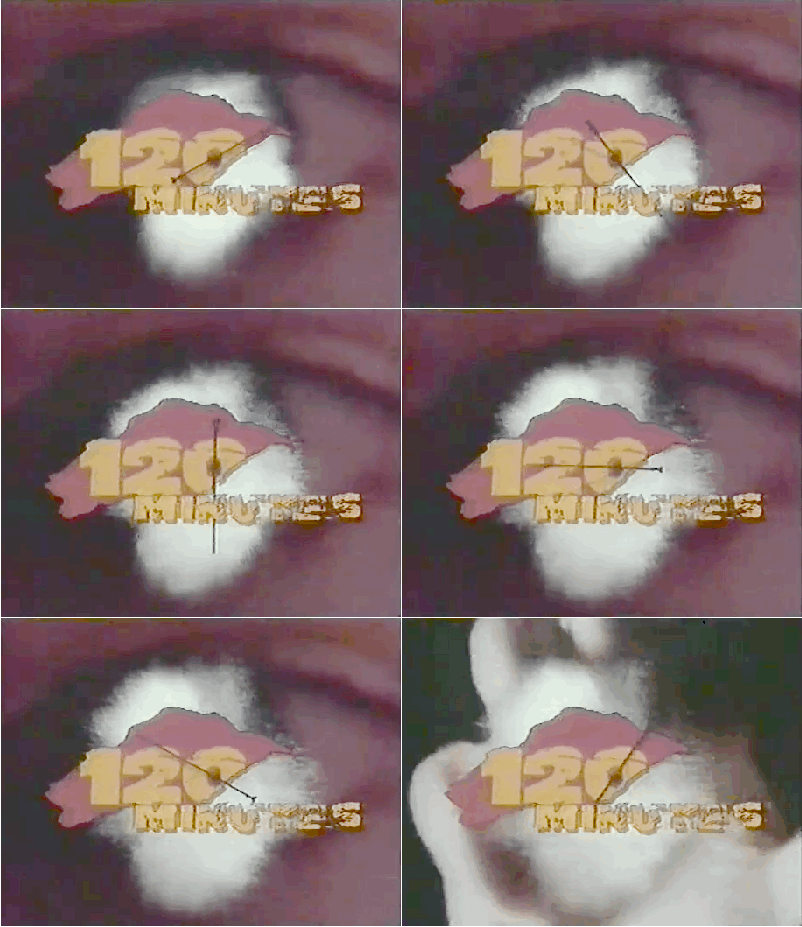
As for the title I used above, the choice of the last generation: this was a tagline at the end of one of the ten-second buffers for the show. It’s a very GenX phrase at that: one, it riffs ironically on Pepsi’s then popular culture-grab tag (“the choice of a new generation”), but also on the back end of the Cold War, when we still weren’t sure if the Soviets were going to bomb us into oblivion. Added to the fact that the visuals for the buffer were pulled from two music videos with dire themes: Laibach’s cover of the Rolling Stones’ “Sympathy for the Devil” (torch-bearing soldiers marching slo-mo through semi-darkness towards a village bonfire) and Killing Joke’s “A New Day” (the slow rise of the morning sun behind a ragged and bare mountain), that tagline fading in at the final moment like a stark reminder of our potential mortality at the hands of others. Heady stuff to see at 1am on a Sunday night when you’re overtired and not looking forward to another week of dealing with jocks at school and grim news in real life.

But at the same time, as a GenXer, we embraced that grim reminder because we dared to. Because there was that slim chance that it would all get better. Because it was easier to embrace the darkness than to curse the one candle that someone else inevitably controlled. Because darkness was where the more interesting, the more creative, the more alternative things hide. We knew there were alternatives out there, beyond what was being fed to us.

Sometimes I think about that, and sometimes I remind myself that this was how GenX survived the jocks and the bulllies, how they survived the Reagan and Thatcher years, how they survived the Cold War, and how they taught themselves to see life in different ways.

And these days, sometimes I hope that newer generations learn how to do this as well.

Walk in Silence 0

PROLOGUE:

I’ve been listening to college radio and alternative rock for thirty years as of this week.

Currently, I’m kind of cheating and switching between the XMU station on SiriusXM, RadioBDC, and a host of college stations via their streaming feed, but the point remains — the singer here (Paul Westerberg at his alcoholic best/worst on Let It Be) is barely making it through the song without stumbling.  You can hear the liquor in his voice.  It’s a classic song of generational discontent, as Wikipedia points out.  I heard the same thing back then, in my bedroom, late at night, and I felt the same thing: who the hell let him close to the mike?

But truly, that was exactly what endeared me to the alternative rock genre, and still does to this day.  The fact that studio time was given to a musician of middling proficiency and questionable talent amused me then, and impresses me now.  Well — at this point, anyone with a laptop, a few microphones and some cheap recording and mixing software can lay down their own music.  And thanks to the internet, they no longer need to jockey for position at the local radio station or bar; they can upload their latest song on Bandcamp hours after making the final mix, and let their small tribe of listeners know it’s out there.

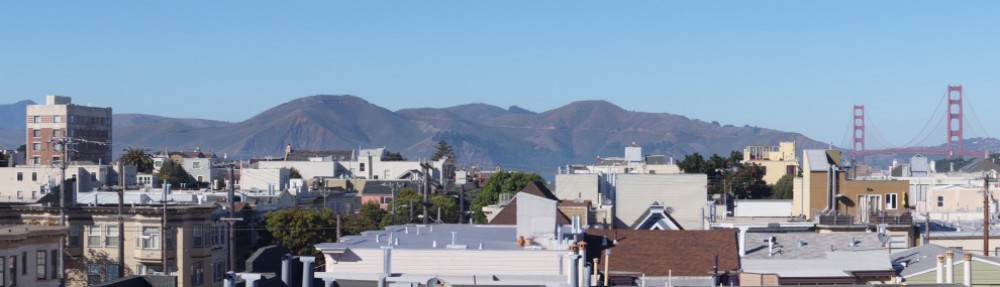
There’s a lot of excellent indie rock out there if one chooses to actively look for it.  Some listeners like myself spend far too much time and money on it, but we love it just the same.  Again with the internet: many college stations stream their shows on their website, so someone like myself, now living in San Francisco, just over a mile from the Pacific Ocean and a view of the Golden Gate Bridge just outside my window, can listen to the broadcast of Boston College’s WZBC.

The only thing missing, in my mind, is having a blank cassette at the ready, in case one of my favorite songs comes on.

That’s one of the original facets of alternative/indie rock, really…the ability to look in the face of popular culture and loudly and proudly profess that you’re not going to play that game, at least not by those rules anyway.  One of the whole points of the genre, harking back to the original UK punk wave of the late 70s (and much further back, depending on which rock genre you’re thinking about), was to make sounds under one’s own rules.

It was about a certain style of anarchy –a personal anarchy, wherein one fully embraces who they are and what they want to be, where one stops trying to fit in where they obviously don’t belong, where they find their own path without outside influence.  Be what you want to be, and fuck ’em if they can’t deal with it.

*

Every music fan has that story:  where did you first hear that new song, that favorite band, discover that new genre?  Every fan has a story where they heard a song or found a new radio station or a new genre for the first time where it just clicks: YES!  This is the thing that has pierced my soul, has connected with me in such a deeply personal way that I will never hear it the same way again!

Okay, maybe not in so many words: often it starts out with a distraction.  Yeah, I kind of dig this track.  It makes you stop and notice it.  You may not know exactly why just yet, but you’re not going to dwell on that right now.  But its primary job has been fulfilled: it’s gotten your attention.  You may be intrigued for the moment but forget it a half hour later, or it may stay with you for much longer, so much that you’ll end up looking for it the next time you’re at the local music shop.

Or, if you were like me in the middle of the 80s, you’d have a small ever-circulating pile of half-used blank tapes near your tape deck, and if you liked the song that much, you’d slam down the play and record buttons and let ‘er rip.

This is the story of how I got from there to here.

*

 Let me start with this: I was part of the inaugural MTV generation.  I was ten going on eleven.  I remember when I first saw the channel when it was offered on our newly-minted Time Warner Cable system, the first cable service in my hometown.  I remember the beige-colored box with the light brown label on top, listening all the channels we’d be getting.  I remember seeing MTV for the first time.  [For the record: my first MTV video was .38 Special’s “Hold On Loosely”.]  And most of all, I remember it was channel 24.  Even before we got cable, I’d already made plans to park my butt in front of the television and soak in the musical goodness.  Any music I heard from about 1982 onwards was considered Something Awesome in my book, especially if it had a video.  But even if it didn’t, that one network opened up something within me that turned music from a passing interest into an obsession.

Around the same time, I had pilfered the radio that had been gathering dust in the kitchen (an old model I believe must have been purchased at one of the local department stores a few decades earlier), and it was now at my desk.  I’d made little marks on the dial where my favorite stations were.  I’d fallen in love with rock radio.

Was it different from the sort-of-occasional listenings of records from our family collection, or the albums we’d take out from the library, or whatever was playing on the car stereo during family roadtrips?  In a way, yes.  Even then I’d gotten into the habit of listening to certain radio stations, but not to such an obsessive extent.  I’d gone from ‘now and again’ to ‘every single morning’ to ‘pretty much all day long’.  Other boys my ages were probably watching sports or playing outside or whatever it was we supposed to do, but I was perfectly happy sitting right next to the radio and enjoying each new song that came on.

The obsession with countdowns started around this time.  That was the fault of one of my older sisters who’d taped various songs off the radio at the turn of the decade, and had recorded part of the year-end countdown on the rock station we all enjoyed, WAQY 102.1 out of East Longmeadow.  A year or so later the torch was passed to me (well, more like I snagged it as she headed off to college).  WAQY had a contest in which, if you sent in the correct countdown list, they’d pick a random winner and give away every album that was on it.  Who was I to turn that down?  With an insane amount of focus and intent for a preteen, I wrote each artist, song on lined paper and duly mailed it in.  Never won, of coure, but that didn’t stop me from listening with rapt attention.

Thinking back, that’s probably what fueled my music obsession the most — between the countdowns and MTV, as well as radio in particular, I was glued to my desk or the living room couch, wondering what song or video would come next.

That went on for most of that decade, really.  From about 1981 or so onwards, I would always have a radio on, or I’d watch a good hour or so of MTV, just soaking everything in.  I really wasn’t too choosy about what songs came up, as long as they caught my interest.  That was partly due to listening to whatever my sisters were listening to in the 70s.  I could take Chicago’s easy-listening comeback albums the grandiose prog rock of Rush, and the guitar jangle of early REM.  A lot of the rock stations back then were more adventurous in their playlist, mixing past and present genres without a second thought.  Within the span of an hour I could hear the Beatles, Led Zeppelin, Dire Straits, Van Halen, and maybe even an Ozzy or an AC/DC track.  In the early days of FM radio, there was always some element of free-form.

I was given a massive playlist to choose from, and I devoured pretty much all of it.

The taste of youth, the taste of you, dear

Okay, I’m finally going to take the plunge.

Next week will be the first of many entries for the Walk in Silence blog series…and of course, I’ll be letting you know all about that over the next week and a half.

But that’s not the plunge I’m talking about.

When I was first planning out the WiS project, I always had the timeframe in the back of my mind: should I focus just on my own personal connection with college radio (1986-1989)?  Should I talk about its history (197? – 199?)?  Or should I just come up with an arbitrary time?  Eventually I chose the third entry, that way I could focus mostly on my own personal history, but also include the time before I connected with the genre, thus 1984 – 1989.

The plunge I’m thinking of now is the college and post-college years.  They weren’t exactly the happiest years of my life, for various reasons, but they were interesting musically.  College rock, at least with American radio, gave way to grunge and Britpop as it became more popular, and changed genre names numerous times before deciding on the all-encompassing ‘alternative rock’.  A schism grew: those who felt alternative rock was selling out and followed the most obscure bands possible, and those who really didn’t mind either way, as long as the prefabricated crap currently in the charts went away.

I’ve been toying with the idea of doing a sequel to Walk in Silence for quite some time.  There’s no name to it yet, nor is there any concrete schedule or plan for it at this time (all my focus is currently on posting WiS and publishing the Bridgetown trilogy), but I do have a few ideas floating around…it’ll focus mostly on the years from late 1989 (when I left for college) to late 1995 (when I left Boston and moved back home).  And it will most likely continue the WiS theme of both personal story and music history.

Some albums from that era still get heavy airplay on the radio: you’ll still hear tracks from Nevermind and Blood Sugar Sex Magik and Loveless and Definitely Maybe and Achtung Baby and Violator and so on.  But there are so many more albums I’ve ignored for one reason or another, forgotten about or couldn’t make myself listen to for personal reasons.  Songs that radio let pass into history, even forgetting to play them on Throwback Thursday.  But as with Walk in Silence and the 80s, it’s been nigh on twenty-plus years for most of these.  It’s well past time to revisit them again.

So starting today I’m going to start listening to some of these albums in my collection, give them a once-over they haven’t had in quite some time, and see where I can go with it.

Should be an interesting ride, to say the least.