Throwback Thursday: Spring 1989

Ah, twenty-five years already, then? A quarter century already since I was a pimply, music-obsessed, self-proclaimed nonconformist and budding writer, twitchy and moody and waiting for my senior year in high school to be over and done with so I could go out and live in the Big Bad World. My senior year felt like a badly scripted, unwanted denouement, to be honest. I really should have been a year ahead. I say this now, well after the fact, because after twenty-five years of contemplation, I realize it wasn’t that I was lazy or had any learning deficiency, it’s that I was bored. And boredom begets distraction. And distraction begets so-so grades. And I never quite got out of that slump, not really. I think if I’d graduated in 1988 instead, it would have forced me to put more effort into it, made me work to my potential. It would have made me mature a hell of a lot quicker. As it happens, I ended up coasting for the rest of my education years instead when I should have excelled.

But that’s a different post altogether. This is a music blog, isn’t it?

Credit: flyerize.com

Credit: flyerize.com

Spring 1989 was right about the time when that beloved radio subgenre of mine, college rock, finally emerged from its late night perch and started making its presence known elsewhere. Well, that’s not entirely true. There’s a lot more to it than a wider audience. Consider the following:

–In late 1988 (the September 10th issue, to be exact), Billboard acknowledged the subgenre for the first time with a “Modern Rock Tracks” chart.

–The Top 40 of the late 80s was in flux, with all different kinds of pop music gaining traction. Top 40 rock was giving way to Top 40 dance music. Many production-ready sounds had emerged as well, thanks to production houses like Stock Aitken Waterman. This was especially embraced by the poppier end of the MTV playlist, thanks to heavy rotation as well as shows like Club MTV. This let the occasional unexpected hit sneak into the charts now and again, giving other subgenres an opening for success.

–The rock sounds of early in the decade and the one before it–the arena rock, the LA glam metal, the Michael-Mann-approved, Miami Vice-ready mood pieces, and the last dregs of 70s bar band sounds–had begun to age, and age badly. Harder, more serious rock like Guns n’ Roses and Metallica became the accepted norm. [Come to think of it, this is probably around the same time many FM rock stations divided between “current rock” and “classic rock” formats.]
credit: discogs.com

credit: discogs.com

–Several British subgenres of rock emerged or were noticed in America about this time as well: shoegaze, Madchester, Britpop, etc. Many were noticed and release by major American labels at this time. They may not have made high chart placement, but they were starting to get noticed. Several local US scenes were gaining traction as well: Seattle, Boston, Athens, and so on.

–Even the American punk scene was in flux, many of its major late-70s/early-80s players (Hüsker Dü, The Replacements, Black Flag, et al) either having broken up, evolved considerably, or on their way to self-destruction. There would always be the hardcore punk in its many sounds and guises, and it would remain in the shadows where it wanted to be, but the newer sounds were more steeped in the post-punk sound–equally as emotional in its delivery, but more melodic and adventurous in its sound. This sound was less influenced by the DIY punk ethos and more by the UK post-punk sounds of just a few years earlier.

credit: thequietus.com

credit: thequietus.com

–Two years earlier in late 1987, we also saw an influx of uniquely college-rock bands releasing highly lauded albums, elevating them past the college-radio-only playlists and onto commercial radio: The Smiths, The Cure, Depeche Mode, REM, Red Hot Chili Peppers, and so on. Many of these were on Warner Bros-related labels, and a number of them had the backing of Sire Records head Seymour Stein. [Seriously, we need a bio of this man, STAT…he was such a big influence on the New Wave scene.]

By 1989, for this music nerd and self-proclaimed nonconformist, I felt both liberated and a little saddened by this change in the weather. On the one hand, I was thrilled that the music I had so loved since that fateful evening in April 1986 was finally getting its due…but at the same time, it felt like it was losing its mystique in the process. After all, this was the music I listened to on my own. It was my music, the songs that spoke to me. I tried to take the high road with this one, though…I felt it was high time my peers stopped listening to the prepackaged crap that radio was feeding us and listen to music with substance.
Credit: discogs.com

Credit: discogs.com

Style versus substance…that was the big debate of the 80s, wasn’t it? Do you want something pleasing to the eyes and ears but superficial, or do you want something of deep meaning but not exactly pretty to look at or listen to? I’d like to think that’s why New Order chose Substance as the title for its 1987 hits collection (and by extension, its Joy Division collection as well); they may also be making sequenced dance music, but put “Blue Monday” side by side with “Never Gonna Give You Up” and one can definitely hear the difference. One was destined for status of classic dance track that’s still embraced today, the other the subject of a hokey (yet admittedly amusing) internet meme. The genre could be similar, but the quality couldn’t be any more different.

Then there’s also the change that comes with the change in decades as well. It’s often been noted that the last few years of a decade tend to show a decline in the interests that once defined them–the flower power of 1967 gave way to the high-octane politics of 1968; the blissful haze of the 70s gave way to the discontent of the late 70s. The paranoia and the wackiness of the early 80s was giving way to the more serious and reflective late 80s. There was also the fact we were coming in on the last decade of the millennia as well. We wondered what the 90s would bring us–the promised jetpacks? World peace? Information at our fingertips? The possibilities!

I’d like to think that this calmer introspection was yet another piece in the puzzle that led to college rock, and in effect other rock subgenres, becoming more acceptable. Yes, I know, it might be a stretch, but think about it–when you’re thirteen, things you dislike are stupid (or in the 80s New England parlance, fucken retahded), but when you’re hitting eighteen and about to head off to college, these things aren’t as important on your popularity scale and you start accepting different things easier. Where Metallica was once only listenable to those long-haired smoking weirdos who wore denim jackets and drove to school in Camaros, in 1989 they had a massive hit with the song “One”–a song based on a 30s war novel at that. By 1989 we had chart hits from Faith No More, Fine Young Cannibals, Love and Rockets, REM, The B-52s, Nine Inch Nails, and more.
Credit: discogs.com

Credit: discogs.com

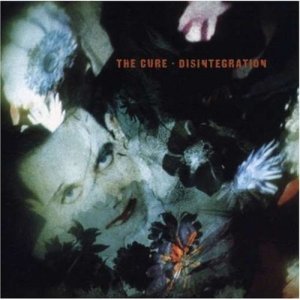
In early May, just as I was finally winding down my educational years in my small hometown, The Cure released what would be considered their best album ever, Disintegration. It was prefaced by two different singles: in the UK, the slinky and creepy “Lullaby” reached all the way to #5, and in the US the darker and angrier “Fascination Street” became their first US chart hit, hitting #1 on the new Modern Rock Tracks list. This was new stuff for those unfamiliar with the band, and for those like me and my close friends, this was definitely new stuff. The Cure had always retained a darker sound since their inception, but after the much brighter sounds of 1985’s The Head on the Door and the poppier, more psychedelic sounds of 1987’s Kiss Me, Kiss Me, Kiss Me, Disintegration was an altogether different affair. It was epic not only in scope but in sound, “mixed to be played loud so turn it up” as the liner notes suggest. It was as dark, it was moody, and it was absolutely, stunningly gorgeous.

This album fit perfectly as a final step towards the end of the decade, and it was the soundtrack to the last remaining days I spent in my hometown. I’d spend the summer working for the DPW in the town cemeteries, and I’d be listening to this album on repeat on my Walkman while I pushed lawn mowers all over the place. I’d listen to it at night that summer, now that WAMH out of Amherst College was off the air for the season. I’d been writing a gloriously doom-laden teen roman à clef and several poems/lyrics at the time (you know how it is when you’re that age), and used this album as a soundtrack as well. And when August rolled around and my buddy Chris had his first of a few “fiasco” parties as his grandfather’s cabin out on Packard Pond, this album got heavy airplay both on our tape players while we laughed, played cards and did other silly things, and again on my Walkman as I finally climbed into bed later that night.

On the last day of that party, after we all cleaned and straightened up and headed back to our homes, I sat on the front porch at my parents’ house and listened to it one more time on my headphones, composition book in hand in case inspiration arose. “Homesick” came on, and I latched on to the lyrics: “So just one more, just one more go / inspire in me, the desire in me, to never go home.” It was the perfect ending quote to my life up to that time–not that I don’t like it here, but PLEASE give me a reason to move on. It was the end of summer, I’d be heading to Boston for college in a month, and I was just itching to get started with the new chapter of my life. And to add to the bittersweet end of the season, the last track, “Untitled”, came on with its slightly-offkey melodica intro, creating a melody that would repeat ad nauseum until all the instruments left again, leaving the offkey melodica drifting way. The lyrics to “Untitled” were the polar opposite of “Homesick”, a last tearful goodbye delivered with such a mortal finality it felt like heartache. While the former was “okay, time to move on and embrace the future”, the latter was “oh, and by the way–you can never return to the past.”

Indeed, I could not, no matter how much I may have wanted to.

*

I’ve returned to my past many times over the years, mostly with writing works in progress, song lyrics and poems, and quite a few blog posts, but I understand that I can’t stay there indefinitely. It took me little while in college to understand that, but I eventually got over it. Now, I enjoy heading back to the days of the late 80s, especially with my overly large music collection. I like to listen to what came out back then and compare it to what’s out now. I can see and hear the cycles now, the songs of yesterday hidden in the songs of today. I talk with many of the same people in that circle of friends online now, even though a continent separates us. I might not be the twitchy self-proclaimed nonconformist anymore, though I am still that writer and music nerd.

So I think after twenty-five years, it’s a good balance.
Forty-five Minutes a Side

[Note: the last two Blogging the Beatles entries will arrive soon, promise!]

My friend Mark posted a picture of a 1991 Radio Shack ad earlier today, and it got me thinking about the amount of money that I spent as a kid at that place. Back in the early to mid 80s, it was on Main Street in downtown Athol, next door to Cinnamon’s Restaurant and just a few doors from my dad’s office. A few years later it moved just over the border into Orange, just across the road from the Shop & Save strip mall, but that never stopped me from asking my parents or my sisters to drive me over there so I could pick up my “toys”.

I wouldn’t exactly call myself a budding tech nerd back then, really. I wasn’t really that into most of the electronics that they had over there; no, this was more about the audio accessories they sold. Some time around 1983 or 1984 I came to the realization that I could connect our well-worn tape recorder to my stereo via a 3.5mm-to-1/4″ audio cable and dub things from vinyl, or even better, from tape to tape. This eliminated having to lay the tape recorder next to a speaker for a tinny, crappy, live sound, as well as having to worry about someone walking into the room and making noise. Pretty soon I had a small but very useful selection of audio components at my fingertips.

Credit: tapeheads.net

Credit: tapeheads.net

Radio Shack was also my go-to for the blank tapes as well. I’d bought them elsewhere, but this store had the best quality tapes, not those smalltime knockoffs with questionable quality. The store brand worked pretty well, but it was the slightly more expensive Memorex tapes that worked well for me. Their 80s version of the popular DBS 90 (see pic) was quite colorful, and decently priced as well. This was the go-to tape for your general music fan–basically, the “it doesn’t need to sound pristine, just decent…I’m listening to it on my boombox from Sears and I just want the music” music fans like myself. It was also the perfect size, for multiple reasons: if you were taping stuff off the radio or making your own mixtape, you could easily fit about ten average-length songs on each side. If you were dubbing your friends’ albums and tapes, you could fit one album on each side with a bit of room to spare for b-sides or filler. I filled a lot of holes in my early collecting years this way. And yes, I did eventually end up buying or downloading the real thing.

This of course was the age of Home Taping Is Killing Music, which was the 80s version of this generation’s file sharing controversy, which most people found quite ridiculous. For the most part, at least in my view, it didn’t kill music at all–if anything, it spread it out at a time when buying music could be quite the chore. Those like myself who were headlong into college radio then had a bitch of a time trying to find half the stuff we wanted; you would most likely not find many punk records at your local department store or small-time record shop, and record clubs rarely if ever carried what you were looking for (unless it was on Sire, then you could probably find it via Columbia House–Seymour Stein was cool that way!). Our main source for albums was our friends’ collections. And if anything, we were the type of fan who would eventually buy the album anyway, once we finally found it.

I haven’t used a blank tape at least since 2004, I think. That was probably the last time I made one of my compilations to fit a ninety-minute tape. [And for the record, those were most likely bought at Newbury Comics alongside the new cds I was buying then.] For many and varying reasons, I stopped using tapes and went mostly all digital from there on in. It’s only this past New Year’s season that I started following the “forty-five minutes a side” rule on making compilations–that is, pretending that I was in fact making this playlist via home taping, complete with attempting the perfect segue from one song to another–and to tell the truth, it was a hell of a lot of fun.

It was like making the old mixtapes again. It may even have inspired me to make more this way!

Walk in Silence: Finding New Music, Immediacy in Availability

I know that I’m the rare music collector–I’m one who will download music, but also still head over to Amoeba on Haight Street and pick stuff up on a semi-regular basis.  I did that yesterday as part of my slow-but-ongoing plan to weed out most of our cd collection, having gotten a good ninety dollars’ store credit out of a pile of titles that have been gathering dust in a closet the last few years.  In the process, I spent a good hour or so digging through equally dusty clearance bins and making out pretty well.  The dollar bins are my friends, because a lot of the time I can find stuff that I want that isn’t available digitally.  As always, the time frame of the titles there are about ten to fifteen years ago (with the occasional exception–for some reason there were a lot of copies of Morning Parade’s album from last year in there), which means it aligns with a lot of the titles I remember seeing during my tenure at HMV and during my weekly jaunts to Newbury Comics back when it was in Amherst.  In the process I also picked up a few new titles that we’d been looking for.  In addition to this, I’ve been ordering a few import cds online lately–the recent and excellent reissues of We’ve Got a Fuzzbox and We’re Gonna Use It!!’s two albums from 1986 and 1989 being the latest–again, because they’re not available digitally.

I’m also an obsessive when it comes to listening.  I’m not sure how rare or how prevalent that is with others, but I’ve always got some music going on in the background wherever I am.  Roadtrips?  Got the local stations on the car radio.  Work?  Streaming something online.  Working out at the gym?  Listening to my mp3 player.  Writing?  Playing something from my digital collection.  Not at my desk?  If we’re not watching something, we’ve got one of the Sirius stations on.  I’m not always focusing on the music, but I’ve always got it playing when I can.  I’ve been that way since I was a young kid in the early 80s.

In the past, I would find new music by listening to the radio–more to the point, once I became obsessed with indie rock, I started paying attention to new things and their release dates.  Again, this really came to the fore once I started working at HMV, previewing them in the stock room before I brought them out onto the floor on Tuesdays.  Even more so when I had my weekly Wednesday comic book/music purchase run in Amherst during the early 00’s.  I fell out of the habit in 2005 when I had couple of major life changes, and I didn’t really get back into it until a good couple of years later.  This would probably explain that gap in 2005-2007 where I kind of remember some indie music, but it doesn’t really stick with me unless I really look at the chronology.  I got back into the habit around 2010-ish when I found Save Alternative, and later started actively looking for college and radio stations on the internet, and even more recently when my wife and I started listening to AOL Music’s Spinner.  Interestingly, I rarely pick up new information from music magazines or websites other than release dates.  I don’t have much against them, but while their coverage is similar to my tastes, they don’t converge enough for me to actually benefit.

I say all this because lately I’ve been listening to college radio again.  I’ve been listening to it for awhile now, but more so than in the last few years.  Because nothing beats getting it from the source.

I wish I could say I’ve got the Jonzbox plugged in and I’m taping stuff as it’s being played, but alas that isn’t true.  I do still have a handful of blank tapes that my sister found lying around, and the Jonzbox still works, albeit just barely, but those days are over.  As much as I’d love to tape radio shows again like I did so many years ago, a handful of the college stations I listen to are well out of range–some of them being on the other side of the country.  That’s the beauty of the internet for me in this respect.  I love being able to listen to WZBC out of Boston College one moment, and KSCU out of Santa Clara U. here in California the next.  There’s also the fact that I can listen to any college station and not really know or expect what they’re going to play next, because for the most part they’re still freeform after all these years, bound only by their show’s theme.

And despite not being able to record these shows, it does occur to me that I can do the next best thing–if I’m interested in a song, I can do what my wife and I have been doing whenever we listen to Sirius XMU and Alt Nation:  write the songs down on Post-Its for further checking out and possible downloading.  I just did that this morning, actually…while listening to a great set on KSCU, I wrote down a small handful of songs I liked and realized I could just as easily zip over to Amazon and download the mp3s whenever I wanted.  While I miss out on recording the semi-professionalism and occassional silliness that goes on with student-run stations, it’s a small price to pay when I can instead buy the music immediately if I so choose, instead of waiting for the weekend/when I get paid to go to the local record store.  And as I’ve mentioned earlier, most of my trips to Amoeba as of late have been for back catalogue.

Still, I do like the idea of listening to the radio again, especially when it’s to listen on certain days for a specific deejay’s show.  It’s a refreshing change from the daily (and sometimes hourly) repeat of the same sounds, and there’s a much higher chance of something new and unknown being played that will catch my attention.  And by listening online, I also get to savor the sounds of different cities.  Northern California’s college radio is a bit more lively and odd than New England’s laid back autumnal sound, for instance.  It’s a pleasant reminder that just when I’m in the mood for a specific sound, or sick of the same music being played, there’s a hell of a lot more always out there that I haven’t tried yet.

RTS Repost: ‘This is the end of the broadcast day…’

[RTS, or ‘Rockin’ the Suburbs’ from the Ben Folds song, is the occasional music-related series of posts I’ve been writing on my Live Journal of the same name for the last few years.  I’ve decided to repost some of them here for your enjoyment. — JC]

“This is the end of the broadcast day…”

That’s a phrase you don’t hear much anymore, do you?

With the large number of terrestrial stations picking up satellite feeds or having overnight shows (pre-recorded or otherwise), and all the internet and satellite stations (at least the ones not run out of someone’s basement) running twenty-four seven, it’s kind of strange in this day and age to hear a station read out the end-of-day legal sign-off.  You know, the one that says the above phrase, followed by the technical jargon of where the station is broadcast from, where their tower is, and what frequency they’re at.

Even rarer nowadays is hearing the station go off the air, followed by the hiss of static.

I’ve been listening via internet to WAMH, Amherst College’s radio station and the one I’ve been listening to since 1987, especially on the weekends with their Potted Plant countdown.  I could be listening to any other station here in the Bay Area, or even Save Alternative (which in my opinion is doing a great job of resurrecting the freeform radio format), but you all know my love for college radio, so I try to listen to it as much as I can while it’s on the air.  Since WAMH usually goes off the air about 10 or 11pm Eastern time, I get to hear the sign-off at 8pm out here on the west coast.

The funny thing is that I remember as a kid hearing the sign-off all the time, and for a brief stretch I knew WCAT’s by heart when I worked there in 1987-88 and again in 1995-96.  I was hired for weekends back in the 80s (I thank my friend Chris for that position), back when it was only an AM station that went off the air at sundown.  I had to play a prerecorded cart of the owner reading off the same legal sign-off, played exactly fifteen seconds before shutting down, so that I could power down right on time.  I had to do the same thing as well at my college radio station, when I had a late night show on WECB, and again at the other college station when I had the alternative show on WERS.  By the time I returned back to WCAT in my last radio gig, that station was broadcasting on both AM and FM frequencies, but I only had to play it for the AM station.

There’s something melancholic about hearing a radio station sign-off, at least for me.  When I was a kid–and even as a teenager–radio was my link to the real outside world, past my family and past the small town I lived in.  I think that, more than anything else, was what pulled me towards radio in the first place, even more so than the idea of playing all my favorite songs and sharing them with other listeners.  I liked the community aspect to it, a sort of etheric connection that kept everyone informed and entertained.  Of course, the internet is a hyped-up, jacked-in, overloaded version of that idea, but somehow it isn’t the same…where the internet is aural and visual, terrestrial radio is only aural and therefore more personal–the deejay is talking to you, informing you, playing you music for your enjoyment.  The internet, while it can also do that, sadly also has the effect of turning you into a five year-old with a sweet tooth let loose in Wonka’s Chocolate Factory–if you have no self-control, you end up overindulging.

Hearing that sign-off always leaves me with a sense of sadness, that I’ve reached the end of a performance, leaving me to make my way back to the real world again.  I’ve been entertained by the deejays and the music, I may have even learned a few things, but their job is over for the day.  Hearing it today reminded me that the school year is almost over, and this station will soon be off the air for the summer, leaving me to my own devices.  It also reminded me that today is Sunday, and my relaxing weekend is almost over.  This time, instead of needing to go back to school the next day, I have to go to work.

Still…I’m glad radio is still out there, whether it’s online or terrestrial.  Even if it is a fleeting entertainment, it’s a sound salvation (as Elvis Costello sang), and still my favorite way of relaxing.  Even when it’s the end of the broadcast day.

WiS Notes – Fuzzbox, Sputnik and The The: Night Flight

When I started my research for the Walk in Silence project last year, I’d decided to write some personal notes and reflections on how college radio affected me in the late 80′s.  It was a brief overview of what I want to cover in this book that lasted for twenty-five installments, a sort of a detailed outline of memories, thoughts on influential (to me) bands and albums, friendships, and such.  I’ll be posting these sporadically on the site over the next few weeks or so.


FUZZBOX, SPUTNIK AND THE THE – NIGHT FLIGHT

Before there was 120 Minutes on MTV, there was Night Flight on USA Network.  NF was a four-hour block on weekends that played all kinds of weird things typically aimed at the arty or creative college kids.  They’d do a retrospective of a video director, or a themed show of music from Australia, or cult movies like 2001: A Space Odyssey or Fantastic Planet, or band overviews, or what have you.

In 1986, the show featured a mini-film based on The The’s then-new album, Infected, a collection of eight videos filmed around the world and sharing a theme of being caught in uncomfortable situations—the theme of the album.  I of course taped it, partly due to having seen the video for the title song on previous NF episodes.  Additionally I’d read a review of the album from a music magazine (the name of which still escapes me) and was intrigued.  I’m thinking I bought the tape at Strawberries in Leominster, but I could be wrong.

About the same time, the music magazine I read, Star Hits, had made a big thing out of this new band from England called Sigue Sigue Sputnik.  Their claim to fame was being signed to EMI for a Malcolm McLaren-worthy four million dollars, not to mention having a sound akin to incredibly cheesy techno and a fashion sense of frightwigs, punk and all things Bladerunner.  One of my pen pals at the time, a girl from the UK, put their single “21st Century Boy” on a compilation for me.  That did it—I was hooked.  If I wasn’t going to be the morbid and moody Cure fan all the time, Sputnik’s Dionysian anarchy was good enough for me.  Silly release!  Why not?

And lastly, there was the other fun punky band I latched onto via Night Flight and Star Hits, We’ve Got a Fuzzbox and We’re Gonna Use It!! (exclamation marks intended).  This tatty foursome were like British punk girls you didn’t so much want to go out with as you knew them as friends or at least crushes.  They didn’t have the best musical abilities, but damn it, they were too cute not to like!  And added to that, you realized their version of punk was what resonated with you most.  Not the angry stuff, not the political stuff, but this, the celebration of being yourself and having fun doing it, and to hell with everyone else!

These three albums made quite the difference to me in late 1986, because that was when I’d started to change my outlook on life.  I’d started drifting away from popular Top 40 music because it was boring me…I’d drifted away from trying to fit in with the popular crowd because that was a lesson in futility.  And yet I was drifting away from older friends, some I’d known since elementary school, because I’d stopped trying to fit in with them.  Some of these old friendships remained, but for the most part I started drifting.  I’ll be honest and say that part of it was class in nature—most of my these friends were from families that, while not exactly poor, didn’t exactly aim any higher than they were expected to.  These were the people that most likely weren’t going to go to college—basically graduate high school, get a job somewhere, and start a family before they hit twenty-five.  I don’t hold that against them in any way, and I’m not saying that there’s anything wrong with that choice–it’s just that it wasn’t me. While I fit in for the most part with their group—more like they accepted me without question, unlike the more opinionated popular crowd—I realized I was different in that I wanted and needed to aim higher than that.  Part of me felt guilty of course, but part of me was relieved that I’d come to this realization.

These three albums were part of this realization, albums I’d listen to on my walkman late at night when everyone else was asleep.  It was my escape into another life I could prepare myself for—the rampant silliness and anarchy of Sputnik, the willful nonconformity of Fuzzbox, or the stark, no-holds-barred reality of The The.  There was an opening that made itself present to me, and all I needed to do was take it.

At the time, it was taken in baby steps, as I tended to be of the school of thinking before acting.  Sometimes too much so, but at least it was in the right direction.

In the writing field, my fiction made a turn for the strange, with the Infamous War Novel I’d been writing for the last year or so started taking on darker, weirder plot twists.  Newer stories such as the nightmarish Dream Weaver and the roman a clef Teenage Thunder (yes, I stole song titles for all my writing at the time) I wrote while at my job at the YMCA, cornering myself on the back steps and frantically scribbling away when I wasn’t poring over the latest music magazine.

Socially I started testing people out by throwing this music at them.  Some of them understood my excitement, having older siblings that listened to the stuff, but they themselves weren’t too excited.  “It’s okay, but who sings about a ‘piss-stinking shopping center’?” one of my friends said to me about The The’s “Heartland”.

It must have been late 1986 or early 1987 when I went for broke and wrote a record review of Flaunt It for the school newspaper.  My only motive for doing so was that I thought it was a hilarious and fun album and I thought others might want to know about it.  Sure, there was an element of showing off my newfound nonconformity, but readers could take what they wanted from it, if at all.  There may have been some pushback when I submitted it, though I don’t remember either way.  I’d been writing for the school paper in one way or another since junior high.  It was kind of expected, considering having a reporter father.

I must have been a few days after the publication when Jim B. walked up to me, asked if I was the one who wrote the review, and proceeded to thank me profusely for it.  Someone had reviewed an album that wasn’t Top 40 crap!  Even more so, someone reviewed something cool with the other nonconformist kids!

I was absolutely thrilled by the payoff.  Over the course of the next few days, a few others had run into me and thanked me for the review or thought it was cool.  One was Chris, one of the guys I’d met briefly in junior high but had lost touch with despite our getting along like gangbusters (and, as it turns out, being distantly related).  Through him and the others, I met a new circle of friends that, to my surprise, totally fit in with my new mindset.  The only problem was that they were all a year ahead of me.  I didn’t take that too hard at first, though…since freshman year I’d met, hung around or got in trouble with others a few years ahead of me.  I’d worry when the time came.

As the 86-87 school year wound down, I started hanging out with this group almost exclusively, going over each others’ houses to play games, watch movies, and of course talk about music.

Chris and I seemed to latch onto each other the most, mostly due to our mutual love for college radio and music in general.  In a way he was the cool older brother I didn’t have.  Every now and again we’d meet up, compare each other’s latest music purchases, and dub them if we could.  We were both part of the music club crowd, so we’d be really bad influences sometimes, ordering albums we didn’t have the money for.

This new group of friends I had ended up running into each other or hanging out over the course of the summer.  We’d go to movies, hang out at Hampshire Mall, and have all sorts of fun.  And for me this was important because these guys were the class geeks, the upper rank of students.  We didn’t always talk about mundane things—we had all sorts of intellectual conversations.  Even when I was lost and resigned myself to just listening, it was a change from the teen soap opera conversations I’d hear with others in my own class.

By late 1987, this was my new circle of friends, and ones I’d cherish for a long time.  I would probably need to thank those three bands—The The, Sigue Sigue Sputnik, and Fuzzbox—for being a catalyst for getting us together.


13-16 September 2010

WiS Notes – Collecting

When I started my research for the Walk in Silence project last year, I’d decided to write some personal notes and reflections on how college radio affected me in the late 80′s.  It was a brief overview of what I want to cover in this book that lasted for twenty-five installments, a sort of a detailed outline of memories, thoughts on influential (to me) bands and albums, friendships, and such.  I’ll be posting these sporadically on the site over the next few weeks or so.


COLLECTING

My parents were enablers.  Well, that, and I was insistent that they buy me such-and-such’s album.  Still, it wasn’t in a bad way that they enabled my music addition.  When we went shopping at the local mall, I’d gravitate to the music stores while my mom shopped for clothes and my dad spent his time in the bookstores.  They didn’t mind that I went alone, because they knew that’s where I’d be and where I’d stay until they came to get me.

My first collection, of course, was the Beatles.  After receiving the Blue Album (1967-1970) as a Christmas gift, I started my search for Beatles albums I needed to complete the discography.  They came from varied areas—Help! came from my uncle, Abbey Road and a few others from the local department stores, still others from tag sales, flea markets, and elsewhere.  The Beatles were the first band where I went out of my way to acquire a complete discography (including various bootlegs).  It wasn’t enough to get the US catalog that was available at the time…I had to find the rare b-sides like “The Inner Light” and “You Know My Name (Look Up the Number)”…the ones that hadn’t been released elsewhere.

Once I started actively listening to music—sometime around 1981 or 1982—and more to the point, around the time I’d started taping stuff off the radio (1983-4 or so), that’s when I really started the collecting thing.

Part of it was due to acquiring various music reference books or taking them out of the library, and part of it was due to the info on new releases that radio deejays would give out.  Most of it was from the books, though.  And once I started listening to college radio, a lot of it came from a copy of the Trouser Press record guide form the local library (and then my own, once I found it at a book store).

Once I had all this info, I would wonder what those albums sounded like—not to mention what the covers looked like, since the stores in my town obviously never carried them.  That sort of sparked, or at least fed, the mystique of college radio as something nocturnal [more on that later].

About 1984 onwards, my dad would let me buy an album or a cassette or two while on our roadtrips.  Most of them were popular, easy-to-find titles like Purple Rain, Born in the USA and so on.  It wasn’t until 1986, after I started listening to college radio, that the collecting really kicked in.  One of the first acquisitions was the cassette version of The Cure’s Standing on a Beach—the one with the b-sides on it.  I figured that would be a good place to start. (Amusingly enough, when I heard “Let’s Go to Bed”, I immediately remembered that song from the early days of MTV.  Small world, and that wasn’t the last time that would happen.)  That soon led to other first acquisitions—The Smiths’ Hatful of Hollow (found at a record store in North Adams), Depeche Mode’s “Shake the Disease” single (found in a cutout bin at a K-Mart in Leominster!), and others.

Truthfully, I really had no real idea who to look for, since I was new to the genre.  I basically looked for who I recognized from Trouser Press (or was mentioned in Star Hits, the teen music magazine I read at the time), or who I heard on college radio or on Night Flight and later on 120 Minutes.  That would explain why I gravitated towards the more well-known of the bands—The Cure, Depeche Mode, and The Smiths.

Another way of collecting was via those record clubs one used to see advertised in TV Guide and in newspaper inserts.  I believe RCA was the first one I joined, sometime around early 1987.  By then I had a few part-time jobs—one had been at Victory Supermarket downtown, and later at the local YMCA.  What little funds I got from that job that didn’t go into a savings account went to my pocket.  That was my money for music magazines, candy, and the occasional cassette or LP, and also the money used so I could pay off the music club.  I bought a small number of albums and ordered things for my sisters as well.  One early purchase from them was World Party’s Private Revolution on cassette.  I believe I also snagged a few albums on vinyl that were on sale.

I quit RCA around late 1987 when my friend Chris tried to get extra albums by signing his friends (read: me and a few others) to join Columbia House.  I decided to join that one basically because it had a better selection—that is, RCA was more mainstream and CH was more adventurous in their selection.  I stayed with them  until college started, I believe, and finally quite for good sometime in 1991.

Back to stores—I spent most of my money at the mall stores, simply because they were more accessible.  The Strawberries at Searstown Mall in Leominster had a great selection (I’d buy many major-label titles there like Music for the Masses, Love Hysteria, Flaunt It (the vinyl version), and so on).  There were two at separate ends of the Hampshire Mall in Hadley—the one at the western end next to JC Penney (whose name I’ve forgotten) had a great selection.  I remember being pleasantly surprised (and the cashier indifferent) when I found Love Tractor’s This Ain’t No Outerspace Ship on cassette there, soon after I heard it on WMUA.

My foray into the independent stores came early, specifically when I started looking for Beatles bootlegs.  That’s Entertainment in Worcester was one such place my Dad took me in the early 80s.  That was a neat store, because it carried a lot of their hard-to-find solo albums, like the early pre-Plastic Ono Band discs that John Lennon did with Yoko.

I think it must have been soon after I started listening to college radio that my dad brought me to Al Bum’s—first to the one on in Worcester, then to the one in Amherst—and soon after that, to Main Street Records in Northampton.  Al Bum’s was a local mini-chain of new and used titles, and definitely catered to the college crowd.  And since we didn’t go to Worcester as much as we did the Pioneer Valley (mostly due to ease of driving there), so the one in Amherst became a hangout.  I found a few Beatles boots there, and later many alt.rock titles I’d been looking for.

By association, we also went to a storefront that was originally an outlet of a Noho store called Faces.  That store in particular carried the usual proto-Hot Topic clothes and accessories (I was into silly pins back then, as everyone was).  In the back, there was a small record store-within-a-store (sort of like the old fashioned Five and Dimes) called For the Record.

It was here that once I’d started buying more college rock titles, I’d find some great titles to add to my collection.  One was Sigue Sigue Sputnik’s Flaunt It which I’d heard about through Star Hits.  Another was The The’s Soul Mining, which I’d picked up after buying Infected elsewhere (possibly at a mall store).  Flaunt It would end up being one of my life-changing purchases (so to speak), as not only did the music excite me and inspire my rebellious streak, I’d meet a whole new group of friends after writing a review of it in the school paper [more on that later as well].

Once I started hanging with that group, it became a weekend thing to drive down to Amherst and/or Northampton to hang out.  These people were just shy of a year from graduating high school, so they of course gravitated to the Five College area (instead of roadtrips to, say, Keene or Leominster or Worcester).  The Valley’s ambience grabbed us and fit our mindsets perfectly.

We made Al Bum’s our second home, as well as Main Street Records.  Not to say that’s all we did, of course—we did go to the movies, eat out (the Panda East in Amherst was a favorite), and basically hung out, like any high school group.  Just that mine had a few core members who were as big on the music as I was, and we gravitated to the music stores most of the time.

Of course, the collecting wasn’t always about buying.  In our own way we were guilty of ‘Home Taping Is Killing Music’ by borrowing each others’ tapes and vinyl, and dubbing them onto cheaply bought blank tapes we’d buy at Radio Shack or the department store or wherever.  It almost became a ritual to let each other know who had what and borrow it throughout the course of the year.  For the most part we were good about it, borrowing on a Friday and getting it back to them on a Monday.  By the time my friends graduated high school, we were dubbing in earnest, trying to level off each others’ collections before everyone left in the fall.

At that point, in the late 80s, my penchant for collecting wasn’t as intense as it was later on…I was content to search for albums and not every single minutiae that got released.


August 31 – September 10, 2010

WiS Notes – College Radio

When I started my research for the Walk in Silence project last year, I’d decided to write some personal notes and reflections on how college radio affected me in the late 80’s.  It was a brief overview of what I want to cover in this book that lasted for twenty-five installments, a sort of a detailed outline of memories, thoughts on influential (to me) bands and albums, friendships, and such.  I’ll be posting these sporadically on the site over the next few weeks or so.

COLLEGE RADIO

Back in the day, once I understood the schedules, I’d look forward to the kickoff of another season at the college radio station.  The first time I understood it, after that initial discovery, I looked forward to hearing WMUA—I picked it up again in the autumn of ’86, about the same time I’d actively started keeping an eye out for neat stuff on USA Network’s Night Flight to videotape.  This was soon after 120 Minutes started, something I wouldn’t habitually watch until about mid-’87.

But with college radio, when you first discover it in the spring you semester you don’t get much of it.  Still, it sowed the seed of teenage rebellion.

To me, looking back, college radio in the mid to late 80s was akin to progressive radio—in terms of “progressive” meaning its radio term of being album-track friendly rather than chart friendly.  A precursor to AOR, in a way.

Once the new school year started, college radio usually didn’t kick in until the end of September—a month’s worth of students settling in, the station manager setting up and running interviews, listening to auditions, and so on.  Back then, many of us listeners were twitchy, waiting for the first day of going live.  In a roundabout way this delay makes sense, in terms of what’s played.  Rock music sells quite well in the fourth quarter at record stores, so there’s a good chance that a new college radio season can mean a lot of good stuff coming out an being played straight out of the shrinkwrap.  At the same time, of course, alternative college radio prided itself on being vehemently anti­-commercial, so many music directors went out of their way to look for something that was great but not necessarily a big seller.  A double-edged sword, to say the least.

Still—there was always that exciting thrill of waiting for the station to come on the air.  Back in the pre-internet days, you actually had to wait for things, and that was part of the fun.  Like waiting on new releases, for instance…back then, you’d hear so-and-so was in the studio or coming out with a new album in the fall, and you never heard a peep of it until the promo copies went out to the stations.

This in its own way was a mental high for me as it was my own way of thinking “hey, someone else who’s in my mindset is coming soon!”  After losing my friends to college, this was a tie-in, a reminder .

That first time was interesting.  If I recall correctly, the CCE [Clarence Clemons Event–more on that later. –Ed.] took place in spring 1986.  My dates are wrong on some of my cassettes, as I know for a fact that the first “college radio tape” had to be autumn of 1986, and the second one soon after.  I’d originally thought the CCE might be autumn 1985, but that’s when the song came out.  Still—once I knew college radio existed, I knew enough to expect it when the school year started.  I’d be prepared with blank cassettes (or used tapes, recording over older stuff with the mindset that I was growing up and moving on to better things).  At first I had the older kitchen radio, then moved onto the “jonzbox” as well as one of my sister’s radios she wasn’t using.  At least two, if I’m not mistaken.

One radio—the jonzbox, a well-worn cassette/radio—was on my desk and tuned to various stations.  It had a six-foot extendable antenna that I bought at Radio Shack (and I think survived for many years until some idiot in college bent it).  The front plastic facing had a strip of paper taped under the dial, covering the AM  band numbers—come on, who listens to AM anymore?—marking the general settings of all the stations I listened to, or at least the ones that came in.

Again, my house was in a valley so not everything came in great.  Local stations came in clear and sometimes even bled over other stations—cheapo radios still do that.  The college stations I liked were tricky, because they were usually low-watt and therefore the local NPR station (WFCR out of Amherst) sometimes overpowered anything near it.  Added to the fact that my family owned a cheapo police scanner, which caused stations to drop out if the radio signals crossed (even worse if it was in scan mode—it would mute a song for a half-second at every pass).  Thus the mega-antenna.

The mindset I remember, like I mentioned above, was that of excitement that I was hearing this stuff again.  At that point, I’d grown out of trying to fit in, grown away from the circle of friends I’d had since childhood.  I did occasionally hang with my friend Kevin, especially my senior year (I’d known him since junior high), and also with Kris (I knew her since grade school—her dad was my fourth grade teacher as well), but most of the others I’d known for some time were floating into the background.

My junior year was the best since I got along famously with so many in the class ahead of me.  They had discovered college radio about the same time I had, so we had that in common for starters.  For all of us, I think we all had that idea that this was something that was a notch beyond the normal pop stuff.  It had substance, it was art, and it wasn’t disposable.  For us, that meant that the things we liked, the things we put our hearts and minds into meant something.  That was key for us, having grown up in a small town.  To put it more bluntly—we rose up above the yokels and the rednecks with our art, with our music, and our intellect.  Because really—if we didn’t have that in this town, what the hell else did we have to live for?

Personally, listening to college radio gave me the impetus to rise up against my own misgivings.  I’ll be honest—even though I may have “hated” the jocks and the popular cliques in high school, a lot of it was my own doing, and I believe that’s true for a lot of people my age that grew up in the 80s.  Life may have felt like a John Hughes movie, but in reality it wasn’t (the exception being The Breakfast Club, in my opinion still his best film)…those movies were caricatures.  My ire was fueled by my social status, and I  hated that I didn’t quite fit in.

Discovering college radio was like an eye opener, a veil finally pulled away to show that there’s a hell of a lot more to life out there than what we were temporarily binded to.  Becoming a part of its universe was like being accepted into that bigger world.

30-31 August 2010