Thirty Years On: April 1988

April 1988 will of course be the month when The Flying Bohemians were born. I’d floated the idea of starting a band of sorts sometime in March if I’m not mistaken, but it wasn’t until the following month that Chris and Nathane and I made any serious plans about it.  It would be after their spring break trip, so the band would have its auspicious debut jam session on the 22nd of that year.  Meanwhile, I’d started songwriting in earnest, pulling out lyrics old and new that could possibly used for our future sessions.  I still had a hell of a lot to learn at that point, but I wasn’t going to let that stop me.

Meanwhile, here’s some of my favorite tunage that was getting play both on college and AOR radio, and on my turntable and tape deck.

Thomas Dolby, Aliens Ate My Buick, released ?? April. Third album from the geekiest synth musician out there. It wasn’t a big seller at all, but it was definitely a fun listen. It’s got some of his goofiest songs on there.

Bright Lights, Big City soundtrack, released ?? April. I’d picked up this soundtrack simply because it’s got an excellent line-up: MARRS, New Order, Depeche Mode, Prince, and Bryan Ferry, to name a few. The movie hasn’t aged well at all, nor has the book (though its unconventional use of telling the story entirely in second-person present tense POV did open my eyes quite a bit as a burgeoning writer at the time), but the soundtrack is still quite excellent.

The Wonder Stuff, “Give Give Give Me More More More” single, released ?? April. A ridiculously fun and witty British band from the Midlands, these guys were a listener’s favorite on college radio almost immediately upon arriving in the US. It would be another few months before their album would drop, but this was an excellent teaser.

Joe Jackson, Live 1980/86, released ?? April. This is an excellent live cross-section of his hits, including an absolutely amazing reinterpretation of his US hit “Steppin’ Out”, turned into a slow, elegiac jazz piece here. I remember ordering this from Columbia House back then just for that one track alone.

Graham Parker, The Mona Lisa’s Sister, released ?? April. WMDK and other AOR stations loved playing Parker’s stuff over the years, and this one got a lot of play as well. I used to love this particular track quite a bit.

In-D, “Virgin in-D Sky’s” single, released ?? April. Ah, Belgian techno…you never quite caught on here in the states, but I loved you just the same. Two club DJs from Antwerp got together and recorded three dance singles (and calling the style ‘New Beat’), and this was the one that somehow caught on with college radio.

John Adams (composer), Nixon in China, released 5 April. I remember this one coming out because it was such an unconventional subject for an opera. That, and Main Street Records down in Northampton had it set up on their endcap at the front of the store, so whenever we walked in, the first thing we’d see was the box set. It would be a few years before I’d finally give it a listen, and many more years until I finally saw it live (with Adams present, as he’s a Bay Area local!). It’s a strange one, sure, but it’s quite fascinating.

The Jesus & Mary Chain, Barbed Wire Kisses, released 18 April. The J&MC’s first collection of b-sides and rarities (they’d release quite a few over the course of their career), it’s an interesting mix that showcases just how far they’d come, from their early feedback screech to their sludgy alt-rock. [Also, the first of a few albums that were ‘borrowed’ from the radio station I worked at then…I mean, was an AM, low-watt, lite-pop, satellite-fed station ever going to play this? I highly doubted it.]

Erasure, The Innocents, released 18 April. I absolutely adored this album when it came out, and “Chains of Love” became one of my favorite tracks of the year to to that point. Another band given a lot of love and promotion by Sire (thanks again, Seymour Stein!), this was heavily played not just on 120 Minutes but during regular daytime MTV. Classic album worth having. [Also, another ‘borrowed’ album. Heh.]

Soul Asylum, Hang Time, released 25 April. One of many punk bands from Minneapolis, these guys were often seen as the slightly less inebriated little brothers of the Replacements, but they rocked just as hard and recorded solid albums right alongside them. They’d finally get their share of major fame in the mid-90s, but this album — their first for a major label — was the one that pricked up the ears of the college radio crowds.

X, Live at the Whisky a Go Go (On the Fabulous Sunset Strip), released 29 April. Another live album that got a lot of airplay on the college radio and AOR stations, it’s an excellent mix of all their classic underground favorites. This was actually the first X album I owned (again, thanks to Columbia House) and “Hungry Wolf” soon became one of my favorite tracks of theirs.

*

Up next: May 1988!
FM

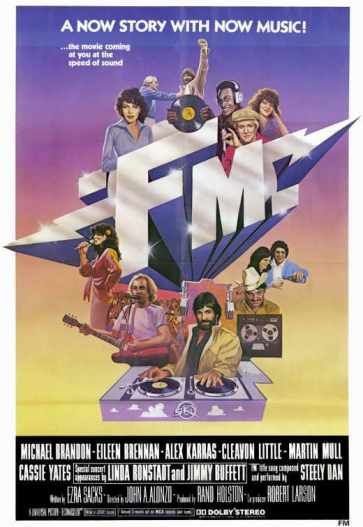
fm movie poster
Back when I was a kid, one of my favorite records that I used to love taking out of the library — aside from The Beatles 1962-1966, which I did not yet own — was the soundtrack to a 1978 movie called FM.

It was an amazing double-album filled with huge rock hits of the last few years: Bob Seger’s “Night Moves”, Steve Miller’s “Fly Like an Eagle”, The Eagles’ “Life in the Fast Lane”, Boz Scaggs’ “Lido Shuffle”, Boston’s “More than a Feeling”, and more…and of course Steely Dan’s classic theme song.  Pretty much a perfect cross-section of what would become the classic rock genre in future radio programming.  [It’s still available on CD at this time, by the way, and highly recommended.]

I don’t remember the movie ever playing anywhere close at the time of its release (April 1978), but then again, I was only seven at the time.  The soundtrack was good enough for me.  Still, it would be another few years before I finally saw it when it was shown on one of the local independent TV channels a few years later.  I enjoyed it, even if some of the more mature issues (like Eric Swan’s sexual encounters or Mother’s consistently-baked persona) went right over my head.  The short version of the plot is that Q-Sky, an LA-based rock station with committed fans but not much profit, is being threatened by upper management to play more commercials and less music to make more money.  The stalwart deejays (your classic tropes here: the smooth-talking overnight guy, the ex-hippie still living in the previous decade, the young and spunky morning host, the cute and friendly girl everyone loves, the popular prima donna, and so on) decide to go against upper management to keep the station alive and rockin’ at whatever cost…even if it means going on strike.

[There are definitely shades of WKRP in Cincinnati here, but please note that the show was actually in pre-production talks when this movie came out; they’re not connected to each other in any way.]

It wasn’t until I read Richard Neer’s 2001 book FM: The Rise and Fall of Rock Radio (also highly recommended) that I renewed my interest in the film.  It took me another number of years to finally find a dvd copy.  Years older and more knowledgeable about the way radio works, I’d discovered that the movie, for all it’s worth, was actually quite accurate in its portrayal of a radio station’s ups and downs during that time.

FM rock radio was in fact becoming the preferred choice for younger listeners by 1978, bypassing AM radio’s previous popularity — thus the riff ‘no static at all’ in the theme song.  It was also the zenith of rock radio to that point, with numerous bands releasing platinum and gold selling albums that are still highly regarded to this day.  At the same time, however, the financial woes of running a popular radio station had started taking its toll on the programming.  It was becoming harder and harder to be a free-form station where the deejay could play anything they wanted, when the business itself needed to make a profit to stay alive.  FM was in fact a spot-on commentary of this, even when it veered into the occasional Hollywood movie silliness.

Running a radio station nowadays is still just as hard as it’s ever been.  The issue is that it’s not built to be a moneymaker; it’s built to be a community service.  It provides free entertainment and information to its listeners; its money is made from its advertising or donations and fundraising events.  Most owners and station managers try to keep the moneymaking part of the business as unobtrusive as they can.

But that’s another post altogether.  I’m just here to talk about one of my favorite movies and soundtracks!

Recent Purchases, March Edition Part 2

Here’s another huge blog entry featuring some truly excellent tunage from an excellent month of releases.  Enjoy!

The Naked and Famous, A Still Heart, released 9 March. Another ‘unplugged’ album, and it’s a lovely one, with a mix of old favorite tracks from the band mixed with some excellent new ones, including a cover of Massive Attack’s “Teardrop”.

David Byrne, American Utopia, released 9 March. The always twitchy, always worldly Byrne treats us to another great album of the odd alt-pop he does so well.

Embrace, Love Is a Basic Need, released 9 March. I love this new record of theirs. It’s tender, it’s beautiful, and it’s got a hell of a lot of heart to it. One of their best records.

The Neighbourhood, The Neighbourhood, released 9 March. Proving they’re much more than just a one-hit-wonder with “Sweater Weather”, this band continues to release fascinating and slightly weird music worth checking out.

Editors, Violence, released 9 March. One of my favorite bands of the last decade or so, their new album isn’t as dark as the previous one, but it’s just as tense.

The Decemberists, I’ll Be Your Girl, released 16 March. A slight change of sound and mood for this Portland band, finally embracing their 80s post-punk influences. Very unexpected sounds, but they pull it off beautifully.

Meshell Ndegeocello, Ventriloquism, released 16 March. Cover albums don’t always work as well as we wish they would, but this one is absolutely stunning, covering 80s and 90s R&B hits from Prince, TLC, Funkadelic, Al B Sure, Janet, and more. One of my favorite albums of the month, hands down.

Preoccupations, New Material, released 23 March. After changing their name to a much less controversial one (they were formerly known as Viet Cong and released one album under that name), they’ve only gotten better and better. Their new record has a distinctly late-80s-college-radio sound (this particular video even looks like it would have been right at home on 120 Minutes back in the day) that I love so much.

Failure, In the Future EP, released 30 March. Failure returns with a new project, a science fictional-themed album that will be released as a handful of EPs (and will be released as a full album later on). Looking forward to more from this amazing band.

*

Coming Soon: April releases!

Recent Purchases, March Edition, Part 1

Another month almost near the end! Here’s the best of what was purchased over the first couple of weeks of this month, most of which I’m still listening to quite heavily. I say ‘purchased’ and not released, because these all had a drop date of the 2nd, and I had to keep an eye on my bank account!

The Breeders, All Nerve, released 2 March. A welcome return to the original Last Splash-era Breeders, with classic chunky riffs, noisy production, and the always off-kilter lyrics of Kim Deal. This one’s definitely going to be a summer listen for me.

Moby, Everything Was Fine, and Nothing Hurt, released 2 March. This one’s quite similar to his classic Play album from 1999, mixing twitchy upbeat songs with quiet mood pieces. There’s even a hint of trip-hop in there as well.

Lucy Dacus, Historian, released 2 March. She reminds me of Beth Orton in a way; not just a singer/songwriter but a sound sculptor. This album starts out soft and sedate but it features a lot of unexpected — and sometimes loud — turns, which keeps me coming back to it.

Moaning, Moaning, released 2 March. Apparently taking a page or three from Red Lorry Yellow Lorry, this Sub Pop band comes straight out of 1985 college radio and doesn’t give up with its walls of guitar and reverb. Which of course means this album is tailored just for me!

Lucius, Nudes, released 2 March. The first of a few ‘unplugged’ albums that show up this month, and it amazes me how well Lucius translates to alt-folk in the process. Especially the new track “Woman”, which is simply stunning with its dual-lead harmonies.

Buffalo Tom, Quiet and Peace, released 2 March. The Boston boys are back with another great record of brash alt-rock and excellent songwriting. There’s even a hint of Springsteen influence on this album, but I’m not complaining.

Tracey Thorn, Record, released 2 March. The vocal half of Everything But the Girl releases her first solo album in six years, and it’s a welcome return.

Andrew WK, You’re Not Alone, released 2 March. The professor of All Things Party releases an album that screams EPIC, but also talks honestly about life. Meat Loaf-esque hard rock bombast (but without the ten-minute operettas, thankfully) shares the same space as spoken-word interludes on being the best you can be at whatever you aim for. Noisy and uplifting, just how AWK wants your life to be lived.

*

Up Next: The rest of the month!

Perfect Albums Meme

Name an album, in any genre, that you think is 100% perfect – where you don’t skip 1 track. – @MOBOAwards

Of course I fell prey to this meme.  Here’s an obviously partial list:

The La’s, The La’s — Singer/leader Lee Mavers might think this masterpiece of his is incomplete and nowhere near what he was hearing in his head, but to me it’s a perfect album.  A mix of the blossoming alternative rock sound of the late 80s-early 90s, Liverpudlian guitar folk, and just a pinch of psychedelia for flavor, and it became an album that I will always think of as my favorite albums of the 90s, tied with…

Failure, Fantastic Planet — On a completely different plane of existence, it’s an incredible record filled with amazing songwriting and production.  It’s loud, it’s devastating, and it leaves me breathless every time I listen to it.

The Beatles, Revolver — Of course, I could list almost any other Beatles release here, but their 1966 album remains my favorite of theirs because it’s the moment where they changed from lovable mop-tops writing songs about love to adults writing about life.  Just after their folky Rubber Soul and just before their psychedelic Sgt Pepper.

Global Communication, 76:14 — If you need to own just one ambient album, let it be this one.  It’s a lovely album to get lost in and let your mind wander.  Where a lot of ambient instrumental albums can sometimes meander into navel-gazing boredom, this album keeps your attention all the way through.

Massive Attack, Mezzanine — “Teardrop” is right up there as one of my favorite songs of all time, and the album it’s from is equally excellent.  A great example of trip-hop moodiness and clever sonic creativity — especially with this album, which uses quiet and empty spaces as part of its soundscape.

Depeche Mode, Violator — Another album that signifies a band’s change.  This is where they went from their classic synth-and-sample sound they’d been known for, to a full-band sound complete with guitar.  Martin Gore’s songwriting evolved at amazing speed here; “Enjoy the Silence” remains one of his crowning achievements to this day.

Beck, Sea Change — Before this album, he’d been known as that “Loser” guy who wrote weird and goofy Mad-Lib-style lyrics with the occasional foray into odd but listenable folk rock, but this album was where he proved just how serious of an artist he really is.  It’s haunting, sometimes heartbreaking, and extremely personal, but it’s also an absolutely gorgeous album.

UNKLE, Psyence Fiction — A very fitting title for this record, it’s a mix of hip-hop, trip-hop, alternative rock, rap, and more, all with a science fictional subtext.  James Lavelle has always been an amazing musician/producer who creates chilly and cavernous soundscapes, and this is a perfect example of it.

Indigo Girls, Indigo Girls — Ever have one of those albums where you kinda like a few songs on it, then once you finally sit down and listen to it all the way through and realize just how freaking amazing it is?  Amy Ray and Emily Saliers are brilliant songwriters, but they’re also brilliant at crafting a perfect vocal duet.

And one more I forgot to mention that I thought of today:

Tears for Fears, Songs from the Big Chair — It’s their most famous album (I still hear “Head Over Heels” on the radio to this day), but it’s also one of my favorite albums of the 80s.  Poppy, jazzy, and even a little experimental, every single one of its tracks has a certain amazing quality to it.  [Listen, for example, to the Gershwin-esque “The Working Hour” with its slow build and blistering sax solos.]

*

I could of course come up with so many more albums to add to this list, but I’ll hold myself back.  For now!

Twenty Years On: March 1998 in Review

March is right about when the doldrums of first quarter taper off, the post-Christmas sales of older titles have quieted down, and more exciting new releases start popping up.  Some of my favorite albums of the year surfaced around this time, albums that remained on heavy rotation for quite a few years afterwards.  Here are a few for you to enjoy.

Madonna, Ray of Light, released 3 March. I’ve been a passive fan of Madonna since her Like a Virgin days (which goes to show how old I am), and interestingly her albums always seesawed between phenomenal and lackluster. I consider this particular album one of her crowning achievements; it beautifully and seamlessly blends her signature dance sound and the brilliant electronica of producer William Orbit. It’s an amazing album from start to finish.

Fastball, All the Pain Money Can Buy released 10 March. Yes, it’s that song, their one-hit wonder (and there were many in 1998), but the rest of the album is actually quite a solid one worth checking out, with equally hooky riffs.

Morcheeba, Big Calm, released 16 March. One of many rock/electronica hybrid bands making the scene at the time, Morcheeba could be alternately loud and chunky or soft and sexy, sometimes within the span of a few tracks on their albums.

Cornelius, Fantasma, released 24 March. Keigo Oyamada has been called “the Japanese Beck” by certain critics, and they’re not wrong. Adventurous, experimental, weird, and often amusing, his work as Cornelius is a feast for the ears.

Semisonic, Feeling Strangely Fine, released 24 March. This band could have ended up a one-hit wonder with “Closing Time”, if it wasn’t for singer Dan Wilson’s brilliant songwriting, which kept the band in the spotlight and has carried his post-Semisonic career to achieving numerous award-winning hits. The entire album is catchy as hell and a lot of fun to listen to.

Superdrag, Head Trip in Every Key, released 24 March. After their snotty, punky mega-hit “Sucked Out” from 1996’s Regretfully Yours, this trio was bound and determined not to be pigeonholed into being another snotty-punk clone, and released a phenomenal album…which, alas, the label hated and proceeded to drop them unceremoniously. Surprisingly mature, often Beatlesque, and full of lovely melodies and introspective lyrics, Head Trip actually proved that they were a strong band, carrying them well into the early 00s and beyond. Highly recommended for your collection.

Sully, I Have Much to Report, released 24 March. An obscure Canadian band from Ottawa, this band nonetheless managed to pop up in the background in numerous shows and movies in the mid-90s. I love this album purely for its murky Cocteau Twins-meets-Sneaker Pimps ambience.

God Lives Underwater, Life in the So-Called Space Age, released 24 March. GLU’s second album is a change from the aggro-electronics of their first album, and in effect it sounds darker and more experimental. It’s a great album for headphones and long writing sessions, though! One of my favorites from this year, it got a hell of a lot of play down in the Belfry for a few years.

Scott Weiland, 12 Bar Blues, released 31 March. Scott’s debut solo album is quite the mix, alternating between weird and unstable, and heartfelt and beautiful. It features a few older tracks (“Lady Your Roof Brings Me Down” is from the Great Expectations soundtrack from a few months earlier, and “Mockingbird Girl” is a rerecording of the song he contributed to the 1995 Tank Girl soundtrack) alongside some fantastic new ones.

Pulp, This Is Hardcore, released 31 March. Jarvis Cocker & Co follow up their brilliant Different Class album with a decidedly darker and sinister outing about the more questionable side of life. This isn’t about the have-nots, it’s about the don’t-give-a-shits.

Harvey Danger, Where Have All the Merrymakers Gone, released 31 March. Another band that sadly became a one-hit wonder, despite multiple albums and excellent songwriting. A fun and exceptionally nerdy band, their entire discography is well worth checking out.

*

Next Up: April 1998!

Recent Purchases, February 2018 Edition

It’s been a busy couple of weeks here, what with me releasing a new book, catching up on personal things, and preparing for FOGcon, I almost forgot to continue with the Recent Purchases post!  Thankfully February is a short month and I don’t have to split it up into two posts, so I can catch up quickly.

Hope you enjoy!

GoGo Penguin, A Humdrum Star, released 9 February. I don’t listen to jazz nearly as much as I used to, but this one was suggested by AllMusic and I have to say I’m glad they did, because this album is FREAKING AMAZING. They’re your basic piano-bass-drums trio, but their music is so energetic and unique that it sounds so much bigger. Highly recommended.

Franz Ferdinand, Always Ascending, released 9 February. These poppy weirdos have returned with yet another irresistibly catchy album full of quirky alt-pop gems. As always, it’s a fun listen from beginning to end.

The Wombats, Beautiful People Will Ruin Your Life, released 9 February. One of my favorite album names of 2018 so far, and another fun listen. This band somehow manages to write songs that sound gleefully happy, even when the lyrics aren’t, and I love them for it.

Fischerspooner, Sir, released 16 February. I’d almost completely forgotten about this band — I own 2003’s #1 album, but missed out on all their follow-ups — but this one jumped out at me and wouldn’t let go. Alternately sexy and weird, and that’s exactly how they want it.

Superchunk, What a Time to Be Alive, released 16 February. My manager at the record store loved this band back in my HMV days, but I never quite latched onto them. Thankfully their latest has fixed that ghastly mistake! Good punky fun.

FiFi Rong, Awake EP, released 23 February. Another groovy, trip-hoppy EP from one of my favorite internet finds.

Our Lady Peace, Somethingness, released 23 February. This crowd-funded release finally gets a wide release. There’s an energy on this album that’s reminiscent to their late 90s-early 00s sound that balances out their softer side that they’ve been mostly using on their later releases.

*

Coming Soon: March 2018, which so far seems to want to bankrupt me with its awesomeness!

Thirty Years On: More March 1988

Welcome to another edition of Thirty Years On!  This one finishes up March 1988 with a mix of many differing styles and sounds. and ending with a classic that remains influential to this day.

Camouflage, Voices & Images, released 4 March. By 1988 there were quite a few synth-centric bands out there with more than just a passing resemblance to Depeche Mode. But Camouflage — who came from the birthplace of dark synthpop, Germany — made a name for themselves by writing gorgeous, catchy melodies and often uplifting lyrics. Their debut is worth checking out, especially for the lovely opener, “That Smiling Face”.

The Beatles, Past Masters Vols 1 & 2, released 7 March. These two volumes are important in that it completed the campaign to release the entire Beatles discography on CD, which had started in 1987. Collecting all the non-album tracks from singles, EPs and elsewhere, it contains an amazing number of their hits that we all know and love.

Love and Rockets, “No New Tale to Tell” single, released 8 March. A surprisingly late UK release coming nearly six months after their psychedelic folk-tinged Earth Sun Moon album (it was released as a single in the US much closer to its release date), it’s a classic alt-pop track from the trio that remains a fan favorite.

The Mighty Lemon Drops, World Without End, released 8 March. This British power-pop band was a critical favorite back in 1986 to the point that they even had a following here in the States, thanks to their signing to Sire (thank you, Seymour Stein!). Their second album is more electric than their quieter, dream-poppier debut, but their songs are still infectiously catchy.

Morrissey, Viva Hate, released 14 March. Moz’s post-Smiths debut remains one of his strongest albums, working directly with producer Stephen Street and Vini Reilly from The Durutti Column. It’s very similar to The Queen Is Dead in terms of songwriting, though with the moodier feel of Strangeways Here We Come.  It’s dark, at times angry and other times wistful…just as we’ve come to expect from Morrissey.

The Smithereens, Green Thoughts, released 16 March. The Smithereens’ second album after 1986’s fantastic Especially for You continues their signature sound of drop-tuned, hard-edged bluesy rock. Their sound is heavier and louder here, and would continue that way to 1989’s 11.

Throwing Muses, House Tornado, released 21 March. One of two amazing releases this day from the classic 4AD label. It sadly was eclipsed by the below release, but it’s still a stunner. It’s a perfect example of the disparate writing styles of Kristin Hersh (angular and full of off-kilter imagery) and Tanya Donelly (poppier and dreamlike)…and how easily they can play off each other.

Pixies, Surfer Rosa, released 21 March. The second of two 4AD releases on this day, this one stunned everyone, from critics to fans alike. Their strange and unique sound was crafted into a monster by producer Steve Albini, who pushed the power of their music to the extreme. It sounds like everyone’s levels are pushed almost into the red, with Dave Lovering’s drums just as thunderous as Black Francis’ howls and screams, Kim Deal’s insistent bass and Joey Santiago’s wailing guitar.

*

Coming soon: April 1988!

Twenty Years On: February 1998 in Review

Welcome to another edition of Twenty Years On!  It’s February 1998, and I’ve started to take it upon myself to order imported albums for my store that I think will sell.  I’m reading all the British music magazines and reading the reviews, and for the most part I do a pretty good job.  Though I may also order a few imports for my own purchase…

Ultrasound, “Best Wishes” single, released 1 February. The major label (Nude UK) debut for this psychedelic Britpop band was an unexpectedly calm track and a one-eighty from their previous small label (Fierce Panda) single, the raucous “Same Band”. A piano-only version of this would later show up as a hidden track on their first album.

Primal Scream, “If They Move, Kill ‘Em” single, released 1 February. After the blissed-out Screamadelica and Stones-y Give Out But Don’t Give Up, PS would return with something equally unexpected: jazzy dub electronica, with 1997’s Vanishing Point. Critics loved it, and fans, once they got used to it, called it a brilliant success.

Catatonia, International Velvet, released 2 February. The Welsh band’s second album might not have made as big a splash as they’d hoped in the UK, but they certainly knew how to write catchy and fun alt-pop singles filled with brightness and humor.

Ian Brown, Unfinished Monkey Business, released 2 February. The former lead singer for the Stone Roses released his first solo album nearly four years after the Roses’ last one, and it’s full of oddities as well as catchy riffs. It’s missing the sunshine-psych sound of his former band (and definitely sounds like demos in places), but it also shows that he’s a strong songwriter lyrically and musically.

Pearl Jam, Yield, released 3 February. The wildly popular Seattle band returned to the airwaves with a classic album that channels both their Ten/Vs sound as well as the angular and punkish No Code. They also returned with their first official video since 1991’s “Jeremy”, co-directed by Todd McFarlane, then known as the creator of the Spawn comic book.

Roni Size/Reprazent, “Brown Paper Bag” single, released 10 February. Taken from 1997’s New Forms album, this fantastic track is a perfect example of the drum & bass sub-genre that popped up around that time. Size and his group were one of the best of their style, seamlessly mixing electronic dance and smooth jazz.

Curve, Come Clean, released 16 February. The group’s third album came nearly five years after their previous one (during which time they’d dissolved, done some solo work, and regrouped two years later and released a few rare singles).  It contains the signature guitar-driven heaviness but with a harder, more acidic edge.

Loreena McKennitt, “The Mummers’ Dance” single, released 17 February. McKennitt was part of the new-age/folk/Celtic wave of the mid-90s (thank you, Riverdance) and had a very strong following, enough to release a remixed version of a track from 1997’s The Book of Secrets album. This version would get significant airplay on many alternative stations around this time.

theaudience, theaudience, released 23 February. An amazing British power-pop band that really should have been a hell of a lot more popular than they ended up being. The entire album is filled with catchy riffs, smart and clever lyrics, and sung by the wonderful Sophie Ellis-Bextor. Alas, they were not only a band that suffered from the Universal/PolyGram merger (a sampler EP for the US was put together but disappeared soon after), their guitarist and co-songwriter quit the band soon after, breaking them up. Ellis-Bextor, thankfully, went on to become a popular solo singer in her own right just a year or so later. Highly suggested to add to your collection if you happen to find it.

Craig Armstrong, The Space Between Us, released 24 February. Armstrong is more known for film score composing (including numerous Baz Luhrmann movies such as Romeo & Juliet, Moulin Rouge and The Great Gatsby), but he’s also released a handful of gorgeous albums full of rich ambiance.  His work is perfect for chilling out — and also perfect for background music during writing sessions!

*

Next Up: March 1998!

[Note: I know, I know…I skipped Neutral Milk Hotel’s In an Aeroplane Over the Sea from 10 February. While I understand and appreciate its ridiculously huge cult status, I’ll admit I’m not that much of a fan and decided not to list it here.]

Thirty Years On: March 1988 Part 1

March 1988!  I always think of March as being one of the longest months of the year back when I was in school, because that was the only month that didn’t have a holiday or a break.  It was when our teachers would assign the term paper or the class project that we’d have to finish around spring break in April.  On the plus side, it was also the time the weather started clearing up a bit.  A few lingering snowfalls, but it would eventually start getting warmer, and the roads would finally start to clear.

Here’s a handful of albums that arrived sometime in March.

Stump, A Fierce Pancake. I was drawn to this Irish band simply for its utter daftness; lyrics filled with puns and odd references, strange samples, guitar riffs deliberately played to sound off-key (see “Buffalo”, which showed up on the US version of this album), and a look that made you think they weren’t the actual band, but the guys at the bar coming to heckle them.

Big Pig, Bonk. An Australian collective with heavy percussion, they had a minor hit in the US with “Breakaway” (which would get a second life in 1989 as the opening credits song for Bill & Ted’s Excellent Adventure), they had a much bigger following back home and in the UK, thanks to their unique sound that mixed drums, blues and funk.

The Mission UK, Children. Wayne Hussey and Craig Adams had parted ways with their previous band (The Sisters of Mercy) and created their style by fusing goth and spaghetti western (similar to other bands of the time like Fields of the Nephilim), and they finally hit their stride with their second album. “Tower of Strength” remains a fan favorite.

REM, “Finest Worksong” single. The last of three singles from their stellar Document album from 1987 and its opening track, it was a rare single of theirs that would get a remix, complete with a horn section. It would also be their next-to-last release on IRS Records, moving to Warner Bros later that year and onto much larger success.

Shriekback, Go Bang!. The alt-funksters who had quite the cult following in the UK had been pressured by their label to come up with a hit, and provided a much dancier, more commercial sound with this album. It’s not their strongest, but it’s definitely catchy.  [Check out Wayne Casey, he of KC and the Sunshine Band, checking out the crowd in the above video!]

Peter Murphy, Love Hysteria. Murphy’s second solo album is a gorgeous classic with lush, complex compositions that would become his stock in trade for future releases. It’s an album for listening and paying attention to, especially with headphones. Highly suggested to add to your collection.

The Jesus & Mary Chain, “Sidewalking” single. A new track to supplement their upcoming b-sides and rarities album Barbed Wire Kisses, this hinted at a much tighter band, turning down the reverb and the feedback creating a heavier, groovier sound that would bring them an even wider audience.

Felt, The Pictorial Jackson Review. A band that defined quiet jangle-pop in the 80s, their eighth album was an interesting mix of styles, with the first side of the album featuring singer Lawrence’s signature meandering sound, and the flip side featuring an amazing jazz piano journey played by keyboardist Martin Duffy (who would go on to join Primal Scream the next year).

Coming soon:  More March 1988!