Intense walls of shredded guitar noise? Check.
So much reverb you could drown in it? Check.
Unconventional time signatures? Check.
Otherworldly feminine vocals? Check.
Dream pop melodies for days? Check.
Pretty much everything that makes Jonc a blissfully happy listener? Check.
Pinkshinyultrablast comes from St Petersburg, Russia, and they’re absolutely amazing.
May 1988: A good portion of my closest friends are graduating quite shortly, and will be taking off in various directions for their college careers. Thus starts the era of me being a moody bastard for about six years. Meanwhile, after about five years of recording songs off the radio and creating my own proto-mixtapes, I finally decide it’s time for me to create my own mixes straight from my own growing collection. I call them ‘compilations’ instead of ‘mixtapes’ because it sounds more professional, considering how detailed I get in creating them. Thirty years later I’m still making them, digitally.
Wire, A Bell Is a Cup Until It Is Struck, released ?? May. The second album in their ‘beat combo’ era, the band moves closer to their eventual electronic experimentation, using samples, loops, and treated instruments. I played the hell out of this album for a good couple of years after it came out.
Colin Newman, It Seems, released ?? May. In tandem with the above, Wire co-lead singer Newman dropped an even more electronic and experimental album. While the Wire album is more rock oriented, this one’s for sitting back and listening.
Heavenly Bodies, Celestial, released ?? May. A somewhat obscure album featuring vocalist and 4AD friend Caroline Seaman (who would pop up on a few This Mortal Coil albums) and a few ex-Dead Can Dance members, it’s a proto-darkwave album with a moody groove to it. “Rains On Me” got some serious airplay on a lot of the college stations when it came out.
Red Lorry Yellow Lorry, Nothing Wrong, released ?? May. The noise-punks from Leeds released an excellent album of sludgy, growling alt-rock that might not have been to everyone’s tastes, but those who did like it (like me) absolutely loved it.
Living Colour, Vivid, released 3 May. Loud, abrasive, political, funky, humorous, and absolutely amazing. Lots has already been said about this album, and it’s all true. I got to see these guys at UMass Amherst in 1989 (it was part of MTV’s college campus tour, with the Godfathers opening up), and they put on one hell of a great show.
Depeche Mode, “Little 15” single, released 16 May. The last single from 1987’s Music for the Masses. It’s also one of my favorite tracks from it due to its amazing dynamics, starting off quiet and delicate and ending up Wagnerian and bombastic. It’s one of those songs you need to hear in headphones to get the full power of it.
Fairground Attraction, The First of a Million Kisses, released 16 May. It took me years to finally buy this album, but I remember the above track getting played incessantly on WMDK and the other AOR stations in the area. A fun and irresistibly catchy tune. The rest of the album is great too!
Compilation: Stentorian Music, created 20 May. The first of many compilations was an ongoing experiment of a themed mix; this one featured songs from groups like The Sisters of Mercy, Love and Rockets, The Cure, and The Screaming Blue Messsiahs among others, and designed to be played loud. It was put on a 60 minute tape and it came out reasonably well, considering. Not bad for a first try.
Compilation: Preternatural Synthetics, created 20 May. Yeah, even then I knew I was getting a bit ridiculous with the titles, but it was just something for fun, after my titling the old radio mixtapes with corny ‘Love & Rock & Roll’ titles. This one was a 90-minute tape featuring all synth and/or electronic-sounding bands, such as Pet Shop Boys, New Order, Depeche Mode, and so on. It’s a perky mix, and rather enjoyable!
The Timelords, “Doctorin’ the Tardis” single, released 23 May. A ridiculous single from the KLF/Justified Ancients of MuMu/JAMMs/etc. gang. Mixing Gary Glitter’s “Rock & Roll Part 2” and the Doctor Who theme, it’s one of those earworms that the college crowd loved.
Camper Van Beethoven, Our Beloved Revolutionary Sweetheart, released 24 May. Another college rock band that went from indie (Pitch-a-Tent) to major (Virgin) in 1988, this record was indeed beloved by a quite a few fans, both old and new. I particularly loved this single, which also got a lot of play on the AOR stations.
Morrissey, “Everyday Is Like Sunday” single, released 31 May. Say what you will about his current nutjob shenanigans, his early post-Smiths records were fantastic. This second single from Viva Hate was another ‘borrowed’ single that popped up at the radio station I worked at. I soon fell in love with the gorgeous deep cut “Will Never Marry”, which would end up on quite a few of my future compilations.
The Sugarcubes, Life’s Too Good, released 31 May. This album was an instant hit for the college crowd, with its eclectic mix of often bizarre lyrics, infectious melodies and the balance of its two lead singers: the pixie-like Bjork and its weirdo horn player, Einar. Not to mention its dayglo album cover! Another band I got to see at UMass Amherst around that time.
It was a busy first part of the month, and the rest of it wasn’t half bad either! Here’s some more great recent tunes I’ve been spinning lately…
The Damned, Evil Spirits, released 13 April. Of course this band would release an album on Friday the 13th! And it’s a damn fine record, in my opinion very similar to their early 80s output. In fact, it kind of reminds me of The Black Album, one of my top faves of theirs.
Juliana Hatfield, Juliana Hatfield Sings Olivia Newton-John, released 13 April. JH provides an excellent tribute to one of her childhood heroes with perfect and solid covers. It’s funny how ingrained in my head all these songs are, as my sisters owned most of the 45s!
A Place to Bury Strangers, Pinned, released 13 April. A bit of a change in the band line-up makes them sound a bit like Slowdive vocally and a hell of a lot more like Joy Division musically. Their wall-of-noise production hasn’t changed, though, and that ties it all together in an aggressive post-punk way.
Manic Street Preachers, Resistance Is Futile, released 13 April. The Manics return with another solid album of post-Britpop rock. They’ve always been more of a UK phenomenon, never quite catching on here in the States, but they’ve always been a consistently fine band.
Jesus Jones, Passages, released 20 April. I know, right?? Their last album was ages ago, but they’ve returned (thanks to PledgeMusic) with a damn fine album of songs worth checking out. Heavy on the guitars and rocking grooves as always, they deliver just what you’ve been hoping to hear.
Kimbra, Primal Heart, released 20 April. A little odd, but always fascinating. A fun groovy little album to sit back and relax to.
Janelle Monáe, Dirty Computer, released 27 April. This album SO worth all the hype that’s been thrown at it. It feels like she’s rewritten Prince’s Dirty Mind, with all its funk grooves and uninhibited sexuality, but that’s definitely NOT a complaint. It really is an amazing album.
It’s a good thing I’ve been streaming these albums and downloading them a few at a time, because all these single major release dates are gonna bankrupt me. Lots of really fun albums at the start of the month, so we’ll have the rest of April featured in Thursday’s post!
Sloan, 12, released 6 April. A great band that’s been around since my college days, releasing a great album of alternative power-pop gems. Each band member wrote 3 songs each, and all twelve of them are solid.
MIEN, MIEN, released 6 April. This is one of those ‘I have no idea what I’m listening to but it’s amazing’ albums I often stumble upon. It’s like an unexpected mix of motorik, psych, goth, and Britpop, and it works. Extra points for making a spot-on Stan Brakhage homage for a video!
Unknown Mortal Orchestra, Sex & Food, released 6 April. UMO once again provides a wonderful album of lite funk, weird grooves and strange ideas. Sometimes they sound like Steely Dan (like with this track), other times they sound like badass grunge. You’re never quite sure where it’s going, but it’s a fun ride.
Eels, The Deconstruction, released 6 April. Mark Oliver Everett returns from a four-year hiatus with a mix of slightly weird yet irresistible tunes on love, loss, and a fresh lease on life. It kind of reminds me of Beck’s Morning Phase: intensely personal yet uplifting at the same time.
Wye Oak, The Louder I Call, the Faster It Runs, released 6 April. One of my top favorites this month. I’d heard of the band and had one of their older albums, but this one floored me upon first listen. Quirky and angular with melodies similar to Lamb, they’re just fantastic.
The Family Crest, The War, Act I, released 6 April. A local favorite (parts of the above video were filmed only a mile or two from our apartment!), they bring an amazing amount of energy to their music, whether it’s happy or sad. Definitely worth checking out.
I’m trying to remember when I first heard of this band, because I heard of them from multiple places at the same time. I remember seeing the advertisement for their debut album popping up in all the music magazines. I remember “Still in Hollywood” getting play on the early episodes of 120 Minutes (it’s the first song of the first episode I ever taped) and occasionally hearing it on the radio. I remember seeing a lot of positive reviews of it from both journalists and other musicians.
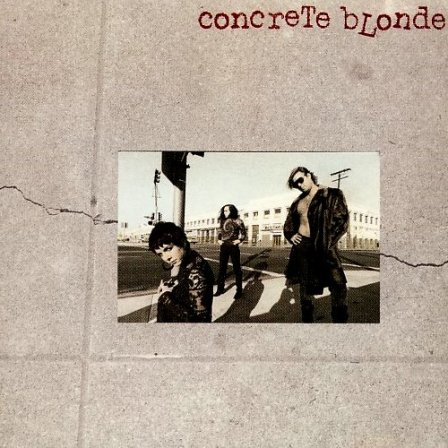
Concrete Blonde was one of those LA-based bands that flew way under the radar in the mid 80s…a critical and industry favorite but never quite hit the big time. They weren’t as punk as X, and they certainly weren’t glam like most of that scene’s metal bands, either. They were an eclectic mix of hard rock and blues, with a bit of country and folk thrown in. Led by bassist and singer Johnette Napolitano and guitarist James Mankey (he and his brother Earle had previously worked with fellow LA weirdos, Sparks), they had turned their previous band Dream 6 into something unique; it was the hard sound of the back streets of LA. It wasn’t about violence or degradation, though…it was about trying to survive, one day at a time.
This was one of those albums that I dubbed off one of my friends early on, but I ended up with my own copy soon after. I loved Johnette’s smoky voice with all its occasional cracks and growls — it was like hearing a more world-weary Ann Wilson — and I loved the ragged melodies. It was the sound of exhaustion, the sound of refusing to give up even when the world was bearing down on your shoulders.
And I especially loved their cover of George Harrison’s “Beware of Darkness”, which turned the song from a warning about the music industry to something more sinister.
At the same time, it could be beautifully delicate and tender, such as with “Make Me Cry”, the only accompaniment being Mankey’s acoustic guitar strumming and the occasional overdubbed harmony.
And it was all bracketed by the song “True” — a vocal and an instrumental version — that veered into a bluesy almost Springsteen-like ‘we’ve got to get out of here’ that sets the entire tone for the album.
This isn’t an album that I’d put on repeat or have stuck in my player for weeks on end; this is an album that I occasionally pull out to savor and enjoy. (I did, however, have it on repeat for about a month in the summer of 1989 when I was working for the DPW. It fit my then-current mood of wanting to escape my hometown quite nicely.) It does feel ever so slightly dated, mostly due to its production; the drums are all flat and there’s a distinct lack of low end, which is a pity considering Johnette really hammers that bass on this record. It’s still a wonderful album and a great example of mid-to-late 80s college rock.
Years later when I started writing Can’t Find My Way Home for the first time (this was around 2009, I believe), I found myself returning to this album as one of a handful of record that fit the mood of the story. And now that I’ve resurrected that writing project again, it’s returned to my playlist. It’s still one of my favorite albums after all this time.
*
You may of course remember their eventual rise to minor fame with 1990’s Bloodletting album and their radio hit “Joey”, or their cover of Leonard Cohen’s “Everybody Knows” for the film Pump Up the Volume from the same year, but they never quite achieved that same level of success after that. They put out a handful of albums between 1986 and 1994, and two more in 2002 and 2004, and they’re all worth checking out.
April 1998: I’d just broken in a new notebook to continue the longhand writing of The Phoenix Effect, the predecessor of the Bridgetown Trilogy, still writing it in the mornings before starting my Day Job at HMV. It was also around this time that I’d started ramping up the road trips in my trusty ’92 Cavalier, making weekly trips all around Massachusetts and New Hampshire for comics, books, and used cds and tapes.
Stabbing Westward, Darkest Days, released 7 April. Louder and angrier than their previous albums, yet more melodic and introspective. Saw these guys open up for Depeche Mode later in the year and they were by far one of the loudest bands I’d ever heard in my entire life.
Tones on Tail, Everything!, released 7 April. Okay, technically it’s missing 3 remixes (which were released as a promo EP called Something! the same day), but essentially this is the entire discography of the band that features Daniel Ash and Kevin Haskins (Bauhaus, Love & Rockets) and bassist Glenn Campling. More post-punk than Bauhaus and not quite as psychedelic as early LnR, but just as fantastic.
Massive Attack, Mezzanine, released 20 April. I just mentioned this one in a previous post about perfect albums, and this is indeed a perfect album. While previous albums Blue Lines and Protection were great trip-hop platters, this one blows them both away. The cover outside fits the sounds perfectly: dark and dangerous moods like the beetle, and delicate and spacious as the white background. And “Teardrop” is indeed one of the best 90s songs ever, and up there as one of my favorite songs of all time.
The Urge, Master of Styles, released 21 April. This band could easily be confused with metal-funk buddies 311, but they’re just as bright and fun. Nick Hexum from 311 pops up on their surprise hit from this album. They’d put out a few more albums over the years, though never quite achieve huge success.
Bernard Butler, People Move On, released 21 April. The ex-Suede guitarist released his solo debut, and it’s a hell of a great album. I know numerous Britpop aficionados who swear by this record. It didn’t quite click with me right away, but eventually I realized just how fantastic it really is. Definitely worth checking out.
Dave Matthews Band, Before These Crowded Streets, released 28 April. A much darker, maybe even a bit weirder album from the DMB gang, I seem to remember it dividing fans. Some (like me) loved it for its evolution away from his poppier jam-band style and more into straight ahead rock, while others wanted more of his pop-single sound. Regardless, it’s a great record.
Eve 6, Eve 6, released 28 April. This was a band that I found myself listening to far more often than I expected to, and it’s due to their flair for writing extremely catchy hooks and fun lyrics. A perfect example of the great readio-friendly alt-rock that was out there at the time.
Francis Dunnery, Let’s Go Do What Happens, released 28 April. I believe I first heard “My Own Reality” from a CMJ cd mix, but as soon as I got a promo of the album I was hooked. Dunnery’s music is quirky and introspective and amazingly catchy. His solo career has been relatively obscure and laid back, but he’s also a fantastic producer and backing musican, having worked with Ian Brown, Chris Difford, and Robert Plant.
VAST, Visual Audio Sensory Theater, released 28 April. One day the WEA rep handed me this album and said “listen to this, it definitely sounds like something in your wheelhouse.” How right they were! Jon Crosby’s one-man band is a tour de force of epic soundscapes, alternating between hard alt-rock, goth, and delicate balladry. And he’s still going strong 20 years later, putting out his own albums and EPs at his own website.
April 1988 will of course be the month when The Flying Bohemians were born. I’d floated the idea of starting a band of sorts sometime in March if I’m not mistaken, but it wasn’t until the following month that Chris and Nathane and I made any serious plans about it. It would be after their spring break trip, so the band would have its auspicious debut jam session on the 22nd of that year. Meanwhile, I’d started songwriting in earnest, pulling out lyrics old and new that could possibly used for our future sessions. I still had a hell of a lot to learn at that point, but I wasn’t going to let that stop me.
Meanwhile, here’s some of my favorite tunage that was getting play both on college and AOR radio, and on my turntable and tape deck.
Thomas Dolby, Aliens Ate My Buick, released ?? April. Third album from the geekiest synth musician out there. It wasn’t a big seller at all, but it was definitely a fun listen. It’s got some of his goofiest songs on there.
Bright Lights, Big City soundtrack, released ?? April. I’d picked up this soundtrack simply because it’s got an excellent line-up: MARRS, New Order, Depeche Mode, Prince, and Bryan Ferry, to name a few. The movie hasn’t aged well at all, nor has the book (though its unconventional use of telling the story entirely in second-person present tense POV did open my eyes quite a bit as a burgeoning writer at the time), but the soundtrack is still quite excellent.
The Wonder Stuff, “Give Give Give Me More More More” single, released ?? April. A ridiculously fun and witty British band from the Midlands, these guys were a listener’s favorite on college radio almost immediately upon arriving in the US. It would be another few months before their album would drop, but this was an excellent teaser.
Joe Jackson, Live 1980/86, released ?? April. This is an excellent live cross-section of his hits, including an absolutely amazing reinterpretation of his US hit “Steppin’ Out”, turned into a slow, elegiac jazz piece here. I remember ordering this from Columbia House back then just for that one track alone.
Graham Parker, The Mona Lisa’s Sister, released ?? April. WMDK and other AOR stations loved playing Parker’s stuff over the years, and this one got a lot of play as well. I used to love this particular track quite a bit.
In-D, “Virgin in-D Sky’s” single, released ?? April. Ah, Belgian techno…you never quite caught on here in the states, but I loved you just the same. Two club DJs from Antwerp got together and recorded three dance singles (and calling the style ‘New Beat’), and this was the one that somehow caught on with college radio.
John Adams (composer), Nixon in China, released 5 April. I remember this one coming out because it was such an unconventional subject for an opera. That, and Main Street Records down in Northampton had it set up on their endcap at the front of the store, so whenever we walked in, the first thing we’d see was the box set. It would be a few years before I’d finally give it a listen, and many more years until I finally saw it live (with Adams present, as he’s a Bay Area local!). It’s a strange one, sure, but it’s quite fascinating.
The Jesus & Mary Chain, Barbed Wire Kisses, released 18 April. The J&MC’s first collection of b-sides and rarities (they’d release quite a few over the course of their career), it’s an interesting mix that showcases just how far they’d come, from their early feedback screech to their sludgy alt-rock. [Also, the first of a few albums that were ‘borrowed’ from the radio station I worked at then…I mean, was an AM, low-watt, lite-pop, satellite-fed station ever going to play this? I highly doubted it.]
Erasure, The Innocents, released 18 April. I absolutely adored this album when it came out, and “Chains of Love” became one of my favorite tracks of the year to to that point. Another band given a lot of love and promotion by Sire (thanks again, Seymour Stein!), this was heavily played not just on 120 Minutes but during regular daytime MTV. Classic album worth having. [Also, another ‘borrowed’ album. Heh.]
Soul Asylum, Hang Time, released 25 April. One of many punk bands from Minneapolis, these guys were often seen as the slightly less inebriated little brothers of the Replacements, but they rocked just as hard and recorded solid albums right alongside them. They’d finally get their share of major fame in the mid-90s, but this album — their first for a major label — was the one that pricked up the ears of the college radio crowds.
X, Live at the Whisky a Go Go (On the Fabulous Sunset Strip), released 29 April. Another live album that got a lot of airplay on the college radio and AOR stations, it’s an excellent mix of all their classic underground favorites. This was actually the first X album I owned (again, thanks to Columbia House) and “Hungry Wolf” soon became one of my favorite tracks of theirs.
Here’s another huge blog entry featuring some truly excellent tunage from an excellent month of releases. Enjoy!
The Naked and Famous, A Still Heart, released 9 March. Another ‘unplugged’ album, and it’s a lovely one, with a mix of old favorite tracks from the band mixed with some excellent new ones, including a cover of Massive Attack’s “Teardrop”.
David Byrne, American Utopia, released 9 March. The always twitchy, always worldly Byrne treats us to another great album of the odd alt-pop he does so well.
Embrace, Love Is a Basic Need, released 9 March. I love this new record of theirs. It’s tender, it’s beautiful, and it’s got a hell of a lot of heart to it. One of their best records.
The Neighbourhood, The Neighbourhood, released 9 March. Proving they’re much more than just a one-hit-wonder with “Sweater Weather”, this band continues to release fascinating and slightly weird music worth checking out.
Editors, Violence, released 9 March. One of my favorite bands of the last decade or so, their new album isn’t as dark as the previous one, but it’s just as tense.
The Decemberists, I’ll Be Your Girl, released 16 March. A slight change of sound and mood for this Portland band, finally embracing their 80s post-punk influences. Very unexpected sounds, but they pull it off beautifully.
Meshell Ndegeocello, Ventriloquism, released 16 March. Cover albums don’t always work as well as we wish they would, but this one is absolutely stunning, covering 80s and 90s R&B hits from Prince, TLC, Funkadelic, Al B Sure, Janet, and more. One of my favorite albums of the month, hands down.
Preoccupations, New Material, released 23 March. After changing their name to a much less controversial one (they were formerly known as Viet Cong and released one album under that name), they’ve only gotten better and better. Their new record has a distinctly late-80s-college-radio sound (this particular video even looks like it would have been right at home on 120 Minutes back in the day) that I love so much.
Failure, In the Future EP, released 30 March. Failure returns with a new project, a science fictional-themed album that will be released as a handful of EPs (and will be released as a full album later on). Looking forward to more from this amazing band.
Another month almost near the end! Here’s the best of what was purchased over the first couple of weeks of this month, most of which I’m still listening to quite heavily. I say ‘purchased’ and not released, because these all had a drop date of the 2nd, and I had to keep an eye on my bank account!
The Breeders, All Nerve, released 2 March. A welcome return to the original Last Splash-era Breeders, with classic chunky riffs, noisy production, and the always off-kilter lyrics of Kim Deal. This one’s definitely going to be a summer listen for me.
Moby, Everything Was Fine, and Nothing Hurt, released 2 March. This one’s quite similar to his classic Play album from 1999, mixing twitchy upbeat songs with quiet mood pieces. There’s even a hint of trip-hop in there as well.
Lucy Dacus, Historian, released 2 March. She reminds me of Beth Orton in a way; not just a singer/songwriter but a sound sculptor. This album starts out soft and sedate but it features a lot of unexpected — and sometimes loud — turns, which keeps me coming back to it.
Moaning, Moaning, released 2 March. Apparently taking a page or three from Red Lorry Yellow Lorry, this Sub Pop band comes straight out of 1985 college radio and doesn’t give up with its walls of guitar and reverb. Which of course means this album is tailored just for me!
Lucius, Nudes, released 2 March. The first of a few ‘unplugged’ albums that show up this month, and it amazes me how well Lucius translates to alt-folk in the process. Especially the new track “Woman”, which is simply stunning with its dual-lead harmonies.
Buffalo Tom, Quiet and Peace, released 2 March. The Boston boys are back with another great record of brash alt-rock and excellent songwriting. There’s even a hint of Springsteen influence on this album, but I’m not complaining.
Tracey Thorn, Record, released 2 March. The vocal half of Everything But the Girl releases her first solo album in six years, and it’s a welcome return.
Andrew WK, You’re Not Alone, released 2 March. The professor of All Things Party releases an album that screams EPIC, but also talks honestly about life. Meat Loaf-esque hard rock bombast (but without the ten-minute operettas, thankfully) shares the same space as spoken-word interludes on being the best you can be at whatever you aim for. Noisy and uplifting, just how AWK wants your life to be lived.
March is right about when the doldrums of first quarter taper off, the post-Christmas sales of older titles have quieted down, and more exciting new releases start popping up. Some of my favorite albums of the year surfaced around this time, albums that remained on heavy rotation for quite a few years afterwards. Here are a few for you to enjoy.
Madonna, Ray of Light, released 3 March. I’ve been a passive fan of Madonna since her Like a Virgin days (which goes to show how old I am), and interestingly her albums always seesawed between phenomenal and lackluster. I consider this particular album one of her crowning achievements; it beautifully and seamlessly blends her signature dance sound and the brilliant electronica of producer William Orbit. It’s an amazing album from start to finish.
Fastball, All the Pain Money Can Buy released 10 March. Yes, it’s that song, their one-hit wonder (and there were many in 1998), but the rest of the album is actually quite a solid one worth checking out, with equally hooky riffs.
Morcheeba, Big Calm, released 16 March. One of many rock/electronica hybrid bands making the scene at the time, Morcheeba could be alternately loud and chunky or soft and sexy, sometimes within the span of a few tracks on their albums.
Cornelius, Fantasma, released 24 March. Keigo Oyamada has been called “the Japanese Beck” by certain critics, and they’re not wrong. Adventurous, experimental, weird, and often amusing, his work as Cornelius is a feast for the ears.
Semisonic, Feeling Strangely Fine, released 24 March. This band could have ended up a one-hit wonder with “Closing Time”, if it wasn’t for singer Dan Wilson’s brilliant songwriting, which kept the band in the spotlight and has carried his post-Semisonic career to achieving numerous award-winning hits. The entire album is catchy as hell and a lot of fun to listen to.
Superdrag, Head Trip in Every Key, released 24 March. After their snotty, punky mega-hit “Sucked Out” from 1996’s Regretfully Yours, this trio was bound and determined not to be pigeonholed into being another snotty-punk clone, and released a phenomenal album…which, alas, the label hated and proceeded to drop them unceremoniously. Surprisingly mature, often Beatlesque, and full of lovely melodies and introspective lyrics, Head Trip actually proved that they were a strong band, carrying them well into the early 00s and beyond. Highly recommended for your collection.
Sully, I Have Much to Report, released 24 March. An obscure Canadian band from Ottawa, this band nonetheless managed to pop up in the background in numerous shows and movies in the mid-90s. I love this album purely for its murky Cocteau Twins-meets-Sneaker Pimps ambience.
God Lives Underwater, Life in the So-Called Space Age, released 24 March. GLU’s second album is a change from the aggro-electronics of their first album, and in effect it sounds darker and more experimental. It’s a great album for headphones and long writing sessions, though! One of my favorites from this year, it got a hell of a lot of play down in the Belfry for a few years.
Scott Weiland, 12 Bar Blues, released 31 March. Scott’s debut solo album is quite the mix, alternating between weird and unstable, and heartfelt and beautiful. It features a few older tracks (“Lady Your Roof Brings Me Down” is from the Great Expectations soundtrack from a few months earlier, and “Mockingbird Girl” is a rerecording of the song he contributed to the 1995 Tank Girl soundtrack) alongside some fantastic new ones.
Pulp, This Is Hardcore, released 31 March. Jarvis Cocker & Co follow up their brilliant Different Class album with a decidedly darker and sinister outing about the more questionable side of life. This isn’t about the have-nots, it’s about the don’t-give-a-shits.
Harvey Danger, Where Have All the Merrymakers Gone, released 31 March. Another band that sadly became a one-hit wonder, despite multiple albums and excellent songwriting. A fun and exceptionally nerdy band, their entire discography is well worth checking out.