I’m currently reading Allan Kozinn and Adrian Sinclair’s The McCartney Legacy: Volume 1, 1969-1973 (and yes, I am planning on reading Volume 2, 1974-1980 when it comes out at the end of this year) and though it’s quite a long and heavy tome, it’s a rather easy read. Their aim was to write something similar to Mark Lewisohn’s Tune In. We fans may have heard the stories hundreds of times, but the unfolding of these historical moments is in an as it happens sort of way; we may know they’re coming, but they’re never revealed in an ‘and then This Famous Moment Happened!’ way.
I’m actually learning a lot in this book. There are moments I knew about, of course — the dissolution of The Beatles, McCartney’s severe dislike and distrust of Allen Klein, the snide back and forth between Paul and John, often via letters in music magazines, and so on — but I never really knew too much about the details of the post-Beatles lawsuits, why they’d happened and why Paul was so damned determined not to give up. Musically we see a lot of flailing, a lot of separate tracks glued together Abbey Road medley-style, and songs written for one project that end up elsewhere.
Paul is often seen as the most successful of the four ex-Beatles — or at least the most visible, given his penchant for rarely ever not working on music — but with this book, you really get a sense of how much desperate flailing went on during those early years. His first four albums may have been sellers but were not well liked by the critics at all. They were expecting More Flawless Beatle Magic, and he absolutely refused to go that route. A lot of the early Wings music is indeed meandering and homey. While that wasn’t what the critics wanted, it was what Paul needed at that point. It wouldn’t be until he lost two members of the original first lineup that he’d hit paydirt with Band On the Run and find his own solo style.
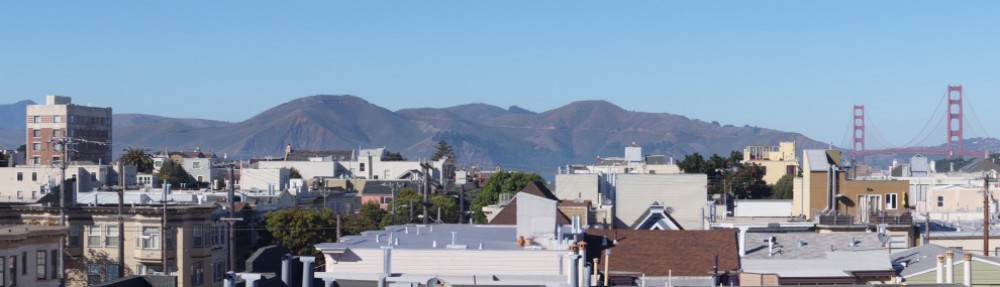
…but tomorrow we’ll be heading across The Bridge to Mill Valley to see The Verve Pipe! I’m really looking forward to this as they’ve been one of my favorite bands for ages, and Villains is one of my top favorite albums of the 90s. (And no, not just because of That Hit Song.)
I think the last time I saw them was in 1997 when they played in Boston with Tonic opening up (remember them as well?). They put on a great show then and I’ve heard their current tour is a lot of great fun too. They’ve mellowed out somewhat but Brian Vander Ark is still one of my favorite songwriters. I’m looking forward to this show!
Well, not too much other than catching up on revision work for Theadia and listening to Pere Ubu, a band I’d known about for quite some time but never owned anything by them for years. They’re like the American version of Wire: starting off deep in arty post-punk territory, sliding into ‘beat combo’ groove after an extended hiatus, thereafter putting out several oddball yet great albums and songs and even the occasional ‘wait, what…?’ cover. They’ve been around for decades (their first single dropped in late 1975!) and they dropped their latest just last year.
I really don’t know of any other fans of The Wolfgang Press, one of the earliest 4AD signings from their early 80s origins, but I was introduced to them via “Cut the Tree”, a gloomy dirge off the label’s seminal Lonely Is an Eyesore compilation, and I loved their bleak post-punk sound. They seemed darker and more avant-garde than Joy Division, less about driving beats and more about making one hell of a weird noise. Their evolution is a fascinating one, finally hinting at an unexpectedly funky sound with 1988’s Bird Wood Cage, which brought them to the amazing and groovy 1991 album Queer which remains one of my favorite albums of the early 90s.
They’d broken up after 1995’s peculiar yet interesting Funky Little Demons and little was said about them other than 2001’s Everything Is Beautiful, part of 4AD’s 90’s-00’s run of best-of mixes, and a 2020 Record Store Day EP called Unremembered Remembered featuring post-Demons demos for an abandoned follow-up. They’ve all had their one solo projects since then.
The new album, A 2nd Shape, drops on 27 September, and I am totally looking forward to it!
…I often think about this particular song by The Clockworks, which remains one of my top favorite songs of the last five years.
Why does this song remind me of the pandemic? Actually it’s the video.
There’s a day-end drone shot of the Bay Bridge here in San Francisco at around the 2:20 mark (and again at 3:05) that brings up the memory of my thirty-mile commute to and from Concord in the East Bay, and whenever I see it in this video, I wonder if my car is somewhere in that shot, heading westward into the city at the end of yet another hellish day. Even though the band released this track in late 2021, at least a year after I’d quit that particular job, the song perfectly encapsulates what that job had been doing to me over the last decade.
This was also around the time I’d been listening to KEXP almost religiously at this point, already an Amplifier (I still donate to them on a monthly basis!), and this track had gotten some major airplay, and I don’t blame them for putting it on heavy rotation as it’s still a hell of a banger. That station got me through a hell of a lot over the last five or so years.
It’s been over four years since I left that job in March 2020 (and I’m still glad I did), and a few years since the peak of that particular pandemic wave (and I’m still wearing a mask to work and still Covid-free) (knock on wood), so this song definitely emulates a feeling of weariness and uneasiness for me, reminding me that none of us really know what the hell was going on at the time, or how long it would last.
Oof. Sorry I don’t have much to say here today, as my day job schedule is kind of heavy on the back end. In the meantime, I’ve been revisiting my U2 collection lately and remembering how much I still enjoy them. I’ve always liked them from the beginning (I actually remember seeing the “I Will Follow” and “Gloria” videos on early MTV), but I didn’t really get into them until the 1984 album The Unforgettable Fire, specifically the title song, which remains one of my favorite early tracks of theirs.
No, not the John Lennon solo track (though I do quite like it, and definitely the cover of it that Sponge did back in ’95). I’m talking about isolated tracks. It’s something that pops up on my YouTube searches of Beatles-related things, and it’s always fun to listen to them. I’m not entirely sure what these posters use to separate the tracks, but I love that even a seasoned fan like myself will hear something new and amazing every time I play one.
For instance, this video of “Oh! Darling” features a vocals-only track that really pushes up Paul’s throat-shredded singing, as well as the slight slap-back echo they’d used for it to give it that 50s feel.
This video of “Helter Skelter” is interesting as well, including a section where you can distinctly hear the guitar going waaaay out of tune as the song progresses from all the hammering it’s getting.
…or this one of “I Want You (She’s So Heavy)” that reveals just how truly bluesy this song is.
…or just how goldang funky “Hey Bulldog” is.
There’s even video out there of songs from the rooftop concert, like “Dig a Pony”!
But this one is by far my favorite: the isolated strings and horns for “I Am the Walrus”. If anything, you should give this one a listen just to show how amazingly creative George Martin was as an arranger. The swoops and intricate phrases that you might not notice in the original are front ant center.
They’d gotten a bit of publicity a short time ago when they’d gotten inducted into the Songwriters Hall of Fame — and they definitely earned that spot and then some — and the band has been mentioned on social media off and on since then.
And it occurred to me that I haven’t sat down and properly listened to this band in ages! I’ve always been a fan of their years on IRS Records, having owned Document and Eponymous on cassette and dubbed the rest from my high school friends, and I think it’s fair to say that The Flying Bohemians (my ‘band’ of the time, heh) owes a huge debt to them as well.
Actually, I’ve been thinking lately that I haven’t done a deep dive on a lot of my favorite bands from the 80s in a long time — REM, The Church, Depeche Mode, The Cure, The Smiths, Wire, and so on — and it’s always tempting to do a blogging-along of the relistens, similar to what I’d done with the Beatles some years ago.
Is this another oh god he’s sliding back into the 80s again thing? Maybe not this time. Those were focused on years rather than bands…this time it would be focusing on discographies. And lord knows how much of a completist I am, heh.
Last month, Seal’s second album was rereleased as a remastered deluxe edition, and thirty years later it remains not only his best and most popular album, but it’s also one of my all-time favorite records of the nineties.
This was an album I bought in the final years of being a Columbia House member, and I’d picked it up more out of curiosity than anything. I still consider his single “Crazy” one of my top favorite songs of all time, and I felt this album was more to his style than the funkier r&b of his first record. It was released during an odd time in my life, right at the end of my stay in Boston and the start of my extended stay back in my old hometown, so I connect this with two things: my job at the movie theater in Somerville, and the long process of restarting my writing career. This was one of the many albums I listened to constantly while attempting to figure my life out.
Sure, everyone remembers the ubiquitous single “Kiss from a Rose”, but it also features the popular ballad “Don’t Cry” and the stunning “Prayer for the Dying”, all songs that got major airplay on pop radio and on MTV and VH1.
“Prayer for the Dying” was the track that initially sold me on this record, even though I hadn’t heard it until after “Kiss from a Rose”, which is interesting considering this was the album’s first single. Like “Crazy” it’s full of emotional turmoil and loss. Unlike that track, however, there is much less hope here. That’s not to say it’s a downer track, however; it’s a song about survival, and that makes all the difference.
The album cut “Dreaming in Metaphors” is a track that gets stuck in my head every now and again with its lopsided beats and swirling melody. Like “Prayer” it too is about turmoil, this time focusing on the frustrations of making life needlessly complicated.
“Don’t Cry” was the last single to drop from this album and it got a fair amount of play on VH1 during the winter of 1995. It’s a counterpoint to the above tracks, an uplifting song of hope during the darkest of times. [Side note: I haven’t seen this video in years, so imagine my surprise when watching it and realizing it was shot at the Palace of Fine Arts here in the city!]
Then of course there’s his most popular single, “Kiss from a Rose”, which didn’t just get played on pop radio, I believe Boston’s WFNX and WBCN gave it a few spins as well! It’s also from possibly my favorite Batman movie — yes, I know, but it’s the only one that doesn’t take itself too seriously and yet isn’t a complete dumpster fire either, and it’s got a banger soundtrack.
A and I went to see him live with the SF Symphony back in 2017 for the tour of his Standards album — singing songs like “My Funny Valentine” and “I’ve Got You Under My Skin” is a surprisingly perfect choice for him. While he did mostly songs from that record, he did pull up several hits from his past, including “Kiss from a Rose”, “Don’t Cry” and “Crazy”. He’s still got the pipes after all these years.
I highly recommend picking this one up. While it’s not as funky and unrestrained as his 1990 debut, it shows a singer already fully in charge of his voice and his style. It’s an amazing record, and the remaster sounds great.
I think it was around this time that I started running out of gas while writing The Balance of Light. [For those playing along, I’d stalled right about where Poe follows Denni and Amna up to Trisanda in Act 3. I knew how to end the book…I think I was just afraid of it this huge years-long project finally coming to an end and doing a crap job of it.] To clear my head I’d started working on the vampire novel more often.
Weirdly enough, I think I was just running out of things to listen to…? There’s this strange era between 2004 and 2007 where I’d lost interest in indie radio. It could be that I was stuck between the lingering effects of alternative metal on one end of the spectrum and indie folk that was a little too esoteric on the other, and neither were really resonating with me. That, and a lot of my favorite bands were in between albums so I wouldn’t hear from them for a while longer.
Danger Mouse & Jay-Z, The Grey Album, early April 2004. Looking at my mp3 collection, 2004 was the peak of the initial mash-up wave, and this one is bonkers fun: DM’s decision to take Jay-Z’s The Black Album and The Beatles’ white album and create something new could have been terrible but instead it’s surprisingly enjoyable and highly amusing. Allegedly both Jay-Z and Paul McCartney thought it was great!
Ambulance LTD, LP, 6 April 2004. This band sadly came and went too quickly, releasing only two EPs and a single album, but it’s all worth checking out. I played the hell out of this record in the Belfry at the time, especially the great opener “Yoga Means Union”.
tweaker, 2am wakeup call, 20 April 2004. Chris Vrenna’s second album remains one of my favorite albums of that year, and it got all sorts of play the entire summer. It features vocals from Robert Smith, Hamilton Leithauser and David Sylvian, and a hauntingly gorgeous instrumental track featuring Johnny Marr that I’ve embedded above. Highly recommended.
Prince, Musicology, 20 April 2004. In between all the funk-heavy NPG Music Club albums he’d dropped for the last couple of years, this was a surprise mainstream hit that got considerable airplay both with the title track and “Cinnamon Girl”. It felt like a record on par musically with Sign ‘o’ the Times for me.
The Beta Band, Heroes to Zeros, 4 May 2004. Their last record’s title may have hit a bit too close to home considering they were no longer indie critic darlings at the time, but that didn’t seem to bother them any with this oddball collection.
The Magnetic Fields, i, 4 May 2004. The fun thing about Stephin Merritt and his many projects is that you can never really take him all that seriously, even when he’s writing breakup songs. Between his basso profundo voice and his quirky and self-effacing lyrics, you can’t help but like him. “I Thought You Were My Boyfriend” was a college radio favorite.
Mission of Burma, ONoffON, 4 May 2004. Their first new album in multiple decades, three of the four original members come back with a loud and blistering record that successfully captures their chaotic post-punk sound that influenced so many others. The fascinating thing is that there’s also an element of quietness here as well, inspired by the members’ time in much calmer bands.
Secret Machines, Now Here Is Nowhere, 18 May 2004. This was another favorite of the year, and an album that got a ton of play during my writing sessions for its deep dive into hard rock tinged with eclectic prog and maybe even a bit of psychedelia. This one earned them a small but highly loyal fanbase that remains to this day and even spread to the side project School of Seven Bells. Highly recommended.
The Fall, 50,000 Fall Fans can’t Be Wrong: 39 Golden Greats, 8 June 2004. A near-perfect sampler of a band with a convoluted discography on several different labels and an always-shifting membership. It’s oddly missing songs from I Am Kurious Oranj however, the 1988 album that helped them gain considerably more popularity in indie circles.
My Chemical Romance, Three Cheers for Sweet Revenge, 8 June 2004. You either love this band or you hate them. For me, they were a band I disliked at first but heard “I’m Not Okay (I Promise)” and “Helena” so much on WHMP that they grew on me. Not quite goth, not quite alternative metal, not quite emo, but somewhere in between.
The Killers, Hot Fuss, 15 June 2004. I’ll be honest, I wasn’t the biggest fan of this band at first, and the breakthrough single “Somebody Told Me” just kind of bounced right off of me as too glam and too alt-rock-goes-disco for my tastes, but the more I heard the other singles the more I liked them, and finally bought it when I heard “All The Things That I’ve Done” which remains one of my favorite songs of theirs.
The Cure, The Cure, 29 June 2004. I’d mentioned this one earlier when I blogged about the band’s 2000s-era releases, and at the time I really wasn’t sure how I felt about it. I liked it, especially the darker-edged songs like “Lost” and “The End of the World”, but its sound was just so unlike them that it was a bit of a hard listen.