The other day I was going through the Mendaihu Universe Legacy Soundtrack list — the albums, mixtapes, and compilations with a direct link to my countless writing sessions for the Bridgetown Trilogy and its many preludes, revivals and offshoots — and I discovered that I could actually pinpoint when those sessions went from ‘when I could get to it’ and solidified into an almost-daily event for the next several years. It’s also the same timeframe when my music listening habits changed and expanded considerably.
It all boils down to when I stopped working longhand on The Phoenix Effect on 7 August 1998. Over the course of that spring and summer, I’d gotten into the habit of writing four or five longhand pages in the food court at the mall I worked at, then once I was at home I’d work on transcribing that work. The transcription started most likely that spring so I had a bit of catching up to do, but by that date, I was completely caught up. I’d even been revising as I went, which meant that the longhand version and the transcript version had some significant differences.
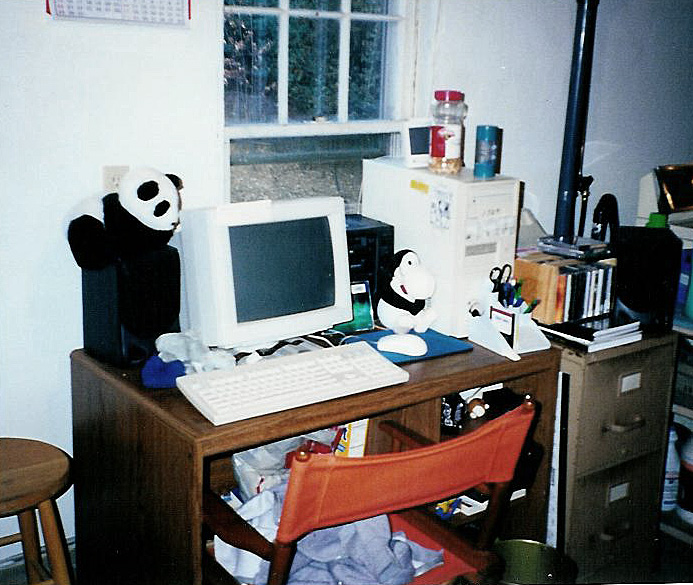
It made more sense to me to finish the novel on the PC, so for the next three weeks I headed downstairs to my basement writing nook every day to work on it. And considering I prefer writing with a soundtrack, the albums I listened to at the time were the ones getting significant repeat play during those sessions. Dishwalla’s And You Think You Know What Life’s About, Hooverphonic’s Blue Wonder Power Milk, Dubstar’s Goodbye, theaudience’s self-titled, Rasputina’s How We Quit the Forest, God Lives Underwater’s Life in the So-Called Space Age. And once the novel was complete, I started on the next round of revisions. With that came repeat listens of Mansun’s Six, Paul McCartney’s Rushes (under the moniker The Fireman), Baxter’s self-titled, Belle & Sebastian’s The Boy with the Arab Strap, UNKLE’s Psyence Fiction.
At the start of 1998, my work at the writing nook was scattershot, maybe two or three times a week. But by the end of that same year, I was down there almost every single night. Not that I completely gave up on longhand just yet, however… I was already planning out a working schedule in which I’d start the sequel to Phoenix in the food court before work while I revised Phoenix in the evening. That first sequel attempt was trunked six months later with another one attempted then stopped soon after, followed by an aborted rewrite of Phoenix. From there the dates do get a little hazy, but I would say that it was most likely the summer of 2000 that I tried one more time on the rewrite, and A Division of Souls was born.
The most important thing of all, though, was that I’d finally solidified a writing practice that I’ve stuck with ever since. I was down there in that basement nearly every single day now, even on the weekends after my road trips or other errands, working on something. There was a brief time of a few months in which it fell to the wayside in September 2000 when I started working second shift at Yankee Candle, but by November I’d switched to the morning shift. From then on until my moving out in March 2005, I’d be down there nearly every night, working on the Bridgetown Trilogy.
And considering the schedule, that also meant that by late autumn of 2000 I was making my weekly runs to Newbury Comics in downtown Amherst, picking up new releases every Wednesday after my comic book run at Hampshire Mall. And nearly all of these albums would get repeated play down there in the basement while I worked on the trilogy. My collection grew exponentially for the next five years because of that, and several of those titles became part of the MU Legacy Soundtrack list.
But yeah, it’s kind of neat to finally confirm that this longstanding writing-and-new-music habit I still have started in September of 1998.
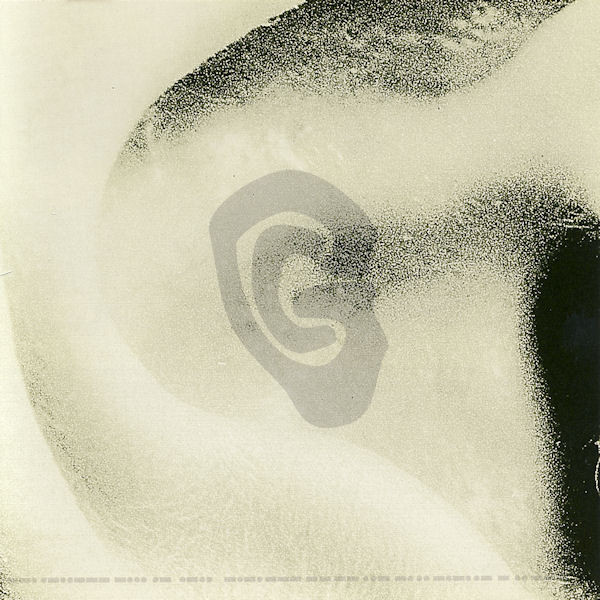
I was introduced to Global Communication in a very roundabout way. While I’m sure I saw the above record in the bins at the HMV I worked at, I never gave it a chance, at least not until late 1997 when I heard a deeply haunting track by Pulusha called “Isolation, Part 1”, found on the not-quite-holiday album Invocation that had intrigued me when it came out in October of 1997. After a bit of reading, I found out that Pulusha was a one-off project featuring Kirsty Hawkshaw — who I knew from Opus III in the early 90s — and Mark Pritchard, who was one half of Global Communication. This album had dropped in July of 1994, but had been so well-regarded that we continually stocked it in our electronic music section three years later.
I’ve listened to and loved all kinds of ambient music over the years — the experimental soundscapes of Brian Eno, the laid back cool of Orbital, the deep echoes of the early years of 4AD — but I’d never heard anything like this before. There are no real titles for the tracks; they are all known by their playing length instead, to avoid influencing what the listener might feel or imagine upon hearing it for the first time.
What caught my attention was the grandfather clock and the gentle rain of the second track, “14:31”.
You of course know that music was a huge influence on my early writing. Inspired by Miami Vice, I took music I loved and wrapped story ideas around them, and the Infamous War Novel was the first longform story I wrote that took those songs and shaped a full storyline around it. But I’d grown out of that style by the early 90s. Music was still there, though playing just a minor ‘soundtrack’ part instead. And a lot of what I was listening to at the time didn’t always fit with what I was writing, so I grew out of that style.
That is, until I listened to the above track in headphones one evening, and my imagination suddenly found itself in a dusty old mansion, sitting in a semi-dark study with cold wood panels, the only light coming from outside the one bay window, partially framed by the canopy of leaves outside, the sky a dirty light gray and the grass of the lawn a deep rich green, matching the dark trees outside. The room was a mix of forgotten papers and books, smelling of must and petrichor.
I don’t think I’d ever had that vivid of a mental image from a song in years.
This was right about the time I started working on The Phoenix Effect as well. This album immediately became part of its soundtrack, played whenever I worked on the more spiritual components of the story. I needed to be in that kind of mental space, that kind of ambient atmosphere, because that’s what it sounded like in my head. Otherworldly, spatial, the sound of moments you never notice until they sneak up on you. A soundtrack that could create not just the mental image of a forgotten part of a house deep in the country, but the loneliness of a spaceship far away from home.
These are but two tracks off a ten-track album that take you on an aural trip without actually telling you where you’re going. It leaves the destination — or just the trip itself — entirely up to your imagination.
One of the downsides to my day job is when I end up monitoring the self checkout machines. That job on its own isn’t that bad, because I’m totally fine with helping customers there. No, the issue is that it’s right next to the shared sinks and hand dryers just outside the bathrooms, and every single time someone uses those dryers, everything I hear ends up getting covered up by a half-minute of WHHHSSSSHSHHHHHHHHHHHHHHHHHHHHHH white noise. I can handle it if it happens every now and again, but when it’s going all day long, I start getting a bit twitchy.
I’ve mentioned before that I have APD. I’m definitely not hard of hearing; in fact I’ve also mentioned that I have weirdly sharp directional hearing (in which I can usually tell you almost exactly which direction a noise is coming from). The way I explain it to people is to picture yourself in a very noisy restaurant. Not only do I hear the music being played over the speakers, I hear the conversation at the table next to us, the sports bros cheering at someone’s score on the TV, other conversations elsewhere around us, all on top of you trying to have a conversation with me. I hear it all at once and all at the same volume, and I can’t always filter it to focus only on you. [You’ll often see me cupping an ear in your direction because of this.]
So when that damn hand dryer goes off, it basically blots out any other sounds that might be going on around me, whether it’s a customer asking a question, my manager calling me on the radio, the store phone ringing, or someone calling me on the intercom. I love my job, but I hate that damn hand dryer sometimes.
What can I do about it? Well, not much unfortunately. It’s less irritating and disrupting if I’m working the register, where the noises are more muted. Or if I happen to do be doing an errand on the floor or upstairs, I embrace the peace and quiet and let my brain rest for a while. And thankfully I’m not assigned the self checkouts all that often.
I have noticed that my APD has gotten a bit more irritating over the years, and I’m sure that’s because I’m just getting older and finding this amount of chaotic noise more irritating, maybe even overwhelming. Perhaps this is why I’ve loved listening to music so much over the course of my life: this is where I focus on one source of sound and little else. And because I’m focusing only on the music, it resonates with me more on an emotional and mental level that most people, I assume.
I can certainly try to focus on the voices and sounds that I need to focus on at any moment, but it can certainly be exhausting as hell sometimes.
After that long-distance road trip out to Ohio, I came back refreshed (and very sunburnt on my left arm due to my then habit of resting my arm on the open window) and ready to start working on The Phoenix Effect again. While it took me a little bit longer to get into the intended ‘write every day’ goal, the story was resonating with me even more as the days went on. My listening habits in the back room of the record store started evolving at the time, moving away from merely sampling a little of everything to the music that really caught my attention, enough that I felt I could use it as a writing soundtrack. These became the CDs I’d be playing on my little cheapo boombox down in the basement of my house while I started transcribing and revising what I’d written over the last few days. Pretty soon every album I brought home — whether a promo, bought or dubbed — became a potential soundtrack specifically for this project of mine.
311, Transistor, released 5 August 1997. An unexpected double album project for them with a staggering twenty-one tracks, they chose to squeeze it onto one disc to ensure fans could afford it. It is a bit of a beast, but it’s also a slight change-up from their then longstanding style of inserting rap into nearly all their tracks. “Beautiful Disaster” was the big single from this that got considerable play.
Jen Trynin, Gun Shy Trigger Happy, released 12 August 1997. Trynin’s second and final solo album was just as great as her first (1994’s Cockamamie) though it definitely has a more adult and autumnal sound that fit the playlists of the local AOR stations like The River. I loved the moodiness of the single “Getaway (February)” even though it sadly got overlooked by the label.
Mixtape, Songs from the Eden Cycle Vol 2, created mid-August 1997. I had so much fun creating the first mix that I knew I’d have to make more in the series, considering I was getting better and more consistent with my writing by then. But while the first volume holds a little more oomph, this one feels a lot moodier and introspective. There are a lot of songs about interpersonal tension and trying to fight for what you believe in.
Jesus Jones, Already, released 18 August 1997. It took them a surprisingly long four years to follow up from 1993’s Perverse, mainly due to their UK label being unhappy with that album’s underperformance and singer Mike Edwards’ increasing frustration about that. It took a while but after a few false starts they came out with what was a strong if sadly unnoticed record.
Mono, Formica Blues, released 25 August 1997 (UK). The first time I heard “Life in Mono” I was driving home from work when a local AOR station played it, and my mind was blown. It was such a spot-on Serge Gainsbourg riff that I went in the very next shift looking to see if I could order it for the store. It wouldn’t be released for another couple of months in the States (and by that time it had been featured on the Great Expectations soundtrack), but I immediately grabbed the import for myself. The album definitely has that trip-hop vibe but with an unexpected French-pop twist, and it’s one of my favorites from the 90s. It definitely earned its MU Legacy Soundtrack badge.
Stereophonics, Word Gets Around, released 26 August 1997. I don’t remember who introduced me to this Welsh band, but I somehow got a hold of the promo for this and I was hooked. They were British indie with a distinctive folky flavor to it, and I’ve been a fan ever since.
Oasis, Be Here Now, released 26 August 1997. Yeah, this album is definitely as bloated and drug-fueled as all the reviews say it is. The problem was that the Gallaghers wanted to top the brilliant Morning Glory and chose to do that by making everything about the new album BIG. The (admittedly great) first single “D’you Know What I Mean” tops seven minutes and the hippiefest third single “All Around the World” goes past nine. And the production is so crowded with sound (it being the peak of the Loudness Wars, of course) that it feels claustrophobic. Don’t get me wrong, though…it’s a really good album, it’s just a hell of a lot to take in. They’d learn their lesson and rein it in with the follow-ups.
Olive, Extra Virgin, released 26 August 1997. “You’re Not Alone” might be a one-hit wonder, but it’s a hell of a lovely song that shows up on several dance compilations, and the rest of the album is just as strong. This is a great example of that mid-90s/early 00s run of chillwave, electronic music that might sound great on the dance floor, but it’s just as wonderful hanging out at home enjoying the calm. It sold relatively well and we played this album quite a bit on the salesfloor.
Shaï nO Shaï, Human Condition, released 26 August 1997. I hardly know anything about this French band other than that this was their one album. They’re a fascinating listen, as they’re not quite Celtic folk yet not quite experimental indie either. I got this as a promo and I was fascinated by their sound, enough that it got repeat plays in the back room at the store and later during writing sessions. Another MU Legacy Soundtrack.
The Crystal Method, Vegas, released 26 August 1997. This techno band did in fact originate in Las Vegas and this debut was an instant hit with the local alternative stations with its blistering singles “Busy Child” and “Keep Hope Alive”. The original version of “Trip Like I Do” is here, but the US editions also added the version they did with Filter for the Spawn soundtrack that became a favorite that year.
*
Coming up: Q4 brings not just more favorites but more road trips
I spent most of the next month or so taking my time thinking about how to approach the futuristic sci-fi story idea I’d had in my head for the last couple of years. While True Faith was a step in the right direction, there were two things wrong with it. One, it felt like a swing and a miss; it had its moments but it felt too derivative and weak, like I wasn’t allowing myself to expand on the ideas and push boundaries. And two, now that I was no longer on speaking terms with its co-author, it was probably for the best that I start over from scratch.
So because of this, I had to approach the project from two different directions: I wanted it to be original and 100% from me, and I wanted to force myself out of my old writing styles and crutches and try something utterly new. And it was a single of a re-recorded track that became the spark that started it all.
Depeche Mode, “Barrel of a Gun” single, released 3 February 1997. The last couple of years had not been good for the band, considering they’d lost key member Alan Wilder after their last tour and almost lost lead singer Dave Gahan to drugs. We weren’t quite sure what to expect of the band, especially when they dropped this heavy and unsettling teaser track. And yet it was less a downward spiral and more of a hard road out of hell, a song of redemption that signaled a new sound and style for the band.
Texas, White On Blonde, released 3 February 1997. “Say What You Want” is one of those oh, THAT song! tracks that pops up on the radio now and again and you forget you really like it. This Scottish band dropped a fine single that got a lot of play both on MTV and on AOR stations, and the album was a moderate success for them. Some time later, the song would be re-released as a completely unexpected yet fascinating duet with the Wu-Tang Clan. I remember my boss really liking this album and giving it a lot of play out on the floor.
U2, “Discothéque” single, released 4 February 1997. At this point this band had settled into the well-trodden path of ‘release brilliant album –> put on an amazing live show –> how the hell do they follow this up?’, and this time they put out…a dance song? It took a lot of people by surprise. Instead of getting another rocker like “Zooropa” we got another discofied “Lemon”. [And let’s face it, the Passengers side project was met with headscratching and an ‘okay fine you’ve done your experimental thing, give us another rocker now’.] There were already rumors that the upcoming album was half-baked and incomplete, an utter mess and even more into their own navels than usual. And yet…somehow this became a huge hit despite all that.
Silverchair, Freak Show, released 4 February 1997. After the impressive and popular debut Frogstomp, this trio surprised everyone by coming out with something that was less peppy Pearl Jam and more swampy Alice in Chains. It’s a much darker and grungier album, prefaced by the snotty single “Freak” and followed up with the sludgy “Abuse Me”. I found this abrupt change intriguing enough that this album got quite a bit of play at the time.
The Offspring, Ixnay On the Hombre, released 4 February 1997. It took this punk band almost three years to follow up from the hugely successful Smash album, and when it finally dropped it was a much darker and more polished affair on a major label. It’s not quite as brash as its predecessor, and its songs feel a bit gloomier in comparison, especially the major hit “Gone Away”. It’s not a terrible album, but it’s definitely a step in a different direction that took time to get used to, and one they’d use to considerable success over the next several years.
Blur, Blur, released 10 February 1997. Another band in need of a change, this UK favorite felt like they’d overstayed their quirky ‘Cool Britannia’ moment and needed to adjust course away from Britpop if they wanted to keep going. And in the process, they wrote and recorded a guitar-heavy record that reveals their unexpected angular post-punk side that works perfectly. From the blistering favorite “Song 2” to the Bowie riff “MOR” to the twitchy “On Your Own”, it’s so different from the snarky Parklife and the glossy The Great Escape that its fans were utterly blown away by it. It remains a fan favorite to this day.
Veruca Salt, Eight Arms to Hold You, released 11 February 1997. A few years after their wonderfully poppy American Thighs with its catchy singles “Seether” and “Number One Blind”, they released their second album (its title a nod to the Beatles, of course) along with the equally catchy “Volcano Girls” that got a lot of play on alternative radio.
Poe, “Hello” single, released 11 February 1997. The song itself dates back to her 1995 debut, but it’s this full-band reimagining that contained the venom and power the original sorely lacked, and it became a radio favorite almost immediately. It’s also this version of the track that was the spark I needed to restart my sci-fi novel project. The lyrics are an obvious nod to the literary cyberpunk genre — so much so that it feels like a direct reference to the 1995 movie Johnny Mnemonic — and suddenly I had an idea: what if the soul can be shifted into a different body? Between that and a quick reread of the original Ghost in the Shell manga, I was off and running. And the rest is (a rather long) history.
Soundtrack, Lost Highway, released 18 February 1997. Even though my interest in David Lynch’s work had fallen by the wayside by this point, this soundtrack fascinated me with its heady mix of creepy instrumentals and intense industrial noise. I absolutely loved the Nine Inch Nails single “The Perfect Drug”, but also the Smashing Pumpkins track “Eye” which also got a considerable amount of play on WFNX.
Live, Secret Samadhi, released 18 February 1997. Another band that took its time working on the follow-up to a groundbreaking album, this was yet another one that detoured into a much darker realm. There’s the chunky-riff single “Lakini’s Juice”, the tender ballad “Turn My Head”, the weird “Freaks” and the gritty opener “Rattlesnakes”. It wasn’t as huge a hit as Throwing Copper was, but it did reasonably well.
Sneaker Pimps, Becoming X (US Edition), released 25 February 1997. I’d been waiting on this one since I’d first heard “6 Underground” at the end of last year, and had even talked the boss into ordering a few import copies beforehand, but when it finally landed in the US, it took off like a shot and became a huge favorite of the alternative crowd, especially those who were enamored of that dark and grimy trip-hop sound they’d heard from Tricky and Portishead. It’s a great album, sometimes unsettling and weird but always keeping your interest from start to finish. This also got a lot of repeat play for my writing sessions!
*
Coming Up: In which I finally begin a new writing project that will keep me busy for the next two decades.
Dave Kendall deserves all the props in the world for coming up with one of the most inspirational and influential shows in MTV’s history: 120 Minutes.
He’d been a writer for music magazines and the UK press as well as for the music channel, and had suggested creating a two-hour show that showcased the great independent music out there that deserved a closer look. He wanted something outside of the mainstream, something akin to the burgeoning era of 80s college radio which at the time was focusing on punk, post-punk, new wave, industrial, EBM, and pretty much anything that didn’t quite conform to the charts or corporate radio. Never mind that the show was on at midnight on Sunday evening, and never mind that, like the early days of the channel, they winged it as they went along; soon after its debut on March 10, 1986, it caught on with high school and college kids and music nerds like me, and we programmed our VHS recorders to catch the latest episodes. It was so beloved that it now has its own archival website, detailing several years worth of episode playlists.
Interestingly, he was not its original host, though he did show up in every episode in the first few years, hosting the music review and top ten college radio countdown segments, often obscured by discolored lo-fi video feedback. He’d finally come out of the shadows and take over from the oddball Kevin Seal in 1989, staying there until 1992.
His delivery was quintessentially Gen-X Punk despite his slightly older age, snarky as fuck when a band’s music threatened to fall into its own navel, chatty and knowledgeable during his interviews, extremely obsessive and encyclopedic whenever a band with a long history dropped something new (his later successor Matt Pinfield certainly learned from him in this respect), wasn’t above taking the piss (such as the above, decorating a studio Christmas tree with a bemused and possibly pasted Trent Reznor on the 24 December 1989 episode, which also featured the string quartet The Ordinaires playing holiday music and a highly confused Ramones stopping by as well). He even got a laugh out of The Whitman Samplers in 1990 when they sampled him over a Funky Drummer beat.
Dave and 120 Minutes helped lift alternative rock out of semi-obscurity and into the mainstream. So many writers say that the scene started in 1991 with Nirvana and PNW grunge, but it really started much earlier in the late 80s with college radio and this show. This wasn’t just a scene, it was a slowly-building and expanding movement, one where you didn’t necessarily have to dress up or go to a club if you didn’t want to (or couldn’t). You could sit in your dimly lit bedroom and just take this all in while you pasted pictures of The Smiths and Siouxsie and Sinéad O’Connor and Depeche Mode on your walls, wrote your song lyrics and learned how to play a guitar not in the style of squealy hair metal. Prefaced by an hour’s worth of British humor with The Young Ones, The Comic Strip and Monty Python during its late 80s heyday, those three hours together were like an open secret for those who didn’t or chose not to fit in with the mainstream. You didn’t just look forward to the episode, you watched it and rewatched it constantly, because this stuff was not played anywhere else on TV or on the radio in your town. It reminded you that there was more out there, so much more out there than just what you were being fed, and it fueled you to keep going.
It was a show that brought me together with a circle of friends in late 1986, who ended up being lifelong acquaintances because we all loved that sound so much. I admit I obsessed over it far more than everyone else in that group, but in the process I became the go-to when you wanted to dub a copy of an album or grab a few songs you didn’t own for your latest mixtape. And yes, for a while I even had those 120 Minutes episodes tucked away on video. I might not have those videos anymore, but my music library continues to expand to this day partly because of the show’s influence on me. I now get my music fix via KEXP FM, which has carried the torch and continued playing all the best at the left of the dial. But it all started there, on those late Sunday evenings.
As Kevin Seal would often say after each music review segment: Thanks, Dave!
I spent most of the summer of 1996 not quite in stasis but not quite moving in any specific direction, to be honest. It was more of a ‘waiting for something to come along’ that I was slowly getting used to. I’d kept my promise to myself not to once again fall prey to becoming stuck in one place I wasn’t entirely happy being in out of necessity; instead I made it a point to look for new jobs outside of the area. I’d still have to figure out travel arrangements, whether it was to borrow someone’s car or look into buying my own beater. In the meantime I stuck with the temp job at my mom’s bank until further notice and focused all my energy on job searching…and writing.
At this point in time I was still trying to figure out what to do with True Faith, which had stalled since I’d moved home. I was still interested in it because it was related to my original Vigil idea from 1993, but I kind of felt like I’d lost the plot, literally. I wasn’t sure where I wanted to go with it, and I was constantly rewriting and revising it instead of moving it forward. It wasn’t close to my best writing and I knew it, so I was focusing on how best to rectify that. I really felt like I was holding myself back, but I wasn’t entirely sure how to break out of that either.
*
Soul Coughing, Irresistible Bliss, released 9 July 1996. WHMP loved this album, especially the single “Super Bon Bon”, and so did WFNX whenever I listened to it during my road trips into Boston. My friend Chris was a huge fan highly recommended them to me, as they were less a straight-ahead alternative band and more of a poetry slam performance, complete with Mike Doughty’s weird yet captivating lyricism.
Soundtrack, Trainspotting: Music from the Motion Picture, released 9 July 1996. The movie was a massive hit everywhere (though I myself didn’t watch it until we rented it at some later point), and even the soundtrack was immensely popular, filled with such a wild assortment of music from Iggy Pop, Underworld, Blur, Primal Scream, and more. This also gave Iggy a huge boost in sales and popularity with the always great “Lust for Life” single.
Tonic, Lemon Parade, released 16 July 1996. This LA band could be seen as a one-hit wonder with the popular “If You Could Only See” single, and yet they’re still going strong today. This debut is a great record — the opener single “Open Up Your Eyes” is also a banger — and it’s worth checking out. I got to see them open for The Verve Pipe later in the year.
Chimera, Earth Loop, released 23 July 1996. I wouldn’t hear this for another few months when I finally found what would then be my dream job, and it was one of the first promo cds I’d snag. They were a sort of alternative-meets-trip-hop with a bit of shoegaze for flavor, and it’s an absolutely lovely record that became one of my favorites of the year.
Hooverphonic, A New Stereophonic Sound Spectacular, released 29 July 1996. This is the album that started it all — and the only one with their original name ‘Hoover’ (before they changed it for obvious reasons) — and the amazing single “2Wicky” sold me right from the beginning for this Belgian group. They masterfully took the darker edges of trip hop and added a flair of elegance and beauty to it, and they’ve been a huge favorite of mine ever since. I highly recommend pretty much everything they’ve ever put out.
Eels, Beautiful Freak, released 13 August 1996. I was aware of Mark Oliver Everett’s music under the name ‘E’ (he had a minor alt-radio hit with “Hello Cruel World” in 1992), but I was drawn to his new project with the oddly catchy “Novocaine for the Soul” single. It became a huge hit on alt-rock radio and started a long and still-strong career for him.
Failure, Fantastic Planet, released 13 August 1996. The first time I heard “Stuck On You” was when I saw the video for it on MTV one day and was gobsmacked by just how flipping brilliant it was. It wasn’t just a banger of a track that felt like a punch in the face, the video was a dead-on riff on the opening credits to the Bond film The Spy Who Loved Me. I bought the album soon after and my mind was fully blown. It really is an amazing record from start to finish, heavy and loud and epic as hell. This album would be one of the first on my Official Soundtrack List to the Mendaihu Universe, and I would play it constantly while writing The Phoenix Effect and then the Bridgetown Trilogy over the next several years. I highly recommend owning this one.
Better Than Ezra, Friction, Baby, released 13 August 1996. After their popular debut, this was their equally great yet not exactly popular follow-up, and yet tracks like “Desperately Wanting” and “King of New Orleans” got significant amount of play on alt-rock radio for a good couple of years there.
Reel Big Fish, Turn the Radio Off, released 13 August 1996. Yet another ska-punk band of the 90s that cluttered up rock radio and MTV at the time, it was a super fun record regardless. “Sell Out” is one of my favorite songs of the late 90s and I remember I used to sing along to this one in the car all the time.
K’s Choice, Paradise in Me, released 20 August 1996. Another Belgian band, this time firmly entrenched in that 90s radio-friendly alt-rock sound complete with (yes) a one-hit wonder, the excellent “Not an Addict” that got play all over the place, even on VH1. I picked this one up on cassette and listened to it quite a bit at the time.
Tara MacLean, Silence, released 20 August 1996. Another singer I discovered during my upcoming new job, this Canadian singer was unfortunately overlooked by US radio at the time. She’s still going strong and has put out several albums, and recently a memoir. This one got a lot of play during my writing sessions as well.
Pearl Jam, No Code, released 27 August 1996. How do you follow up the massively popular Vitalogy album, all while very publicly boycotting Ticketmaster? By putting out something even weirder! It’s all over the place, containing both wonderful radio-ready singles like “Hail Hail” and “Who You Are”, folky tracks like “Off He Goes”, and dense soundscapes like “Lukin”. It remains a head-scratcher for a lot of people for it being all over the place. It’s the album of theirs I listen to least, but only because it can be a hard listen at times. They’d bounce back with the excellent Yield a few years later.
The summer of 1996 was full of unexpected changes. The biggest one being the one other time I ever ragequit a job. The radio station gig ended one sunny morning when I was due to head over for a shift, only to be told that my hours would be cut to a few on the weekends. [For some weird reason, radio has always been like that across the board, and it sucks.] My evangelical boss didn’t just cut my hours but said I’d only been hired until she could get someone else for weekday mornings, then also refused to help me sign up for unemployment benefits (she claimed I’d never worked full time when I often worked over 32 per week). The day I quit, my replacement was there looking a bit sheepish with the boss nowhere to be found. I handed over the key and never went back.
Thankfully, my mom managed to get me a temporary part-time position at the bank she worked at, scanning older signature cards into their recently built-up database. I held that job for maybe a few months at most, just something to put in my account and help pay off my debts until something better came along. [That, of course, would arrive in early September, thanks again to my mom seeing an ad in the paper for ‘something I might enjoy’. More on that soon enough.]
This is also right about the time I really took a shine to the local road trips. I still didn’t own a car at this time, and would borrow my mom’s car for the afternoon until I had to pick her up at the end of her shift. After a few weeks I realized, hey, why not drive around town, maybe head up to the Four Corner Store in New Hampshire, just for the hell of it? I didn’t have to wait for my local friend to be available at this point, I could just…do it on my own. By the end of summer, I was constantly borrowing someone’s car to head up to Toadstool Books in Keene, or wherever. I realized I was no longer stalled out at home, doing nothing but listening to music, attempting to take my writing seriously, and wishing I was elsewhere. Even if it was just a small round trip on the back roads of New England, it was much better than nothing.
Ash, 1977, released 6 May 1996. WHMP was a big fan of this Irish band and played the “Goldfinger” single quite a bit at the time. I liked that they were grunge-adjacent, yet based firmly in the 90s Britpop scene, a mix of both genres that I enjoyed.
Butthole Surfers, Electriclarryland, released 6 May 1996. I of course knew about this band since my high school days, but I don’t think anyone, even the band, expected “Pepper” to be as big of a hit as it was. It’s their most radio-friendly song (and that’s saying something), and somehow most stations had to work around the band name, often referring them to as “BH Surfers” or just “the Surfers”.
The Cure, Wild Mood Swings, released 7 May 1996. After a four-year wait between albums (not including their live albums), they somehow managed to split the fanbase with what is either an enjoyable and brightly produced album or an overly long and directionless mess. Unfortunately I was in the latter crowd, as it felt like the band had completely lost their way. Mind you, it does have a few great songs like “Strange Attraction” and “Gone!” but it still feels like a swing and a miss for me.
Soundtrack, Mission: Impossible, released 14 May 1996. The new Tom Cruise action flick — one of many in the 90s that mined the TV shows of old and updated them with gritty realism — was surprisingly enjoyable and well made, and the two other guys from U2 updated its well-known Lalo Schifrin theme song into something groovy and electronic.
Manic Street Preachers, Everything Must Go, released 20 May 1996. The band had just gotten over the shocking disappearance of their guitarist and lyricist Richey Edwards, and had decided to soldier on as a trio. What could have been a hard road turned into a brilliant release — figuratively and literally — and earned them the Mercury Prize in 1997. The title track remains one of their best and most loved songs, and they’ve had a very successful career in the UK since then.
The Wallflowers, Bringing Down the Horse, released 21 May 1996. After a debut that fell flat, the band came back swinging with a massively successful second record full of radio hits that still get played like “One Headlight”, “6th Avenue Heartache” and “3 Marlenas”. They may not have reached the same heights afterwards, but singer Jakob Dylan still releases new stuff under the name.
Soundgarden, Down On the Upside, released 21 May 1996. The heavy grunge band’s last album before breaking up, it was a surprisingly strong release considering they’d had to follow up the massively successful Superunknown. There are several super strong songs here like “Burden in My Hand” and “Blow Up the Outside World”, not to mention the amusing “Ty Cobb”.
Duncan Sheik, Duncan Sheik, released 4 June 1996. I’ve been mentioning this album lately, but it really is a fascinating release and a shockingly impressive debut. Again: it could have been a one-hit wonder, this time with his catchy mid-tempo “Barely Breathing” that crossed over to several genre stations, but one listen to the entire record and you realize just how brilliant of a songwriter he is. The dreamy “She Runs Away”, the mercurial “In the Absence of Sun”, the pondering “Days Go By”…the entire record is highly recommended and one of my favorite albums of the 90s.
Squirrel Nut Zippers, Hot, released 4 June 1996. You couldn’t escape the kitschy swing-jazz holler of “Hell” that summer — yes, another 90s one-hit wonder — but the album is good silly fun. They, alongside Brian Setzer and others, managed to revive the whole retro swing craze in the late 90s.
Belle and Sebastian, Tigermilk, released 6 June 1996. The birth of 90s twee chamber pop as we know it, this Scottish collective literally wrote and recorded this album as a school project for a class in music business, and yet it garnered such a huge following (thanks to BBC DJs John Peel and Mark Radcliffe) that they became a full-fledged band and began a long and successful career.
Beck, Odelay, released 18 June 1996. How do you follow up with the massively successful stoner-rap weirdness of “Loser” and Mellow Gold? By teaming up with The Dust Brothers and recording an absolutely smashing tour de force that still gets high praise years later as one of his best works. From the groovy “Devils Haircut” to the funky “Where It’s At” to the jazzy “The New Pollution”, this album might be all over the place but it works amazingly well.
Primitive Radio Gods, Rocket, released 18 June 1996. Yet another one-hit wonder with the quirky song with the unforgettable title “Standing Outside a Broken Phone Booth with Money in My Hand” (which appears absolutely nowhere in the song itself but was borrowed from Canadian singer Bruce Cockburn), the band did not plan for it to be such a massive and memorable hit even despite its clever and quotable lyrics and an appearance on the soundtrack to the Jim Carrey movie The Cable Guy. They might have disappeared from public view, but they’re actually still around and self-releasing their works online.
Screaming Trees, Dust, released 25 June 1996. It seemed that several of the grunge bands of the early 90s were splitting up around this time for one reason or another — some reasons sadder than others, unfortunately — but Screaming Trees tried to soldier on. They were dropped by their label after this record, which didn’t come close to the same heights as their earlier records, but they did have a minor radio hit with the bluesy “All I Know” which got a lot of play on WHMP. They’d eventually split in 2000.
*
Coming up: Filling in the hours and looking beyond
By this time I’d been working not-quite-fulltime at the radio station, doing the morning shifts from 5:30am to noon, and also on Sunday afternoons to prep the religious programming on the AM station that still ran from dawn to dusk. I was on my own for the most part until the GM came in and nitpicked any slight errors I’d made. Let’s just say that she was one of those evangelicals that threw stones first and leave it at that, shall we? Anyway, it wasn’t the most exciting of jobs and as before, I was never on air, but it gave me time to play around with a few ideas. I revived my poetry and lyric writing, something I hadn’t done for a good year or so. I watched Sailor Moon on the station TV in the morning (this was when anime was finally becoming more popular and mainstream in the US instead of a niche thing). I read books and comics I’d been buying recently. I drew maps and comic ideas. Anything to get my mind moving instead of spiraling into self-pity.
This is when I’d come up with the idea of priming the creative pump, so to speak. While I was getting caught up on the Great Transcription Project, I was also playing around with various ideas longhand. We had scrap paper galore in the studio and I used it to let my mind come up with ideas. They didn’t have to go anywhere, it was just an exercise to get myself back into creative shape. I came up with about a dozen story ideas, none of which went anywhere in the long run, but the exercise did its job: I felt the creative spark reignite, and I was ready to start writing again.
I should also state that at this point, my then-gf (and cowriter on True Faith) and I had broken up though we did stay in touch, very occasionally meeting up with a few mutual friends to do things. I also met up with a few people via online New Age chatrooms and had a brief friendship with someone who gave me a lot of positive insight on my ideas that would eventually become a part of The Phoenix Effect in the future. So it wasn’t as if I’d cut myself off from the world; it was more that I felt a bit lost and trying to find my footing. These weren’t the most fulfilling of connections, but they were needed at the time and helped me stay out of that funk I’d been in a few months previous.
Lush, Lovelife, released 5 March 1996. The band’s last album before breaking up, it was also their most radio-friendly and popular, especially with the single “Ladykillers”. They still attained most of their dreampop/shoegaze sound, but it felt forced and overly polished to me, however.
Various Artists, WHORE: Tribute to Wire, released 5 March 1996. Around this time I’d started listening to my old standby college radio station, WAMH at Amherst College. I had to get used to the fact that they weren’t playing the post-punk-influenced alternative stuff I’d fallen in love with back in the 80s but was now fully immersed in indie rock that I was only vaguely resonating with. They’d play a few tracks off this one now and again, especially Band of Susan’s cover of the brilliant “Ahead”.
Stereolab, Emperor Tomato Ketchup, released 11 March 1996. I bought this one via Columbia House as I’d always liked them but never quite got around to ever buying anything from them! I’d heard “The Noise of Carpet” on 120 Minutes and that sold them for me. I still get the track stuck in my head now and again.
Cocteau Twins, Milk & Kisses, released 15 March 1996. Believe it or not, I wouldn’t own this for a good year or so! I was more of an early-era, pre-Heaven Or Las Vegas fan and felt their later work lacked the dreamlike sound I loved so much. It would end up being their final album as they would break up soon after.
The Beatles, Anthology 2, released 18 March 1996. I remember the ‘new’ Beatles single, “Real Love”, was supposed to drop on Valentines Day or thereabouts but got delayed, instead dropping a week or so before the second volume of the Anthology series. This one fascinates me, as it dials back the live and interstitial content that was prevalent on the first volume and focuses on the interesting alternate takes, like the trippy first take of “Tomorrow Never Knows”. At this point there was still a rumor that a third ‘new’ song would be on the third volume, but alas, time and technology kept that from happening.
Barenaked Ladies, Born On a Pirate Ship, released 19 March 1996. Before the hugely popular Stunt from 1998, this album opened the door much wider for this beloved Canadian band, with the single “The Old Apartment” getting major airplay on the radio over the next year or so.
Love and Rockets, Sweet FA, released 19 March 1996. Story goes that they’d recorded a significant portion of this album project when a fire consumed the studio they’d been working in. Guitars were burnt to a crisp (thus the album cover) and friend Genesis P-Orridge suffered injuries because of it, but in the end they soldiered on and came out with a sleek album that wasn’t quite a return to their psych rock origins or the techno of their previous album, and “Sweet Lover Hangover” became a radio favorite.
Tracy Bonham, The Burdens of Being Upright, released 19 March 1996. She’d become a local favorite in Boston with her indie-released The Liverpool Sessions EP, and for her major label debut she came out with guns blazing and several songs that became favorites on the local alternative stations like the blistering opener “Mother Mother”, the catchy “The One” and the oddball singalong “Sharks Can’t Sleep”. She’s still active as a musician and putting out her own works.
Superdrag, Regretfully Yours, released 26 March 1996. This band could be seen as a one hit wonder with its clever “Sucked Out” (a song about selling out, natch), but there’s a lot more going on with this band than just being a whiny Gen-Xer. They’re actually quite an excellent powerpop band worth checking out, and their amazing about-face with 1998’s Head Trip in Every Key (done specifically as an anti-“Sucked Out” album which did its job by having the label drop them soon after) is highly recommended.
Stone Temple Pilots, Tiny Music…Songs from the Vatican Gift Shop, released 26 March 1996. STP, on the other hand, seemed to be on the verge of self-immolation, as the first hints of Scott Weiland’s self-destructiveness came to the fore. This is a druggy haze of an album because of that. It’s not my favorite of theirs and a bit of a hard listen because it feels so sloppy, especially after the wonderful Purple from 1994, but it does have its finer moments like the above single that got a lot of play at the time.
Guided By Voices, Under the Bushes Under the Stars, released 26 March 1996. This is their ninth(?) album so I kind of gave up on trying to catch up with their work, but they finally resonated with me with the lovely “Official Ironmen Rally Song” single that got a lot of play not only on WAMH but on WHMP as well. I did get this song down on one of my radio source tapes somewhere, but it would be quite a few years more before I finally downloaded this album.
The Verve Pipe, Villains, released 26 March 1996. I immediately fell in love with this album not because of the ridiculously popular single “The Freshmen” but because of their other radio/video tracks “Photograph” and “Cup of Tea”, both of which would show up on one of my favorite mixtapes later in the year. It really is an amazing album, and Brian Vander Ark’s songwriting is at its highest here. I bought this one via Columbia House and played the hell out of it over the next several years, as it became one of my all-time favorite 90s records and became a frequent go-to for my writing sessions, especially when working on The Phoenix Effect and the Bridgetown Trilogy. I highly recommend checking it out if you haven’t already.
Six months into living in a new apartment in a new city in a new state on the opposite coast and we were still getting used to it. The furthest we’d gone outside of town at that point was probably down to Serramonte Mall in Daly City to buy home furnishings at Target, or me driving A down to SFO for one of her occasional work-related trips. Even driving to the west side of town felt weird, as we did once or twice to check out the beach or down to the SF Zoo. I was still getting used to navigating the roads when we drove around, trying to find the best way to the various neighborhoods when we weren’t taking public transit. We’d get used to it eventually, taking day trips north to Santa Rosa and Petaluma or south to Half Moon Bay. We’d even make the looooong trip up to Sacramento for the state fair now and again!
I was still feeling a bit lost and distracted creatively. I wasn’t writing too many poems or lyrics, my then current WIP (Love Like Blood) was moving in fits and starts, and I was heavily distracted by the internets. About this time I’d made the ill-advised foray into political blog reading and occasional online ranting, which lasted about a year and ended up being a lot of insufferable whining and echo-chambering that I’ve since taken offline. [I would soon realize that that particular avenue would serve no purpose to me other than raise my blood pressure.]
*
Brian Vander Ark, Angel, Put Your Face On, released 1 May 2006. The Verve Pipe singer is looking a little scruffy here. His band had gone on hiatus, and over the next few years he’d put out multiple solo records that were more acoustic and ballady, but continued to prove that he never lost his stellar songwriting chops.
Pearl Jam, Pearl Jam, released 2 May 2006. After four years, a protracted Ticketmaster fight and a b-sides compilation, the group reconvened on the quasi-indie label J Records (really a subsidiary of BMG at the time) and released an album that sounded a lot like their early grungier years. It’s not one that gets a lot of play these days, but at the time “World Wide Suicide” and “Wasted” got a fair bit of play on Live 105.
Snow Patrol, Eyes Open, released 9 May 2006. I always get this one confused with 2003’s Final Straw because they sound very similar in tone, and both contain some of their most popular songs. This one, however, contains the evergreen “Chasing Cars” that is possibly their biggest hit in the US, and got a significant bump when it was used on an episode of Grey’s Anatomy (a show which handily used the Miami Vice rules of mood soundtrack).
Gnarls Barkley, St Elsewhere, released 9 May 2006. The project of CeeLo Green and Danger Mouse offered a huge hit with the song “Crazy” which still gets play everywhere (including supermarkets). CeeLo had been known as a member of the hip-hop group Goodie Mob and had previously put out a few soul-tinged solo records, but this album gave him some major publicity, enough that he’s shown up on hit songs ever since.
Hot Chip, The Warning, released 22 May 2006. A band I knew of, thanks to the music magazines and blogs I was reading at the time, but also one that very rarely got play anywhere except online. I’d eventually hear the ridiculously fun and catchy “Over and Over” and both A and I would become loyal fans. We even got to see them at Outside Lands some years later!
Soundtrack, Ergo Proxy opus01, released 25 May 2006. I don’t exactly remember when I first heard of this anime TV series, but I’m pretty sure it was from seeing trailers for it when we rented Funimation anime through Netflix. “Kiri” by Monoral is one of my top favorite opening themes.
Paramore, The Summer Tic EP, released 19 June 2006. I’ll be painfully honest, when their debut All We Know Is Falling came out in 2005, I let them pass by as yet another hard-rock-with-angry-female-singer band (as there were many out there at the time, and I totally blame Evanescence and their inescapable “Bring Me to Life”), but it didn’t take me long to change my mind when I realized just how fun they were. This EP was a sort of thank-you to fans while on the Warped Tour, and contained the brilliant cover of Failure’s “Stuck On You”, a band who deeply influenced singer Hayley Williams. Interestingly, she shows up on the band’s 2026 album Location Lost!
Silversun Pickups, Carnavas, released 25 June 2006. While a lot of newer bands weren’t really capturing my attention, this one did due to its unique sound and style. “Lazy Eye” was boppy and catchy and I of course loved the quiet/LOUD dynamic of it. They’d become a consistent favorite band of ours.
Grant-Lee Phillips, nineteeneighties, released 27 June 2006. The former Grant Lee Buffalo leader’s solo record of 80s covers could have been a throwaway, but Phillips shines by using tracks that translate incredibly well with his acoustic work and forlorn vocal style. This one got a lot of play on my mp3 player that summer.
*
Coming up: Odd indie albums, reissues, and overwrought bombast