Favorite Albums: Failure, Fantastic Planet

Credit: discogs.com

Credit: discogs.com

Say hello to the rug’s topography / it holds quite a lot of interest with your face down on it…

I distinctly remember hearing Failure for the first time; their debut Comfort had been released just as I started my senior year in college, and our FM station, WERS, had received a promotional copy, which I soon found in the freebie bins outside the studio (aka the “here, this sucks and/or is too commercial-sounding and we won’t play it” bins, given the station at the time).  I’d heard a lot of great things about the band and the album, even despite the incessant and often misguided comparisons to the ubiquitous Nirvana.  I can see where they’d get that, if you think loud guitars + quirky chord changes + odd lyrics = Nirvana or one of its clones, but I always felt that was a cop-out, a weak and lazy way to pigeonhole a newly-popular subgenre.

I played “Submission” and “Pro-Catastrophe” from that first album on my radio show on our AM station, WECB, where I was the music director that semester, and I thought they were well worth checking out and sharing with others.  My enthusiasm didn’t get too far, of course, considering WECB’s low-watt reach was ridiculously sketchy, not to mention by that time, the alternative rock purists were refusing to listening to anything remotely commercial, and that WFNX was playing Nirvana, Soundgarden and Pearl Jam every fifteen minutes or so.  Failure unfortunately could not sneak in edgewise into anyone’s playlist.  I don’t blame the band for that at all; in fact, I have to give them mad props for remaining true to the sounds they wanted to create.  They weren’t as Led-Zep as most grunge bands were, they weren’t as hard as any metal bands out there, but they also weren’t deliberately outsider anti-commercial either.

They released a second album, Magnified, in early 1994, which I unfortunately never picked up at the time, as that was during my broke years in Boston, but I did eventually pick it up a few years later while working at HMV.

That was where I fell in love with the band again.

In August of 1996, about a month before I started working at the record store, the band released the video for the single “Stuck on You”, a brilliant and almost shot-for-shot takeoff of the opening credits to the James Bond flick The Spy Who Loved Meand I was immediately hooked.  I mean, listen to that crunch–it’s drop-tuned a half-step to give it a powerful low end, and balanced with a high end distorted riff.  The whole thing just punches you in the face from the first few seconds, and doesn’t relent until the last few.  Lead singer and songwriter Ken Andrews delivers great vocals here too, drifting lazily through the verses (which, interestingly enough, are about getting a song stuck in your head) but belting them out during the choruses.

One of the first promotional freebies I got from the record store was a copy of this single, a two-track cd shaped like the head of the spaceman on the album’s cover and featuring the album version and the radio edit of the track.  Suffice it to say this track got a lot of play in the back storage room at the time.  Fantastic Planet was one of my first purchases when I first started working at HMV.  As the lone shipping/receiving clerk for the store, I often hung out up back, pricing and security-tagging and processing them into the stock database, but during all that time I’d have a radio going.  That was one of the first things I did when I started the job, actually–I got a hold of a cheap boombox at WalMart and brought it in specifically for backroom listening.  [It wasn’t just for my own entertainment, either…I did that because I knew the label reps would want us to sample some of their wares during their visits.  That worked quite to our advantage, actually.]

I knew I’d love it even before I heard any other tracks from it–the fact that they named it after the 1973 animated French film of the same name (a movie I’d taped years before off USA Network’s Night Flight and watched repeatedly) was definitely a selling point, but I’d heard a hell of a lot of positive reviews as well.  I even snagged a promotional album flat for it as well and had it posted prominently for pretty much the entire time I was at the store.   And yes, I played the hell out of that album for years to come.


The history behind the album is quite interesting, as Ken Andrews and bassist Greg Edwards explain in this recent interview as well as in this promo for the album’s 2010 vinyl reissue both point out that it was recorded during their most tumultuous times as a band.  Come 1995 they’d had issues not just with the label (Slash Records) not quite knowing how to sell the band, and drugs and personal issues were also causing fractures.  And yet, they retained a crystal clear idea of what they wanted the album to sound like, and took delicate care with each and every track before considering it done.  This included the production as a whole–they took care to ensure the running order was perfect as well.  The album also both starts and ends with the same trinkety sound effect loop, but it could be taken two ways: the album is either an unending cycle, or they’re a prologue and epilogue to gauge just how much the cycle has changed from one end to the other.

It’s hard to say exactly what the album may be about, really…while there is a theme of space in the science fiction sense–thus the title–it’s also about emotional space and one’s self within it.  There are songs about drug addiction and psychological breakdowns, but there are also songs about redemption and clarity as well.  Even the opening track, “Saturday Savior”, could be taken more than one way–either a throwaway relationship, or addiction denial.  The album almost has a similar lyrical and musical feel as Pink Floyd’s The Wall, where we don’t quite notice until a few songs in that things are starting to get dark and desperate.  It’s not until “Smoking Umbrellas” that the imagery becomes trippier, the chords of the song drifting in unexpected directions.  The frantic “Pillowhead” follows it up, and the narrator knows full well that he’s deep in addiction now.  By “Dirty Blue Balloons”, he’s at his “Comfortably Numb” phase, wasted beyond help, and at “Pitiful” he’s hit rock bottom.  We’ve hit the halfway point in the album, and we’re not sure where he can go from here.

And that’s when “Leo” arrives–a moment of clarity, where he’s finally able to see himself, and he doesn’t like what he sees and feels.  There’s pain, a misplaced hunger, a sense of paranoia that he can’t quite place.  There’s no real resolution, at least not yet.  The first step is a cleansing, in the form of “The Nurse Who Loved Me”.  A brilliant, beautiful angelic song (which puts A Perfect Circle’s cover to shame) that’s not just about the narrator’s coming clean physically but emotionally as well.  It’s one of the best tracks on the album, deliberately constructed to build tension both in sound and pace, right up until the last second…and ending with a breath of exhaustion and relief.  And by “Another Space Song” and “Stuck On You”, he’s back on the mend.  There’s still addiction–emotional addiction this time–that needs stopping and healing.  He faces it head on on “Heliotropic”, one of the heaviest and angriest tracks on the album.  He’s forcing himself to admit guilt and turn away from the temptations once and for all.  Redemption and relief finally come to him in the epic closer “Daylight”–he’s gone through hell physically and emotionally, most of it his own doing, and he’s made peace with it…now it’s time to make peace with himself.


When I first heard this album, I did pick up on the addiction references, but I also chose to see past them for the overall mood of the album, just as I had back in my teens with The Wall–it wasn’t so much about the actual story being told that intrigued me as it was about the way it was told.  I don’t really pay too much attention to the literal meaning of the lyrics; instead I see the peaks and the valleys in this album as if they’re part of a novel or a movie, with its sequencing taking us on a deep spiritual and emotional journey.  It tells a story, and it tells it without flinching.  It’s because of this that it fell into heavy rotation during my writing sessions for the Bridgetown Trilogy, and helped inspire the ending scene in A Division of Souls.  It’s remained one of my top ten favorite albums, and still gets heavy play–I even have it on the mp3 player I use at the gym.

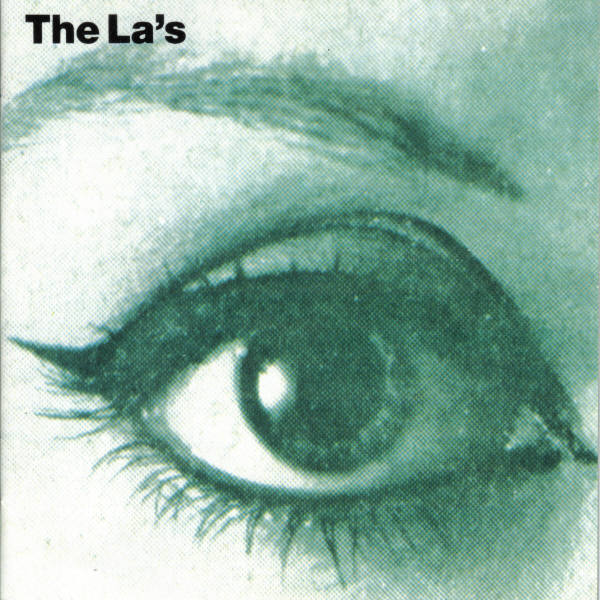
Favorite Albums: The La’s, The La’s

Source: discogs.com

Source: discogs.com

If you want I’ll sell you a life story
About a man who’s at loggerheads with his past all the time
He’s alive and living in purgatory
All he’s doing is rooming up in hotels
And scooping up lots of wine

Many of you already know this band as a one-hit wonder with their single “There She Goes”, which hit the American airwaves in early 1991 and appeared pretty much everywhere in the early 90s, from tv shows to movie soundtracks. You may have also heard the oft-told story of lead singer Lee Mavers’ never-ending search for the perfect sound for their music, and that the album was released against his wishes. Their single self-titled album is listed on all kinds of best-of lists even today, and is highly praised by many music critics.

But is it as excellent as they say it is? I would definitely agree that it is. Let’s put aside the argument of “…but it’s not the album that Lee Mavers wanted put out.” Let’s be honest, I can see where Mavers was coming from, but sometimes your creation doesn’t quite match what’s in your brain, and you have to make do with the end result if it’s close but not perfect. Steve Lillywhite, the last producer to work with the band, pretty much had the job of making a finished product for Polydor Records, whether or not Mavers was happy with it. Let’s take a look at the end result.

The La’s were (are?) a Liverpudlian band who wore their influences openly and proudly–the pre-fame Teddy image look of the Beatles (as well as their ’64 Dylan-inspired folk rock sound), the simple-yet-catchy songwriting of Buddy Holly, with a dash of the lo-fi DIY of 60s garage bands. Mavers’ songs were the kind you’d kick around with your buddies in your uncle’s back shed, songs of love and longing, of frustration and irritation. At the same time it’s a dedication to craft, filled with intricate guitar picking and tight band playing. They’re well aware how to write a song correctly, where no tracks ramble or lose direction.

“Son of a Gun” kicks off the album and sets the scene: a tale about a man entering the 90s, who may have had an exciting and adventurous past, but now seems lost and listless. You’re not quite sure if he’s talking about a friend of his or if he’s actually talking about himself but hiding his failure behind third-person narrative. He returns to this directionlessness multiple times throughout the album: the folky skiffle “Doledrum” , the slow doom of “Freedom Song”, the waltzy “Way Out”…and in a brilliant move, he returns one final time to this theme in the excellent epic closer “Looking Glass”.  By this final contemplation, however, he’s come to the conclusion that he’s got to break the cycle once and for all if he wants to escape it–in fact, he comes to terms with the fact that his past is gone, and the only way he can move is forward.  Not that the whole album is a study on suburban Brittish ennui; there’s a number of uplifting songs involved as well, from the big single “There She Goes” and the perky “Feelin'”, and the love of music in “Timeless Melody”  Each song delivers its own take on Britain’s blue-collar listlessness, condemning it, celebrating it, and ultimately breaking free of it.

The La’s was released in October of 1990 in the UK, but did not reach American shores until March of 1991, where it was an instant hit with the growing alternative rock crowd.  In Boston, where I was in college at the time, many tracks off the album got airplay on both WFNX and WBCN, and remained a favorite on both of those stations throughout the 90s.  Even after the rather twee take on “There She Goes” by Sixpence None the Richer, the original still version still gets played to this day.


On a more personal note, this album came out right about the time I was finishing off my sophomore year in college.  I was rooming with Mike on the fourth floor of Charlesgate, and I’m pretty sure I drove him nuts by listening to this album in those final months of that semester.  But this year was also the first summer where I stayed in the city rather than head back home for the season–I rented out a room at a Fisher College dorm just down the street from Emerson College’s old Back Bay campus and retained my job at the Emerson library media center.  As nearly all of my college friends had gone home and my then-girlfriend was still in high school, I was pretty much completely on my own for those three months.  I did a lot of thinking, a lot of working things out, a lot of future planning…and a lot of writing, both words and music.  A few weeks into the season I ran into Lissa, a girl from my circle of friends at the time, and we hit it off as friends.  We’d end up sharing an apartment for about a year, spending my entire junior year in a spacious apartment on Beacon Street (this was well before the city got rid of rent control, so we could still afford to live there).

I remember listening to The La’s incessantly during this period, as it seemed to mirror a lot of what was going on in my own life.  I too was listless and directionless, having come to the frustrating conclusion that as a film student I doubt I’d ever get close to making the dream of actually making films a reality; my relationship with my girlfriend at the time had started to deteriorate and would finally come to an end by the end of 1992; and even my friendship with Lissa would become strained.  I found myself listening to “Looking Glass” on repeat in an attempt to remind myself that I couldn’t wallow in pathetic self-pity–I simply had to move forward, one way or another.  It would take much longer than expected to get my shit together and move ahead, but I was bound and determined to make it happen, despite all the setbacks.  In late 1993 I would start gathering my ideas for a story based on this time in my life and named it Two Thousand.  I have various incomplete versions laying about and have this on one of my backburners.  And around that same time, I’d start writing my first science fiction story, which would, after nearly twenty years, end up morphing into the Mendaihu Universe and The Bridgetown Trilogy.

Tell me where I’m going…
Tell me where I’m bound…
Turn the pages over
Turn the world around
Open up the broken door for all lost will be found
Walk into the empty room but never make a sound
Oh tell me where I’m going
Tell me why I’m bound to tear the pages open
Turn the world around…


Fly-by and Shameless Plug Time!

Yeah, best laid plans and all that…I had some interesting ideas to toy with for a new post, but kind of got distracted by my Great Office Cleanup Project.  In short, I decided that my old arrangement of printed manuscripts on the bottom shelf (and partially blocked by a file box) and unsorted piles of stuff on the shelf above wasn’t working.  What I thought would take one day ended up taking both Saturday and Sunday, as the cleanup also included the partially obscured bookcase next to the loveseat, the four small storage boxes next to the desk, and the rest of the tall black bookshelf.

All told, I got rid of about twenty ancient spiral notebooks, most of them over a decade old, that I haven’t used in ages–I ripped out what few pages I did use and sorted them into their proper piles and threw the remains in the recycling.  There’s also a box full of stuff that can either be shredded or tossed, and one final smaller box of non-writing personal bits and bobs that I need to sort through.  I reorganized by putting all related project stuff together, putting trunked and unimportant projects down on the bottom shelf, and current projects up on the second.  All poetry and journals are together on another shelf, and all the reference books are up on top.  In short, it’s still a bit messy, but at least I know where the hell everything is now!

We shall return to our regularly scheduled writing this week, and I’m planning to get another post out ASAP. Thanks again for your patience!


That said…

SHAMELESS PLUG TIME!

Please check out the Kickstarter for Decomposure’s latest possible album project!

I’m plugging his project for two three reasons:

1.  I’m a big fan of his music, and it’s worth checking out, especially 2012’s Eating Chicken.  He’s done everything from experimental sound textures to lovely balladry to quirky angular pop.  He’s quite the excellent songwriter and I love what he’s done creatively.

2. I like the idea he came up with for this current project, as it’s got some parallels to what I’m doing here with Walk in Silence, by revisiting his childhood via roadtrip and writing an album about it.  I’m quite curious as to how this will unfold and would love to hear new music from him.

3.  Like many creative people, he actually records music as a labor of love, as he actually has a full-time career outside of the music field.  I’ll pay forward to anyone who’s that dedicated to their craft.

So yeah–check it out, and give him some love and cash if you can! 🙂

Throwback Thursday: Spring 1989

Ah, twenty-five years already, then? A quarter century already since I was a pimply, music-obsessed, self-proclaimed nonconformist and budding writer, twitchy and moody and waiting for my senior year in high school to be over and done with so I could go out and live in the Big Bad World. My senior year felt like a badly scripted, unwanted denouement, to be honest. I really should have been a year ahead. I say this now, well after the fact, because after twenty-five years of contemplation, I realize it wasn’t that I was lazy or had any learning deficiency, it’s that I was bored. And boredom begets distraction. And distraction begets so-so grades. And I never quite got out of that slump, not really. I think if I’d graduated in 1988 instead, it would have forced me to put more effort into it, made me work to my potential. It would have made me mature a hell of a lot quicker. As it happens, I ended up coasting for the rest of my education years instead when I should have excelled.

But that’s a different post altogether. This is a music blog, isn’t it?

Credit: flyerize.com

Credit: flyerize.com

Spring 1989 was right about the time when that beloved radio subgenre of mine, college rock, finally emerged from its late night perch and started making its presence known elsewhere. Well, that’s not entirely true. There’s a lot more to it than a wider audience. Consider the following:

–In late 1988 (the September 10th issue, to be exact), Billboard acknowledged the subgenre for the first time with a “Modern Rock Tracks” chart.

–The Top 40 of the late 80s was in flux, with all different kinds of pop music gaining traction. Top 40 rock was giving way to Top 40 dance music. Many production-ready sounds had emerged as well, thanks to production houses like Stock Aitken Waterman. This was especially embraced by the poppier end of the MTV playlist, thanks to heavy rotation as well as shows like Club MTV. This let the occasional unexpected hit sneak into the charts now and again, giving other subgenres an opening for success.

–The rock sounds of early in the decade and the one before it–the arena rock, the LA glam metal, the Michael-Mann-approved, Miami Vice-ready mood pieces, and the last dregs of 70s bar band sounds–had begun to age, and age badly. Harder, more serious rock like Guns n’ Roses and Metallica became the accepted norm. [Come to think of it, this is probably around the same time many FM rock stations divided between “current rock” and “classic rock” formats.]

credit: discogs.com

credit: discogs.com

–Several British subgenres of rock emerged or were noticed in America about this time as well: shoegaze, Madchester, Britpop, etc. Many were noticed and release by major American labels at this time. They may not have made high chart placement, but they were starting to get noticed. Several local US scenes were gaining traction as well: Seattle, Boston, Athens, and so on.

–Even the American punk scene was in flux, many of its major late-70s/early-80s players (Hüsker Dü, The Replacements, Black Flag, et al) either having broken up, evolved considerably, or on their way to self-destruction. There would always be the hardcore punk in its many sounds and guises, and it would remain in the shadows where it wanted to be, but the newer sounds were more steeped in the post-punk sound–equally as emotional in its delivery, but more melodic and adventurous in its sound. This sound was less influenced by the DIY punk ethos and more by the UK post-punk sounds of just a few years earlier.

credit: thequietus.com

credit: thequietus.com

–Two years earlier in late 1987, we also saw an influx of uniquely college-rock bands releasing highly lauded albums, elevating them past the college-radio-only playlists and onto commercial radio: The Smiths, The Cure, Depeche Mode, REM, Red Hot Chili Peppers, and so on. Many of these were on Warner Bros-related labels, and a number of them had the backing of Sire Records head Seymour Stein. [Seriously, we need a bio of this man, STAT…he was such a big influence on the New Wave scene.]

By 1989, for this music nerd and self-proclaimed nonconformist, I felt both liberated and a little saddened by this change in the weather. On the one hand, I was thrilled that the music I had so loved since that fateful evening in April 1986 was finally getting its due…but at the same time, it felt like it was losing its mystique in the process. After all, this was the music I listened to on my own. It was my music, the songs that spoke to me. I tried to take the high road with this one, though…I felt it was high time my peers stopped listening to the prepackaged crap that radio was feeding us and listen to music with substance.

Credit: discogs.com

Credit: discogs.com

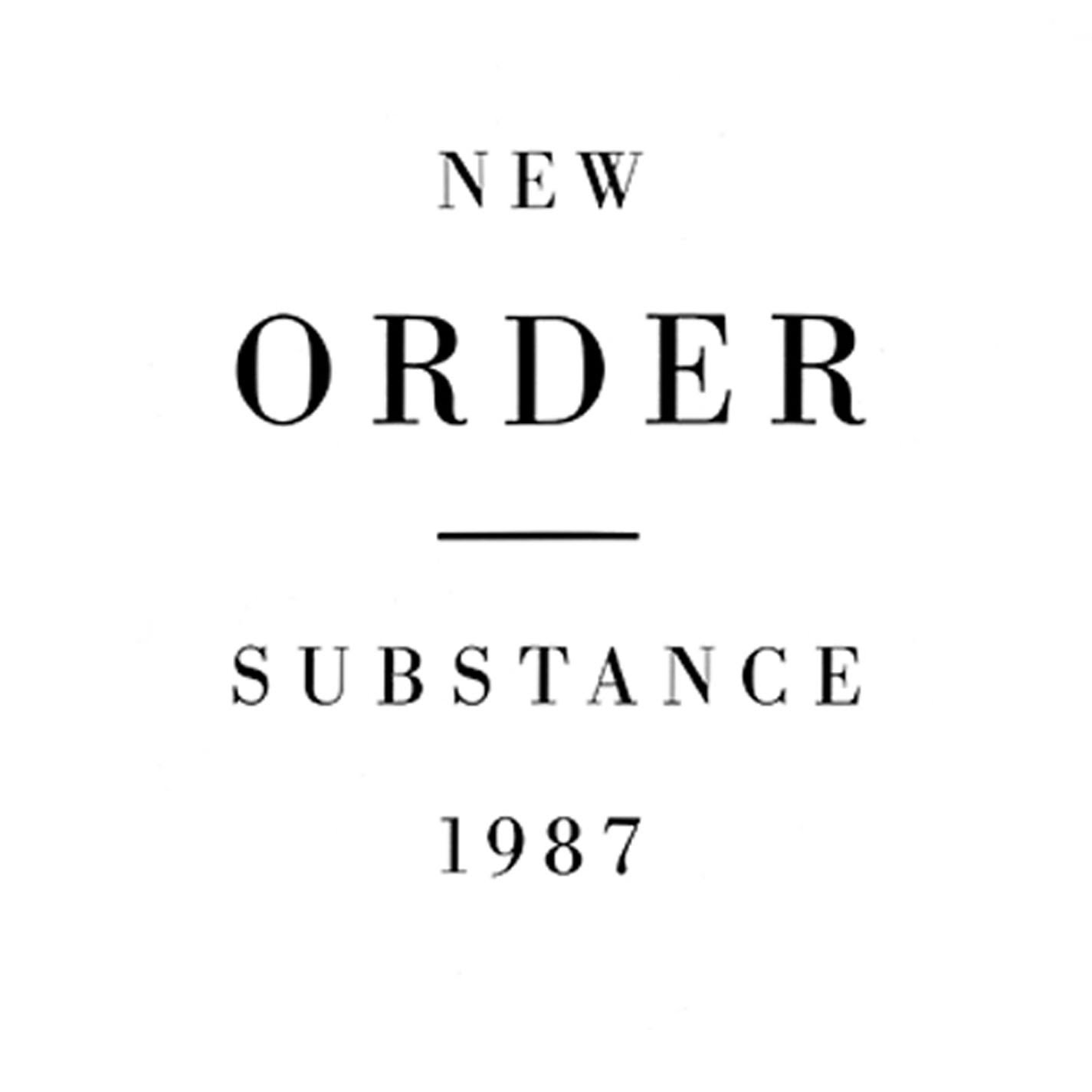
Style versus substance…that was the big debate of the 80s, wasn’t it? Do you want something pleasing to the eyes and ears but superficial, or do you want something of deep meaning but not exactly pretty to look at or listen to? I’d like to think that’s why New Order chose Substance as the title for its 1987 hits collection (and by extension, its Joy Division collection as well); they may also be making sequenced dance music, but put “Blue Monday” side by side with “Never Gonna Give You Up” and one can definitely hear the difference. One was destined for status of classic dance track that’s still embraced today, the other the subject of a hokey (yet admittedly amusing) internet meme. The genre could be similar, but the quality couldn’t be any more different.

Then there’s also the change that comes with the change in decades as well. It’s often been noted that the last few years of a decade tend to show a decline in the interests that once defined them–the flower power of 1967 gave way to the high-octane politics of 1968; the blissful haze of the 70s gave way to the discontent of the late 70s. The paranoia and the wackiness of the early 80s was giving way to the more serious and reflective late 80s. There was also the fact we were coming in on the last decade of the millennia as well. We wondered what the 90s would bring us–the promised jetpacks? World peace? Information at our fingertips? The possibilities!

I’d like to think that this calmer introspection was yet another piece in the puzzle that led to college rock, and in effect other rock subgenres, becoming more acceptable. Yes, I know, it might be a stretch, but think about it–when you’re thirteen, things you dislike are stupid (or in the 80s New England parlance, fucken retahded), but when you’re hitting eighteen and about to head off to college, these things aren’t as important on your popularity scale and you start accepting different things easier. Where Metallica was once only listenable to those long-haired smoking weirdos who wore denim jackets and drove to school in Camaros, in 1989 they had a massive hit with the song “One”–a song based on a 30s war novel at that. By 1989 we had chart hits from Faith No More, Fine Young Cannibals, Love and Rockets, REM, The B-52s, Nine Inch Nails, and more.

Credit: discogs.com

Credit: discogs.com

In early May, just as I was finally winding down my educational years in my small hometown, The Cure released what would be considered their best album ever, Disintegration. It was prefaced by two different singles: in the UK, the slinky and creepy “Lullaby” reached all the way to #5, and in the US the darker and angrier “Fascination Street” became their first US chart hit, hitting #1 on the new Modern Rock Tracks list. This was new stuff for those unfamiliar with the band, and for those like me and my close friends, this was definitely new stuff. The Cure had always retained a darker sound since their inception, but after the much brighter sounds of 1985’s The Head on the Door and the poppier, more psychedelic sounds of 1987’s Kiss Me, Kiss Me, Kiss Me, Disintegration was an altogether different affair. It was epic not only in scope but in sound, “mixed to be played loud so turn it up” as the liner notes suggest. It was as dark, it was moody, and it was absolutely, stunningly gorgeous.

This album fit perfectly as a final step towards the end of the decade, and it was the soundtrack to the last remaining days I spent in my hometown. I’d spend the summer working for the DPW in the town cemeteries, and I’d be listening to this album on repeat on my Walkman while I pushed lawn mowers all over the place. I’d listen to it at night that summer, now that WAMH out of Amherst College was off the air for the season. I’d been writing a gloriously doom-laden teen roman à clef and several poems/lyrics at the time (you know how it is when you’re that age), and used this album as a soundtrack as well. And when August rolled around and my buddy Chris had his first of a few “fiasco” parties as his grandfather’s cabin out on Packard Pond, this album got heavy airplay both on our tape players while we laughed, played cards and did other silly things, and again on my Walkman as I finally climbed into bed later that night.

On the last day of that party, after we all cleaned and straightened up and headed back to our homes, I sat on the front porch at my parents’ house and listened to it one more time on my headphones, composition book in hand in case inspiration arose. “Homesick” came on, and I latched on to the lyrics: “So just one more, just one more go / inspire in me, the desire in me, to never go home.” It was the perfect ending quote to my life up to that time–not that I don’t like it here, but PLEASE give me a reason to move on. It was the end of summer, I’d be heading to Boston for college in a month, and I was just itching to get started with the new chapter of my life. And to add to the bittersweet end of the season, the last track, “Untitled”, came on with its slightly-offkey melodica intro, creating a melody that would repeat ad nauseum until all the instruments left again, leaving the offkey melodica drifting way. The lyrics to “Untitled” were the polar opposite of “Homesick”, a last tearful goodbye delivered with such a mortal finality it felt like heartache. While the former was “okay, time to move on and embrace the future”, the latter was “oh, and by the way–you can never return to the past.”

Indeed, I could not, no matter how much I may have wanted to.

*

I’ve returned to my past many times over the years, mostly with writing works in progress, song lyrics and poems, and quite a few blog posts, but I understand that I can’t stay there indefinitely. It took me little while in college to understand that, but I eventually got over it. Now, I enjoy heading back to the days of the late 80s, especially with my overly large music collection. I like to listen to what came out back then and compare it to what’s out now. I can see and hear the cycles now, the songs of yesterday hidden in the songs of today. I talk with many of the same people in that circle of friends online now, even though a continent separates us. I might not be the twitchy self-proclaimed nonconformist anymore, though I am still that writer and music nerd.

So I think after twenty-five years, it’s a good balance.

WiS: We’ve Got a Fuzzbox and We’re Gonna Use It!!

I’ve been wanting to write this post since the two remastered cds came out in the middle of last year, and now I can finally do so! We’ve Got a Fuzzbox and We’re Gonna Use It!!, aka Fuzzbox here in the states, was a cute and punky quartet out of Birmingham UK, and one of my first music crushes when I started listening to alternative rock. They’d been brought to my attention right about the same time as Sigue Sigue Sputnik in the glossy music mag Star Hits, and upon seeing their crazy-colored and spritzed hair and Goodwill-chic punky fashion, I was completely hooked–which in all honesty wasn’t really hard, considering it didn’t take much to rebel in a small town like mine. They made me realize punk wasn’t just about rebelling against society, like American punk had suggested–it was also about doing your own thing, however out there it might be, and not giving a shit about what other people thought about it.

Fuzzbox was only together for a short time, releasing only two albums and a handful of singles (like most punk bands were wont to do during the 80s, it seems) before going their separate ways, but they were just so damn fun to listen to that it didn’t matter.

Credit: last.fm - l-r, Tina, Vix, Magz & Jo

Credit: last.fm – l-r, Tina, Vix, Magz & Jo

Fuzzbox started sometime in 1985 with four friends who’d decided to start a band. And like any punk band worth their salt at the time, mastering your instrument wasn’t exactly high on the list of priorities. Consisting of Vickie Perks (aka Vix) on vocals, Tina O’Neill on drums and sax, and sisters Maggie (aka Magz–vocals, keys and guitars) and Jo Dunne (bass, guitars and keys), they immediately jumped in on the occasional open mike night at the local bars and learned their chops onstage. It’s said Maggie was the creator of the band name, announcing that they did in fact have a fuzz distortion guitar pedal they were about to use.

Their debut single was the gritty and poppy “XX Sex”, with shockingly direct feminist lyrics about exploitation and sexism in the media. They followed up with a ridiculous and silly summer single with labelmates The Nightingales and Ted Chippington with “Rockin’ with Rita”, and by summer’s end they were given a spot on the highly influential NME C86 compilation with “Console Me”. They prefaced their debut album that October with a jittery and bass-heavy single about unrequited love, “Love Is the Slug”, my musical introduction to them via MTV’s 120 Minutes.

Credit: fuzzbox.angelfire.com

Credit: fuzzbox.angelfire.com

Bostin’ Steve Austin (released as a self-titled album here in the states, but with the same cover) was released in December of 1986, featuring a dozen gems about the girls’ life in Birmingham–not just containing the teen heartbreak of “Love Is the Slug” and “Jackie”, it also contains the confrontational “XX Sex” and “What’s the Point” (their follow-up single released in January of 1987) and “Preconceptions”, as well as a weirdly hypnotic cover of Norman Greenbaum’s “Spirit in the Sky”. The quality of the music here is surprisingly tight, even when it hints at sounding on the verge of disintegrating into a distorted mess. Vix’s lyrics alternate between playful, angry, and emotional, and despite the simplicity of the melodies there’s a lot going on musically. The stop-start of “You Got Me”, the building tension in “Love Is the Slug” and even the 60s-girl-group pastiche of “Hollow Girl” works perfectly.

Bostin’ Steve Austin got a ridiculous amount of play on my tape players between early 1987 and mid-1989–this was the side of punk that I gravitated to, the revelation that I didn’t have to try fitting in with the in-crowd anymore. I didn’t really need to do much, of course–wear some of my college rock tee-shirts, my grandfather’s green trenchcoat, and let my hair grow out of its quintessentially 80s spiky ‘do (but not to the point of longhaired metaldom), and start writing music reviews for albums hardly anyone else in my school listened to.

Meanwhile, Fuzzbox disappeared for a short while, and would reappear in early 1989 with a completely new and unexpected look and sound. I admit I wasn’t entirely sure how to approach it at first, having twitched and thought “oh god, they’ve become Jem and the Holograms.” But there was something about it…something about the slick late 80s production, the chart-ready poppiness, that called to me. I began to realize that this was the forbidden candy for me as a fan of college rock, the ultimate test: do I dare admit that, after labeling myself an alternative music nerd and a nonconformist, that I actually enjoyed this admittedly catchy music?

Credit: www.independent.ie - clockwise from top left: Vix, Maggie, Tina, Jo

Credit: http://www.independent.ie – clockwise from top left: Vix, Magz, Tina, Jo

Gone was the thrift-shop fashion as well, replaced by glitz and glamour. The fuzziness of their sound was also gone, replaced by shiny synthesizers and sequencers. They now had an outsider as a cowriter of songs in the form of session musician/producer Liam Sternberg. And yet…

…and yet, there was something about this new album, Big Bang, that I just could not give it up. I was older and now in college, and yet the music hinted at the readymade poppiness of 80s Top 40, the kind that was throwaway and yet catchy and likable at the same time. The Brummie humor was still there, hiding in the lyrics of lead single “International Rescue”, a loving ode to the Gerry Anderson tv classic Thunderbirds (and, in the video, a humorous nod to Jane Fonda’s Barbarella as well).

Credit: musicstack.com

Credit: musicstack.com

Big Bang kicked off with the irresistibly poppy “Pink Sunshine” (and also released as the second single) and my immediate reaction was to wonder where the hell my punk goddesses had gone off to…but I soon understood what they were doing. This wasn’t about rebelling, not anymore. It was about being an adult now, having gotten over the teenage growing pains. These were the Brummie girls stuck in their jobs, dealing with the drudgery of the real world and letting it all loose at the end of the working week.
There’s a lot of flirting and emotion going on with this album, and that’s part of what makes it so irresistible. There’s the rocking sci-fi of “Fast Forward Futurama”, the heartbreak of “Self!” (featuring the guitar work of none other than Queen’s Brian May!), and the gorgeous dancefloor bliss of “Versatile for Discos and Parties” (quite possibly my favorite track off the album). There’s even a brilliant cover of Yoko Ono’s “Walking on Thin Ice”, retaining the song’s mystique but giving it additional emotional beauty. The album ends on a very somber yet lovely note with a track called “Beauty”, which sounds like nothing else they’ve ever recorded.

Big Bang‘s shameless pop wasn’t shameless at all–it was a loving tribute to the dance pop of the decade, one that was about to come to a close. The sound of 80s pop would age, and often not for the best, but when it was done right, it was still fun to listen to. A few years later, once I discovered anime movies and series, from Urusei Yatsura and Silent Möbius and later to the Gall Force series and Sailor Moon, I began to realize that, thanks to Big Bang, I now had begun a long-lasting love affair with Japanese Pop (aka J-Pop). I began seeing the album as an unintended but spot-on paean to the J-Pop so prevalent in the credits and montages in anime, and that made me love the album even more. It’s pure pop, but it’s still irresistibly fun.

In 1990 they would release a final single, “Your Loss My Gain”, written for a never-realized third album, and while it seemed they were progressing in a more mature pop direction, they soon split up. They all went their separate ways. Only Vix remained in the music industry, recording under various band names including Vix n’ the Kix. Three compilations would surface a bit over a decade later: two albums of demos and outtakes called Fuzz and Nonsense and Rules & Regulations to Pink Sunshine: The Fuzzbox Story, and a greatest hits collection amusingly titled Look at the Hits on That (a very Fuzzbox-worthy pun title). And in 2010, Vix, Maggie and Jo reunited with the help of Vix’s backing band for a one-off single, a cover of M’s classic track “Pop Muzik”. Sadly, Jo would pass away from a cancer-related illness in 2012, but a year later, Vix decided it was time to rerelease the band’s 80s discography. Bostin’ Steve Austin would finally have its debut on compact disc, and Big Bang would contain all the remaining 80s tracks, including the “Your Loss My Gain” single.

We’ve Got a Fuzzbox and We’re Gonna Use It!! was a band that influenced not just my listening habits but my way of life when I was growing up in the late 80s; it was a refreshing view of punk-as-freedom rather than punk-as-anger, and helped me realize that the music I listen to, then and now. My tastes still lean towards the alternative, but I’m not above the shamelessly pop, especially if it’s done well. In relistening to Bostin Steve Austin I now hear a lot of the intelligence and fearlessness in the lyrics, which makes me appreciate it all the more. And as an added bonus, they’re there if all I want is some great and fun music to listen to.

Check it out:
Bostin Steve Austin: Splendiferous Edition, at Amazon.co.uk
Big Bang!: Orgasmatron Edition, at Amazon.co.uk
“Pop Muzik” single on iTunes

Blogging the Beatles 55/56/57: post-breakup releases, “Free As a Bird” and “Real Love”

When the Beatles officially broke up in 1970, the world didn’t so much end as it soldiered on, just as it was supposed to.  It was truly the end of an era–the band that defined the sixties pretty much stayed within the confines of its decade, and its four band members moved onto newer and more personal phases of their musical careers. There were of course many fans who wished it were otherwise, that the four would iron out their differences and reconvene, but it was not to be. They’d already started focusing on their own personal projects as early as 1966, perhaps thought about splitting up when Brian Epstein died in 1967, and definitely started doing things on their own by 1968. It was time for a new chapter in their lives.

John Lennon had already made a name for himself separate from the band via his music, his art and film projects, his personal politics, and his relationship with Yoko Ono. By 1970 he’d created his own ersatz group, the Plastic Ono Band, whose members shifted with whoever happened to be available at the time. This was less of a group than it was merely an umbrella name that he only use whenever he felt like it. After three experimental albums with Yoko and one shaky live album, his first post-band project would be the harrowing, brutally honest John Lennon/Plastic Ono Band, released in December of 1970, his “primal scream” album wherein he exorcised as many personal demons as he could–his lack of parental guidance, his distrust of idolatry–but it also gave us the gorgeous “Love”. John would follow up the equally personal but much less abrasive Imagine, the dangerously political Some Time in New York City, and the lost-weekend trio of Mind Games, Walls and Bridges and Rock & Roll before deciding to call it a day. In 1975 he would give up the public life so he could raise his on Sean. It wasn’t until 1980 that he and Yoko would come back recharged with enough material to release two albums: the lovely Double Fantasy and, after his unfortunate assassination that December, the equally fantastic Milk and Honey in 1984.  His legacy still lives on separate from the group, seen as many things: an innovator, a misguided cynic, a downright bastard, and a loving husband.

Paul McCartney would have the most prominent and prodigious post-Beatles career. He followed up his official solo debut McCartney (1970) with an equally creative album under both his and Linda’s name, Ram, in 1971. Soon after that he created a new band named Wings, which, after a few bumps in the road (live, as well as with the releases Wild Life and other early singles), he soon hit his stride. He understood and accepted the fact that he could write a good, catchy pop song at the drop of a hat, and released a long string of singles and albums, starting with 1973’s ballad “My Love”, the killer James Bond theme “Live and Let Die”, and Red Rose Speedway. He followed this up with a string of hit singles and albums: Band on the Run, Venus and Mars, Wings at the Speed of Light, “Jet”, “Silly Love Songs”, “Listen to What the Man Said”, “Let ‘Em In”…all the way up to 1979’s danceable hit “Goodnight Tonight”. The band would break up during the 1980-1981 period for various reasons, some personal, some public–but Paul soldiered on into the 80s with another string of hits. This era may have also been chock full of albums and singles, but by 1986 and Press to Play his star seemed to be waning a bit. He briefly returned to the limelight with the excellent Flowers in the Dirt in 1989, using new backing players and working closely with Elvis Costello on a number of tracks. More well-made but indifferently-received albums and singles followed, including a fantastic electronica-based side project called The Fireman, but it wasn’t until 1997’s Flaming Pie that he was back in the limelight. That album, inspired by the Beatles’ Anthology project as well as his relationship with Linda during the last few years of her life before she succumbed to cancer, gave fans not only a fresh and updated sound but melodies steeped in nostalgia. His output would slow down from here on in, but he would never completely stop. Last year’s unexpected album New was a lovely treat and a great example of a man who simply loves the craft of music, regardless.

George Harrison’s solo career may have been bumpy, but he never let that stop him. Having created an impressively large backlog of as-yet-unrecorded songs, some rejected by John and Paul for Beatle work, he released the impressive three-disc All Things Must Pass in November of 1970, and it still stands as one of the best post-breakup albums. His following output did lean towards the spiritual side, but it didn’t always smother the end result with proselytizing. For every “Give Me Love (Give Me Peace on Earth)” and “My Sweet Lord” there was “This Guitar (Can’t Keep from Crying)” and “All Those Years Ago”. There were a few misses here and there, but he was always true to himself, rarely if ever writing a throwaway song that he’d later be embarrassed by. By 1982 and Gone Troppo, however, he’d decided to let go of the music for awhile, focusing instead on his private life and his film production company Handmade Films. It wasn’t until 1987’s brilliant comeback Cloud Nine that he came back into focus, not just with that album but the supergroup Traveling Wilburys, who would release a much-heralded self-titled album the following year. By 1992, however, he’d only released the Live in Japan as a follow-up, and would not release any further solo albums in his lifetime. He had been working on a final album, 2002’s Brainwashed, before his death from cancer in 2001.  His son Dhani had played a significant role in those final recordings, and his legacy lives on in his son, who now sings and plays guitar in his own band, thenewno2.

Ringo Starr, on the other hand, would have the most interesting and varied post-band career. After a one-two punch of albums in 1970 (Beaucoups of Blues and Sentimental Journey) recorded more for his own (and, supposedly, his mother’s) enjoyment, he would release a number of albums chock full of fun pop and rock songs, starting with 1973’s Ringo. This album featured not only an incredibly large and varied number of cameos from his musician friends, it would also feature music and even separate performances alongside a few of his former bandmates. They would always show up on his releases, writing a song or two or playing guitar on a few tracks. He too caught the film bug, becoming an actor for a number of odd, quirky films such as Candy, The Magic Christian (filmed during the final Beatle days), Son of Dracula, and more. His last major role would be in the b-movie farce Caveman in 1981, but he would continue to show up in other productions, from Paul’s 1984 Give My Regards to Broad Street, the kid’s show Shining Time Station, and multiple cameos in other places. His solo albums would become somewhat scattered from the early 80s onwards, but he more than makes up for it by his consistent touring under the “All-Starr Band” moniker, playing beside all his musician friends in a hit-filled revue.

*     *     *

The Beatles’ music itself never really fell from the spotlight in the 70s, for varying reasons. As EMI owned their music for a long time to come, they would occasionally release compilations to satisfy public demand and keep the band in the limelight. Starting with 1973’s dual compilations 1962-1966 and 1967-1970 (aka the “red” and “blue” albums respectively, for their colored covers that reproduced the iconic Please Please Me/Get Back photos), there would be at least one new compilation every couple of years all the way up to 1982’s 20 Greatest Hits. Some of them, like Rock n’ Roll Music, were obvious cash-ins, but others such as the excellent Love Songs (featuring the brilliant Richard Avedon band photo from a 1967 issue of Look on its cover and inlay) and the curious Rarities made up for it. There were always hints of more rarities being publicly released, such as the aborted Sessions album in 1985, but they never came to pass. By the mid-80s, there was a distinct lack of any new output, and for obvious reasons: the Beatles were finally coming to compact disc!

In 1987 into 1988–most likely to tie in with the “20 years ago today…” Sgt Pepper theme–EMI/Capitol once and for all decided to release the entirety of the Beatles canon on CD. And even more excitingly, the albums were finally going to be released worldwide in their British formats, ridding collections of the endless overlaps and superfluous releases. All the non-album singles were to be collected onto two additional albums called Past Masters Volumes 1 and 2. The vinyl and cassette releases would follow suit, and any previous international and US releases would be considered in the past tense. These releases would remain the last word in Beatles music from here on in.

Sometime in 1992, the remaining Beatles had decided to reconvene to work on a documentary of the band’s history. This had been a background project almost since their breakup in 1970, but in the 90s interest had returned. They would be interviewed by musician-cum-tv-personality Jools Holland and filmed all over the place, from Paul’s Sussex studio to George’s Friar Park mansion to Abbey Road Studios itself, finally telling the real story behind the band after all the years of speculation and confusion. The documentary, simply named The Beatles Anthology, would be a multi-episode documentary as well as a three-volume, multi-cd collection, and a book. By 1994 they were doing much of the post-production on the project, and all three had decided that they were going to work on some incidental music. That idea, however, changed when they felt that they may want to work on a true Beatles project again. George Harrison and Neil Aspinall (their former road manager and later business manager) had known of John’s penchant for demoing his music in the late 70s, and asked Yoko for assistance. She handed them rough tapes of four tracks, two of which would become the all-new Beatles tracks in over two decades.

This would pose a bit of a problem, however: how to record as the Beatles, when it simply wasn’t the Beatles without all four members?

*     *     *

Credit: beatlesbible.com

Credit: beatlesbible.com

Single: “Free As a Bird”
Released: 4 December 1995

“Free As a Bird” started life as one of John’s countless demos that he recorded throughout the 1970s, this one arriving sometime in 1977 during his tenure as stay-at-home dad at their Manhattan apartment, the Dakota. It’s somewhat of a slow and meandering song, but it’s got all the qualities of a true Lennon original: it contains a number of fascinating chord changes, its lyrics are wistful and heartfelt, and despite its somewhat somber melody, it’s truly a hopeful tune. And once the other three fleshed it out into a complete song, it contains some of the most breathtaking sounds and production since the days of Abbey Road. Ably co-produced by former Electric Light Orchestra frontman and fellow Traveling Wilbury (and huge Beatles fan!) Jeff Lynne, it is one of their strongest tracks ever, and with good reason: this is the Beatles of 1994-95, influenced not only by their old sounds but by their combined solo output. It’s equal parts Abbey Road, Double Fantasy, Flowers in the Dirt, Traveling Wilburys, and Time Takes Time, all in one four-and-a-half minute track.

The answer to the above problem was in the form of a few cassettes from John’s demo collection, handed over from Yoko to Paul. The band took this project very seriously; if any of the members disliked what they heard, they would not release it. There was also the trick of taking a homemade recording of somewhat dubious quality, and supplementing it with a full band in the studio. They would rely on their old studio tricks for this: the recording would be processed to as clear quality as possible, vocals beefed up by Paul and George, and the arrangement would be supplemented by bridges and a few different chord changes by them as well. The new lyrics turned the theme from one of John’s “I feel just fine at home doing little at all” lyrics into an altogether different one; it now became a wistful song of remembrance–similar to John’s “In My Life”, it became one of both sadness and hope.  And luckily, all three members felt the end result was fantastic.  Even Ringo commented that “it sounds like them” (meaning his old band)!

A whimsical video was created for the song, directed by Joe Pytka, and was originally used as a supplemental piece to the Anthology television airing. The video is chock full of visual cues of Beatles songs and history. We see shots of the band at the Cavern, all the lonely people crossing the Liverpool docks heading for work, eggmen making their deliveries, pretty nurses selling poppies from a tray, a long and winding road, a helter skelter…the list goes on, eighty to a hundred visual cues coming up throughout. It’s a fantastic feast for the eyes and a hell of a lot of fun for the fan who has waited decades for this moment, to hear and see something new again.

*     *     *

Credit: beatlesbible.com

Credit: beatlesbible.com

Single: “Real Love”
Released: 4 March 1996

After recording “Free As a Bird”, they chose the somewhat easier track “Real Love”. This one was nearly complete and its demo version had already been released officially on the soundtrack to the 1988 documentary Imagine John Lennon, and they did not need to spend nearly as much time working on it. Once again they’d needed to clean up the cassette and punch up John’s singing by having Paul sing alongside, and John’s guitar playing was supplemented by both Paul and George. It’s not nearly as strong a track as “Free As a Bird”, but it’s definitely catchier and therefore received more airplay than the previous. John’s composition is lighter and brighter, perhaps influenced by the more positive songs he’d written for both Double Fantasy and Milk and Honey, and the end result with the rest of the band is very indicative of the poppier sound of perhaps Rubber Soul. It definitely sounds like an earlier-era track composition-wise. Though the band did enjoy working on this recording as well, it seemed they were not as excited about it as the previous one, perhaps due to the fact that it was for the most part an almost-complete track; at this point they were merely session men completing it.

The video for this track showed up on a later episode of the Anthology airing, and is a much more straightforward visual. Half of it contains footage of the three members recording the track at Paul’s studio in Sussex, the other half being a mystical visual of a white piano–hinting at the same one connected to John and seen in the “Imagine” video–rising up from a pool of water and flying up into the air alongside other instruments and objects. A slow motion sequence of the band’s profiles shows up about halfway through, using footage from John’s film Smile and supplementing it with the slowly smiling faces of Paul, George and Ringo.  It’s an uplifting performance, and in its own way it’s a heartfelt nod to their long-missed, much-loved best friend and former bandmate.

*     *     *

“Free As a Bird” would be the lead-off track on the first Anthology cd, which would be released 21 November 1995, and “Real Love” would lead off the second volume, which was released on 18 March 1996. The two other possible “new” tracks, “Grow Old with Me” (originally on Milk and Honey) and “Now and Then” (unreleased but found on many a bootleg) were not followed up on, although a brief tryout was attempted on “Now and Then” but never recorded. The third Anthology cd would arrive on 28 October 1996, sans any new track. These two songs would remain the last new Beatles tracks recorded and released.  The three volumes however did contain a shockingly large amount of previously officially released recordings, including at least a dozen or so tracks that were recorded for albums but ultimately left off.  This series pretty much clears out the closet, leaving only a scant few remaining tracks unheard by the public.

The Anthology project effectively turned Apple Records back into a living entity, and a long stretch of projects began in earnest. In 1994, we were treated to a fine collection of songs recorded during their frequent visits to BBC Radio (a second volume would arrive years later in 2013). In 1999, a major remastering of the 1968 film Yellow Submarine would be released, and would also treat fans to an altogether new experience: its tie-in album, Yellow Submarine Songtrack, released 13 September of that year, would be the only collection of Beatles tracks completely remastered to multiple tracks. The result is a bit odd, as many of the songs were originally on four tracks and thus sounds a bit empty, but on the other hand, the songs were finally given a lot of breathing room and one can hear many different facets otherwise unavailable.

On 13 November 2000 the new compilation 1 arrived, a collection of songs that would hit Number One on the charts either in the US or in the UK (or both). Exactly three years later, the album Let It Be…Naked popped up, a fascinating look at the band’s final album reimagined without Phil Spector’s overwrought meddling. Some songs retained their Spectorization, such as the creative editing/lengthening of “I Me Mine”, though others like “The Long and Winding Road” and “Across the Universe” finally saw the light as intended, without the sappy strings and choruses.

In 2004 and 2006, Capitol released the two The Capitol Albums box sets, containing the first eight American albums (minus A Hard Day’s Night, originally released on United Artists Records) in their unique remixes. Also in 2006, right around the same time as the mash-up craze, the famed dance/performance troupe Cirque du Soleil created a show called Love, containing nearly all-new mixes and mashups of Beatles tracks and spearheaded by George Martin’s son Giles.

On 9 September 2009, the world was treated to something even better: official Beatles remasters. Although their albums had been lightly touched up and slightly modified over the years as deemed necessary, mainly by George Martin, they had never had such a complete overhaul starting from the original master tapes. They were a significant improvement over the original cd masters–cleaned up and clarified, properly balanced and equalized, prepared for the new generation fans and audiophiles. Both the stereo and mono mixes were given the process and released in glorious box sets reproducing the original album covers, and in some cases even their inner sleeves. The 1987 cd editions were phased out and replaced by the stereo versions of these albums, which have become the standard.

In 2012, the Beatles’ catalog finally got its electronic day in the sun as mp3s, available exclusively (and some say ironically) through iTunes, which later in the year releases a special collection of the band’s loudest tracks, fittingly entitled Tomorrow Never Knows. At the end of 2013 an odd iTunes-only release created solely to circumvent copyright issues sneaks out called The Beatles Bootleg Recordings 1963, filled with Please Please Me-era alternate takes and BBC recordings. And lastly, the US discography gets another box set release in 2014 (on my birthday, no less). The US Albums is a curious release in that it faithfully reproduces all the albums unique to the US, this time including A Hard Day’s Night as well as The Beatles’ Story (a 1964 documentary album), Yesterday and Today, and Hey Jude, right down to the inner paper sleeves…but contain all the remastered versions, rather than the US remixes that were evident on the 2004/06 box sets.  It’s generally a box set for completists, but it’s well worth it for those interested.

And lastly, Paul and Ringo themselves are continuing to play Beatles songs live on tour to this day.

*     *     *

And in the end…

The band may have broken up over 40 years ago–a year before I was born–but it’s evident that their legacy lives on, as strong and healthy as it always has been. They may not show up on the radio nearly as often as they may have in the 1970s and 1980s, but they continue to be one of the most-loved, most influential, and most important bands in the genre of rock music. Other bands have come and gone that are of equal status, of course. Other bands have also changed the face of music in one way or another, have inspired countless wannabes to pick up an instrument or write a song of their own. The Beatles are merely one of the first in a long line, founding fathers in this particular format of popular music.

They’ve influenced me, inspired me, frustrated me, and been part of my life’s soundtrack since I was around five years old. They’re still one of my top favorite bands ever. When I started writing this series, I made it a point to also learn how to play a number of the songs on guitar. I expected to just know a few more songs in the process, but instead I actually started learning a number of things: unconventional chords, interesting chord changes, how the parts of a melody work together, and how a number of sometimes completely disparate parts make up a unified whole. That last part in particular is of interest, as it made me think more seriously about my writing in general. In seeing how the Beatles deftly created their songs, I now saw how I could make my own prose better. In seeing how they created not just a number of songs but a complete and cohesive album, I now all the moving parts of my stories and make them a complete and cohesive novel. And lastly, I even learned how to listen to music even closer, to not so much analyze it as figure out how they put it together, the flourishes, the creative timing, the dissonance and the dualities.

The Beatles were one hell of a creative band, and in retrospect, I think that simple point is why they’ve stayed with me all these years.

Link/Shameless Plug: Bass playing and other fun musical things

Hey there!

Do me a solid and head on over to my bud Mark Stratton’s blog Aggaspletch (yeah, I’m not sure either, but I like onomatopoeia, so there you go).  He’s got a nifty iPod Challenge series going over there, and that there link is to a guest post about bass playing written by yours truly (yay me!).  He’s got quite the eclectic tastes in music, but he knows his stuff and he’s a great writer to boot.  So check it out!

Blogging the Beatles 53/54: “Let It Be”/”You Know My Name (Look Up the Number)” and Let It Be

By early 1970, all four members of the Beatles were already busy with their own solo projects. By the end of 1969, John had already come out with four albums–three of them experimental noise recorded with Yoko, and the fourth being a live album he’d recorded in Canada with a hastily gathered all-star band–as well as two big singles, “Give Peace a Chance” and “Cold Turkey” (with “Instant Karma! (We All Shine On)” to be rush-released in early February 1970). Ringo had recorded an album of standards called Sentimental Journey that would be released in March. George had only snuck out a single experimental album in May 1969, Electronic Sound, but by the end of 1970 he’d have a triple album release of All Things Must Pass.

Paul, on the other hand, had chosen to lay low. He’d been recording himself, and had only chosen to release his debut solo release, McCartney, when he was good and ready. As luck would have it, however, the original release date of Let It Be would originally conflict with McCartney, and it was only through stubborn will and frustration that he would win out, pushing the final Beatles album out a month. The decision was not without acrimony, however. On Paul’s side, he’d planned the 17 April release date for some time, and was not informed of the Let It Be release date until he’d already made concrete plans. On the other hand, the other members argued that he should move the date, considering the band’s release was more important. Paul would eventually win the debate, it was a bitter victory. John and George had sent Ringo, the always amicable best-buddy to plead one more time…only to have Paul explode at him in a rage. He wasn’t so much angry at Ringo, per se…it was more that they’d been so coy about breaching the subject and sending someone else. And it ended up being one of the final wedges that split the band. Perhaps not entirely due to this event but certainly related to it, when promotional copies of McCartney were sent out, he’d attached a self-scripted Q & A, which contained vague but telling news: he really didn’t see the Beatles recording anything else anytime soon. He hadn’t exactly come out and said they’d broken up…but he hadn’t dismissed the idea, either.

*     *     *
Credit: jpgr.co.uk – The Beatles Complete UK Discography site

Credit: jpgr.co.uk – The Beatles Complete UK Discography site

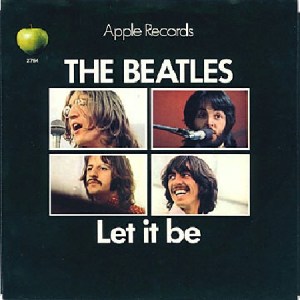
Single: “Let It Be”/”You Know My Name (Look Up the Number)”
Released: 6 March 1970

By March, the planned Get Back project had gone through multiple revisions, and was now being given to Phil Spector to see if he could do anything with them. In the meantime, they chose to release the next single from the sessions as sort of a precursor to the eventual album. This particular single was recorded at the recently built (and rebuilt, to working order this time) Apple Studios, in the basement of their Savile Row business office, with George Martin stopping by to produce. It was recorded on 31 January, technically the final date of the Get Back sessions, and a day after their ersatz “live” rooftop concert the previous day. This session was primarily to record tracks they would not have been able to perform up on the roof; it was a sort of “live in studio” performance instead. Three songs would be recorded and finished after multiple takes, and would all eventually show up on the album.

It was also at this time that the end result of the sessions had changed its name to Let It Be, not just to coincide with the latest single (and one much closer in date than “Get Back”), but also because of the change in the related film/performance project. The filming, originally planned as a “band at work” documentary to release alongside a potential television special, had turned into a full-blown feature film documentary instead. The idea of “getting back” to their roots was now obscured enough that a new title was necessary. This single would have been the first official mention of the title, its picture single cover saying as much.

Side A: Let It Be
Paul’s lovely piano piece dates back to late in the sessions for The Beatles (Paul was noodling around on the piano with this piece at least around 15 September 1968), and finally gets its full, gorgeous release here. It’s a solemn ode to his long-departed mother Mary, who’d been a nurse and midwife and definitely a force of nature in the McCartney household in his youth. She was strong and independent, but she was also deeply caring to everyone she loved, and she’d deeply affected Paul in that way. The lyrics are said to be very indicative of her, a solid emotional anchor when everything around was chaos (which makes sense, considering when Liverpool had gotten bombed in the early 1940s, she would gladly offer assistance to any wounded civilians).

The performance here is strong and heartfelt, with Paul on grand piano, John on bass, George on guitar, Ringo on drums, and their guest Billy Preston on organ. Interestingly, however, by this time their “no overdubs” policy had pretty much been dropped, so any tweaking on the music was given the go-ahead. On 4 January 1970, George Martin added a simple orchestral backing quite similar to “Hey Jude”, with the orchestra playing minimal notes. Also during that session, George Harrison dubbed on a guitar solo to replace the one he’d recorded on 30 April 1969. This solo is how one can tell the difference between the single version and the album version, as otherwise they are exactly the same: George’s solo is much slower and more meandering here.

Side B: You Know My Name (Look Up the Number)
This would most likely have to be the most curious of Beatles b-sides, and for many reasons. Originally started way back on 17 May 1967 during the Yellow Submarine sessions, it was dropped and returned to on multiple occasions as time and interest warranted. It’s somewhat similar to their cabaret/pantomime Christmas recordings of that era, recording the same melody and lyric (the entirety of it being “You know my name” and “look up the number”, natch) in varying music styles. The May ’67 recording was the crunchy and boisterous first segment; it was revived on 7 and 8 June of that year with additional styles added, with Rolling Stone member Brian Jones playing an admirable alto saxophone solo. It wasn’t until 30 April 1969–the same day George overdubbed the above solo–that John and Paul revived it once more, this time on a later-aborted plan to release it as the b-side to “What’s the New Mary Jane”, itself to be a Plastic Ono Band single. It was eventually edited down from a nearly six-minute track (its nearly full version is available on Anthology 3) and used as the b-side to their final single. Perhaps an odd choice, but an interesting one nonetheless, as each song balances the other out quite nicely.

*

This would be the final Beatles single in the UK canon, at least until whatever became of the Anthology sessions of 1994. However, the US chose to release one last single after this, the equally strong ballad “The Long and Winding Road” with George’s “For You Blue” as its b-side. Either way, this is a fine choice for a final single–despite everything, the band soldiered on and delivered a highly memorable and much-loved release.

*     *    *

Credit: jpgr.co.uk – The Beatles Complete UK Discography site

Credit: jpgr.co.uk – The Beatles Complete UK Discography site

Album: Let It Be
Released: 8 May 1970

For those who have not followed the history of the band and only know them by their releases, this album is somewhat of a let down, especially after the brilliance of Abbey Road. Its many flaws are apparent; some of the songs only reach jam session-level professionalism, others are tightly played but weak in melody, and others suffer from the Spector-ized bombast of overproduction. It’s not entirely a soundtrack to the movie’s tracks, either; some were recorded at Twickenham, others at Apple after filming had ended, and there are many overdubs and edits, despite the album’s liner notes commenting otherwise. Still, it’s an interesting collection in and of itself, and there are fine moments that rose out of the troubled sessions.

*   *   *

Side A

Track 1: Two of Us
Paul’s folky traveling song may have originally been inspired by his northern travels with Linda Eastman, but it can also easily be seen as a return to the folky singalong of “Love Me Do” in a way. With Paul and John dueting on vocals and Martin acoustics (George is on bass and overdubbed electric guitar, Ringo on drums), it’s a lovely example of the band recapturing their early to mid-60s folk-based sound. The lyrics are simple, maybe even a little silly and self-deprecating, but that’s part of its charm…it’s supposed to be that way. The album version was one of the songs recorded “live in studio” on 31 January 1969, and it’s actually a different take on their original version, which was much more electric and upbeat. [This version can be heard in part in the Let It Be film.]

Track 2: Dig a Pony
John’s first offering isn’t one of his best–he’d dismissed this one as “garbage” later on his career”–but it’s certainly up his alley in terms of quirkiness. This one of the few tracks recorded on the roof of the Savile Row Apple building, and after a quick false start (which you can see in the movie–Ringo yells “Hold it!” so he can quickly stub out his cigarette and pick up his drumsticks), it kicks into a quick 6/8-time introduction that has little to do with the main melody, which is a much slower 3/4. The song itself is a sort of blues, but its constant and unexpected chord changes give it an off-kilter ambience, which fits nicely with the odd wordplay. The lyrics don’t really mean much, an attempt at playing with as many differing and strange variations of “You can do anything if you set your mind to it”. The verses are balanced out with an “All I want is you” passage which may or may not serve as a chorus, and borrows the melody from the introduction. Again, it’s not one of John’s best, but it’s an interesting attempt nonetheless.

Track 3: Across the Universe
The first Spectorized Beatles song makes its appearance here. This is also a strange choice of track, as the version here is the early 1968 recording massively remixed and overdubbed with orchestral and choral layers and slowed down to its original speed. The band did practice full versions during the Get Back sessions, but the original was used instead. One reason was that a portion of the track does show up in the movie, but the other is that John’s donations to the album are so slim here that they felt this would be a good addition. The album version is the most well known version, and does have its own dreamlike quality similar to the No One’s Gonna Change Our World version, and though the strings and chorus sound like overkill now, it does in fact sound more polished and cleaner than the latter.

Track 4: I Me Mine
George provides his first of two tracks for the session here, and it’s one of his most personal and scathing. It’s partly inspired by his ongoing studies in Indian philosophies, but more to the point, it’s his second track in just under a year, just after “Not Guilty”, that’s squarely (but obliquely) aimed at John and Paul. By early 1969 he’d about had enough of his two leading bandmates’ egos, having passed over so many of his songs, only to work on half-baked tracks like “Maxwell’s Silver Hammer” or some such. The result is short (just under two minutes in the original April 1970 studio recording), but in those few minutes he spares nothing, all but singing “yes, it’s all about you, isn’t it?” This is also one of the tracks on the album that actually benefits from Phil Spector’s remixing; he repeated one full section to lengthen it by another thirty seconds or so, and the horns are only added to the back end of the verse. It’s one of the rare times where Spector truly understood how the Beatles worked with overdubs.

Track 5: Dig It
This fifty-second snippet is part of a much longer jam recorded at the Apple studio on 26 January, much shorter than even the four minute version shown in the movie. There’s not much to say here other than it’s a three-chord repetitive riff echoing Dylan’s “Like a Rolling Stone” but much bouncier, and featuring Billy Preston on organ and George Martin on maracas. John’s ad-libbed vocals don’t go very far other than riffing on the Dylan line and listing off random famous names. The only excitement here is John’s silly ad-lib at the end (taken from an earlier version of the same jam), which dovetails nicely with the next song on the album.

Track 6: Let It Be
Paul’s lovely piano ballad makes a return here. Again, it’s features the same backing tracks as the single version, though Spector tweaks this one as well. The orchestration has been punched up, some effects have been added, and a few of the lyrics have gotten slightly rearranged, especially near the end. A livelier guitar solo (recorded 4 January 1970) played by George is used here instead. The two versions are so similar that it’s quite hard to tell the two apart other than by George’s solo, but this one seems much more complete.

Track 7: Maggie Mae
The first side closes with a forty-second leftover from the Apple studio jams, which they would often rely on for warming up. On 24 January 1969 this particular morning’s warmup featured a number of their old skiffle favorites from their Quarrymen days, including this old standard about a prostitute who would rob her clients. It dies out rather quickly, but it’s a fun little aside nonetheless.

Side B

Track 1: I’ve Got a Feeling
The second track on the album to be culled from the rooftop concert, it’s a catchy track equal parts Paul and John. John kicks off the song with his excellent fingerpicking style he’d honed so carefully during sessions for The Beatles, but it’s Paul’s offering of the main “I’ve Got a Feeling” melody that drives the track. John’s “Everybody Had a Hard Year” (a Beatles demo that never got recorded) and “Watching Rainbows” (the origin of the fingerpicked riff, and found on many bootlegs) is a perfect counterpoint to Paul’s melody. An almost unintelligible bridge pops up twice in the middle of the track, a pounding, climbing riff, only to stop cold and be brought back down to earth by George’s quick solo guitar drop. [That drop may have been quite the source of contention during the sessions; soon after a run-through of this track in the movie, Paul and George quietly argue until George delivers the infamous “I’ll play whatever you want me to play” remark.] This is probably the strongest song of the entire rooftop concert.

Track 2: One After 909
Paul mentions this old track (probably written around 1957 and attempted but never released in 1963) in the film as one of the “Lennon-McCartney Originals” they wrote in the pre-fame days. They dismiss it as a rather corny lyric, but chose to include it in the sessions as part of their warmup jams of old favorites. While the original from way back when was a bluesy rocker, the album version, recorded as part of the rooftop concert, is more of a honkytonk country track. It’s played very loosely, perhaps a little too much so, as their performance sounds less than enthusiastic. On the other hand, it’s obvious that they’re having fun playing this old gem.

Track 3: The Long and Winding Road
Paul’s slow piano ballad may have been a hit single in the US and a much-loved track for many, but it has one of the most troubled of histories of any Beatles track. Musically, it’s inspired by Paul’s drives with Linda through the sparse landscape of Scotland, to and from his farmstead near Kintyre, and the original version, heard in the film and later on the 2003 release Let It Be…Naked, is actually quite lovely. It’s very sparsely arranged, with Paul on piano, John on bass, George on quietly-strummed guitar, Ringo on delicate drums, and Billy Preston on organ, including quite a moving hymn-like solo. However…the album version is the end result of an increasingly unstable Spector, who added such cloying and overbearing orchestral and choral overdubs that it turned a decent ballad into a horribly over-the-top schmaltzy track. The version is so precious that it enraged Paul to the point of quitting the band once and for all. He’d asked to have it redone without the overdubs, but his request was ignored and the version was the one released. Paul sued Allen Klein (their ersatz manager at this time, but more of a financial manager if anything) and the other three to dissolve the company they’d only created a few years before, and used Spector’s mishandling of the track as one of the major points. He’d hated Klein for some time and had never trusted him (John and George liked him, and Ringo was his usual ambivalent self), but he’d chosen to be the bigger man for some time…but this blatant mishandling had been the final straw. No other track in the Beatles catalog has this sound, and thankfully so.

Track 4: For You Blue
George brings things back to normal with an easy, fun twelve-bar blues track recorded at the Apple studio on 25 January. It’s jangly and lightly played, with George on acoustic guitar and vocals, John on a slide guitar (the slide used was actually a shotgun shell!), Paul on restrained piano, and Ringo playing soft but tight drums. It’s clear they’re all having fun playing this track–it’s evident even in the movie, where all four are full of smiles as they play. Lyrically it’s a simple love song that could easily have fit in with the lyrics of their early years, but the highlight is George’s asides of “Go, Johnny, go!” and “Elmore James has got nothing on this, baby!” during John’s spirited slide solos.

Track 5: Get Back
The album ends with another version of their early 1969 single. It’s exactly the same take, though expertly rearranged by Spector here to sound like a different one. He adds a bit of studio chat, including a tongue-in-cheek rewrite of the lyric from John (“Sweet Loretta Fart, she thought she was a cleaner, but she was a frying pan”), and instead of the breakdown at the end of the single version, he treats that as the end of the song and edits the classic ending line of the rooftop concert and the movie itself: ” “I’d like to say thank you on behalf of the group and ourselves and I hope we’ve passed the audition!” This is a bittersweet line, considering it’s a play on their very early days of auditioning for shows, as well as the very last lines heard by the band on vinyl as they broke up. Saving the track for last was a brilliant move, as it leaves the listener on a high note. It’s a reminder that, despite the band’s history (and the dodginess of the album itself), the band remained as true to their goals as entertainers and accomplished musicians.

*      *      *

Let It Be is often seen as a flawed masterpiece, and not exactly a fan favorite, due to its unhinged performances and lack of inspired musicianship. It’s glaringly obvious that this was an album of tracks where Spector was given, in the words of John a year later, “…the shittiest load of badly-recorded shit with a lousy feeling to it ever, and he made something of it.” Glyn Johns had done what he could, and the Get Back version of session does sound admirable if extremely disjointed, but John had a point–the band had been in a bad place and going in a bad direction after sessions for The Beatles, and no one was really in the mood. They’d been trained so soldier on despite their mental and emotional states, however, as that was the norm for the music industry in the sixties. Had they truly taken time off, time away from each other, and especially after sessions for Sgt Pepper back in 1967, perhaps things would have turned out differently. As it stands, however, the era of 1968 into the first half of 1969 was a band on the wane.

That said, the album itself does have merit. There are many interesting tracks that, if taken in a chronological context, serve as a middle ground between the angry and organic The Beatles and the slick and poppy Abbey Road. Many of the tracks here could fit on either album. “Two of Us,” “Dig a Pony” and “I’ve Got a Feeling” would have fit nicely on the former; “Let It Be” would have been a brilliant standalone single on par with “Hey Jude”; the non-Spectorized “The Long and Winding Road” and “I Me Mine” would have fit on the latter; “Get Back” could have remained a great standalone single as well. This view would also make Abbey Road the final album, which also makes sense, considering its own deliberate finality.

It also has been given much love over the years as well; in 1988, Slovenian industrial band Laibach recorded their own interpretation of the album (minus the title track) in a multitude of interesting ways, including a disturbingly dark “Get Back”, an operatic “Two of Us”, and an angelic “Across the Universe”. Many of the tracks have been covered over the years, and Paul himself has revisited “Get Back”, “Let It Be” and “The Long and Winding Road” many times during his solo tours. It’s by no means their best album, but as Beatles albums go, it’s still a solid one, despite its faults.

It would be the last new Beatles album released during their career, and the last release of their official canon, but it was by no means the last release ever. In 1973, Capitol released the 1962-1966 and 1967-1970 compilations, and for the next ten years they released various further compilations, each one a solid mix. In 1987 these compilations were all out of print and the entire catalog finally released on compact disc, with only the two Past Masters volumes serving as a compilation, collecting all non-album tracks. Still…these were all albums of previously released tracks. There would be no more new Beatles tracks.

At least, not until twenty-five years later, in 1995.

Next Up: the Anthology series, and the “Free As a Bird” and “Real Love” singles
Blogging the Beatles 51/52: No One’s Gonna Change Our World compilation and The Beatles’ Seventh Christmas Record

The next two items in this series are more curiosity pieces than actual Beatles canon, and were both released pretty much as afterthoughts at this point in the band’s history.  One was a leftover from early 1968, and the other a final fan club release cobbled together out of unrelated solo recordings.  Both were released in the last days of 1969, one week apart, some months after the band had unofficially split up.  Fans at this time had no idea of the band’s true status, other than the upcoming Let It Be film and album and some solo endeavors, so if anything, they must not have expected anything was up, other than a few random holiday season releases.

The last time all four Beatles would be in the studio together was back on 20 August 1969, finishing up major editing and mixing work on “I Want You (She’s So Heavy)”, though they would enter Abbey Road separately over the next few months for one thing or another.  John would come in a few weeks later in a failed attempt to mix and release “What’s the New Mary Jane” as a Plastic Ono Band single, and again a few weeks after that to work with Paul on finalizing “You Know My Name (Look Up the Number)” as its possible b-side.  Ringo would also show up in early December to work with George Martin on his television special With a Little Help from My Friends.  And in early 1970, Paul, George and Ringo would return to work on a few last-minute tweaks to a few Let It Be tracks.  Other than that, however, they would no longer record together collectively as the foursome they once were.

*     *     *

Album: No One’s Gonna Change Our World
Released: 12 December 1969

In early 1968, actor and comedian Spike Milligan–lead member of the venerated Goon Show crew–fashioned a charity album for the World Wildlife Fund.  He’d asked the band for a musical donation, and given the band’s adoration of the Goons, they willingly bent one of their cardinal rules:  the Beatles will never allow their music to be released on any various-artist compilation.  The album would contain a fascinating and vast mix of singers and musicians, from The Bee Gees, Cilla Black, The Hollies, Lulu, Cliff Richard, and more.  Given the Beatles’ status, they would of course get top billing, not to mention have the album name borrow (and slightly change) one line from their track.  The album itself was delayed for quite a time, originally to be released in late 1968 but held off until December 1969.  It remains the one compilation album that the Beatles willingly donated their time and music to.  [There have been various soundtracks featuring Beatles recordings since, but they have all been Beatle-related documentaries, such as Imagine John Lennon and The US vs John Lennon, or the Cirque du Soleil production Love.  To this date they have not let any band recordings show up on any non-band related soundtracks or compilations.]

Side A, Track 1: “Across the Universe”

The fourth and final track recorded before the band’s trip to India finally makes its appearance here.  The track very nearly showed up as a bonus track on a possible EP containing the new Yellow Submarine tracks, but after that idea fell by the wayside, the track lingered until it was gladly given to Milligan for his pet project.  It’s a gorgeous, dreamy song of John’s, though it’s one of his that he was never fully happy with.  Like “Tomorrow Never Knows”, he had a specific sound in his head that he wanted, but could never adequately reproduce or even describe.  He absolutely adored the lyrics, however, claiming them to be one of his best poetic works.  Oddly inspired by irritation via a conversation he’d had with Cynthia (apparently she’d been going on about something, and after they’d gone to bed, the opening line “words are flowing out like endless rain into a paper cup” popped into his head), he instead turned it into a deeply spiritual lyric taken from the band’s growing interest in Transcendental Meditation.

The track itself is light and almost completely acoustic, mainly featuring consistent rhythm guitar strumming from John, with the occasional noodling from George on electric guitar with light tremolo and wah-wah effects.  Paul shows up on piano and Ringo on  percussion, though they are so deep in the mix they’re barely noticed.  The song itself is lovely; its home key is a high D chord and there is a semblance of a melody, though, like “I Am the Walrus”, he uses multiple melodic phrases to achieve it.  Also fascinating and extremely rare is the fact that two young girls are featured on the track as well:  Lizzie Bravo and Gayleen Pease, two “Apple Scruffs” (the small but loyal group of hangers-on outside the studio who would cheer the band on as they arrived and left the studio) were brought in to sing the high-register part of the chorus “nothing’s gonna change my world”.

This track, recorded in early February, would go through multiple versions before its two major releases.  The first, remaining close to the original February sessions, would have wildlife sound effects added on 2 October, would be released here.  There were attempts to put some rather experimental sounds on the mix, such as the band humming, George featuring heavily on tambura, and a plethora of backwards effects–this version would show up on multiple bootlegs over the years.  It was later decided by Glyn Johns, the producer tasked with creating a Get Back album in January 1970, to clean up the original, take out the two girls, and use that as a John donation to the album (his output was rather thin by this point).  Finally, in late March/early April, Phil Spector had taken over the project and created an altogether different version, the one that shows up on the Let It Be album.

*       *       *

Single: The Beatles’ Seventh Christmas Record
Released to the Beatles’ Official Fan Club: 19 December 1969

Like the previous fan club Christmas single, this last outing was created out of separate solo recordings and put together by Kenny Everett.  This one is even more of a hodgepodge of directionless, unscripted recordings from the four.  Gone is the humor and the silliness of previous recordings.  Any humor seems a bit forced.  There’s not really much exciting here, other than a home recording of John and Yoko talking to each other at Tittenhurst, a bit of riffing and chatting from Paul, a song and a shameless plug of The Magic Christian from Ringo, and only a quick hello from George.

Taken in the context of the previous recordings, it seems kind of a sad and wistful end to a fascinating career.  On the other hand, it’s four men who are fast approaching their thirties and taking their life and their fame more seriously.  John and Yoko are clearly in love with each other here, sometimes cloyingly so, but they clearly enjoy each other’s company.  Paul’s segments are somewhat reminiscent of his 1968 message, a simple acoustic song and a thank you to the fans; at this point it’s believed he was working on tracks for his solo debut McCartney, so there seems to be a bit of distraction in his voice.  Ringo, on the other hand, clearly enjoys the holidays after all these years and still offers a bit of lighthearted humor and an old standard or two.

This would be the last new Beatles fan club release; by December of 1970 they had publicly and officially broken up.  That year’s release for the fans would then be a semi-official compilation of the previous seven recordings on solid twelve-inch vinyl.  The UK version, titled From Then to You, would have a simple white card cover with a printed label pasted on.  The US version would be slightly more exotic, using past pictures of the band and named The Beatles Christmas Album.

*      *      *

At this point, the band had completed almost all the projects that they had set out to do in the past year.  They were leaving very little behind; all told, there is an extremely small number of songs that were recorded and completed in studio during their time together that would not be released.  Many of those songs would remain in the vaults for years, only surfacing on inferior-sounding bootlegs, until the Anthology series arrived in 1995-96.  That left only one project to be released: the Get Back sessions.  That title would remain so until early spring of 1970, when they would finally be released in May under the name Let It Be, alongside the film of the same name.  The project was so fraught with personal and musical issues, that hardly anyone in the band wished to work on it.  Eventually they would hand it to the famed producer Phil Spector, who would turn questionable recordings into quite the interesting final chapter of the band’s existence.

*      *      *

Next Up: “Let It Be”/”You Know My Name (Look Up the Number)” and Let It Be

Jonc’s Best of 2013 Lists

Here we go, kids–time again for my personal top favorites of the past year! I’m going a bit retro with the format this time out, as that seems to have been the theme for me this year: revisiting older processes, tweaking them, learning from them, and updating them when and where necessary. Case in point was my end of year compilation, something I’ve been creating, or attempting to create, and sometimes failing for one reason or another, since 1988. There’s another retro thing right there: most if not all of you have heard me go on about that year in music, how influential and exciting it was for me. So I’d decided to go old-school and build it up aesthetically (Rob Fleming from High Fidelity would be proud of me), and in the process, I’ve decided that this year’s Lists will also be the same. Okay, I didn’t start with the countdown lists until the late 90s during my stint at HMV, but still…it’s the return to the countdown that matters!

So without further ado…

JONC’S TOP MUSIC OF 2013

Well, THAT Came Out of Nowhere…: Best Unexpected Releases from Classic Bands and Singers
My Bloody Valentine, mbv
The London Suede, Bloodsports
Boards of Canada, Tomorrow’s Harvest
Paul McCartney, New

‘Don’t You Already Have This?’ ‘Yes.’ ‘But You’re Buying It Anyway?’ ‘Uh…Yes?’: Best Box Sets and Reissues
We’ve Got a Fuzzbox and We’re Gonna Use It!!, Bostin’ Steve Austin [Splendiferous Edition]
We’ve Got a Fuzzbox and We’re Gonna Use It!!, Big Bang [Orgasmatron Edition]
So happy these two 80s albums finally got a remaster/reissue! Two of my favorites from 1986 and 1989. They couldn’t sound more different from each other (the former is loud and punky, the latter is sleek and poppy), but Fuzzbox were a hell of a lot of fun.
Love and Rockets, 5 Albums
This set is highly recommended; the first four LnR albums plus a disc of rarities, it’s some of the best college rock out there, and a HUGE influence on my own music.
The Clash, Sound System
The seminal punkers finally get a remaster, and OH MAN does this collection sound freakin’ AWESOME. It’s a vast improvement over the original CD masters.

Listening to Their Older Siblings’ Records: Best Retro-Sounding Releases
The History of Apple Pie, Out of View
Panda Riot, Northern Automatic Music
Nightmare Air, High in the Lasers
A number of bands nailed the noisy, dreamy shoegaze sound pioneered by My Bloody Valentine and Lush. Excellent stuff.
Smallpools, Smallpools EP
A four-tracker with sounds lifted straight from Prince’s Revolution days. Synthpoppy goodness.
Savages, Silence Yourself
A band that picks up where the original postpunk left off so many years ago, channeling LiLiPUT and early Siouxsie & the Banshees.
Daft Punk, Random Access Memories
This time out the duo borrowed Nile Rodgers for a while to channel some sweet 70s soul and disco beats. Great mix.
Capital Cities, In a Tidal Wave of Mystery
A band firmly stuck in early MTV 1982 new wave, complete with Alphaville keyboards set on “French horn” setting.

I Want My MTV YouTube: Best Videos
Capital Cities, “Safe and Sound”
With a song like this, it’s only fair that it has dancing. And it has a lot of it.
Rogue Wave, “College”
Okay, I admit I only knew there was a video for this about a few days ago. It’s on this list because this was filmed in the Presidio, about a mile or so away from my apartment. I know exactly where that spire is, and have taken many pictures of it! Also: I can’t be sure, but I think they’re riding the 1 California at the beginning and end of this video. 🙂
Cayucas, “High School Lover”
Goofy video, but it fits the goofiness of the song.
Pearl Jam, “Sirens”
The guys look GREAT for a band that’s been around since 1991!
World Order, “Last Dance”
Or, you know, pretty much any World Order video. They’re all awesome. 🙂

Best Songs
20. Johnny Marr, “Generate! Generate!”
19. Yeah Yeah Yeahs, “Sacrilege”
18. How to Destroy Angels, “Ice Age”
17. The London Suede, “Barriers”
16. Small Black, “Free at Dawn”
15. MS MR, “Hurricane”
14. Low, “Plastic Cup”
13. Boards of Canada, “Reach for the Dead”
12. The Polyphonic Spree, “Popular By Design”
11. My Bloody Valentine, “New You”
10. Rogue Wave, “College”
9. Placebo, “Too Many People”
8. Django Django, “Default”
7. Editors, “A Ton of Love”
6. Wire, “As We Go”
5. Trails and Ways, “Como Te Vas”
4. Pearl Jam, “Sirens”
3. Cayucas, “High School Lover”
2. Bastille, “Pompeii”
1. Dutch Uncles, “Fester”

Best Albums
20. Cut Copy, Free Your Mind
19. Depeche Mode, Delta Machine
18. Small Black, Limits of Desire
17. Little Green Cars, Absolute Zero
16. How to Destroy Angels, Welcome Oblivion
15. MS MR, Secondhand Rapture
14. Beady Eye, BE
13. Bastille, Bad Blood
12. Arctic Monkeys, AM
11. The National, Trouble Will Find Me
10. Dutch Uncles, Out of Touch in the Wild
9. My Bloody Valentine, mbv
8. The Polyphonic Spree, Yes, It’s True.
7. Sleigh Bells, Bitter Rivals
6. Editors, The Weight of Your Love
5. Tired Pony, The Ghost of the Mountain
4. Pearl Jam, Lightning Bolt
3. Wire, Change Becomes Us
2. Johnny Marr, The Messenger
1. Boards of Canada, Tomorrow’s Harvest