Forty Years On: Favorite Music from 1986 Part IX

My obsession with college radio had now expanded to the point where I wasn’t just reading The Trouser Press Record Guide over and over (I’m pretty sure I had my own copy of it at this point) or looking through the bins at Strawberries and Musicland; I was frequenting the indie shops down in the Pioneer Valley that catered to the college crowds down there. I was also starting to tape episodes of Night Flight and 120 Minutes more often. By October, WMUA was finally back on the air and I would be listening to it in the evenings when I really should have been doing my homework (or later, sleeping).

It was also around this time that I started learning about alternative lifestyles as well. I mean sure, I’d known about them for quite some time, mainly as stereotypes on TV shows and movies and comics, but thanks to the music I listened to and the magazines I’d started picking up, I learned that there was so much more out there. As a kid stuck in a small and somewhat conservative backwoods town in central Massachusetts, all of this was eye-opening and mind-expanding. I didn’t have to be stuck as the stereotypical nerd with the spiky hair and dorky clothes. I could be whatever the hell I wanted to be. And now that I’d been introduced to a new circle of friends that accepted that way of thinking, I found myself wanting to explore further.

Spoons, Bridges Over Borders, released October 1986. This Canadian band was alas on the downswing by the time this album came out — they’d been popular in their own country as an early 80s new wave band, but their detour into rock came with diminishing returns. That said, however, this was a surprisingly solid record and the title track got a bit of play on 120 Minutes, which is where I’d heard of them. I picked this one up used at Al Bums not that long after.

Colin Newman, Commercial Suicide, released October 1986. The co-lead singer of Wire’s fourth solo album recorded during their multi-year hiatus is aptly named (and very cheeky and on brand for him), as it’s more melodic and less experimental than his previous albums. It’s a hint of what the new and reformed Wire will sound like in just a short time. I remember seeing this one in the bins but never got around to picking it up (mainly as I wouldn’t become a Wire fan until 1987) until my freshman year in college.

Timbuk 3, Greetings from Timbuk 3, released October 1986. Here’s a perfect example of a full-on alternative band that somehow had a huge charting song only for them to become a one-hit wonder. It’s a perfect example of Gen-X wit: a super poppy and upbeat track hiding the much darker apocalyptic words. I remember WMDK really latching onto this album and playing several tracks off it.

General Public, Hand to Mouth, released October 1986. The one thing I remember about this album is that its full-page ad campaigns were everywhere in the music magazines. It alas did not have a charting single like 1984’s All the Rage did with “Tenderness”, and Dave Wakeling and Ranking Roger went their separate ways.

Big Audio Dynamite, No. 10, Upping St., released October 1986. The follow-up to the brilliant This Is Big Audio Dynamite surprisingly did better in the UK charts, even despite it being a darker-edged and less sample-heavy record. “C’mon Every Beatbox” got a lot of play even on US rock radio and MTV. A month later I’d hear the deep cut “Dial a Hitman” on WMUA — a quirky track featuring a spoken word outro featuring Matt Dillon and Laurence Fishburne! — which would give me all the more reason to pick up the cassette.

Pop Will Eat Itself, Poppiecock EP, released October 1986. I’m pretty sure this is when I first heard about PWEI as they’d been mentioned in passing in Smash Hits regarding the short-lived Grebo movement in the UK (a weird Midlands subculture leaning heavily on greasy biker chic). The bands were either surprisingly good (like PWEI and The Wonder Stuff) or shockingly terrible (like Zodiac Mindwarp).

Ultravox, U-Vox, released October 1986. This band had pretty much come and gone in the US after the minor hit “Reap the Wild Wind”, but they remained a favorite in the UK. I remember this one coming out then disappearing pretty quick, with “All Fall Down” getting just a little bit of play on WRSI and WMDK.

a-ha, Scoundrel Days, released 6 October 1986. As expected, following up with the ridiculously popular Hunting High and Low was going to be hard, especially when they expected yet another bright and poppy “Take On Me”. This ended up being a much quieter and darker album that didn’t do as well in the US other than the minor single “Cry Wolf”. Which is too bad, because the single “Manhattan Skyline” is an absolutely gorgeous ballad that should have gotten a hell of a lot more airplay.

Slayer, Reign in Blood, released 7 October 1986. I remember this one coming out because it caused so much distress with its imagery and lyrics, but also because it had blown so many minds for its sheer force and creativity as a thrash metal album. The other thing I remember is that the first time I heard it was actually on a friend’s walkman…as we were leaving catechism class. Heh.

Talking Heads, True Stories, released 7 October 1986. This was such a polarizing record for fans and critics because of its place as a sort-of-soundtrack for the film of the same name and the lack of experimental new-wave/no-wave sound they’d long been known for. The songs were tight and radio friendly, including the ubiquitous “Wild Wild Life”. (Personally I like “Love for Sale” a lot more.) In retrospect it does kind of work as a stepping stone between the intriguing Little Creatures and the world music influences of Naked.

Wang Chung, Mosaic, released 14 October 1986. Yes, the album with “Everybody Have Fun Tonight”, but this is definitely not a filler album with That One Hit. It’s got several enjoyable and pop friendly tunes like “Hypnotize Me” and “Let’s Go”. Someone gave this one to me for my birthday, I think?

The Smiths, “Ask” single, released 20 October 1986. The Manchester foursome once again come up trumps with yet another brilliant standalone single, a simple love song with the usual self-effacing Morrissey wit with the catchiest of beats.

Frankie Goes to Hollywood, Liverpool, released 20 October 1986. The band’s second album is almost always forgotten about, but I find this one a vast improvement. It’s tighter and darker-edged, and far more digestible than the overdone Pleasuredome. The critics enjoyed it, but the fans (and apparently Holly Johnson himself) didn’t, and they’d break up soon after its release. I picked this one up on cassette on a whim after hearing the storming “Warriors of the Wasteland”, and for the next several months it would get repeat plays on my walkman late at night. It would also be part of my expanding writing session soundtrack.

Iggy Pop, Blah Blah Blah, released 23 October 1986. This was another example of an album that was a critical favorite but a miss everywhere else. It’s Iggy at his most radio-friendly — something he’d do again a few years later with the breakthrough Brick by Brick — with the hit cover of Johnny O’Keefe’s “Real Wild Child (Wild One)” and “Cry for Love”.

The Police, Every Breath You Take: The Singles, released 25 October 1986. The reunion that should have been but wasn’t, this trio gathered several of their biggest hits on this tight collection along with the rerecorded version of “Don’t Stand So Close to Me” as the lead-off single. This was a band I knew well thanks to heavy radio play and a copy of Synchronicity, so this was a great collection that got a lot of play for me. [It’s probably for the best that their original plan of rerecording all their hits fell through due to Stewart Copeland suffering an injury, as this version of “Close” has not aged well at all, whereas the original remains much more timeless.]

Howard Jones, One to One, released 25 October 1986. Another album that couldn’t quite catch up to its previous release (in this case, the brilliant Dream Into Action), it nonetheless features Jones writing smart and enjoyable synthpop. This was another purchase through the RCA record club for me.

The Stranglers, Dreamtime, released 27 October 1986. This band is a good example of a group that softened up as they went along; their early punk and post-punk albums and singles were hard and crunchy but by the early 80s their sound grew more melodic and emotive. “Always the Sun” is a great example of that, and it got repeat play on 120 Minutes around this time.

Kate Bush, “Experiment IV” single, released 27 October 1986. A new teaser single for her upcoming greatest hits collection, I remember seeing the video for this on Night Flight — they’d done a video retrospective of her music. I’d been a passive fan since the classic single “Running Up That Hill” (which was a surprise hit in the States in 1985, predating its new life via an appearance on Stranger Things by several decades). They’d made a big thing out of this video due to its appearance of several famous British actors like Dawn French, Hugh Laurie and Richard Vernon.

XTC, Skylarking, released 27 October 1986. As mentioned, “Dear God” was still resigned to the b-side of “Grass” at this time, but despite that, this album was successful from the get-go, receiving several high-score reviews from critics and fans alike. It got a significant amount of play both on college radio and AOR in my neck of the woods with tracks like “Grass”, “Earn Enough for Us” and the dreamlike “Another Satellite” (a personal favorite of mine).

*

Next up: The crossover — full-on nonconformity! Sort of.
Forty Years On: Favorite Music from 1986 Part VI

I remember midsummer of 1986 being hot, excessively humid and full of excitement. Even despite my day job at the supermarket taking up some of my time, I was heavily immersed in my growing music collection and the different radio stations I now listened to on a daily basis. I wasn’t just listening to music for a few hours at this point; I was often listening all day long, a habit/obsession I haven’t really bothered to get rid of since. While most teens my age were reading comic books or watching TV, my radio was always on and I was reading music magazines and poring over Trouser Press for the next titles I wanted to look for.

Yet who knew that one unconventional album would significantly alter the course of my life…?

*

Let’s Active, Big Plans for Everybody, released July 1986. I remember the music magazines and that music reviewer in the Telegram really liking this band. I didn’t know much about them other than that they were (he was?) REM-adjacent, basically musician-producer Mitch Easter with various friends, and that all the critics loved his Athens GA-meets-psychedelia sound. I’m pretty sure I heard them in passing on WMDK at some point and I also remember seeing the magazine ad for this album, though I never got around to picking up their stuff because it was just so damn hard to find my way!

Gene Loves Jezebel, Discover, released July 1986. This was an interesting band as they successfully crossed over in the US, with “Heartache” and “Desire (Come and Get It)” getting decent amount of play on rock radio and MTV. They kind of passed me by as I’d initially filed them away as another 80s hair band, but they grew on me the more I heard their songs.

The Smithereens, Especially for You, released July 1986. Another band that crossed over to rock radio and MTV to an impressive degree, this New Jersey quartet’s trick was that they took blues and sped it up, rock ballads and quieted them down, and played it all with guitars tuned down almost a full step to achieve that heavy low end. “Behind the Wall of Sleep” was a big favorite of mine for quite a while that summer.

Guadalcanal Diary, Jamboree, released July 1986. Yet another band the critics loved yet never quite achieved any large success, this band from Marietta GA laid down countrified indie grooves similar to their Athens brethren REM, though with a much lighter touch. Another album I remember seeing ads for in music magazines and hearing a few things on WMDK, but they wouldn’t quite land any success, at least not for another year…

Eurythmics, Revenge, released July 1986. I’d like to think that this was the Eurythmics album that finally broke them through into consistent mainstream success. While they were one of the mainstays of the original MTV era with “Sweet Dreams”, they’d only have the occasional memorable hit single until the wild and bantering “Missionary Man” hit the airwaves and caught on massively. It’s my second favorite album of theirs.

Peter Murphy, Should the World Fail to Fall Apart, released July 1986. The video for his cover of Pere Ubu’s “Final Solution” would get the occasional play on MTV now and again, and would eventually get repeat plays on future episodes of 120 Minutes, but I was only vaguely aware at the time that he was formerly the lead singer of Bauhaus. I’d see this album now and again in the bins, but it would be a few more years before I’d catch on and become a big fan of his solo career.

David + David, Boomtown, released 7 July 1986. I remember hearing this song on WAAF a lot and being of two minds about it. I loved the desperate mood the music created, yet I wasn’t a big fan of its depressing skeezy-side-of-town lyrics (I was depressed enough at the time, thank you very much). I kept on returning to it, however, because it was such a sonically amazing song to hear on a hot and hazy summer day with the radio on and the windows open.

The Communards, Communards, released 21 July 1986. To be honest, the original Thelma Houston version is one of my favorite disco songs of the 70s, and I grew up with that single in the family collection, and when I heard that Jimmy Somerville left Bronski Beat and did a banger of a cover, I loved it. I’d eventually own the promo single for it (yet another ‘borrow’ from the local radio station a few years down the line).

The Smiths, “Panic” single, released 21 July 1986. How do you follow up an absolutely brilliant album that’s an instant hit with several of your best songs on it? By releasing one of your most popular non-album singles! Allegedly written by Morrissey and Johnny Marr after hearing the terrible breaking news about the Chernobyl disaster on the radio, only for it to be immediately followed by the innocuous “I’m Your Man” by Wham!, the band’s fans took it as a screed to the fact that commercial radio (and the rigidity of the BBC) were tone-deaf and and out of touch. Its oddly chipper “hang the DJ” closing refrain only underscores what was fast becoming one of alternative rock’s biggest issues with popular music: stop choking us with this slop and give us what we want.

REM, Lifes Rich Pageant, released 28 July 1986. After four stellar and critically lauded albums but still remaining well entrenched in the alternative college radio scene (even despite the occasional breakout into rock radio), it took the brilliantly beautiful single “Fall On Me” to send them further towards a bigger following. IRS Records winced at its simplistic 8mm filmed-upside-down video, yet somehow it caught on not just on MTV but showed up on several rock radio stations. The album also feels different form their previous records; they’ve moved past the quiet countrified jangle-rock and mumbly oblique lyrics and moved closer towards meaning: the stunning emotional release of “Begin the Begin”, the desperation of “Cuyahoga”, the hope of “These Days”. And even the occasional silliness that they formerly kept hidden, like “Underneath the Bunker” and “Superman”. It’s such a surprise after their previous records and one of my favorite early-era releases of theirs.

Sigue Sigue Sputnik, Flaunt It, released 28 July 1986. Out of all the 80s albums that could have claimed the title, this was the one that completely altered the course my life. I’d picked it up at a small shop in downtown Amherst, a little hole in the wall inside an indie clothing shop. I’d heard about them a month or so earlier via the music magazines — the news being that they’d been signed to EMI Records for an incredible four million pounds, they were five guys dressed up in fishnets and fright wigs and played synthesizers and used unconventional samples and were heavily influenced both by Elvis and by synth duo Suicide. And their album featured actual commercials. I became absolutely obsessed with this album, listening to it constantly on my headphones at top volume to fully immerse myself in its futuristic weirdness. It resonated with me to such a degree that it broke whatever link I had to commercial radio at the time: this was music that truly spoke to me personally, even despite its goofiness and ridiculousness. It was just so out there, breaking so many rules simply by ignoring them, but that was its appeal: it’s okay to let your freak flag fly. Enjoy it. Embrace it. Live it. Mind you, I had no plans or inclination to start fashioning myself up in punk attire, considering that was a fast track to getting bullied by the jocks and ostracized by pretty much everyone else…but this was all about the mind and the heart for me. It told me that it was okay to dig deeper, to go further and ignore whatever anyone else might say. And I never looked back.
More importantly, this album was also the catalyst to reunite with me with someone I’d met in junior high, someone who would become a lifelong friend and welcome me into an altogether different circle of friends that changed my life infinitely for the better. I’d written a glowing record review in the school paper and they’d reached out to me. Within a month I was a part of this new crowd — they were a year ahead of me, but exactly on my wavelength in every other way. The next year and a half would be one of the best times of my teenage life.

*

Next up: where to go from here…?

All I wanted was a Pepsi

Conformity is a hell of a drug. I’ve said that before and I still stick by it.

Conservatives drafting up laws outlawing transgender care, targeting LGBT+ people with “Christian”-based hatred disguised as ‘moral concern’, outlawing drag shows, banning books, avoiding major health concerns by lying about them, bending the rules to gather more votes, chasing away the homeless instead of helping them, embracing gun culture to the point of pornography, refusing monetary assistance for those who need it, hating on anyone who isn’t cis and white and rich…need I go on? It’s like the fucking Reagan/Thatcher eighties all over again.

And they won’t listen to anyone telling them otherwise. Not that they can’t, but that they don’t want to.

We’re not asking for special laws. We’re not asking for preferred service. We’re not even asking for special privileges. All we want is the same thing the rest of you have. Just one bit of peace. And you won’t give it to us.

*

What the hell does this have to do with my music blog?

I think about this all the time these days. I mean, it’s hard not to, when several media avenues are filled with this bullshit. Again, forty years later. Same shit, different generation.

I’ve often mentioned how college radio opened my eyes and blew my mind when I was fifteen, when it became apparent that I was not going to fit in with the cliques and social circles of my small town. Even then when I encountered a style of music that resonated with me, I didn’t just connect with it, I took a deep dive. I’d obsess over discographies, get familiar with album cuts and b-sides, learn the band’s backgrounds. I read about the bands’ local fanbases, their inspirations and influences, and why they sounded like they did. That led me to other bands, other alternate ways of listening and thinking. I may not have physically latched onto the scene in the same obsessive way, musically or fashionwise, but mentally and emotionally I’d allowed myself a complete immersion.

That is to say, I’m pretty sure that unlike your casual music listener, I swallowed the whole idea of ‘the alternative’ fully and completely. I pretty much stopped trying to connect with the popular or the status quo. I could connect if I wanted to, but only when I wanted or needed to. [I will freely admit that I had to bow to the status quo for a few years in the 90s, mostly out of financial and emotional desperation, but that’s another story.]

I know many people who don’t take the spiteful evangelical right-wing conservative base all that seriously, partly because for a small but annoyingly loud base, they’re mostly all bark and no bite. I try not to take them too seriously myself by remembering that there are so many more people out there whose social mindset is calmer and more compassionate. It’s easy to slip into the feedback loop that there’s a constant WAR! going on (after all, this base prides itself on such hyperbole) that makes one want to fight back with equal vigor. I mean, this is truly a muddy, chaotic battlefield here, if we’re going to roll with the metaphor. Those at the sidelines might not understand how terrible it is in the middle of it all, and those caught in the middle might not notice how peaceful it is at the sidelines.

Over the years I’ve altered my point of view about all of this, partly because I was utterly sick of reacting to it all. Someone says or does something shitty, I respond emotionally, they double down, and so on. The feedback loop continues. It was taking me nowhere. It was physically unhealthy for me, and something had to change.

I had to remember what I’d learned in my youth: conformity is a hell of a drug. Why was I playing right into their emotional mind games? Why was I reacting every single time? I mean, let’s be real: I don’t have to play by their fucking rules. Never mind asking why I’d been doing so in the first place, because that’s not important. What is important is knowing that I don’t owe them the pleasure. I don’t owe them the satisfaction, especially if they’re spending all their time taking mine away.

It took me a fucking long time to figure that out because of so many social niceties and conflict avoidance issues drilled into my head over the years. It’s not only weird to admit I have that clarity now, but that I’d figured all that out decades ago, back when I was a moody-ass teenager with an obsession with alternative music and the lifestyle behind it. And I decided that considering that I already knew the answer, I didn’t have to dwell on the time wasted…I just had to pick up where I left off.

The status quo and the rigid conformity and the hatred and the ignorance and the bigotry will always be there, unfortunately. It’ll come and go, just like any other cycle of life. The most we can do for ourselves is to remember that we don’t have to play by their fucking rules.

Dancing screaming itching squealing fevered feeling

The-Cure-Kiss-Me-Kiss-Me-Kiss-Me

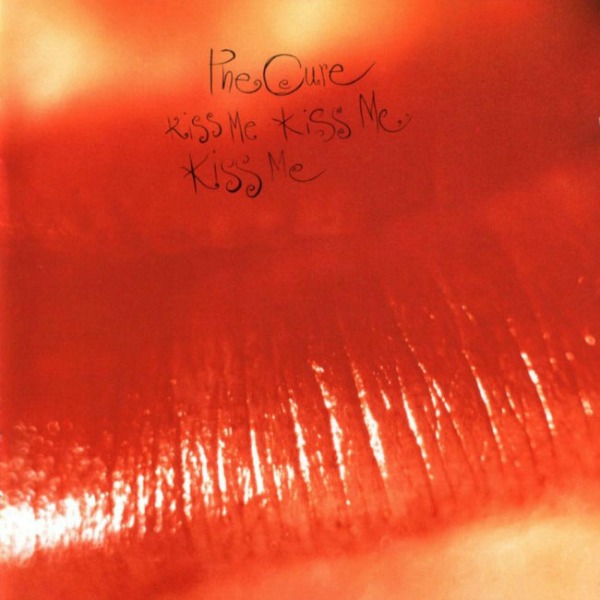
It was 28 years ago today that The Cure’s Kiss Me, Kiss Me, Kiss Me was released, and of course I’ve got it playing on my PC while I’m writing this up.

The Cure’s release history up to that date in the US was quite scattershot in the mid-80s…multiple labels over the course of four years (Boys Don’t Cry on PVC, Happily Ever After and Pornography on A&M, the 1982-83 singles and The Top on Sire).  It wasn’t until 1985’s much poppier and upbeat The Head on the Door showed a new and invigorated band, and their new label Elektra made sure they didn’t falter.  The 1986 singles compilation Standing on a Beach only served to push their status ever higher, and by the time Kiss Me (or “Kiss Me Cubed” as my friends and I used to call it) came out, America had finally taken notice.

This sprawling yet exciting double album came out at the same time I was asserting my individualism as a teenager.  A new circle of friends, a burgeoning record collection full of newly-found college rock, and a fresh coat of not giving a fuck anymore of what other kids thought of me.  I’d gone to see them with my sister and a friend that August in Worcester, and came back with a concert tee with Robert Smith’s pasty, lipsticked mug on the front and the lyrics to “Hot Hot Hot!!!” on the back.  I practically wore that shirt out in the ensuing months. I certainly got a lot of guff from both kids and teachers, but I didn’t care. This was the new me.  Forget fitting in, time to figure out who I was.

Kiss Me was indeed a sprawling album, but like Standing on a Beach it got a hell of a lot of play on my tape players.  I was a huge Cure fan by that time, and thanks to Elektra buying out the old contracts, their early releases were finally much easier to find.  I listened to them all on heavy rotation whenever and wherever I could.  I even predicted that “Just Like Heaven” would end up being one of their next (and best, and most famous) singles, and I was not proven wrong.

My friends and I would occasionally take road trips down to Amherst and Northampton to hang out at the record stores, and during the fall of 1987 and into 1988 this album would often be playing.  [This was back in the days before most of our parents’ cars had tape decks, so one of us, usually me, would lug along a boombox and have it playing in the back seat.  During one memorable trip when this was playing, the drinking of many sodas that evening came to its expected fruition and I urged they pulled over.  As I’m running into the woods, they pulled away, leaving me completely alone. Returning a few minutes later, they saw me on the side of the road, running after them, and slammed on the breaks, causing my radio to crash to the car’s floor in a thump! loud enough that I heard it from fifty yards away.]  To this day I still think of the winding Daniel Shays Highway and the back roads of Shutesbury when I listen to this album.

Compared to their earlier, darker albums of the early 80s and the intense frailty of Disintegration just a few years later, this album seems is so much more energetic, even a bit psychedelic.  It kind of reminds me of Prince’s Sign ‘o’ the Times, which had come out almost exactly two months earlier; it’s a beefy double album full of multiple and quite different genres, but it’s also a crowning achievement where nearly all the tracks are memorable, wonderfully produced, and leaves little to no room for boredom.  But also like Prince’s album, Kiss Me was a departure from their earlier albums, where they chose to break down the barriers, both creative and personal, to record something they would be proud of.  I kind of think The Head on the Door was a practice run, Standing on the Beach was the fanbase test, and this was the first official run; it would culminate of course with Disintegration.  It’s of no surprise that this was also the era of one of their best band line-ups, with Simon Gallup on bass, Porl Thompson on guitar, Lol Tolhurst on keyboards and Boris Williams on drums.  This particular quintet remains one of the strongest versions of the band for many older fans, as their sound was amazingly tight and inventive.