Songs from the Eden Cycle, Vol 1

cassette30082013

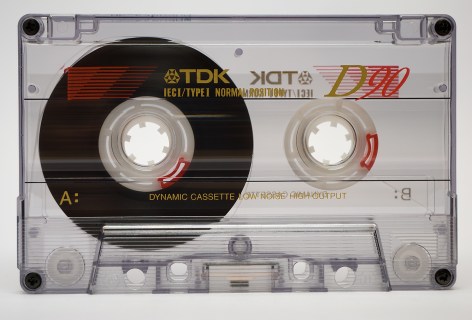
The TDK D90 blank cassette. My tape of choice for almost all of my 90s mixtapes.

One thing I’d always done during the course of a writing project is to give it a soundtrack.  Whether it’s a playlist, a list of specific albums, or a mixtape, it serves to create a specific mood that I’m looking for.  With The Phoenix Effect, having envisioned this as a multi-book project even then, I’d given the series the name The Eden Cycle (referencing both obvious religious imagery and EdenTree, a megacorporation that would be a part of the plot).  It seemed fitting to give the mixtapes the same title.

At the time, my idea had been of souls inhabiting AI cybernetic bodies — which in hindsight created a lot more trouble than it was worth — so the imagery I was looking for was much darker and creepier.  That said, however, I chose not to focus on dystopian pessimism; instead I wanted my story to ascend past that into something positive.

This is the first of four mixtapes I made during 1997-8; this one was made in mid-April of 1997, just before I went on a road trip out to Ohio to visit a friend of mine.  One of the major reasons for making it was so I could listen to it during my commute and think about what I was going to write.  Over the next few days I’ll be sharing the other three original volumes from this era.  The links are to their YouTube/Vimeo videos (they’ll open in a separate tab), and I’ll also provide a brief background as to why I chose the song for the mix.

Side A

  1. Poe, “Hello [Band Version]”
    I liked Poe’s Hello album, but the kickass single remake of the song felt like a perfect opening to a mix tape.  It fit in with the cyberpunk feel of TPE that I was originally aiming for as well.  An ‘opening credits’ song, if you will.
  2. Failure, “Heliotropic”
    Fantastic Planet was getting a crapton of play on my cd players, both at work and at home during my writing sessions.  This track’s spaciness, loudness and extremely heavy, crunchy bass evoked the exact amount of tension I was looking for.  It had that feeling of being outside on the brightest day with the heaviest of hangovers.
  3. U2, “Mofo”
    Pop was still getting a lot of play as well, and I loved how twitchy this one was.  I used this track as a kind of gauge to remind me of how Bridgetown felt on a spiritual energy level: a sprawl of millions of people, each with different levels and directions of this energy, all dissonant and discordant.
  4. David Bowie, “Dead Man Walking”
    I’ll be honest, I wasn’t the biggest of Bowie collectors — I think I only owned maybe five or six releases, tops — but Earthling (released earlier in 1997) connected with me big time.  I loved its techno influences and its paranoia.  This track fit my image of Nehalé: a man who was destined to take a specific action that would affect a vast number of people, and he had to force himself to come to terms with that.
  5. Psykosonik, “Need to Die”
    There was a brief surge of darkwave techno in the mid to late 90s (super-generalization: darkwave = gothy electronica) that I got into, and Psykosonik’s Unlearn was handed to me by one of my HMV coworkers (Thanks, Doug!).  I put this here mostly as a mood piece, but I did like how it fit in with one of the TPE themes: people didn’t necessarily have to die to be reborn spiritually.
  6. Live, “Lakini’s Juice”
    Another mood piece, this one suggesting (to me) discomfort in a situation one could find themselves in.  I believe I used this as inspiration for Poe’s constant irritation at not being able to complete tasks put before him.
  7. Elysian Fields, “Lady in the Lake”
    Their Bleed Your Cedar album was handed to me as a promo, and I liked its swampy feel.  The album (and this track) helped me focus on how a recently awakened character would have to deal with their situation; both feeling disconnected from everyone (I’m the only one like this) and superconnected (I can intimately sense everyone around me) at the same time.
  8. Moby, “That’s When I Reach for My Revolver”
    As a Masshole, I had to appreciate Moby covering the Mission of Burma classic (as well as putting out a punk album, considering he’s more known as an electronic musician).  Just like the original, this song was a perfect example of dedicated and determined nonconformity that fit in with Vigil.
  9. The Verve Pipe, “Veneer”
    Not that long before this, I’d seen this band live in Boston, and they did a beautiful and transcendent version of this track (which, as it happens, is about a long road trip through Michigan while high).  To me, it evoked a sensation of being elsewhere; in the process it inspired how I had my characters react when they first visited Trisanda.

Side B

  1. Richard Einhorn, Anonymous 4, “Exclamavit”
    I’d heard Einhorn’s Voices of Light on NPR one evening when I was driving into Boston in the summer of 1995, and I was completely floored by the gorgeousness of it.   [It was inspired by Carl Theodor Dreyer’s 1928 silent film The Passion of Joan of Arc and can be heard as its soundtrack on the Criterion dvd.]  I wasn’t the biggest orchestral music fan at the time, but this slowly set me on my way.  This particular opening felt like another good ‘opening credits’ piece, and thus opens Side B of the tape.
  2. Pulp, “Common People”
    The album version of their classic single is a much more sinister affair than the single version (there’s an additional verse that truly reveals the disgust he holds back in the rest of the song).  While the plot of the song doesn’t quite fit the plot of my story, it does reflect the bigoted view of The Other that was part of my story’s plot.
  3. Sponge, “Isolation”
    There’s a great Lennon tribute album called Working Class Hero from 1995 that I listened to a lot then, and I loved this version of the Plastic Ono Band track.  This ties in with the previous Pulp track, a forced cultural disconnect that one can only accept for so long before one has to fight back.
  4. The Offspring, “Gone Away”
    Part of the reason this one was on here is that I heard it so many times during that Ohio road trip!  Again, tension and discord.  This time because something’s been taken away and you can’t do a damn thing about it.
  5. Filter, “Hey Man, Nice Shot”
    This track inspired my love for the Slow Build:  starting off quiet and sparse, but gradually growing louder and more intense in energy.  The original Chapter 1 of The Phoenix Effect used this song as a template, which carried all the way to the opening of A Division of Souls.  The ADoS opening is supposed to feel like someone slowly turning the volume louder and louder until it climaxes in an intense burst of energy.
  6. Failure, “Daylight”
    Okay, how many times is this track on one of my mixtapes?  One of my favorite songs of all time, and even at the start of the project I knew it would be the Ending Credits track to my story.  [NOTE: I’m planning on writing a script of the ‘director’s cut’ for the ending of A Division of Souls and posting it over at the Bridgetown blog later this month, which uses this song as its soundtrack.]  The story is done, everyone’s exhausted, and the day has been saved…but the fight is far from over…and roll credits.  [Seriously, folks…go buy Fantastic Planet.  It’s a fucking phenomenal record.]
  7. U2, “Wake Up Dead Man”
    A denouement track after the epic ending track preceding.  I knew TPE was going to end on an unresolved note, leaving it wide open for its sequel.  The day has been saved, but the work’s not over.  Relationships between certain characters have been strained or broken; others have refused to give in so easily.  For me, this song is a plea for the war to cease before it goes too far. [I never forgot this idea and eventually used it in The Balance of Light.]
  8. The Tragically Hip, “Grace, Too”
    Canada’s favorite band with one of their favorite hits, which I remember seeing on MuchMusic back in 1994 (partly because I loved that the video was created using monitor feedback).   A lift from the previous song, in which we shift viewpoint to someone who knows they’re in the lower classes but still has high hopes for themselves.  This idea would later become the gathering of the Mendaihu at the Moulding Warehouse in A Division of Souls.
  9. Jamiroquai, “Virtual Insanity”
    …and after all that, ending on a slightly more positive note (somewhat), the final track brings a kind of…well, not hope, but an awareness.  This was a big plot point even in TPE: the characters had to become completely aware of their situation, where the conflict wasn’t in trying to figure it out, but in coming to terms with it and choosing either use it, abuse it, or avoid it as long as they could.


Hope you enjoyed my little bit of tunage sharing there!  I’ll be following up with the other three volumes in the original series soon!
Music from the Eden Cycle: U2’s Pop

https://dailymotion.com/video/xrtmga

Say what you will about U2’s Pop, it’s an interesting album to say the least.  It’s not quite an extension of their electronica-influenced albums Achtung Baby and Zooropa (or their foray into deliberate non-commercial territory under the Passengers moniker, Original Soundtracks 1) as it’s a deliberate side-step.  It’s twitchy in places, barren in others.  They freely admit that it was an unfinished album, a record they should have spent more time on, had they not had a major tour to prepare for.

It’s not their strongest, but I still enjoy it.  It kind of reminds me of 1984’s The Unforgettable Fire in a way, as it sounds like a band in the middle of evolving.  I remember when it was about to come out while I was at HMV; the PGD sales rep (back when U2 was distributed by PolyGram) was obviously trying to upsell it because hey — Big Name Band, right?  But he knew he couldn’t quite pull it off.  He was let down by it, having felt it was one of their weakest albums.  Well…in the context of their career path, when you hit the stratosphere with The Joshua Tree and you keep getting more ridiculously popular, any move aside from UP seems like a step down.  And to most critics, this one felt like a severe misstep.

https://dailymotion.com/video/xrtmj0

To be honest, I felt the exact opposite about it.  I was actually let down by Zooropa, having felt that album was more like Achtung Baby Outtakes Wot Weren’t B-SidesPop felt a lot stronger and more cohesive to me.  It ended up being one of the first albums that received heavy rotation during my first round of writing sessions when I started The Phoenix Effect.  I kind of liked its similarity to the Beatles’ White Album…it starts off pretty strong with “Discotheque” and “Do You Feel Loved”…and progressively gets stranger and darker as the album goes on.  The final track, “Wake Up Dead Man” is the polar opposite of its opening track; one is dense and trippy, the other is wiry and exhausted.  The whole flow of the album works perfectly for me.

This was precisely what I needed for my writing session soundtracks!  I wanted to hear something that was a little left of commercial, something strong but not singles-oriented, something that had ambience.  Something that inspired the tension that I’d need in the new novel I was writing.

My writing nook down in my parents’ basement (it wasn’t called the Belfry yet…that name wouldn’t come for another few years) was right near the bottom of the stairs, using one of my uncles’ old desks and one of my dad’s dusty rolling desk chairs.  I had my Windows 3.1 PC that I’d bought with my own tax return money and a big heavy CRT monitor donated by my sister.  I didn’t even have Word 97 at that time, as I don’t think it would have fit on the system…I wrote everything using the Write program instead, and that worked just fine for me.

When I brought my longhand work home from the Day Job, I’d sit down at the PC and start transcribing what I’d written.  This is pretty much where I taught myself how to revise; I knew I’d have to flesh out a lot of what I’d written, so I figured that was the perfect time for it.  I’d figure out what tone I was trying to capture with the prose and expand on it.  And sometimes, the instant revision would give me an idea of what I’d need to write the following day.

It was a learning process the entire time, and I knew I’d want a writing soundtrack to go with it.  Pop was one of the first, and pretty much stayed with me for a good number of years until the single novel morphed into the Bridgetown Trilogy.

Platinum Records

If you haven’t seen my recent post over at Welcome to Bridgetown, I’m currently celebrating the platinum anniversary of my starting a novel (The Phoenix Effect) that would end up morphing into my Bridgetown trilogy.  All this month I will be posting fun things related to the original as well as the trilogy, and I thought I’d do the same over here.

Twenty years ago I was a few months in on my relatively new job as the lone shipper/receiver at HMV Records.  Even though I was one of the oldest hires there (I’m pretty sure I was closer to my manager Tom’s age than the young’uns I worked alongside), I was still feeling my way around.

The biggest change from the years previous was that I had a much closer connection to the music I was listening to.  I was listening to a lot of radio at the time but didn’t have that much money to spend on new releases, but this job let me listen to a lot more stuff (and yes, I may have dubbed a number of cds onto blank cassettes while in the back room, heh!).

But the sounds were changing as well.  The bright bounciness of Britpop was suffering from hangovers and bloating (see: Oasis’ Be Here Now, a solid but WAY overworked album); the American grunge was kind of losing its way (not to mention some of its lead singers to overdoses), and let’s face it: the college rock I knew of then was essentially the commercial rock of now.

That’s not to say the quality (or quantity) of alternative rock was declining…it was merely evolving with the times.  In fact, 1997 featured some fantastic, solid releases from bands both old and new, taking the genre in new and interesting directions.

On a personal level this was a positive and much-needed evolution for me, as I’d been in dire need of a change in my life and outlook.  I’d been broke, angry and depressed for about three years straight, gone through some personal issues that were Not Fun At All, and needed a positive change ASAP.

Not only that, this change in mood is reflected in my writing.  I’d essentially started a new project resurrected from the ashes of one that I had to close down for personal reasons.  And let’s be brutally honest:  back then, I’d had a collegiate view of being a writer.  I was a special snowflake with the Powers of Story [insert sprinkly *whoosh* sfx here] and I wrote Important Life Allegories™.  In reality, however…my writing was crap, I knew it was crap, no one was going to take it seriously, and I was going to need to be a shit ton better than the level I was currently at if was going to get anywhere with it.

So that meant dispensing with the mindset of Writing as Superpower and take it seriously.  Making it a daily process instead of a casual one.  Relearning the basics of story construction.  (This included doing a hell of a lot more reading than before; not just the how-to writing books, but the different genres of fiction and nonfiction I was interested in.  This plan kick-started my habit of visiting book stores on the weekends and, thankfully, a love of reading.)

Music has always been a part of my writing process, and this time it was no different.  This time out I’d be making mixtapes of tracks that would inspire my writing (the four-volume Songs from the Eden Cycle from 1997-8, the sort-of sequels in the early 2000s, and the recent Eden Cycle Sessions mp3 playlists).  Certain albums released during this time would get heavy rotation play on my cd player down in my basement writing nook.  And I’d listen to a hell of a lot of stuff on my fifty-mile commute, which was always a perfect time for me to brainstorm.

I’d made a decision to be a writer quite early in my life, but 1997 was when I decided to take that decision seriously.

Writing Session Tunage: What Next?

NOTE:  HEY KIDS!  Speaking of writing, I have an e-book coming out this Friday!  The Balance of Light, the third book in the Bridgetown Trilogy, will finally get released in just a few short days!  Come on over to Smashwords and check it out!

* * *

anime-writing-gif

Of course, you all know that I almost always have some sort of tunage going during my writing sessions, especially when they’re back here in Spare Oom.  Even as I type this, I’m listening to Elbow’s latest album, Little Fictions.

You also know that there have been certain go-to albums that I’ll play, especially if I’m working on something related to the Mendaihu Universe.

But now that that particular project is complete…now what should I listen to?  Good question.

Meet the Lidwells! is about a musical family, and once I get to the bulk of the writing of this project, I’m sure I’ll be listening to a lot of 90s alternapop to fit with the band’s sound.  I’ve got a lot of that stuff in my collection, thanks to my time at HMV, but I can also let SiriusXM’s Lithium station do the work as well.

Other than that, my project options are wide open.  I’m thinking maybe a standalone Mendaihu Universe book or two.  And for some reason, I’ve decided that I need to listen to a lot of LOUD music for those.  The plot ideas I have for these involve a lot of emotional and societal tension, so something twitchy and irritable would fit quite nicely.

Something like the alt-metal of Caspian for instance:

…or something nice and crunchy from Deftones.

I’m sure I’ll temper it with some quiet moody stuff like I always do.

Either way, it’s time to change up the writing session soundtrack big time.  I’m not sure what I’ll be listening to in particular, but I’m keeping my options open.  Some of my favorite writing session albums come to me purely by accident — an album I haven’t heard in years that just happens to fit the mood of the scene, or a new release that clicks with me right from the first listen.  I still absolutely adore Failure’s Fantastic Planet (it’s still on my gym mp3 player after all these years), but I’ve got to start listening to more than just the same things.

Ultrasound’s ‘Everything Picture’

In the last few years of my run at HMV, I was given the go-ahead to do special orders for customers, as well as order the occasional import.  This came in handy when NSYNC released the single “Bye Bye Bye” some time before the No Strings Attached album; I knew it would be a huge seller despite the price, so I had them order a good hundred or so copies.  They all sold out within a few days.

Around that time, I’d been reading all the reviews in the British music magazines and catching up on bands that may or may not break here.  One of my favorite finds was a five-piece called Ultrasound, whose sound was a fantastic cross between crunchy guitar-led Britpop (very similar to Kaiser Chiefs, predating them by at least a few years) and seventies psychedelia, with a bit of Pink Floydish prog in there as well.  They released a handful of singles and one album, Everything Picture, before breaking up.  [They would, however, reconvene twelve years later for a second album, Play for Today, and have just released a new mini-album at the end of 2016.]

It’s a sprawling album, twelve long tracks stretching an hour and a half over two cds (most of the tracks are around six or seven minutes long, with the last track featuring a truly epic freakout that lasts a little over 21 minutes plus a two-minute hidden track!).  Due to its length and wide scope, many critics found it bloated and meandering, but despite that, it reached to number 23 on the UK Albums chart, and it’s remained a fan favorite.  I for one loved that it was a long album; a sort of The Beatles only with fewer and much longer songs.  I dubbed it onto cassette and listened to it constantly whenever I drove around New England.

The single “Stay Young” is one of my favorites from this album.  It’s a wonderful rock anthem from the loud-soft-loud school, a twenty-first century rewrite of “My Generation” in a way.

The track “Aire & Calder” is another favorite.  I love its driving beat and folksy melody that evokes the feeling of riding a caravan through the British wetlands.  [Aire and Calder are two rivers that meet up near Goole and Castleford just outside Leeds; both towns are name-dropped within the song as well.]

The album still holds up well nearly eighteen years later.  I can see where the critics were frustrated, as it slides all over the place, changing moods and sounds constantly (again, much like the White Album), but taken as a whole, it remains a strong record from start to finish.

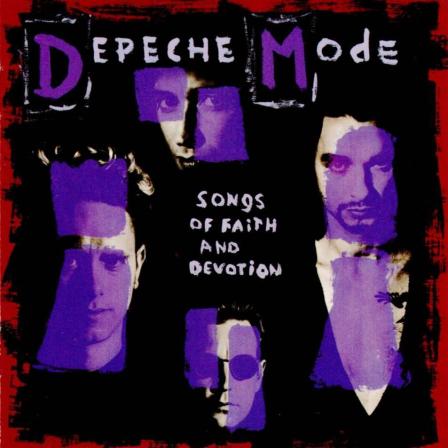
Depeche Mode in the 90s – Songs of Faith and Devotion

depeche-mode

The next release from Depeche Mode in the 90s was a much darker affair…

But first, I’d like to make a little side trip to late 1991 and Wim Wenders’ fantastic epic, Until the End of the World.  One of my top ten favorite films, it’s a road movie about a woman whose presence changes the fate of nearly everyone around her, while she herself is trying to figure out her own.  It takes place at on New Years’ Eve, as 1999 changes over to 2000 — not just the end of the year, but the century and the millennium as well.   For the soundtrack, Wenders reached out to numerous bands and musicians and asked them to write a song in the style they believe they’d have eight years from then.

DM’s donation was a religiously-tinged blues ballad called “Death’s Door” that hints at the prodigal son returning (much like William Hurt’s character in the film).  It’s a great soundtrack worth picking up, and if you can find a copy of the film (it’s available for streaming on Amazon), it’s well worth checking out.

After that, the band remained quiet for some time until February 1993, when the new single “I Feel You” was released.  Upon first listen, it sounded like the band had retained their fuller, stronger sounds and melodies, but had continued with their darker themes and moods.  Like many previous pre-album singles (like “Strangelove” and “Personal Jesus”, it sounded vastly different than anyone had expected, right down to the opening screech of feedback.

Also gone was Dave Gahan’s perky goofball image; he was now grungy and longhaired with a dangerous sex swagger.  [It was revealed sometime later that this partly due to his worsening drug addiction.]  In fact, within the first minute of the video, we no longer see the band on banks of keyboards; only Andy Fletcher was behind the keys.  Alan Wilder was now drumming, and Martin Gore was playing a Cash-like twang that would become the motif of the entire track.


Songs of Faith and Devotion arrived not six months later but almost exactly one month after that first single.  There’s a rough tension throughout the album, not unlike listening to The Beatles’ white album (a description given to it by Alan Wilder himself)…the music is full of powerful anger, and Gahan’s singing has taken on an irritated growl (inspired by the LA alternative bands he’d been hanging with by that time).  There are more organic samples here — live drums and guitars laid down and sequenced — and hardly a clanging pipe or popping firework anywhere at all.  And tensions within the band had grown to such a degree that Wilder would quit the band at the end of the supporting tour.

It’s a very apt title, as religious themes pop up all over the place.  It’s not an album about praise, though…it’s about the limits of faith and devotion, both in life and in spirituality.  The critical response to the album was highly positive, however, and though its singles are rarely chosen for airplay nowadays, it’s an incredibly solid and deeply emotional album worth checking out.

Second single “Walking in My Shoes” is the track that would get the most airplay, as it’s the most melodic and most typical of the band’s sound.  That’s not to say it was written to sell units, however, far from it.  It’s a bleak song using the ‘walk a mile in my shoes’ metaphor as only Gore and DM can do it: don’t you dare judge me until you feel what I’ve gone through.

Third single “Condemnation,” however, was a completely leftfield hit on both sides of the Atlantic.  While “Death’s Door” hinted at a hymnal, this one is purely gospel choir, and it’s a deeply moving and lovely track.

Fourth and final single “In Your Room” featured the band venturing even further from their digital sound as well as their previous image: the video features numerous visual cues from their previous videos made with Anton Corbijn, twisted just that little bit to hint at a wish to be freed of them.  Even the mix used here (the Zephyr Mix) is almost all analogue, showing DM as an almost purely rock band now instead of a synth band.

Even the album tracks like the gospel-by-way-of-Led-Zeppelin “Get Right with Me” and the turbulent irritation of “Rush” feature a band going all out in spirit and emotion.  Taken as a whole, the album definitely mirrors the real-life tensions the band had been dealing with during the writing and recording, as well as the expectations laid upon them to recreate something as phenomenal as Violator.  It would nearly break them.  Wilder would depart at the end of the album’s tour, and once the tour was over that December, they would go their separate ways.  Dave Gahan would attempt suicide in late 1995 and nearly die from a drug overdose in spring 1996.  Gahan survived and persevered, recovering from his heroin addiction and turning his life around.

By early 1997, they were back with a new, even stronger and more cohesive album, Ultra.


More on the 90s

So yeah, I’ve still been contemplating expanding the Walk in Silence series to include the 90s.  I’ve started listening to the decade chronologically, much as I did with the original series and going through the 80s, and once again it’s been an interesting ride.

Presently I’m listening to Living Colour’s sophomore album Time’s Up, which came out in late August 1990.  It was the back end of summer, and I’d chosen to take the last two weeks off between my summer job (second year at the DPW) and starting my sophomore year at Emerson.  Chris and I got together to reform the Flying Bohemians as a duo, and recorded a few tracks in my parents’ garage.

I spent those last two weeks doing not much of anything: made a pretty decent compilation that I still listen to in 2016, did a bit of poetry, lyric and journal writing, a lot of Solitaire playing, and met up with all my friends who’d come home for a brief time.  For the most part, most of them had taken root in their college towns and gotten local summer jobs or were taking summer classes, so there was only a narrow window of time that we could meet up.

Me?  The only reason I’d come back home for the summer was that I hadn’t prepared myself for any summer position or an apartment to sublet for a few months.  It had crossed my mind, of course, but I hadn’t the time or the money to plan it out sufficiently.  I figured the summer of 1991 would be when I’d stick around.

That, and I’d wanted to spend more time with T, as well as distance myself from the frustration of freshman year.  Summer 1990 was time to start over again.

Hey Wait I got a new complaint

I don’t use the Sirius XM radio on my own PC as much as I should, so today I thought I’d put it on.  I chose the Lithium channel, primarily because the song playing at the time was Nine Inch Nails’ “Down In It”.  And now I’ve been listening to the 90s all morning.

Yes, I know!  Me, the guy who’s posted about 80s college rock for far too long, finally moving forward in time?  Heh.

Seriously, the 90s was an interesting decade, looking back on it now.  I tend to think of it as a decade where we crossed a lot of lines that had drawn in the sand for so long that we kind of forgot why they were there in the first place.  A lot of interesting chances were taken in the creative world; some fell flat, but some were welcomed and became the norm.  College radio became modern rock became alternative rock became chart-topping rock.  It didn’t help that the 80s chart rock had become a sad caricature of itself, full of hair metal spandex and arpeggios, and bar bands with very few actual hits.  Something had to take over eventually, and alt.rock had been waiting in the wings since the early 80s.

The music of the 90s for me felt sort of like a light was finally turned on.  More to the point, it felt like I’d exited the dark cave of my bedroom and its 4AD/Cure gloom and entered the sunshine of the wider world beyond.  I could easily say that Nirvana’s “Smells Like Teen Spirit” was in fact the point of change, as it probably was for many others.  It wasn’t the first alt.rock song that broke through to chart radio (I’d like to think that honor actually belongs to Love and Rockets’ “So Alive”, which hit #3 on the Billboard Hot 100 chart two years earlier), but it was the most important one.  Rock radio wasn’t the same afterwards.

Yeah, sure, there were also the bands that weren’t grunge, weren’t Britpop, and didn’t quite fit into the already-standard ‘alternative’ format.  In retrospect they were chart rock’s New Breed.  They were melodic, catchy, and just mainstream enough to be played on pretty much any commercial rock station without scaring the parents.  They were just edgy enough that the kids loved them anyway.  You probably wouldn’t hear them on college radio (that avenue was being filled at that time with No Depression, math rock, slowcore, and the other decidedly noncommercial subgenres), but you’d hear them on the burgeoning Modern Rock and AOR stations.

These are the songs you’ll hear on Adult Alternative stations nowadays, tracks by Collective Soul and Tonic rubbing shoulders with James Bay and Elle King.  The slightly harder stuff will pop up on the alt.rock stations that have survived this long, sneaking in as ‘classic tracks’ next to new tracks by other 90s bands that have miraculously stayed together this long (Weezer, Red Hot Chili Peppers, Blink-182).

*

I can pretty much divide the 90s into two distinct personal eras: the college/Boston years (1990-95) and the HMV years (1996-2000), with the yearlong entr’acte of ennui and deadend jobs of 1995-6.  Despite the personal ups and downs I was contending with at the time, I rarely missed an opportunity to follow the latest trends.  I may not have had the money to buy it all at the time, but that didn’t stop me from making radio tapes, dubbing cds from friends, or keeping my boombox set to the local alternative stations.

Or spending most of my hard-earned pay at the record store I worked at, for that matter.

Despite my personal and emotional ups and downs in that decade, I found it to be a lot more enjoyable than the previous decade when I was dealing with my gawkish teenage self.  My twenties certainly had their extremely frustrating moments, and I did make a lot of really stupid decisions, but by the back end of that decade, I had my shit together and knew exactly what I wanted to do.  That’s when I knew for a fact that I’d be a writer.  It’s also when I knew that this infatuation with music was going to be a lifelong thing and I was perfectly fine with that.