As I mentioned previously, having a new writing project means having a new playlist. Nearly all of the Bridgetown trilogy music leaned more towards darker atmospheric moods, so the hard switch to a new musical style has felt a bit like whiplash.
Meet the Lidwells! features a family band that plays what some would call power pop: quirky and upbeat, often guitar-oriented, sometimes a bit odd, but never an uncomfortable listen.
Well-known examples would be Fountains of Wayne…
or Veruca Salt…
or Matthew Sweet…
or Belly…
….you get the picture.
So why power pop? Well, the story of the Lidwells is partly set in the late 80s-early 90s; they’re a band heavily influenced by the Beatles (thanks to their parents) as well as late 80s college rock (thanks to their elder siblings). Much like the Beatles, they started out writing simple poppy love songs aimed towards the young teen market. Over the course of five chart-topping albums and numerous hit singles, their sound evolves from that catchy pop to more adventurous alternative rock. And just like the Beatles, weary of the ups and downs of fame and tiring of the game, they decide to go out on a big note with their strongest album.
Right now, while I’m working on notes and piecing together a coherent story, I’m also making it a point to look for more music to listen to that would fit this project. It doesn’t necessarily have to be explicitly power pop, of course…as long as it’s somewhere in the neighborhood. And I’m specifically looking for both male and female singers, as it’s important to the story.
So yeah…if you have any suggestions/recommendations for bands and songs, please feel free to let me know in the comments! I’m always open to new tunage. 🙂
Or: Albums Wot I Listened to Incessantly While Writing the Trilogy in the Belfry, 1996-2004. It’s by no means a complete list, as I’ve left out a ton of albums that didn’t get nearly as much play but may have shown up in heavy rotation for a shorter time. I also didn’t list the albums that popped up during the revision years, which would probably be another long list in itself.
I’ve put them in semi-chronological order of release. These are still some of my favorite albums; I would highly suggest checking many of them out, perhaps finding a copy or two for your collection if you don’t have them already. It’s a wide mix; there’s electronica, alternative metal, alternative rock, and even a classical album or two. A lot of these albums still pop up on rotation when I’m working.
To be honest, it does feel kind of odd to finally be listening to a different style of music for my latest project. [Meet the Lidwells! is full of power-pop goodness, so there’s a lot of Matthew Sweet and Fountains of Wayne involved, and a lot of listening to The Power Pop Show on KSCU.] But I highly doubt I’ll stop listening to Fantastic Planet or Sea Change any time soon…
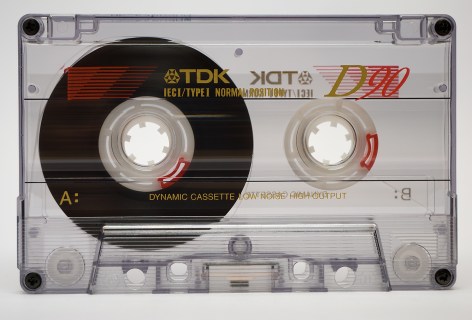
The TDK D90 blank cassette. My tape of choice for almost all of my 90s mixtapes.
One thing I’d always done during the course of a writing project is to give it a soundtrack. Whether it’s a playlist, a list of specific albums, or a mixtape, it serves to create a specific mood that I’m looking for. With The Phoenix Effect, having envisioned this as a multi-book project even then, I’d given the series the name The Eden Cycle (referencing both obvious religious imagery and EdenTree, a megacorporation that would be a part of the plot). It seemed fitting to give the mixtapes the same title.
At the time, my idea had been of souls inhabiting AI cybernetic bodies — which in hindsight created a lot more trouble than it was worth — so the imagery I was looking for was much darker and creepier. That said, however, I chose not to focus on dystopian pessimism; instead I wanted my story to ascend past that into something positive.
This is the first of four mixtapes I made during 1997-8; this one was made in mid-April of 1997, just before I went on a road trip out to Ohio to visit a friend of mine. One of the major reasons for making it was so I could listen to it during my commute and think about what I was going to write. Over the next few days I’ll be sharing the other three original volumes from this era. The links are to their YouTube/Vimeo videos (they’ll open in a separate tab), and I’ll also provide a brief background as to why I chose the song for the mix.
Side A
Poe, “Hello [Band Version]”
I liked Poe’s Hello album, but the kickass single remake of the song felt like a perfect opening to a mix tape. It fit in with the cyberpunk feel of TPE that I was originally aiming for as well. An ‘opening credits’ song, if you will.
Failure, “Heliotropic” Fantastic Planet was getting a crapton of play on my cd players, both at work and at home during my writing sessions. This track’s spaciness, loudness and extremely heavy, crunchy bass evoked the exact amount of tension I was looking for. It had that feeling of being outside on the brightest day with the heaviest of hangovers.
U2, “Mofo” Pop was still getting a lot of play as well, and I loved how twitchy this one was. I used this track as a kind of gauge to remind me of how Bridgetown felt on a spiritual energy level: a sprawl of millions of people, each with different levels and directions of this energy, all dissonant and discordant.
David Bowie, “Dead Man Walking”
I’ll be honest, I wasn’t the biggest of Bowie collectors — I think I only owned maybe five or six releases, tops — but Earthling (released earlier in 1997) connected with me big time. I loved its techno influences and its paranoia. This track fit my image of Nehalé: a man who was destined to take a specific action that would affect a vast number of people, and he had to force himself to come to terms with that.
Psykosonik, “Need to Die”
There was a brief surge of darkwave techno in the mid to late 90s (super-generalization: darkwave = gothy electronica) that I got into, and Psykosonik’s Unlearn was handed to me by one of my HMV coworkers (Thanks, Doug!). I put this here mostly as a mood piece, but I did like how it fit in with one of the TPE themes: people didn’t necessarily have to die to be reborn spiritually.
Live, “Lakini’s Juice”
Another mood piece, this one suggesting (to me) discomfort in a situation one could find themselves in. I believe I used this as inspiration for Poe’s constant irritation at not being able to complete tasks put before him.
Elysian Fields, “Lady in the Lake”
Their Bleed Your Cedar album was handed to me as a promo, and I liked its swampy feel. The album (and this track) helped me focus on how a recently awakened character would have to deal with their situation; both feeling disconnected from everyone (I’m the only one like this) and superconnected (I can intimately sense everyone around me) at the same time.
Moby, “That’s When I Reach for My Revolver”
As a Masshole, I had to appreciate Moby covering the Mission of Burma classic (as well as putting out a punk album, considering he’s more known as an electronic musician). Just like the original, this song was a perfect example of dedicated and determined nonconformity that fit in with Vigil.
The Verve Pipe, “Veneer”
Not that long before this, I’d seen this band live in Boston, and they did a beautiful and transcendent version of this track (which, as it happens, is about a long road trip through Michigan while high). To me, it evoked a sensation of being elsewhere; in the process it inspired how I had my characters react when they first visited Trisanda.
Side B
Richard Einhorn, Anonymous 4, “Exclamavit”
I’d heard Einhorn’s Voices of Light on NPR one evening when I was driving into Boston in the summer of 1995, and I was completely floored by the gorgeousness of it. [It was inspired by Carl Theodor Dreyer’s 1928 silent film The Passion of Joan of Arc and can be heard as its soundtrack on the Criterion dvd.] I wasn’t the biggest orchestral music fan at the time, but this slowly set me on my way. This particular opening felt like another good ‘opening credits’ piece, and thus opens Side B of the tape.
Pulp, “Common People”
The album version of their classic single is a much more sinister affair than the single version (there’s an additional verse that truly reveals the disgust he holds back in the rest of the song). While the plot of the song doesn’t quite fit the plot of my story, it does reflect the bigoted view of The Other that was part of my story’s plot.
Sponge, “Isolation”
There’s a great Lennon tribute album called Working Class Hero from 1995 that I listened to a lot then, and I loved this version of the Plastic Ono Band track. This ties in with the previous Pulp track, a forced cultural disconnect that one can only accept for so long before one has to fight back.
The Offspring, “Gone Away”
Part of the reason this one was on here is that I heard it so many times during that Ohio road trip! Again, tension and discord. This time because something’s been taken away and you can’t do a damn thing about it.
Filter, “Hey Man, Nice Shot”
This track inspired my love for the Slow Build: starting off quiet and sparse, but gradually growing louder and more intense in energy. The original Chapter 1 of The Phoenix Effect used this song as a template, which carried all the way to the opening of A Division of Souls. The ADoS opening is supposed to feel like someone slowly turning the volume louder and louder until it climaxes in an intense burst of energy.
Failure, “Daylight”
Okay, how many times is this track on one of my mixtapes? One of my favorite songs of all time, and even at the start of the project I knew it would be the Ending Credits track to my story. [NOTE: I’m planning on writing a script of the ‘director’s cut’ for the ending of A Division of Souls and posting it over at the Bridgetown blog later this month, which uses this song as its soundtrack.] The story is done, everyone’s exhausted, and the day has been saved…but the fight is far from over…and roll credits. [Seriously, folks…go buy Fantastic Planet. It’s a fucking phenomenal record.]
U2, “Wake Up Dead Man”
A denouement track after the epic ending track preceding. I knew TPE was going to end on an unresolved note, leaving it wide open for its sequel. The day has been saved, but the work’s not over. Relationships between certain characters have been strained or broken; others have refused to give in so easily. For me, this song is a plea for the war to cease before it goes too far. [I never forgot this idea and eventually used it in The Balance of Light.]
The Tragically Hip, “Grace, Too”
Canada’s favorite band with one of their favorite hits, which I remember seeing on MuchMusic back in 1994 (partly because I loved that the video was created using monitor feedback). A lift from the previous song, in which we shift viewpoint to someone who knows they’re in the lower classes but still has high hopes for themselves. This idea would later become the gathering of the Mendaihu at the Moulding Warehouse in A Division of Souls.
Jamiroquai, “Virtual Insanity”
…and after all that, ending on a slightly more positive note (somewhat), the final track brings a kind of…well, not hope, but an awareness. This was a big plot point even in TPE: the characters had to become completely aware of their situation, where the conflict wasn’t in trying to figure it out, but in coming to terms with it and choosing either use it, abuse it, or avoid it as long as they could.
Hope you enjoyed my little bit of tunage sharing there! I’ll be following up with the other three volumes in the original series soon!
Say what you will about U2’s Pop, it’s an interesting album to say the least. It’s not quite an extension of their electronica-influenced albums Achtung Baby and Zooropa (or their foray into deliberate non-commercial territory under the Passengers moniker, Original Soundtracks 1) as it’s a deliberate side-step. It’s twitchy in places, barren in others. They freely admit that it was an unfinished album, a record they should have spent more time on, had they not had a major tour to prepare for.
It’s not their strongest, but I still enjoy it. It kind of reminds me of 1984’s The Unforgettable Fire in a way, as it sounds like a band in the middle of evolving. I remember when it was about to come out while I was at HMV; the PGD sales rep (back when U2 was distributed by PolyGram) was obviously trying to upsell it because hey — Big Name Band, right? But he knew he couldn’t quite pull it off. He was let down by it, having felt it was one of their weakest albums. Well…in the context of their career path, when you hit the stratosphere with The Joshua Tree and you keep getting more ridiculously popular, any move aside from UP seems like a step down. And to most critics, this one felt like a severe misstep.
To be honest, I felt the exact opposite about it. I was actually let down by Zooropa, having felt that album was more like Achtung Baby Outtakes Wot Weren’t B-Sides. Pop felt a lot stronger and more cohesive to me. It ended up being one of the first albums that received heavy rotation during my first round of writing sessions when I started The Phoenix Effect. I kind of liked its similarity to the Beatles’ White Album…it starts off pretty strong with “Discotheque” and “Do You Feel Loved”…and progressively gets stranger and darker as the album goes on. The final track, “Wake Up Dead Man” is the polar opposite of its opening track; one is dense and trippy, the other is wiry and exhausted. The whole flow of the album works perfectly for me.
This was precisely what I needed for my writing session soundtracks! I wanted to hear something that was a little left of commercial, something strong but not singles-oriented, something that had ambience. Something that inspired the tension that I’d need in the new novel I was writing.
My writing nook down in my parents’ basement (it wasn’t called the Belfry yet…that name wouldn’t come for another few years) was right near the bottom of the stairs, using one of my uncles’ old desks and one of my dad’s dusty rolling desk chairs. I had my Windows 3.1 PC that I’d bought with my own tax return money and a big heavy CRT monitor donated by my sister. I didn’t even have Word 97 at that time, as I don’t think it would have fit on the system…I wrote everything using the Write program instead, and that worked just fine for me.
When I brought my longhand work home from the Day Job, I’d sit down at the PC and start transcribing what I’d written. This is pretty much where I taught myself how to revise; I knew I’d have to flesh out a lot of what I’d written, so I figured that was the perfect time for it. I’d figure out what tone I was trying to capture with the prose and expand on it. And sometimes, the instant revision would give me an idea of what I’d need to write the following day.
It was a learning process the entire time, and I knew I’d want a writing soundtrack to go with it. Pop was one of the first, and pretty much stayed with me for a good number of years until the single novel morphed into the Bridgetown Trilogy.
If you haven’t seen my recent post over at Welcome to Bridgetown, I’m currently celebrating the platinum anniversary of my starting a novel (The Phoenix Effect) that would end up morphing into my Bridgetown trilogy. All this month I will be posting fun things related to the original as well as the trilogy, and I thought I’d do the same over here.
Twenty years ago I was a few months in on my relatively new job as the lone shipper/receiver at HMV Records. Even though I was one of the oldest hires there (I’m pretty sure I was closer to my manager Tom’s age than the young’uns I worked alongside), I was still feeling my way around.
The biggest change from the years previous was that I had a much closer connection to the music I was listening to. I was listening to a lot of radio at the time but didn’t have that much money to spend on new releases, but this job let me listen to a lot more stuff (and yes, I may have dubbed a number of cds onto blank cassettes while in the back room, heh!).
But the sounds were changing as well. The bright bounciness of Britpop was suffering from hangovers and bloating (see: Oasis’ Be Here Now, a solid but WAY overworked album); the American grunge was kind of losing its way (not to mention some of its lead singers to overdoses), and let’s face it: the college rock I knew of then was essentially the commercial rock of now.
That’s not to say the quality (or quantity) of alternative rock was declining…it was merely evolving with the times. In fact, 1997 featured some fantastic, solid releases from bands both old and new, taking the genre in new and interesting directions.
On a personal level this was a positive and much-needed evolution for me, as I’d been in dire need of a change in my life and outlook. I’d been broke, angry and depressed for about three years straight, gone through some personal issues that were Not Fun At All, and needed a positive change ASAP.
Not only that, this change in mood is reflected in my writing. I’d essentially started a new project resurrected from the ashes of one that I had to close down for personal reasons. And let’s be brutally honest: back then, I’d had a collegiate view of being a writer. I was a special snowflake with the Powers of Story [insert sprinkly *whoosh* sfx here] and I wrote Important Life Allegories™. In reality, however…my writing was crap, I knew it was crap, no one was going to take it seriously, and I was going to need to be a shit ton better than the level I was currently at if was going to get anywhere with it.
So that meant dispensing with the mindset of Writing as Superpower and take it seriously. Making it a daily process instead of a casual one. Relearning the basics of story construction. (This included doing a hell of a lot more reading than before; not just the how-to writing books, but the different genres of fiction and nonfiction I was interested in. This plan kick-started my habit of visiting book stores on the weekends and, thankfully, a love of reading.)
Music has always been a part of my writing process, and this time it was no different. This time out I’d be making mixtapes of tracks that would inspire my writing (the four-volume Songs from the Eden Cycle from 1997-8, the sort-of sequels in the early 2000s, and the recent Eden Cycle Sessions mp3 playlists). Certain albums released during this time would get heavy rotation play on my cd player down in my basement writing nook. And I’d listen to a hell of a lot of stuff on my fifty-mile commute, which was always a perfect time for me to brainstorm.
I’d made a decision to be a writer quite early in my life, but 1997 was when I decided to take that decision seriously.
Next week will be the first of many entries for the Walk in Silence blog series…and of course, I’ll be letting you know all about that over the next week and a half.
But that’s not the plunge I’m talking about.
When I was first planning out the WiS project, I always had the timeframe in the back of my mind: should I focus just on my own personal connection with college radio (1986-1989)? Should I talk about its history (197? – 199?)? Or should I just come up with an arbitrary time? Eventually I chose the third entry, that way I could focus mostly on my own personal history, but also include the time before I connected with the genre, thus 1984 – 1989.
The plunge I’m thinking of now is the college and post-college years. They weren’t exactly the happiest years of my life, for various reasons, but they were interesting musically. College rock, at least with American radio, gave way to grunge and Britpop as it became more popular, and changed genre names numerous times before deciding on the all-encompassing ‘alternative rock’. A schism grew: those who felt alternative rock was selling out and followed the most obscure bands possible, and those who really didn’t mind either way, as long as the prefabricated crap currently in the charts went away.
I’ve been toying with the idea of doing a sequel to Walk in Silence for quite some time. There’s no name to it yet, nor is there any concrete schedule or plan for it at this time (all my focus is currently on posting WiS and publishing the Bridgetown trilogy), but I do have a few ideas floating around…it’ll focus mostly on the years from late 1989 (when I left for college) to late 1995 (when I left Boston and moved back home). And it will most likely continue the WiS theme of both personal story and music history.
Some albums from that era still get heavy airplay on the radio: you’ll still hear tracks from Nevermind and Blood Sugar Sex Magik and Loveless and Definitely Maybe and Achtung Baby and Violator and so on. But there are so many more albums I’ve ignored for one reason or another, forgotten about or couldn’t make myself listen to for personal reasons. Songs that radio let pass into history, even forgetting to play them on Throwback Thursday. But as with Walk in Silence and the 80s, it’s been nigh on twenty-plus years for most of these. It’s well past time to revisit them again.
So starting today I’m going to start listening to some of these albums in my collection, give them a once-over they haven’t had in quite some time, and see where I can go with it.
Oof! Yeah, still working on the final revision/edit of The Persistence of Memories, and it’ll be another few weeks before I can give myself a breather. The soft release date at the moment is “sometime mid-April”, but I’ll let you all know more as soon as I have more concrete plans! At present I’m THISCLOSE (translation: about forty or so pages) to finishing the revision/edit, I’ve made a quick mock-up of the cover (which you can see at Welcome to Bridgetown). Once the edit’s done, then comes the formatting and the uploading. And then FINALLY I can get back to a normal schedule again. [That is, until I start the same process once more with The Balance of Light. Whee!]
In the meantime, I’ve been on a School of Seven Bells kick lately, partly due to their release of their last album, SVIIB (recorded just before Benjamin Curtis passed away). Jangly shoegazey goodness that kind of reminds me of Lush with a bit of Stereolab mixed in. Enjoy!
Some news on the Walk in Silence book project. I shared this on my LiveJournal a short time ago (edited for clarity):
I think I may set aside Walk in Silence, the book.
I’ll finish it of course, for my own reasons, but I don’t think I’ll be releasing it as a self-published book, at least not for the foreseeable future. It’s a tough decision, but it’s one I’ve been thinking of ever since the start of the year, maybe even before then.
There are a few reasons…one is that it started feeling less like a book worth publishing and more of a vanity project. On a more personal note, writing this memoir version really felt like I was really just trying to finally purge it from my system once and for all so I could move on. While on a personal and emotional level this can be a good thing, and I may even be proud of the end result, it’s not something I’d be happy with on a professional level. I wouldn’t be embarrassed about it…I just don’t think it would be something worth putting out there professionally. As I said, it’s become a vanity project — it’s a story I want to tell, but I’m doubting there’s a significant audience for it. Maybe I’ll put it out there as a serial on [this] blog at some point. It feels that would be the best home for it, when all is said and done.
Do I feel sad about this? Not entirely. A bit let down, of course. That nagging feeling that I’ve wasted a few thousand hours of writing time on something that may or may not see the light of day. But I’ve had a hell of a fun time reading all those music bios and reference books for research, and I’ve come to appreciate and understand music a hell of a lot more over the years. Totally worth it just for that alone. I may also feel a bit embarrassed, having bloviated the idea and everything else about it over the last three or four years online, much to your wavering patience and tolerance, but I think I’ll get over it.
But really…the main thing is that I think I’ve outgrown the project. My heart and mind have moved on, probably some time ago, and it was high time for me to accept that.
…
…so yeah. At this time, it’s no longer going to be an e-book/physical book project.
On a more professional level, I think it would have been problematic as a book, especially a self-published one. There’s only so far I can go with Fair Use in regards to copyrighted music, and I don’t think I’d have done the project justice (to my standards, anyway) if I had to hold back for legal reasons. Doing it as a blog series would give me more leeway and make it more interactive, as I’d be able to provide links, audio and/or video.
SO.
What’s in store for this project? Well! Glad you asked!
I’ve already gotten a good ways into it (it focuses mostly between 1984 to 1989, and I’m currently writing about late 1988), so instead of trunking it and erasing it from my mind, I will use my collected notes and writings for it and do a serial much along the lines of my Blogging the Beatles series from a few years ago. It may start out as a once-a-week entry, but if time permits and I get myself into the groove, I may post more than that.
Another plus for me morphing it into a blog series is that I get to return to my originally planned release date again! Yay! It’s still in the planning stages, but I’m thinking a soft start date of April 19 or thereabouts, to celebrate thirty years of me obsessing over this damn genre.
April vacation, 1986, when a dorky teenage kid from a small town discovered a college radio station for the first time, and how it completely changed his life.
I’ve been listening to Air over the past few days…the band just popped into my head unbidden, and I’ve been searching for a good, laid-back soundtrack for my extended editing sessions lately, so it was a perfect fit. Their debut Moon Safari was released on this day back in 1998 (which puts it right in the middle of my HMV years), but it’s so retro in its sound that you swear it came out in 1972 on some budget label and got played at K-Mart when you were a kid. It of course ended up on heavy rotation during my writing sessions down in the basement.
In 2000 they released the soundtrack to Sofia Coppola’s The Virgin Suicides, based on the Jeffrey Eugenides book. That too got heavy rotation for me, with its spooky, dark passages. [Trivia: I didn’t know this until many years later that the singer for “Playground Love” is none other than the singer for Phoenix, going under the name Gordon Tracks.] It kind of fit the mood I was in at the time as well, considering I’d just been shuffled out of the HMV job and wasn’t exactly sure where my next step was going to be.
They may have lost me a bit on album two (three?), 10,000 Hz Legend, but I think that’s because they’d chosen to update their sound a bit, bring the melodies forward a decade or two. It took me a few years to get used to this one, and it’s got some great tracks on it, including a cameo vocal from Beck on “The Vagabond”.
Now the next album, Talkie Walkie, is probably my favorite of theirs, even over Moon Safari. They hit their stride here, balancing their retro-synth sound perfectly with some lovely modern melodies. They also provided an absolutely gorgeous track called “Alone in Kyoto” for Sofia Coppola’s next film Lost in Translation:
I’m still trying to get used to the next couple of albums (2007’s Pocket Symphony and 2009’s Love 2), most likely because my mind was elsewhere at the time, adjusting to our lives here in SF. Eventually they’ll come to me. Their most recent album, Le Voyage Dans la Lune from 2012, is fascinating in that it’s a soundtrack for Georges Méliès’ 1902 film of the same name. And Nicolas Godin (the fair-haired one of the duo) just released a solo album of Bach-inspired songs called Contrepoint, which I’m hoping will eventually see release stateside sometime this year.