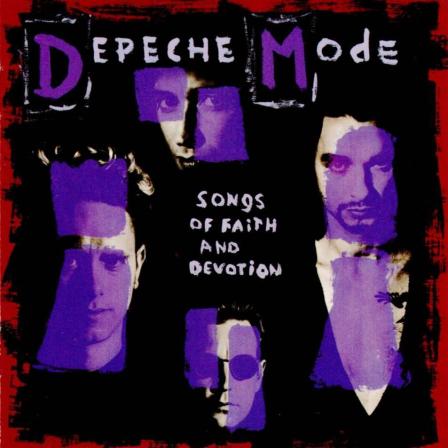
So yeah, I’ve still been contemplating expanding the Walk in Silence series to include the 90s. I’ve started listening to the decade chronologically, much as I did with the original series and going through the 80s, and once again it’s been an interesting ride.
Presently I’m listening to Living Colour’s sophomore album Time’s Up, which came out in late August 1990. It was the back end of summer, and I’d chosen to take the last two weeks off between my summer job (second year at the DPW) and starting my sophomore year at Emerson. Chris and I got together to reform the Flying Bohemians as a duo, and recorded a few tracks in my parents’ garage.
I spent those last two weeks doing not much of anything: made a pretty decent compilation that I still listen to in 2016, did a bit of poetry, lyric and journal writing, a lot of Solitaire playing, and met up with all my friends who’d come home for a brief time. For the most part, most of them had taken root in their college towns and gotten local summer jobs or were taking summer classes, so there was only a narrow window of time that we could meet up.
Me? The only reason I’d come back home for the summer was that I hadn’t prepared myself for any summer position or an apartment to sublet for a few months. It had crossed my mind, of course, but I hadn’t the time or the money to plan it out sufficiently. I figured the summer of 1991 would be when I’d stick around.
That, and I’d wanted to spend more time with T, as well as distance myself from the frustration of freshman year. Summer 1990 was time to start over again.
I don’t use the Sirius XM radio on my own PC as much as I should, so today I thought I’d put it on. I chose the Lithium channel, primarily because the song playing at the time was Nine Inch Nails’ “Down In It”. And now I’ve been listening to the 90s all morning.
Yes, I know! Me, the guy who’s posted about 80s college rock for far too long, finally moving forward in time? Heh.
Seriously, the 90s was an interesting decade, looking back on it now. I tend to think of it as a decade where we crossed a lot of lines that had drawn in the sand for so long that we kind of forgot why they were there in the first place. A lot of interesting chances were taken in the creative world; some fell flat, but some were welcomed and became the norm. College radio became modern rock became alternative rock became chart-topping rock. It didn’t help that the 80s chart rock had become a sad caricature of itself, full of hair metal spandex and arpeggios, and bar bands with very few actual hits. Something had to take over eventually, and alt.rock had been waiting in the wings since the early 80s.
The music of the 90s for me felt sort of like a light was finally turned on. More to the point, it felt like I’d exited the dark cave of my bedroom and its 4AD/Cure gloom and entered the sunshine of the wider world beyond. I could easily say that Nirvana’s “Smells Like Teen Spirit” was in fact the point of change, as it probably was for many others. It wasn’t the first alt.rock song that broke through to chart radio (I’d like to think that honor actually belongs to Love and Rockets’ “So Alive”, which hit #3 on the Billboard Hot 100 chart two years earlier), but it was the most important one. Rock radio wasn’t the same afterwards.
Yeah, sure, there were also the bands that weren’t grunge, weren’t Britpop, and didn’t quite fit into the already-standard ‘alternative’ format. In retrospect they were chart rock’s New Breed. They were melodic, catchy, and just mainstream enough to be played on pretty much any commercial rock station without scaring the parents. They were just edgy enough that the kids loved them anyway. You probably wouldn’t hear them on college radio (that avenue was being filled at that time with No Depression, math rock, slowcore, and the other decidedly noncommercial subgenres), but you’d hear them on the burgeoning Modern Rock and AOR stations.
These are the songs you’ll hear on Adult Alternative stations nowadays, tracks by Collective Soul and Tonic rubbing shoulders with James Bay and Elle King. The slightly harder stuff will pop up on the alt.rock stations that have survived this long, sneaking in as ‘classic tracks’ next to new tracks by other 90s bands that have miraculously stayed together this long (Weezer, Red Hot Chili Peppers, Blink-182).
*
I can pretty much divide the 90s into two distinct personal eras: the college/Boston years (1990-95) and the HMV years (1996-2000), with the yearlong entr’acte of ennui and deadend jobs of 1995-6. Despite the personal ups and downs I was contending with at the time, I rarely missed an opportunity to follow the latest trends. I may not have had the money to buy it all at the time, but that didn’t stop me from making radio tapes, dubbing cds from friends, or keeping my boombox set to the local alternative stations.
Or spending most of my hard-earned pay at the record store I worked at, for that matter.
Despite my personal and emotional ups and downs in that decade, I found it to be a lot more enjoyable than the previous decade when I was dealing with my gawkish teenage self. My twenties certainly had their extremely frustrating moments, and I did make a lot of really stupid decisions, but by the back end of that decade, I had my shit together and knew exactly what I wanted to do. That’s when I knew for a fact that I’d be a writer. It’s also when I knew that this infatuation with music was going to be a lifelong thing and I was perfectly fine with that.
I’d tweeted earlier this week that one of my favorite things about vacationing in London is hearing some of my favorite songs in their original context. By that, I mean hearing songs that were big and important hits in the UK that may not have been even a blip on the US radar.
A year or so ago we were at a bar near Smithfield Market meeting with a friend of ours when Manic Street Preachers’ “Everything Must Go” popped up on the jukebox. It was a top-ten hit in the UK and signaled a new direction for the band after the strange disappearance of their former lead singer months previous.
David Bowie was of course a worldwide success, and his title theme for the movie Absolute Beginners was a very minor hit in the US (hitting #55 on the Billboard chart) but hit #2 in the UK. The movie itself is somewhat based on the British novel of the same name written by Colin MacInnes — a well-loved coming of age novel set in the hip London of the late 50s. Heard this one in a coffee shop just outside of St. Paul’s Cathedral one rainy morning.
The Divine Comedy is well known in the UK as an ‘orchestral pop’ band in the vein of Scott Walker (another musician quite familiar there but not in the US), and they wrote a song about the oversize tour buses one sees all around London. This track would pop into my head every time I saw one of them go by.
I love doing this kind of thing wherever I go, come to think of it. It’s partly to get the feel of the local sound, and partly because I’m just a sucker for rock music history. Whether it’s getting in touch with with Britain’s quirky rock (most of which became alternative rock here in the states), or Boston’s unique mix of collegiate and blue-collar, or San Francisco’s purposely weird sounds, I love being able to not only connect with the music itself, but the context in which it was written and recorded. It brings me closer to the real lives behind the music…it lets me understand why the song exists.
I’d say the music that I connected to most at the time was classic rock. I’d grown up listening to it, and started my music collection with the Beatles. Not to say I didn’t enjoy other genres or station programming…I had a passing interest in the poppier Top 40 sounds, especially from about 1983 onwards, when it updated its sound and included multiple genres. But thanks mainly to WAQY 102.1 FM out of East Longmeadow and WAAF 107.3, originally out of Worcester, I found myself listening to a lot of classic and AOR rock.
Looking back, I think part of it may be due to the quality of the production and the creativity of the music. It didn’t necessarily need to be a genius creation, it just had to have something that caught my attention somehow.
That would mean John Bonham’s thunderous drums and John Paul Jones’ synth strings on the epic “Kashmir” — the first rock song to completely blow my mind — or the Beatlesque* sounds of Electric Light Orchestra’s “Can’t Get It Out of My Head”. Or it could be the countrified twang of Eagles. Even the bubblegum fun of Sweet’s “Ballroom Blitz” and “Fox On the Run” counted, thanks to their catchy guitar riffs and high-pitched harmonies.
I often say The Beatles’ 1967-1970 compilation is ‘officially’ the first album I ever owned, but that’s not entirely true. I will admit that claim actually belongs to Shaun Cassidy’s Born Late, which I’d gotten for Christmas in 1977. I kind of consider that a trial run, though…in December of 1977 my music collection was pretty much a reflection of what I thought album collecting was about at the time: pop music and buying whatever was popular at the time. Why did I have my mom buy that Shaun Cassidy album? Who knows. I think it was because he was one of the Hardy Boys on TV at the time, and he was all over the covers of teen magazines at the time. David’s little brother, also a musician and an actor and a heartthrob! Buy it now! Hell, I was six years old at the time, I didn’t know any better. I didn’t even know I was breaking a perceived gender role at the time by liking a young pop star’s music. My parents may have side-eyed me (more on the quality of the music than the gender role, that is), but I didn’t care. Even then it was about the music.
All that changed in 1978, when two things happened.
First, the much maligned movie Sgt Pepper’s Lonely Hearts Club Band, featuring the insanely popular Bee Gees (another favorite band, thanks again to an older sister) and Peter Frampton (a huge pull, thanks to the fantastic Frampton Comes Alive album and his mindblowing use of the talkbox guitar effects on “Do You Feel Like We Do”). I originally went because I liked the singers, but my mom had hinted that I’d enjoy the songs they’d be singing here. It’s painful to watch now, but at the time it was silly and a lot of fun.
Second, I was made aware of an annual tradition on WLVI, channel 56 (6 on our dial), one of Metro Boston’s independent television stations (decades before it became an affiliate of The CW). On a summery Sunday afternoon they’d play Yellow Submarine, the 1968 animated Beatles movie.
I knew the Beatles in passing, of course. In the 70s, who didn’t? They’d only broken up a few short years before and were enjoying healthy solo careers at that point (especially Paul McCartney). Their music was still getting heavy rotation on the radio at the time.
[I should probably interrupt here and state that there was a third event that took place in 1978 that changed everything, even though I wasn’t quite aware of it at the time. That event is the overwhelming change in radio listening habits in the United States. It was this year when people began listening to music on the FM dial rather than on AM. There are many and varied reasons for it — the acceptance of rock radio as a valid genre rather than an underground interest, and even the fact that home stereos were becoming more affordable. By the time 1978 rolled around, we’d had a stereo in my parents’ bedroom that as soon moved to my sisters’ bedroom, where it got much higher use. I ended up with a cheap hand-me-down kids’ record player where even to this day, I can still remember the loud nasally wrhirrrrrrrr of the motor. I’d get the old stereo when my sisters upgraded, and finally getting my own sometime around 1983.]
So yes, it was in 1978 when I finally, officially, owned my first record, and also picked up on my first musical obsession. Over the next four or five years, I searched and found all the Beatles-related records I could find. Some of the albums I purchased were new (usually bought at Mars Bargainland, the department store outside of town), but many were found used at garage sales, town fairs and elsewhere. First came the albums, then came the singles. I believe I got Sgt Pepper and Abbey Road early on, because I was already familiar with most of those songs from the Sgt Pepper movie. Revolver was another early one, thanks to familiarity with some of its tracks as well. Imagine an eight-year-old hearing “Tomorrow Never Knows” for the first time — I had no idea what I was listening to, but it certainly was amazing!
*
I’m explaining all this, even though it has nothing to do with college radio, because this early obsession is a major reason why I latched onto it as closely as I did.
Even as the pop music of the seventies and eighties slowly morphed from one genre or style to another, I found myself irrevocably obsessed over it all. I knew bands and their discographies almost as well as other kids my age might know who played on what NFL team and for how long. Their stats were performance ratings and signature moves; my stats were release dates and what labels released them.
* – Beatlesque: usually means evoking psychedelic melodies of 1967, dreamlike whimsy, three-part harmony, and often attempting to sound like something from either Sgt Pepper’s Lonely Hearts Club Band or Abbey Road.
I’ve been listening to college radio and alternative rock for thirty years as of this week.
Currently, I’m kind of cheating and switching between the XMU station on SiriusXM, RadioBDC, and a host of college stations via their streaming feed, but the point remains — the singer here (Paul Westerberg at his alcoholic best/worst on Let It Be) is barely making it through the song without stumbling. You can hear the liquor in his voice. It’s a classic song of generational discontent, as Wikipedia points out. I heard the same thing back then, in my bedroom, late at night, and I felt the same thing: who the hell let him close to the mike?
But truly, that was exactly what endeared me to the alternative rock genre, and still does to this day. The fact that studio time was given to a musician of middling proficiency and questionable talent amused me then, and impresses me now. Well — at this point, anyone with a laptop, a few microphones and some cheap recording and mixing software can lay down their own music. And thanks to the internet, they no longer need to jockey for position at the local radio station or bar; they can upload their latest song on Bandcamp hours after making the final mix, and let their small tribe of listeners know it’s out there.
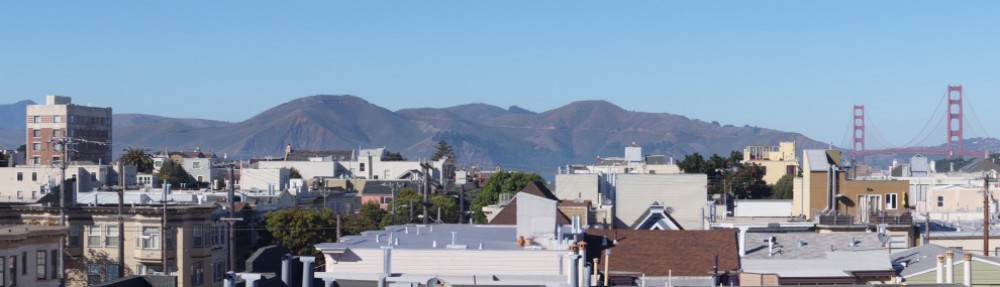
There’s a lot of excellent indie rock out there if one chooses to actively look for it. Some listeners like myself spend far too much time and money on it, but we love it just the same. Again with the internet: many college stations stream their shows on their website, so someone like myself, now living in San Francisco, just over a mile from the Pacific Ocean and a view of the Golden Gate Bridge just outside my window, can listen to the broadcast of Boston College’s WZBC.
The only thing missing, in my mind, is having a blank cassette at the ready, in case one of my favorite songs comes on.
That’s one of the original facets of alternative/indie rock, really…the ability to look in the face of popular culture and loudly and proudly profess that you’re not going to play that game, at least not by those rules anyway. One of the whole points of the genre, harking back to the original UK punk wave of the late 70s (and much further back, depending on which rock genre you’re thinking about), was to make sounds under one’s own rules.
It was about a certain style of anarchy –a personal anarchy, wherein one fully embraces who they are and what they want to be, where one stops trying to fit in where they obviously don’t belong, where they find their own path without outside influence. Be what you want to be, and fuck ’em if they can’t deal with it.
*
Every music fan has that story: where did you first hear that new song, that favorite band, discover that new genre? Every fan has a story where they heard a song or found a new radio station or a new genre for the first time where it just clicks: YES! This is the thing that has pierced my soul, has connected with me in such a deeply personal way that I will never hear it the same way again!
Okay, maybe not in so many words: often it starts out with a distraction. Yeah, I kind of dig this track. It makes you stop and notice it. You may not know exactly why just yet, but you’re not going to dwell on that right now. But its primary job has been fulfilled: it’s gotten your attention. You may be intrigued for the moment but forget it a half hour later, or it may stay with you for much longer, so much that you’ll end up looking for it the next time you’re at the local music shop.
Or, if you were like me in the middle of the 80s, you’d have a small ever-circulating pile of half-used blank tapes near your tape deck, and if you liked the song that much, you’d slam down the play and record buttons and let ‘er rip.
This is the story of how I got from there to here.
*
Let me start with this: I was part of the inaugural MTV generation. I was ten going on eleven. I remember when I first saw the channel when it was offered on our newly-minted Time Warner Cable system, the first cable service in my hometown. I remember the beige-colored box with the light brown label on top, listening all the channels we’d be getting. I remember seeing MTV for the first time. [For the record: my first MTV video was .38 Special’s “Hold On Loosely”.] And most of all, I remember it was channel 24. Even before we got cable, I’d already made plans to park my butt in front of the television and soak in the musical goodness. Any music I heard from about 1982 onwards was considered Something Awesome in my book, especially if it had a video. But even if it didn’t, that one network opened up something within me that turned music from a passing interest into an obsession.
Around the same time, I had pilfered the radio that had been gathering dust in the kitchen (an old model I believe must have been purchased at one of the local department stores a few decades earlier), and it was now at my desk. I’d made little marks on the dial where my favorite stations were. I’d fallen in love with rock radio.
Was it different from the sort-of-occasional listenings of records from our family collection, or the albums we’d take out from the library, or whatever was playing on the car stereo during family roadtrips? In a way, yes. Even then I’d gotten into the habit of listening to certain radio stations, but not to such an obsessive extent. I’d gone from ‘now and again’ to ‘every single morning’ to ‘pretty much all day long’. Other boys my ages were probably watching sports or playing outside or whatever it was we supposed to do, but I was perfectly happy sitting right next to the radio and enjoying each new song that came on.
The obsession with countdowns started around this time. That was the fault of one of my older sisters who’d taped various songs off the radio at the turn of the decade, and had recorded part of the year-end countdown on the rock station we all enjoyed, WAQY 102.1 out of East Longmeadow. A year or so later the torch was passed to me (well, more like I snagged it as she headed off to college). WAQY had a contest in which, if you sent in the correct countdown list, they’d pick a random winner and give away every album that was on it. Who was I to turn that down? With an insane amount of focus and intent for a preteen, I wrote each artist, song on lined paper and duly mailed it in. Never won, of coure, but that didn’t stop me from listening with rapt attention.
Thinking back, that’s probably what fueled my music obsession the most — between the countdowns and MTV, as well as radio in particular, I was glued to my desk or the living room couch, wondering what song or video would come next.
That went on for most of that decade, really. From about 1981 or so onwards, I would always have a radio on, or I’d watch a good hour or so of MTV, just soaking everything in. I really wasn’t too choosy about what songs came up, as long as they caught my interest. That was partly due to listening to whatever my sisters were listening to in the 70s. I could take Chicago’s easy-listening comeback albums the grandiose prog rock of Rush, and the guitar jangle of early REM. A lot of the rock stations back then were more adventurous in their playlist, mixing past and present genres without a second thought. Within the span of an hour I could hear the Beatles, Led Zeppelin, Dire Straits, Van Halen, and maybe even an Ozzy or an AC/DC track. In the early days of FM radio, there was always some element of free-form.
I was given a massive playlist to choose from, and I devoured pretty much all of it.
Yes, after all these years of talking about it, doing all kinds of reading and note-taking and excavating my memory banks, I’m finally going to make this a thing! Over the weekend I started making the posts, and will schedule them to drop on Tuesday and Thursday mornings. Woo!
I’ve even made it a point to be a few posts ahead and want to keep it that way, so I’ll have a backlog. This is a project I’ve had in my head for a good few years now, so I want to do it justice.
Next week will be the first of many entries for the Walk in Silence blog series…and of course, I’ll be letting you know all about that over the next week and a half.
But that’s not the plunge I’m talking about.
When I was first planning out the WiS project, I always had the timeframe in the back of my mind: should I focus just on my own personal connection with college radio (1986-1989)? Should I talk about its history (197? – 199?)? Or should I just come up with an arbitrary time? Eventually I chose the third entry, that way I could focus mostly on my own personal history, but also include the time before I connected with the genre, thus 1984 – 1989.
The plunge I’m thinking of now is the college and post-college years. They weren’t exactly the happiest years of my life, for various reasons, but they were interesting musically. College rock, at least with American radio, gave way to grunge and Britpop as it became more popular, and changed genre names numerous times before deciding on the all-encompassing ‘alternative rock’. A schism grew: those who felt alternative rock was selling out and followed the most obscure bands possible, and those who really didn’t mind either way, as long as the prefabricated crap currently in the charts went away.
I’ve been toying with the idea of doing a sequel to Walk in Silence for quite some time. There’s no name to it yet, nor is there any concrete schedule or plan for it at this time (all my focus is currently on posting WiS and publishing the Bridgetown trilogy), but I do have a few ideas floating around…it’ll focus mostly on the years from late 1989 (when I left for college) to late 1995 (when I left Boston and moved back home). And it will most likely continue the WiS theme of both personal story and music history.
Some albums from that era still get heavy airplay on the radio: you’ll still hear tracks from Nevermind and Blood Sugar Sex Magik and Loveless and Definitely Maybe and Achtung Baby and Violator and so on. But there are so many more albums I’ve ignored for one reason or another, forgotten about or couldn’t make myself listen to for personal reasons. Songs that radio let pass into history, even forgetting to play them on Throwback Thursday. But as with Walk in Silence and the 80s, it’s been nigh on twenty-plus years for most of these. It’s well past time to revisit them again.
So starting today I’m going to start listening to some of these albums in my collection, give them a once-over they haven’t had in quite some time, and see where I can go with it.
Oof! Yeah, still working on the final revision/edit of The Persistence of Memories, and it’ll be another few weeks before I can give myself a breather. The soft release date at the moment is “sometime mid-April”, but I’ll let you all know more as soon as I have more concrete plans! At present I’m THISCLOSE (translation: about forty or so pages) to finishing the revision/edit, I’ve made a quick mock-up of the cover (which you can see at Welcome to Bridgetown). Once the edit’s done, then comes the formatting and the uploading. And then FINALLY I can get back to a normal schedule again. [That is, until I start the same process once more with The Balance of Light. Whee!]
In the meantime, I’ve been on a School of Seven Bells kick lately, partly due to their release of their last album, SVIIB (recorded just before Benjamin Curtis passed away). Jangly shoegazey goodness that kind of reminds me of Lush with a bit of Stereolab mixed in. Enjoy!
This phrase has been stuck in my head quite a bit lately. Not so much in tandem with the recent passings of numerous famous (and infamous) people we’ve known in our lives, but more with how nothing is ever permanent. It’s a theme that runs rampant in the Mendaihu Universe. Things end, things begin. Things evolve. It’s never the end of the world; it’s just an unfortunate moment that we must process in some way. Yes, there are horrible things in history, horrible things that cost lives, and I’m not ignoring or belittling that. But in the evolution of humankind, it’s never remained that way forever. We learn from our mistakes as well as from our insights. We make things better for ourselves and for others. There are always naysayers, but there are others who believe. There are destroyers, but there are also makers.
And to be honest, that’s the most fascinating part of being alive for me.
You know, it dawned on me that I don’t think I’ve gone to a nightclub venue since…well, probably since before I moved down to New Jersey in 2005, come to think of it. I used to head to various shows in Boston all the time back when I was in Massachusetts, and didn’t think twice about driving that seventy miles, hanging out int some smoky basement dive with too-loud music, and having to leave a tad early so I could make the last Red Line train out to Alewife where I was parked.
Over the years since we’ve been here, our showgoing has pretty much remained with the San Francisco Symphony and the SF Opera. It just sort of happened naturally, as they were well-known ensembles we were looking forward to checking out when we moved out here a decade ago. And over those last ten years, I’ve really come to appreciate classical music a lot more than I ever have in my life.
I won’t lie, for years the extent of my classical knowledge was pretty much tied in with Warner Bros cartoons such as What’s Opera, Doc?, The Rabbit of Seville, Long Haired Hare and so on. There’s also the 80s Hollywood movie such as Platoon (Barber’s Adagio for Strings), Apocalypse Now (Wagner’s ‘Ride of the Valkyries’), and 2001: A Space Odyssey (R. Strauss’ ‘Morning’ from Also Sprach Zarathustra).
I wasn’t completely ignorant of classical music; it was just a genre that I didn’t follow as closely as I did others. This of course has changed over the years; I used to really like Copland back in my college years but find his work kind of thin nowadays…I now find Tchaikovsky one of my biggest favorite composers.
There are certain pieces that I find absolutely stunning and will try to get to a performance if the SF Symphony is playing them. Such as:
https://youtu.be/CcflwUYYoXk
Samuel Barber’s ‘Adagio for Strings’ completely blows me away every time I hear it, whether it’s the orchestral version or the original string quartet version. I love when music has a deliberate flow to it — each melodic phrase is given time to complete itself without hurry. It’s like breathing.
https://youtu.be/dZDiaRZy0Ak
Maurice Ravel’s ‘Bolero’ is so much fun! It starts off so quietly and unassumingly, and yet by the end, every single instrument in the house is bleating, banging and barking so loudly that the entire audience whoops with cheers when it finishes. A silly Italian movie called Allegro non Troppo (a self-professed “low-budget” homage to Disney’s Fantasia) got me hooked on this piece in college with its unique take on planetary evolution.
Tchaikovsky’s 6th Symphony (‘Pathetique’) is probably my favorite piece of all right now. I was thinking of it the other day when I was watching David Bowie’s final video, “Lazarus”…one kind of got the feeling that David knew the end was coming, and had decided to go out on a final creative note — a denouement letting us know how much he’d enjoyed his time in this world. I feel the same whenever I hear the Pathetique because it was Tchaikovsky’s last piece in much the same manner…I think he’d finally come to terms with his life as well as his mortality. This is also why I love the way the ‘big finish’ in this piece is actually in the 3rd movement and not the final; the final 4th movement ends up being more of an exhalation, a release.
https://youtu.be/kAKX9x7sLO8
Mason Bates’ The B-Sides is a relatively new piece — written by a composer six years younger than myself, I should add — and I can totally see the future of classical music heading in this direction, with a mix of analog, digital, and found sounds (check the ‘instrument’ used about three and a half minutes in!). Bates is somewhat of a local hero here, as he’s both a nightclub DJ (as DJ Masonic) and a composer of a large number of wonderfully creative pieces that he often performs with the SFS. Bates also recently released an album with the Boston Modern Orchestra Project called Mothership, which I highly recommend. I have high hopes for this one!