Fly-By: It’s a perfect day for letting go…
Reply
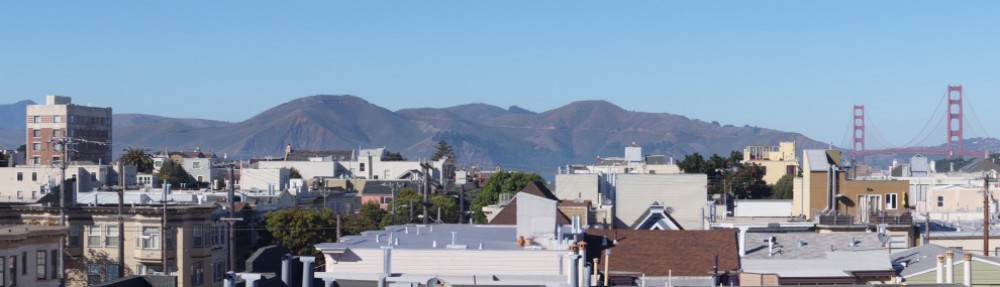
Long story short: I have given my two weeks at the current Day Job. Let’s just say that it wasn’t entirely on peaceful terms. I’ve talked about it a bit on my social media channels, and there’s a chance I may write something about it for a Medium article in the next week or so to go into more detail.
More to come….
NOTE: I’ve been listening to their album Big Bang nonstop lately, partly because I love it so but partly because it’s inspiring some ideas on a new story idea that’s gestating over in my daily words. Thought I’d share a post from six(!!) years ago about one of my favorite 80s bands, with updates and edits. Enjoy!
We’ve Got a Fuzzbox and We’re Gonna Use It!!, aka Fuzzbox here in the States, was a cute and punky quartet out of Birmingham UK, and one of my first music crushes when I started listening to alternative rock. They’d been brought to my attention right about the same time as Sigue Sigue Sputnik in the glossy music mag Star Hits, and upon seeing their crazy-colored and spritzed hair and punky Oxfam chic, I was completely hooked–which in all honesty wasn’t really hard, considering it didn’t take much to rebel in a small town like mine. They made me realize punk wasn’t just about rebelling against society, like American punk had suggested — it was also about doing your own thing, however bizarre it might be, and not giving a shit about what other people thought about it.
Fuzzbox was initially together only for a short time, releasing just two albums and a handful of singles before going their separate ways, but they were just so damn fun to listen to that it didn’t matter.

Fuzzbox started sometime in 1985 with four friends who’d decided to start a band. And like any punk band worth their salt at the time, mastering your instrument wasn’t exactly high on the list of priorities. Consisting of Vickie Perks (aka Vix) on vocals, Tina O’Neill on drums and sax, and sisters Maggie (aka Magz–vocals, keys and guitars) and Jo Dunne (bass, guitars and keys), they immediately jumped in on the occasional open mike night at the local bars and learned their chops onstage. It’s said Maggie was the creator of the band name, announcing that they did in fact have a fuzz distortion guitar pedal they were about to use.
Their debut single was the gritty and poppy “XX Sex”, with shockingly direct feminist lyrics about exploitation and sexism in the media. They followed up with a ridiculous and silly summer single with labelmates The Nightingales and alternative comedian Ted Chippington with “Rockin’ with Rita”, and by summer’s end they were given a spot on the highly influential NME C86 compilation with “Console Me”. They prefaced their debut album that October with a jittery and bass-heavy single about unrequited love, “Love Is the Slug”, my musical introduction to them via MTV’s 120 Minutes.

Bostin’ Steve Austin (released as a self-titled album here in the US, but with the same cover) was released in December of 1986, featuring a dozen gems about the girls’ life in Birmingham–not just containing the teen heartbreak of “Love Is the Slug” and “Jackie”, it also contains the confrontational “XX Sex” and “What’s the Point” (their follow-up single released in January of 1987) and “Preconceptions”, as well as a weirdly hypnotic cover of Norman Greenbaum’s “Spirit in the Sky”. The quality of the music here is surprisingly tight, even when it hints at sounding on the verge of disintegrating into a distorted mess. Vix’s lyrics alternate between playful, angry, and emotional, and despite the simplicity of the melodies there’s a lot going on musically. The stop-start of “You Got Me”, the building tension in “Love Is the Slug” and even the 60s-girl-group pastiche of “Hollow Girl” works perfectly.
Bostin’ Steve Austin got a ridiculous amount of play on my tape players between early 1987 and mid-1989–this was the side of punk that I gravitated to, the revelation that I didn’t have to try fitting in with the in-crowd anymore. I didn’t really need to do much, of course–wear some of my college rock tee-shirts, my grandfather’s green trenchcoat, and let my hair grow out of its quintessentially 80s spiky ‘do (but not to the point of longhaired metaldom), and start writing music reviews for albums hardly anyone else in my school listened to.
Fuzzbox disappeared for a short while, and would reappear in early 1989 with a completely new and unexpected look and sound. I admit I wasn’t entirely sure how to approach it at first, having twitched and thought “oh god, they’ve become Jem and the Holograms.” But there was something about it…something about the slick late 80s production, the chart-ready poppiness, that called to me. I began to realize that this was the forbidden candy for me as a fan of college rock, the ultimate test: do I dare admit that, after labeling myself an alternative music nerd and a nonconformist, I actually enjoyed this admittedly catchy music?

Gone was the thrift shop fashion as well, replaced by glitz and glamour. The fuzziness of their sound was also gone, replaced by shiny synthesizers and sequencers. They now had an outsider as a cowriter of songs in the form of session musician/producer Liam Sternberg. And yet…
…and yet, there was something about this new album, Big Bang, that I just could not give it up. I was older and now in college, and yet the music hinted at the readymade poppiness of 80s Top 40, the kind that was throwaway and yet catchy and likable at the same time. The Brummie humor was still there, hiding in the lyrics of lead single “International Rescue”, a loving ode to the Gerry Anderson tv classic Thunderbirds (and, in the video, a humorous nod to Jane Fonda’s Barbarella as well, featuring Adrian Edmonson from The Young Ones as an evil scientist).

Big Bang kicked off with the irresistibly poppy “Pink Sunshine” (and also released as the second single) and my immediate reaction was to wonder where the hell my punk goddesses had gone off to…but I soon understood what they were doing. This wasn’t about rebelling, not anymore. It was about being an adult now, having gotten over the teenage growing pains. These were the Brummie girls stuck in their jobs, dealing with the drudgery of the real world and letting it all loose at the end of the working week.
There’s a lot of flirting and sexiness going on with this album, and that’s part of what makes it so irresistible. There’s the rocking sci-fi of “Fast Forward Futurama”, the heartbreak of “Self!” (featuring the guitar work of none other than Queen’s Brian May!), and the gorgeous dancefloor bliss of “Versatile for Discos and Parties” (quite possibly my favorite track off the album). There’s even a brilliant cover of Yoko Ono’s “Walking on Thin Ice”, retaining the song’s mystique but giving it additional emotional beauty. The album ends on a very somber yet lovely note with a track called “Beauty”, which sounds like nothing else they’ve ever recorded.
I realized that Big Bang‘s shameless pop wasn’t shameless at all — it was a loving tribute to the dance pop of the decade, one that was about to come to a close. The sound of 80s pop would age, and often not for the best, but when it was done right, it was still fun to listen to. A few years later, once I discovered anime movies and series from the 80s and 90s such as Urusei Yatsura and Silent Möbius and later to the Gall Force series and Sailor Moon, I began to realize that, thanks to Big Bang, I now had begun a long-lasting love affair with JPop. I began seeing the album as an unintended but spot-on paean to the J-Pop so prevalent in the credits and montages in anime, and that made me love the album even more. It’s pure pop, but it’s still irresistibly fun.
In 1990 they would release a final single, “Your Loss My Gain”, written for a never-realized third album, and while it seemed they were progressing in a more mature pop direction, they soon split up. They all went their separate ways. Only Vix remained in the music industry, recording under various band names including Vix n’ the Kix. Three compilations would surface a bit over a decade later: two albums of demos and outtakes called Fuzz and Nonsense and Rules & Regulations to Pink Sunshine: The Fuzzbox Story, and a greatest hits collection amusingly titled Look at the Hits on That (a very Fuzzbox-worthy pun title). And in 2010, Vix, Maggie and Jo reunited with the help of Vix’s backing band for a one-off single, a cover of M’s classic track “Pop Muzik”. Sadly, Jo would pass away from a cancer-related illness in 2012, but a year later, Vix decided it was time to rerelease the band’s 80s discography. Bostin’ Steve Austin would finally have its debut on compact disc, and Big Bang would contain all the remaining 80s tracks, including the “Your Loss My Gain” single.
****
But there’s more! Since I first posted this, Vix and Maggie have returned to music under the Fuzzbox name and have dropped a few new singles over the last few years! In 2016 they released a new single called “Let’s Go Supernova”, and in 2018 they crowdfunded another single, fittingly called “WGAF…AWGUI!!”. In 2019 they released a video-only single called “Say Hello” for a local Birmingham project. And they will soon be releasing a box set called We’ve Got a Box Set and We’re Gonna Use It!!. It certainly is great to see them still going strong, still irreverent and still full of poppy goodness.
We’ve Got a Fuzzbox and We’re Gonna Use It!! is a band that influenced not just my listening habits but my way of life when I was growing up in the late 80s; it was a refreshing view of punk-as-freedom rather than punk-as-anger, and helped me realize that the music I listen to, then and now. My tastes still lean towards the alternative, but I’m not above the shamelessly pop, especially if it’s done well. In relistening to Bostin Steve Austin I now hear a lot of the intelligence and fearlessness in the lyrics, which makes me appreciate it all the more. And as an added bonus, they’re there if all I want is some great and fun music to listen to.
Oh hey! It’s time for another month’s worth of new releases! The first quarter’s music so far has been surprisingly fruitful with a lot of great albums, and I’m quite happy about that! Here are a few new records I’ve been playing on my mp3 player as of late…
Destroyer, Have We Met, released 31 January. This is a rather quirky band that’s been around for quite some time, but their music has always been consistently melodic and intriguing.
Joseph, Trio Sessions: Vol 1, released 31 January. This is a fine alt-folk trio that channels the sounds of 70s Laurel Canyon and their three-way harmony is just lovely. I highly suggest checking out the rest of their work as well.
Poliça, When We Stay Alive, released 31 January. This Minneapolis band has always been a bit on the strange side with their music, but this new one is far more soulful and moving than their previous work. It’s an unexpected but wholly welcome direction and I love it.
Revolution, I Love You, Black Feathers, released 7 February. I don’t even remember where I’d discovered this band (NoiseTrade, perhaps?) but I fell in love with their strange but amazing mix of shoegaze, goth, synthpop and maybe even a bit of punk. The new record goes in all sorts of unexpected and wonderful directions.
Green Day, Father of All…, released 7 February. The new album kind of reminds me of their late 90s/early 00s era records, especially Nimrod and Warning, as the songs slide between all-out punk assaults and radio-friendly groovy rock. Not that that’s a bad thing, because they still manage to pull it all off.
Stone Temple Pilots, Perdida, released 7 February. They’ve lost two singers and that’s enough to break any band, but the DeLeo brothers soldiered on to write and record a stunningly gorgeous and heartbreaking album.
Hayley Williams, Petals for Armor 1 EP, released 7 February. The Paramore lead singer finally releases her first solo outing and it’s well worth the wait. It’s darker and quieter than her band work, but it’s just as powerful.
Best Coast, Always Tomorrow, released 21 February. I’ve always liked this band, and I love how they’ve completely embraced their own brand of that California sound — sunny, punchy, and just that little bit off-kilter. This one’s a fun and infectious record and I really should be playing it a lot more!
Grimes, Miss Anthropocene, released 21 February. I did not expect to enjoy the new Grimes as much as I do! She’s quite firmly in the ‘off in their own universe’ column when it comes to musicians and personalities, but the new record is just brimming with really neat sounds and ideas that pulled me completely in from the beginning. One of my favorites so far!
**
More to come soon!

I can easily divide up the 90s on a musical and personal note: the college/post-college years (Jan 1990 – Sept 1996) and the HMV years (Sept 1996 – Sept 2000). And I often do, because I approached my listening habits according to how much money (or more accurately, how little) I had in my coffers at the time. The former was filled with mix tapes of things recorded off the radio, dollar bin raids at the various used record shops I frequented, dubs from friends, and the occasional splurge when I really should have been paying a bill. [I’ll totally own up to that. But they were of course few and far between.] The latter was filled with meticulously crafted mix tapes of things bought at a discount from my store, freebies, even more dollar bin raids, and, erm, maybe a few dubs surreptitiously made in the back room of the store? The music of the post-HMV years, aka the Yankee Candle years, would be informed almost entirely by Newbury Comics. I’m pretty sure I singlehandedly kept them in business then. But that’s another post.
Personally, I would say the personal delineation is around the same time, and surprising no one, was informed by financial reasons; I was finally able to pay off overdue bills and stop deferring my student loans. I would also posit that it was also the time I got my shit together and started my writing career on a much more serious level. Whatever worked to dislodge myself from the spiral I’d found myself in. And once I found myself in a better mental and emotional state, there was no looking back.
I couldn’t listen to those early 90s years without feeling a sense of failure. I could have been such a better student. I could have applied myself better. I could have done this, I could have done that. Giving into my moodiness and lack of self-esteem far too often. So it’s with no surprise that I avoided obsessing over that era here at Walk in Silence for quite a number of years. The HMV years were much more positive, not to mention directly tied in with my Belfry years writing The Phoenix Effect and the Bridgetown Trilogy.
So why now? Why am I picking up these pieces? Well, it’s been three decades on, and I’m in a much better place. It’s time for a bit of closure on a lot of things related to that time. Make peace with what I couldn’t achieve, and celebrate everything else I’ve done since. I’m listening to these albums and singles the way I’d wanted to in the first place: without all the extra baggage. Experience them as the creative endeavors they are, and if I’m lucky, learn to appreciate them a hell of a lot more.
I’m ridiculously picky when it comes to updating my mp3 players. I currently have three, which I’ve acqured over the years: a Creative Zen Mozaic, an older SanDisk Sansa Clip, and a newer SanDisk Sport Plus. Do I use all three? Yes, of course I do! Normally I tend to have them filled up with specific themes or sounds; the Zen is usually reserved for new and recent releases plus the Beatles discography (because come on…do you know me?) while the Sansa Clip has older favorites.
Now that I work in an office again (grumble grumble), I’ve been putting all three to good use throughout the day. I don’t have direct access to my music library unless I use up a significant amount of phone data via our Plex server, so I make do with the old-school travel-sized players.
Lately I’ve been playing around with a new possible writing project (no promises yet) in which I sort of decided its soundtrack would be the music of the early 90s up to the early 00s. Why? Good question, but I won’t go into detail just yet. Suffice it to say, I’m going to start listening to these albums for first time without equating them to the Bridgetown Trilogy. I’m not doing it on purpose, it just happened that way. But in the process, I’m getting to revisit these songs with fresh ears and no prior influence.
But more importantly, I get to revisit these songs without the emotional attachment I’ve long had with most of them. I’ve written so many blog posts about those lean post-college years, and about the music I listened to during that time, but this time out I’m finally giving them a spin without getting caught up in all the personal drama. I’m listening to them in the context of what was going on in the world during the time of their release. [I suppose in a way you could say I’m purposely not making it all about me this time. Heh.]
Also, it’s kind of fun to revisit some of these songs and albums that I know pretty well but haven’t visited in ages. In particular, I’ve been making it a point to revisit some of the mainstream pop albums I enjoyed — the downside to being so into alt-rock is a habitual avoidance of all things pop — and getting something new out of them. It’s to the point that I’ve been tempted to do another visit to Amoeba Records’ dollar bin to find more of those albums that passed me by.
And who knows — maybe I’ll rediscover a few tracks that flew under my radar!
I’m still a bit annoyed that I can’t seem to get my mp3 players (or my phone for that matter) to play any music through the car. Apparently our car stereo is so low tech that it doesn’t even have a line-in audio selection on the interface. It does have a few USB ports, but no UI that will let me access whatever I connect to it. [It of course has Bluetooth and iThingie interfaces, neither of which I need.] All I want is to listen to something aside from the same stations playing the same dang things over and over! Why is that so hard? Eesh.
Anyway, this reminds me of those days long ago when I used to bring my boombox along when I went on a roadtrip with my friends, or when I had that unwieldy and not-always-working connector to my cd walkman (which would eat up AA battery power at the rate of maybe two cd plays and skip at the slightest jolt). I don’t think it’s currently possible to upgrade our car stereo, so there’s not a lot I can do except figure out an alternative or see if I can find a lifehack online somewhere. Right now I’m contemplating keeping a small Bluetooth-ready speaker in the car, which I’d originally bought for my PC, and plug in my mp3 player that way. At least I can charge that thing rather than go through all those batteries.
I find this quite amusing, actually, as it almost feels like I’ve gone full circle: if I really want to listen to my own music, I’m going to have to carry it on me and have something to play it on, or in this case, through.
[A little something from my daily words that I wrote the other day…]
I’ve been listening to more music from 1990-1992 again, because why not? I’m still a bit fascinated by this era, where the sounds have grown larger than (and out of?) the college rock scene, but before the giant wave of Britpop and grunge. The music is lighter, less moody, even kind of positive in a way. It’s sort of like the early Beatles, or the early hippie scene, where it’s working from its surface, or perhaps from a more honest core, before the moods and the darker drugs and the hyped-up scenes came in.
I was on the back end of my freshman year at Emerson and just starting sophomore year, torn between the escape of my small town and being tied to it. It’s the era of the happier times and looking optimistically into the future. The end of the Cold War and the start of the Middle East wars — the first war televised In Real Time that Generation X could watch, bringing a lingering horror that we could possibly be dragged kicking and screaming into it whether we wanted it or not. We had Bush I in office which was essentially Reagan II, more of the same conservative bullshit. But we knew better…we could go further.
We were fighting with our blood and our emotions to break out of the old bigotries and passive ignorance. But it was also the era of great creativity: the new independent movie directors. It was an era of our generation deciding we were sick of the exhausted tropes and music-by-numbers and took a page from what we knew: our own takes on REM and The B-52s and French New Wave and so on. We were nerdy artists and we were having fun riffing on our own creations, knowing full well that we could now get away with it. In short: we were coming of age and we realized we’d had voices of our own. We were irreverent. We were saying fuck the world, let’s do it ourselves if they won’t help us. We were a generation that was seen as an amusing sideline
Out of the mire of my freshman year (and that frustratingly slow last summer working for the town barn) came a much healthier and more positive outlook. I’d grown past my attempts to fit in with the alternahipsters (I was just too square for them, I guess?) and relearned how to gravitate towards the people who would become close, if temporary, friends. There was a positive vibe coming across, despite the situations we often found ourselves in. I wrote some of my best songs to date, created Murph, worked on multiple screenplays for classes. And I listened to even more music than before, because I had so much more access to it: I had WFNX and WBCN and all the college stations (including my own) and I had all the record stores I could shop at.
It was a strange time, as I was indeed seeing the decade when it seemed the world could change in the blink of an eye. And it often did, slipping into so many different subspaces and subgenres before we could even notice it happening. I stayed within this positivity because it was so much needed at the time. I let myself open up to a lot more people. I started opening up my mind a bit, let myself experiment with different ideas and thoughts because I could trust myself now. What I started thinking about, feeling, doing at that point in time, that was when I first let myself go further. Let myself find out who I might be underneath all of this, without all the barriers and without having to put everyone else’s needs before mine.
That was when I chose to stay in the city the coming summer. I knew that going back would have been going in the wrong direction. I had to go forward, live a different life. I was poor as fuck and I spent most of the summer eating bad foods and barely scraping by, but I was bound and determined to break out of my old shell. I’d crash and burn (and spectacularly at that) just a few years later, but it at least gave me a direction when I could start over again.
I don’t really know what possessed me, but it seems my next possible writing project wants to have an early 90s soundtrack. So here, have some non-grunge semi-obscurities that have been popping up on my mp3 player the last few days…
Another downside to having to commute again is that I’m stuck listening to local terrestrial radio stations in the car. Now, before you get all het up about that statement, let me explain: I’m all for local terrestrial stations! They’re good for the community, they keep me updated on when the highway I’m currently driving on might be all sorts of borked a few miles up the road; they do in fact keep me entertained on an otherwise uneventful and sort of boring drive* in their own way. In fact, I just recently found a Bollywood-themed station out of San Jose!
[* – The one non-boring bit of the commute I will never tire of is coming across the western span of the Bay Bridge and back into San Francisco just as the sun is setting. It’s a glorious view and I still have moments where I’m amazed I live in such a ridiculously photogenic city.]
No, the issue I have is the commerciality of most of these stations. Sure, I totally understand that these stations need advertising and numbers and set rotations to keep them going nowadays, as freeform radio is pretty much relegated to college and non-profit stations. But what has always made me tire of these stations is that the playlist can be so…predicatable. When you listen to the radio as much as I do, the playlist patterns start getting more and more obvious. I’ve worked at both college and commercial stations so I know what rotations are and why they’re a thing… I guess I just tire of them a lot quicker than other people do.
There’s only so many times I can hear classic mainstays like Red Hot Chili Peppers’ “Can’t Stop” or Green Day’s “Longview” in a week (at least four to six) or new songs like Tones & I’s “Dance Monkey” (same, if not more, and the song kind of similar to Crazy Frog’s “Axel F” in that I find it quite annoying and yet somehow ridiculously popular). There’s certain songs that are like playing bingo: the day isn’t complete without hearing That Particular Classic Track.
I mean, I hate to sound like an old and aging hipster yelling at clouds here, but sometimes these “alternative” stations feel more like… “alternapop” stations, playing it safe with the same bands that feel more pop than alternative. They aren’t nearly as adventurous as they make themselves out to be. This is especially notable when I’m listening to a non-profit station like KEXP, which is far more adventurous in its playlist…and inclusive. It occurred to me recently that our local alternative station rarely plays bands of color (at least that I know of), and rarely any women aside from “Dance Monkey”, Billie Eilish, Shaed’s “Trampoline” and Meg Myers’ cover of Kate Bush’s “Running Up that Hill”. Maybe a Lana Del Rey track now and again, but it’s almost all men. That tells me it’s almost all about the numbers, and the numbers state that the listeners are mostly the “males 18 – 44” group. Everyone else gets the short shrift, even if that station is one of the very few in the area that plays the style and genre they like the most.
I’ll make do, but it’s really uninspiring after a while and I find myself spending most of my commute hitting the surf button for something different. I’m this close to giving up on these stations and ordering a headphone-to-USB cable so I can listen to my mp3 players in the car.
Thankfully, most of the terrestrial stations I do listen to, ones that appeal to my tastes and don’t bore me, also stream online where I can listen to them on my phone. Kind of tricky to do when your traveling, though.
Epic fantasy & military sci-fi author.
An Eclectic Collection of Pop Culture
Photographs, music and writing about daily life. Contact: elcheo@swcp.com
historian of the business and politics of culture
Something's wrong. It's not dusty here.
Young Adult Author
Blogging the Nagra Tapes | The Beatles' Get Back sessions
Adventures in collecting Beatles music
A daily selection of the best content published on WordPress, collected for you by humans who love to read.
Trek Across the Musical Terrain
A Music Blog
For all the things I idiotically adore
Drill a hole and take a peek outside.
Writer of Young Adult Fantasy
about the craft and business of fiction
Quality articles about the golden age of music
Madly In Love With Sound
 Walk In Silence