Walk in Silence 21

Love And Rockets

(Photo by Fin Costello/Redferns/Getty Images)

The summer of 1989 was spent mostly in cemeteries.

No, I hadn’t decided to go full-on goth…I was in the Cemetery, Park and Tree Division of the DPW, lugging lawn mowers in the back of the town trucks around to most of the local cemeteries.  We on the summer help team would cut the grass around the headstones and the odd niches, and one of the regular full-timers would come riding around on a John Deere and cut the rest.  We’d usually be one or two sections ahead of the riders, so occasionally we’d sneak into one of the wooded areas and enjoy the shade.  The cycle of cutting was such that by the time we made our rounds at all our usual stops, it was time to cut the grass on the first location again.  My favorite cemetery to mow was Silver Lake; it’s the largest in town (a few of my relatives are buried there), so it would take a few days to finish, and we’d have so much more time to goof off.

Me?  I got along just fine with everyone at the job.  They thought I was a bit weird, wearing my Cure and Smiths tee-shirts and all and listening to that weird shit, but I gave as good as I got, and got the job done as needed.  I brought my Walkman (I finally had an official Sony by that time!) and listened to all kinds of stuff during my job, both old and new:  Hüsker Dü’s Zen Arcade, Bauhaus’ Swing the Heartache: The BBC Sessions, most of my 1988-89 compilations to date, The The’s Mind Bomb, Concrete Blonde’s self-titled, The Cure’s Disintegration and The Head on the Door, most of Cocteau Twins’ Treasure, The Moon and the Melodies and most of their EPs from that era, and so much more.  I’m pretty sure I went through fifty or sixty dollars’ worth of AA batteries that summer.

I also started focusing a bit more seriously on the writing.  The IWN had pretty much gone into stasis, the Belief in Fate project was complete, so I focused mostly on my lyrics and poetry writing.  I also worked on my guitar chops, both on my bass and on my sister’s acoustic.  I’d gotten better, though my chord-shifting still needed a hell of a lot of work.  Given that I was outside for most of the day and hiding inside in the evening during the hot summer, I didn’t have much else to do except listen to a lot of music and let my influences get the best of me.

This was a bit of a double-edged sword, as I found myself returning to my ‘morose bastard’ ways again, even though I was in a strong relationship and was heading out into the Big Bad World in a few months.  Perhaps it was a bit of melancholy I felt in realizing that I’d finally be letting go of both the good and the bad of my youth.  Maybe it was a bit of sadness that I’d be heading off to Boston and leaving Tracey back home for another three years.  Maybe it’s that I’d be even further away from my friends and would have to start over from scratch.  Maybe it was that I really had no idea what I truly wanted to do, but I was afraid to admit it, especially after I’d already committed to my choice of college.  Maybe it was a bit of all of this.

The end of the summer came quickly.  I worked pretty much all the way up to the last few weeks of August, taking maybe a week off before I was to head out the first week of September to my new destination.  Which meant any last minute music dubbing and compilation making would need to be done post haste!

fiasco

It also meant that, for a very brief time, I’d get to see all my Misfit friends again.  Chris borrowed his grandfather’s cabin out on Packard Pond north of town, and invited most of the Misfit crew in for a three day get-together (which he’d amusingly named a ‘fiasco’).  It was a purposely low-key party, just like most of ours, in which we listened to music, played various games, watched silly movies and cartoons, and went swimming.  There was even a tag sale up the street that we went to, where I bought a few things for my impending college years.  It was the vacation we all needed then, a few days of doing nothing but sleeping in, goofing off, chatting and just having fun.

If anything, I’d say this was the point where our friendship had truly become more than just being high school friends.  Many of us have drifted various ways over the years, but that summer was the moment when I truly knew that many of these people would be in my life for years to come.  I wouldn’t know when I’d be seeing them again after this, or if we’d be in constant touch with each other (remember, this was 1989, well before anyone of us used the internet)…but I knew that, despite that, we’d still find a way to make it happen.

I’d borrowed my mom’s car for that weekend, so I was one of the last people to head out when the party was over.  I packed my belongings in the back seat, helped Chris clean up, and saw him off.  He’d be heading back to his parents’ house for a bit and then head back to UMass in a few days, I’d be leaving the first week of September for Boston.

The Last Home Year had finally come to a close.
Walk in Silence 0

PROLOGUE:

I’ve been listening to college radio and alternative rock for thirty years as of this week.

Currently, I’m kind of cheating and switching between the XMU station on SiriusXM, RadioBDC, and a host of college stations via their streaming feed, but the point remains — the singer here (Paul Westerberg at his alcoholic best/worst on Let It Be) is barely making it through the song without stumbling.  You can hear the liquor in his voice.  It’s a classic song of generational discontent, as Wikipedia points out.  I heard the same thing back then, in my bedroom, late at night, and I felt the same thing: who the hell let him close to the mike?

But truly, that was exactly what endeared me to the alternative rock genre, and still does to this day.  The fact that studio time was given to a musician of middling proficiency and questionable talent amused me then, and impresses me now.  Well — at this point, anyone with a laptop, a few microphones and some cheap recording and mixing software can lay down their own music.  And thanks to the internet, they no longer need to jockey for position at the local radio station or bar; they can upload their latest song on Bandcamp hours after making the final mix, and let their small tribe of listeners know it’s out there.

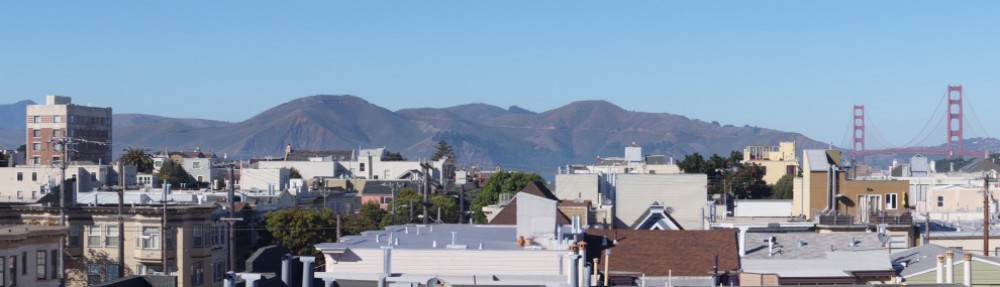
There’s a lot of excellent indie rock out there if one chooses to actively look for it.  Some listeners like myself spend far too much time and money on it, but we love it just the same.  Again with the internet: many college stations stream their shows on their website, so someone like myself, now living in San Francisco, just over a mile from the Pacific Ocean and a view of the Golden Gate Bridge just outside my window, can listen to the broadcast of Boston College’s WZBC.

The only thing missing, in my mind, is having a blank cassette at the ready, in case one of my favorite songs comes on.

That’s one of the original facets of alternative/indie rock, really…the ability to look in the face of popular culture and loudly and proudly profess that you’re not going to play that game, at least not by those rules anyway.  One of the whole points of the genre, harking back to the original UK punk wave of the late 70s (and much further back, depending on which rock genre you’re thinking about), was to make sounds under one’s own rules.

It was about a certain style of anarchy –a personal anarchy, wherein one fully embraces who they are and what they want to be, where one stops trying to fit in where they obviously don’t belong, where they find their own path without outside influence.  Be what you want to be, and fuck ’em if they can’t deal with it.

*

Every music fan has that story:  where did you first hear that new song, that favorite band, discover that new genre?  Every fan has a story where they heard a song or found a new radio station or a new genre for the first time where it just clicks: YES!  This is the thing that has pierced my soul, has connected with me in such a deeply personal way that I will never hear it the same way again!

Okay, maybe not in so many words: often it starts out with a distraction.  Yeah, I kind of dig this track.  It makes you stop and notice it.  You may not know exactly why just yet, but you’re not going to dwell on that right now.  But its primary job has been fulfilled: it’s gotten your attention.  You may be intrigued for the moment but forget it a half hour later, or it may stay with you for much longer, so much that you’ll end up looking for it the next time you’re at the local music shop.

Or, if you were like me in the middle of the 80s, you’d have a small ever-circulating pile of half-used blank tapes near your tape deck, and if you liked the song that much, you’d slam down the play and record buttons and let ‘er rip.

This is the story of how I got from there to here.

*

 Let me start with this: I was part of the inaugural MTV generation.  I was ten going on eleven.  I remember when I first saw the channel when it was offered on our newly-minted Time Warner Cable system, the first cable service in my hometown.  I remember the beige-colored box with the light brown label on top, listening all the channels we’d be getting.  I remember seeing MTV for the first time.  [For the record: my first MTV video was .38 Special’s “Hold On Loosely”.]  And most of all, I remember it was channel 24.  Even before we got cable, I’d already made plans to park my butt in front of the television and soak in the musical goodness.  Any music I heard from about 1982 onwards was considered Something Awesome in my book, especially if it had a video.  But even if it didn’t, that one network opened up something within me that turned music from a passing interest into an obsession.

Around the same time, I had pilfered the radio that had been gathering dust in the kitchen (an old model I believe must have been purchased at one of the local department stores a few decades earlier), and it was now at my desk.  I’d made little marks on the dial where my favorite stations were.  I’d fallen in love with rock radio.

Was it different from the sort-of-occasional listenings of records from our family collection, or the albums we’d take out from the library, or whatever was playing on the car stereo during family roadtrips?  In a way, yes.  Even then I’d gotten into the habit of listening to certain radio stations, but not to such an obsessive extent.  I’d gone from ‘now and again’ to ‘every single morning’ to ‘pretty much all day long’.  Other boys my ages were probably watching sports or playing outside or whatever it was we supposed to do, but I was perfectly happy sitting right next to the radio and enjoying each new song that came on.

The obsession with countdowns started around this time.  That was the fault of one of my older sisters who’d taped various songs off the radio at the turn of the decade, and had recorded part of the year-end countdown on the rock station we all enjoyed, WAQY 102.1 out of East Longmeadow.  A year or so later the torch was passed to me (well, more like I snagged it as she headed off to college).  WAQY had a contest in which, if you sent in the correct countdown list, they’d pick a random winner and give away every album that was on it.  Who was I to turn that down?  With an insane amount of focus and intent for a preteen, I wrote each artist, song on lined paper and duly mailed it in.  Never won, of coure, but that didn’t stop me from listening with rapt attention.

Thinking back, that’s probably what fueled my music obsession the most — between the countdowns and MTV, as well as radio in particular, I was glued to my desk or the living room couch, wondering what song or video would come next.

That went on for most of that decade, really.  From about 1981 or so onwards, I would always have a radio on, or I’d watch a good hour or so of MTV, just soaking everything in.  I really wasn’t too choosy about what songs came up, as long as they caught my interest.  That was partly due to listening to whatever my sisters were listening to in the 70s.  I could take Chicago’s easy-listening comeback albums the grandiose prog rock of Rush, and the guitar jangle of early REM.  A lot of the rock stations back then were more adventurous in their playlist, mixing past and present genres without a second thought.  Within the span of an hour I could hear the Beatles, Led Zeppelin, Dire Straits, Van Halen, and maybe even an Ozzy or an AC/DC track.  In the early days of FM radio, there was always some element of free-form.

I was given a massive playlist to choose from, and I devoured pretty much all of it.

WIS: Points of Interest II – Northampton

A few more pictures from our visit to New England a few weeks ago…this time focusing on Northampton.  Our road trips in 1987-88 often included a stop or two down here.  I obviously gravitated towards the record stores and sometimes the book stores, but there were also quite a few excellent restaurants here as well.  It’s still one of my favorite places to go when we’re in the area.  I would not mind living here either, if it were not for the fact that we’d have to deal with snowy winters!

Downtown Northampton

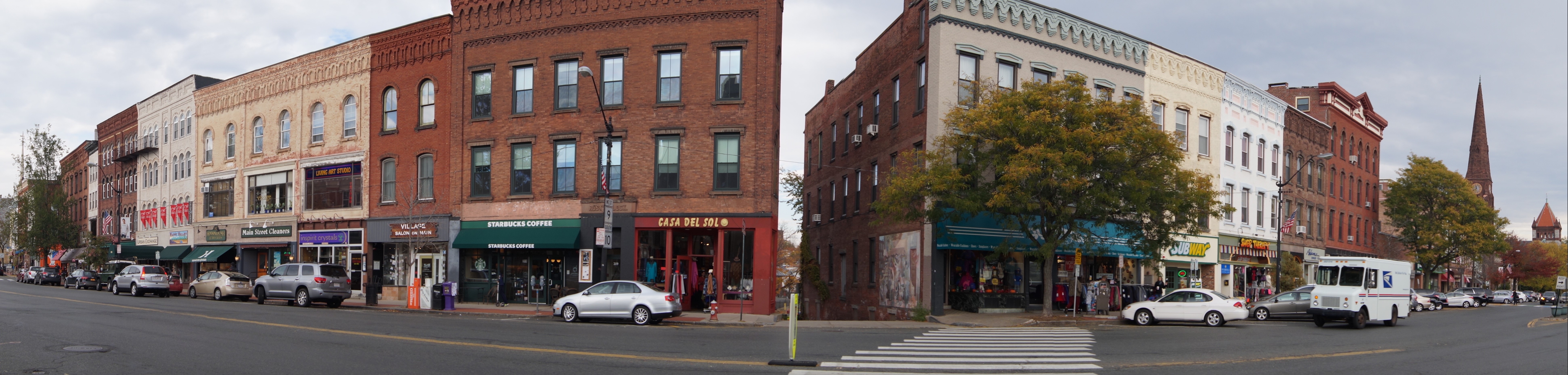
Downtown Northampton, north side of Main Street across from City Hall

Here’s a panoramic shot of part of downtown Northampton, as seen from across the street in front of City Hall.  That alleyway is Cracker Barrel Alley.  We used to park in the lot back there during our trips to Main Street Music, which is where Village Salon on Main is now, to the left of Starbucks.  Here’s another view of the Alleyway.

Cracker Barrel Alley...many an evening clutching my latest record purchases while walking here.

Cracker Barrel Alley…many an evening clutching my latest record purchases while walking here.

A few reasons I show this. On our trips to MSM, there was many a night’s end when we’d be walking down this alleyway and back to the car, clutching our latest spoils and already planning when we’d borrow them for further dubbing.  In fact, after our shopping we’d often hang here for a good half hour, talking about all sorts of things before we had to head back home.  It has not changed one bit, maybe aside from the repaving.

Second?  See that building in the background?  That community-themed mural has been there for decades (and touched-up here and there), at least since the 80s.  But the important part was that boring little brick wall around the corner from it.  About two stories up, someone sometime in the early 80s spraypainted the word ‘ANARCY‘ in large black letters.  No idea how they got up there, and I don’t think anyone fessed up to it, either.  But promoting anarchy to the point that you deliberately spell it wrong?  We loved that idea!  It fit in with our 80s small-town nonconformist ideals quite nicely.  I think it stayed up there at least until the early 90s when it was finally powerwashed off, but I’m sure most Smithies and other Five College kids from that era will remember and cherish that tag.

And when I was down here with family, while I spent most of my time (and money) at MSM, my dad would often go a few doors down to…

DSC04096

Broadside Books, a fiercely indie bookstore that would make City Lights proud.

…which not only is still open, but still looks the same after all these years!  This indie has always been a mix of commercial, obscure, and political since 1974.  It’s a quintessentially New England type of indie, a community-first type of store that offers the bestsellers alongside books on grassroots politics and local history.

Faces, where many 80s rock pins for my denim jacket were purchased.

Faces, where many 80s rock pins for my denim jacket were purchased.

Ah, Faces!  It opened here in 1986 during the high point of that decade’s fashion, and catered to all kinds of ridiculousness.  This was your one-stop shop for dayglo clothing, fun printed tee-shirts, whoopee cushions, fake poop, posters (album, band, and black-light), disposable dorm and apartment furniture and accessories (in their huge basement), and anything else to make your college life California flashy in an otherwise drab New England.  And also where I bought a crapton of those pins you might remember seeing on denim jackets in that decade.  I usually went for the rock band logos, album covers, and the occasional silly jokey ones (‘I’m not weird, everyone else is!’).  It very nearly closed recently, but since it’s so beloved by students and locals alike, someone bought it from the original owner and it’s still alive and well.

Thornes Marketplace Building and environs, including a boot shop that I believe is older than me!

Thornes Marketplace Building and environs, including a boot shop next door that I believe is older than me!

Just across the way from Faces is another hangout, Thornes Marketplace.  Their website states it took over the site of the old McCallum’s Department store in the mid 70s and by 1977 or so it got its present name and has been an indoor shopping experience ever since.  There are stores of varying shapes and sizes, from clothing boutiques to kitchen accessories and even an Acme Surplus in the basement!  Speaking of which, way down in the sub-basement (back parking lot level) was a huge used record store called Dynamite Records.  It didn’t so much cater to hard-to-find obscurities as it did those albums you never got around to picking up when they were new, or that one record you’re missing from some band’s discography.  This was a bit later on, I believe, maybe in the early 90s and into the early 00s, as I spent many an afternoon beefing up my back catalog with their selection.   OH!  Yes, and just around the corner on that side street to the right (Old Street) is Herrell’s Ice Cream, quite possibly one of the best local ice cream parlors in the area.

Pleasant Street, which really hasn't changed all that much...aside from the storefronts

Pleasant Street, which really hasn’t changed all that much…aside from the storefronts

This little strip at the head of Pleasant Street has changed a bit over the years.  Northampton Wools is where Pleasant Street Video used to be for decades (said to be one of the best local rental places in town, and had quite the collection of popular and obscure titles).  McLadden’s Irish Pub has taken place of the former Pleasant Street Theatre, where all kinds of indie and low-budget movies would be shown.  I never went there until the mid-90s, but I did get to see quite a few great films there.  Their basement screening room was so tiny and oddly shaped, the first two rows had 3 seats on either side.  Further up is another record store I’d frequent in the 90s called Turn It Up! Records, down in a musty basement.  I usually went here for used cds, as their dollar bins were quite choice.  They’re still there, I believe!

One last thing I want to post here…it’s another ‘no longer there’ Google Maps embed, but it’s kind of important, at least to me!  It’s one of the stores in the strip mall on King Street, north of the town center, right near I-91.

This is the storefront where Northampton Newsroom used to be, back in the 70s and 80s (and I believe into the early 90s). It was your small WaldenBooks-style store with a selection of genres, a wide selection of newspapers and magazines, as well as candy, gifts and more.  I mention this place because in late 1984 during one of our family shopping trips down to the Valley, I bought a book here called Dragon Fall by Lee J Hindle.  It was the first winner of a YA writer contest for its publisher, and when I heard a teen had written it, a light bulb went off: hey, I could do this too!  I’d written some stories here and there that didn’t go anywhere, but after seeing this, there was no helping it…I had to be a writer too.  I started writing the Infamous War Novel in earnest and never looked back.

Hope you enjoyed the tour! 🙂

WiS: Points of Interest 1

Our vacation was fruitful on many different levels, and I was able to fill in a lot of the gaps for my Walk in Silence photo database.  Here’s the first of a few posts focusing on various points of interest related to the 1986-1989 timeline of the book.  Hope you enjoy!

I used to catch the school bus from that intersection. Imagine a surly teen waiting for the moment he could pop on his headphones and blot out the inane conversations going on around him.

I used to catch the school bus from that intersection. Imagine a surly teen waiting for the moment he could pop on his headphones and blot out the inane conversations going on around him.  Usual soundtrack: The Smiths or Depeche Mode.

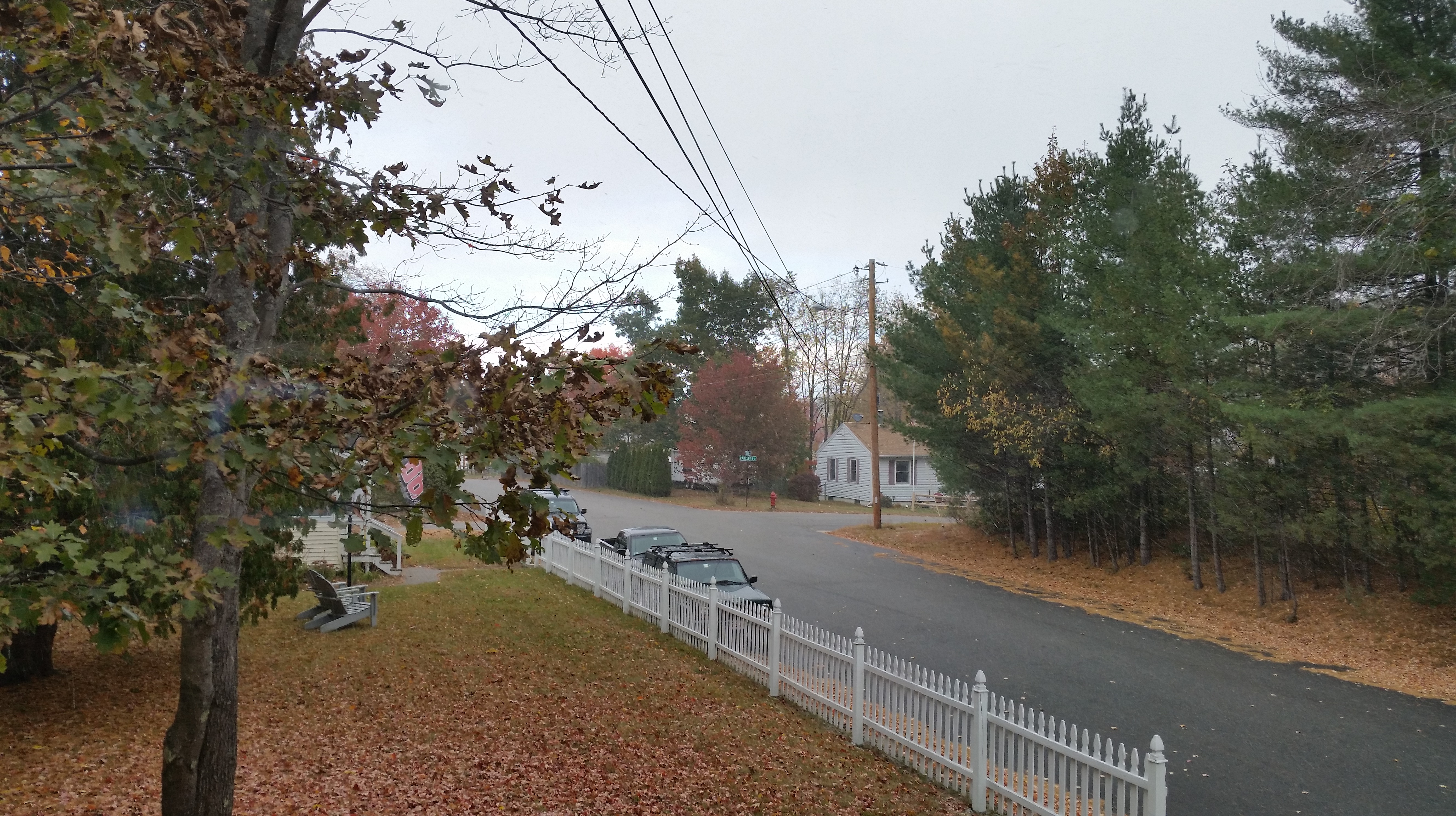
This was taken from the front room of my parents’ house, looking up the street.  If this picture looks a little streaky to you, it should — that was a minor five-minute flurry of snow that fell not an hour after we arrived!  But yes, this was similar to the view from my bedroom window looking north, where my desk was.  It never felt like the edge of the world, but more like a hideaway from it.  I spent a lot of time there, listening to WMUA or WAMH (or one of my many tapes or records) while doing homework, writing, or reading.

From Google Maps, as I didn’t get a decent picture:

My high school, which hasn’t really changed that much at all over the years.  A lot of memories of walking through these halls.  I still remember my locker number (103, Lower C hallway, just outside Mr. Jolly’s room).  My house was two and a half miles from here, so I took the bus (#312) and tried to avoid everyone that annoyed me.  The ride took just shy of twenty or so minutes, due to traffic and a few further stops, so I could listen to at least three or four songs on my Walkman before we got there.

Oh, and if you’re curious, this was my standard attire during my junior and senior years, as displayed on Spare Oom couch:

Not the originals -- the first duster and Smiths tee bit the dust from overwear. Duster 2 was from a friend, and I found the Smiths tee on eBay.

Not the originals — the first duster and Smiths tee both bit the dust from overwear by 1990. Duster 2 was given to me from a high school friend around that time, and I found the Smiths tee on eBay last year.

A tatty green duster (my grandfather’s) and a tee shirt showing the cover of the “William, It Was Really Nothing” single (bought at MSM and cherished as one of my favorites) was all I needed to wear to show my unique weirdness — no need for mohawks or nose piercings in my small town, not when I was already known as the resident college rock geek.

On our recent trip we also made a point to stop in Amherst and Northampton on one of the days, for varying reasons.  One was to meet up with a few friends from the area, but it was also to revisit some of our old haunts.  I’d been heading down that area since the early 80s when my family would shop at the malls down in Hadley; A. is a Smithie from the early 90s and knows the area as well.

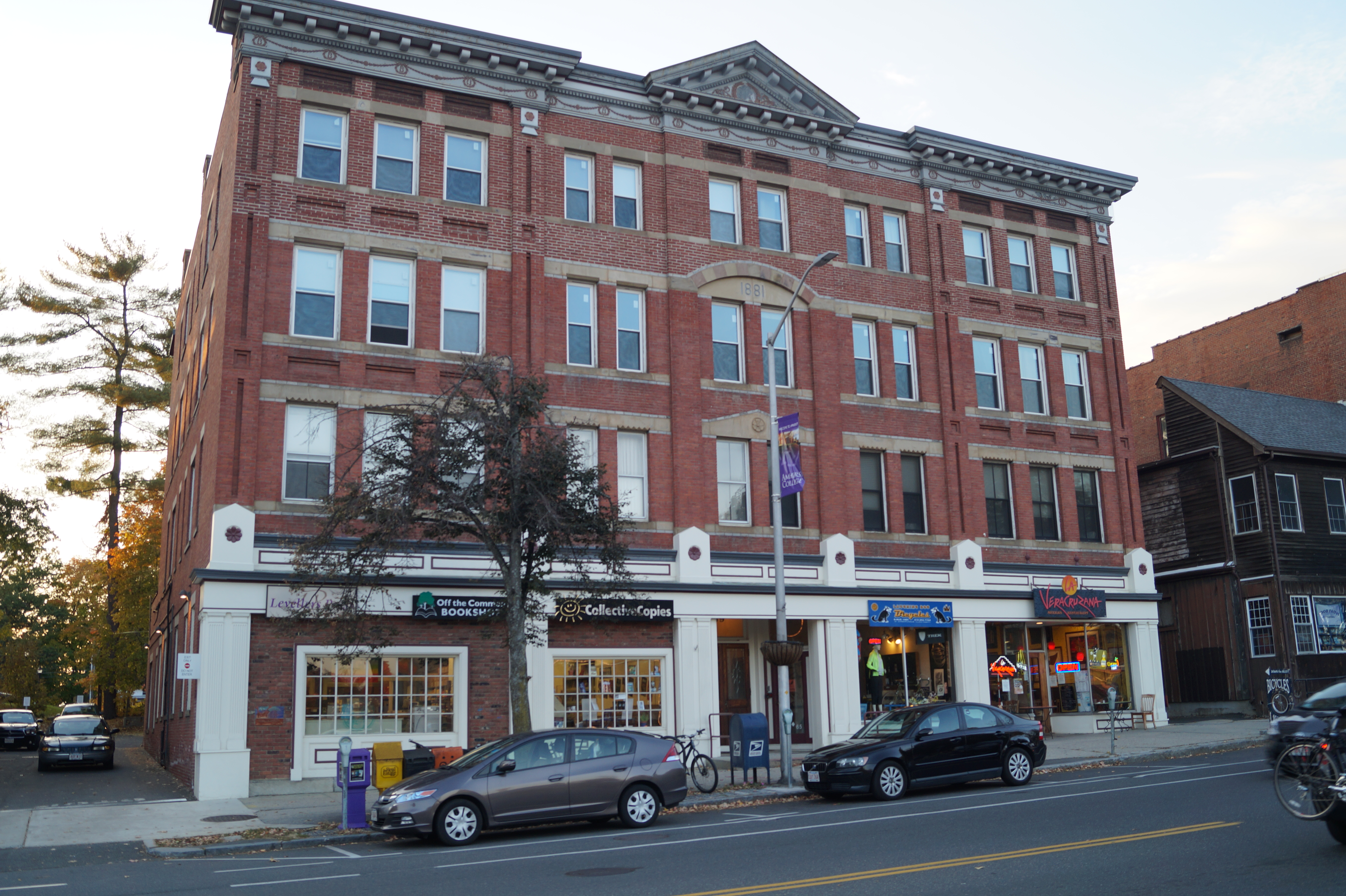
Amherst Common

Amherst Common, where we would often congregate

The Five College area is one of my favorite places in the state.  In high school my friends and I would frequent this area all the time, hanging out not just at the mall but on the commons and in the various stores and cafés, talking and laughing and listening to great music.

Panda East - my first taste of Chinese food

Panda East – my first taste of Chinese food

Panda East was a Chinese restaurant we used to frequent back in 1987-88 (and yes, I am a bit surprised that it’s still there after all these years), often for dinner before or after we did our shopping or going to a movie.  After we ate we’d hang out in this little courtyard in the foreground and talk about all sorts of things.  I remember listening in on a conversation about college plans and silently wishing I could be a part of it.  Alas, I had one more year to go.

The former Bonducci's across from the common

The former Bonducci’s across from the common

Almost directly across from Spring Street on the common was a café called Bonducci’s. It was where that Veracruzana Mexican restaurant is now, in that right corner spot.  It was your typical collegiate café that served coffee, sodas (I always used to buy the Snapple vanilla creme, back when they used to make sodas) and pastries.  This was often our last stop of the night, but it was also where we’d often have the more serious conversations. Some of us would trade gossip, others would talk about philosophy (as one did when we tried to pretend we were being all deep and academic).  I would often be the one to initiate the conversations about music, of course.

One picture that didn’t quite come out is of the small strip of stores on North Pleasant Street.  Here’s the Google Maps version:

That corner spot where Zanna is now, used to be where Al Bum’s was back in the 80s (and I think into the very early 90s).  My dad brought me here probably around 1985 or 1986, as it was one of the few record stores I knew of that carried Beatles bootlegs.  A year later when I discovered college radio, it became an important and expected stop for finding the punk, college rock and industrial sounds that I couldn’t find at the malls or department stores.  When my friends and I headed down here, we’d almost always stop for an hour or two and dig through the bins.  Al Bum’s played a significant part in my music collecting during that time; what I didn’t buy at Main Street Music in Noho, I bought there, with a very minor percentage bought at the music stores at the Hampshire Mall.

[As an aside, there was a satellite store for Faces (more on that in part 2) that was partially hidden behind that Mobil gas station next door.  Within that was a mini-store that sold cassettes and cds called For the Record.  I bought a handful of tapes from there between 1987 and 1989.  It’s since become a dilapidated and empty warehouse.]

Holding our breaths

Holding our breaths

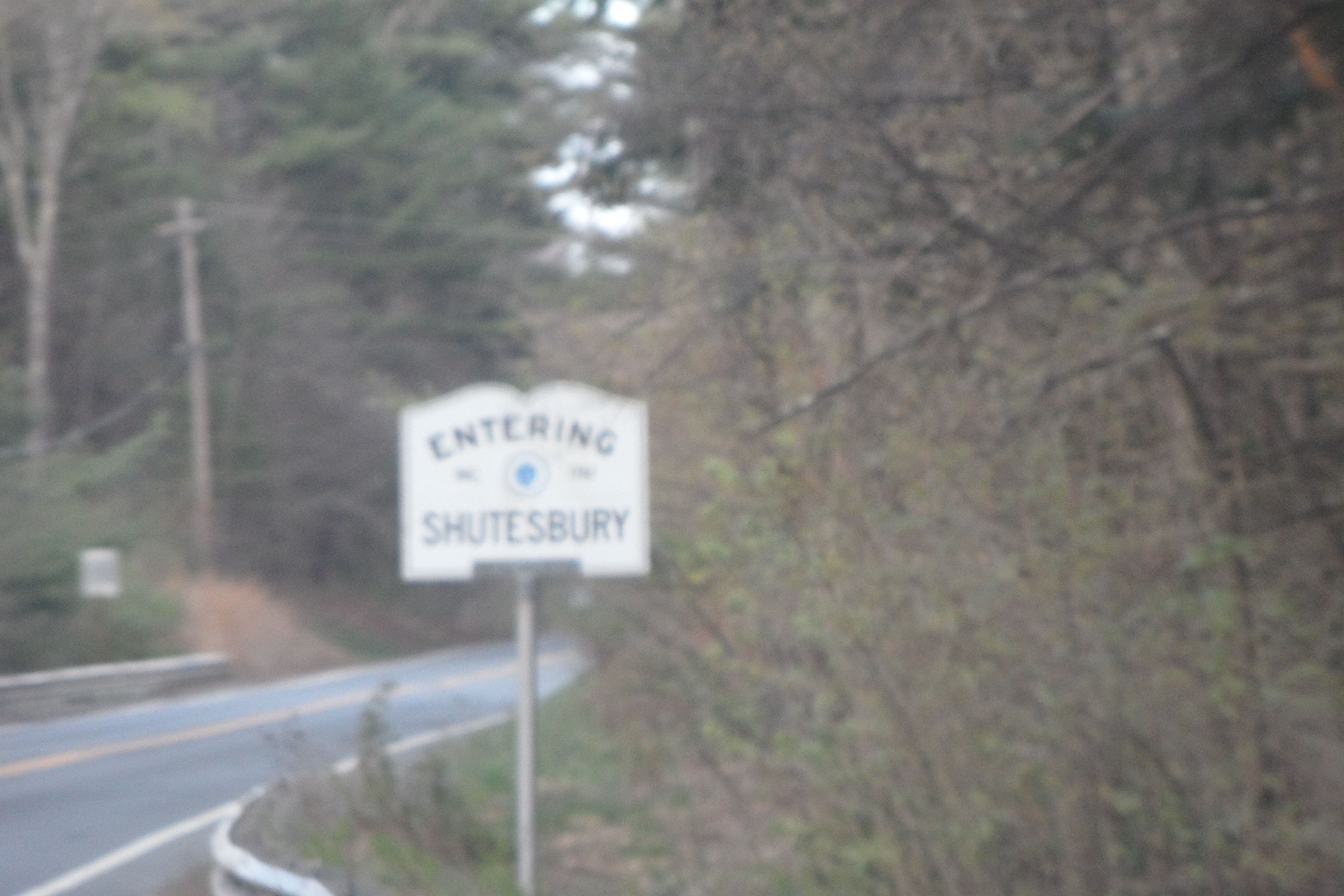
Lastly, a picture from our trip back in 2012.  There’s a stretch of Route 202 in New Salem that cuts through a tiny corner of Shutesbury for a few hundred feet before popping back in.  I was always amused by this little bit of ten-second town-hopping, and sometime around 1985 or so I got into the habit of holding my breath between the two town signs.  I got all my friends to do the same, so when we headed back home from an afternoon or evening from the Valley area, we’d always do this.  Thirty years on and I still do it every time I come back and visit.

Coming Up: Views of Northampton and maybe a bit of Boston as well!

[WiS] I started something…

About a year and a half ago, I’d decided to take a few days off writing to get all my writing (and other things hiding away in file boxes) sorted and arranged.  It took much longer than usual, I think I kicked up enough dust to give me allergies, and I was sore afterwards.  But I had a much more organized bookshelf and filing cabinet in the process.

The best part?  On Saturday when I was looking for all the printouts, outtakes and notes for Walk in Silence (and pretty much every other project related to it dating back to 1988 or so), it took me all of a half hour.  Boom, done.  Which gave me even more time to actually sit down and read through some of these things this weekend.  Bonus!

I’m also returning to my beloved 80s album collection again.  As you can probably guess, I’m listening to the Smiths’ Strangeways, Here We Come from 1987 as I write this.  I always found it kind of sadly amusing that I finally got into the band just as they were breaking up.  Also, I’m enjoying the weekly radio show The 80s Underground (which I listen to via KSCU.com, but is also available via podcast) which plays on Wednesday afternoons.  It’s a great show because the DJ does what he can to play the less-familiar tracks from great bands instead of the same ‘hits of yesteryear’.  Worth checking out.

You might have guessed that I’m looking forward to getting this project done, even despite all the other writing projects I have surrounding it.  I have all the resources at my fingertips now, and most other things I can easily find online, so it’s mostly just a matter of keeping focused and knowing the trail I need to follow.  It’ll be tricky, but I think I can do it.

More to come!

Current Book Status: Oh wow I thought I’d be outta here by now

I kind of hinted at this on my LJ yesterday, but I may as well make it semi-official here: I’m planning on releasing Walk in Silence, the book, in April of 2016.

So, what does this mean?  Well, for me, it means that I have six months to get my sh*t together, get a final version written, edited, formatted and ready for publication.  Yes, I will be doing the same as ADoS and self-releasing it through Smashwords and Amazon.  This, on top of working on the final revision and edit of The Persistence of Memories, other projects, and the Day Job.

Why April 2016?  Because that will mark thirty years (April vacation 1986, to be precise) since I’d discovered college radio and kickstarted an obsession that hasn’t gone away. I think an anniversary release would work nicely.  It’ll be tough, but I think I can do it.  It’s not a strict deadline, but that’s the one I’m aiming for.

So what’s the current status of the book, anyway?   That’s…a good question.  I have about six or seven different versions in various states of (in)completion, copious notes, a hell of a lot of reference material, but nothing actually complete.  Sure, it’s kind of crazy for me to think I can get it from complete disarray into a finished product in six months.  Especially when the theme of the book kept changing — I was originally going to write about the ‘college rock’ sound of the mid to late 80s.  Then I was going to write just about my obsession with it.  Then I was going to compile a history of the sound.  And then I realized that none of them really quite connected with what I wanted to write in the first place.  So while I distanced myself from it and worked on the ADoS release in the interim, I kept the project in the back of my mind and let it percolate.  What did I really want to do with it?

I can’t rightly say what it’ll exactly be about at this time, but now that I have time and inclination to complete this project, I’m happy to say I have a much clearer idea, and will be starting in on it this weekend.

In the meantime, don’t be surprised if you start seeing more 80s-themed posts and videos here within the next few months!  🙂

Favorite Bands: Electric Light Orchestra

This past week, Jeff Lynne released the first single from Electric Light Orchestra’s first album of new tracks in fourteen years, and fans have been squeeing with delight at the new song “When I Was a Boy”, because it sounds so much like the classic ELO from the mid to late 70s that we all know so well.  Lynne will totally admit to being heavily influenced by the Beatles during his initial 70s tenure, and you can definitely hear it in their songs.  It’s no surprise he was tapped by George Harrison for the Traveling Wilburys project as well as the Beatles Anthology.

I remember hearing some of the singles early on, like “Showdown”, “Can’t Get It Out of My Head”, “Evil Woman” and “Telephone Line” on the family stereo, but it wasn’t until 1977’s Out of the Blue that I realized how much I liked the band.  One of my sisters had picked up the single for “Sweet Talkin’ Woman” (which was pressed on clear pink vinyl!) and soon after my parents bought us the album for Christmas.  It’s a classic double-album with solid songwriting throughout. It also contains a “mini-opera”, entitled “Concerto for a Rainy Day”, which takes up Side 3 of the album and ends with one of their most well-known hits, “Mr. Blue Sky.”

From there I followed the band to their next album, 1979’s Discovery, with the hit single “Don’t Bring Me Down”, as well as their inclusion in the latter half of the Xanadu soundtrack the next year.  [The movie was interesting in idea but is deeply flawed in delivery, and has not aged well at all.  All that aside, ELO did manage to score some excellent Don Bluth animation with the “Don’t Walk Away” segment!]

The next album, 1981’s Time, was quite the departure from all of the above, and thus was a bit of a headscratcher for many, but I’ve always considered it one of my favorite ELO albums, just below Out of the Blue.  It’s a concept album about a man time-traveling over a hundred years into the future, unable to return to his own timeline, and coming to terms with this unexpected change.  There are a number of great tracks on this one, including the top-ten single “Hold On Tight”:

Another single worth noting is “Twilight”, which only hit the lower half of the charts in most countries.  I for one hadn’t known about it until I heard it way on the back end of a radio station’s year-end countdown, and thought…how the hell did I miss this one??  It’s a fantastic track with crashing drums, a driving beat, and sci-fi tinged lyrics.  In Japan it became a cult favorite as it was used (without permission, though I believe Lynne thought it was awesome and let them fly with it) in 1983 for the opening animation for that country’s science fiction convention, Daicon IV.

The animation was done by a group of diehard SF fans who soon became the anime company Gainax, now known internationally as the production team behind Neon Genesis EvangelionGunbuster and FLCL, just to name a few.  It’s a classic piece of Japanese animation worth watching.  Try to see how many well-known SF characters (and tropes, and spaceships!) you can recognize here!

ELO’s last few albums, Secret Messages (1983) and Balance of Power (1986) did not fare nearly as well as their previous output, but they’re still solid albums with the signature Jeff Lynne sound, with songs such as the twangy “Rock and Roll Is King”, the dreamy “Secret Messages”, and their last hit of the 80s, “Calling America”:

Lynne would retire the ELO moniker after that album (drummer Bev Bevan would continue with Lynne’s okay as “ELO Part II” for most of the 90s) and would turn to music production (and releasing two solo albums).  He briefly reignited the ELO name in 2001 with the Zoom album with the minor single “Alright”, but returned to producing soon after.

Over the years I managed to pick up their back catalog, and found it just as intriguing as their more well-known tracks.  The first three albums (The Electric Light Orchestra, ELO 2 and On the Third Day) are more prog-rock affairs that featured a mix of baroque strings, electric blues and lengthy suites, but it was the fourth album Eldorado that attracted the attention of new fans, with its more Beatlesque pop balladry.  Their star would continue to rise with Face the Music and A New World Record, until finally hitting it big internationally with Out of the Blue.

There are countless album tracks worth seeking out as well from this band:  Eldorado’s “Mister Kingdom”Face the Music‘s “Fire On High”Out of the Blue‘s “Summer and Lightning” and even the light and fanciful “The Diary of Horace Wimp” from Discovery are just a few of many great tracks from the band worth checking out.  They’re always entertaining, and always creative.

All Aboard the Express Kundalini

I was thinking the other day, why is it that I get all wistful and nostalgic come September? Well, the obvious answer is that it’s the start of the new school year.  The excitement of all the college radio stations coming back on the air with new and returning deejays and great tunage.  The remembrance of another year hanging out with friends on a daily basis.  The Best Laid Plan of trying to do better this semester.  And of course, the start of the fourth quarter when all the really good albums by the best bands start coming out.

That’s not to say it’s all about my days in the late 80s.  Growing up in central Massachusetts (in “Radio Free Athol”, where stations came in depending on where in town you were and how strong your antenna was), the fourth quarter is when the Day Job started getting busier.  At the record store, that meant a larger volume of stock I had to process.  At Yankee, that meant earlier hours and a busier day.  Some things never change.  But regardless, that was when the days got a little shorter and a little cooler.  The slow pace of summer replaced by the fast pace of autumn.

Love and Rockets often pops into mind at this time of year as well.  For one reason, their first four albums were all released around this time (Seventh Dream of Teenage Heaven, 11 Oct 1985 in the UK and reissued in the US Nov 1988; Express, 15 September 1986; Earth Sun Moon, 9 September 1987; Love and Rockets, 4 September 1989), and I bought them all soon after release.  For another, I really grokked onto the acoustic/psychedelic sounds of those first albums at the time.  I’d taught myself the basics of guitar playing (both on bass and my sister’s acoustic), and Daniel Ash’s dreamy 12-string work was exactly what I was trying for.  It would take some time for me to get to that level, but those songs definitely left an impression on me.

I mean, take “Saudade”.  It’s often considered one of their best songs.  It’s nearly thirty years old, but it still stands out as an absolute classic.  An aptly titled song at that.  A hint of melancholy and nostalgia in the melody, but also a consistently driving energy that keeps building until it can no longer contain itself.  It’s a lovely, gorgeous song, and also one of the reasons I finally bought myself a twelve-string a few years back.

It’s that time of year again, so of course I’ll be getting all wistful and nostalgic once more, listening to older tracks, playing a few tunes on the guitar, and perhaps even tuning into the local college stations again.  It’s been years since I’ve set foot in a classroom; I can bump into my buddies online whenever I want.

But there’s still something about September that still sticks with me.  For the past few years I’ve been hearing a lot of young, new bands playing the same kind of music I grokked to back in the 80s.  A resurgence of shoegaze and reverb-drenched mood music.  Young bands reinterpreting the sounds their parents and older siblings listened to, and making it their own.

The end of something old and the start of something new, I suppose.

It’s Just a Dugout That My Dad Built

In my recent dollar bin shopping spree at Amoeba, I finally got around to picking up Donald Fagen’s post-Steely Dan solo debut, The Nightfly.  It’s very typical Fagen — jazzy, sardonic, nerdy, and wonderfully creative all at the same time.  I remember the first single, “IGY (What a Beautiful World)” being played a bit on the radio, but the second single, “New Frontier”, was the one had the video on MTV and became the memorable hit.

I loved the use of animation in this video, multiple styles used to show multiple facets of the song itself:  the (then modern) computer graphics to show the futuristic layout of new housing developments; the early Vogue ads and the Picasso paintings come to life; Soviet propaganda hinting at the impending Cold War.  And my two favorite bits of animation:  the cowboy-hatted, pistol-packing general marching around and shooting at rogue Commie nukes (a distinct nod to the old UPA films), and the bendy, lo-fi-but-cool jazz band.

[That last one had a particular effect on me; a few years later when I went through my jazz phase in the mid-80s, I would often visualize this particular image while listening to it late at night on my headphones.]

[Also, a quick bit of interesting trivia: the directors of this video, Annabel Jenkel and Rocky Morton, also directly my other favorite animated video, Elvis Costello’s “Accidents Will Happen.”  Furthermore, they’re the co-creators of the Max Headroom franchise, and also co-directed the Super Mario Bros movie.]

I was listening to this track the other day and thinking about the sounds of the radio, pre-1989, before the end of the Cold War and the fall of the Berlin Wall.  Growing up in the 70s and 80s, we all listened to the popular sounds and were aware of the possible political threats out there.  Some of us kept it separate, some of us mixed the two Amnesty International-style.

We weren’t oblivious or ignorant of world issues out there; we just chose not to be completely frightened or doom-laden about it (Prince’s “1999” comes to mind, for instance).  We’d gotten so used to the elephant in the room that we just treated it as part of the furniture, and felt reasonably sure that in its advanced age and sedentariness, it probably wasn’t going to act up any time soon.  Our reaction to the fall of the Berlin Wall and the dissolution of the USSR wasn’t so much a patriotic whoop of victory as a sigh of happy relief that it had finally gone away.


On College Radio vs Progressive Radio in Massachusetts in the late 80s

I’ve been thinking about this subject lately, partly due to the way I’ve decided to frame the text of Walk in Silence in book form.  I did not want to write just a memoir, nor did I want to write a simple book about alternative rock. I decided to make it a hybrid of both, and in the process I wanted to do a bit of research on radio history in general.  I not only want to go over some of the highlights of great alternative rock of the time and talk about my favorite songs and albums, but I want to explain the genre itself–how it formed, how it got there, and how it related to other music (and points in history) at that particular time.  It’s not just enough for me to say why “Under the Milky Way” is my all-time favorite song; I wanted to explain that the Church’s Starfish album was make-or-break for them after years of not-quite-success.  There’s also the fact that in the 80s, the lines between pop music, rock, and “new wave” were a hell of a lot more defined then.

On a more professional note, however, there were two different kinds of stations playing this kind of music at the time as well, and that’s what I want to speak about here.

There was the college radio station: the longtime home to the alternative, the free-form, and the not-quite-professional.  Ratings didn’t matter to college radio, only that they had the funding from wherever it happen to come from, be it fund drives or grants or the listening audience.  For most college stations, especially for colleges where it was more of an extracurricular position rather than part of the curriculum, the student disc jockeys may have at the least been instructed to vary their playlist or play a few core tracks, and at most been given stern reminders of FCC rules and regulations.  Other than that, you could get away with playing whatever you liked.  For the most part, the quality and style depended on whose shift you were listening to.  Some disc jockeys would play hardcore punk or EBM (Electronic body music, a danceable subgenre of industrial rock and championed by many European groups like Front 242), or maybe even that new post-punk influenced rock stuff coming from the UK, like the Smiths and the Cure.

On the other hand–or should I say, up a little higher on the dial–there were the professional radio stations.  Short version: by the early to mid 1980s, there seemed to be a shift in popular radio, and a lot of stations were starting to feel the crunch.  Slightly longer version: considering that popular FM radio was pretty much still in its teens at this time (it sounds weird, but it’s true: popular FM radio as we know it today really didn’t come into wide popularity well until the mid to late 70s), the FM stations that tried to cater to all sounds and styles were beginning to flounder.  Listening habits changed and people wanted to hear more of their favorite styles rather than a wide and often weird mishmash.  The wildly successful pop stations of AM yesteryear were now the wildly successful pop stations of FM now.  The rock stations did well, but they were also splintering, often due to their listenership; some like Worcester’s WAAF 107.3FM with its younger fanbase continued to follow trends to play the latest hard rock, while others like East Longmeadow’s WAQY 102.1FM began to drift with its older fanbase towards classic rock.

Of the latter, a newer subgenre emerged.  Partly inspired by the more adventurous free-form sounds of 70s FM radio, the arrival of Album-Oriented Radio (AOR) in the late 70s and early 80s catered more towards the connoisseur radio listener, the avid music listener who wanted more than just the throwaway pop or the mindless party rock.  True to its name, its playlist prided itself on featuring non-single album tracks, providing the listener with a much wider experience.  As the 80s wore on however, it was found that while AOR had its diehard fans, it was not a moneymaker.  A number of stations reverted back to a rock format, or were sold and completely changed formats.  Those who stayed were often extremely localized, such as Turners Falls’ WRSI 95.3FM (sold in 1996 and moving to Northampton at 93.9) and Peterborough NH’s WMDK 92.1FM, and placed in small but artistic-minded communities.  They may have been small, but they had the upper hand–they were run by music fans who knew their stock in trade, and knew how to sell it locally.

These two local stations never really sold themselves as “AOR” but more as “progressive radio”.  This term may have confused some, considering the word ‘progressive’ often went hand in hand with ‘rock’, and together ‘progressive rock’ often meant twenty-minute hyperbolic workouts from bands like Yes, early Genesis, and ELP.  But by the 80s, ‘progressive radio’ actually meant something different–it was almost a taunt, a term that said ‘we’re better than you–we play music for smart people’, and in its own way it was true.  The passive radio listener just wants background noise, but the active radio listener wants something that will stimulate the brain.  And it just so happened that post-punk sounds coming out of the UK and the collegiate sounds emerging in the US fit the bill at that point in time.  If there were no college radio stations nearby, or none with the wattage strength to reach long distances (especially over hilly central Massachusetts), these progressive stations would offer up the most radio-friendly of it.

And for a good couple of years, probably from around 1984 or 1985 up to 1988, these stations could get away with playing the not-quite-commercial rock.  These bands weren’t being played anywhere else except on college and progressive radio stations.
While college radio was much more open-minded and adventurous in its available playlist, it had its own shortcomings as well.  Part of the whole alternative music scene in parts of the US was its exclusiveness–it was music for the nerds and the geeks and the people on the fringes of society who didn’t belong in the popular cliques.  Morrissey may have sung and the music that they constantly play / it says nothing to me about my life / hang the blessed DJ in response to a UK radio personality who tastelessly followed up coverage of the Chernobyl disaster with Wham!’s “I’m Your Man”, but in the US it took on a slightly different meaning.  For those of us here in the States, it was simply a rebellion against the tired, creatively vacant mainstream.

But what was mainstream, anyway? Especially in the last few years of the decade when more ‘modern rock’ songs were showing up on the Top 40 charts? What was there to rebel against when the keys to our rebellion were now becoming mainstream?  By the early 90s, many college radio stations were refusing to play anything by the Cure or Morrissey or Depeche Mode or REM, simply because they were being played on commercial radio.  They would need to start looking elsewhere for their alternative fix.

On the other hand, progressive radio could still get away with it.  Perhaps it was that, as professional stations, they had to constantly keep an eye on shifting tastes.  Progressive radio is where I first started hearing Britpop, back in 1989 with Happy Mondays and the Stone Roses, well before a lot of other stations played it.  They also kept an eye on other subgenres of rock that fit into their playlist, like the folk rock sound of Tracy Chapman, Tanita Tikaram and Indigo Girls, the blues rock of Jeff Healey, or the new funk of Lenny Kravitz.  They were able to balance the commercial with the alternative, and that kept their stations alive much longer.  It also kept the alternative sound in the spotlight, making way for newer “adult alternative rock” stations such as WXRV (The River) 92.5FM in Haverhill.  It also helped usher in more “new alternative” sounds–bands that may lean towards the mainstream, but are decidedly not intellectually vacant pop.

 *

Over two decades later, I’ve been noticing a slow but significant return to departmentalizing the different genres of rock on FM radio.  It’s partly due to the advent of the internet, and it’s also due, as it always has been, to the shifting tastes of its listeners.  For a brief time in the 90s, alternative rock became so polarizing that on the one hand we had all-commercial rock radio on one end and very anti-commercial rock radio on the other.  Now, however, we’re starting to see specific subgenres again, and they’re being played on both college radio and on indie rock stations, sometimes within the same hour.  We’ll hear the bizarro tUnE-yArDs alongside the catchy pop of Capital Cities alongside the folk rock anthems of Frank Turner.  Listeners can access the sounds not just on FM radio but on satellite stations, online-only stations, streaming sites and even playing their mp3 library set to “random”.  But thanks to these same things, we can set our listening preferences so we’re only listening to weird left-field rock or synthpop or folk rock.  We’re not just bound to the FM dial anymore, but we can bound ourselves to just how wide or how narrow we want our music to be.  Radio may continually shift in its never-ending search for new sounds and higher earnings, but as always, it comes around and settles in new and more interesting ways for us to listen.