Coming Soon: When We Was Fab — Blogging the Beatles Solo Years

Others have commented: it’s going to be the Beatles’ solo years next!  This one’s gonna be a long series, so I’m pretty sure I’ll be featuring it on specific days…maybe offering it every other Wednesday or something.  We shall see.  This may take some time for me to build up a backlog, as there are quite a few releases to plow through — and I’m not going to include the multiple reissues that have taken place over the years.  One last note: I’ve already decided this is going to be chronological, just like the previous series, so this means we’ll be visiting all four solo discographies at the same time.  I will also be featuring multiple releases per post, or else I’ll be posting until 2019!

Until then, I’ll be providing the usual music posts on Tuesdays and Thursdays.

Thanks for joining in!

Which band should I blog about next?

johnny-marr

The always excellent Johnny Marr, who I’ll be seeing in October!

I’ve been tempted to do another “blogging a band” series like I did with the Beatles a while back.  The original one was a lot of fun, as I was not only able to give the songs and albums a good solid listen, I was able to better understand their place in musical history — both their own, and within the larger scene.  And as a bonus, I was also able to learn a lot of new songs on my guitar!

I probably don’t know any band nearly as well as I know the Beatles, but I do own a lot of complete (or nearly complete) discographies of plenty of bands, or they’re easily available for streaming somewhere if I don’t.  I’ll be relearning their oeuvre right alongside you!

So, what do you think?  Here’s a shortlist so far of favorite 80s/90s bands I could possibly do:

–U2
–The Smiths
–The Cure
–Wire
–Blur
–Depeche Mode (continuing the by-the-decade theme)

I was also thinking of maybe continuing the Beatles theme by going through their solo output, either separately or all together chronologically.

Any votes/suggestions?

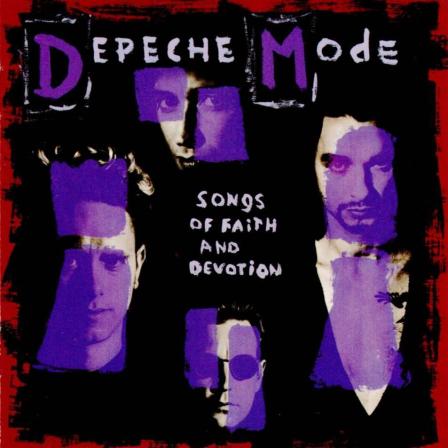
Depeche Mode in the 90s – Songs of Faith and Devotion

depeche-mode

The next release from Depeche Mode in the 90s was a much darker affair…

But first, I’d like to make a little side trip to late 1991 and Wim Wenders’ fantastic epic, Until the End of the World.  One of my top ten favorite films, it’s a road movie about a woman whose presence changes the fate of nearly everyone around her, while she herself is trying to figure out her own.  It takes place at on New Years’ Eve, as 1999 changes over to 2000 — not just the end of the year, but the century and the millennium as well.   For the soundtrack, Wenders reached out to numerous bands and musicians and asked them to write a song in the style they believe they’d have eight years from then.

DM’s donation was a religiously-tinged blues ballad called “Death’s Door” that hints at the prodigal son returning (much like William Hurt’s character in the film).  It’s a great soundtrack worth picking up, and if you can find a copy of the film (it’s available for streaming on Amazon), it’s well worth checking out.

After that, the band remained quiet for some time until February 1993, when the new single “I Feel You” was released.  Upon first listen, it sounded like the band had retained their fuller, stronger sounds and melodies, but had continued with their darker themes and moods.  Like many previous pre-album singles (like “Strangelove” and “Personal Jesus”, it sounded vastly different than anyone had expected, right down to the opening screech of feedback.

Also gone was Dave Gahan’s perky goofball image; he was now grungy and longhaired with a dangerous sex swagger.  [It was revealed sometime later that this partly due to his worsening drug addiction.]  In fact, within the first minute of the video, we no longer see the band on banks of keyboards; only Andy Fletcher was behind the keys.  Alan Wilder was now drumming, and Martin Gore was playing a Cash-like twang that would become the motif of the entire track.


Songs of Faith and Devotion arrived not six months later but almost exactly one month after that first single.  There’s a rough tension throughout the album, not unlike listening to The Beatles’ white album (a description given to it by Alan Wilder himself)…the music is full of powerful anger, and Gahan’s singing has taken on an irritated growl (inspired by the LA alternative bands he’d been hanging with by that time).  There are more organic samples here — live drums and guitars laid down and sequenced — and hardly a clanging pipe or popping firework anywhere at all.  And tensions within the band had grown to such a degree that Wilder would quit the band at the end of the supporting tour.

It’s a very apt title, as religious themes pop up all over the place.  It’s not an album about praise, though…it’s about the limits of faith and devotion, both in life and in spirituality.  The critical response to the album was highly positive, however, and though its singles are rarely chosen for airplay nowadays, it’s an incredibly solid and deeply emotional album worth checking out.

Second single “Walking in My Shoes” is the track that would get the most airplay, as it’s the most melodic and most typical of the band’s sound.  That’s not to say it was written to sell units, however, far from it.  It’s a bleak song using the ‘walk a mile in my shoes’ metaphor as only Gore and DM can do it: don’t you dare judge me until you feel what I’ve gone through.

Third single “Condemnation,” however, was a completely leftfield hit on both sides of the Atlantic.  While “Death’s Door” hinted at a hymnal, this one is purely gospel choir, and it’s a deeply moving and lovely track.

Fourth and final single “In Your Room” featured the band venturing even further from their digital sound as well as their previous image: the video features numerous visual cues from their previous videos made with Anton Corbijn, twisted just that little bit to hint at a wish to be freed of them.  Even the mix used here (the Zephyr Mix) is almost all analogue, showing DM as an almost purely rock band now instead of a synth band.

Even the album tracks like the gospel-by-way-of-Led-Zeppelin “Get Right with Me” and the turbulent irritation of “Rush” feature a band going all out in spirit and emotion.  Taken as a whole, the album definitely mirrors the real-life tensions the band had been dealing with during the writing and recording, as well as the expectations laid upon them to recreate something as phenomenal as Violator.  It would nearly break them.  Wilder would depart at the end of the album’s tour, and once the tour was over that December, they would go their separate ways.  Dave Gahan would attempt suicide in late 1995 and nearly die from a drug overdose in spring 1996.  Gahan survived and persevered, recovering from his heroin addiction and turning his life around.

By early 1997, they were back with a new, even stronger and more cohesive album, Ultra.


Walk In Silence 1

I’d say the music that I connected to most at the time was classic rock.  I’d grown up listening to it, and started my music collection with the Beatles.  Not to say I didn’t enjoy other genres or station programming…I had a passing interest in the poppier Top 40 sounds, especially from about 1983 onwards, when it updated its sound and included multiple genres.  But thanks mainly to WAQY 102.1 FM out of East Longmeadow and WAAF 107.3, originally out of Worcester, I found myself listening to a lot of classic and AOR rock.

Looking back, I think part of it may be due to the quality of the production and the creativity of the music.  It didn’t necessarily need to be a genius creation, it just had to have something that caught my attention somehow.

That would mean John Bonham’s thunderous drums and John Paul Jones’ synth strings on the epic “Kashmir” — the first rock song to completely blow my mind — or the Beatlesque* sounds of Electric Light Orchestra’s “Can’t Get It Out of My Head”.  Or it could be the countrified twang of Eagles.  Even the bubblegum fun of Sweet’s “Ballroom Blitz” and “Fox On the Run” counted, thanks to their catchy guitar riffs and high-pitched harmonies.


I often say The Beatles’ 1967-1970 compilation is ‘officially’ the first album I ever owned, but that’s not entirely true.  I will admit that claim actually belongs to Shaun Cassidy’s Born Late, which I’d gotten for Christmas in 1977.  I kind of consider that a trial run, though…in December of 1977 my music collection was pretty much a reflection of what I thought album collecting was about at the time: pop music and buying whatever was popular at the time.  Why did I have my mom buy that Shaun Cassidy album?  Who knows.  I think it was because he was one of the Hardy Boys on TV at the time, and he was all over the covers of teen magazines at the time.  David’s little brother, also a musician and an actor and a heartthrob!  Buy it now!  Hell, I was six years old at the time, I didn’t know any better.  I didn’t even know I was breaking a perceived gender role at the time by liking a young pop star’s music.  My parents may have side-eyed me (more on the quality of the music than the gender role, that is), but I didn’t care.  Even then it was about the music.

All that changed in 1978, when two things happened.

First, the much maligned movie Sgt Pepper’s Lonely Hearts Club Band, featuring the insanely popular Bee Gees (another favorite band, thanks again to an older sister) and Peter Frampton (a huge pull, thanks to the fantastic Frampton Comes Alive album and his mindblowing use of the talkbox guitar effects on “Do You Feel Like We Do”).  I originally went because I liked the singers, but my mom had hinted that I’d enjoy the songs they’d be singing here.  It’s painful to watch now, but at the time it was silly and a lot of fun.

Second, I was made aware of an annual tradition on WLVI, channel 56 (6 on our dial), one of Metro Boston’s independent television stations (decades before it became an affiliate of The CW).  On a summery Sunday afternoon they’d play Yellow Submarine, the 1968 animated Beatles movie.

I knew the Beatles in passing, of course.  In the 70s, who didn’t?  They’d only broken up a few short years before and were enjoying healthy solo careers at that point (especially Paul McCartney).  Their music was still getting heavy rotation on the radio at the time.

[I should probably interrupt here and state that there was a third event that took place in 1978 that changed everything, even though I wasn’t quite aware of it at the time.  That event is the overwhelming change in radio listening habits in the United States.  It was this year when people began listening to music on the FM dial rather than on AM.  There are many and varied reasons for it — the acceptance of rock radio as a valid genre rather than an underground interest, and even the fact that home stereos were becoming more affordable.  By the time 1978 rolled around, we’d had a stereo in my parents’ bedroom that as soon moved to my sisters’ bedroom, where it got much higher use.  I ended up with a cheap hand-me-down kids’ record player where even to this day, I can still remember the loud nasally wrhirrrrrrrr of the motor.  I’d get the old stereo when my sisters upgraded, and finally getting my own sometime around 1983.]

So yes, it was in 1978 when I finally, officially, owned my first record, and also picked up on my first musical obsession.  Over the next four or five years, I searched and found all the Beatles-related records I could find.  Some of the albums I purchased were new (usually bought at Mars Bargainland, the department store outside of town), but many were found used at garage sales, town fairs and elsewhere.  First came the albums, then came the singles.  I believe I got Sgt Pepper and Abbey Road early on, because I was already familiar with most of those songs from the Sgt Pepper movie.  Revolver was another early one, thanks to familiarity with some of its tracks as well.  Imagine an eight-year-old  hearing “Tomorrow Never Knows” for the first time — I had no idea what I was listening to, but it certainly was amazing!

 *

I’m explaining all this, even though it has nothing to do with college radio, because this early obsession is a major reason why I latched onto it as closely as I did.

Even as the pop music of the seventies and eighties slowly morphed from one genre or style to another, I found myself irrevocably obsessed over it all.  I knew bands and their discographies almost as well as other kids my age might know who played on what NFL team and for how long.  Their stats were performance ratings and signature moves; my stats were release dates and what labels released them.


* – Beatlesque: usually means evoking psychedelic melodies of 1967, dreamlike whimsy, three-part harmony, and often attempting to sound like something from either Sgt Pepper’s Lonely Hearts Club Band or Abbey Road.

Walk in Silence 0

PROLOGUE:

I’ve been listening to college radio and alternative rock for thirty years as of this week.

Currently, I’m kind of cheating and switching between the XMU station on SiriusXM, RadioBDC, and a host of college stations via their streaming feed, but the point remains — the singer here (Paul Westerberg at his alcoholic best/worst on Let It Be) is barely making it through the song without stumbling.  You can hear the liquor in his voice.  It’s a classic song of generational discontent, as Wikipedia points out.  I heard the same thing back then, in my bedroom, late at night, and I felt the same thing: who the hell let him close to the mike?

But truly, that was exactly what endeared me to the alternative rock genre, and still does to this day.  The fact that studio time was given to a musician of middling proficiency and questionable talent amused me then, and impresses me now.  Well — at this point, anyone with a laptop, a few microphones and some cheap recording and mixing software can lay down their own music.  And thanks to the internet, they no longer need to jockey for position at the local radio station or bar; they can upload their latest song on Bandcamp hours after making the final mix, and let their small tribe of listeners know it’s out there.

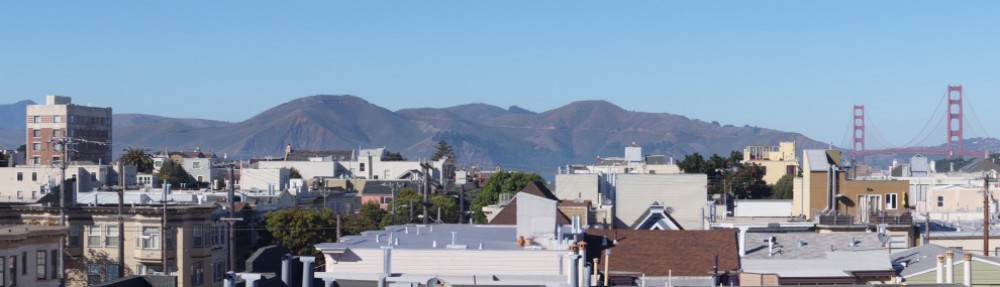
There’s a lot of excellent indie rock out there if one chooses to actively look for it.  Some listeners like myself spend far too much time and money on it, but we love it just the same.  Again with the internet: many college stations stream their shows on their website, so someone like myself, now living in San Francisco, just over a mile from the Pacific Ocean and a view of the Golden Gate Bridge just outside my window, can listen to the broadcast of Boston College’s WZBC.

The only thing missing, in my mind, is having a blank cassette at the ready, in case one of my favorite songs comes on.

That’s one of the original facets of alternative/indie rock, really…the ability to look in the face of popular culture and loudly and proudly profess that you’re not going to play that game, at least not by those rules anyway.  One of the whole points of the genre, harking back to the original UK punk wave of the late 70s (and much further back, depending on which rock genre you’re thinking about), was to make sounds under one’s own rules.

It was about a certain style of anarchy –a personal anarchy, wherein one fully embraces who they are and what they want to be, where one stops trying to fit in where they obviously don’t belong, where they find their own path without outside influence.  Be what you want to be, and fuck ’em if they can’t deal with it.

*

Every music fan has that story:  where did you first hear that new song, that favorite band, discover that new genre?  Every fan has a story where they heard a song or found a new radio station or a new genre for the first time where it just clicks: YES!  This is the thing that has pierced my soul, has connected with me in such a deeply personal way that I will never hear it the same way again!

Okay, maybe not in so many words: often it starts out with a distraction.  Yeah, I kind of dig this track.  It makes you stop and notice it.  You may not know exactly why just yet, but you’re not going to dwell on that right now.  But its primary job has been fulfilled: it’s gotten your attention.  You may be intrigued for the moment but forget it a half hour later, or it may stay with you for much longer, so much that you’ll end up looking for it the next time you’re at the local music shop.

Or, if you were like me in the middle of the 80s, you’d have a small ever-circulating pile of half-used blank tapes near your tape deck, and if you liked the song that much, you’d slam down the play and record buttons and let ‘er rip.

This is the story of how I got from there to here.

*

 Let me start with this: I was part of the inaugural MTV generation.  I was ten going on eleven.  I remember when I first saw the channel when it was offered on our newly-minted Time Warner Cable system, the first cable service in my hometown.  I remember the beige-colored box with the light brown label on top, listening all the channels we’d be getting.  I remember seeing MTV for the first time.  [For the record: my first MTV video was .38 Special’s “Hold On Loosely”.]  And most of all, I remember it was channel 24.  Even before we got cable, I’d already made plans to park my butt in front of the television and soak in the musical goodness.  Any music I heard from about 1982 onwards was considered Something Awesome in my book, especially if it had a video.  But even if it didn’t, that one network opened up something within me that turned music from a passing interest into an obsession.

Around the same time, I had pilfered the radio that had been gathering dust in the kitchen (an old model I believe must have been purchased at one of the local department stores a few decades earlier), and it was now at my desk.  I’d made little marks on the dial where my favorite stations were.  I’d fallen in love with rock radio.

Was it different from the sort-of-occasional listenings of records from our family collection, or the albums we’d take out from the library, or whatever was playing on the car stereo during family roadtrips?  In a way, yes.  Even then I’d gotten into the habit of listening to certain radio stations, but not to such an obsessive extent.  I’d gone from ‘now and again’ to ‘every single morning’ to ‘pretty much all day long’.  Other boys my ages were probably watching sports or playing outside or whatever it was we supposed to do, but I was perfectly happy sitting right next to the radio and enjoying each new song that came on.

The obsession with countdowns started around this time.  That was the fault of one of my older sisters who’d taped various songs off the radio at the turn of the decade, and had recorded part of the year-end countdown on the rock station we all enjoyed, WAQY 102.1 out of East Longmeadow.  A year or so later the torch was passed to me (well, more like I snagged it as she headed off to college).  WAQY had a contest in which, if you sent in the correct countdown list, they’d pick a random winner and give away every album that was on it.  Who was I to turn that down?  With an insane amount of focus and intent for a preteen, I wrote each artist, song on lined paper and duly mailed it in.  Never won, of coure, but that didn’t stop me from listening with rapt attention.

Thinking back, that’s probably what fueled my music obsession the most — between the countdowns and MTV, as well as radio in particular, I was glued to my desk or the living room couch, wondering what song or video would come next.

That went on for most of that decade, really.  From about 1981 or so onwards, I would always have a radio on, or I’d watch a good hour or so of MTV, just soaking everything in.  I really wasn’t too choosy about what songs came up, as long as they caught my interest.  That was partly due to listening to whatever my sisters were listening to in the 70s.  I could take Chicago’s easy-listening comeback albums the grandiose prog rock of Rush, and the guitar jangle of early REM.  A lot of the rock stations back then were more adventurous in their playlist, mixing past and present genres without a second thought.  Within the span of an hour I could hear the Beatles, Led Zeppelin, Dire Straits, Van Halen, and maybe even an Ozzy or an AC/DC track.  In the early days of FM radio, there was always some element of free-form.

I was given a massive playlist to choose from, and I devoured pretty much all of it.

Où sont tes héros aux corps d’athlètes?

I’ve been listening to Air over the past few days…the band just popped into my head unbidden, and I’ve been searching for a good, laid-back soundtrack for my extended editing sessions lately, so it was a perfect fit.  Their debut Moon Safari was released on this day back in 1998 (which puts it right in the middle of my HMV years), but it’s so retro in its sound that you swear it came out in 1972 on some budget label and got played at K-Mart when you were a kid.  It of course ended up on heavy rotation during my writing sessions down in the basement.

In 2000 they released the soundtrack to Sofia Coppola’s The Virgin Suicides, based on the Jeffrey Eugenides book.  That too got heavy rotation for me, with its spooky, dark passages.  [Trivia: I didn’t know this until many years later that the singer for “Playground Love” is none other than the singer for Phoenix, going under the name Gordon Tracks.]  It kind of fit the mood I was in at the time as well, considering I’d just been shuffled out of the HMV job and wasn’t exactly sure where my next step was going to be.

They may have lost me a bit on album two (three?), 10,000 Hz Legend, but I think that’s because they’d chosen to update their sound a bit, bring the melodies forward a decade or two.  It took me a few years to get used to this one, and it’s got some great tracks on it, including a cameo vocal from Beck on “The Vagabond”.

Now the next album, Talkie Walkie, is probably my favorite of theirs, even over Moon Safari.  They hit their stride here, balancing their retro-synth sound perfectly with some lovely modern melodies.  They also provided an absolutely gorgeous track called “Alone in Kyoto” for Sofia Coppola’s next film Lost in Translation:

I’m still trying to get used to the next couple of albums (2007’s Pocket Symphony and 2009’s Love 2), most likely because my mind was elsewhere at the time, adjusting to our lives here in SF.  Eventually they’ll come to me.  Their most recent album, Le Voyage Dans la Lune from 2012, is fascinating in that it’s a soundtrack for Georges Méliès’ 1902 film of the same name.  And Nicolas Godin (the fair-haired one of the duo) just released a solo album of Bach-inspired songs called Contrepoint, which I’m hoping will eventually see release stateside sometime this year.

Lush: Chorus

I’d been a fan of the 4AD label since probably 1986 when I first heard This Mortal Coil’s cover of Bill Ogan’s “I Want to Live” (from the Filigree and Shadow album) on WMUA one dark night.  I’d fallen in love with the dark moods the label’s bands evoked; not the dark of violence or depression, but the dark as in the absence of light.  To me, the sound of Cocteau Twins and Dead Can Dance always made the most sense to me at one in the morning, when the rest of the world was asleep.  Yes, even the stark punk crunch of Pixies in 1988 evoked darkness for me; their music sounded like a band that had just gotten into the studio at 2am after playing a blistering show and channeling that chaotic energy into the wee hours.

So when I first heard Lush in late 1989 via their first EP, Scar, and soon after with their follow-up EP Mad Love (both timed perfectly with my entry into college), I was completely taken in by how bright their music was.  The same amount of reverb was there, but it was all made of sparkling beads of light and autumn afternoon breezes.  The rainy excitement of “Scarlet” and the tripping evolution of “De-Luxe” were my entryway into the brighter realm of Britpop, at a time when the American alternative sound was veering into the metallic sludge of northwestern grunge.  When Lush released the stunning “Sweetness and Light” single in late 1990, I was completely hooked.  Its freeing energy and gorgeous simplicity created, to me, a perfect pop song.  To this day it’s extremely high on my list of absolute favorite songs.

Their first album proper, Spooky, came out just days after my 21st birthday, and I remember going to Tower with what little money I had at the time to buy it.  I didn’t embrace it right away, but that was more due to some personal issues I was having at the time than the music.  By that summer I had it on repeat on my Walkman, especially the single “Nothing Natural”.  I loved Steve Rippon’s off-kilter, questioning bass line, and especially loved the back end of the song where it completely drops away, leaving the rest of the song soaring for a good few moments before crashing back down for its final measures before finally fading out.

I equally loved Split, even though it felt like a much darker affair (again, I think this was more due to my personal mindset at the time), but after years of listening to Lush, it’s become my favorite album of theirs.  I feel it’s where they hit their peak musically, even despite the producing issues they had at the time.  It contains my other favorite song of theirs, “Desire Lines”.  It’s a slow, plodding song, but deliberately so (and an extremely courageous choice for a single), and it’s probably the first song where I finally grokked to the mathematics of song construction.  One can sense its novel-like format, coming in unobtrusive and steady, ebbing and flowing with increasing energy until it finally builds to its middle eight, hitting a shimmering climactic peak before dropping back down to the denouement.

Their next album, Lovelife from early 1996, was a bit of a leftfield surprise for me, as I hadn’t expected a more economic and poppier sound from them, but it was yet another album that got quite a bit of play for me, thanks to it being released just months before I started my job at HMV (I would often play this one and the Gala in the back room while prepping stock for the floor).  The track “Ladykillers” was on heavy rotation on WFNX at the time, so I’d hear it almost every day on the way to and from work.  And the goofy definitely-not-a-love song “Ciao!” — a brilliant duet with Miki Berenyi and Pulp’s Jarvis Cocker, and probably the best British musical odd couple since Shane MacGowan and Kirsty MacColl.

I would return to Lush’s catalogue over the years, especially during certain writing sessions for the trilogy where I needed some kind of music that was ambient and dreamlike but also upbeat (otherwise I’d have gone for my regular go-to of Global Communication’s 76:14).  Their Ciao! Best of Lush album came out in early 2001 and I’m pretty sure it was in my writing soundtrack bin well until 2003 or so.  And now they’ve just released a lovely box set called Chorus, of nearly everything they recorded (it’s currently quite hard to find, but you might want to check their official online store here, that’s where I got it).

I remember Lush being hard to pin down for a lot of alt.rock listeners in the 90s in the northeastern US…they were either too dreampoppy for grunge tastes, or they were too noisy for the fans of the classic chamberpop 4AD sound, but they seemed to fit right in with those other stunning (in sound and in volume) shoegaze bands like My Bloody Valentine, Swervedriver and Ride.  It’s been years since they broke up in the late 90s, but thanks to reunions of bands like MBV and Ride, brilliant music documentaries like Beautiful Noise and Live Forever, as especially new noisepop bands like WarpaintTamaryn and Wolf Alice carrying the torch, Lush is now fondly remembered as one of the best bands of their time and highly influential.


Lush has recently reunited and are playing a few gigs in the UK soon; they may also be releasing an EP of new songs later this year.

Favorite Bands: Electric Light Orchestra

This past week, Jeff Lynne released the first single from Electric Light Orchestra’s first album of new tracks in fourteen years, and fans have been squeeing with delight at the new song “When I Was a Boy”, because it sounds so much like the classic ELO from the mid to late 70s that we all know so well.  Lynne will totally admit to being heavily influenced by the Beatles during his initial 70s tenure, and you can definitely hear it in their songs.  It’s no surprise he was tapped by George Harrison for the Traveling Wilburys project as well as the Beatles Anthology.

I remember hearing some of the singles early on, like “Showdown”, “Can’t Get It Out of My Head”, “Evil Woman” and “Telephone Line” on the family stereo, but it wasn’t until 1977’s Out of the Blue that I realized how much I liked the band.  One of my sisters had picked up the single for “Sweet Talkin’ Woman” (which was pressed on clear pink vinyl!) and soon after my parents bought us the album for Christmas.  It’s a classic double-album with solid songwriting throughout. It also contains a “mini-opera”, entitled “Concerto for a Rainy Day”, which takes up Side 3 of the album and ends with one of their most well-known hits, “Mr. Blue Sky.”

From there I followed the band to their next album, 1979’s Discovery, with the hit single “Don’t Bring Me Down”, as well as their inclusion in the latter half of the Xanadu soundtrack the next year.  [The movie was interesting in idea but is deeply flawed in delivery, and has not aged well at all.  All that aside, ELO did manage to score some excellent Don Bluth animation with the “Don’t Walk Away” segment!]

The next album, 1981’s Time, was quite the departure from all of the above, and thus was a bit of a headscratcher for many, but I’ve always considered it one of my favorite ELO albums, just below Out of the Blue.  It’s a concept album about a man time-traveling over a hundred years into the future, unable to return to his own timeline, and coming to terms with this unexpected change.  There are a number of great tracks on this one, including the top-ten single “Hold On Tight”:

Another single worth noting is “Twilight”, which only hit the lower half of the charts in most countries.  I for one hadn’t known about it until I heard it way on the back end of a radio station’s year-end countdown, and thought…how the hell did I miss this one??  It’s a fantastic track with crashing drums, a driving beat, and sci-fi tinged lyrics.  In Japan it became a cult favorite as it was used (without permission, though I believe Lynne thought it was awesome and let them fly with it) in 1983 for the opening animation for that country’s science fiction convention, Daicon IV.

The animation was done by a group of diehard SF fans who soon became the anime company Gainax, now known internationally as the production team behind Neon Genesis EvangelionGunbuster and FLCL, just to name a few.  It’s a classic piece of Japanese animation worth watching.  Try to see how many well-known SF characters (and tropes, and spaceships!) you can recognize here!

ELO’s last few albums, Secret Messages (1983) and Balance of Power (1986) did not fare nearly as well as their previous output, but they’re still solid albums with the signature Jeff Lynne sound, with songs such as the twangy “Rock and Roll Is King”, the dreamy “Secret Messages”, and their last hit of the 80s, “Calling America”:

Lynne would retire the ELO moniker after that album (drummer Bev Bevan would continue with Lynne’s okay as “ELO Part II” for most of the 90s) and would turn to music production (and releasing two solo albums).  He briefly reignited the ELO name in 2001 with the Zoom album with the minor single “Alright”, but returned to producing soon after.

Over the years I managed to pick up their back catalog, and found it just as intriguing as their more well-known tracks.  The first three albums (The Electric Light Orchestra, ELO 2 and On the Third Day) are more prog-rock affairs that featured a mix of baroque strings, electric blues and lengthy suites, but it was the fourth album Eldorado that attracted the attention of new fans, with its more Beatlesque pop balladry.  Their star would continue to rise with Face the Music and A New World Record, until finally hitting it big internationally with Out of the Blue.

There are countless album tracks worth seeking out as well from this band:  Eldorado’s “Mister Kingdom”Face the Music‘s “Fire On High”Out of the Blue‘s “Summer and Lightning” and even the light and fanciful “The Diary of Horace Wimp” from Discovery are just a few of many great tracks from the band worth checking out.  They’re always entertaining, and always creative.