The other day I was going through the Mendaihu Universe Legacy Soundtrack list — the albums, mixtapes, and compilations with a direct link to my countless writing sessions for the Bridgetown Trilogy and its many preludes, revivals and offshoots — and I discovered that I could actually pinpoint when those sessions went from ‘when I could get to it’ and solidified into an almost-daily event for the next several years. It’s also the same timeframe when my music listening habits changed and expanded considerably.
It all boils down to when I stopped working longhand on The Phoenix Effect on 7 August 1998. Over the course of that spring and summer, I’d gotten into the habit of writing four or five longhand pages in the food court at the mall I worked at, then once I was at home I’d work on transcribing that work. The transcription started most likely that spring so I had a bit of catching up to do, but by that date, I was completely caught up. I’d even been revising as I went, which meant that the longhand version and the transcript version had some significant differences.
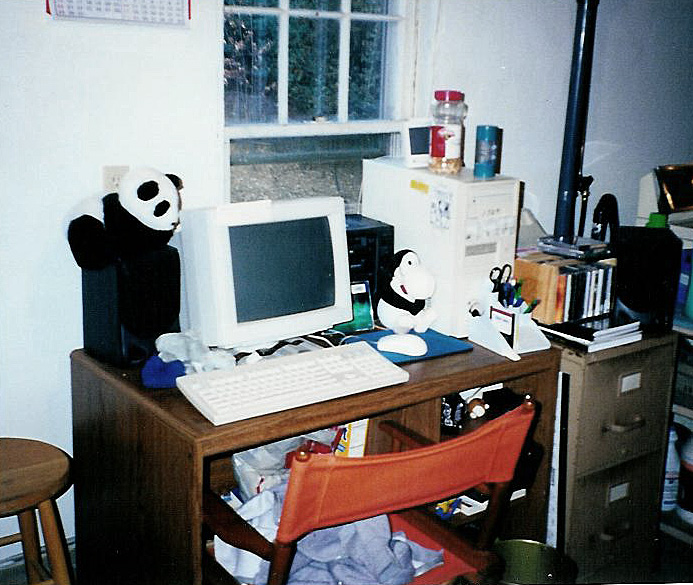
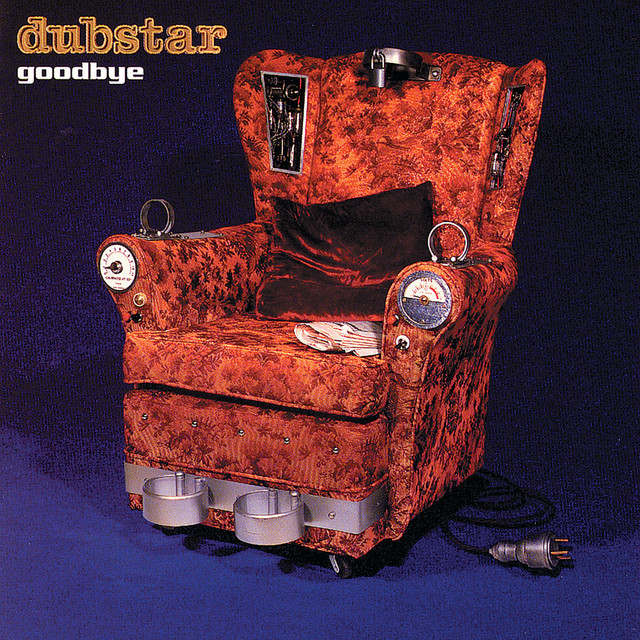
It made more sense to me to finish the novel on the PC, so for the next three weeks I headed downstairs to my basement writing nook every day to work on it. And considering I prefer writing with a soundtrack, the albums I listened to at the time were the ones getting significant repeat play during those sessions. Dishwalla’s And You Think You Know What Life’s About, Hooverphonic’s Blue Wonder Power Milk, Dubstar’s Goodbye, theaudience’s self-titled, Rasputina’s How We Quit the Forest, God Lives Underwater’s Life in the So-Called Space Age. And once the novel was complete, I started on the next round of revisions. With that came repeat listens of Mansun’s Six, Paul McCartney’s Rushes (under the moniker The Fireman), Baxter’s self-titled, Belle & Sebastian’s The Boy with the Arab Strap, UNKLE’s Psyence Fiction.
At the start of 1998, my work at the writing nook was scattershot, maybe two or three times a week. But by the end of that same year, I was down there almost every single night. Not that I completely gave up on longhand just yet, however… I was already planning out a working schedule in which I’d start the sequel to Phoenix in the food court before work while I revised Phoenix in the evening. That first sequel attempt was trunked six months later with another one attempted then stopped soon after, followed by an aborted rewrite of Phoenix. From there the dates do get a little hazy, but I would say that it was most likely the summer of 2000 that I tried one more time on the rewrite, and A Division of Souls was born.
The most important thing of all, though, was that I’d finally solidified a writing practice that I’ve stuck with ever since. I was down there in that basement nearly every single day now, even on the weekends after my road trips or other errands, working on something. There was a brief time of a few months in which it fell to the wayside in September 2000 when I started working second shift at Yankee Candle, but by November I’d switched to the morning shift. From then on until my moving out in March 2005, I’d be down there nearly every night, working on the Bridgetown Trilogy.
And considering the schedule, that also meant that by late autumn of 2000 I was making my weekly runs to Newbury Comics in downtown Amherst, picking up new releases every Wednesday after my comic book run at Hampshire Mall. And nearly all of these albums would get repeated play down there in the basement while I worked on the trilogy. My collection grew exponentially for the next five years because of that, and several of those titles became part of the MU Legacy Soundtrack list.
But yeah, it’s kind of neat to finally confirm that this longstanding writing-and-new-music habit I still have started in September of 1998.