Dave Kendall RIP

Dave Kendall deserves all the props in the world for coming up with one of the most inspirational and influential shows in MTV’s history: 120 Minutes.

He’d been a writer for music magazines and the UK press as well as for the music channel, and had suggested creating a two-hour show that showcased the great independent music out there that deserved a closer look. He wanted something outside of the mainstream, something akin to the burgeoning era of 80s college radio which at the time was focusing on punk, post-punk, new wave, industrial, EBM, and pretty much anything that didn’t quite conform to the charts or corporate radio. Never mind that the show was on at midnight on Sunday evening, and never mind that, like the early days of the channel, they winged it as they went along; soon after its debut on March 10, 1986, it caught on with high school and college kids and music nerds like me, and we programmed our VHS recorders to catch the latest episodes. It was so beloved that it now has its own archival website, detailing several years worth of episode playlists.

Interestingly, he was not its original host, though he did show up in every episode in the first few years, hosting the music review and top ten college radio countdown segments, often obscured by discolored lo-fi video feedback. He’d finally come out of the shadows and take over from the oddball Kevin Seal in 1989, staying there until 1992.

His delivery was quintessentially Gen-X Punk despite his slightly older age, snarky as fuck when a band’s music threatened to fall into its own navel, chatty and knowledgeable during his interviews, extremely obsessive and encyclopedic whenever a band with a long history dropped something new (his later successor Matt Pinfield certainly learned from him in this respect), wasn’t above taking the piss (such as the above, decorating a studio Christmas tree with a bemused and possibly pasted Trent Reznor on the 24 December 1989 episode, which also featured the string quartet The Ordinaires playing holiday music and a highly confused Ramones stopping by as well). He even got a laugh out of The Whitman Samplers in 1990 when they sampled him over a Funky Drummer beat.

Dave and 120 Minutes helped lift alternative rock out of semi-obscurity and into the mainstream. So many writers say that the scene started in 1991 with Nirvana and PNW grunge, but it really started much earlier in the late 80s with college radio and this show. This wasn’t just a scene, it was a slowly-building and expanding movement, one where you didn’t necessarily have to dress up or go to a club if you didn’t want to (or couldn’t). You could sit in your dimly lit bedroom and just take this all in while you pasted pictures of The Smiths and Siouxsie and Sinéad O’Connor and Depeche Mode on your walls, wrote your song lyrics and learned how to play a guitar not in the style of squealy hair metal. Prefaced by an hour’s worth of British humor with The Young Ones, The Comic Strip and Monty Python during its late 80s heyday, those three hours together were like an open secret for those who didn’t or chose not to fit in with the mainstream. You didn’t just look forward to the episode, you watched it and rewatched it constantly, because this stuff was not played anywhere else on TV or on the radio in your town. It reminded you that there was more out there, so much more out there than just what you were being fed, and it fueled you to keep going.

It was a show that brought me together with a circle of friends in late 1986, who ended up being lifelong acquaintances because we all loved that sound so much. I admit I obsessed over it far more than everyone else in that group, but in the process I became the go-to when you wanted to dub a copy of an album or grab a few songs you didn’t own for your latest mixtape. And yes, for a while I even had those 120 Minutes episodes tucked away on video. I might not have those videos anymore, but my music library continues to expand to this day partly because of the show’s influence on me. I now get my music fix via KEXP FM, which has carried the torch and continued playing all the best at the left of the dial. But it all started there, on those late Sunday evenings.

As Kevin Seal would often say after each music review segment: Thanks, Dave!

Sucking in the Seventies

I was born in late January of 1971, so that makes me just a few months shy of forty-two at this point in time. I don’t feel it most days…in fact, for the most part the reminder of my age is when I think about music releases–remembering when certain songs and albums came out and were huge hits, stuff like that–and only then will I belatedly think “Oh yeah…I’m that old. Huh.” Not that it bothers me. It comes as an afterthought.

As I’d mentioned before, one of the benefits of being this age is being able to see music genres and styles come full circle, or at least warp and mutate and eventually return in some form to the original. Synthpop bands are the big thing lately, bands who might not be giving a gracious nod to the original Krautrock bands of the seventies and early eighties like D.A.F. or Kraftwerk, but are at least embracing the sound’s second generation by giving that nod to Howard Jones, Thomas Dolby, A Flock of Seagulls, Depeche Mode, and so on. Bands like Bear in Heaven, Cut Copy, M83 and so on have brought back that reverb-drenched Korg synth sound, and they’re getting some serious airplay on indie and satellite stations. They call it ‘indietronica’ now, but it’s the same as synthpop–catchy tunes backed by music that sounds futuristic, dated, sterile and exciting, all at the same time. It’s like the 80s all over again.

But what about the seventies? Sure, as a lot of critics and bloggers would like to say, the seventies were one big hellhole of bad fashion, nasty politics, and craptacular music. It was the hangover decade following the partying 60s, the time of old excesses finally coming back to bite us on the ass. And yet…the seventies did have its own saving graces. It had the punk/no-wave/post-punk/art-punk scenes of the UK, New York and elsewhere. FM became the mainstream bandwidth to listen to, and freeform was in its heyday. It had Bruce Springsteen, Led Zeppelin, and Aerosmith. And, if you’re into that kind of genre, it had some pretty damn fine prog rock like early Genesis, Rush, and ELP. And as much as we hate it and like to deride it, there was disco. It never really went away, really. We still have Scissor Sisters, Hot Chip, and countless teen pop singers. The infectious beats are still there, just under different names and better production quality.

One of the reasons I’ve been thinking about this misbegotten decade is the prevalence of pictures run through the Instagram app.

borrowed by @vikstagram at http://followgram.me/vikstagram/

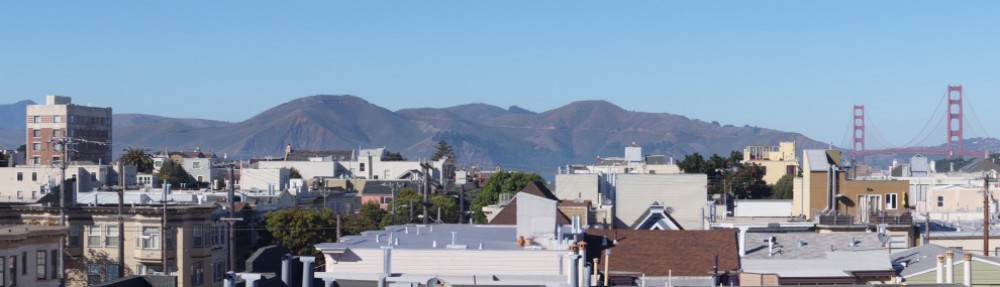
This here’s a good example: a picture of downtown San Francisco at the end of a sunny day. It was taken in January of this year, but with the magic of an iPhone and the Instagram app, it suddenly looks like it was taken with a Polaroid camera sometime in 1977. There’s a slight discoloration you’re not quite sure of (maybe a little sienna from sunfade?), maybe a bit of surface scratch, maybe a bit of graininess, and definitely a lot of color oversaturation. It looks like a picture found in your family photo album that you’d forgotten about. It’s the latest app that everyone loves and uses heavily if they have iProducts. [The rest of us need to use Photoshop, but I’m not complaining.]

Having been a small kid in the 70s, this kind of imagery triggers a lot of visual memories. It brings me back to when my age was in the single digits and the boundaries of my life went as far as my cousins’ house on Paige Street a block and a half away, and the long walk downtown with my Mom (one full mile!) was an exciting afternoon trip. Of when a layer of winter’s snow seemed amazingly deep, and sliding the hills in our backyard was the best thing ever. My dad saved quite a few of these old pictures from my youth, of my older sisters and I playing in the back yard or on a vaction trip to Maine or elsewhere. Perhaps this is the allure of Instagram…those of us in our thirties and forties remember our youth as grainy and color-saturated. We remember our youth as one of those 16mm films we’d watch during recess if the weather was horrible outside.

As is typical with me, this imagery also triggers a lot of aural memories as well. When I see these Instagram pictures of autumn scenes, I think of ABBA’s “S.O.S.” and “Knowing Me, Knowing You” and listening to Arrival on the family stereo in the autumn of 1976. I see pictures of rainy days and I think of Electric Light Orchestra’s “Sweet Talkin’ Woman” and listening to Out of the Blue in the spring of 1978. Pictures of cities at night and I think of The Rolling Stones’ “Miss You” and the gang troubles in Boston in the 70s. Pictures of parks and I think of the kids’ show Jabberwocky out of Boston and its trippy theme song. Every single memory has some slight gauze, as if our young brains had some kind of lower pixel rate and couldn’t save the images any clearer than that.

These are all songs I grew up with, images that I remember from my youth. Despite all the twitch-inducing memories everyone likes to dredge up of bad fashion and excess, a lot of the mundane things in the 70s aren’t very different from what they are today. The seasons come and go, showing us their colors both bright and dark. Fashion is still questionable here and there. Politics still unites and divides. Disco is still here, just under a different name. Rock and roll is still rock and roll. We see the present without the Instagram filters, but we always see the past in that dated, grainy way. It’s even inspired the sounds of these indie bands like Chairlift, Air, Boards of Canada, and more.

Now that I’m slowly approaching forty-two, I’ve decided that perhaps it’s time for me to pull those memory filters aside. I like looking at these faux-aged pictures as art, but I find myself more impressed by the startling clarity and framework of professional photography. If I’m going to revisit the past–my own past, the sound of classic rock and AOR, the history of the country, what have you–I want to revisit it clearly, with as little outside influence or gloss as possible. That way I can understand it better, maybe even visualize the parallels, differences and similarities between the past and the present. I’ll still enjoy these Instagram pictures and listen to these retro-influenced bands, of course…there’s no harm in them if you can tell the difference between then and now.