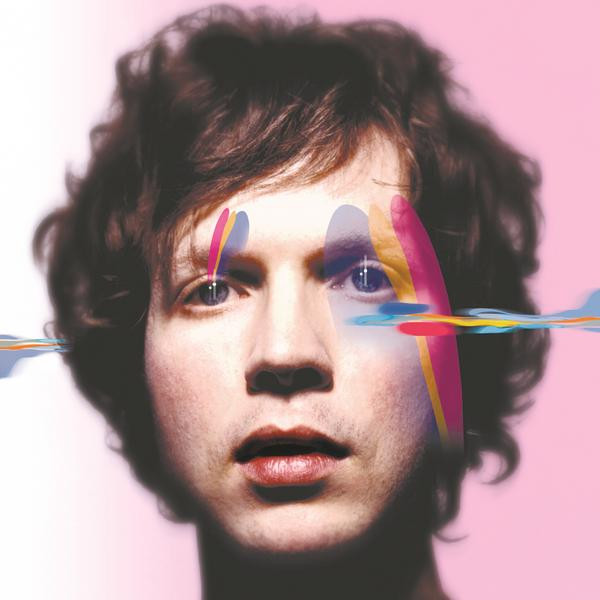
Favorite Albums: Beck’s ‘Sea Change’

In honor of Beck’s upcoming new record Ride Lonesome which comes out this Friday, I thought I’d do a quick revisit of my favorite album of his, 2002’s Sea Change. It’s aptly named; after the quirky Odelay, the meandering Mutations, and the funky Midnite Vultures, he goes through a bitter breakup, completely changes direction, and comes out with a deeply personal and contemplative record that defies anything he’s done before. It’s my top favorite of all his albums and the one I return to the most. I’ve mentioned several times that it’s also tagged as a Mendaihu Universe Legacy Soundtrack, having been played constantly during the writing of the Bridgetown Trilogy.

He made several music videos for this album even though there were no official singles, and they complement the album’s themes of emotional loss and eventual healing.

He pulls no punches right from the start: the opener “The Golden Age” sets the stage as a night-time drive, perhaps a long dark night of the soul: Put your hands on the wheel, let the golden age begin / The window down, feel the moonlight on your skin / Desert wind cool your aching head / The weight of the world drift away instead. There’s a lot to work through, and it’s not going to be easy.

That pain continues through “Paper Tiger”, a string-laden piece (conducted by his father David Campbell) that feels very much like an old blues track. Here we start hearing more nuances in the album’s production (the always amazing Nigel Godrich), with phased vocals and the use of that slow-build style I love so much.

Eventually he comes around — sort of — with the somber “Guess I’m Doing Fine”, which is obviously not the case but at least he’s trying to find a way through it all. The video has him walking around various parts of Los Angeles, including several scenes in Echo Park, with a ghostly acoustic guitar following his every move. Eventually he befriends a local and they start talking about life. Their conversation is unknown, but the setup underscores the whole point of the song: the only way to get better is to work towards it.

It’s a tough road ahead, working through the anger of “Lonesome Tears” and the self-effacing “Lost Cause” until we hit the exhaustion of “End of the Day”. It all starts building up until it finally spills out with the adversarial “It’s All in Your Mind”, which, interestingly, was originally a lo-fi single released years before (just before Odelay), but it fits in well here.

It’s followed up by the somber and mercurial “Round the Bend” — he’s finally accepted this grief, and starts the healing. It’s followed by “Already Dead’, in which he faces everything that’s left and gone away. What’s left is what needs working on: “Sunday Sun” focuses on acceptance and moving on.

In its own way, the penultimate track “Little One” underscores that acceptance, that what is done is done and you can’t get it back. But like the video, it also focuses on what’s only seen in dreams and hopes: a clearer future of healing. A waking up from the nightmare, exhausted and feeling out of place, yet seeing a clearer path ahead. The album closes with the quiet yet uplifting “Side of the Road”, a reminder of what we’ve gone through and what we might encounter next.

*

Interestingly, I passed on picking this album up for a few months when it dropped back in September of 2002, as I hadn’t been the biggest fan of Midnite Vultures and hadn’t really heard anything from this one. It wasn’t until I happened to hear a few songs during one of my frequent stops at the Newbury Comics in downtown Amherst that it finally clicked, and I was immediately sold. By year’s end I was playing it constantly during my writing sessions. It was a perfect soundtrack that aurally fit the moods and setting of the more somber sequences of the trilogy.

Twelve years and several albums later, Beck revisited this quieter style with the equally brilliant Morning Phase in February of 2014. And his newest, Ride Lonesome, has been described as the third in this series. While Beck has already been seen as a master in writing catchy yet offbeat (and often bizarre) alternative pop singles with quirky lyrics and creative production, with these albums he proves that he can also write deeply personal and heartfelt ballads that work themselves deep into your psyche.

(Almost) Thirty Years On: April 1997

There’s something to be said about finally finding your groove. So much stress and anxiety finally recedes into the background where you don’t need to constantly worry that it’ll come back to bite you in the ass when you’re not paying attention. HMV was the first job in ages where I wasn’t jumping ship, getting axed or finding it’s a terrible fit after six months, which meant that I could finally focus on what I wanted to focus on and not worry as much about the bills. It meant that I could allow myself a deeper focus on the writing and a calmer approach to life. Hell, I’d even started assisting in the ordering of stock by then, as my boss trusted me and appreciated my input. It was the first time in years where I didn’t feel like I was scrambling and flailing.

And I think one can see the difference in what I wrote at the time. While still a rough draft, it’s so much better than the work I was doing on my previous now-trunked works. I’d stumbled upon a style that resonated with me and I wanted to see how far I could go with it, and now I had the ability to make that happen.

Our Lady Peace, Clumsy, released 2 April 1997. The Canadian band’s second album was a huge hit in their own country but also a surprise hit here in the States with the two major singles, the snaky “Superman’s Dead” and the ballad “Clumsy”. It was a big seller at my store and even made it to the best-of wall at the end of the year. This one got a lot of play during my writing sessions as well.

The Chemical Brothers, Dig Your Own Hole, released 7 April 1997. It took forever, but when the new album dropped it was HUGE. You heard the new single “Block Rockin’ Beats” everywhere, all the time, to the point that maybe it was a little oversaturated, but it was such an amazing record it surpassed Exit Planet Dust in terms of popularity. The duo seemed to have found their niche, cleverly mixing electronic and analog sounds, and occasionally providing guest vocals, and the fans ate it up. It ended up on several year-end lists and still remains one of their most popular albums.

Sleater-Kinney, Dig Me Out, released 8 April 1997. Their first for the Kill Rock Stars label and the first with drummer Janet Weiss, you can tell that they went all out for this one. Loud, raucous, and full of heartbreak, it was a highly successful release for the college and alternative stations. This was one of my boss’ favorite albums of the year and he’d often play it out on the sales floor.

Depeche Mode, Ultra, released 14 April 1997. After a tumultuous couple of years, the band came back with an album that channeled both their old-school dark-themed style and their newer heavier sound. It’s a perfect fit and the record is one of my all-time favorites of theirs. This is one of the first albums I added to the ‘MU Legacy Soundtrack’ list — albums that I’d frequently come back to throughout my writing of the trilogy and its various versions over the years. It’s still my favorite of the 90s DM albums, even more so than Violator.

Soundtrack, Austin Powers: International Man of Mystery, released 15 April 1997. I went to this movie thinking that it was either going to be really funny or painfully repetitious and unfunny (as SNL skits tend to be for me), but I was pleasantly surprised by its ability to absolutely nail it as a loving pastiche of mid-60s Mod, yet still be absurdly silly at the same time. The end-credits music video of Austin’s band Ming Tea (Mike Myers, Suzanna Hoffs and Matthew Sweet) was a perfect way to cap it all off.

Supergrass, In It for the Money, released 21 April 1997. It took me a while to grow into this album, as I’d only been a passing fan of their debut I Should Coco, but once I did, I was a fan thereafter. I’m pretty sure it was the lovely and Beatlesque “Late in the Day” (and its clever video) that caught my attention in the first place. It has a very autumnal sound, quieter and calmer than their debut and far more adventurous. This was another album that my boss loved and pushed on the sales floor.

Scud Mountain Boys, The Early Year, released 21 April 1997. I knew about this local (Northampton) band from listening to WAMH in the mid 90s, and this was a reissue of their first two albums that dropped in 1995. Their quiet alt-country sound fit in perfectly not only with the indie crowd but seemed to capture the sound of woodsy midwestern Massachusetts as well. Their cover of “Wichita Lineman” is absolutely stunning and is my favorite version of the song. This was another album that got a lot of play in the back room as well as during my writing sessions.

Delerium, Karma, released 22 April 1997. A side project of Rhys Fulber of Front Line Assembly, this band could have been just another Enigma copycat yet somehow broke through on the chillwave circuit with the gloriously lovely “Silence” single with Sarah McLachlan on vocals. The rest of the album is just as wonderful and ended up on my year-end favorites list; it was also another MU Legacy Soundtrack that got a lot of play over the next several years.

Future Bible Heroes, Memories of Love, released 29 April 1997. I remember first hearing the song “Lonely Days” on The River, an Adult Alternative station out of Andover MA, while driving home from work one night and immediately falling in love with its not-quite-retro sound. One of several side projects of Stephin Merritt (he of The Magnetic Fields among other things) and including vocalist Claudia Gonson and ex-Figures On a Beach musician Chris Ewen, Their indie pop sound manages to capture that early 80s synthpop style with oddball self-conscious lyricism (a Merritt hallmark) and catchy melodies. This would get a lot of play as well, and is of course an MU Legacy Soundtrack.

*

Coming Up: In which a new writing project finally gets its own mixtape