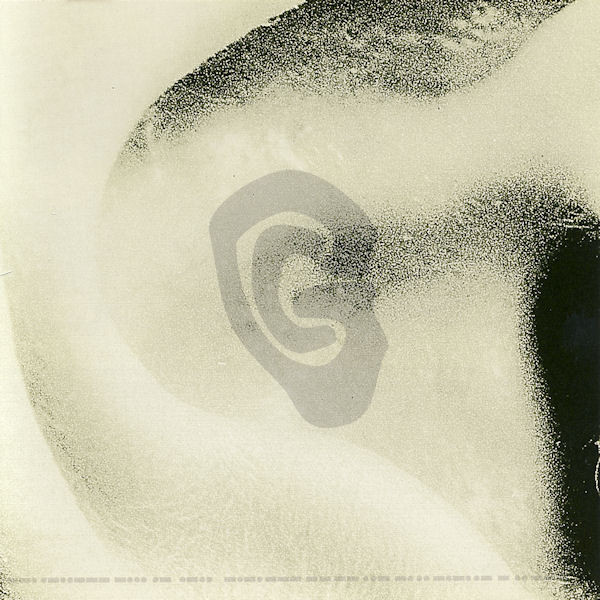
I was introduced to Global Communication in a very roundabout way. While I’m sure I saw the above record in the bins at the HMV I worked at, I never gave it a chance, at least not until late 1997 when I heard a deeply haunting track by Pulusha called “Isolation, Part 1”, found on the not-quite-holiday album Invocation that had intrigued me when it came out in October of 1997. After a bit of reading, I found out that Pulusha was a one-off project featuring Kirsty Hawkshaw — who I knew from Opus III in the early 90s — and Mark Pritchard, who was one half of Global Communication. This album had dropped in July of 1994, but had been so well-regarded that we continually stocked it in our electronic music section three years later.
I’ve listened to and loved all kinds of ambient music over the years — the experimental soundscapes of Brian Eno, the laid back cool of Orbital, the deep echoes of the early years of 4AD — but I’d never heard anything like this before. There are no real titles for the tracks; they are all known by their playing length instead, to avoid influencing what the listener might feel or imagine upon hearing it for the first time.
What caught my attention was the grandfather clock and the gentle rain of the second track, “14:31”.
You of course know that music was a huge influence on my early writing. Inspired by Miami Vice, I took music I loved and wrapped story ideas around them, and the Infamous War Novel was the first longform story I wrote that took those songs and shaped a full storyline around it. But I’d grown out of that style by the early 90s. Music was still there, though playing just a minor ‘soundtrack’ part instead. And a lot of what I was listening to at the time didn’t always fit with what I was writing, so I grew out of that style.
That is, until I listened to the above track in headphones one evening, and my imagination suddenly found itself in a dusty old mansion, sitting in a semi-dark study with cold wood panels, the only light coming from outside the one bay window, partially framed by the canopy of leaves outside, the sky a dirty light gray and the grass of the lawn a deep rich green, matching the dark trees outside. The room was a mix of forgotten papers and books, smelling of must and petrichor.
I don’t think I’d ever had that vivid of a mental image from a song in years.
This was right about the time I started working on The Phoenix Effect as well. This album immediately became part of its soundtrack, played whenever I worked on the more spiritual components of the story. I needed to be in that kind of mental space, that kind of ambient atmosphere, because that’s what it sounded like in my head. Otherworldly, spatial, the sound of moments you never notice until they sneak up on you. A soundtrack that could create not just the mental image of a forgotten part of a house deep in the country, but the loneliness of a spaceship far away from home.
These are but two tracks off a ten-track album that take you on an aural trip without actually telling you where you’re going. It leaves the destination — or just the trip itself — entirely up to your imagination.

