Unknown's avatar

About Jon Chaisson

Author, blogger, music collector, cat wrangler. May contain trace amounts of sugar and caffeine. Books available at Smashwords!

Songs from the Eden Cycle, Vol 1

cassette30082013

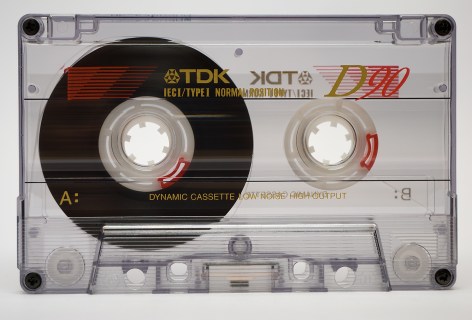
The TDK D90 blank cassette. My tape of choice for almost all of my 90s mixtapes.

One thing I’d always done during the course of a writing project is to give it a soundtrack.  Whether it’s a playlist, a list of specific albums, or a mixtape, it serves to create a specific mood that I’m looking for.  With The Phoenix Effect, having envisioned this as a multi-book project even then, I’d given the series the name The Eden Cycle (referencing both obvious religious imagery and EdenTree, a megacorporation that would be a part of the plot).  It seemed fitting to give the mixtapes the same title.

At the time, my idea had been of souls inhabiting AI cybernetic bodies — which in hindsight created a lot more trouble than it was worth — so the imagery I was looking for was much darker and creepier.  That said, however, I chose not to focus on dystopian pessimism; instead I wanted my story to ascend past that into something positive.

This is the first of four mixtapes I made during 1997-8; this one was made in mid-April of 1997, just before I went on a road trip out to Ohio to visit a friend of mine.  One of the major reasons for making it was so I could listen to it during my commute and think about what I was going to write.  Over the next few days I’ll be sharing the other three original volumes from this era.  The links are to their YouTube/Vimeo videos (they’ll open in a separate tab), and I’ll also provide a brief background as to why I chose the song for the mix.

Side A

  1. Poe, “Hello [Band Version]”
    I liked Poe’s Hello album, but the kickass single remake of the song felt like a perfect opening to a mix tape.  It fit in with the cyberpunk feel of TPE that I was originally aiming for as well.  An ‘opening credits’ song, if you will.
  2. Failure, “Heliotropic”
    Fantastic Planet was getting a crapton of play on my cd players, both at work and at home during my writing sessions.  This track’s spaciness, loudness and extremely heavy, crunchy bass evoked the exact amount of tension I was looking for.  It had that feeling of being outside on the brightest day with the heaviest of hangovers.
  3. U2, “Mofo”
    Pop was still getting a lot of play as well, and I loved how twitchy this one was.  I used this track as a kind of gauge to remind me of how Bridgetown felt on a spiritual energy level: a sprawl of millions of people, each with different levels and directions of this energy, all dissonant and discordant.
  4. David Bowie, “Dead Man Walking”
    I’ll be honest, I wasn’t the biggest of Bowie collectors — I think I only owned maybe five or six releases, tops — but Earthling (released earlier in 1997) connected with me big time.  I loved its techno influences and its paranoia.  This track fit my image of Nehalé: a man who was destined to take a specific action that would affect a vast number of people, and he had to force himself to come to terms with that.
  5. Psykosonik, “Need to Die”
    There was a brief surge of darkwave techno in the mid to late 90s (super-generalization: darkwave = gothy electronica) that I got into, and Psykosonik’s Unlearn was handed to me by one of my HMV coworkers (Thanks, Doug!).  I put this here mostly as a mood piece, but I did like how it fit in with one of the TPE themes: people didn’t necessarily have to die to be reborn spiritually.
  6. Live, “Lakini’s Juice”
    Another mood piece, this one suggesting (to me) discomfort in a situation one could find themselves in.  I believe I used this as inspiration for Poe’s constant irritation at not being able to complete tasks put before him.
  7. Elysian Fields, “Lady in the Lake”
    Their Bleed Your Cedar album was handed to me as a promo, and I liked its swampy feel.  The album (and this track) helped me focus on how a recently awakened character would have to deal with their situation; both feeling disconnected from everyone (I’m the only one like this) and superconnected (I can intimately sense everyone around me) at the same time.
  8. Moby, “That’s When I Reach for My Revolver”
    As a Masshole, I had to appreciate Moby covering the Mission of Burma classic (as well as putting out a punk album, considering he’s more known as an electronic musician).  Just like the original, this song was a perfect example of dedicated and determined nonconformity that fit in with Vigil.
  9. The Verve Pipe, “Veneer”
    Not that long before this, I’d seen this band live in Boston, and they did a beautiful and transcendent version of this track (which, as it happens, is about a long road trip through Michigan while high).  To me, it evoked a sensation of being elsewhere; in the process it inspired how I had my characters react when they first visited Trisanda.

Side B

  1. Richard Einhorn, Anonymous 4, “Exclamavit”
    I’d heard Einhorn’s Voices of Light on NPR one evening when I was driving into Boston in the summer of 1995, and I was completely floored by the gorgeousness of it.   [It was inspired by Carl Theodor Dreyer’s 1928 silent film The Passion of Joan of Arc and can be heard as its soundtrack on the Criterion dvd.]  I wasn’t the biggest orchestral music fan at the time, but this slowly set me on my way.  This particular opening felt like another good ‘opening credits’ piece, and thus opens Side B of the tape.
  2. Pulp, “Common People”
    The album version of their classic single is a much more sinister affair than the single version (there’s an additional verse that truly reveals the disgust he holds back in the rest of the song).  While the plot of the song doesn’t quite fit the plot of my story, it does reflect the bigoted view of The Other that was part of my story’s plot.
  3. Sponge, “Isolation”
    There’s a great Lennon tribute album called Working Class Hero from 1995 that I listened to a lot then, and I loved this version of the Plastic Ono Band track.  This ties in with the previous Pulp track, a forced cultural disconnect that one can only accept for so long before one has to fight back.
  4. The Offspring, “Gone Away”
    Part of the reason this one was on here is that I heard it so many times during that Ohio road trip!  Again, tension and discord.  This time because something’s been taken away and you can’t do a damn thing about it.
  5. Filter, “Hey Man, Nice Shot”
    This track inspired my love for the Slow Build:  starting off quiet and sparse, but gradually growing louder and more intense in energy.  The original Chapter 1 of The Phoenix Effect used this song as a template, which carried all the way to the opening of A Division of Souls.  The ADoS opening is supposed to feel like someone slowly turning the volume louder and louder until it climaxes in an intense burst of energy.
  6. Failure, “Daylight”
    Okay, how many times is this track on one of my mixtapes?  One of my favorite songs of all time, and even at the start of the project I knew it would be the Ending Credits track to my story.  [NOTE: I’m planning on writing a script of the ‘director’s cut’ for the ending of A Division of Souls and posting it over at the Bridgetown blog later this month, which uses this song as its soundtrack.]  The story is done, everyone’s exhausted, and the day has been saved…but the fight is far from over…and roll credits.  [Seriously, folks…go buy Fantastic Planet.  It’s a fucking phenomenal record.]
  7. U2, “Wake Up Dead Man”
    A denouement track after the epic ending track preceding.  I knew TPE was going to end on an unresolved note, leaving it wide open for its sequel.  The day has been saved, but the work’s not over.  Relationships between certain characters have been strained or broken; others have refused to give in so easily.  For me, this song is a plea for the war to cease before it goes too far. [I never forgot this idea and eventually used it in The Balance of Light.]
  8. The Tragically Hip, “Grace, Too”
    Canada’s favorite band with one of their favorite hits, which I remember seeing on MuchMusic back in 1994 (partly because I loved that the video was created using monitor feedback).   A lift from the previous song, in which we shift viewpoint to someone who knows they’re in the lower classes but still has high hopes for themselves.  This idea would later become the gathering of the Mendaihu at the Moulding Warehouse in A Division of Souls.
  9. Jamiroquai, “Virtual Insanity”
    …and after all that, ending on a slightly more positive note (somewhat), the final track brings a kind of…well, not hope, but an awareness.  This was a big plot point even in TPE: the characters had to become completely aware of their situation, where the conflict wasn’t in trying to figure it out, but in coming to terms with it and choosing either use it, abuse it, or avoid it as long as they could.


Hope you enjoyed my little bit of tunage sharing there!  I’ll be following up with the other three volumes in the original series soon!

Music from the Eden Cycle: U2’s Pop

Say what you will about U2’s Pop, it’s an interesting album to say the least.  It’s not quite an extension of their electronica-influenced albums Achtung Baby and Zooropa (or their foray into deliberate non-commercial territory under the Passengers moniker, Original Soundtracks 1) as it’s a deliberate side-step.  It’s twitchy in places, barren in others.  They freely admit that it was an unfinished album, a record they should have spent more time on, had they not had a major tour to prepare for.

It’s not their strongest, but I still enjoy it.  It kind of reminds me of 1984’s The Unforgettable Fire in a way, as it sounds like a band in the middle of evolving.  I remember when it was about to come out while I was at HMV; the PGD sales rep (back when U2 was distributed by PolyGram) was obviously trying to upsell it because hey — Big Name Band, right?  But he knew he couldn’t quite pull it off.  He was let down by it, having felt it was one of their weakest albums.  Well…in the context of their career path, when you hit the stratosphere with The Joshua Tree and you keep getting more ridiculously popular, any move aside from UP seems like a step down.  And to most critics, this one felt like a severe misstep.

To be honest, I felt the exact opposite about it.  I was actually let down by Zooropa, having felt that album was more like Achtung Baby Outtakes Wot Weren’t B-SidesPop felt a lot stronger and more cohesive to me.  It ended up being one of the first albums that received heavy rotation during my first round of writing sessions when I started The Phoenix Effect.  I kind of liked its similarity to the Beatles’ White Album…it starts off pretty strong with “Discotheque” and “Do You Feel Loved”…and progressively gets stranger and darker as the album goes on.  The final track, “Wake Up Dead Man” is the polar opposite of its opening track; one is dense and trippy, the other is wiry and exhausted.  The whole flow of the album works perfectly for me.

This was precisely what I needed for my writing session soundtracks!  I wanted to hear something that was a little left of commercial, something strong but not singles-oriented, something that had ambience.  Something that inspired the tension that I’d need in the new novel I was writing.

My writing nook down in my parents’ basement (it wasn’t called the Belfry yet…that name wouldn’t come for another few years) was right near the bottom of the stairs, using one of my uncles’ old desks and one of my dad’s dusty rolling desk chairs.  I had my Windows 3.1 PC that I’d bought with my own tax return money and a big heavy CRT monitor donated by my sister.  I didn’t even have Word 97 at that time, as I don’t think it would have fit on the system…I wrote everything using the Write program instead, and that worked just fine for me.

When I brought my longhand work home from the Day Job, I’d sit down at the PC and start transcribing what I’d written.  This is pretty much where I taught myself how to revise; I knew I’d have to flesh out a lot of what I’d written, so I figured that was the perfect time for it.  I’d figure out what tone I was trying to capture with the prose and expand on it.  And sometimes, the instant revision would give me an idea of what I’d need to write the following day.

It was a learning process the entire time, and I knew I’d want a writing soundtrack to go with it.  Pop was one of the first, and pretty much stayed with me for a good number of years until the single novel morphed into the Bridgetown Trilogy.

Aside: Music as Sanctuary

The other day Jason Chaffetz (R-UT) said the following on CNN:

Rep. Jason Chaffetz (R-Utah) on Tuesday said Americans may have to choose between purchasing a new iPhone or paying for health insurance.
“You know what, Americans have choices. And they’ve got to make a choice,” the House Oversight Committee chairman told CNN’s
New Day, one day after the House GOP unveiled its plan to replace ObamaCare.
“And so maybe, rather than getting that new iPhone that they just love and they want to spend hundreds of dollars on, maybe they should invest in their own healthcare.”

As you can well imagine, the blowback on social media was swift and deafening.  The one thing you do not want to argue with a poor person is whether or not they deserve something you deem frivolous.  You do not want to kick down, because they’ll kick you right back even harder.  [Noted, he did attempt to walk back the comment, but his follow-up was still basically “you poor folk will still need to go without Fun Stuff if you want to be healthy.”]

Why do I bring this up here at Walk in Silence?  What does this have to do with my obsession with music, anyway?  [And for a very slight few of you: oh god why is he bringing up politics and ruining an otherwise decent blog?]

Well.

Let me tell you a little about my post-college years, from mid-1993 to late 1996.  Yeah, I’ve talked about this before in previous entries, but rarely in detail.  Stay with me on this.

See, when you’re too damn fucking broke, you’ve got student loan debt, the average apartment rent in Boston at the time is around $400-500 a month, your paycheck averages around $200 every two weeks at a job that you don’t necessarily want but is what’s available for someone with little to no business experience, but you’re absofuckinglutely determined to make a name for yourself somewhere in the working world…you do any damn thing you can to make it happen.

You survive on take-out and what groceries you can skim from your parents.  You borrow money from your parents to attempt getting caught up.  You defer those loan payments.  You maybe skip a payment on the credit card so you can buy food for yourself.  You deal with a long-distance relationship because your girlfriend is too broke to stay in town for the summer and has to live with her mom for the season, which means the only mode of contact is writing letters and, very rarely, a phone call.

And because of your committed career choice as a writer, with absolutely no publications to show for it just yet, and you’re still learning the ropes, you know you’ll need a Day Job to cover expenses.  And pretty quickly you know you have no interest in business sales — you dislike trying to sell something to someone that you yourself aren’t interested in (in this case, a telemarketing job selling toll-free numbers to small businesses), and you really dislike the idea of having to aim for a quota in order to keep your job.  You briefly entertain a position doing transcription, but you don’t really have the ear or the speed for that.  So that means you’ll end up working at some blue collar establishment, like an ice cream parlor, or a movie theater.  You’re not above that; it’s what you’ve done for day jobs in the past.

You were on your parents’ insurance until you graduated back in May of 1993.  You don’t even fucking think of entertaining that expense, because you know you won’t even be able to afford it.  Not without cutting elsewhere.  Like moving back home with the family.  They’ll have you, of course, but you’d feel like such a goddamned failure because you graduated with a BA from college and can’t even get a fucking career off the ground, let alone living in a city where all the jobs (what there are of them) may actually be.

So.  No insurance.  Low-paying job.  Hardly any food in the refrigerator.  All your college friends have moved on and left the city.  The only thing that you get by on is a pack of cigarettes that you make last for two weeks or so, water, tea and instant coffee, toast or cereal, and food that you didn’t pay for from your Day Job (hot dogs and soda is a frequent dinner, with a chaser of popcorn).

Your next door neighbor, a guy you know from college who’s living comfortably on his own due to having rich parents (he owns a number of kind-of-expensive toys from Sharper Image to prove it).  He’s your only friend of note at the moment, and even at that point he’s more of a clueless prick than a friend.  He wonders why you won’t come out with him to dinner at that restaurant or to see that movie, even when you tell him repeatedly that you can’t afford it.  He wonders why you won’t splurge on things you need, considering you have a credit card and all.  And because he’s pretty much the only person you know in the city to any degree, he’s your hangout buddy.  And because you don’t know what else to do with your miserable fucking life, he’ll easily talk you into doing things that get you deeper into debt.

You’ll make one stop at Beth Israel Hospital one early winter morning early in 1995 when you have an insanely sharp pain in your groin area and you have no idea what’s causing it.  You have no insurance, so when you’re filling out the hospital forms, you say you have no frigging idea how to pay for it, if at all.  You tough it out and decide to be a charity case.  After staying overnight at the hospital (where you’ve been shoved aside and left out in the hallway for hours before some intern comes by and finally realizes you haven’t been seen), you’re told that the pain is caused by an overlong twisted vein that’s been starved of blood.  Not caused by an injury or anything…just a weird medical issue that can happen to any male.  Things are readjusted and you’re given the information that to permanently fix it, you’ll need to have a minor surgery done.

You already know that’s out of the fucking question.  You deal with it, get discharged, walk to the subway and ride home.  You call in sick (no sick time pay, by the way) and take the day off.  [You won’t get that fixed until two years later when it flares up again, and thankfully this time you have insurance to take care of it.  And sick time.]

Eventually this will all come to a head in the summer of 1995, when your original plan to renew your lease in that apartment in Allston falls through.  No roommates (your original roomie moves out, the replacement backs out), no phone (cut off due to overdue bills), hardly any food (which your ex-roommate ate anyway), and still no way to get ahead.

You finally make the decision, say fuck this shit, and move back home with your parents, which you will do for the next decade, just so you can get caught up with bills again and fix your completely decimated credit rating.  It’s the most frustrating, the most depressing, the most goddamn aggravating decision you’ve ever made in your life.

So.

What was all that about, anyway?  And what does that have to do with Jason Chaffetz’s complete lack of empathy?  And why here at Walk in Silence?

Well.

See, there was in fact one thing that kept me from going batshit crazy, from wanting to jump off a bridge, from wanting me to do something truly and colossally stupid.  Something that kept me sane.

And that was music.

Not a day went by when I didn’t have the radio going, or was listening to my music collection.  It was my one splurge.  It was my sanity.  My sanctuary.  I rarely bought new releases, as I could only afford them every couple of months, and a few titles at that.  No, I built up my vinyl collection by digging through the dollar bins at the used record stores around town.  I had a pretty decent collection of classic rock and sort-of-recent releases at a fraction of the cost.

To a lesser extent, I’d also rent movies every couple of weeks from Tower Records.  Those were cheap, maybe a few dollars for an overnight rental every couple of weeks.  Did I feel guilty about that?  Not one bit.  It was how I rediscovered anime which inspired me to try my hand at writing science fiction instead of literary fiction.  It completely opened my eyes and my mind to new creative avenues in my writing, and started me on the path to where I am today.

But the point here is:  music was my sanctuary.  It was one of the very few positives in my life at that time.

Did I make some dumb financial mistakes?  Sure.  We all do at that age.  Maybe I could have sold more of my albums back to the stores for money — something I did a few times, actually — but that was just a temporary, finite answer to an ongoing problem.   It gave me pocket money for one run to the supermarket for food.  Could I have done without the music or the video rentals?  Sure, but I probably would have been a hell of a lot more miserable than I already was.

Music was the inspiration for my writing.  It was something I chose to afford because it gave me something to look forward to.  It was something that helped me feel that little bit happier when I was going through a hell of a deep depression.  It reminded me that there was a light at the end of this very dark tunnel.

And I would not let my finances, or anyone else for that matter, take that one oasis away from me.  No fucking way.

So yeah.

This is why — this is one of many reasons why — when I hear from asshats like Chaffetz who decide that poor people must ‘do without’, even for things such as phones — which keep people connected to the world and help them stay available and contactable for job openings, health screenings, and loved ones — I get extremely angry and my filter goes out the goddamn window.

You, Jason, do not fucking understand what it is to live your live on the margins with barely a way to get yourself out.  Not one goddamn clue.

You deserve no nice words from me.

Platinum Records

If you haven’t seen my recent post over at Welcome to Bridgetown, I’m currently celebrating the platinum anniversary of my starting a novel (The Phoenix Effect) that would end up morphing into my Bridgetown trilogy.  All this month I will be posting fun things related to the original as well as the trilogy, and I thought I’d do the same over here.

Twenty years ago I was a few months in on my relatively new job as the lone shipper/receiver at HMV Records.  Even though I was one of the oldest hires there (I’m pretty sure I was closer to my manager Tom’s age than the young’uns I worked alongside), I was still feeling my way around.

The biggest change from the years previous was that I had a much closer connection to the music I was listening to.  I was listening to a lot of radio at the time but didn’t have that much money to spend on new releases, but this job let me listen to a lot more stuff (and yes, I may have dubbed a number of cds onto blank cassettes while in the back room, heh!).

But the sounds were changing as well.  The bright bounciness of Britpop was suffering from hangovers and bloating (see: Oasis’ Be Here Now, a solid but WAY overworked album); the American grunge was kind of losing its way (not to mention some of its lead singers to overdoses), and let’s face it: the college rock I knew of then was essentially the commercial rock of now.

That’s not to say the quality (or quantity) of alternative rock was declining…it was merely evolving with the times.  In fact, 1997 featured some fantastic, solid releases from bands both old and new, taking the genre in new and interesting directions.

On a personal level this was a positive and much-needed evolution for me, as I’d been in dire need of a change in my life and outlook.  I’d been broke, angry and depressed for about three years straight, gone through some personal issues that were Not Fun At All, and needed a positive change ASAP.

Not only that, this change in mood is reflected in my writing.  I’d essentially started a new project resurrected from the ashes of one that I had to close down for personal reasons.  And let’s be brutally honest:  back then, I’d had a collegiate view of being a writer.  I was a special snowflake with the Powers of Story [insert sprinkly *whoosh* sfx here] and I wrote Important Life Allegories™.  In reality, however…my writing was crap, I knew it was crap, no one was going to take it seriously, and I was going to need to be a shit ton better than the level I was currently at if was going to get anywhere with it.

So that meant dispensing with the mindset of Writing as Superpower and take it seriously.  Making it a daily process instead of a casual one.  Relearning the basics of story construction.  (This included doing a hell of a lot more reading than before; not just the how-to writing books, but the different genres of fiction and nonfiction I was interested in.  This plan kick-started my habit of visiting book stores on the weekends and, thankfully, a love of reading.)

Music has always been a part of my writing process, and this time it was no different.  This time out I’d be making mixtapes of tracks that would inspire my writing (the four-volume Songs from the Eden Cycle from 1997-8, the sort-of sequels in the early 2000s, and the recent Eden Cycle Sessions mp3 playlists).  Certain albums released during this time would get heavy rotation play on my cd player down in my basement writing nook.  And I’d listen to a hell of a lot of stuff on my fifty-mile commute, which was always a perfect time for me to brainstorm.

I’d made a decision to be a writer quite early in my life, but 1997 was when I decided to take that decision seriously.

Fly-by: Earworm

Sorry, folks…had to head into Concord for the Day Job today, so I wasn’t able to get any music post up.

BUT.

Once I was there, I happened into the little snack shop they have in my building, and they were playing Carmen on the radio.

Which meant I had “L’amour est un oiseau rebelle” stuck in my head ALL MORNING LONG.

Granted, I do love how this aria is basically her trolling Don José something fierce. 🙂

It’s half past four and I’m shifting gears


So I ended up buying the new Golden Earring box set, The Complete Studio Recordings, (at a pretty sweet deal — 28 cds for a little over $100, coming out to about $4 a cd) and I’m quite looking forward to giving it a listen.

They’re a band I’ve always wanted to hear more of, especially since their history reaches way back to the early 60s.  Most of you know them from their two US hits “Radar Love” (one of the best 70s bass lines ever) and “Twilight Zone” (one of the most memorable early 80s MTV videos).   I owned their Cut album for a long time and absolutely loved it as a kid.  I never got around to picking up more of their albums though, as they were often hard to find and were never a big draw in the US.

Still, they’re considered the Netherlands’ biggest rock band and what I have heard of their early stuff I quite enjoy.  Including their amazingly ridiculous yet fascinating seventeen-minute prog cover of The Byrds’ “Eight Miles High”.

It’s going to take me a while to sift through this collection, but I’m looking forward to it!

Recent Music Purchases, February Edition

I’m quite enjoying how 2017 is panning out musically so far.  There’s some really solid tunage being released, and even more to come in the next few months.  Looking forward to it!  In the meantime, here’s some more stuff that’s been getting lots of play on my PC lately, hope you enjoy!

Spoon, “Hot Thoughts” single, released 20 January (album coming 17 March).

Arcade Fire, “I Give You Power” single (feat. Mavis Staples), released 20 January

The New Pornographers, “High Ticket Attractions” single, released 27 January (album coming 7 April)

Japandroids, “Near to the Wild Heart of Life” from the album of the same name, released 27 January

Big Wreck, “One Good Piece of Me” from Grace Street, released 3 February

Porcelain Raft, “Big Sur” from Microclimate, released 3 February (I am hella obsessed over this album at the moment…)

Dutch Uncles, “Big Balloon” from the album of the same name, released 17 February

The Verve Pipe, “Cup of Tea” from Villains – Live and Acoustic, released 17 February (really, go get this or the original, it’s a phenomenal record)

Light Reading: Ed Ward’s ‘History of Rock & Roll, Vol 1’

I’ll be honest, I’ve kind of ignored the origins of rock music for longer than I really should have.  I’m quite familiar with rock in the late 70s and 80s, having lived through it, and over the years I’ve read a lot about how the 60s shaped and influenced rock music and vice versa.

The 50s and earlier, however?  I have a very thin basic knowledge at best.  Of course I’m familiar with the classics everyone else knows…the early Elvis tracks on Sun Records, the handful of Jerry Lee Lewis songs, the usual Chuck Berry riffs, and thanks to the Beatles, the not-quite-hits that got a second life as covers.  But that’s about it.

Ed Ward’s The History of Rock & Roll, Vol 1: 1920-1963 is a fascinating read in that it’s not a memoir of that era but a streamlined chronology of numerous events, people and performers that helped shape the music genre we all know today.  There’s no concrete starting point to rock music — it evolved over a long period of time, inspired and influenced by all kinds of different regional styles of music.  And thanks to radio’s own evolution from providing entertainment (such as the comedies and the dramas, and the aural productions of plays) to focusing more on shorter popular music, these regional sounds were heard nationally, informing and influencing even newer sounds.

If you’re familiar with how current styles of rock evolve within the last twenty to thirty years, this will make total sense; the Ramones begat the UK punk movement begat the moody post-punk sound begat American college radio begat 90s alternative, for instance.

The writing isn’t bland, even though Ward promotes this work as a textbook of sorts.  On the contrary, he delights in amusing asides (Screaming Jay Hawkins gleefully admitting to not remembering recording his signature song “I Put a Spell on You” because he was completely drunk at the time), conservative backlashes (label owners creating a ‘good music’ subgenre of Sinatra-inspired saccharine music from the likes of Frankie Avalon), weird moments in rock history (the bizarre popularity of Alvin and the Chipmunks), producers and promoters milking a trend as far as they can (death songs like “Teen Angel”) and so on.  His overall theme seems to say that no one in the music business really knew what the hell they were doing half the time, but as long as they made money and the kids loved it, then why complain?

In addition to this, Ward doesn’t completely focus on any one artist for an extended length of time; this is all about the chronology of the history.  It puts things into a wider perspective, showing just how many different sounds and events unfolded at the same time.  (I did not know that the careers of Elvis Presley and Carl Perkins pretty much started off within a month of each other, for instance; in fact, Elvis befriended Carl early on and helped get him an audition at Sun.)  He also includes the other popular genres at the time: country, soul, folk, and jazz.  While they weren’t lumped in with the emerging rock genre, they were part of its inspiration and were closely related enough to warrant further investigation.

It’s definitely a fun and very informative read, especially if you’re a music nerd like myself.  It’s also inspired me to investigate this period of popular music a lot more closely than I have in the past.  I’d like to check out those pop singles of yore, those jazz albums and whatnot, and hear for myself how they informed and inspired the popular music we all know and love today.


On a side note:  I still find it kind of mind-bending when I compare this kind of chronology with my own experience.  While reading this I was reminded of the Sha Na Na variety show that was on TV in the late 70s; they were essentially covering those old 50s pop songs that were twenty or so years old by then.  In modern times: that would be me doing a cover of Oasis’ “Wonderwall”…which I still think of as relatively recent in my own personal timeline!

New Sounds: Cosima

I love finding a new musician to latch onto.  Sometimes it’ll be a track that I’ve heard on the radio station I’m listening to.  Other times it’ll be a featured artist at a music blog.  And yes, sometimes it’ll even be a band that randomly started following me on Twitter.

It was an article from September in the music blog The Line of Best Fit that introduced me to Cosima, a singer from the UK whose songs are haunting but lovely in that Cocteau Twins-meets-Massive Attack sort of way.  I keep coming back to them, wanting to hear them again.

She’s just getting started — she’s only got a few singles and an EP out right now — but I highly recommend picking it all up, because it’s all phenomenal stuff.  Her new track “To Build a House” is her best yet.

Go and check out her music.  Highly recommended.