Thirty Years On: September 1996

The answer to my job frustrations lay in a newspaper want-ad my mom saw in the Sunday paper in the early half of September. A new record store was opening in the recently opened new mall in Marlborough — out in the middle of nowhere yet perfectly placed where I-280 and Route 495 meet, two major highways in the state. Solomon Pond Mall had been built earlier in the year and was still bringing in new tenants when the HMV chain chose to open one there. They’ve long been a UK institution yet began expanding in the US in the early 90s. I’d gone to the one in Harvard Square in Cambridge a few times during my time in Boston. And their selection was excellent: they weren’t afraid to carry titles that weren’t on the national charts, and many music nerds like me loved that.

Me? Work at a record store? I mean, come on. Have you met me??

Especially since I had both retail and shipping/receiving experience, which they were looking for. I sent in a resume immediately. They responded back quickly with interest, first with a quick phone pre-interview and then a second in-person interview later on with the manager. That would take place in the food court of the mall, and by the end of it I believed I was a shoo-in. They would call about a week later with an offer, which I of course accepted!

And then came the next problem to be solved: how the hell do I get there? That was also answered by my mom who knew a few car dealership owners due to her job and asked around. In short order, so we found a beater for me: a 1992 blue Chevy Cavalier for $2000. Paperwork signed and filed, I was ready to go on my first day, which was 23 September.

How do I know this date without looking it up? Because my first day was actually getting training at the Harvard Square store the day before Sheryl Crow’s self-titled second album came out. That was the first CD I ever processed, tagged and price-stickered for the company. I’d start the very next day at the Solomon Pond Mall store.

The next four years were going to be interesting. And my finances were definitely going to suffer damage if I wasn’t careful with my purchases. Thank heavens for promo copies, then!

*

The London Suede, Coming Up, released 2 September 1996. I’d loved their first album but felt the second was a bit too out there for me, but this third album hit the sweet spot: the glam rock of the first album, the quirkiness of the second, and some stellar songwriting. This is fascinating, considering this was the first without their original guitarist Bernard Butler. It’s my second favorite album of theirs right after the first one.

REM, New Adventures in Hi-Fi, released 10 September 1996. This band, on the other hand, had fallen from my obsession radar by the time this album came out. While I did like Out of Time, I thought Automatic for the People was merely okay and Monster was a noisy mess. This album was a head-scratcher for me then, a collection of songs written and recorded during long and grueling tours fraught with health issues and whatnot. It’s not necessarily bad, but it’s patchy and contains a lot of filler. And yet this is the one that a lot of latter-era fans think is one of their best, and critics couldn’t say enough great things about it.

Billy Bragg, William Bloke, released 10 September 1996. Bragg hadn’t had a radio hit in a while and this one suffers from not really having one on it. He was a new dad now and he’d temporarily backed away from his overtly political lyrics in the process, making this one sound rather calm and sedate. It’s got some great deep cuts on it, however, including the lovely “Sugardaddy”.

Kula Shaker, K, released 16 September 1996. I first heard this band when WHMP played the “Tattva” single and I was immediately hooked by their 60s psychedelic pop sound that was less a caricature and more a loving nod to the style. I was also taken by the brilliant album cover created by comic artist Dave Gibbons (known for his work on Watchmen at the time). It’s pure psych-out bliss and one of my favorite albums of the 90s. They’d break up a few years later, but would reunite in the 00s, and their latest (this year’s Wormslayer) is another favorite I often revisit.

Space, Spiders, released 16 September 1996. Yet another one-hit wonder, at least on this side of the Atlantic, with the 60s inspired single “Female of the Species”, which would end up on the soundtrack for the first Austin Powers film. But it’s catchy as hell and worth checking out the rest of the album. It’s good 90s fun.

Tool, Ænima, released 17 September 1996. After three long years, the revered alt-metal band that stormed MTV with its weird-ass Brothers Quay/Jan Svankmajer-inspired videos finally returned with its second record that won over fans (and gained new ones) immediately. I wasn’t the biggest fan but I appreciated them enough to listen to this one now and again while at work. I even had a promo tee-shirt for this album!

Cake, Fashion Nugget, released 17 September 1996. I’d known about this band for a while, but it was the excellent single “The Distance” that got me hooked. [It was also the hilarious one-note guitar solo for their cover of “I Will Survive” that sold me.] I’d borrow the store copy and listen to it up back quite frequently, eventually getting my own copy which I still visit every now and again. It’s a really fun album full of quirky alt-rock melodies that get stuck in your head.

Various Artists, Hang the DJ: Modern Rock 1986, 1987 and 1988, released 17 September 1996. Most compilations revisiting the 80s tended to not be all that daring, staying safe with the same Soft Cell, Thomas Dolby, ABC and Berlin songs you expect. The track list for these three titles, on the other hand, looked like something I would have made back in the day! [In fact, the 1988 volume contains quite a few of the same tracks as my year-end Does Truth Dance? Does Truth Sing? mix.] I found these at the record store and immediately picked up all of them on cassette where they got a lot of play over the next couple of years.

Moby, Animal Rights, released 23 September 1996. Moby took an unexpected left turn far away from his well-known and well-loved electronic music by putting out a hardcore rock album that confused almost every fan of his. He did, however, release a surprisingly decent cover of the classic Mission of Burma song “That’s When I Reach for My Revolver” which got a lot of play on WFNX of course. [Sadly, the MTV version would take all the sting out of the song with the alternate line “that’s when I realize it’s over”, which still makes me wince.]

Fatboy Slim, Better Living Through Chemistry, released 23 September 1996. Before songs like “Praise You” and “Rockafeller Skank” permeated the airwaves and wouldn’t go away, he dropped a more sedate and lighthearted album that laid down the path he’d take on his electronic music career. The Who-sampled single “Going Out of My Head” got a significant amount of radio play at the time.

John Parish & Polly Jean Harvey, Dance Hall at Louse Point, released 23 September 1996. This one took me a while to get used to, as it’s not the sound of PJ Harvey that you’d expect. Parish was a former bandmate of hers, and they’d reconvened to put out what would basically be experimental torch songs, including a cover of the Leiber-Stoller song “Is That All There Is?” It was a critic favorite at the time, and I’ve eventually come around on it.

Weezer, Pinkerton, released 24 September 1996. I remember this one dividing fans and critics alike with its crunchier and heaver sound. Those who were expecting light pop gems like “Buddy Holly” and “Undone” instead got weird things like “El Scorcho” and “Pink Triangle”. I for one loved it, and would remain a fan ever since.

Soundtrack, That Thing You Do! released 24 September 1996. I knew this was going to be a pastiche on 60s pop with expected nods to the Beatles, but Tom Hanks pulls it off by making it a spot-on homage to the scene instead of a comic riff. It’s a really well-made film and one of my favorites of the decade. Even the music was bang on, with Adam Schlesinger’s excellent take on jangle pop as well as solo crooners and even jazz. This was one of the first promo CDs I’d get from the store!

Morcheeba, Who Can You Trust? released 24 September 1996. This band’s first album came out of nowhere and captured the attention of both critics and fans of trip-hop and chillwave electronic music with the great single “Trigger Hippie” that got a lot of play on WFNX at the time. I’d be a fan almost from the start.

Lamb, Lamb, released 30 September 1996. Believe it or not, I missed the boat the first time around on this band, though I’d finally catch on a short time later when my coworker Doug introduced me to the absolutely brilliant single “Gorecki”. [Yes, the character of Christine in the Bridgetown Trilogy is indeed named after this song.] By 1998 I was a big fan and they’d be on my “I’ll buy anything they release” shopping list. They’d also have pride of place on the Official Trilogy Soundtrack. Highly recommended.

The Chemical Brothers, “Setting Sun” single, released 30 September 1996. This duo had become a critic and fan favorite with their debut, 1995’s Exit Planet Dust, but they’d become even bigger with this teaser single that’s an obvious nod to the Beatles’ “Tomorrow Never Knows” and also such a noisefest that you can’t help but blast it out of your car’s speakers. It would be another eight months before the follow-up record appeared, but at that point they’d become an MTV staple in the late 90s.

*

Coming Up: The beginnings of a deeper (and more expensive) immersion

Thirty Years On: July/August 1996

I spent most of the summer of 1996 not quite in stasis but not quite moving in any specific direction, to be honest. It was more of a ‘waiting for something to come along’ that I was slowly getting used to. I’d kept my promise to myself not to once again fall prey to becoming stuck in one place I wasn’t entirely happy being in out of necessity; instead I made it a point to look for new jobs outside of the area. I’d still have to figure out travel arrangements, whether it was to borrow someone’s car or look into buying my own beater. In the meantime I stuck with the temp job at my mom’s bank until further notice and focused all my energy on job searching…and writing.

At this point in time I was still trying to figure out what to do with True Faith, which had stalled since I’d moved home. I was still interested in it because it was related to my original Vigil idea from 1993, but I kind of felt like I’d lost the plot, literally. I wasn’t sure where I wanted to go with it, and I was constantly rewriting and revising it instead of moving it forward. It wasn’t close to my best writing and I knew it, so I was focusing on how best to rectify that. I really felt like I was holding myself back, but I wasn’t entirely sure how to break out of that either.

*

Soul Coughing, Irresistible Bliss, released 9 July 1996. WHMP loved this album, especially the single “Super Bon Bon”, and so did WFNX whenever I listened to it during my road trips into Boston. My friend Chris was a huge fan highly recommended them to me, as they were less a straight-ahead alternative band and more of a poetry slam performance, complete with Mike Doughty’s weird yet captivating lyricism.

Soundtrack, Trainspotting: Music from the Motion Picture, released 9 July 1996. The movie was a massive hit everywhere (though I myself didn’t watch it until we rented it at some later point), and even the soundtrack was immensely popular, filled with such a wild assortment of music from Iggy Pop, Underworld, Blur, Primal Scream, and more. This also gave Iggy a huge boost in sales and popularity with the always great “Lust for Life” single.

Tonic, Lemon Parade, released 16 July 1996. This LA band could be seen as a one-hit wonder with the popular “If You Could Only See” single, and yet they’re still going strong today. This debut is a great record — the opener single “Open Up Your Eyes” is also a banger — and it’s worth checking out. I got to see them open for The Verve Pipe later in the year.

Chimera, Earth Loop, released 23 July 1996. I wouldn’t hear this for another few months when I finally found what would then be my dream job, and it was one of the first promo cds I’d snag. They were a sort of alternative-meets-trip-hop with a bit of shoegaze for flavor, and it’s an absolutely lovely record that became one of my favorites of the year.

Hooverphonic, A New Stereophonic Sound Spectacular, released 29 July 1996. This is the album that started it all — and the only one with their original name ‘Hoover’ (before they changed it for obvious reasons) — and the amazing single “2Wicky” sold me right from the beginning for this Belgian group. They masterfully took the darker edges of trip hop and added a flair of elegance and beauty to it, and they’ve been a huge favorite of mine ever since. I highly recommend pretty much everything they’ve ever put out.

Eels, Beautiful Freak, released 13 August 1996. I was aware of Mark Oliver Everett’s music under the name ‘E’ (he had a minor alt-radio hit with “Hello Cruel World” in 1992), but I was drawn to his new project with the oddly catchy “Novocaine for the Soul” single. It became a huge hit on alt-rock radio and started a long and still-strong career for him.

Failure, Fantastic Planet, released 13 August 1996. The first time I heard “Stuck On You” was when I saw the video for it on MTV one day and was gobsmacked by just how flipping brilliant it was. It wasn’t just a banger of a track that felt like a punch in the face, the video was a dead-on riff on the opening credits to the Bond film The Spy Who Loved Me. I bought the album soon after and my mind was fully blown. It really is an amazing record from start to finish, heavy and loud and epic as hell. This album would be one of the first on my Official Soundtrack List to the Mendaihu Universe, and I would play it constantly while writing The Phoenix Effect and then the Bridgetown Trilogy over the next several years. I highly recommend owning this one.

Better Than Ezra, Friction, Baby, released 13 August 1996. After their popular debut, this was their equally great yet not exactly popular follow-up, and yet tracks like “Desperately Wanting” and “King of New Orleans” got significant amount of play on alt-rock radio for a good couple of years there.

Reel Big Fish, Turn the Radio Off, released 13 August 1996. Yet another ska-punk band of the 90s that cluttered up rock radio and MTV at the time, it was a super fun record regardless. “Sell Out” is one of my favorite songs of the late 90s and I remember I used to sing along to this one in the car all the time.

K’s Choice, Paradise in Me, released 20 August 1996. Another Belgian band, this time firmly entrenched in that 90s radio-friendly alt-rock sound complete with (yes) a one-hit wonder, the excellent “Not an Addict” that got play all over the place, even on VH1. I picked this one up on cassette and listened to it quite a bit at the time.

Tara MacLean, Silence, released 20 August 1996. Another singer I discovered during my upcoming new job, this Canadian singer was unfortunately overlooked by US radio at the time. She’s still going strong and has put out several albums, and recently a memoir. This one got a lot of play during my writing sessions as well.

Pearl Jam, No Code, released 27 August 1996. How do you follow up the massively popular Vitalogy album, all while very publicly boycotting Ticketmaster? By putting out something even weirder! It’s all over the place, containing both wonderful radio-ready singles like “Hail Hail” and “Who You Are”, folky tracks like “Off He Goes”, and dense soundscapes like “Lukin”. It remains a head-scratcher for a lot of people for it being all over the place. It’s the album of theirs I listen to least, but only because it can be a hard listen at times. They’d bounce back with the excellent Yield a few years later.

*

Coming up: The start of the HMV Years

It’s that time of year again…plus recent listens

Believe it or not I did not listen to Revolver this time out while I did our taxes! Just…didn’t feel in the mood, I guess. But yes, everything is done and away until next year. Who knows what they’re going to look like then?

In the meantime, I’ve been revisiting some music from 2001-2002 — the Belfry Years, specifically the albums that were on heavy rotation during the writing of A Division of Souls, which I’m currently ‘remastering’. [Long story short if you don’t follow my writing blog: It’s been ten years this September since I first self-published the book, so I thought I’d do a tenth anniversary special edition. I’m currently doing a bit of revision and clean-up where needed, fixing up the cover a bit, and perhaps adding some extra bonus things. And yes, I will most likely be doing this for The Persistence of Memories and The Balance of Light as well.]

So what’s popped up that I’m enjoying once more?

I’d forgotten how much I loved Zero 7’s Simple Things! It’s a lovely record that feels a bit like Morcheeba with a hint of Air and “Destiny” is just a wonderful track.

The Chameleons UK shows up on my playlists partly because I love the track “Swamp Thing” so much, but this 2001 album was an amazing return to form after a long hiatus for the group. Highly recommended.

Big Wreck has always been one of my unsung favorites. They’re one of those bands that are absolutely amazing yet have never had a huge following. Loud and extremely melodic, they’re definitely not alt-metal, but they’re not just another 90s alt-rock band either. I highly recommend checking out all their work.

I kinda sorta liked Coldplay’s “Yellow” when it came out, but I wasn’t completely sold on their lighter sound. I even passed up picking up their second album A Rush of Blood to the Head until I heard them do “Politik” live on the Grammys in early 2003. That’s when I realized just how amazing “God Put a Smile Upon Your Face” is, and how this band has a lot more going on than just radio friendly fare.

More to come!

A weekly visit

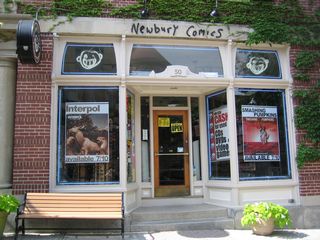
In going through the early years of ‘the Bridgetown soundtrack’ (as I’ve been calling it), specifically from 2000 onwards after I’d left HMV, I’ve been of course thinking of the Newbury Comics that used to be in downtown Amherst, just off the common and across the street from the town hall.

I’d been going there off and on since 1995 or so, but this one became my go-to on Wednesdays when I did my comic book/new music release runs after work once I started working at Yankee Candle. It became one of my favorite things to do: drive down 116 from Deerfield to the Hampshire Mall in Hadley, stop at Showcase Comics to pick up my subscriptions and check out some new titles, then drive up to Amherst Common to spend an hour or so at Newbury and pick up new releases there. I remember my old HMV boss, Tom, had become a district manager for the chain and I’d run into him every now and again. I set a weekly budget of $70 to spend there, which quite often ended up being around five CDs, given the store’s ridiculously low sale prices, often hovering around eight to nine dollars per title.

Given my work schedule by that time — 6am to 2pm — I could get this shopping out of the way and get home in time to chill for a bit, have dinner with the family, then start my nightly writing session around 6pm, where I’d work for about two hours. It was a perfect schedule for me, one I’d keep for the next several years. When I started working at my current store here in SF, I’d offered to be an opener for this exact reason: getting off shift by early afternoon provides me not only with recharge time but also enough for a productive writing session.

When I moved away from Massachusetts in March of 2005, this Newbury Comics was the last place I stopped on my way out. I figured one more time for old times’ sake was worth it. I bought cd copies of two favorite titles I’d owned on vinyl for years: Blood Sweat & Tears’ 1969 self-titled record (the one with “Spinning Wheel” on it) and Boston’s classic 1976 debut. I also bought some snacks and Pocky (that store had been my source of the addictive chocolate sticks for years) and headed out one last time on my way down to New Jersey.

The store moved to downtown Northampton a few years later if I recall, and it’s still there to this day. We’ll stop in every now and again during our visits back east, and although I don’t buy nearly as much physical music as I used to, I’ll still surf through the bins to look for interesting things.

Dividing Lines: When the Trilogy Soundtrack Really Started

I’ve been going through my music library for the year 2000 to revisit what I would be listening to in the Belfry, and I think I’ve figured out the point where I knew the HMV days were truly over and when the Belfry days kicked into high gear. It’s actually a surprisingly stark line that jives with when I was given the quit-or-be-fired ultimatum from my terrible boss. It’s August of 2000, and by the end of the month I’d be gone.

The Dandy Warhols, Thirteen Tales from Urban Bohemia, 1 August 2000. Although I’m almost certain I bought this in my final days at HMV and listened to it around that time, I want to say this was an album I spent more time listening to in the Belfry. I wasn’t even the biggest DW fan; by this point I’d heard their earlier hit “Not if You Were the Last Junkie On Earth” for the zillionth time on WFNX and did not like it to begin with, hearing “Godless” turned the tables for me. I remember listening to this one a lot during the summer evenings and weekends while figuring out what I wanted to do with The Phoenix Effect.

Between then and the end of the month, I did pick up a handful of CDs both from the record store and from Newbury Comics — by then my weekly comic book run had started to include a quick stop there to look for things my own store might not carry (or sell cheaper).

Goldfrapp, Felt Mountain, 11 September 2000. I’d left the record store by this point and was just starting at Yankee Candle — a westerly commute instead of an easterly one, and twenty miles shorter at that — but I really didn’t want to disconnect from my weekly accumulation of music. I could just as easily buy copies of my favorite music magazines, CMJ (College Music Journal) and ICE (an industry magazine featuring news on new releases) at Newbury Comics. I think this was one of the first that I bought there after starting the new job.

VAST, Music for People, 12 September 2000. I know I bought this one the same day as the Goldfrapp album (and the Barenaked Ladies album Maroon as well). I’d been a big fan of Jon Crosby’s first album under the VAST moniker and while this one felt slightly more upbeat and less steeped in Nine Inch Nails-esque gloom, it featured some amazing tracks that got a lot of play in the Belfry.

*

I actually wouldn’t start writing A Division of Souls for another year and a half, maybe early 2002 after the frustrations brought about by The Phoenix Effect and its sequel The Mihari, which I was writing at the time. The two books do have a lot of similarities to A Division of Souls, however, and it was simply a decision to stop work on both TPE and TM and completely start over from scratch. [Very similar to what I’d done recently with Theadia, actually.]

The music that inspired the project, however, started around this time when I switched day jobs. It wasn’t a clean switch of course, as I actually worked second shift for my first couple of months (3 – 11pm or thereabouts) and wouldn’t move to first shift until sometime in November. It would be around that time when my writing sessions would truly become more stable and frequent, as would my weekly trips to Newbury to pick up new music.

Revisiting music from the trilogy

I said I was going to do it and I’m doing it now: I’m currently going through the albums and singles from 2000 onwards as a soundtrack to the Bridgetown Trilogy Remaster Project. I started the revisit on Monday afternoon on my day off with William Orbit’s remixed take on Barber’s Adagio for Strings, one of my all-time favorite classical pieces.

I know, this is sort of an arbitrary place to start and doesn’t really line up with the writing chronology. I’d started and finished The Phoenix Effect (the early ‘demo’ version, if you want to continue the music analogy) but hadn’t yet started writing its aborted sequel The Mihari (that would take place that summer if I’m not mistaken), but the actual day-one of A Division of Souls wouldn’t take place until late 2001 or early 2002.

So why start the relistening at January 2000? Partly because I knew my days were numbered at the record store by then. I still loved the job and wished I could stay there forever, but a) I could definitely see the downturn of the music industry happening in real time, and b) I wasn’t sure how much longer I could handle the store manager without eventually ragequitting. It was also a bit of a weird time musically; grunge had long given way to adult alternative which had given way to meathead alt-metal, and pop was having a huge resurgence with its sugary overproduced electronica.

A lot of music I listened to at the time felt a bit out of place. I wasn’t quite sure what I wanted to listen to, because very little of it was resonating with me at a deep level, as it once had just a few years previous. That could very well be due to personal issues and changes, and at the time I was feeling unmoored.

Still, I was willing to see where it all took me. Life changes and all.

All this talk about Bridgetown…

…has given me a hankering to listen to some tunes from the HMV years when I wrote The Phoenix Effect. I’ve mentioned numerous times before that a lot of the music I listened to around that time heavily influenced and/or inspired many of its scenes. But it was also when I had a lot of positive things going on in my life for the first time in ages.

So now the trick is to find some current tunage that can take its place as the writing soundtrack for MU4….I do have a few in mind that have been on frequent rotation here in Spare Oom!

Twenty Years On: Spring 2004

I often say that 2005 was the year of major change in my life (getting married and moving twice and all, among other things), but it really started in 2004. I’d met A online and by the summer we were constantly running into each other on LiveJournal. I was writing The Balance of Light at the time and having a terrible time with it, and writing a vampire novel as a way to distract myself. I’d head to my first Worldcon that autumn when it came to Boston. I’d quit buying comics cold turkey when my go-to comics store closed up shop, and I even started thinking seriously about looking to find my own apartment. Life was changing whether I was ready for it or not.

Musically I’d latched onto LAUNCHcast, a sort of proto-Spotify site where one could curate a playlist by way of a ratings system. [And given that my house was in a radio desert, I couldn’t always listen to WHMP or WFNX at the time unless I was in the car or using my stereo upstairs.] Given my music obsessions, it wasn’t long before it provided me with the kind of indie and electronic rock I enjoyed so much.

The Crystal Method, Legion of Boom, 13 January 2004. I’d completely forgotten there was an album between this one and their mega-selling Vegas (the one with “Busy Child” and “Trip Like I Do” on it), so I thought I’d try them out again. This one got a bit of play in the Belfry during my writing sessions.

Air, Talkie Walkie, 20 January 2004. This band is on the ‘I will buy anything from them’ list, and this one became a huge favorite of mine that year, getting a lot of play all around, not just during writing sessions but my occasional road trips as well. I loved that it retained the dreaminess of their Moon Safari album yet sounded futuristic.

Stereolab, Margerine Eclipse, 27 January 2004. Another band I was woefully behind on in terms of collecting at the time, I liked playing this one on the weekends when I had my hours-long writing sessions.

Yes, The Ultimate Yes: 35th Anniversary Collection, 27 January 2004. I’d always been a huge fan of this band, though everything I owned of theirs was on scratchy used vinyl, having acquired them over the years in dollar bins, heh. This was a great full discography-so-far collection that was quite a pleasure to listen to.

The Walkmen, Bows + Arrows, 3 February 2004. Long before Hamilton Leithauser showed up on indie radio with his solo and collective projects, he was the lead singer of this great indie band that got a ton of play on LAUNCHcast and college radio with the song “The Rat”. Highly recommended.

Incubus, A Crow Left of the Murder…, 4 February 2004. Sure, you hear those same two or three hit singles from this band on alternative rock radio these days. Back when this came out, the singles “Megalomaniac” and “Talk Shows on Mute” got a ton of play on alternative radio, but sadly this album tends to be forgotten for the most part. It’s one of their most tense and dense records though, and well worth checking out.

Franz Ferdinand, Franz Ferdinand, 9 February 2004. Yes, that band with that song! They’ve always been a bit of an oddball band that slid between arty post-punk and groovy glam and somehow made it not just fresh and new, but made it irresistibly catchy as well.

Junkie XL, Radio JXL: A Broadcast from the Computer Hell Cabin, 10 February 2004. One of my favorite records of the year, this is a two-cd collection of electronic rock and house mixes and a thrill to listen to. Released just a few years before Tom Holkenborg focused mostly on film scores, this one’s highly recommended.

Audio Learning Center, Cope Park, 26 February 2004. This not-quite-grunge rock band from Portland were big on the moodier pockets of the genre, leaning a bit more towards emo and post-rock in some places. They only dropped two albums (this is the second) but they’re well worth checking out. This one got a lot of play in the Belfry.

TV On the Radio, Desperate Youth, Blood Thirsty Babes, 9 March 2004. I picked this one up mainly due to the fact that every music critic out there were getting their minds blown by this record, and they weren’t wrong. I wasn’t entirely sure what to make of this band at first, considering their sound back then was a bit difficult to describe. But the track “Dreams” was just so emotionally dire that I knew then that this was a record I’d enjoy.

The Vines, Winning Days, 21 March 2004. Their second record after the critically acclaimed Highly Evolved was a bit of both ‘more of the same’ and ‘heading further into psychedelia’ and while it wasn’t as popular as their debut, it was just as enjoyable to listen to.

The Standard, Wire Post to Wire, 23 March 2004. I latched onto the track “Even Numbers” via LAUNCHcast and I picked this one up soon after I’d heard it maybe twice. They were another Portland band made out of former members of other local indie groups, and this was their third and most popular album. This one got a lot of play in the Belfry as well.

Jem, Finally Woken, 24 March 2004. This quirky British singer had a minor hit with the trippy “They” single that got a lot of play on the local indie rock stations and kind of labeling her as a one hit wonder in the process, but the rest of this album is well worth checking out. To me she was like Alison Goldfrapp only a lighter and trippier.

L’arc~en~Ciel, Smile, 31 March 2004. I’d been a fan of this band since hearing “Spirit Dreams Inside” at the tail end of the 2001 Final Fantasy movie, but alas they were always super hard to find unless I was willing to spend thirty dollars on Japanese imports. This was one of their first American releases and featured one of their best hits and their most popular, “Ready Steady Go” (which at the time was also the opening theme for the anime show Fullmetal Alchemist).

*

Q2 coming soon!

The Belfry Years, Part I

As I’ve mentioned before, I allowed myself a month to stew in anger and frustration. I was pissed off that all my plans to stay in Boston had crashed and burned in epic fashion, and that I had to completely start over. On the other hand, living at home would allow me a bit of leniency by chipping in on the family bills and errands instead of a large monthly rent-sized chunk coming out of my paycheck, which would definitely help me get out of debt. And while I might have been emotionally in a much better place than my immediate post-college years, mentally I still had a long way to go. This was the era of reading New Age books as a way to force myself to think in alternative ways, and the era of giving my creativity a bold rethink. I was obviously getting nowhere there, and it was time to send it in a different direction.

For now, though, it was time to give my head and heart a bit of a long overdue reprieve. At least for a little while. I borrowed my mom’s car and went on a lot of drives around the area, the start of a very long-standing habit of weekend roadtrips on the backroads of central Massachusetts and frequent visits to used record stores and book stores. It was time to find myself, outside of the rat race I’d fallen into.

And to figure out what my next steps would be creatively.

The Jesus and Mary Chain, Hate Rock ‘n’ Roll, released 1 September 1995. A third compilation of b-sides, standalone singles and rarities gets some minor play on WHMP, the Northampton station I’d latch onto now that I was out of range of WFNX and WBCN. The title track would get a bit of play now and again.

Seven Mary Three, American Standard, released 5 September 1995. “Cumbersome” was everywhere when it dropped; they were sort of an American countrified Nickelback in a way (no offense meant, really) with a lot of radio-ready alternative bar-band rock. This ended up a one-hit wonder for them but one that still gets play now and again.

Various Artists, Help: A Charity Project for the Children of Bosnia, released 9 September 1995. I picked this one up maybe a few days after it dropped, which is an amazing turnaround considering the songs had been recorded only four days previous! While some charity albums can be a bit of a disconnected mismatch of hits and filler, this one is solid from start to finish. Trivia: this is the first appearance of Radiohead’s “Lucky” which would show up two years later on OK Computer. I played this one a lot at the time.

Blur, The Great Escape, released 11 September 1995. I may have recently mentioned that I felt this album was a bit weak compared to their earlier work, but that’s not to say it’s not bad…just a bit light on the energy. Although there are several great songs on it like the lovely and peculiar “The Universal”.

Lenny Kravitz, Circus, released 12 September 1995. In between the ridiculously overplayed “Are You Gonna Go My Way” from the same-titled album in 1993 and the overplayed “Fly Away” from 1998’s 5 album, there was this high charting but largely forgotten fourth album with the killer single “Rock and Roll Is Dead”. It’s a bit of an angry album for him but it’s worth checking out.

Red Hot Chili Peppers, One Hot Minute, released 12 September 1995. This was also a largely forgotten album stuck in between two huge successes (1991’s Blood Sugar Sex Magik and 1999’s Californication) and during a highly unstable era for the band (musically and personally). This is the one with the light and airy “Aeroplane” and cheerful “My Friends” but it’s also got the whirling tempest of album opener “Warped”. The album is a bit of a mess but it’s still enjoyable.

Eve’s Plum, Cherry Alive, released 19 September 1995. The second and last album from this bouncy power pop band featuring Colleen Fitzpatrick (aka Vitamin C), it’s a super fun record worth checking out, just like their previous release. WHMP would play “Jesus Loves You (Not As Much As I Do)” and the title track quite often.

Son Volt, Trace, released 19 September 1995. The other half of Uncle Tupelo that didn’t join Wilco became this band that continued the excllent alt-country sound they’d perfected in their previous band. “Drown” was a hit on alternative radio and the rest of the album is just as good.

Skunk Anansie, Paranoid and Sunburnt, released 21 September 1995. I’d find out about this band via the movie Strange Days which would be released quite soon (they make a major appearance near the end of the film) and I fell in love with their chaotic and angry energy, an outlet that was sorely lacking at the time for me. Sadly they never got any airplay Stateside, but I’ve always recommended them to anyone who likes kickass hard rock and alt-metal.

David Bowie, Outside, released 26 September 1995. Bowie has always been the one to reinvent himself with pretty much every new project, and this one was definitely an unexpected turn from the classy and clean Black Tie White Noise and the curious Buddha of Suburbia soundtrack. This one’s a tense and dense futuristic concept album that caused quite a lot of headscratching, but still managed a minor hit with “The Hearts Filthy Lesson” (which at the time reminded me a lot of Wire at their most adventurous).

Lisa Loeb & Nine Stories, Tails, released 26 September 1995. Meanwhile, the ubiquitous “Stay (I Missed You)” which appeared on the Reality Bites soundtrack appears on Lisa’s first major label record here, and it’s a huge hit on both alternative and commercial radio, and still gets play to this day.

Sonic Youth, Washing Machine, released 26 September 1995. This album was a bit of a headscratcher as well, as it’s much longer and more meandering than their blistering earlier sound or their early-90s compactness. It feels a lot like they’re a jam band here, which they always were to some degree. Interestingly enough the twenty-minute closer “The Diamond Sea” was the song chosen as a single, chopped down to a much quicker five.

*

Next up: More changes to come, whether I’m ready or not.